Tuesday, March 27, 2018

Satoko Fujii Orchestra Berlin - Ninety-Nine Years (LIBRA RECORDS 2018)


Satoko Fujii’s Orchestra Berlin bursts with energy and excitement 
on their second recording, Ninety-Nine Years

“Satoko Fujii is the Ellington of free jazz.” – Cadence Magazine

“Satoko Fujii is a brilliant and inspiring jazz genius. There is just no other way to say it.”
– Travis Rogers Jr., The Jazz Owl

On Ninety-Nine Years (March 23, 2018 via Libra Records), composer-pianist Satoko Fujii premieres her first compositions written expressly for Orchestra Berlin. The ten-piece ensemble responds with a full-throated, buoyant performance that makes the album one of the most exciting in her large catalog of big band releases.   

Fujii convened Orchestra Berlin in 2015 to record Ichigo Ichie, a commission from the Chicago Jazz Festival, written for and originally performed by a ten-piece ensemble of Chicago musicians. Fujii, who was living in Berlin at the time, wanted to record the piece, so she asked German saxophonist Gebhard Ullmann, for whom she’d written arrangements heard on his 2004 Soul Note CD, Big Band Project, to put together a group to record her new composition. She had never heard or played with most of them. “I really didn’t know how they would play together or how the music would sound,” Fujii says. “I didn't expect them to play so hot, with so much energy.” 

Although composer-conductor and orchestra hadn’t worked together before, they clicked immediately. In his 4-star review of the album in All About Jazz, Budd Kopman wrote, “This is edge-of-the-seat music that has a palpable central line of energy flowing through it… frequently astonishing in its impact...” 

“Their sound made me want to write this project,” Fujii says. “I probably wouldn’t have written these pieces if I hadn’t done Ichigo Ichie with them.”


On Ninety-Nine Years, Fujii digs deep to bring out the special character of the band and its soloists. Her compositions call on the uninhibited energy of the group and leave plenty of room for soloist to contribute their own ideas. Her insightful conducting heightens the drama of each piece, setting off both writing and improvising to best effect. 

The album opens with “Unexpected Incident” (the Japanese government’s euphemism for the Fukushima nuclear disaster), a showcase for the band in all its bold, energized glory. The composition features the steamrolling power of the band’s tenor saxophonists, with Ullmann plowing ahead over the ensemble early in the piece, Matthias Schubert locked in a fierce duet with trombonist Matthias Müller, and concludes with Ullman’s growling, raving unaccompanied solo. 

In an unaccompanied solo, bassist Jan Roder opens “Ninety-Nine Years,” a dedication to Fujii’s late mother-in-law, with his strong sense of line and development. Drummers Peter Orins and Michael Griener and baritone saxophonist Paulina Owczarek enter one by one, building to an ebbing and flowing collective improvisation. Then Ullmann once again powers up, launching long flexing lines that erupt into contoured waves of pure sound. Fujii cues in an affecting, melancholy melody from the ensemble, contrasting sorrow and compassion with Ullmann’s unquenchable vitality. 

The percussionists display their close rapport and command of rhythm, groove, and texture in duets at the beginning of “On the Way,” before trumpeter Natsuki Tamura lightens the mood with a hilarious solo utilizing vocal sounds and odd-ball mutterings. 

Tamura suggested the title of “Oops,” whose tricky rhythms initially gave the horn players problems. Schubert once again brings excitement and grandeur to the proceeding in his wild, almost operatic solo. “Follow the Idea” brings the album to a close with another burst of white hot energy and wild swings between dead serious intensity and high-spirited humor. 


Most jazz composers work with one orchestra over time, but Fujii maintains no less than five. Each one has its distinct character, which she loves to explore. Fujii returned to Orchestra Berlin because, she says, “I think they bring out some part of me that the other bands don’t.”

Fujii’s unprecedented birthday bash continues in April with Bright Force (Libra) by Kira Kira, a quartet featuring Australian pianist Alister Spence, trumpeter Natsuki Tamura, and drummer Ittetsu Takemura. Intelsat, a duet with Spence will follow later in the year. May will see the release of Triad (Long Song Records), which showcases a one-time trio with Italian soprano saxophonist Gianni Mimmo and American bassist Joe Fonda. The summer months start to heat up in June with 1538 by This Is It!, a trio featuring Fujii with Tamura on trumpet and Takashi Itani on percussion. Fujii and bassist Fonda follow up their acclaimed 2016 duo album with a new one in July. Later in the year, a new recording by Orchestra Tokyo and the debut of a new piano-bass-drums trio will arrive. Other surprises and delights will be in store over the course of the year, in what is sure to be an unforgettable outpouring of musical riches.


Critics and fans alike hail pianist and composer Satoko Fujii as one of the most original voices in jazz today. She’s “a virtuoso piano improviser, an original composer and a bandleader who gets the best collaborators to deliver," says John Fordham in The Guardian. In concert and on more than 80 albums as a leader or co-leader, she synthesizes jazz, contemporary classical, avant-rock, and Japanese folk music into an innovative music instantly recognizable as hers alone. Over the years, Fujii has led some of the most consistently creative ensembles in modern improvised music, including her trio with bassist Mark Dresser and drummer Jim Black, the Min-Yoh Ensemble, and an electrifying avant-rock quartet featuring drummer Tatsuya Yoshida of The Ruins. Her ongoing duet project with husband Natsuki Tamura released their sixth recording, Kisaragi, in 2017.

“The duo's commitment to producing new sounds based on fresh ideas is second only to their musicianship,” says Karl Ackermann in All About Jazz. Aspiration, a CD by an ad hoc band featuring Wadada Leo Smith, Tamura, and Ikue Mori, was released in 2017 to wide acclaim. “Four musicians who regularly aspire for greater heights with each venture reach the summit together on Aspiration,” writes S. Victor Aaron in Something Else. She records infrequently as an unaccompanied soloist, but Solo (Libra), the first of her projected 12 birthday-year albums, led Dan McClenaghan to enthuse in All About Jazz, that the album “more so than her other solo affairs—or any of her numerous ensembles for that matter—deals in beauty, delicacy of touch, graceful melodicism.” As the leader of no less than five orchestras in the U.S., Germany, and Japan, Fujii has also established herself as one of the world’s leading composers for large jazz ensembles, leading Cadence magazine to call her, “the Ellington of free jazz.” 


Introducing Robert Diack - Lost Villages (Friday, April 13th, 2018)


The Lost Villages were a collection of nine communities and townships in Southern Ontario. The people therein were forcibly removed to make way for the St. Laurence Seaway, a 1950’s project which linked Southern Ontario to the Atlantic Ocean by a collection of waterways. The houses are submerged underwater, as the places where there once was human community there are now lakes. 

The album Lost Villages, which shares its name with the communities discussed above, was written with that inspiration of upheaval, however, the composition is grounded in and inspired by its own local geography; it is a product of the environment it was created in (largely composed in Southern Ontario, and Toronto). The writing of the album is extensively inspired by “post-rock” elements, and uses large scale repetitions and layering. These elements, when blended with those of jazz (and post-bop) synthesize into wholly new formulation of musical style. Citing influences from Godspeed You Black Emperor, Aaron Parks, and Philip Glass, the material is a fluid and flexible musical exploration.

Using acoustic and electronic instruments, this recording pushes boundaries in the jazz anthology, building off tradition to create something new. This recording has embraced post-production editing, allowing for techniques and influences from different genres to proliferate into the contemporary jazz moment. Some tracks feature editing, creating sounds which are impossible otherwise, and some tracks feature no editing at all.  The thematic material that this recording draws on is that of loss and submersion, set in the capitalist machine of society, and mirrors the namesake event. 

Featuring Patrick O’Reilly on Guitars, Jacob Thompson on Piano, Brandon Davis on Bass, and Robert Diack on drums, this recording showcases the next wave of talent in Canada.


Robert Diack is a drummer and composer from Toronto Canada. Robert has studied music extensively in Toronto, with over fifteen years of learning in various institutions across the city. Robert studied jazz at the University of Toronto and is a student of Nick Fraser. Composing for many years, he draws his influence from jazz and post-bop, to folk and traditional, to post-rock and pop music. As a drummer Robert has recorded and played over Canada, especially in Toronto. Recordings include two indie pop albums with Reenieband, large-scale informal releases with the musical collective Luscar, and an upcoming folk-rock album by David Madras. 


Lost Villages will be officially released internationally on Friday,  April 13th, 2018

Upcoming

CD RELEASE:
Monday April 16th @ the Rex Hotel


Monday, March 26, 2018

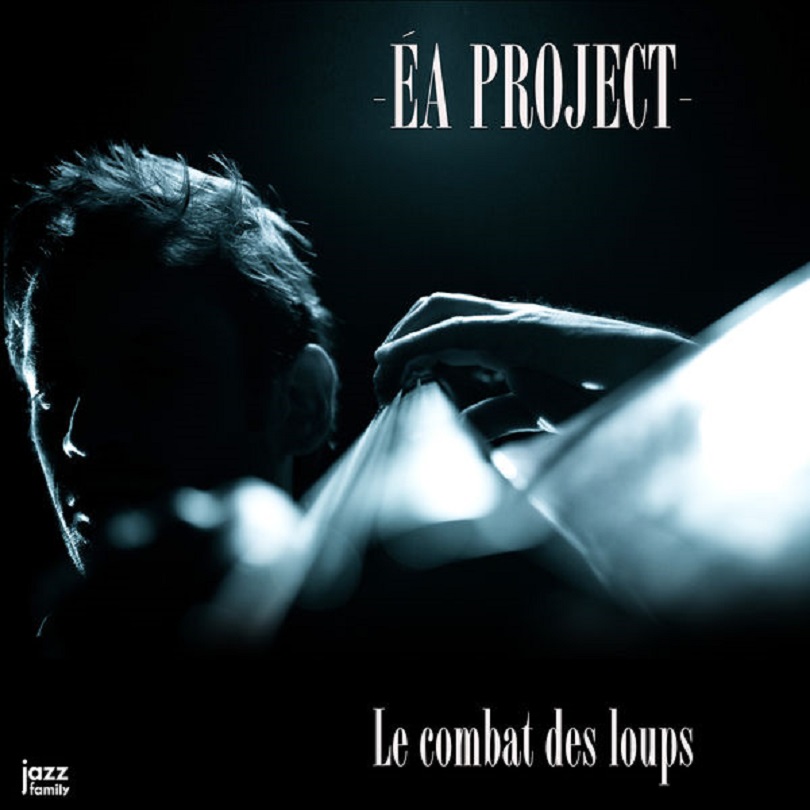
ÉA Project - Le combat des loups (JAZZ FAMILY RECORDS 2018)


« ÉA PROJECT » est le nouveau quintet du contrebassiste et compositeur Martin Guimbellot.

Sideman sur la scène jazz depuis plus de quinze ans, ce musicien inspiré au son généreux collabore auprès de nombreux groupes très éclectiques passant du jazz malgache (Ouranos Quartet) de l’électro-jazz (Why Cie) du bop (Jean-Philippe Gregoire Quartet/ Baptiste Herbin Quartet) etc… Il compose et joue également pour Mélina Tobiana Quintet (jazz soul) et Bloom (jazz/pop/latin).

Cette formation en quintet autour de ses compositions exprime donc une musique résolument moderne mariant diverses influences. La tradition du jazz côtoie des sonorités plus métissées et très actuelles avec une volonté de rendre accessible les mélodies qui restent néanmoins très riches. Sa musique se veut underground, créative et il souhaite, par la variété de ses expériences musicales, toucher un public des plus large.

Pour mener à bien son projet il s’entoure de talentueux musiciens de jazz. Stephan Moutot au saxophone ténor, diplômé de la New school University, a fait ses armes à New York pendant près d’une décennie notamment avec le groupe « The Flail » où il a acquis une solide expérience. Yoann Loustalot et sa trompette sont reconnus dans le milieu du jazz français depuis fort longtemps particulièrement grâce à son travail de composition comme dans son trio Aérophone. La batterie subtile de Fred Pasqua égraine les plus belles salles de concert en Europe et collabore dans de nombreuses formations confirmées du moment. Enfin le jeune Simon Chivallon au piano, fraîchement sorti du CMDL (Centre des musiques Didier Lockwood), semble être, avec une technique irréprochable et une grande polyvalence, destiné à un avenir des plus prometteur.


1 Boomerang 4:38
2 Course poursuite 5:06
3 Borderline 4:38
4 King Monk 5:45
5 Éa 6:20
6 Urban Shadows 3:33
7 Le combat des loups 4:15
8 Gaïa 5:09
9 In Blue 6:11

Stephan Moutot: Tenor et soprano sax
Yoann Loustalot: Trompette
Simon Chivallon: Piano
Fred Pasqua: Batterie


Neil Patton - Solitaire (2018)


This collection of fifteen solo piano compositions reflects the spectrum of emotions we experience when alone, from the joys and inspiration of solitude, to the trials and darkness of isolation. These pieces are meant to celebrate those precious times away from the crowd, but also to encourage those who are in need of community and hope.

Performed on the same Yamaha C7 concert grand piano that Neil used for his previous two albums (Between Shadow and Light, and Hammer & Wire), these recordings capture the height, breadth and depth of sound that only a piano can produce, everything from delicate melodies to thundering rhythms. There is something for everyone in this collection.

"These are some of the best melodies and compositions I have ever created. I hope these pieces will encourage and connect with listeners on a deep level." - Neil Patton

“It’s not often that I have a hard time naming favorite pieces on albums, but every track on Solitaire is a favorite. This album is a masterpiece from start to finish. This is music that has substance, beauty and profound depth, played with passion, compassion and soul-stirring empathy. Neil Patton is the real deal, folks!” - Kathy Parsons, MainlyPiano.com


1. The Turning Page
2. Redemption
3. Walking On Air
4. The Shepherd
5. Lacrymosa
6. The Muse
7. Where I Can’t Follow
8. The Calling
9. Twilight
10. Strength
11. Solitaire
12. Adrift
13. Bound
14. Back Porch
15. Gethsemane


Tuur Moens - Nebula (2018)


Most praised for his unique style and unerring consistency as a drummer, Tuur has developed a highly diversified artistic palette ranging from jazz and latin to African and Brazilian music. He mesmerizes audiences, performing in a deeply charged pace that begets soulful perfection.

Tuur plays with Lura, Munir Hossn, Jorge Pardo, Teus Nobel, Rogier Telderman, and more. Full bio, see website.


1. Nebula 08:16
2. Choices 07:02
3. In z'n Vijf 06:41
4. Mr. Time (feat. Jorge Pardo) 08:47
5. Night Walker 02:32
6. Tempo Tentar (feat. Munir Hossn) 03:44
7. Luna (feat. João Frade) 08:54
8. Nighty Night 02:18
9. Arvore de Inverno 04:22


Tuur Moens: Drums, percussion, vocals and compositions
Munir Hossn: El. bass, ac. guitar, vocals and production
João Frade: Accordion
Thomas Maasz: Piano
Jorge Pardo (special guest): Flute

Mixing: Niels Onstenk & Tuur Moens in Rotterdam (NL)
Mastering: Carlos Freitas at Classic Master in São Paulo (BR)
Artwork: Guillaume Saix at WebmyArt in Paris (FR)


Quadrumane - Quadrumane (2018)


Quadrumane loves stroking sounds, with a fondness for the unusual, the little-twisted, the big-full-of-rhythm, the sinuous and the uncertain. Freezes you in a roar, mollifies you with a melody. Improvises a lot, a strike here, a blow there, plics, plocs, and even bzuts.

1. Lou Wazo 04:38
2. The Tenebrous Shadow Of The Hidden (But Yellow) Moon 08:33
3. El Oazzo 05:38
4. O’Azow 10:44
5. Glandouf 08:56
6. L’Amoureux Egyptien 07:29

Erwin Toul: batterie, radio-cassette, électronique
Pierre-Yves Baudin: soprano saxophone, bass clarinet, electronique

Benoit Delbecq 4 - Spots On Stripes (CLEAN FEED RECORDS 2018)

« A thoughtful chill runs through the music of Benoît Delbecq, a French pianist of investigative temperament and crystalline technique. There’s a ton of compressed energy in his playing, but he projects an unflappable calm ». These lines from the New York Times in 2010 by jazz critic Nate Chinen offer a pertinent description of Delbecq’s music. Delbecq is a multi-awarded  Parisian pianist and composer, a type-setter who persists in developing his ideas among which a very rhythmic approach that brings the soul of jazz to John Cage’s prepared piano. Delbecq may prepare just a few strings with wood sticks then sit at the piano become a percussion-and-piano ensemble. Delbecq is curious with sound, the rhythm of prose, and mutating loops of sound fabrics. His musical thrust continues to weave some outstanding and compelling tapestries for our delight.

This new quartet assembles four musicians from New York and Paris of the highest caliber in today’s contemporary jazz scene. There are winding melodies written for silversmith Mark Turner who kneads them like dow when Delbecq elegantly seems to observe them from a mirror, as well as lines for John Hébert whose rocking bass may decide to shift the whole group’s harmony, the whole cooking magically with Gerald Cleaver’s stellar, soulfoul and contagious drumming. The quartet plays a nomadic and rhythmic music as if they followed a map with contour lines only, letting musical gems appear and farm them on the moment on such fertile terrain.

Delbecq was born in 1966. Since the early nineties, his works have received acclaims from legendary musicians such as Mal Waldron, Steve Lacy, György Ligeti, Steve Coleman, Evan Parker, as well as from many critics and festivals around the world. He studied improvised music in Paris with free music pioneer Alan Silva. When aged 19, he joined Silva’s Celestrial Communication Orchestra, while jazz giant Mal Waldron mentored him to work on his own musical ideas. Delbecq has participated in a couple of jazz workshops at the Banff Centre and studied there with Dave Holland, Steve Coleman, Muhal Richard Abrams, among others greats. He also studied composition and music analysis with Solange Ancona, a former student of Olivier Messiaen. For composing he uses his own graphic notation he came cross with when transcribing the music of the Aka pigmees from the Central African rainforest.

He has previously worked with Mark Turner, John Hébert and Gerald Cleaver in two different projects (Delbecq Unit with Turner in 2003-5, and Hébert trio with Cleaver on drums since 2008). He’s been an activist of the Hask Collective Paris (1992-2004) and is presently a founding member of Bureau de Son Paris (2008) and the dStream label.

Delbecq’s works include collaborations with Mark Turner, Evan Parker, Oliver Lake, Michael Moore, Jean-Jacques Avenel, John Hébert, Steve Argüelles, Gerald Cleaver, Julian Argüelles, Marc Ducret, Guillaume Orti, Noël Akchoté, Mark Helias, Fred Hersch, Andy Milne, Ethan Iverson, Kris Davis, Jozef Dumoulin, Mike Ladd, Mary Halvorson, Taylor Ho Bynum, Tomas Fujiwara, François Houle, Gerry Hemingway, Toma Gouband, Samuel Blaser, Masa Kamaguchi, Emile Biayenda, Miles Perkin, Guillaume Orti, Robin Fincker, Sylvain Darrifourcq, Robin Verheyen, Clemens Van de Feen, Tomas Fujiwara, Jonas Burwinkel, Petter Eldh, Tim Berne, Tom Rainey, Lotte Anker, Hubert Dupont, Sarah Murcia, Olivier Py, François Thuillier, Stéphane Galland, Petter Bruun, Claudia Solal, Sarah Murcia, Kim Myhr, Michele Rabbia, Maria Pia de Vito, Oene Van Geel, Mandhira de Saram, Jonas Burgwinkel, Petter Eldh, Jorrit Dijsktra, John Hollenbeck, Dave King, Grdon Gordina, Kenton Loewen and many others.

1 Spots on Stripes 8:35
2 Broken World 4:13
3 Rosemary K 3:41
4 The Loop of Chicago 5:24
5 Disparition Du Si 3:20
6 Dawn Sounds 6:51
7 Old Vinyl 5:43
8 Springs 5:28
9 Dripping Stones 4:35
10 De Stael 5:30

Mark Turner  tenor saxophone
Benoît Delbecq  piano
John Hébert  double bass
Gerald Cleaver  drums

All compositions by Benoît Delbecq (Sacem)

Recorded June 15th, 2017 at Trading8s Studio, Paramus NJ by Christopher Sulit | Mixed by Benoît Delbecq at PlushSpace Paris | Mastered by Klaus Sheuermann at 4ohm Berlin

Produced by Benoît Delbecq | Executive production by Pedro Costa for Trem Azul | Design by Travassos

Samo Salamon, Tony Malaby & Roberto Dani - Traveling Moving Brething (CLEAN FEED RECORDS 2018)

A former student of John Scofield, Samo Salamon was named by the magazine Guitar Player as one of 10 most interesting guitarists of the moment, with All About Jazz stating that this Slovenian is «one of the most talented and interesting to emerge on today’s jazz scene», putting him at the same level of Kurt Rosenwinkel and Ben Monder. The Penguin Jazz Guide choose his debut record “Ornethology”, from 2003, as one of the 1001 Best Albums in the history of jazz, and Salamon’s partnerships with such different musicians as David Binney, Sabir Mateen, Dominique Pifarely and Mark Helias say much about his importance on the world circuits. “Travelling Moving Breathing” is a new opus of his Bassless Trio, a project in constant change of contributors, after previous recordings with Tim Berne and Tom Rainey or with Julian Arguelles and John Hollenbeck and only the Italian drummer Roberto Dani staying from line-ups with Paul McCandless, Michel Godard, Achille Succi and others.

Now the third wheel of this band’s dynamics is the American saxophonist Tony Malaby, culminating a good number of adventures together with the Eastern European who possesses «a monstruous technique and an intense desire to navigate multiple jazz related genres» (critic Glenn Astarita dixit) dating from 2004 and from the Samo Salamon Quartet. Salamon couldn’t have better company in Malaby and in Dani (him who already had the best with him) in his commitment to play a improvisationally-driven music capable to keep us on our toes from the first to the last minute.

1 Dephony 6:03
2 Moving Target 6:05
3 Breathing 6:35
4 Grey Matter 9:13
5 Traveling Without Motian 6:15
6 Too Much 4:03
7 Kei's Dream [Explicit] 7:43
8 Arnold 8:05
Pedro is Clean 4:26

Tony Malaby  tenor & soprano saxophone
Samo Šalamon  guitar
Roberto  Dani drums

All compositions by Samo Salamon except for #3 by Salamon/Malaby/Dani

Recorded in Ravne na Koroškem in April 2017 by Domen Hudrap | Mixed and mastered by Samo Salamon

Produced by Samo Salamon | Executive production by Pedro Costa for Trem Azul | Design by Travassos | Photos by Nika Hölcl – Fotobeležnica

Frode Gjerstad Trio + Steve Swell - Bop Stop (CLEAN FEED RECORDS 2018)


Frode Gjerstad’s name can be legendary in Norway and all the European continent, due to the fact that he was practically the only one to contrast himself, from the beginning, to the saxophone style which defined the Scandinavian approach to jazz for 40 years, the one defined by Jan Garbarek, but his trio with Jon Rune Strom and Paal Nilssen-Love is relatively new on the scene. It started in 2011 and there’s only another recording with trombonist Steve Swell as special guest, “At Constellation”, from 2015. Of course, there were some previous cumplicities between these musicians: Nilssen-Love was a member of Gjerstad’s Circulasione Totale Orchestra since 1992 and the alto saxophonist and clarinetist played with Swell in several occasions, mostly when visiting the United States.

Musically, the quartet proposes a very particular kind of free improvised music with strong connections to the free jazz tradition, reinforced by the participation of the American who collaborated with the likes of Cecil Taylor, Bill Dixon and Anthony Braxton. The energy level is very high, but the delivery isn’t always on the red: lots of dynamics and sudden contrasts keep the group interactions interesting and unpredictable. Frode Gjerstad’s approach to improvisation is distinctive in itself: he’s a melodic player, even if asymetrical, and he prefers the “old school” jazz phrasing to «reed-fueled bric-a-brac», as a music critic once wrote, managing to present it as if it’s a novelty.

1 Bop Stop 18:06
2 Stop Bop 9:51
3 Pop Bop 16:00
4 Post Stop 8:24

Frode Gjerstad  alto saxophone
Steve Swell  trombone
Jon Rune Strøm  double bass
Paal Nilssen-Love  drums & percussion

All Music By Frode Gjerstad (Tono), Steve Swell (Steve Swell Music/Bmi), Jon Rune Strøm (Tono), Paal Nilssen-Love (Tono/Cien Fuegos)

Recorded live in performance on the 17th of September 2017 At The Bop Stop, Cleveland Oh, Usa | Recorded, mixed and mastered by Frode Gjerstad

Produced by Frode Gjerstad, Steve Swell,Jon Rune Strøm and Paal Nilssen-Love | Executive production by Pedro Costa for Trem Azul | Design by Travassos

RADKA TONEFF / STEVE DOBROGOSZ | Fairytales | ODIN | 6th April 2018 | LP / CD (Hybrid SACD)


FAIRYTALES, Original Master Edition, is set for release by ODIN on LP and SACD on the 6th of April 2018

Radka Toneff and Steve Dobrogosz’s perfectly attuned duo collaboration has served as an inspiration to both musicians and listeners for three decades.

Fairytales, is Norway’s best-selling jazz album, and was also voted Norway’s best album of all time in a poll of Norwegian musicians in 2011. The remarkable sound quality of this album, recorded using one of the earliest digital tape recorders, has been recovered and captured using MQA technology. MQA has recreated the sound of the duo’s breath-taking original performance for this special master edition.


A1 The Moon Is A Harsh Mistress (Jimmy Webb)
A2 Come Down In Time (Elton John/Bennie Taupin)
A3 Lost In The Stars (Kurt Weill/Maxwell Anderson)
A4 Mystery Man (Steve Dobrogosz/Fran Landesman)
A5 My Funny Valentine (Richard Rodgers/Lorenz Hart)

B1 Nature Boy (Eden Ahbez)
B2 Long Daddy Green (Blossom Dearie/Dave Frishberg)
B3 Wasted (Radka Toneff/Fran Landesman)
B4 Before Love Went Out Of Style (Dudley Moore/Fran Landesman)
B5 I Read My Sentence (Steve Dobrogosz/Emily Dickinson)

This fresh, re-mastered version of the album is based on the original 16 bit/ 50,35 kHz master tape from 1982, and for the first time the album is made available as a Hybrid SACD. The process of upgrading the already superb sound quality of the recording is bringing the listener even closer to the music as it was played and sung at the Grieg Hall in February 1982, when the unique chapter of “Fairytales” was written into Norwegian music history.


Radka Toneff

Radka Toneff (1952-1982, Norwegian mother, Bulgarian father) was established in Norway and its neighbouring countries as a unique singer and leader of her own band when she and American pianist Steve Dobrogosz (1956- ), who was living in Sweden, recorded Fairytales in February 1982. They had known each other since 1979, when Dobrogosz took over as the pianist in Radka’s quartet, in which bassist Arild Andersen, for several years Radka’s closest musical collaborator and record producer, and Danish drummer Alex Riel formed the remainder of the ensemble. When playing their quartet gigs Radka and Steve often introduced a duo or two, and they had also recorded an improvised duo version of the standard “My Funny Valentine”, which was produced by Erling Wicklund at the end of a radio recording session at the Norwegian Broadcasting Corporation, in November of that year.

An inspired session

This remarkable ad hoc duet, which would become track five on Fairytales, had inspired Steve to play with the idea of a duo album, and when Radka, a few years later, was wondering whether to follow up her two albums “Winter Poem” (Zarepta, 1977) and “It Don’t Come Easy” (Zarepta, 1979) with an orchestral recording as her third record, Steve suggested the duo format as a diametrically opposed alternative. Radka eventually welcomed the idea, but as the Zarepta label had been dissolved she had no record company behind her. None of the record companies in Norway or Sweden had given the duo a positive response until the Norwegian Jazz Federation’s newly launched label, Odin, entered the scene. Rolf Grundesen, then head of the Federation, suggested recording the album at the Grieg Hall in Bergen, which had digital recording equipment and a good grand piano. Nine songs were recorded in the course of two evenings, with Arild Andersen producing.

A solemn epilogue

Fairytales had a solemn epilogue when Radka died under tragic circumstances a few weeks after the album was released and had begun to go from strength to strength. In retrospect, though, it is not the memory of the loss of an incomparable singer, but rather the content of what Radka accomplished together with her American duo partner that keeps Fairytales alive. “It’s not just the sound itself, but it’s also about how Radka sings, about the sensitivity in her voice,” Steve Dobrogosz has said. The pianist describes Radka as a superb, forthright and genuine interpreter who was “at her best” with Fairytales, and he rejects any implication that she sounds especially lonely or depressed, or that the album can be construed as part of any autobiographical timetable.


The sum of singer Radka Toneff was, naturally, more than the parts she was able to display on Fairytales. But when practically all subsequent singers in Norway, from Sidsel Endresen up to the young talents of today, get a warmth in their voices and eyes when they talk about Radka as an artistic ideal and a source of inspiration, it is not least because they heard Fairytales at some point, and were sold. The fact that the album has also been the impetus for an interest in Radka that has produced posthumous records, books, radio documentaries and countless articles only confirms the strong position the album still occupies.