Showing posts with label Ron Carter. Show all posts

Tuesday, March 8, 2022

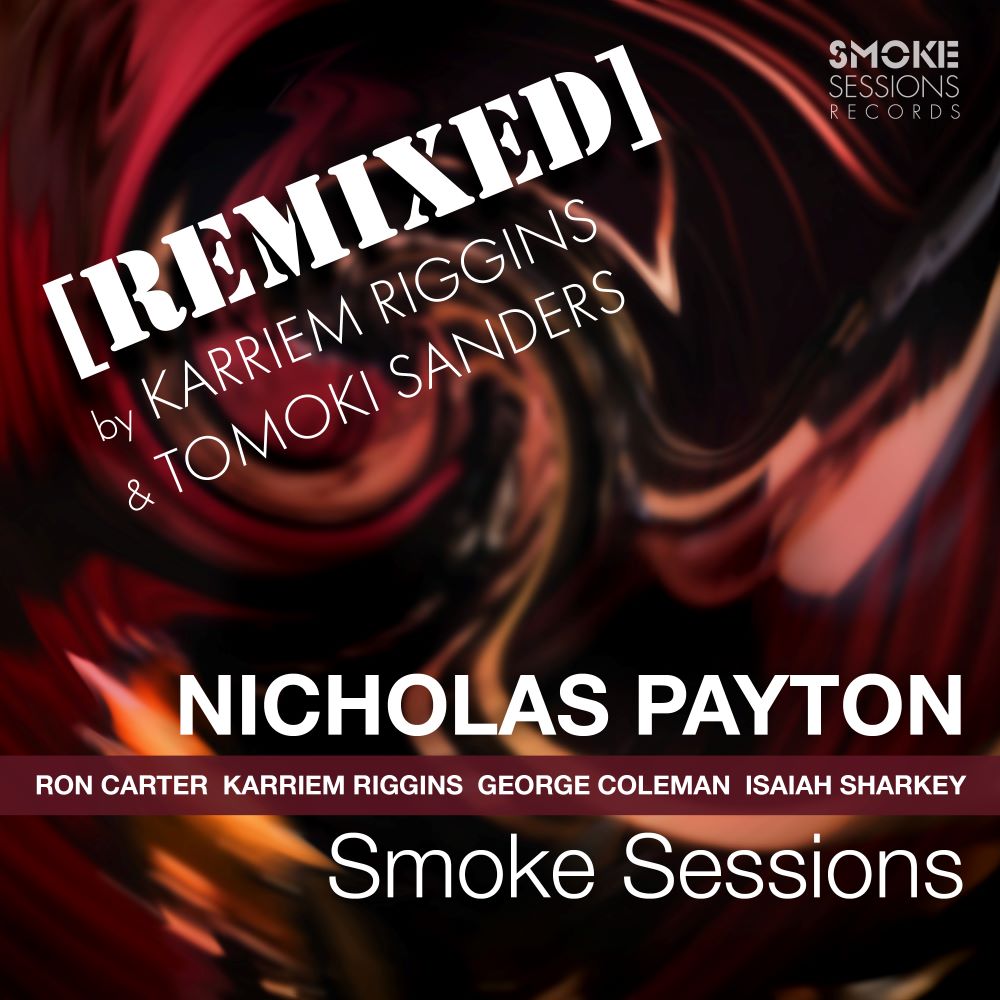
Nicholas Payton | "Smoke Sessions (Remixed)" | Available March 8 via Smoke Sessions Records

Innovative Trumpeter, Keyboardist and Composer
Nicholas Payton Transforms the Music from Latest
All-Acoustic Trio Album on New Remix EP
 
Smoke Sessions (Remixed) Due Out March 8, 2022
via Smoke Sessions Records

EP Features Genre-Blending Remixes by
Karriem Riggins and Tomoki Sanders
and Special Guest Isaiah Sharkey

Though it’s never simple (or advisable) to pin Nicholas Payton down to a particular genre or style, the renowned trumpeter/keyboardist/composer’s two recent releases for Smoke Sessions Records have found him in relatively traditional acoustic trio mode. He was accompanied by the powerhouse rhythm section of bassist Peter Washington and drummer Kenny Washington on 2019’s live Relaxin’ With Nick, then with the generation spanning trio of drummer Karriem Riggins and legendary bassist Ron Carter on 2021’s acclaimed Smoke Sessions.

But Payton, it turns out, had more transformative intentions in mind for the latter session. On his new EP Smoke Sessions (Remixed), due out March 8 via Smoke Sessions Records, he turns the raw material of four of the album’s tracks over to Riggins and the rising star multi-instrumentalist producer Tomoki Sanders to create remixed versions of the tunes refracted through the lens of the hip hop generation.

This post-modern hybrid approach to what others may view as disparate genres is central to much of Payton’s discography, so it certainly makes sense that he would hear the potential for such electronic reimagining in the music he recorded with Carter and Riggins. “Many of my projects have a remix component built into them already,” he explains. “I felt giving those types of production treatments to an all-live acoustic session would speak more to the times in which we live. It gives the folks a bit of both worlds.”

Riggins, the drummer for the original Smoke Sessions album, puts on his producer hat for three of the four tracks on the remix EP. It’s a role he’s as comfortable playing as the one he essays behind the drumkit – he’s done production work for many of hip hop’s most creative artists, including Common, The Roots, Erykah Badu and Kanye West.

“Production and mixing [are] a significant part of Karriem’s body of work,” Payton says. “I hired him as the drummer on the session with this in mind.”

For his part, Riggins refers to Payton as, “one of those geniuses… He set the bar high and it’s always super inspirational being around him and playing music with him."

The original “Levin’s Lope” already brought inspiration full circle, taking a Ron Carter-inspired bassline from Payton’s “Cyborg Swing” and giving it to the man himself; the oft-sampled Carter now provides robust inspiration for a new Riggins beat and swirling melody. Payton’s Rhodes playing on “Gold Dust Black Magic,” which also featured guitarist Isaiah Sharkey, ripples out into a cosmic dub beat in Riggins’ hands, while guest saxophonist George Coleman’s sultry tenor sound is shrouded in stark, airy new atmospherics until a bold, funky new beat hammers into place.

The EP’s final track is another case of ricocheting inspiration. The young, uncategorizable multi-instrumentalist Tomoki Sanders, who Payton calls, “one of my favorite up and coming musician/producers,” provided a beat that helped inspire the original version of “Hangin’ In and Jivin’;” his remix amplifies and reconstructs the muscular groove at the heart of the tune.

While he insists that, “it’s never my intent to decide what anyone gets from my music,” Payton does hope that Smoke Sessions (Remixed) helps cement in listener’s minds his notion that all music co-exists in a continuum, and that genre classifications are inherently limiting. It’s an argument that on these four tracks he makes through the most enticing and infectious of means.

“I hope it highlights there’s not such a disparity between more traditional styles and current ones,” he says. “It’s all just music.”

"Smoke Sessions" was produced by Nicholas Payton and Paul Stache,
and recorded live in New York at Sear Sound's Studio C on a Sear-Avalon
custom console at 96KHz/24bit and mixed to 1/2" analog tape.
Available in audiophile HD format.

Nicholas Payton · Smoke Sessions (Remixed)
Smoke Sessions Records · Release Date: March 8, 2022

For more information on other Smoke Sessions Records releases, please visit:

Friday, January 21, 2022

Gui Duvignau - Baden (January 21, 2022 Sunnyside Records)

The music of Brazilian guitarist and composer Baden Powell has enchanted listeners for decades. His ability to combine elements of jazz, classical, and Brazilian folkloric music into his own singular genre that was spoken only on his nylon string, acoustic guitar has maintained his quiet legend status throughout the world.

Born in France, but raised in Brazil, bassist/composer Gui Duvignau was drawn to the music of Baden Powell through his Brazilian guitarist friends, who all considered Powell a fundamental figure in the worlds of Brazilian music and acoustic guitar. During his own guitar study, Duvignau asked friends for pointers and they continually referred him to Powell’s techniques. Further exploration of Powell’s repertoire led the bassist to the revelations provided by the fantastic music of the guitarist.

Years of studying and performing the music of Baden Powell led Duvignau to the idea of developing a recording celebrating the great guitarist. Duvignau’s new recording, Baden, uses Powell’s beloved songs as a foundation for explorative interpretations and improvisations from Duvignau’s fantastic ensemble, along with two highly esteemed guests, Ron Carter and Bill Frisell.

As a well-studied musician, Duvignau was astounded by Powell’s classical-honed technique and ability to communicate across genres. The guitarist’s music was a breath of fresh air and there was a sense of the spiritual in everything that Powell played, including the many interpretations he made of religious music of Brazil’s African-derived religions, like Candomblé and Umbanda. The guitarist was unique as he looked more toward the influences of samba rather than the bossa nova style that was popular at the time.

Duvignau felt that the best way to pay tribute to Powell was to play his music as openly as possible; not try to make a recording that was a Brazilian jazz record. Thus, Duvignau pointed this out to the musicians that he wanted to play with as he knew they could take the music anywhere. He welcomed back two mentors and friends who had appeared on his previous recording, 3, 5, 8, woodwind master Billy Drewes and drummer Jeff Hirshfield. Duvignau also recruited fellow Berklee alum, pianist Lawrence Fields, a great bandmate and consummate professional.
To make the project even more special, Duvignau invited his mentor Ron Carter to participate on a track. The bassist also recruited the great guitarist Bill Frisell to add his brilliant tones to a number of the pieces.

The recording begins with Powell and Vinícius de Moraes’s “Canto de Ossanha,” perhaps Powell’s most well-known piece and one that Duvignau felt necessary to include. Here the tune’s mysterious then upbeat nature is carried by Frisell’s guitar and Drewes’s lithe soprano sax. Another Powell and de Moraes collaboration from their Os Afro Sambas record, “Canto de Xangô” is a waltzing piece inspired by Candomblé ritual music that was passed down from West Africa. Fields’s piano solo is especially inspiring here. Duvignau scaled the band down to a trio with Frisell and Hirshfield for “Tristeza e Solidão,” his resonant bass work blending beautifully with Frisell’s unmistakable guitar.

Duvignau wrote “Ao Baden” when he first discovered Powell’s music and is loosely based on the chord changes of “O Astronauta.” Luiz Gonzaga and Humberto Teixeira’s “Asa Branca” is a bluesy piece that Powell recorded frequently. Duvignau wrote the blues piece “Bluesa Preta” to introduce it and be performed with Mr. Carter in a moving duo. The impressionistic “Canto de Iemanjá” is another piece from Os Afro Sambas and provides a magical setting for Drewes over Fields’s Wurlitzer playing. Powell and Paulo César Pinheiro’s “Refém da Solidão” is a simple but beautiful ballad, while Powell and de Moraes’s “O Astronauta” has a natural, standard-like feel orbiting in the hands of this jazz quartet.

Duvignau’s subdued “Mata Adentro” (meaning “Into the Forest”) is open and minimal, providing ample space for Drewes, Frisell, Hirshfield, and the leader to explore texturally. The bassist challenged himself and took on Powell and de Moraes’s “Berimbau” and “Consolação” as a solo piece for bass, channeling the mystical sounds perfectly. Powell and Pinheiro’s “Lapinha” is a song about a capoeira master from Bahia and the ensemble performs it in a bright and folkloric manner. The recording concludes with Duvignau’s tribute to Powell and Frisell, “For Bill & Baden,” finishing the record with a blues as Duvignau does most performances.

The music of Baden Powell has been a revelation for Gui Duvignau since he discovered the guitarist a number of years ago. The bassist has assembled a fantastic ensemble and program to pay tribute to the Brazilian great on Baden.

1. Canto de Ossanha
2. Canto de Xangô
3. Tristeza e Solidão
4. Ao Baden
5. Bluesa Preta / Asa Branca
6. Canto de Iemanjá
7. Refém da Solidão
8. O Astronauta
9. Mata Adentro
10. Berimbau / Consolação
11. Lapinha
12. For Bill & Baden

Billy Drewes - saxophones, clarinet
Lawrence Fields - piano, Wurlitzer
Gui Duvignau - bass
Jeff Hirshfield - drums
Ron Carter - bass (track 5)
Bill Frisell - guitar (tracks 1, 3, 9, 12)

Friday, October 29, 2021

Nicholas Payton | "Smoke Sessions" | Available October 29, 2021 via Smoke Sessions Records

Multi-Instrumentalist and Composer Nicholas Payton
Realizes Long-Cherished Dream to Record with
Iconic Bassist Ron Carter on Stunning New Album

Album Features Longtime Collaborator
Karriem Riggins and Special Guest Appearance
by Legendary Saxophonist George Coleman
 
Smoke Sessions, Due Out October 29, 2021
via Smoke Sessions Records,
Plus Four-Song Remix EP Forthcoming

For a young Nicholas Payton, Miles Davis’ 1966 album ‘Four’ & More, captured live two years earlier at Lincoln Center’s Philharmonic Hall, provided a template for what music could – and should – be. Now long established as one of the most renowned musicians and composers on the scene, Payton has convened two of the legendary musicians who played with Davis on that album, bassist Ron Carter and special guest saxophonist George Coleman, to craft some exemplary sounds of his own.

With Smoke Sessions, set for release on October 29, 2021 via the label of the same name, Payton finally realizes his long-cherished dream of leading a session with Ron Carter on bass. To reignite the chemistry of the album he’d fallen in love with decades before, he also invited George Coleman to contribute to a pair of tunes. (A third contributor to ‘Four’ & More, pianist Herbie Hancock, is represented by the composition “Toys,” but Payton fills the keyboard chair on the date as well as playing trumpet). Rounding out the quartet is the esteemed drummer Karriem Riggins, a longtime collaborator of Payton’s who helps ensure that the music bridges generations as well as styles.

“Miles Davis' ‘Four’ & More was the album that really inspired me to take up music seriously,” Payton explains. “Ever since then, Ron Carter has been an idol and a favorite musician of mine. As long as I’ve been leading bands I’ve patterned my choice of bassists by the metric of how much Ron they have in their playing. When I’ve looked for pianists in my band over the years, it's often predicated on how much Herbie they have in their sound. So this album is really a dream come true for me.”

Far from a tribute or a look back, however, Smoke Sessions is a wholly contemporary new album that vibrantly captures Payton’s open-eared blend of swing, funk, soul and hip-hop influences with Riggins’ expansive fluidity behind the kit and Carter’s renowned, rock solid majesty on the bass. Payton seizes the opportunity to engage with that recognizable voice in multiple forms, taking both the Miles and Herbie roles as trumpeter, pianist and keyboardist via the multi-instrumentalism that has become a thrilling trademark of his approach.

While Payton has crossed paths with Carter on a number of occasions over the years, he’d never been able to persuade the famously exacting bassist to appear on one of his own dates before now. “He finally started giving me the time of day,” Payton says with a laugh. “Once I had his interest I hurried up and locked it in before he changed his mind.”

Whatever the delay, Carter spoke highly of the bandleader in the wake of recording Smoke Sessions. “I was quite pleased and had fun playing with him as a piano player as well as a trumpet player,” the bassist said. “Listen to him play trumpet. He’s listening to my response to what he does — if the trumpet players of today want to try to put him in a place, he should be up there because he listens to what the bass player contributes to his solo.”
The album opens in high-spirited fashion, with the elastic groove of Payton’s aptly named “Hangin’ and a Jivin’” before Coleman makes his first of two appearances on the sultry “Big George.” “I feel like George didn't get as much credit as he deserved for being a part of Miles's experimentations in alternate changes and chord progressions,” Payton says. “That's why the songs on the album with George tend to be basically four-bar vamps – those four-bar turnarounds and what they would do with them were so influential in changing the landscape of how musicians play chord changes. It was important to me to get into that stuff that they did back in the 60s. George being there was like the cherry on top.”

Those concepts are explicitly referenced in the title of “Turn-a-Ron,” Coleman’s second guest spot, which gives the two masters plenty of space to interact with one another. The bassist is also paid homage on “Levin’s Lope,” which references his middle name while repurposing the bassline of “Cyborg Swing,” from Payton’s Quarantined with Nick album. “The sound of how I hear bass in an ensemble comes basically from Ron Carter and Ray Brown, so a lot of the music that I write is tailor made for what Ron does. I didn't have to make any alterations to accommodate him because I write with his sound in mind anyway.”

The two-part “Lullaby for a Lamppost,” dedicated to New Orleans music legend Danny Barker, takes its structure from a New Orleans funeral procession – slow and dirge-like at first, then celebratory as the body is laid to rest. “Danny Barker gave me my first regular gig at this club on Bourbon Street in New Orleans called the Famous Door,” Payton recalls. “The tune is my homage to him, to his mentorship and the dedication he had to educating the youth in New Orleans.”

“Q for Quincy Jones,” originally recorded on Payton’s 2015 Letters album, pays tribute to another wide-ranging musical icon whose production skills, Payton remarks, “have been part of the fabric of the sound of music in the 20th century from Dinah Washington to George Benson to Michael Jackson.” The composer adapted “Gold Dust Black Magic” from his orchestral work of the same name, premiered earlier this year by the Louisiana Philharmonic Orchestra.

The remaining two pieces are drawn from the songbooks of two of Payton’s most formative keyboard influences: Hancock’s aforementioned “Toys,” originally recorded on 1968’s Speak Like a Child with Carter on bass; and Keith Jarrett’s achingly beautiful “No Lonely Nights.”

The recording of Smoke Sessions, Payton concludes, was “like a pinch-myself moment… I used to pretend I was playing with [these musicians] when I was a child, and now it’s happening. I literally felt like I was walking on air. To have someone I've listened to on record and admired from afar actually be a part of something that I created was just beyond my wildest imagination. I remained in a dream state for a couple of months afterwards.”

"Smoke Sessions" was produced by Paul Stache and Nicholas Payton,
and recorded live in New York at Sear Sound's Studio C on a Sear-Avalon
custom console at 96KHz/24bit and mixed to 1/2" analog tape.
Available in audiophile HD format.

Nicholas Payton · Smoke Sessions
Smoke Sessions Records · Release Date: October 29, 2021

For more information on other Smoke Sessions Records releases, please visit:

Monday, September 27, 2021

Gonzalo Rubalcaba, Ron Carter and Jack DeJohnette - "Skyline" via 5Passion

GRAMMY Award Winning Pianist Gonzalo Rubalcaba Teams Up with Jazz Legends Ron Carter and Jack DeJohnette on Skyline, New Album via 5Passion

Pianist Gonzalo Rubalcaba is thrilled to announce the release of Skyline, his eighth album on 5Passion Records and the first in a planned trilogy of piano trio albums for the label Rubalcaba co-founded in 2010.

Rubalcaba — raised and educated in Havana, where he played professionally as both a drummer and a pianist before emigrating first to the Dominican Republic in 1991 and then to Miami in 1996 — tells celebrated jazz journalist Ted Panken in Skyline’s liner notes that early gigs with the giants of the artform like bassist Ron Carter and drummer Jack DeJohnette turned out to be his, “real school, [his] portal to a different relationship with American musicians and American music.” So when Rubalcaba had a new trio project in mind, one rife with Afro-Cuban rhythms but informed by years studying what musical conversation between musicians should sound and feel like, he knew he needed sidemen who could pull off both elements with equal parts feel and erudition. 

Carter and DeJohnette had to round out this trio. 

“No matter what music you put in their hands,” Rubalcaba tells Panken in the liners, “at the end they convert that music into something personal. That to me has an amazing value.

“But at the same time they understand their function at every moment…. Ron and Jack know how to keep their sound, their spirit, while fulfilling at a very high level your request as a producer or musical director or composer. They combine a special talent and a strong personality with a high level of consciousness of responsibility—everything together.”
While there’s never any doubt Rubalcaba is the lead sonic architect here, it’s evident on all nine cuts, as Panken notes, that he “didn’t want this to be a “Gonzalo record per se; he wanted to create a conversation from multiple points of view.” New perspectives are applied to the familiar, as each musician offers up a pair of his own previously recorded tunes to the trio’s (re)interpretive lens. For an illustration of the group’s methodology, take Carter’s “Gypsy,” a tune originally released on 1979’s Parade with Chick Corea (piano), Tony Williams (drums), and Joe Henderson (tenor sax). After a newly constructed preface, Carter reprises a walking bass line that calls to mind the original—though this version is at a slightly more relaxed tempo. Less frenetic and in ways steadier and more self-assured, this one retains the original’s probing, prodding and exploratory nature. If Parade’s was a showcase for Henderson, Skyline’s version is a showcase for Rubalcaba, as he plays both Joe Henderson’s lead lines and Chick Corea’s comping lines. The latter third of the tune spotlights DeJohnette and, secondarily, Carter—before Rubalcaba returns for one last lightning run. It closes with a sparse, contemplative dialogue that hits like a deep, awakening stretch—the musical manifestation of end-stage savasana. 

Hypnotic and wistfully circular, “A Quiet Place” is the other contribution from Carter’s seemingly infinite catalogue. It holds special meaning because DeJohnette also played on the first incarnation, from 1978’s A Song for You. But perhaps more meaningfully, this one speaks to the risks Rubalcaba—who’s always had the insane facility to play at breakneck speeds—took to develop as both a player and composer. “I put myself in contact with different spaces and musical visions,” he tells Panken in the liners. “Even where you are not totally comfortable with [different] ideas, you can always learn. Life is a palette with many tastes and flavors and colors and moments.” Carter’s playing makes the visceral richness of this piece possible; his framing allows Rubalcaba to plumb not just depths of feeling but also to communicate the kind of breadth of emotion that separates really good art from everything else.

The first of DeJohnette’s offerings is “Silver Hollow,” a tune the drummer recorded first in 1978 with his New Directions group, then 13 years later, with Rubalcaba, on the latter’s The Blessing. Deliberate and inherently narrative, this one tells a story, but that story’s construction is left to the imagination of the listener—almost as if the musicians leave it to you to choose your own noirish adventure. Then there’s “Ahmad the Terrible,” inspired by DeJohnette’s formative years in Chicago, when, as a young gigging pianist—that’s right, Rubalcaba isn’t the only multi-instrumentalist here—he learned by watching Ahmad Jamal at his fabled Second City haunts. Presented almost scenically, like a theatrical number, this one displays the combination packages—the sweetness and muscly melodicism, the tension and release, the insouciance and the sober weightiness—for which Jamal is so beloved. 

Rubalcaba sources his original offerings from a pair of his ’90s releases for Blue Note. “Promenade” is the first, a most appropriate selection that originally appeared on 1998’s Inner Voyage as a dedication to Ron Carter. No doubt the hope was that, one day, Carter himself would be able to play this one. That day has come, and the result proves worth the wait. Rubalcaba and DeJohnette both take turns out front, but, mostly here, they accompany Carter, whose ideas are many, never superfluous, and always expressed with an elegant authority that need not be explicitly stated. With “Siempre Maria,” Skyline’s penultimate tune, Rubalcaba presents a comprehensive harmonic and structural overhaul of the ballad/bolero that originally appeared on 1992’s Suite 4 Y 20. It’s both meandering and focused, as though Rubalcaba and co. are hard at work at deciphering that foundational Latin American mystery, amor.
Behind the scenes with Gonzalo, Ron and Jack, courtesy of 5Passion

Two Cuban standards occupy coveted slots; “Lágrimas Negras,” a bolero from the ’20s, opens the album, and “Novia Mia” sits square in the middle of Skyline’s nine tracks. On the former, Carter hops out front early, soloing with a series of playful, referential riffs, which includes a memorable nod to Grieg’s “In the Hall of the Mountain King.” On the latter, Rubalcaba bears his soul, with a capacious solo rendition of this iconic Cuban ballad that lends credence to the old cliché that the space between notes can communicate just as much as the notes themselves.

The bluesy closer, “RonJackRuba,” testifies to the notion that it takes a little luck to make a great record. This one’s the product of a spontaneous collective improvisation that the trio didn’t even know was being recorded. The engineer Jim Anderson had left the room to tend to a tech issue but had the good sense to keep the tape rolling. “One of us played a note, and then we followed that sound, that line, and continued playing for seven minutes,” recalled Rubalcaba. “We didn’t know Jim was recording until we stopped and he told us.”

Over nine tracks presented, what Panken astutely dubs, “an equilateral triangle aesthetic,” a fusion of distinct personalities and sensibilities from three master musicians who know when to speak and when to listen. Skyline, he says, continuing to unspool this thread, is “an immersive album that is unique in Rubalcaba’s discography for its unendingly dialogical quality, in which no topic, idea or motif is off-limits to kinetic, soulful investigation.”

Skyline will be available on all platforms

Friday, August 6, 2021

NEW RELEASE: Gerry Gibbs / Thrasher Dream Trio - Songs From My Father (August 6, 2021 via Whaling City Sound)

Celebrated Drummer and Bandleader Gerry Gibbs Announces the Release of Songs From My Father

A Celebration of the Music of Bebop Luminary Terry Gibbs,
Prominently Featuring Musical Titan Chick Corea, In His Final Recording


Songs From My Father is the much-anticipated new album from renowned musical polymath Gerry Gibbs. On his thirteenth release as a leader, drummer - percussionist - bandleader - arranger Gibbs presents a smashing double-disc masterwork featuring four iterations of his acclaimed Thrasher Dream Trio. Under his astute direction, this band of jazz titans pays homage to the musical legacy of Gerry's 96-year-old father, Terry Gibbs. To honor Terry, one of the last living architects of bebop and innovators of the vibraphone, Gerry selected 18 tunes from his father’s vast discography and interpreted the timeless material through his own refined compositional lens with inventive, modern arrangements. Notably, Songs From My Father features the last recorded performance of the great Chick Corea, and includes one of Chick's tunes composed specifically for this project. With Gibbs in the drum chair, his Thrasher Dream Trios include Chick Corea and Ron Carter; Kenny Barron and Buster Williams; Patrice Rushen and Larry Goldings; and Geoff Keezer and Christian McBride; along with percussionist Kyeshie Gibbs.

A global pandemic could not slow down this jazz luminary - instead it inspired an impressive stint of creative output. Gibbs presents Songs From My Father fresh off the heels from his 2019 epic, genre-defying opus Our People, hailed by Philip Booth of JazzTimes as “Artfully layered pieces often verg[ing] on the cinematic...Quite a feat,” as well as 2020’s Emotional Pandemic, an 18-track album fully composed, engineered and performed (all eight instruments!) by Gibbs and released, free-of-charge, to a select 500 friends and collaborators. In fact, it was this release that piqued the attention of the legendary Chick Corea who initially inquired about Gibbs’ process for writing and recording all of the instruments. The conversation evolved to the possibility of collaboration, and the concept was born of releasing a double disc filled with the product of Gibbs’ collaborations with four astounding trios, including a collaboration with Corea and Ron Carter. Corea would later ask to be more deeply involved in the music that was being recorded, composing an original piece in dedication to Terry Gibbs “Tango For Terry”, and arranging two pieces for the album.
Gerry Gibbs by Joan Carroll

Gibbs remarks “What I wanted to do seemed almost impossible with COVID, fear, traveling, safety precautions as well as logistics. How do you coordinate four trios when a disease was spreading all over America?” In the throes of a global pandemic, Gibbs found himself on a several-month nationwide journey to capture recordings of himself alongside a long list of his friends and collaborators - the finest improvisers of our time. NEA Jazz Master Ron Carter notes, “one of the fun things that I look forward to, when playing with Gerry is what part of drum history will I be able to identify when he plays...what an unfortunate surprise that the trio recording that I was a part of with Gerry would be Chick's last recording. Chick and I played on several recordings together and I cherish those moments even more now.”

“To record my challenging music,” Gibbs notes, “and not being able to rehearse because of safety protocols seemed unrealistic, so I changed course and thought it would be best to play music that would be great vehicles to do what these 8 of the greatest improvisers on the planet are known for doing, improvise!” Ultimately, the bandleader decided to perform material written by one of his all-time favorite musicians and composers, someone’s music that was deeply integrated within his own musical upbringing and the history and lineage of the jazz idiom  - the archetypal works of his own father Terry Gibbs.

Terry Gibbs first earned international recognition touring with Chubby Jackson, Buddy Rich and Woody Herman. In 1951, he joined the Benny Goodman Sextet. Subsequently, he toured with his own quartet where he won the title of "# 1 Vibraphonist in the world," in both the Downbeat and Metronome polls from 1950 to 1955. Gibbs also played a role in breaking down the race and sex barrier in music by employing pianists Terry Pollard, who he often featured in vibe duos, Pat Moran, and Alice Coltrane. Throughout his illustrious career Gibbs has enjoyed world acclaim playing with greats such as clarinetist Buddy DeFranco, Charlie Parker, Dizzy Gillespie, Horace Silver, Max Roach, Art Blakey, Elvin Jones and Tito Puente. With 65 albums to his credit, Gibbs is the composer of 300+ compositions that were recorded by Nat “King” Cole, Les Brown, Cannonball Adderly, Count Basie, George Shearing and many more. 

Gibbs indicates that  “for the longest time, I wanted to do a tribute to him while he was still here. He is getting ready to turn 97 this year and still in great shape. He is, of course, known for being one of the last original BeBoppers alive and innovators of the vibraphone. As you will hear, he composes in many different ways making it a lot of fun to reimagine his music through these 8 true giants in music - his melodies inspired some incredible solos from all 9 of us.”

During the process of recording, a huge tragedy occurred with the untimely and completely unexpected passing of Chick Corea. Gibbs notes “I, like everyone that’s my age, grew up learning from and idolizing Chick. For the last 5 months of his life we spoke weekly on the phone. Sometimes it was about future plans to do more music together, sometimes it was to talk about new music he or I was working on. Sometimes it was just to say hello. What an honor to have had those last 5 months becoming friends with him.” Songs From My Father is the last recording Chick Corea played on, a testament to Corea’s stellar creative output right up until the very end.
Gerry Gibbs by Joan Carroll

Disc 1 of Songs From My Father features Chick Corea and Ron Carter on “Bopstacle Course”, composed in 1974 and “Sweet Young Song of Love” composed in 1985, and arranged by Gibbs and Corea. The first disc’s final track, “Hey Chick”, is a special homage to the memory of Chick Corea. Conceived and compiled by Gerry Gibbs, this monumental performance features every musician from all four iterations of the Thrasher Dreams Trio as well as the audio from Terry Gibbs’ original 1961 recording of the composition, then titled “Hey Jim” (which also included pianist Pat Moran bassist Max Bennett and Mike Romero on drums). The melody of the piece is first stated by a trio with Geoff Keezer, Ron Carter and Gibbs on drums, seamlessly transitioning into the track’s first solo which features a recording of several choruses from Terry Gibbs’ solo from the original 1961 recording, which Gerry Gibbs fused with overdubbing from Larry Goldings on organ, and himself on drums. The piece then transitions through five additional solos featuring various trios with Gerry Gibbs alongside Larry Goldings and Ron Carter; Kenny Barron and Buster Williams; Patrice Rushen and Larry Goldings; Geoff Keezer and Christian McBride; and Ron Carter, Buster Williams, Larry Goldings and Christian McBride respectively. Upon listening to this special compilation of masterful performers, Gerry and Terry discussed the matter and decided to retitle the tune “Hey Chick” as a dedication to the late musical titan. The Thrasher Dream Trio iteration with the inimitable Kenny Barron and Buster Williams is featured on the album opener “Kick Those Feet” and “Take It From Me” both composed in 1964. “Smoke Em Up” (1968) and “Lonely Days” (1955) both feature Gibbs alongside pianist Patrice Rushen and organist Larry Goldings. Gibbs performs with pianist Geoff Keezer and bassist Christian McBride on 1955’s “Nutty Notes”, and 1958’s “The Fat Man”.

Disc 2 provides audiences with further arrangements of timeless Gibbs compositions including 1949’s “T & S” and 1955’s “Lonely Dreams” featuring Barron, Gibbs and Williams; 1978’s “Townhouse 3”, 1961’s “Hippie Twist” and 1958’s “Pretty Blue Eyes” featuring Rushen, Gibbs and Goldings; 1978’s “4 A.M”, 1961’s “For Keeps” and 1955’s “Gibberish” featuring Keezer, Gibbs and McBride; and 1964’s “Waltz For My Children”  featuring and arranged by Chick Corea, alongside Gibbs and Carter as well as the final piece on the album - “Tango For Terry” written and performed by Corea for his old friend Terry Gibbs.

After 10 months and 15,000 miles of car travel to assemble the recordings for this masterpiece, Gerry Gibbs’ newest outing will finally be in the hands of listeners. Songs From My Father acts as a document to the memory of the fallen jazz titan who graces many of its tracks, Chick Corea, and the legacy of the luminary whose work the album reflects, bebop architect Terry Gibbs. With this monumental new recording, Gerry Gibbs cements his standing as one of the most creative and forward-thinking musicians on the contemporary jazz scene.

TRACKS – Disk 1
1. Kick Those Feet
2. Smoke 'Em Up
3. Bopstacle Course
4. Nutty Notes
5. Take It From Me
6. Sweet Young Song Of Love
7. The Fat Man
8. Lonely Days
9. Hey Chick

TRACKS – Disk 2
1. Townhouse 3
2. T & S
3. 4 A.M.
4. Waltz For My Children
5. Hippie Twist
6. Lonely Dreams
7. For Keeps
8. Pretty Blue Eyes
9. Gibberish
10. Tango For Terry

Featured

Thrasher Dream Trio #2
disc 1 – tracks 1,5 / disc 2 – 2,6

Gerry Gibbs / drums, percussion

Chick Corea/ acoustic piano, minimoog

Ron Carter/ acoustic bass

Thrasher Dream Trio #2
disc 1 – tracks 1,5 / disc 2 – 2,6

Gerry Gibbs / drums, percussion

Kenny Barron/ acoustic piano

Buster Williams/ acoustic bass

Thrasher Dream Trio #3
disc 1 – tracks 2,8 / disc 2 – 1,5,8

Gerry Gibbs / drums, percussion

Patrice Rushen/ acoustic piano

Larry Goldings/ Hammond B3 organ

Thrasher Dream Trio #4
disc 1 – tracks 4,7 / disc 2 – 3,7,9

Gerry Gibbs / drums

Geoff Keezer/ acoustic piano

Christen McBride/ acoustic bass

Tuesday, March 23, 2021

AVAILABLE NOW: Greg Skaff | "Polaris" | SMK Jazz (Smoke Sessions Records)

AVAILABLE NOW via SMK Jazz

Guitarist Greg Skaff Enlists Jazz Royalty
Ron Carter and Albert "Tootie" Heath for His
First Ever Guitar/Bass/Drums Trio Album, Polaris

Album Reunites the Legendary Bassist and Drummer for
First Time in Decades on Joyously Swinging Session

Fans of Greg Skaff may know him as one of modern jazz’s premier organ jazz guitarists through his own trios with hard-grooving greats like Mike LeDonne and Pat Bianchi; or as a veteran first-call sideman, from his early years with soul-jazz titan Stanley Turrentine through decades of work with the likes of Ruth Brown, Bobby Watson, Freddie Hubbard, Orrin Evans, Matt Wilson, Ralph Peterson and countless others.
 
Despite that impressive resumé, Skaff marks a career first with his new album Polaris: a trio album with a standard guitar, bass and drums line-up. There’s nothing standard about the rhythm section he enlisted for the occasion, however: he’s joined by a pair of jazz icons, bassist Ron Carter and drummer Albert “Tootie” Heath. Available now via SMK Jazz, an imprint of Smoke Sessions Records, the album features three jazz masters delighting in each other’s creativity and ebullient sense of swing.
 
“When a guitar player works with an organist in a trio,” Skaff says, “the organist is driving the bus. He’s playing the bass, a lot of the harmony and sometimes even the melody. So you're essentially playing their game. In a guitar/bass/drums trio, the guitarist has considerably more responsibility – as well as freedom. Experimenting with that format in the last few years of gigging, I learned to embrace both the freedom and the responsibility. I felt that Ron and Tootie would be simpatico with that because of how sharply they listen and their ability to move the music in different directions.”
 
Of course, simply setting three gifted players in a room and letting them explore the music took on a different meaning in 2020, when the coronavirus pandemic kept us all isolated for the bulk of the year. It nearly threatened the recording of Polaris, as the second of two planned studio dates fell on March 16, just as New York City was heading into lockdown.
 
“Right up until the morning of the date I wasn't really sure it was going to happen,” Skaff recalls. “I kept checking in with Ron and Tootie to ask if they were still down; I definitely wasn’t going to demand that they be there. But they both wanted to do it. Tootie was in town to play the Lincoln Center memorial for his brother [legendary saxophonist Jimmy Heath, who had passed away in January]. He was really down because it got canceled when they closed Lincoln Center. So he just wanted to do something.”
 
Heath and Carter were both excited for the chance to play together, an opportunity that had only come once in more than 30 years, when their paths briefly crossed on the 1993 all-star session The Riverside Reunion Band. Their most extensive experience together had come early in both men’s careers, when they were enlisted as the rhythm section for pianist Bobby Timmons, setting out on a solo career following his second stint with Art Blakey’s Jazz Messengers.
 
“I was very aware of the Bobby Timmons record that they're both on,” Skaff says, referring to the trio’s sole release, 1961’s In Person. “I thought it would be really cool to play with those two guys together, especially since they hadn't worked together in such a long time.”
Skaff had been working with Carter over the last several years in the bassist’s Great Big Band, where he stepped in for Russell Malone. Those gigs provided the guitarist with insight into the veteran bassist’s approach, which spurred him to amply prepare before stepping foot into the studio. Once Carter was on board Heath was quick to accept the gig, and once the trio convened many of those preparations went out the window – but were valuable nonetheless.
 
“I wanted to make sure we knew exactly what we were going to be doing at any minute,” Skaff says. “I know Ron's like that, so I didn’t want to be caught underprepared. But once we got in there, we didn't end up sticking to the details. It was really cool because they didn't just play everything the way I wrote it – in a good way. The tunes ended up being a lot different than the way I would usually play them.”
 
Skaff largely focused on choosing standard repertoire for the session, wanting to minimize the amount of reading required so that spontaneity and interactivity could come to the fore. The album opens with a buoyant run through “Old Devil Moon,” driven by Carter’s vigorous walking bass and inspired by the well-known rendition from Sonny Rollins’ A Night at the Village Vanguard. It’s followed by the first of two Duke Ellington compositions on the album, “Angelica,” transformed into a New Orleans parade thanks to Heath’s high-spirited second line beat.
 
Carter’s classic “Little Waltz,” first recorded on Timmons’ The Soul Man! in 1966 (with Carter, Wayne Shorter and Jimmy Cobb), comes in for two interpretations. The first was a spur of the moment decision when Heath was late for the second session, prompting Carter to suggest a duet in the tradition of his storied partnership with Jim Hall, resulting in a lovely, intimate dialogue. The trio version is equally tender, spotlighting the delicate caress of Heath’s brushwork.
 
The organ tradition that Skaff knows so well is hinted at with a bristling take on Larry Young’s “Paris Eyes,” originally recorded with one of Skaff’s heroes, guitarist Grant Green. Carter’s melodic gifts are showcased on the oft-reprised ballad “Yesterdays,” where the bassist essays the melody following a lush, mood-setting solo guitar intro.
 
The bassist is the honoree of Skaff’s first original, “Mr. R.C.” – a play on John Coltrane’s “Mr. P.C.,” a tribute to Paul Chambers, Carter’s predecessor in the Miles Davis Quintet. The leader also contribute the steely title track, named after the North Star – actually a triple star system, making the name doubly apt as both an acknowledgment of the two elders’ role as guiding lights as well as the album’s trio format. (Though Skaff is quick to humbly shrug off any designation of himself as a third “star” in this situation.)
 
A rare take on Ellington’s “Lady of the Lavender Mist” is exquisite in its restrained beauty, while Carter’s “Caminando,” a regular set opener with the bassist’s current quartet, digs down into an earthy blues feel. Finally, Skaff takes an introspective solo turn on the Harold Arlen classic “Ill Wind.”
 
Where the future lies for the trio is bound up in the state of uncertainty in which we all find ourselves these days. But much like its namesake star, Polaris shines the way to brighter days ahead thanks to the illuminating interplay of three brilliant artists.

Greg Skaff · Polaris
SMK Jazz · Release Date: March 19, 2021

For more information on other SMK Jazz or Smoke Sessions Records releases, please visit:

Saturday, September 1, 2018

David Hazeltine - The Time is Now (SMOKE SESSIONS RECORDS October 26, 2018)


Pianist and composer David Hazeltine brings his long-held dream to fruition with fellow jazz masters, bassist Ron Carter and drummer Al Foster, on "The Time Is Now", available October 26!

1 The Time is Now
2 The Odd Couple
3 Smoke Gets in Your Eyes
4 Cabin in the Sky
5 Blues for Eddie
6 Don't Let Me Be Lonely Tonight
7 When I'm Here with You
8 The Parlayer
9 In a Sentimental Mood
10 Muse of Montgomery
11 Signals

Wednesday, August 15, 2018

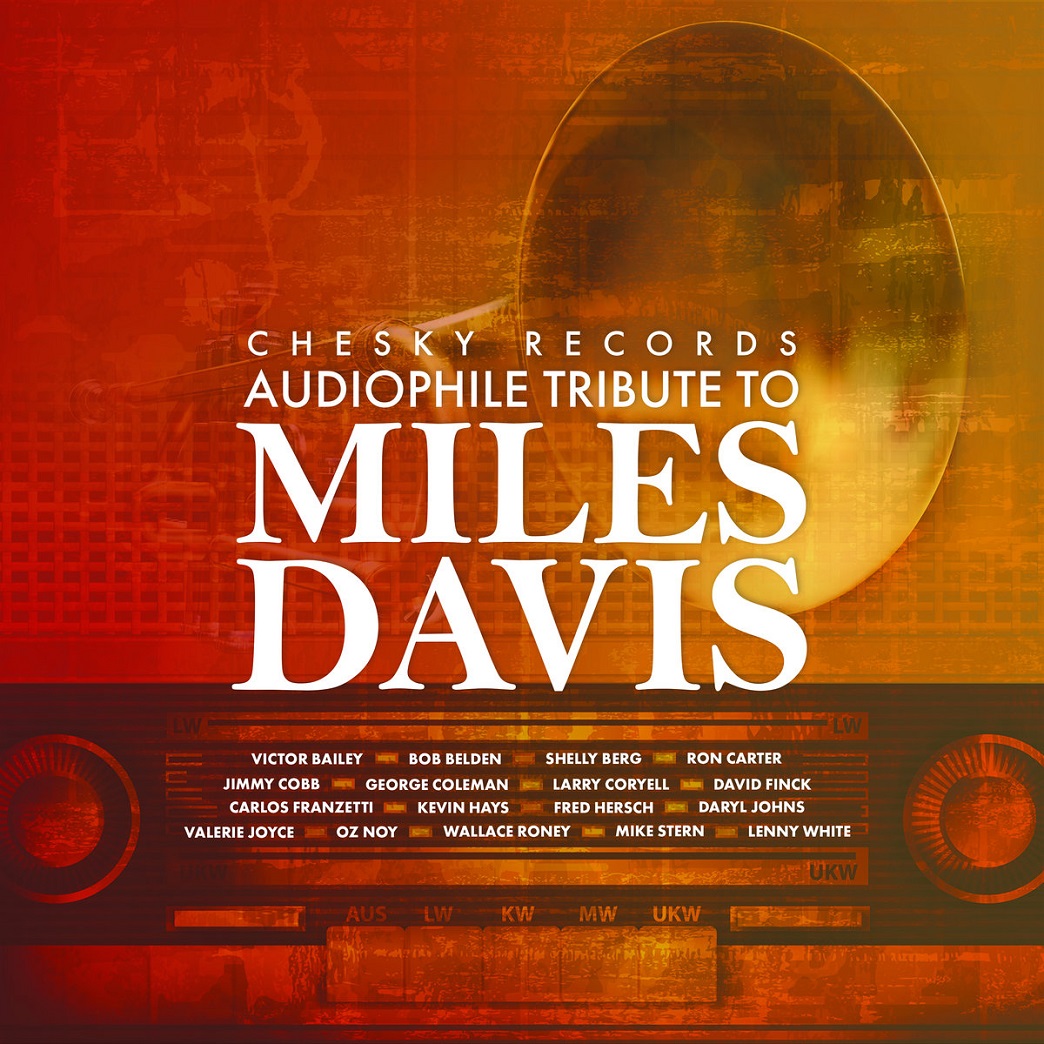
Various Artists - Chesky Records Audiophile Tribute to Miles Davis (CHESKY RECORDS 2018)


Miles Davis is synonymous with the history of Jazz. With a discography that includes over 80 albums, Davis' catalog is as expansive as it is timeless. On this Chesky Records compilation, we've assembled Jazz luminaries' interpretations of his works in tribute to the immortal greatness of Miles Davis. Add to the beautiful music that it was pristinely captured for an audiophile audience, and you have a classic album for the ages.

1. Shh Peaceful 11:21
Wallace Roney, Bob Belden, Oz Noy, Kevin Hays, Daryl Johns, Lenny White

2. Circle 05:17
Carlos Franzetti

3. So What 06:17
Victor Bailey, Larry Coryell, Lenny White

4. It's About That Time 14:29
Wallace Roney, Bob Belden, Oz Noy, Kevin Hays, Daryl Johns, Lenny White

5. Solar 02:32
Shelly Berg & David Finck

6. Blue In Green 04:31
Valerie Joyce

7. Mademoiselle Mabry 10:05
Wallace Roney, Bob Belden, Oz Noy, Kevin Hays, Daryl Johns, Lenny White

8. Milestones 03:51
The Fred Hersch Trio

9. Blue in Green 07:28
George Coleman, Mike Stern, Ron Carter, Jimmy Cobb

10. All Blues 07:03
George Coleman, Mike Stern, Ron Carter, Jimmy Cobb

11. Eighty One 06:30
George Coleman, Mike Stern, Ron Carter, Jimmy Cobb

12. Freddie Freeloader 06:34
George Coleman, Mike Stern, Ron Carter, Jimmy Cobb

Monday, March 12, 2018

Emmet Cohen - Masters Legacy Series Volume 2 featuring Ron Carter (CELLAR LIVE 2018)


Masters Legacy Series Volume 2 is a record that simultaneously features and pays tribute to Sir Ron Carter. Masters Legacy Series Volume 2 is a record that simultaneously features and pays tribute to Sir Ron Carter. Carter is among the most original, prolific, and influential bassists in jazz. With more than 2,000 albums to his credit, he has recorded with many of music's greats. Here is is accompanying a bright young star on the jazz scene today, Emmet Cohen.

Is there any way you can go wrong when you pick up a record that says Ron Carter on the cover? Especially when he's given the space and respect to do things his way? I think not! An utterly smoking piano trio date that seems to slyly take you on a history trip through jazz, this is the kind of well played date that ranks in the good as it gets pantheon. Killer stuff by pros that are shining. - Chris Spector --Midwest Record

1 All Of You 10:14
2 Opus One 8:42
3 Hindsight 4:25
4 Holy Land 7:17
5 Dear Ruth 3:00
6 It's About Time 7:34
7 Any Old Time 7:16
8 Hatzi Kaddish Intro 1:08
9 Hatzi Kaddish 7:50
10 Light Blue 6:53
11 Ron Carter Speaks 4:02
12 Joshua 7:50

Emmet Cohen - piano
Ron Carter - bass
Evan Sherman - drums

Friday, June 16, 2017

Ron Carter: Golden Striker (Live) with Donald Vega & Russell Malone (Live at Theaterstübchen Kassel) IN+OUT RECORDS 2017


Erst unlängst feierte der am 4. Mai 1937 in Michigan geborene US-amerikanische Bassist RON CARTER seinen achtzigsten Geburtstag. Mit Beiträgen zu mehr als 2.200 Alben ist Carter der meistaufgenommene Bassist der Jazzgeschichte. Anlässlich seines achtzigsten Geburtstags sind nun gleich zwei Live-Alben erschienen: zum einen das mit dem französischen Akkordeonisten Richard Galliano eingespielte „An Evening With Ron Carter & Richard Galliano“, und die uns vorliegende Live-Aufnahme mit Donald Vega am Klavier und Russell Malone an der Gitarre. Beide übrigens mit nur einem Tag Abstand im Theaterstübchen in Kassel aufgenommen. 

Auf einer Gesamtlänge von 68 Minuten glänzt das Trio durch unglaublich tightes Zusammenspiel. Fast will es scheinen - je sparsamer die Instrumentierung, desto brillanter Carters Performance. Bei keinem anderen Track tritt dies so deutlich zu Tage wie auf „Samba de Orfeu“. Die Art und Weise wie das Trio so ganz ohne Schlagzeuger rhythmisch aneinanderklebt zeugt von überragender Meisterschaft. Insbesondere Gitarrist Russell Malone stellt durch sein Rhythmusspiel unter Beweis, warum er ein gern gesehener Sideman von Jazzgrößen wie Diana Krall, Benny Green, und dem unvergleichlichen Jimmy Smith (†  2005) war und ist. 

Unvergessen ist Carters Live Auftritt im Blue Note, dem wir vor einigen Jahren in New York beiwohnen durften. Auch auf  "Golden Striker“ ist es dem Trio gelungen, die einzigartige Atmosphäre eines RON CARTER Konzerts perfekt einzufangen. Ins Kasseler Theaterstübchen passten an den beiden Aufnahmeabenden dem Vernehmen nach gerade mal an die 100 Leute. Und so ist „Golden Striker“ ein intimes Geburtstagsgeschenk an die Fans der Legende geworden.  Um mit Carters Worten in einem renommierten deutschen Jazzmagazin zu schließen: auf "Golden Striker“ erwarten den Hörer „Funken, Rauch, Flammen, Freude und eine Menge Freundschaft“. 

1. Laverne Walk [Live] 12:16
2. Candle Light [Live] 6:47
3. Golden Striker [Live] 7:46
4. Samba de Orfeu [Live] 7:20
5. Eddie's Theme [Live] 9:14
6. A Nice Song [Live] 7:26
7. My Funny Valentine [Live] 10:44
8. Cedar Tree [Bonus Track] [Live] 6:26

Donald Vega, piano
Russell Malone, guitar

Friday, February 24, 2017

Ron Carter & Richard Galliano - An Evening With (Live at the Theaterstübchen, Kassel) 2017


Sie könnten es sich wesentlich einfacher machen, gerade in ihrem Alter, mit ihrer Reputation. Etwas spielen, das die Leute mit ihnen identifizieren: Locker swingenden Mainstream, fließende Musette. Hello Mr. Carter, nice to meet you! Bonjour Monsieur Galliano, comment allez vous? Jeder bleibt bei sich, lässt sich bejubeln und feiern; der eine in den Jazzclubs von Downtown, der andere in den Sälen nahe der Seine. Doch wer die beiden „partners in crime“ respektive „partenaires dans le crime“ kennt, der weiß zur Genüge, dass sie zeitlebens das Risiko suchten wie Adrenalin-Junkies, das Abenteuer Musik niemals von der sicheren Seite her angingen, sondern immer hinter den eigenen Horizont gelangen wollten. Vielleicht ist es Neugier, vielleicht aber auch die Klugheit, schon früh begriffen zu haben, dass die Beschränkung auf sich selbst niemanden voran bringt, sondern eher zu Stillstand, manchmal gar zu Rückschritt führt.

Also ließen sich Ron Carter und Richard Galliano zum zweiten Mal nach 1990, als sie ihr gefeiertes Album „Panamanhattan“ in Paris einspielten, auf das Wagnis einer interkontinentalen Kollaboration ein. Hier der französische Akkordeonmeister, dessen Finger mit akrobatischer Leichtigkeit über die Tastatur fliegen und das Instrument in Melancholie weinen oder vor Freude jubilieren lassen.


Dort die amerikanische Bassinstanz, deren tief gestimmte Saiten mehr als 2500(!) Einspielungen veredeln und der zu den Eckpfeilern des Gesamtkunstwerks von Miles Davis, Eric Dolphy, Archie Shepp, Herbie Hancock, Aretha Franklin, Roberta Flack und Antonio Carlos Jobim zählt. Zwei, die in ihrer eigenen Welt längst Heldenstatuts erlangt haben und eigentlich nur verlieren könnten, wenn sie das Terrain des jeweils anderen betreten. „Glaub mir, es gibt nichts Wahrhaftigeres als mit einem Zocker auf die Bühne zu gehen“, schwärmt Carter von der aufgefrischten Liaison mit seinem gallischen Kumpel. Den einst verlorenen gegangenen roten Faden entdeckten beide im März 2016 bei der Jazz Woche in Burghausen als kleines Intermezzo im Rahmen eines gemeinsamen Auftritts mit der WDR Big Band wieder. Den vorläufigen Höhepunkt bildete dann die Aufnahme im Theaterstübchen in Kassel am 29. Oktober. Galliano erinnert sich: „Bevor wir loslegten, sagte ich zu ihm: ´Da kann du mal sehen: 27 Jahre sind vergangen, wir sind immer noch dieselben und ich spiele immer noch dasselbe Akkordeon. Worauf Ron nur entgegnete: „Und wir haben immer noch dieselben Finger!“

Mit diesen 20 flinken Werkzeugen bewegen sich die beiden Protagonisten des musikalischen Joint Venture ohne Berührungsängste aufeinander zu. Keiner verharrt in seiner angestammten Position. Wie zwei furchtlose Alpinisten balancieren sie über dem gähnenden Abgrund und vollführen waghalsige Manöver, springen gegenseitig immer wieder in die Bresche. Je länger die intimen Wanderungen voller subtiler Zwischentöne und feinsinniger, tänzerischer Eleganz dauern, umso größer scheint die Vertrautheit zu werden. Vier Carter-Kompositionen („Einbahnstrasse“, „Blues For D. P.“, „Ah Rio“, First Trip“), vier Stücke von Galliano („Tea For Toots“, „Billie“, „Waltz For Nicky“, „Tango For Claude“), für jeden ein Solo („You Are My Sunshine“ und „Aria/Libertango“): Nichts hat sich verändert. „Richard ergreift wirklich jede rhythmische und harmonische Gelegenheit“, wundert sich der Amerikaner über seinen französischen Partner.


Und der kontert galant: „Ron sieht immer noch so jung, frisch und smart aus wie vor drei Jahrzehnten. Und er ist nach wie vor enthusiastisch, unkompliziert und kommt ohne Umschweife auf den Punkt.“ Selten passte ein häufig gedankenlos gebrauchtes Bild besser, als an diesem ganz besonderen Abend: Ron Carter und Richard Galliano kreieren ein universelle musikalische Sprache, deren Vokabeln aus Noten bestehen. Ein risikoloser Genuss.

01. Einbahnstrasse 5:56
02. Tea for Toots 6:18
03. Billie 5:51
04. Waltz for Nicky 5:13
05. You Are My Sunshine 5:39
06. Tango pour Claude 4:24
07. Blues for D.P. 4:46
08. Aria / Libertango 5:38
09. Ah, Rio 5:12
10. First Trip 5:15
11. It's About Time - Bonustrack Digital Only 4:45


Wednesday, February 1, 2017

Miles Davis Quintet - Freedom Jazz Dance (The Bootleg Series Vol. 5) SONY MUSIC 2016 (3 CD)


A 3CD box set collection chronicling Miles’ musical evolution in the studio from 1966-1968 working with his “second great quintet,” the latest edition in Columbia/Legacy’s acclaimed Miles Davis Bootleg Series provides an unprecedented look into the artist’s creative process, drawing on full session reels including all rehearsals, partial and alternate takes, extensive and fascinating studio conversation and more.

Celebrating the 50th anniversary of Miles Smiles, the groundbreaking second studio album from the Miles Davis Quintet–Miles Davis (trumpet), Wayne Shorter (tenor saxophone), Herbie Hancock (piano), Ron Carter (bass) and Tony Williams (drums)–this definitive new collection includes the master takes of performances which would appear on the Miles Smiles (1967), Nefertiti (1968) and Water Babies (recorded 1967, released 1976) albums alongside more than two hours worth of previously unreleased studio recordings from original sessions produced by Teo Macero (with the exception of “Fall,” produced by Howard A. Roberts).

“Circle,” “Orbits,” “Dolores” and “Freedom Jazz Dance” were recorded at the historic Columbia 30th Street Studio in New York City on October 24, 1966. “Gingerbread Boy” and “Footprints” were recorded at the same location the following day, October 25, 1966. Full session reels – every second of music and dialogue – that were taped for the Miles Smiles album are included. Prior to this the only material ever released from the classic album were the master takes for the six songs. Never before have the full session reels for an entire Miles Columbia album been released, here providing an in-depth look at the studio process of one of jazz’s greatest bandleaders, and arguably the greatest small jazz group ever.

“Masqualero”, heard on the set in a previously unreleased alternate take, was recorded at Columbia 30th Street Studio on May 17, 1967. “Water Babies” and “Nefertiti” were recorded there on June 7, 1967. “Fall” was cut at the Columbia studio on July 19, 1967. Complete session reels for “Water Babies”, “Nefertiti” and “Fall” are included in the box.

“Country Son”, heard in a unique previously unreleased rhythm section only rehearsal, was recorded at Columbia Studio B in New York City on May 15, 1968.


Miles Davis Quintet: Freedom Jazz Dance: The Bootleg Series, Vol 5 box set was produced for contemporary release by the multi Grammy Award winning team of Steve Berkowitz, Michael Cuscuna and Richard Seidel. The album was mixed from the original 4-track tapes and mastered by Grammy Award winning engineer Mark Wilder, Battery Studios, New York City, July 2016.

In addition to more than two hours of previously unreleased studio sessions, the collection includes “Blues in F (My Ding),” a rare and unique home recording featuring Miles, demonstrating on piano a new blues he was working on to Wayne Shorter.

Miles Davis Quintet: Freedom Jazz Dance: The Bootleg Series, Vol 5 includes revelatory behind-the-scenes liner notes penned by Grammy Award-winning Ashley Kahn, author of Kind of Blue: The Making of the Miles Davis Masterpiece, as well as new interviews with Quintet members Ron Carter and Wayne Shorter.

Sourced from original four-track analog session reels and master tapes transferred and mixed in high resolution at 24-bit/192 kHz, Miles Davis Quintet: Freedom Jazz Dance: The Bootleg Series, Vol 5 offers a profound and intimate look at Miles’ creative process in the studio, providing insight into the bold new musical directions Davis and members of his quintet would take as the 1960s drew to a close.


Disc 1

Freedom Jazz Dance (Session Reel)
Freedom Jazz Dance (Master Take)
Circle (Session Reel)
Circle (Take 5)
Circle (Take 6)
Dolores (Session Reel)
Dolores (Master Take)

Disc 2

Orbits (Session Reel)
Orbits (Master Take)
Footprints (Session Reel)
Footprints (Master Take)
Gingerbread Boy (Session Reel)
Gingerbread Boy (Master Take)
Nefertiti (Session Reel)
Nefertiti (Master Take)

Disc 3

Fall (Session Reel)
Fall (Master Take)
Water Babies (Session Reel)
Water Babies (Master Take)
Masqualero (Alt. Take 3)
Country Son (Trio Rehearsal)
Blues in F (My Ding)
Play Us Your Eight (Miles Speaks)

Wayne Shorter, tenor saxophone
Herbie Hancock, piano
Ron Carter, bass
Tony Williams, drums