Showing posts with label John Ellis. Show all posts

Tuesday, December 14, 2021

Peter John Stoltzman, John Ellis, Dru Heller, Gonzalo Teppa - Spiraling Inward (December 2021)

Stoltzman is a pianist, composer, and educator. He has toured and recorded with Steve Gadd, Eddie Gomez, made Hip-Hop tracks for Warner Bros., played Carnegie Hall and the Hollywood Bowl with his father, clarinetist Richard Stoltzman.

1. Soul of the Matter 07:14
2. McKinley 07:24

Recorded and Mixed at Mighty Fine Productions, Denver CO
Mastered by PJS

Friday, September 17, 2021

Jon Gordon - Stranger Than Fiction (September 17th 2021 via ArtistShare)

Jon Gordon is one of the most accomplished and in demand alto and soprano saxophonists of his generation. A past winner of the Thelonious Monk International Jazz Competition, Gordon has made multiple appearances in Downbeat Magazine’s critics poll over the years. His past recordings havebeen consistently celebrated for their unique brilliance.

Gordon’s new ArtistShare release Stranger Than Fiction is a nonet project of all original music. It features faculty members and former students from the University of Manitoba jazz program - where Gordon teaches - alongside special guests from across North America, including jazz greats Orrin Evans, John Ellis, and Alan Ferber, among others. Stranger Than Fiction is an incredible addition to an already remarkable catalogue of music.

“Jon Gordon is one of the greatest alto players ever.”
Phil Woods

“Gordon has embraced the history of his instrument, carrying with it the ability to extend music as a universal language.”
Wayne Shorter

Stranger Than Fiction will be released worldwide
on Friday, September 17th 2021 via ArtistShare.
1. Pointillism 3:32
2. Havens 7:15
3. Stranger Than Fiction 7:19
4. Dance 7:24
5. Sunyasin 1:28
6. Counterpoint 6:59
7. Bella 7:50
8. Modality 7:04
9. Steps 0:51
10. Waking Dream 4:32

Jon Gordon - Alto Saxophone
Derrick Gardner - Trumpet
Alan Ferber - Trombone
Reginald Lewis - Tenor Saxophone (1, 7-10)
Tristan Martinuson - Tenor Saxophone (1-6)
John Ellis - Bass Clarinet (1-4, 6-8)
Anna Blackmore - Bass Clarinet (1, 5, 9, 10)
Jocelyn Gould - Guitar and Vocals (1, 5)
Larry Roy - Guitar Solo (6)
Will Bonness - Piano (all but 3 and 7)
Orrin Evans - Piano (3, 7)
Julian Bradford - Bass
Fabio Ragnelli - Drums

Helen Sung with special guest Harlem Quartet - Quartet+ (September 17, 2021 Sunnyside Records)

Pianist/composer and 2021 Guggenheim Fellow Helen Sung celebrates the work of influential women composers on her latest album Quartet+, crafting new arrangements of tunes by Geri Allen, Carla Bley, Mary Lou Williams, Marian McPartland and Toshiko Akiyoshi while carrying the tradition forward with her own stunning new works. Co-produced by violin master Regina Carter, the album pairs Sung’s quartet with the strings of the GRAMMY® Award-winning Harlem Quartet in an inventive meld of jazz and classical influences.

Available September 17, 2021, on Sunnyside Records, Quartet+ was conceived and produced during the Covid-19 pandemic and made possible by a grant from the NYC Women’s Fund for Media, Music and Theatre with additional support from the Aaron Copland Fund for Music. It allows Sung, who also studied classical violin, to realize a long-held dream of writing for strings while maintaining the improvisatory spark of her stellar quartet, featuring saxophonist and flutist John Ellis, bassist David Wong, and drummer Kendrick Scott.

The double quartet format is the latest evolution of Sung’s career-long search for inspiration beyond the boundaries of jazz. Her classical background emerged before on 2007’s Sungbird (After Albéniz) – the title track of which is reprised for Quartet+ – a thrilling dialogue between modern jazz and 19th century Romanticism. Her most recent album, Sung With Words, incorporated the words of poet Dana Gioia, while upcoming projects delve into the pianist’s Asian-American heritage and the intersection of jazz and neuroscience.

While the Houston native veered away from her classical training after undergraduate studies at the University of Texas at Austin, Sung admits that the early influence has maintained a strong pull on her musical thinking. “I guess I can't escape my classical heritage,” she says with a laugh. “It's definitely part of how I hear and how I write.”

It also gives her a connoisseur’s ear for the many ways in which jazz and classical music have converged, not always successfully. “Since I also studied violin, I'm really picky about how I want it to sound in a jazz setting,” she explains. “When I first heard Regina Carter she was playing with Kenny Barron at the Blue Note, and I remember thinking, ‘That's how I would want to play jazz violin.’ When I heard the Harlem Quartet I had that same feeling.”

Sung crossed paths with the acclaimed quartet during a cross-genre performance with clarinetist Eddie Daniels at Jazz at Lincoln Center in 2018. She immediately approached the musicians after the show to suggest a collaboration. The opportunity came with the NYC Women’s Fund grant, which also gave the project a direction Sung had not previously ventured into with her own music, following on work undertaken with Terri Lyne Carrington’s Berklee Institute of Jazz and Gender Justice and Roxy Coss’ Women In Jazz Organization.

“In the past I tried to avoid the whole ‘women in jazz’ thing because I felt music should speak for itself,” she says. “But as I've gotten older, I’ve begun to feel that’s not the most complete way to deal with it. So I’m starting to grapple with the issues, and will do my best to approach things with honesty and candor.”

It’s hardly the first time she’s explored the work of the composers represented on Quartet+, however. In 2007 she won the Kennedy Center’s Mary Lou Williams Jazz Piano Competition and has since paid tribute to the history-spanning pianist at Harlem Stage and on NPR. She was a guest on Marian McPartland’s revered Piano Jazz in 2006 and has performed in tributes to Geri Allen in the wake of Allen’s untimely death in 2017.

Allen’s “Feed the Fire” begins the album in dramatic fashion, with a striking new counter melody added to the original’s blistering rhythms. Williams’ “Mary’s Waltz” is refashioned in a way that draws from the classical tradition as well as the blues, a multi-faceted approach that the history-spanning composer would surely have appreciated. Sung heard a symphonic element to Akiyoshi’s “Long Yellow Road” which she elaborated on in her arrangement, while “Wrong Key Donkey” vividly captures the originality and eccentricity of Carla Bley’s complex whimsy.
photo by Margot Schulman

Sung’s homage to McPartland fuses a string quartet rewrite of “Melancholy Mood” with a group improvisation on “Kaleidoscope,” the theme from her iconic radio show. These pieces are interspersed with snippets of Dr. Billy Taylor’s “A Grand Night for Swinging.” Sung discovered the piece from a Mary Lou Williams’ recording, and decided to add it to honor Taylor’s early championing of female jazz musicians, which included founding the Mary Lou Williams Women In Jazz Festival.

In addition, Sung’s original composition “Coquette” was inspired by one of German composer Clara Schumann’s “Romance” pieces, with Ellis’ playful, lilting flute flirting with the elegant strings. “Lament for Kalief Browder,” dedicated to the Bronx teenager who committed suicide following his arduous three-year imprisonment without trial at Rikers Island, was previously recorded on Sung With Words. Sung had long envisioned the piece with strings, realized here in a breathtaking rendition. “Sungbird,” meanwhile, is reimagined from the original’s Latin-inflected jazz quintet version as a passionate dance sans drums.

While the entire album was created during the pandemic, the two-movement “Temporality,” a Jazz Coalition commission, directly addresses the strange year (and counting) we’ve all just come through. “The way I experienced time became very elastic during the pandemic,” Sung says. “Each day felt interminably long, one blurring into the next, and then suddenly an entire month had passed! ‘Time Loops’ is about that, while ‘Elegy for the City’ is my lament for the terrible human loss suffered by New York and other cities.”

Despite the stresses of the pandemic, Sung is enjoying a particularly fruitful period, with several fascinating projects in the works aside from the release of Quartet+. She’ll apply her 2021 Guggenheim Fellowship to a multi-movement piece for big band slated for completion in 2022. With a Chamber Music America Digital Residency grant, she’s producing a series of events this year using the tragic recent attacks on the AAPI community as a catalyst for interdisciplinary events with her quartet and a poet, a DJ and an installation artist. Sung also received a New Music USA 2021 Music Creator Development Fund grant for a collaborative project with dancer and neuro-rehabilitation researcher Miriam King to create a dance program with original music for dementia/Alzheimer’s patients. Sung remarks, “If I’ve learned anything this past year and a half, it’s to not take anything for granted, be it people, relationships, opportunities…so I’m jumping in with arms wide open. I want to swallow life whole!” 

1. Feed the Fire
2. Mary's Waltz
3. Coquette
4. Elegy for the City
5. Time Loops
6. A Grand Night for Swinging (Intermission)
7. Long Yellow Road
8. Wrong Key Donkey
9. Melancholy Mood
10. Kaleidoscope
11. Lament for Kalief Browder
12. Sungbird
13. A Grand Night for Swinging (Reprise)

Helen Sung - piano
John Ellis - tenor sax (1, 5, 6, 7, 8), soprano sax (11, 13) & flute (2, 3, 4)
David Wong - bass
Kendrick Scott - drums

Harlem Quartet:
Ilmar Gavilan - violin I
Melissa White - violin II
Jaime Amador - viola
Felix Umansky - cello

Friday, August 13, 2021

John Ellis / Adam Levy / Glenn Patscha - Say It Quiet (August 13, 2021 Sunnyside Records)

Decades of friendship and the crossing of paths in the music industry does not necessarily guarantee opportunities for intimate, meaningful collaboration. Professional musicians know that the balance between making a living and pursuing dream projects usually tilts toward whatever keeps a roof over one’s head. But every so often, the chance to get a project together that is musically and emotionally rewarding comes about. Such opportunities must be grabbed.

The collaborative recording, Say It Quiet, by longtime friends John Ellis, Adam Levy, and Glenn Patscha is the result of taking advantage of such an opportunity. These three brilliant, busy musicians take the time to put together a gorgeously crafted collection of songs chosen to showcase their sympathetic personalities and musical approaches.

The Canadian born and Nova Scotia based Patscha was already working professionally before relocating to New Orleans to study with the late, great Ellis Marsalis. Patscha became one of the stalwart jazz pianists on the scene, where he met the future woodwind ace, John Ellis, who came from North Carolina. It wasn’t long before Patscha looked to the world of rock and pop music to make a living, leaving the jazz scene to record and tour with the likes of Marianne Faithful, Levon Helm, Sheryl Crow, and Bonnie Raitt.

In the meantime, Ellis established himself as one of the most in demand woodwind players in New York in the fields of jazz and pop music. Through an introduction by Charlie Hunter, Ellis met guitarist and Californian Adam Levy, who has toured and recorded with both Norah Jones and with Tracy Chapman. At the same time, Patscha had created his band Ollabelle and would cross paths with Levy at Jones’s beloved Living Room residency in New York City or the Carriage House in Boston, striking up a friendly bond.

Regular contact allowed the three to consider possible musical alliances, but it was a chance performance with Patscha as a part of Ellis’s Double Wide band that led to a revelation for the keyboardist. Having just beaten cancer, Patscha reexamined what his musical goals were and reunited with aspirations in jazz and instrumental music, having missed playing in such an open fashion with Ellis. Levy was a natural choice to be included in the project, as their musical styles and affiliations crossed over in many ways, though the three had never previously recorded all together. It was apparent to them that they would have infinite abilities to explore the possibilities in the music but it was their capacity to squeeze the soul out of the music that made the teaming so essential.

Once the three united, they decided to bring together material in a sort of potluck dinner style, with each member suggesting music they would like to play. Because of their strong pop and jazz roots, they were not overly concerned with labels for the music. The group knew that they wanted to remain instrumental only, allowing their instruments to be their voices and define the textures of the music.

In a perfect world, the group would have found a way to have a residency in a local venue and develop material as members brought new pieces in from week to week. Levy was in Los Angeles at the time and much of their initial brainstorming came from text conversations, proposing tunes and ways to arrange them. Their book kept growing and growing until a recording was inevitable.

Ellis, Levy, and Patscha convened together with bassist Chris Morrissey and drummer Dan Rieser during May 2019 at Brooklyn Recording. They brought in an eclectic collection of originals and choice cuts from some favorite composers. Using their studio time to their advantage, the group put their producing chops, honed from decades of studio time, to work, putting elements into songs that called for it, whether through layering of parts or through overdubbing. The studio’s wealth of instruments and Ellis’s own arsenal of woodwinds, including saxophones, clarinets, and flute, provided a vast palette of sounds for the ensemble to construct their own aural world from.

The recording begins with Patscha’s “Bahia,” a homage to legendary singer Milton Nascimento that shows the depth of the keyboardist’s appreciation for Brazilian music from his early forays to ultimately performing at the well-known Bourbon Street club in Sao Paulo. Stevie Wonder’s “If It’s Magic” was arranged by Ellis, whose melancholy clarinet, combined with Levy’s acoustic guitar, find beauty in the song’s simplicity. Levy brought in Abdullah Ibrahim’s “Barakaat,” a piece with intriguing movement that slowly reveals itself over the steadiness of Morrissey and Rieser’s beat. Patscha and Ellis brought in a favorite of their mentor, Ellis Marsalis, the brilliant James Black written blues, “Magnolia Triangle.”

Patscha wrote “Eleanor” for his dearly departed mother, a woman who was restless but quiet, an essence he captured in the piece and heightened by the warm but constant sound of his Oberheim synthesizer. Inspired by Grant Green and Herbie Hancock’s tension building rendition, Levy suggested “Motherless Child” to provide an opportunity for the group to set their teeth into one of Rieser’s propulsive grooves. The group comes together perfectly on Randy Newman’s “Let’s Burn Down the Cornfield,” a simple tune that Patscha had always loved.

Ellis’s glorious “Better Angels” takes its name from a line from Abraham Lincoln’s first inaugural address, a gospel-tinged musical reminder of how relevant that message remains today. Ellis’s bittersweet “Dogwood” was a tune he could never find a home for but with this ensemble, and guest Stefan Bauer’s lush vibes work, the piece truly blossoms. The recording concludes with Patscha’s “Portage La Prairie,” a sauntering blues that takes its name from a Manitoba town where Patscha had one of his first (and most harrowing) professional gigs.

Recording together for the first time, John Ellis, Adam Levy, and Glenn Patscha have created a singular recording with Say It Quiet, a record that utilizes the trio’s full musical potential across genres to create an unassuming, instrumental album of pure music. 

1. Bahia
2. If It's Magic
3. Barakaat
4. Magnolia Triangle
5. Eleanor
6. Motherless Child
7. Let's Burn Down the Cornfield
8. Better Angels
9. Dogwood
10. Portage La Prairie

John Ellis - tenor saxophone, clarinet, bass clarinet & alto flute
Adam Levy - electric & acoustic guitars
Glenn Patscha - piano, organ & keyboards
Chris Morrissey - bass
Dan Rieser - drums
Stefan Bauer - vibraphone (2, 9, 10)
Erin Donovan - vibraphone (1)

Friday, August 6, 2021

Pete Rodriguez - Obstacles (August 6, 2021 Sunnyside Records)

Life is a journey filled with ups and downs. The trials and tribulations the traveler encounters shape his or her personality and relationships, determining the kind of person he or she is. It is healthy to measure both the positives and the negatives, as even bad things can eventually work for the good.

Trumpeter/composer Pete Rodriguez has had an eventful life. Born in New York and raised in the Bronx and Puerto Rico, Rodriguez, son of the famed salsero Pete “El Conde” Rodriguez, has been ensconced in music since birth. His love for music set him on a path to make it his life’s work, whether through performing or teaching. Rodriguez’s new recording, Obstacles, was recorded as a way to confront his obstacles and working through them in a healthy way, by channeling his emotions and feelings into art.

Before college, Rodriguez spent four years in the army and then moved to New Jersey, where he attended Rutgers University in the 1990s to broaden his musical base into the realm of jazz music. Instructors like bassist Larry Ridley, pianist Kenny Barron, guitarist Ted Dunbar, trumpeter William Fielder, and saxophonist Ralph Bowen were instrumental in building both his love for jazz and his chops. At the same time, Rodriguez began to perform professionally in the vibrant salsa scene, which he had already become well immersed in because of his father and his Godfather, Johnny Pacheco.

While living in New York, Rodriguez familiarized himself with many of the local jazz players, but it wasn’t until he was on his first tour with Eddie Palmieri that he met pianist Luis Perdomo. It would be a couple years until he and Perdomo became fully acquainted in the City. It was Freddie Hubbard who had told Rodriguez that the most important thing in picking a band would be to have a good rhythm section. Having already found a great pianist, he asked Perdomo who else he would suggest.

Perdomo suggested drummer Rudy Royston, a true monster behind the kit, and they also brought in bassist Ricky Rodriguez, who the trumpeter already knew could handle any music put in front of him. Already familiar with the rest of the group, saxophonist John Ellis fit in perfectly as a counter voice to the leader’s trumpet. From there, Pete Rodriguez never needed to look to other musicians for his ensemble and made a number of recordings featuring derivations of this group.

Growing up in the City presented many challenges for a Latino; Rodriguez was regularly profiled by police. In 2000, his father passed away, which led Rodriguez to stop playing trumpet for three years. His work as a physical therapist assistant led him to meeting high level runners and bicyclists, activities that he would adopt and that would bring him out of his depression. The birth of Rodriguez’s daughter led to fluctuations in his family’s life and his practice routine, something that was difficult to adapt to. Rodriguez and his family moved to Austin, Texas ten years ago. He took a teaching job at a local State University, where he faced a number of hurdles and individuals who got in the way of his success and eventually led to his dismissal.
All of these events could have taken a real toll on Rodriguez, but he decided to use them as inspiration. He began to compose pieces that conveyed his feelings about situations and individuals who stood in his path. The resulting pieces were composed and presented to knock down another stigma he faced as a Latin American jazz player, frankly, that he could only play Latin jazz. Obstacles is a straight-ahead jazz album that swings with the best of them.

Recording was its own challenge, as Rodriguez had to fly the band to Texas and put them up locally. The group was only able to rehearse briefly before they put the music to tape. Rodriguez’s trust in, and the incredible ability of, these musicians insured the beauty and strength of the music they put down.

The recording begins with “50,” a contrafact of John Coltrane’s “Moment’s Notice” that Rodriguez wrote to celebrate his 50th birthday and that shows his penchant for visualizing his playing in line with that of a tenor saxophonist. The modal “Abraham” takes its name from the work of inspirational speaker Esther Hicks, who promotes positive thinking to reach goals. Rodriguez is hot and cold in his estimation of this model, he reflects that in the piece by remaining meditative and allowing the other members to solo, including a lovely turn on Rhodes by Perdomo. The snappy “El Proceso” came about when Rodriguez challenged himself to write a tune a week for six weeks while hosting a local jam session. The piece was built upon and built upon, until during one performance, Ellis suggested to play the melody up an octave, thus continuing the composing process.

The brief “Academic Backstabbing 101” is written with the character of a former mentor turned backstabber in mind, done here by eschewing improvisation (the individual in question can’t) and lithely playing over a piece inspired by Chuck Wayne’s “Solar” (a tune the individual believed was the most difficult in the jazz lexicon to play). “Mi Ritmo” is a lively attempt to make Thelonious Monk proud without being imitative over set rhythm changes. The lovingly composed “Triple Positive” is a tribute to a close family friend who passed away from breast cancer, her positive and loving spirit living on in Rodriguez’s warm trumpet melody.

The title track is based on Gigi Gryce’s “Minority” as played by Rodriguez’s hero, Clifford Brown. Melodies on top of melodies maintain the intensity on “Obstacle,” a reflection of tension and message of the tune’s inspiration. The warm tones of Perdomo’s Rhodes set the scene for Rodriguez’s “Someone Else,” a lovely, winding ballad. The aggressive “Mary Dick Ellen” is a musical smudge on a former colleague who used racist tropes when dealing with Rodriguez, so he uses her musical limitations in response. Rodriguez uses the same method on the quasi-blues, “FU Jon,” the unrelenting bassline chasing the detractor while Rodriguez abstains.

Pete Rodriguez has found a perfect, therapeutic method to get beyond the troubles that he faces. He makes music to confront it. Obstacles is a tremendous example of putting negative energy to use to generate positive (and extremely listenable) results. 

1. 50
2. Abraham
3. El Proceso
4. Academic Backstabbing 101
5. Mi Ritmo
6. Triple Positive
7. Austin & Ally
8. Obstacles
9. Someone Else
10. Mary Dick Ellen
11. FU John

Pete Rodriguez - trumpet
John Ellis - tenor & soprano saxophone
Luis Perdomo - piano & keyboards
Ricardo Rodriguez - bass
Rudy Royston - drums

Tuesday, August 3, 2021

Massimo Biolcati - Momenta (2021)

A first-call accompanist, producer, composer and bandleader, New York bassist Massimo Biolcati is known as a founding member of Gilfema, the acclaimed collective trio with Hungarian drummer Ferenc Nemeth and West African guitarist and vocalist Lionel Loueke.

1. Dario Immaginario 06:07
2. Adaptation 07:16
3. Emma's Dilemma 06:41
4. Love Is Stronger Than Pride 05:00
5. Along Came Betty 07:25
6. Estate 05:14
7. Momenta 05:34
8. Gumbo Blues 05:40
9. In the Wee Small Hours of the Morning 04:13

Massimo Biolcati - Bass (all tracks)

Tracks: 1, 4, 5, 7, 9
Phil Dizack - Trumpet
Kevin Hays - Piano
Kendrick Scott - Drums
Recorded at Bunker Studios in Brooklyn, NY by Nolan Thies on February 27, 2020.

Track 3
Jaleel Shaw - Alto Sax
Lex Korten - Piano
Clarence Penn - Drums
Recorded at Bunker Studios in Brooklyn, NY by Alex Conroy on February 8, 2020.

Tracks: 2, 6, 8
John Ellis - Tenor Sax
Mike Moreno - Guitar
Rodney Green - Drums
Recorded at Bunker Studios in Brooklyn, NY by Aaron Nevezie on November 4, 2020.

Produced by Massimo Biolcati
Mixed and mastered by Dave Darlington at Bass Hit Recording, New York, NY
Cover artwork by María José Benvenuto
Cover design by Miranda Danusugondo

Thursday, June 17, 2021

Dara Tucker - Dreams of Waking: Music For a Better World (2021 Green Hill Music)

Award-Winning Vocalist Dara Tucker Announces the Release of Her Transcendent New Album, Dreams of Waking: Music For a Better World via Green Hill Music

Green Hill Music is proud to announce the May 28th, 2021 release of Dreams of Waking: Music For a Better World, the new album by consummate vocalist, songwriter and bandleader Dara Tucker. With fresh, inspired arrangements of classic singer-songwriter and soul compositions of the protest era, Tucker’s powerful new release gives voice to the cry for social justice and change that has swept across the United States in the new decade. Songs from such legendary songwriters as Stevie Wonder, Donny Hathaway and Paul Simon are presented through a jazz lens with a compelling performance from the vocalist and her illustrious band of musicians. Dreams of Waking: Music for a Better World features Tucker alongside pianists Cyrus Chestnut and Sullivan Fortner, bassists Dezron Douglas and Vicente Archer, drummers Johnathan Blake and Joe Dyson along with saxophonist John Ellis and trumpeter Giveton Gelin.

“Dreams of Waking refers to the hope that our society will develop an awareness of the inequities that still exist,” Tucker said. “It’s the dream that we will become fully conscious and attuned to the hopes, dreams and needs of every human being.”

As a songwriter, Tucker is no stranger to composition as commentary as she teamed up in a similar spirit with blues & Americana artist Keb Mo’ to co-write the title track to his 2020 Grammy-winning album Oklahoma. Tucker’s sole original composition for her new album, “Do We Sleep?” issues a passionate call for cultural awakening that echoes the title of the album. “Many of my original songs are internal statements that help to chronicle my growth, experiences and evolution that I hope will inspire others,” Tucker said. “This time, I decided to focus on the external. Are we really awake? What are we doing to give attention to the cries of injustice and inequality, or are we complicit by silence, ignorance or lack of interest and awareness?”
Drawing from the 1960’s and 1970’s, an era that holds special significance to her musical journey, Tucker’s new album brings life to a collection of songs that reaffirm her belief in our shared humanity. The jazz waltz reimagining of James Taylor’s, “Secret O’ Life” and pianist Cyrus Chestnut’s arrangement of Donny Hathaway’s, “Someday We’ll All Be Free” allows Tucker to soar, sonically capturing the spirit of hope and reflection.

The Motown-meets-New Orleans buoyancy of Stevie Wonder’s, “You Haven’t Done Nothin,’” arranged by saxophonist John Ellis, blends party with protest, while Sullivan Fortner’s recast of Paul Simon’s, “Bridge Over Troubled Water” flows both turbulently and steadily with Tucker at the helm.

Dara Tucker is making her mark in the world of organic, heartfelt music by blending the melodic and lyrical richness of the central plains with the soulful strains of the African American experience. Her eclecticism is guided by the diversity of her narrative. Born in Tulsa, Oklahoma to a family of singers and ministers, Tucker and her siblings traveled across the US singing with their parents. From there, Tucker has experienced a diverse array of locales that she has called home including Interlaken, Switzerland; Nashville, and finally, New York City. Tucker has since toured nationally with her own bands and also with renowned hybrid guitarist Charlie Hunter.

Dreams of Waking: Music For a Better World is her latest in a compendium of innovative studio releases. The resulting 12-song project, recorded by GRAMMY-winning engineer Mike Marciano and produced by Greg Bryant, delves deeply into the national Zeitgeist with a clarion call to all agents of change to build a world that embraces the dignity and humanity of all people.

1. Secret O' Life (James Taylor) 4:02
2. You Haven't Done Nothin' (Stevie Wonder) 4:43
3. Someday We'll All Be Free (Donny Hathaway/Edward Howard) 4:00
4. Do We Sleep? (Dara Tucker) 4:13
5. Bridge Over Troubled Water (Paul Simon) 8:02
6. Make Someone Happy (Jule Styne/Adolph Green/Betty Comden) 5:48
7. What The World Needs Now (Burt Bacharach/ Hal David) 3:50
8. What's Going On? (Marvin Gaye/Renaldo Benson/Al Cleveland) 5:18
9. Love's In Need Of Love Today (Stevie Wonder) 4:12
10. You've Got A Friend (Carole King) 6:12
11. Wade In The Water (traditional arr. David M. Rodgers) 5:47
12. I Think It's Gonna Rain Today (Randy Newman) 4:02

Dara Tucker - vocals (all tracks) & arrangements (1, 6, 12)
Cyrus Chestnut - piano (1, 3, 6, 7, 9, 10, 11) & rhodes piano (3, 10) & arrangements (3, 6, 7, 9)
Sullivan Fortner - piano (2, 4, 5, 8, 12) & rhodes piano (2) & arrangements (5, 8, 12)
Dezron Douglas - bass (1, 3, 6, 7, 9, 10, 11)
Vicente Archer - bass (2, 4, 5, 8)
Johnathan Blake - drums (1, 3, 6, 7, 9, 10, 11)
Joe Dyson - drums (2, 4, 5, 8) & tambourine (2) 
Giveton Gelin - trumpet (2, 4, 5, 8)
John Ellis - tenor saxophone (2, 4, 8) & soprano saxophone (5) & arrangement (2) & horn arrangements (2, 4)

* "You've Got A Friend" & "Wade In The Water" arranged by David M. Rodgers

Recorded November 29th, November 30th & December 1, 2020 at Samurai Hotel Studios, Astoria, NY
Engineered & Mixed by Mike Marciano for Systems Two Recording
Mastered by Mike Haynes for ENSO Mastering
Produced by Greg Bryant for Watchman Music
A & R Direction by Greg Howard for Green Hill Productions
Cover and liner photography by Andreas Hofweber
Makeup: Tanya Alvarado
Album Design by: Chad Smith

Wednesday, March 31, 2021

Dr. Lonnie Smith - Breathe (March 2021 Blue Note)

Breathe captures the Hammond B-3 organ legend Dr. Lonnie Smith during his 75th birthday run at the Jazz Standard in NYC in 2017, the same week he recorded his acclaimed trio album All In My Mind. On this night the good doctor took the stage with an expanded line-up featuring Jonathan Kreisberg on guitar, Johnathan Blake on drums, John Ellis on tenor saxophone, Jason Marshall on baritone saxophone, Sean Jones on trumpet, and Robin Eubanks on trombone. Two additional studio tracks that open and close the album present the unique collaboration between Doc and Iggy Pop including a sublime cover of Donovan’s 1966 hit “Sunshine Superman.”

The legendary Hammond B-3 organist Dr. Lonnie Smith has recorded over thirty albums as a leader, but his favorite setting to document his creativity is live. “It’s so hard to capture what I’m feeling at the moment in the studio,” he says. “Hearing me live is catching me playing in the moment. It’s a good vibe. It’s a loving situation.”

During the 2017 celebration of his 75th birthday, basking in the glow of being named an NEA Jazz Master, Smith settled into the Jazz Standard in New York City for a live recording date. With his steady trio of guitarist Jonathan Kreisberg and drummer Johnathan Blake, the master of improvisational innovation delightfully delivered the spirited All In My Mind album, which was released in 2018.

That celebratory week has now yielded a second fantastic album with Breathe, a dynamic eight-song set that includes six thrilling pieces brimming with foot-tapping grooves, sophisticated harmonic voicings, indelible melodicism, and ethereal atmospherics that were captured on the Jazz Standard stage with the trio as well as an expanded septet. Notably, the album is bookended by two remarkable studio collaborations between Smith and the legendary vocalist Iggy Pop.

“I was playing with my trio at Arts Garage in Delray Beach in Florida,” says Dr. Lonnie, who lives in Ft. Lauderdale. “Iggy would come by and say he wanted to play with me. I let him play slaparoo and he loved it. He enjoyed playing with us. We thought about recording a few songs, so we went in with my trio backing us up, and it worked.”

Pop, Smith, Kreisberg, and Blake headed into a Miami studio with the addition of percussionist Richard Bravo and discovered a unique chemistry that resulted in two striking performances including the album’s opening track “Why Can’t We Live Together,” a 1972 R&B hit by Timmy Thomas that was later recorded by Sade on her 1984 debut album. With its call for unity, the song is given an eased, soulful read by Pop while Smith plays gentle grooves before diving into a juicy solo. “That’s a great tune with a great message,” he says. “It really says something to you. We enjoyed it very much.”
The album closes with Iggy and Dr. Lonnie taking Donovan’s 1966 hit “Sunshine Superman” for a funkified joyride. “Ah, hah!” exclaims Doc. “That’s another good one. You can hear the ones we both like. This fits his voice.”

The entire album is rooted in the deep musical communication Smith has developed with his trio mates over many years. “It’s hard to keep a working group like this,” the good Doctor says. “But my group has been together a long time. It’s a brotherhood. It’s a family. It’s exciting. They’re playing from their hearts. They know what I’m trying to do and enhance what I play. They hear me. I play in the moment all the time, and they’re there for me.”

In the trio takes from the Jazz Standard, Dr. Lonnie’s B-3 sounds like it’s wailing, as on the epic, soulful original “World Weeps” that goes up-tempo with a wall of organ emotion and Kreisberg’s fleet-fingered guitar flight. “It has a New Orleans feel,” says Doc, “like a dirge.”
The trio also takes a playful plunge into Thelonious Monk’s “Epistrophy.” “That’s one of my favorites,” Smith says. “I had to get that in there. It’s a little different, but I think he would have approved of it. There’s funky wisdom.”

The remainder of the album finds the trio expanded to a septet with the addition of John Ellis on tenor saxophone, Sean Jones on trumpet, Jason Marshall on baritone saxophone, and Robin Eubanks on trombone. “Some of my songs need the horns,” Smith says. “I needed that atmosphere.” The lyrical, buoyant “Bright Eyes” is a Dr. Lonnie original that dates back to the days when he played with George Benson. “Too Damn Hot” is another original that starts slowly but then heats up with sizzling solos. “I wrote that song some years ago,” he says. “I like all the surprises. It feels good, almost as if you don’t really know what’s going on.”

Smith’s “Track 9” starts with an edgy horn-filled groove then shifts gears with tempo acceleration that opens into a utopian party. The B-3 maestro steers the proceedings with his bass lines while Jones launches into a scorching solo. “It’s like a train, ‘Track 9.’ It moves like a train. You hear it in the distance, then there’s the horn and the beat is slow then it picks up. I wanted to give it a James Brown feel.”

“Pilgrimage” shines a spotlight on the soulful beauty of vocalist Alicia Olatuja. “Alicia is a helluva singer,” Smith says. “She is something else. The way she sings this song is perfect. She sings it like it’s hers. As her accompanist, my comping was just to lay back and take it easy. I listen carefully, give her what she needs then get the horns to push it. It’s special.”

Breathe is Smith’s third Blue Note album since his 2016 return to the label where he made a name for himself in the late 1960s, first as a sideman with saxophonist Lou Donaldson on soul jazz classics like Alligator Bogaloo, and soon after as a leader with his own classics such as Think! and Turning Point. The 2016 album Evolution marked his Blue Note homecoming, followed by All In My Mind in 2018. His last three albums have all been produced by Blue Note president Don Was. “Don has been hands on, there all the time,” he says. “He believes in you. I’ve worked with producers who don’t understand the musicians they’re working with. But Don, he wants me to be myself, to understand what I like to do. It’s a reminder of the old days when Frank Wolff used to be the same.”

Smith adds, “Blue Note is like family. It’s like I never left. Everybody is great to work with. They give me the opportunity to play my life, to tell my story.”

Tuesday, September 4, 2018

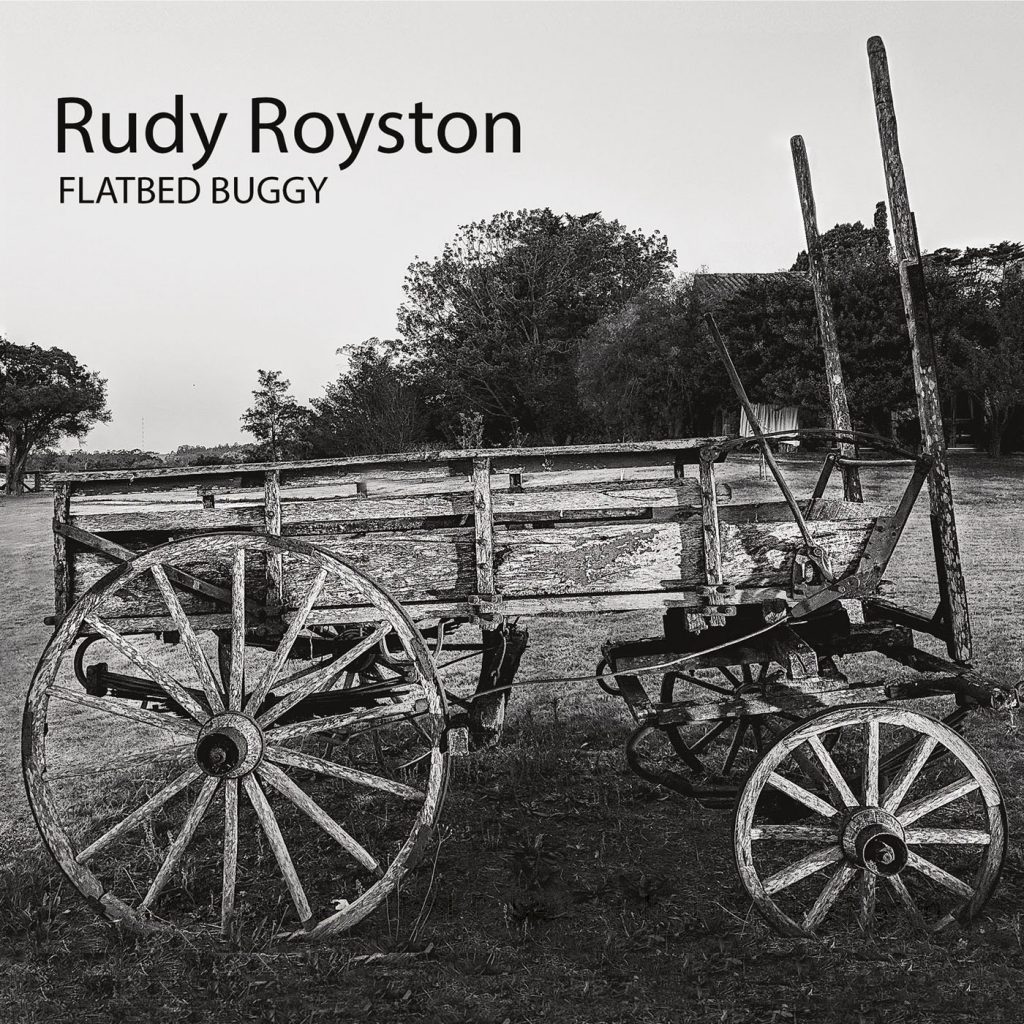
Rudy Royston - Flatbed Buggy (GREENLEAF MUSIC October 26, 2018)


Introducing Rudy Royston’s new record Flatbed Buggy

We’re announcing Rudy Royston’s third album as a bandleader. Flatbed Buggy features a new chamber-like quintet performing Rudy’s original compositions inspired by his youth growing up in Texas.

The album will be available worldwide on October 26


The new album, Rudy’s third as a bandleader, features thirteen original compositions for a new chamber-like quintet that includes Gary Versace (accordion), John Ellis (bass clarinet/saxophones), Hank Roberts (cello) and Joe Martin (bass).

Rudy Royston, first-call drummer with Bill Frisell, JD Allen, Dave Douglas and a host of other jazz greats, has honed a thoroughly engaging voice as a composer and bandleader with his compelling debut 303 (2014) and the raw and bracing trio follow-up Rise of Orion (2016). To these fine releases, both on Dave Douglas’ Greenleaf Music imprint, Royston now adds his third, Flatbed Buggy, rich in tonal contrast and mood yet steeped in the supple, enduring swing and groove that has driven his writing and playing from the start.

Right away the instrumentation is a striking departure: Royston leads a compact, almost chamber-like quintet featuring Gary Versace (accordion), John Ellis (bass clarinet/saxophones), Hank Roberts (cello) and Joe Martin (bass). “I was going for something that was more about melodies,” Royston declares. “I wanted to illustrate a story.” And indeed, the melodies flow forth on Flatbed Buggy, with rich harmony and surpassingly subtle orchestration and interplay occurring at every step as well.

Of the album title, Royston says: “Flatbed buggies to me mean country, they mean home, they mean earth. We lived in Denver but my father lived in Texas, and I would spend time in the country there. I remember riding on this kind of flatbed buggy thing when I was a child. The whole feeling that brought me … it was comforting, it was outside, this bitter shrubbery smell, my friends are there, my family’s there. So it’s about that, but the album also has to do with time: a time in my life, the beginning of things, the process of them. The buggy moving along up a road represents the movement of time. And the titles on the album really have to do with time and motion.”

The warmth and immediacy captured by Royston and the group, the unorthodox sound of the instrumental combinations themselves, marks Flatbed Buggy as a creative breakthrough. “Ron Miles is always my major influence,” the drummer offers, “because his music is so sing-able and melodically rich. I wanted that melodic quality but also moments underneath in the harmony where it was a little scratchy, a little dusty. My neighborhood in Texas was a little dusty.”

Together with the deep and woody instrumental timbres of Flatbed Buggy, there’s the way Royston keeps them continuously in play, beyond conventional jazz-combo roles: “I wanted us all to be constantly playing. I wanted us all to orchestrate or color or have a little input regardless of who is soloing. So if you check out the little stuff Hank is doing on Gary’s solos, for instance — all these neat little themes are happening. It sounds very orchestra-like for me. Some of it is written but 90 percent is those guys just interjecting their own taste into what’s going at the time.


At points in the program are short, rhythmically propulsive interludes — “Bed Boppin’,” “Dirty Stetson,” “Hold My Mule” (an old church expression), “I Guess It’s Time to Go” — that serve as what Royston calls “leaps of time.” “They remind you that you’re moving forward,” he says. “I hope there’s no ending on anything: a lot of these pieces fade out, because even when we pass away things still seem to be going forward somehow.”

In particular, the thematically related “Boy…Man” and “Girl…Woman” bring the passage of time further into focus, each a musical story not only of growth and maturation but eternal life: “That’s why I fade out, because it’s not about endings. It’s not like, ‘She lived her life and then passed away.’ It’s kind of like nothing ends, not yet.”

While Flatbed Buggy presents far more than a succession of virtuosic solos, the passion and technical depth of the performances themselves — including standout improvisations from all involved — can’t go unremarked. John Ellis, among the great saxophonists of his generation, plays mainly bass clarinet throughout, achieving a remarkable sound and impact. Gary Versace, a top organist and pianist of our time, is equally stunning on accordion, bringing a reedy melodic sustain and full harmonic weight to the music. On the low strings, whether bowed or pizzicato, Hank Roberts and Joe Martin contribute a wealth of subtlety and energy as well, intersecting and digging in, never in the expected ways. And Royston, even though he lays back and never dominates here (he notes there’s only one drum solo on the record), still offers what amounts to a master class on the jazz drummer’s art.

There’s an endless amount to discover: the melodic development and final triumphant letting-loose of the opening “Soul Train”; the hint of New Orleans rhythm in “Flatbed Buggy”; the picture of innocence in a young child twirling, on “Twirler,” with a startlingly brilliant tempo shift into slow swing; or the fast, twisty bop theme and soprano sax showcase of “Bobble Head” (where that lone drum solo crops up).

Another major statement is “The Roadside,” inspired by memories of a drive through wide open space in Texas, with great expanses of weeds and wildflowers. “It was very beautiful to be in the midst of all that,” Royston says. “It was moving, it was in motion, these flowers on the side of a dirt road, sprawled everywhere. My dad loved to fish, so we were driving somewhere to some pond, in the back of the country somewhere. The piece takes you back to that moment and reminds you that no matter where you are now, you’re on a journey someplace.”

PERSONNEL
Rudy Royston, drums
John Ellis, bass clarinet / saxophones
Gary Versace, accordion
Hank Roberts, cello
Joe Martin, bass

PRODUCTION CREDITS
Produced by Rudy Royston
Executive Producer: Dave Douglas
Engineered, edited and mixed by David Kowalski at Teaneck Sound Studios, Paramus, NJ, April 2018
Mastered by Kevin Blackler at Blackler Mastering, Brooklyn, NY, May, 2018
All songs by Rudy Royston (Rudy Royston Publishing / ASCAP)
Cover Design by Rudy Royston
Cover Buggy Photo by Isabella Oprete

TRACK DETAILS
1. Soul Train (9:44)
2. Bed Bobbin’ (0:35)
3. Flatbed Buggy (5:45)
4. boy…MAN (5:43)
5. Twirler (5:24)
6. Dirty Steson (0:32)
7. Hourglass (7:15)
8. Bobblehead (5:51)
9. The Roadside Flowers (6:54)
10. Hold My Mule (0:36)
11. girl…WOMAN (11:07)
12. I Guess It‘s Time To Go (1:35)
13: I Wanted To Be Home Soon (9:26) * Bonus track, Bandcamp download only

Check out the album’s title track, on Apple Music and Spotify.

Pre-order the album now on Bandcamp, iTunes, Amazon and you’ll receive the lead track instantly!

And watch for tour dates to be announced soon!

Enjoy the music!


Monday, June 18, 2018

Davy Mooney & Ko Omura - Benign Strangers (July 27, 2018 SUNNYSIDE RECORDS)


The world is remarkable in that people from far off places and different walks of life can have an immediate, dramatic impact on each other after meeting just once. The notion of meeting a newcomer who embraces new people and ideas but also freely puts forth his own ideas is the theme of guitarist Davy Mooney and drummer Ko Omura’s new recording, Benign Strangers. 

Originally from New Orleans, Mooney is a longtime regular on the New York scene and, for the past year, he has been teaching at his alma mater, the University of North Texas in Denton. Mooney’s two Sunnyside releases, Perrier Street and Hope of Home, highlight his fantastic playing and composing with an incredible cast of musicians graced with the New Orleans magic, including saxophonist John Ellis, pianist Jon Cowherd and drummer Brian Blade. 

Intrigued by the culture after his first visit in 2008, Mooney has been a regular visitor to Japan. After the 2012 release of Perrier Street, he reached out to a Japan based UNT friend for help getting a tour and ensemble together. It was then that Mooney met Ko Omura. 

Omura was born in Tokyo but grew up in the United States and Australia. After graduating from the Sydney Conservatorium of Music and a stint in Sydney, Omura returned to Tokyo where he has made his name as a top-notch drummer and organizer and influencer in the local scene. 

Mooney returned to Japan to tour over the next two years. The initial tours mainly featured Mooney’s pieces but a fluid dynamic was enforced as Omura’s influence began to shape the sound of the collaboration by introducing his own music into the touring ensembles. Mooney and Omura’s composing styles are well suited, as they both are melodists of high degree. It wasn’t long before the duo began making plans for further endeavors, including a recording. 

During the brutal cold of January 2018, Mooney and Omura met in New York City to record with a small ensemble. It was a warm, reunion-like atmosphere in the studio, as Mooney had long friendships with all involved. But apart from pianist Glenn Zaleski, it was the first time Omura had met the assembled cast, which included John Ellis, bassist Matt Clohesy and engineer Michael Perez-Cisneros. 

The recording was a true collaboration with Mooney and Omura both providing compositions, which were finely tuned in the studio. The resulting recording is a stirring collection of original pieces that prove that jazz is a language that spans the globe. 

The recording begins with Omura’s sweeping “Benign Strangers,” an homage to individuals, now friends, from all over the globe who have helped him along his musical path. Mooney’s “In This Balance of Time” is a beauty with interesting form and shifting meters, while his “Dim” is an intriguing experiment with the diminished chords. Omura’s “Subconscious Partner” is a breezy tune that shares gratitude to the inner voice that pushes us on our way. Omura has traveled to India to study the tabla over the past four years and his talent on the twin drums is evident on his “Unimagined Virtues,” which is performed in a trio with Mooney and Ellis. 

Named for a street sign he sees on his way to work each day, Mooney’s “Shady Shores” is a bright and inspiring piece, which features solos from Zaleski and Mooney. The title for Omura’s quietly stoic “Hiraeth” comes from a Welsh word meaning nostalgia or longing and provides a perfect vehicle for Clohesy’s bass feature. Mooney’s angular “Polly Pulse” is a tricky, polyrhythmic piece and a departure from the guitarist’s usual compositional style. “The Heights” is another from Mooney’s book that shows his talent at writing catchy material in service to improvisation. The recording concludes with Omura’s “29th Road,” a lilting composition named for a street in a Mumbai suburb that had a spiritual feel and the most jovial stray dogs on the planet. 

Bright things can happen when worlds collide. Two individuals of diverse backgrounds can come together to create beautiful music, as is the case with Davy Mooney and Ko Omura on their lovely new Benign Strangers.


1. Benign Strangers 06:27
2. In This Balance of Time
3. DIM
4. Subconscious Partner
5. Unimagined Virtues
6. Shady Shores 06:25
7. Hiraeth
8. Polly Pulse
9. The Heights
10. 29th Road

Davy Mooney - guitar
John Ellis - soprano, tenor sax, bass clarinet, clarinet
Glenn Zaleski - piano
Matt Clohesy - acoustic bass
Ko Omura - drums, tabla


Thursday, February 8, 2018

Igor Lumpert & Innertextures - Eleven (CLEAN FEED RECORDS 2018)


Here is the third reprise of Igor Lumpert’s project Innertextures, but this time (after “Innertextures” and “Innertextures Live”), not with the previous trio format. The band with Chris Tordini and Nasheet Waits is now a quartet, with Greg Ward playing the second saxophone and Kenny Grohowski taking the drum sticks, and in “Eleven” there’s two guests summing up: trumpeter Jonathan Finlayson on a couple of tracks and bass clarinetist John Ellis playing on another one (in the past, Lumpert had the collaboration of musicians like Robert Glasper and Jacob Bro, and even his trio was once formed with Matt Brewer and Tommy Crane).

Important to notice is the fact that Lumpert, Tordini, Grohowski and Finlayson studied together at the New School of Music. The musical formula remains the same, but now more matured and with other nuances: a kind of «hyper-mode bop» with funk elements and some aspects of Slovenian folk music (he was born in Novo Mesto), as the specialized press noted, with «odd-metered rhythmic pacing and mesmeric variances in pitch». For more than 15 years living in New York, Lumpert’s jazz is sounding more American than ever, full of verve and groove, but without losing its “trademark” of complexity and unpredictability.

Maybe the most internationally recognized of all Slovenian jazz musicians, this former pupil of Chico Hamilton and Billy Harper who played with luminaries like John Abercrombie and Sonny Simmons is really the face of the present universal dimension of this music genre, with each composition brilliantly confirming that status. A must listen, must have record, marvelously produced by Robert Sadin.


1. 13th of August 7:27
2. XmD 4:44
3. Poseidon 7:49
4. Paha 5:40
5. Eleven 8:28
6. Brela 7:29

Igor Lumpert  tenor saxophone
Greg Ward  alto saxophone
Chris Tordini  double bass
Kenny Grohowski  drums
Jonathan Finlayson  trumpet on 3 and 5
John Ellis  bass clarinet on 6

All compositions by Igor Lumpert

Recorded at Bunker Studios, Brooklyn, New York on May 10th, 2017 by Ted Tuthill | Mixed and Mastered by Dave Darlington at Bass Hit Studios
Produced by Robert Sadin | Executive production by Pedro Costa for Trem Azul | Design by Travassos


Saturday, October 28, 2017

Eden Ladin (feat. Dayna Stephens / John Ellis / Gilad Hekselman) - Yequm (CONTAGIOUS MUSIC 2017)

CONTAGIOUS MUSIC PROUDLY PRESENTS THE DEBUT RECORDING FROM PIANIST/COMPOSER EDEN LADIN - YEQUM


After nearly nine years of living in NYC and being an in-demand sideman for the likes of Omer Avital, Myron Walden, Wallace Roney, Ari Hoenig, bassist Avishai Cohen, Camila Meza, trumpeter Avishai Cohen and many others, pianist/composer/bandleader Eden Ladin proudly announces the release of his debut album, Yequm, to be released on Dayna Stephens’ label, Contagious Music on October 6. This long awaited moment reveals an artist who has paid his dues, gained knowledge and racked up experience. During his time on the scene he has allowed his artistry to steep in the longstanding tradition of being a first call sideman in New York City. Therefore, what we hear on his debut album, Yequm, is a fully-formed artist who was able to sit in silence, listen to the music resonating in his mind, and uncover a personal narrative of original compositions, reflecting years of musical exploration, traveling back and forth between New York and Tel Aviv, and experiences around the world. The music is co-interpreted by Dayna Stephens, John Ellis, Gilad Hekselman, Harish Raghavan and Daniel Dor, alongside special guests Camila Meza and Yonatan Albalak. The title – Yequm is Hebrew for “Universe.” Welcome to pianist Eden Ladin’s Yequm, an exciting, unique and brilliant debut from a young artist bursting with talent and promise.

Contagious Music label owner/saxophonist/composer/bandleader Dayna Stephens said of Ladin and Yequm, “Eden has a limitless imagination when it comes to melody harmony and how to weave his influences into his sound. I've being inspired by his writing and playing and in both aspects he clearly has a strong foundation that comes from studying masters that span many genres. As I’ve seen him develop over the years he has built on that foundation a unique sound creation that is beautifully displayed on Yequm. When hearing it for the first time, Eden mentioned to me that he hadn’t found a way to release it, the solution then became obvious, this is NEED TO HEAR music to my ears, and through Contagious Music I’ll do my best to allow it to blossom.”

About The Music on Yequm with Eden Ladin:

Lonely Arcade Man – The entire album is comprised of original compositions by Ladin. This was originally written as an electronic track and is based on an imaginary story the pianist/composer had about a character trapped inside an arcade game. “Every time someone plays the game he is happy, but once they're finished he lives inside this little digital world by himself. Sometimes I can feel like this man (don’t we all?).”

Smell / Faded Memory – This tune was in progress for many years, and has had many transfigurations. The first four bars come from an idea Ladin had back in 2006, when he was still in his teens and wasn’t completed until 2013/2014. “In other words this song was a work in progress for about 9 years. The song examines that feeling you get when you recognize a familiar smell from the past. For example a hint of that perfume your grandmother wore when you were 5 can revive vivid childhood memories, almost like a flashback. That sensation is really unique.”

From The Frozen Cave – This serves as intro to the next track on the album. “Throughout the years I’ve worked a lot with one of my best friends and musical brother, Yonatan Albalak. It was very important for me to have him on this record, even if for one track (as he lives in Israel). I sent him the track, told him the imaginary story surrounding it (see below), and asked him to play an intro for it; I knew he would understand me. He later sent me four different takes that were all amazing. The one we chose here was exactly what I envisioned.”

The One Warm Hearted Man Living In The Kingdom Of Ice – This is another tune that was a work in progress for many years – Ladin is an artist that allows compositions to take their time as they come into maturity. “The story takes place on a frozen planet engulfed in huge, blue glaciers, frozen lakes, and endless snowstorms. At the peak of the highest mountain lies a dark castle and inside lives an evil witch with a frozen heart. She terrorizes the zombie-like people of the planet; they all fear her. But there is one man, a warrior hiding in a cave; he has a warm heart. With his flaming sword and after years of strict practice he is now ready to defeat the evil witch and set the people of the planet free! This song tells the story of that man.”

The Way We Used To Laugh – This composition reflects feelings and thoughts about when you have to let someone go, who was very dear to you. “In a relationship - things can get complicated and problematic to a point where it can't be fixed. Even though this song was composed after such a time, it draws from the joyful memories we’ve shared and the laughs we’ve had together back when everything was wonderful.”

Safta (Grandma) – “Dedicated to my late grandmother, Rachel Plotkin, honoring a very special and unique person. When I was little she would often sit next to me while I practiced the piano, playing intimate concerts for her. During the final days as her illness progressed I wanted to return to Israel; however, it was important to her that I complete my senior recital first and then travel on the following day… But it was too late. She passed away on the day of my senior recital. She was the most positive person I've known, influencing me through the way she saw the world. She helped me understand that despite the sufferings of life, one should always dwell on the positive-there’s positivity in everything. This song is playful, not morbid, in celebration of her life and positive spirit. I chose to merge tracks 5 and 6 as they both remember the loss of people I’ve truly loved and they embrace their influence on my life.”

Times Square – “Reflects on the best and worst place in NYC. I took a video with my phone, went home, watched it next to my keyboards, and this melody just came out of me.”

Dreams – “Everything is possible there… People you love that are not a part of your life anymore can show up suddenly… But you can't always really reach them… I wanted a dreamy atmosphere and decided there would only be vocals, piano, and about 7 layers of keyboards synths.  I was fortunate to have my good friend and incredible musician Camila Meza singing on this one.”

Gambit – The seed of this track came from a phrase Ladin transcribed from a song by the electronic group, Boards Of Canada, which he is very influenced by. He composed a new melody and harmony on this idea and it grew from there. The title reflects Ladin’s recent fascination for Chess, and captures a situation in which a player risks one or more pieces to gain an advantage in position, a “gambit.” Obviously a risky thing to do because it’s a situation you must know how to get out of or you will lose the game - also a metaphor for life, sometimes you’ve got to risk a lot in order to become better.

Schlompi – “Schlompi was a toy store in Tel-Aviv that I used to go to as kid. This song that has kind of a playful and silly melody with hints of childhood melancholia, which reminded me of toy stores, and this store in particular.”

Autumn Song – “was written in autumn of course. I’ve always found autumn to be a very special time of year—a time of new beginnings on one hand but also of endings: happiness and mourning; rain and sun.”


Eden Ladin – piano, keyboards, compositions
Dayna Stephens – tenor sax and EWI (tracks 1,4,9,10)
John Ellis – tenor and soprano sax (tracks 2, 5, 6, 7, 11)
Gilad Hekselman – guitar
Harish Raghavan – bass
Daniel Dor – drums

Special Guests:
Camila Meza – vocals (track 8 & bonus track 12)
Yonatan Albalak – guitar (track 3)

Please Visit: