Showing posts with label Anne Drummond. Show all posts

Monday, January 28, 2019

Oz Noy - Booga Looga Loo (ABSTRACT LOGIX February 15, 2019)


New York guitar phenom Oz Noy is that rare artist -- one who has cultivated his own distinct voice within the context of classic structures. His latest album, Booga Looga Loo reawakens timeless Boogaloo meets Jazz meets R&B grooves with Noy’s extended, unpredictable harmonic sensibility, stinging phrasing, and deft musical economy. Helping to realize Noy’s concept of the boogaloo record is a cast of musicians equally versed in the backbeat and the beyond, including drummers Vinnie Colaiuta, Dave Weckl and Steve Ferrone; bassists Will Lee, John Patitucci, and James Genus; and keyboardists Jerry Z and Brian Charette. Other contributors include Kevin Hays, Seamus Blake, and Anne Drummond. 


On Booga Looga Loo, five taut, incisive Noy originals are joined by striking reinventions of material by the Beatles (“Eight Days a Week,” with Lee on vocals), the Beach Boys (an achingly delivered “God Only Knows”), Ray Charles (“I Got a Woman”), and Thelonious Monk (“Bemsha Swing”). The album follows Twisted Blues, Oz Noy’s acclaimed two-volume exploration of the limits of the blues, a searing live set recorded in Shanghai with Weckl and bassist Étienne M'Bappé (Asian Twistz), a Soul Funk R&B record “Who Give A Funk" and the debut of Ozone Squeeze, Noy’s versatile, accessible trio with drummer Darren Stanley and vocalist and keyboardist Rai Thistlethwayte.


Vinnie Colaiuta, Dave Weckl, Steve Ferrone (Drums)
Will Lee, John Patitucci, James Genus (Bass)
Jerry Z, Brian Charette, Kevin Hays (Keys)
Seamus Blake (Sax)
Anne Drummond (Piano)

1. BoogaLoo Fever
2. Chocolate Souffle
3. A Soul Thang
4. Bemsha Swing
5. Booga Looga Loo
6. I Got a Woman
7. God Only Knows
8. Eight Days a Week

Shows


Wednesday, October 3, 2018

Benny Green - Then and Now (SUNNYSIDE RECORDS November 2, 2018)

Throughout his career as one of the world’s premier living Jazz musicians, legendary bebopper Benny Green has established himself as a powerhouse pianist and bandleader, boasting concert appearances and recording credits with giants of the industry over the past 35 years. But prior to his forthcoming record Then And Now (his 20th album as leader), Green has never featured either vocals or flute on any of his albums. Painting with rich aural colors and textures, Green boldly steps into new musical space for Then And Now, featuring both vocal sensation Veronica Swift and flautist Anne Drummond. 

Jazz sensibility comes naturally to Green, the NYC-born son of a jazz saxophonist and a Berkeley, California native. At a young age Green’s ear became fine-tuned to the art form, and he soon found himself invited to perform alongside Jazz icons like Betty Carter, Freddie Hubbard and Ray Brown. Art Blakey found Green’s swinging musicality to be the right ingredient and invited Green to join the ranks of his elite Jazz Messengers – this relationship would prove deeply influential to Green, who has since dedicated his career to straight-ahead hard bop. 

Although featured in a wide variety of performance arenas, Green is in his element and shines as the leader of the Benny Green Trio. With drumming master Kenny Washington and revered bassist David Wong completing the piano trio, Green commands the stage, delighting international audiences in his 38th year as a bandleader. It was only natural that this trio would become the springboard for Green’s recent new musical adventures.


A recording session led by prodigy vocalist Veronica Swift made such an impact on Green that he expanded his own generally instrumental traditions and began collaborating with both Swift and his trio. Green’s authoritative skill at the keyboard and hard-swinging ensemble were the perfect sonic landscape for Swift’s masterful musicianship and organic approach to scat singing, with Swift proving her voice was the perfect soloing instrument to complement Green’s stylistic swing. 

Swift, like Green, grew up in a musical family – her father a world-renowned bebop jazz pianist Hod O’Brien, along with her mother, vocalist Stephanie Nakasian, had made Swift’s young life rich with Jazz tradition. Swift and Green were a well-matched pair, each dedicated to bebop and swinging Jazz styles. When Swift began performing together with the Benny Green Trio, they discovered a dynamic element of interactive group synergy and interplay. They regularly perform together still, celebrating the musical vision they share. 

With Then And Now, Green explores yet more new ideas and soundscapes, delving into the rich sounds of a Rhodes electric piano on a few tracks. The vintage Rhodes, with Green at the helm, becomes a new and darker sonic foundation for Swift’s voice. Flautist extraordinaire Anne Drummond joins Green on the new record as well, after having previously performed some of Green’s own original music on her recording Revolving. 

Green’s compositions for Then And Now exemplify the album’s title: this record is musically distinct from any of his previous records. Longtime fans of Green’s will immediately recognize his unparalleled mastery and swing, but will also hear him stretching out comfortably in these new colors. The juxtaposition of Green’s familiar trio format and the new voices and textures on Then And Now create a heartfelt program, anchored in the swinging tradition that’s always been so central to Green’s heart. The new album is definitively, authentically Benny Green – but it conveys a side of Benny Green you haven’t heard before. 


Then And Now begins with Green’s salute to revered soul singer, pianist, composer Donny Hathaway which quotes both the singer’s “Valdez in The Country” and his duet with Roberta Flack, “The Closer I Get to You; Green’s “Donny Hath A Way” is a hard-grooving tune featuring flute, percussion and Green on Rhodes. 

Swift joins Green on Dexter Gordon’s “For Regulars Only,” a childhood favorite of hers, and performs her own stunning vocal transcription of Freddie Hubbard and Dexter Gordon’s original trumpet and tenor saxophone parts. For Cedar Walton’s “Latin America,” Green explores the duality of the keyboard itself, playfully balancing the Rhodes and acoustic piano as two characters: the Latin character and the gringo character, respectively. 

Swift’s touching lyrics about life lessons, set to Green’s “Naturally,” feature Swift exploring her own sonic comfort zone, with her voice eventually layered over itself in delicious triple texture. Driven by Washington and Wong, Green and the trio lay down a hard-hitting arrangement of Hank Jones’s “Minor Contention”, followed by a meditative dedication to California wildlife, Green’s calming “Enchanted Forest” as chamber trio of flute, piano and bass. 


Washington plays a classic Art Blakey-style 4-bar introduction out front on Horace Silver’s “Split Kick,” for which Swift rejoins the trio, covering the original trumpet and alto saxophone parts as played by Clifford Brown and Lou Donaldson with her voice. Green pays tribute to Duke Pearson, one of his favorite composers, with “Say You’re Mine”, and along with Swift recalls his mentor Walter Davis, Jr. with “Humphrey”, first recorded by Green in 1991 on his album Testifyin’. Swift’s vocals follow the trio’s opening chorus on “Something I Dreamed Last Night,” harkening Anita O’Day’s classic ballad style. 

But the crowning moments of the album are the “then” and the “now.” With “Hipsippy Blues” Green calls to mind his greatest musical influence, Art Blakey, and the time they’d spent playing together: a mindful musical glace back to “then.” Then Green turns to the “now”, celebrating the 25th anniversary of the release his own composition “Wiggin” (first recorded in 1993 on Green’s That’s Right. Green stands firmly in the present, surrounded by fascinating musical colors, textures, collaborators, and ideas. 

With the release of Then and Now, listeners get a rare glimpse of Benny Green, a giant of Jazz in his own right, both then and now.

Anne Drummond - flute & alto flute
Benny Green - piano & electric piano
David Wong - bass
Josh Jones - percussion
Kenny Washington - drums

1. Donny Hath A Way
2. For Regulars Only
3. Latin America
4. Naturally
5. Minor Contention
6. Enchanted Forest
7. Split Kick
8. Say You're Mine
9. Humphrey
10. Hipsippy Blues
11. Something I Dreamed Last Night
12. Wiggin'

Tuesday, May 1, 2018

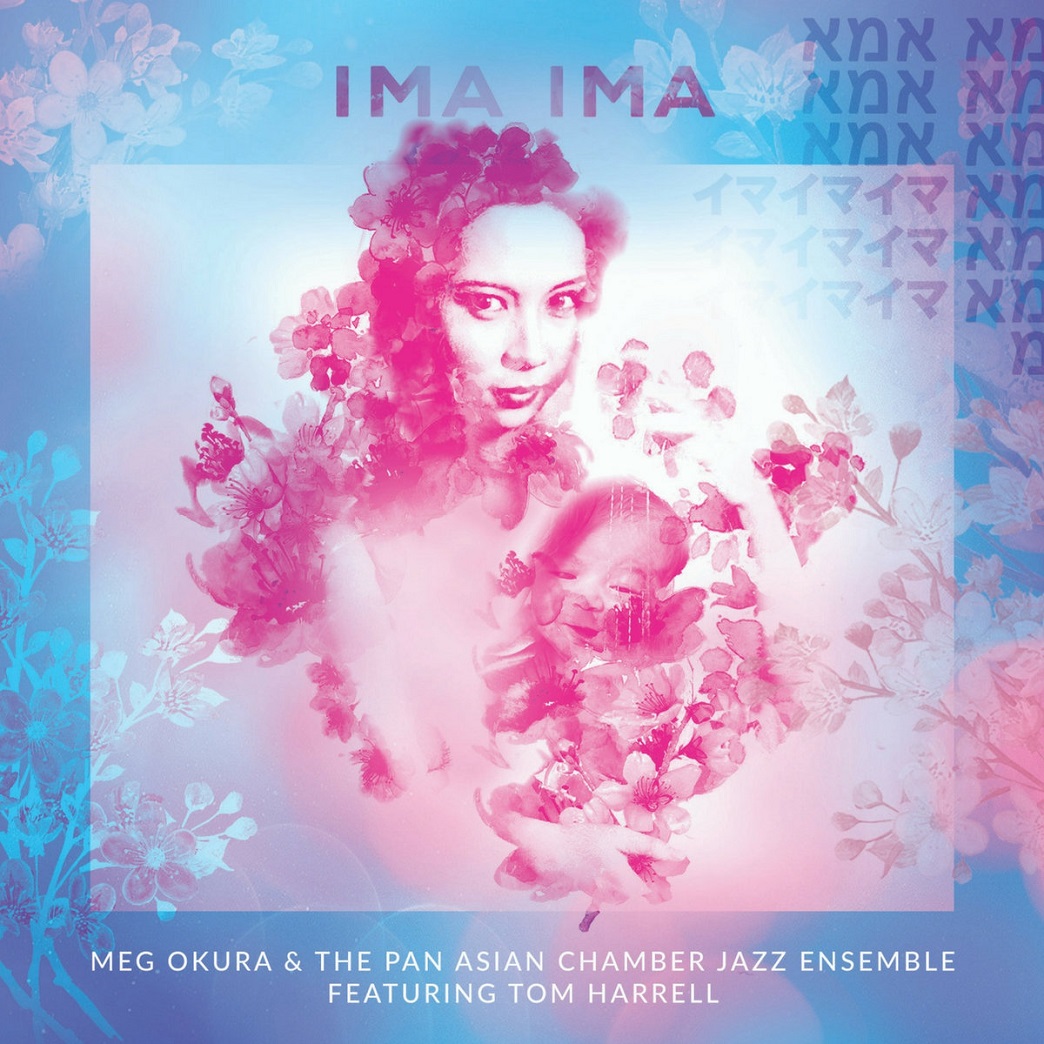
Meg Okura & The Pan Asian Chamber Jazz Ensemble (feat. Tom Harrell) - IMA IMA (May 13, 2018)


“PACJE has no peer in melding classical and jazz within an ethnically informed chamber setting.”
- Elliot Simon, The New York City Jazz Record

The ensemble’s self-titled debut album “Meg Okura’s Pan Asian Chamber Jazz Ensemble” was one of the “2006 Best Albums” of the Independent Music Awards. The Pan Asian Chamber Jazz Ensemble has since released Naima (2010), Music of Ryuichi Sakamoto (2013), and the forthcoming Ima Ima (2018) to critical acclaim. The group has performed over 50 concerts and festivals nationally and internationally, including NYC Winter Jazzfest, Lincoln Center, Levitt Pavilion (CA), KL International Jazz Festival in Malaysia and sold-out concerts in Japan.

​A native of Tokyo, Ms. Okura moved to New York after making her solo debut at Kennedy Center as at 19. She studied at the Juilliard School as a classical violinist, only to switch to jazz upon graduation. Since then, she has performed and recorded with jazz masters including Michael Brecker, Steve Swallow, Lee Konitz, and Tom Harrell, earning her place as “the queen of chamber jazz.” (All About Jazz) She has appeared on several dozens of albums and soundtracks as a violinist and erhu player.

Her composer credits appear on films such a documentary, The Congregation, or TV Series, Louie, among others.  She has also written for C. Eule Dance, the New York Symphonic Ensemble, Sirius String Quartet, the J-Orchestra (18- piece jazz orchestra), and the Pan Asian Chamber Jazz Ensemble.  She has received numerous grants and awards including Metlife Creative Connections Grant (Meet The Composer), Brand Personality Award (Asia Pacific Brands Foundation), Manhattan Community Arts Fund (Lower Manhattan Cultural Council), Jerome Composers Commissioning Program (American Composers Forum), and most recently, New Music USA Project Grant.


1. Ima Ima
2. A Summer In Jerusalem 10:27
3. A Night Insomnia 08:42
4. Birth of Shakyamuni 09:33
5. Blues In Jade 08:46
6. Black Rain 07:06
7. Tomiya 07:38

Tom Harrell (trumpet)
Anne Drummond (flute, alto flute, piccolo)
Sam Newsome (soprano sax)
Sam Sadigursky (bass clarinet, clarinet)
Brian Marsella (piano, Wurlitzer electric piano)
Riza Printup (harp)
Pablo Aslan (bass)
Jared Schonig (drums)
Rez Abbasi (guitar)

Thursday, May 26, 2016

Victor Gould - Clockwork (2016) FRESH SOUND NEW TALENT


present


"It’s understandable that a jazz pianist might feel inclined, even obliged, to debut as a leader with a trio album. But Clockwork, the maiden voyage of Victor Gould, includes sextet arrangements, two pieces augmented with strings, and several percussion turns from Pedrito Martinez. There are piano trio showcases as well, but they are part of the mosaic, not the full picture. “I didn’t want to be locked in with instrumentation,” says Gould. “I’ve come to believe that the best orchestration is when you change instrumentation very often. So you could think of that in the scheme of one piece or a whole record.”

The title Clockwork amplifies this point, suggesting that varied instrumentation can in fact yield great coherence. “Clockwork is many different elements working together,” notes Gould. “It’s the very definition of clockwork — the gears of a clock all working together to create something very intricate.” At the heart of it all is an extraordinary synergy between Gould, bassist Ben Williams and drummer E. J. Strickland. It’s consistent throughout the record but most starkly evident on the trio cuts.

Having made his mark in recent years as a sideman with Wallace Roney, Ralph Peterson, Donald Harrison, Louis Hayes, Vincent Herring, Eric Alexander and more, Gould has learned a thing or two about musical clockwork. A native of Los Angeles, he attended Berklee as an undergrad and then earned the high honor of a slot at Thelonious Monk Institute of Jazz from 2009-2011. Studying alongside him at both these institutions was Godwin Louis, the alto saxophonist heard on this album, who happens to be one of Gould’s dearest friends.

Trumpeter Jeremy Pelt, who’s been hiring Gould in his own superb band of late, is a characteristically stirring soloist as well as a focused and dynamic ensemble presence on the sextet pieces. Myron Walden, playing soprano and tenor saxophones, took on an added role as co-producer: “Myron and I decided which would be the best song choices from my catalogue,” Gould recalls. “After that, he helped run the recording session and took charge of time management, so it lifted a lot of the stress from me.”

Pelt plays flugelhorn on “Chaancé,” one of the two pieces to feature strings. Written and named after Gould’s wife, this lovely ballad finds the leader in a tensile give-and-take with the strings during his eloquent solo, blending with and responding to them but soaring with renewed intensity when they fall silent. By contrast, there’s an “apocalyptic” energy, to use Gould’s word, coursing through “Apostle John,” from the foreboding rubato of the prelude to the modal groove and intricate counterpoint of the piece itself. Anne Drummond adds just the right flavor on flute, almost sounding like a soprano voice.

The string arrangements followed from Gould’s prior experience scoring for symphony orchestra (his original piece “Side Angle,” which doesn’t appear here). The sextet arrangements, for their part, were a result of his tenure at the Monk Institute, where he played with a six-piece dream band of fellow students. Along with the swinging, Latin-tinged title track we hear “Three Souls,” a tribute not only to the great Hank Jones but also to two people close to Gould who died around the same time (the fleeting reference to Stevie Wonder’s “Don’t You Worry ’Bout a Thing” seems to imply a fourth soul). Another sextet piece, “Room 416,” is named for the Berklee dorm room that Gould shared with bassist and friend Peter Spear, who died tragically in 2014. “Peter was really good friends with Godwin as well, so I thought it was important for Godwin to take that lead melody in the A section and show some love.”

“The Return,” a quartet number that features Louis again in radiant form, is Gould’s dedication to trumpeter Gregory Diaz, who struggled with embouchure problems at Berklee and was unable to play for a period of time. “Greg and I went to high school together as well and he was one of the best trumpet players I knew. I wrote this tune to encourage him — ‘The Return of Greg Diaz’ is its full name.”

“Sir Carter,” led off by an eccentric intro for horns and drums, is what one suspects: an homage to the great Ron Carter, who visited the Monk Institute for a week and had a profound impact on Gould and his fellow students. “Nefertiti” is of course a legendary Wayne Shorter piece that Carter himself played with the Miles Davis Quintet. Gould’s brisk 5/4 rendition gives it a straight-eighth-note patina and some added twists and turns, without ever sacrificing the tune’s hypnotic legato flavor. Here again the trio chemistry is substantial. Gould solos forcefully before yielding to the virtuosic Williams.

Martinez adds his inimitable congas on “Blue Dales,” which Gould originally composed as an etude to practice independence but later turned into a song. Right away the congas add propulsion and color to the bright, staccato rhythms of the theme, so dazzlingly articulated by Williams and Strickland. The piece is a 16-bar minor blues with dramatic and clever harmonic movement, an ideal framework for improvising: Williams leads off, followed by Gould and finally Strickland over a tumultuous four-bar vamp.

In the end it’s the combination of elements in Gould’s music — the hard-bop drive and harmonic adventure, the chamber-music refinement, the Latin tinge that Jelly Roll Morton theorized all those years ago — that makes Clockwork succeed on the level that it does. It couldn’t be clearer: Gould was ready, after years spent on numerous big-league bandstands, to take the reins and bring all his experience to bear, pursuing a sound deep in technical proficiency and flair but also expressive nuance and immersion in the jazz tradition. May those gears keep turning."


David R. Adler, New York, March 2016


01. Clockwork 7:39
02. Room 7:09
03. Chaancé 5:22
04. Blue Dales 5:21
05. The Return 7:55
06. Apostle John (Prelude) 3:07
07. Apostle John 9:03
08. Sir Carter (Intro) 0:45
09. Sir Carter 4:52
10. Nefertiti 5:38
11. Three Souls 8:06

All songs composed & arranged by Victor Gould, except #5 written by Wayne Shorter

Personnel:
Victor Gould (piano)
Jeremy Pelt (trumpet on #1,2,3,6,7,8 & 11)
Godwin Louis (alto sax on #1,2,3,5,6,7,8 & 11)
Myron Walden (tenor sax on #1,2,3,6,7,8 & 11)
Anne Drummond (flute on #3 & 7)
Ben Williams (bass, except on #6 & 8)
E.J. Strickland (drums, except on #6)
Pedrito Martínez (percussion on (#1,4 & 7)
Yoojin Park (violin, on #3,6 & 7)
Heejin Chang (viola, on #3,6 & 7)
Veronica Parrales (cello, on #3,6 & 7)

Recorded at Systems Two Studios, Brooklyn, New York, December 14, 2015 and January 19, 2016

Sound engineer: Max Ross
Mixing & mastering: Dave Darlington
Photography: Anne Yatskevich
Painting: Martel Chapman

Co-producers: Victor Gould & Myron Walden

Executive producer: Jordi Pujol

BUY THIS ALBUM