Showing posts with label Bill Frisell. Show all posts

Friday, March 25, 2022

The Michael Leonhart Orchestra presents 'The Normyn Suites', due out March 25, 2022 (Sunnyside Records)

The Michael Leonhart Orchestra presents The Normyn Suites, a new masterwork to be released on March 25, 2022 via Sunnyside Records 

Featuring appearances by Elvis Costello, Bill Frisell, Joshua Redman, JSWISS, Larry Goldings, Nels Cline, Donny McCaslin and more 

Release show at Rizzoli Bookstore on April 10, 2022

‘The Normyn Suites’ is an elegy; to listen is to spend time in that space of loss, reckoning, questioning, and mourning. At the same time, though, with each note, each phrase, we are propelled back into life."
– Alexandra Horowitz, author of Our Dogs, Ourselves: The Story of a Singular Bond 

"Threads the needle between pop and experimental music seamlessly… gorgeous." 
– Forbes

Sunnyside Records is proud to announce the March 25, 2022 release of The Normyn Suites by the Michael Leonhart Orchestra. The Normyn Suites is both a requiem and celebration, inspired by the life and death of the bandleader’s 15-year-old dog, a female mini dachshund named Normyn. The third album by the Michael Leonhart Orchestra features a pair of suites – the first of which is an exploration of the stages of grieving, while the second is a reflection on love and loss. In keeping with the MLO’s eclectic musical palette, the album features several collaborations with Elvis Costello, with contributions by Bill Frisell, Nels Cline, and JSWISS as well as two bonus offerings with Donny McCaslin. The release of The Normyn Suites will be celebrated at Rizzoli Bookstore in New York City on April 10. 

“The Normyn Suites is an elegy; to listen is to spend time in that space of loss, reckoning, questioning, and mourning. At the same time, though, with each note, each phrase, we are propelled back into life,” reflects author Alexandra Horowitz in the stirring liner notes. The first part is titled “The Normyn Suite #1: (Soundtrack to the Five Stages of Grieving)”, and was inspired by “The Kübler-Ross Grief Cycle”, a model introduced by Elisabeth Kubler-Ross in her 1969 book On Death and Dying. “The Five Stages of Grief” is a critically acclaimed study on how humans handle loss.

For this suite in five parts, Leonhart expands the MLO’s live performance palette of brass, woodwinds and strings to include choir and found percussion over gritty breakbeat drums. 
Leonhart shares, “I wanted “Denial” and “Anger” to have an emotional tension and raw quality, almost a whiplash effect, before the contemplative soloing of Bill Frisell over the peaceful “Catharsis”.” The fourth composition, “Nostalgia” opens with a nod to the main melody of “The Dunes Of Cahoon Hollow” (from “Suite #2), orchestrated for choir and monophonic synths before Jim Pugh (trombone) and Walt Weiskopf (tenor sax) take turns as instrumental narrators. Leonhart’s years with Pugh and Weiskopf as part of the Steely Dan horn section inspired him to choose them specifically for their expressiveness and personal experiences with loss. The final movement of the suite,“Acceptance” starts with Leonhart’s mother Donna singing a wordless melody over chamber strings. Leonhart utilizes gospel harmonies and a written soli over a soulful 6/8 groove to represent the peace and empowerment that come with the true recognition of personal heartbreaking loss. 

“The Normyn Suite #2: (Love & Loss)” is a collection of six pieces Leonhart began composing in the final weeks of Normyn’s life, when she was physically too weak to walk and began to lose her appetite. Leonhart would bring her to the studio where she would rest in her favorite bag on top of the grand piano while he played and composed. The six pieces “May The Young Grow Old” (featuring Larry Goldings), “Waking From Sedation” (featuring Bill Frisell), “Freedom From The Pain”, “Unconditional Love”, “La Preghiera”, and “The Dunes Of Cahoon Hollow” take listeners on an dazzling sonic journey.
Photos of Michael Leonhart by Shervin Lainez

In addition to the two suites, the album features three songs co-written with Elvis Costello during the quarantine. There are two versions of “Shut Him Down” bookending the suites — one with Joshua Redman, playing his late father Dewey’s newly restored tenor saxophone for the first time on record, the other with Chris Potter on bass clarinet. Costello performs spoken word on “Radio is Everything”, featuring legendary guitarists Bill Frisell & Nels Cline who also co-wrote the songs with Leonhart and Costello. The final collaboration is the driving “Newspaper Pane”.

Two bonus tracks, “Kenny Dorham” and “Wayne Shorter”, present the debut recording of Leonhart’s organ quartet featuring Donny McCaslin. These two songs were initially composed as a birthday tribute to each of these jazz legends, two of Leonhart’s favorite small group composers.

The Michael Leonhart Orchestra developed its singular sound over the course of its monthly residencies at Jazz Standard, one of New York’s most prestigious jazz rooms. Pre-pandemic, Leonhart was steadily honing his vision there, with unconventional instrumentation and a shapeshifting community of sought-after players from a variety of cutting-edge scenes and disciplines. Leonhart’s approach to the MLO is informed by his many other activities and wide-ranging credits: he’s a top-level jazz trumpeter and longtime member of Steely Dan; a gifted and distinctive pianist; a singer, songwriter and film composer; a session player with credits including the Bruno Mars/Mark Ronson megahit “Uptown Funk“; an accomplished orchestrator (Nels Cline’s Lovers) and producer (Donald Fagen’s Sunken Condos, Sachal Vasandani’s Slow Motion Miracles). The polyglot musical worldview Leonhart has developed as a result stamps the MLO’s work at every moment. And the joy he gets from it is infectious. 

Hailed as “a blazing hot mess of awesome” by The New York City Jazz Record, the Michael Leonhart Orchestra (MLO) traverses a huge swath of musical terrain, guided by the highly developed ears, ceaselessly omnivorous tastes and playful yet meticulous artistry of its leader, Michael Leonhart.

The Michael Leonhart Orchestra features a who’s-who of today’s contemporary musical talent including Keyon Harrold, Catherine Russell, E.J. Strickland, Freddie Hendrix, Eric Friedlander, Ryan Keberle, and more.

1 Shut Him Down
2 The Normyn Suite #1: Denial
3 The Normyn Suite #1: Anger
4 The Normyn Suite #1: Catharsis
5 The Normyn Suite #1: Nostalgia
6 The Normyn Suite #1: Acceptance
7 Radio Is Everything
8 The Normyn Suite #2: May the Young Grow Old Featuring
9 The Normyn Suite #2: Waking from Sedation
10 The Normyn Suite #2: Freedom from the Pain
11 The Normyn Suite #2: Unconditional Love
12 The Normyn Suite #2: La Preghiera
13 The Normyn Suite #2: The Dunes of Cahoon Hollow
14 Shut Him Down (Video Edit)
15 Newspaper Pane
16 Kenny Dorham
17 Wayne Shorter

Friday, January 21, 2022

Gui Duvignau - Baden (January 21, 2022 Sunnyside Records)

The music of Brazilian guitarist and composer Baden Powell has enchanted listeners for decades. His ability to combine elements of jazz, classical, and Brazilian folkloric music into his own singular genre that was spoken only on his nylon string, acoustic guitar has maintained his quiet legend status throughout the world.

Born in France, but raised in Brazil, bassist/composer Gui Duvignau was drawn to the music of Baden Powell through his Brazilian guitarist friends, who all considered Powell a fundamental figure in the worlds of Brazilian music and acoustic guitar. During his own guitar study, Duvignau asked friends for pointers and they continually referred him to Powell’s techniques. Further exploration of Powell’s repertoire led the bassist to the revelations provided by the fantastic music of the guitarist.

Years of studying and performing the music of Baden Powell led Duvignau to the idea of developing a recording celebrating the great guitarist. Duvignau’s new recording, Baden, uses Powell’s beloved songs as a foundation for explorative interpretations and improvisations from Duvignau’s fantastic ensemble, along with two highly esteemed guests, Ron Carter and Bill Frisell.

As a well-studied musician, Duvignau was astounded by Powell’s classical-honed technique and ability to communicate across genres. The guitarist’s music was a breath of fresh air and there was a sense of the spiritual in everything that Powell played, including the many interpretations he made of religious music of Brazil’s African-derived religions, like Candomblé and Umbanda. The guitarist was unique as he looked more toward the influences of samba rather than the bossa nova style that was popular at the time.

Duvignau felt that the best way to pay tribute to Powell was to play his music as openly as possible; not try to make a recording that was a Brazilian jazz record. Thus, Duvignau pointed this out to the musicians that he wanted to play with as he knew they could take the music anywhere. He welcomed back two mentors and friends who had appeared on his previous recording, 3, 5, 8, woodwind master Billy Drewes and drummer Jeff Hirshfield. Duvignau also recruited fellow Berklee alum, pianist Lawrence Fields, a great bandmate and consummate professional.
To make the project even more special, Duvignau invited his mentor Ron Carter to participate on a track. The bassist also recruited the great guitarist Bill Frisell to add his brilliant tones to a number of the pieces.

The recording begins with Powell and Vinícius de Moraes’s “Canto de Ossanha,” perhaps Powell’s most well-known piece and one that Duvignau felt necessary to include. Here the tune’s mysterious then upbeat nature is carried by Frisell’s guitar and Drewes’s lithe soprano sax. Another Powell and de Moraes collaboration from their Os Afro Sambas record, “Canto de Xangô” is a waltzing piece inspired by Candomblé ritual music that was passed down from West Africa. Fields’s piano solo is especially inspiring here. Duvignau scaled the band down to a trio with Frisell and Hirshfield for “Tristeza e Solidão,” his resonant bass work blending beautifully with Frisell’s unmistakable guitar.

Duvignau wrote “Ao Baden” when he first discovered Powell’s music and is loosely based on the chord changes of “O Astronauta.” Luiz Gonzaga and Humberto Teixeira’s “Asa Branca” is a bluesy piece that Powell recorded frequently. Duvignau wrote the blues piece “Bluesa Preta” to introduce it and be performed with Mr. Carter in a moving duo. The impressionistic “Canto de Iemanjá” is another piece from Os Afro Sambas and provides a magical setting for Drewes over Fields’s Wurlitzer playing. Powell and Paulo César Pinheiro’s “Refém da Solidão” is a simple but beautiful ballad, while Powell and de Moraes’s “O Astronauta” has a natural, standard-like feel orbiting in the hands of this jazz quartet.

Duvignau’s subdued “Mata Adentro” (meaning “Into the Forest”) is open and minimal, providing ample space for Drewes, Frisell, Hirshfield, and the leader to explore texturally. The bassist challenged himself and took on Powell and de Moraes’s “Berimbau” and “Consolação” as a solo piece for bass, channeling the mystical sounds perfectly. Powell and Pinheiro’s “Lapinha” is a song about a capoeira master from Bahia and the ensemble performs it in a bright and folkloric manner. The recording concludes with Duvignau’s tribute to Powell and Frisell, “For Bill & Baden,” finishing the record with a blues as Duvignau does most performances.

The music of Baden Powell has been a revelation for Gui Duvignau since he discovered the guitarist a number of years ago. The bassist has assembled a fantastic ensemble and program to pay tribute to the Brazilian great on Baden.

1. Canto de Ossanha
2. Canto de Xangô
3. Tristeza e Solidão
4. Ao Baden
5. Bluesa Preta / Asa Branca
6. Canto de Iemanjá
7. Refém da Solidão
8. O Astronauta
9. Mata Adentro
10. Berimbau / Consolação
11. Lapinha
12. For Bill & Baden

Billy Drewes - saxophones, clarinet
Lawrence Fields - piano, Wurlitzer
Gui Duvignau - bass
Jeff Hirshfield - drums
Ron Carter - bass (track 5)
Bill Frisell - guitar (tracks 1, 3, 9, 12)

Friday, January 14, 2022

OUT TODAY: Single from “Interpret It Well” / Ches Smith with Frisell, Maneri and Taborn (Pyroclastic Records)

Drummer/vibraphonist/composer Ches Smith leads a breathtaking all-star quartet with guitarist Bill Frisell, violist Mat Maneri and pianist Craig Taborn

Interpret It Well, due out May 6, 2022 via Pyroclastic Records, features stunning explorations of Smith’s ethereal compositions

“A smartly unruly drummer active in devious art-rock and outsider jazz."
– Nate Chinen, New York Times

"[The] nondescript term ‘drummer’ doesn’t get near the chemistry of earworm hooks, sharp-end jazz innovation and global-musical openness of New York percussionist/composer Ches Smith."
– John Fordham, The Guardian

Album Preview Concerts March 30 & 31 at The Stone at the New School, NYC

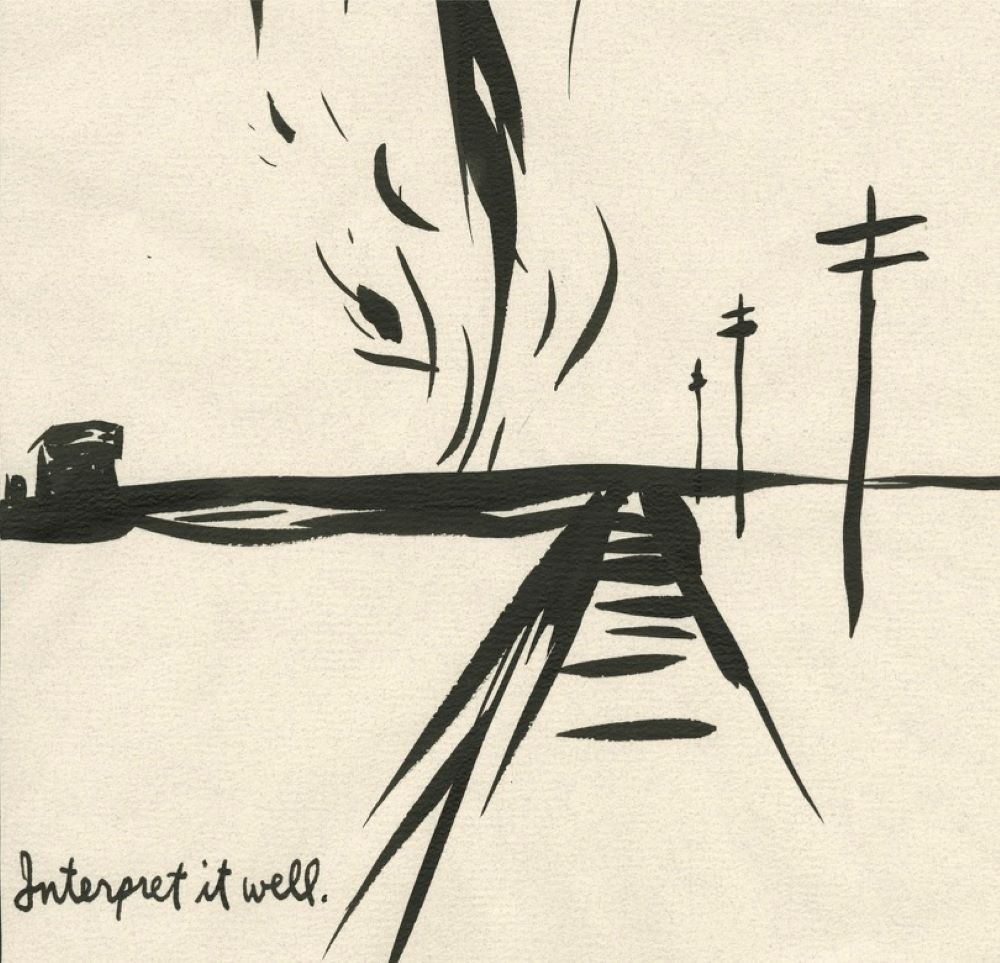
“Interpret it well,” reads the script text in Raymond Pettibon’s mysteriously evocative drawing. A few thick black ink strokes describe an enigmatic landscape – the telephone poles, the railroad track and the building in the distance seem obvious enough as markers of desolation, but the swirl of lines on the horizon are more ambiguous. The steam from an approaching train? An oncoming tornado? Hope or dread, connection or destruction, all depend on interpretation.
 
It’s a fitting choice of cover art for drummer/vibraphonist/composer Ches Smith, whose entrancing new album Interpret It Well borrows Pettibon’s three-word prompt as both title and instruction, for bandmates and listeners alike. The album, due out May 6, 2022 from Pyroclastic Records, is his second with keyboardist Craig Taborn and violist Mat Maneri, the much-anticipated follow-up to the trio’s acclaimed 2016 ECM release The Bell. This time out the band becomes a quartet with the addition of master guitarist Bill Frisell, whose contributions bring additional depth, space and texture to a group already rich in all three qualities.
 
It was that sense of openness and exploration, in fact, which intrigued Frisell in the first place. The guitarist attended a Ches Smith Trio concert in late 2018, following which he contacted the drummer with questions about the compositions. “Bill was very nice about the gig – effusive, actually,” Smith recalls. “He told me that he felt the tunes were accessible but challenging at the same time. There's something about the way Craig and Mat and I play together, where we extrapolate to the max but the music feels like the pieces. So I thought Bill might be interested in playing them with us.”
 
It took more than a year for schedules to align, but Frisell was finally able to join the trio for a performance in early 2020. The combination gelled immediately – “Bill felt like a natural part of the band,” Smith writes in his liner notes – but the demands on everyone’s time meant that a recording with all four would prove next to impossible to book.
 
Everyone knows what comes next – the pandemic happened, and suddenly time was all anyone had. Smith reworked his compositions with the newly forged quartet in mind, and the band went into the studio that October when life began to resume some semblance of normalcy (for the first time, at least).
© Kesler Pierre

The results are absolutely striking. As he did for the trio incarnation on The Bell, Smith writes compositions that are minimal but indelible; skeletal enough to allow these remarkable improvisers space to roam far afield yet so vivid that the core image is never lost amidst the daring embellishments.
 
Which brings us back to the Pettibon drawing – what Smith’s music shares with the artist’s work is that idea of a distinctive landscape evoked with a few sketchy lines, with vast stretches of the mysterious left in the spaces between. “There are definitely maximal moments on this record,” Smith says. “But when I think of the music in my head, it's fairly minimal. I like a lot of music where nothing seems to be happening.”
 
That may be true of the music on Interpret It Well in broad terms, but listen closely and a great deal is happening just beneath the misleadingly placid surface. The album is bookended by “Trapped” and “Deppart” (“Trapped” spelled backwards), two alternate versions of the same brief piece, a haunting, repetitive melody that slowly accrues power one voice at a time. “That’s one of the most minimal things I've ever written,” Smith says. “It's simultaneously a bar, a melody and a chord, and people can approach it however they want.”
 
The title track begins with Smith’s tentative, querying vibraphone, with the other voices gradually gathering around him like a deepening fog. The picture eventually comes into focus only to give way to Taborn’s stuttering, agitated solo, which ushers in the urgent, ferocious final section. The piece has been inspiring to artists outside of the band as well – artist/filmmaker Frank Heath, whose works have been described as “poetic interventions into systems of communication, information and understanding,” has created a new film to accompany “Interpret It Well.” The piece will be available May 6 via the Ches Smith and Pyroclastic websites.
 
Frisell contributes a high lonesome intro to “Mixed Metaphor,” soon matched by Maneri’s forlorn bowing. Smith (on vibes) and Taborn then take over for a labyrinthine duet, ultimately leading into a spiraling vamp. The sparse “Morbid” is a ballad of sorts, an elegy unfurling at an achingly slow pace, luxuriating in the evanescent sound while all four take care not to shatter the exquisitely delicate atmosphere. “Clear Major” takes on a more forceful tone, beginning with Taborn’s insistent patterns. The piece is a three-part suite, the volleying first section followed by the lurching rhythms of the middle and the intricately woven lines of the final – each movement separated by clamorous improvisations that deconstruct the composition in order to rebuild again. The complex “I Need More” proceeds at a brisk pace rife with tension, finally exploding into Frisell’s razor-sharp, searing solo. 
 
Interpretation is central to Ches Smith’s compositional approach, and here it yields absolutely breathtaking results. “Bill, Mat and Craig can all turn the ensemble in a new direction on a dime by playing one phrase,” Smith says. “What I love about this band is the way that over time, they'll all change their parts – Craig adding harmony or Mat embellishing the written material to keep it fresh. I’ve played with the two of them a lot over the years, but the music turns out different every time. And I know Bill’s playing very well, but he constantly surprised me. Interpret It Well is really my way of encouraging them – it could be the unspoken credo of the band.”

1. TRAPPED 2:27
2. INTERPRET IT WELL 13:39
3. MIXED METAPHOR 16:26
4. MORBID 7:20
5. CLEAR MAJOR 15:29
6. I NEED MORE 11:42
7. DEPPART 2:36

Ches Smith, drums, vibes
Craig Taborn, piano
Mat Maneri, viola
Bill Frisell, guitar

Ches Smith – Interpret It Well
Pyroclastic Records – PR 19 – Recorded October 12-13, 2020
Release date May 6, 2022

Friday, August 27, 2021

Andrew Cyrille Quartet - The News (August 27, 2021 ECM)

Andrew Cyrille’s album The News carries forward the story from The Declaration of Musical Independence, the 2014 ECM recording described by Down Beat as “an unabashed exploration into time, pulse space and atmosphere…ambitious yet simple, rich yet stripped-down, challenging yet infinitely satisfying.” The New York Times cited the album as evidence of a “late career renaissance” for the drummer.

A force in improvisation for more than sixty years, Cyrille has played across the landscape of jazz from Coleman Hawkins’s The Hawk Relaxes to Cecil Taylor’s Unit Structures, led his own bands, and worked extensively with Milford Graves, Walt Dickerson, David Murray, Muhal Richard Abrams, Oliver Lake, Reggie Workman and many, many more. His first ECM appearance was on 1970’s Afternoon of a Georgia Faun, Marion Brown’s album with Chick Corea, Anthony Braxton, Bennie Maupin and Jeanne Lee. Half a century later Cyrille appeared with his Lebroba trio with Wadada Leo Smith and Bill Frisell at Lincoln Center’s 50th birthday tribute to the label.

For The News, recorded at Sound on Sound Studio in New Jersey in August 2019, David Virelles was drafted as last-minute replacement for old associate Richard Teitelbaum, whose involvement had been ruled out by ill-health. Virelles had previously played with Cyrille and Ben Street in contexts including the group Continuum. Gently guiding from the drums, Cyrille gives his revised line-up plenty of freedom while also shaping, subtly, the group’s sonic identity with his flowing sense of pulse.

The title track “The News” revisits a conceptual piece that Andrew first recorded on a solo percussion album, The Loop, made for the Italian Ictus label in the late 1970s. Here a newspaper is placed over the snare drum and toms and played with brushes. In the quartet version, Frisell, Virelles and Street all impressionistically extend its rustling, whispering textures on their own instruments.

“Leaving East of Jordan” is a tune by AACM-associated pianist Adegoke Steve Colson. Cyrille has previously played it both with its composer and with the group Trio 3 with Oliver Lake and Reggie Workman. Cyrille’s “With You In Mind” is also a piece that has gone through diverse interpretations: there are earlier recorded interpretations in trio with Hentry Grimes and Bill McHenry and in duo with Greg Osby. Here the music takes off from Andrew’s unaccompanied spoken word introduction with the band amplifying its sentiments, with a particularly tender guitar solo from Bill Frisell.

The guitarist has three tunes here “Mountain”, “Baby” and “Go Happy Lucky”, the last of which, as an abstracted blues, has a distant kinship with Duke Ellington’s “Happy Go Lucky Local.” Frisell has recorded extensively for ECM, from early leader dates such as In Line and Rambler to the recent duet projects Small Town and Epistrophy with Thomas Morgan. Along the way there has also been a long association with Paul Motian and Joe Lovano documented on recordings from Psalm (1981) to Time and Time Again (2006). Frisell has also contributed to other recordings of enduring significance including Paul Bley’s Fragments, Kenny Wheeler’s Angel Song, Marc Johnson’s Bass Desires, Jan Garbarek’s Paths, Prints and Gavin Bryars’s After the Requiem.
 
David Virelles. who contributes the tune “Incienso” to the programme and shares composer credits with Cyrille on the exploratory “Dance of the Nuances”, first appeared on ECM with Chris Potter in 2011. Albums with Tomasz Stanko followed (Wisława, December Avenue) as well as Virelles’s own recordings Mbókò, Antenna and Gnosis.
 
Ben Street and Andrew Cyrille have collaborated in contexts including the trio of Danish pianist Søren Kjærgaard. The bassist’s ECM credits include albums with the Billy Hart Quartet (All Our Reasons, One Is The Other) the Ethan Iverson/Tom Harrell Quartet (Common Practice), and the Aaron Parks Trio (Find The Way).

1 MOUNTAIN (Bill Frisell) 08:25
2 LEAVING EAST OF JAVA (Adegoke Steve Colson) 08:49
3 GO HAPPY LUCKY (Bill Frisell) 05:21
4 THE NEWS (Andrew Cyrille) 05:34
5 INCIENSO (David Virelles) 05:35
6 BABY (Bill Frisell) 05:34
7 DANCE OF THE NUANCES (Andrew Cyrille, David Virelles) 07:24
8 WITH YOU IN MIND (Andrew Cyrille) 07:11

Andrew Cyrille   Drums
Bill Frisell   Guitar
David Virelles   Piano, Syntzesizer
Ben Street   Double Bass

Friday, August 20, 2021

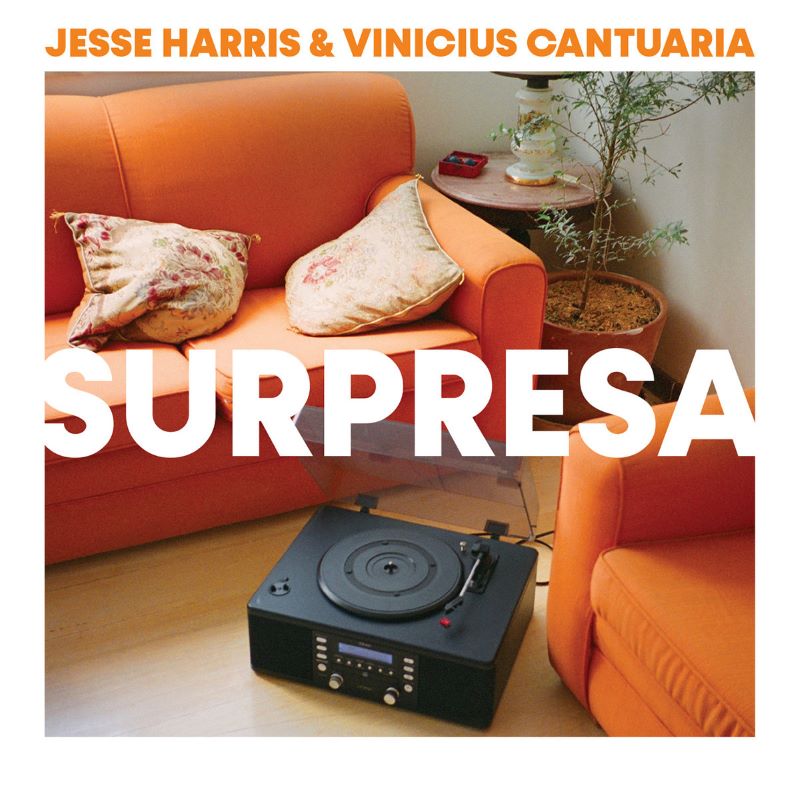
Jesse Harris & Vinicius Cantuaria - Surpresa (August 20, 2021 Sunnyside Records)

The past year found the whole world waiting. The COVID-19 pandemic paused life for most people and found everybody looking ahead to when life would return to normalcy. Singer/songwriters Jesse Harris and Vinicius Cantuaria took the time provided by the lull to record a project that had been evolving over the previous few years. Surpresa is the enchanting culmination of their efforts and it shows that some things are well worth the wait.

Both artists are well-known for their superior songwriting abilities. Harris came to the attention of the music world as a member of Once Blue and, later, writing hit songs for Norah Jones, Melody Gardot, Solomon Burke, and more. Beginning his professional work as a member of Caetano Veloso’s band, the multi-instrumentalist and composer Cantuaria has made a name for himself with his unique approach to the music of his native Brazil and his intriguing collaborations with artists as diverse as Ryuichi Sakamoto and Laurie Anderson.

Harris and Cantuaria initially met in 2011 when their mutual friend Dadi Carvalho introduced them, allowing Harris to stay at Cantuaria’s Rio de Janeiro home while Harris was in Brazil. Once he returned to New York, Harris visited Cantuaria and his wife Claire in Brooklyn. They struck up an immediate friendship and began hanging out and writing music. The writing eventually led to Harris inviting Cantuaria to play on gigs where they would incorporate each other’s songs and those of Tom Jobim into a working repertoire. Harris would go on to write “This Time” for Cantuaria’s 2012 recording, Indio De Apartamento.

It was about the time that they had decided to record together that the pandemic hit. Rather than becoming disillusioned, Harris began to ramp up his creative efforts. His home studio, Secret Sun West, allowed him to create any time he felt inspired to. When Cantuaria was able to finally return to the States, the two friends jumped immediately into recording Surpresa.

The majority of the tunes were written collectively, or separately by Harris or Cantuaria, with the exception of Gilberto Gil’s “Ó, Maria.” They recorded most of the instruments themselves, bringing in a handful of special guests to add to their work. Having worked with Melody Gardot for years, it was only natural that Harris invited her to add her vocals and a little piano. Guitar wizard Bill Frisell was also brought in to wonderful effect on a couple of tunes. Other guests included vocalist Gabi Hatmann, horn arranger CJ “CARM” Camerieri, percussionist Jeremy Gustin, and Will Graefe.

The recording begins with Harris’s folky “Waiting,” a wistful piece written about waiting for things to get better. Cantuaria wrote “Rio Negro” years back with the legendary Caetano Veloso and revisits it here in a cool, bittersweet style. Harris wrote “Far Away” as he watched planes flying over Gardot’s Paris apartment, missing places and people he’d love to visit. The first song the duo of Cantuaria and Harris wrote together, “How Long?” came together when the two friends were still in isolation, Cantuaria providing the music and Harris the lyrics, which ask the question that was on everybody’s mind during the Summer of 2020. The breezy yet resonant title tune follows on a positive note, the duo’s tune expressing the beautiful feeling of people coming together again, amplified by their collective voices and Gardot’s sonorous piano.

Taking inspiration from a photography book by Roe Ethridge, the duo’s jaunty “Broken Umbrellas” is about summer ending and its unfulfilled dreams. Gilberto Gil’s “Ó, Maria” finds Harris singing in touching Portuguese and Frisell adding his tasteful plectrum of strings. Frisell is also featured on Cantuaria and Argentinean composer Alejandro Corvalan’s “Colibri,” adding his typical haunting, bluesy touch alongside Cantuaria’s penitent vocals. Harris’s moving instrumental “Little Star” is revisited with the aid of Jeremy Gustin on percussion. Though it began as a Cantuaria instrumental, the bouncy “West Broadway Shuffle” finds additional charm with Harris’s guitar-doubling melody and lyrics. Harris’s “You, The Queen” is a song that Cantuaria loves to perform and it is a fitting end to their quietly poignant program.

It seems all too appropriate that Jesse Harris and Vinicius Cantuaria’s collaborative album, Surpresa, would have that uniquely Brazilian feeling of saudade. Their music and words could easily express the thoughts and feelings of the population as it sat and waited longingly for the world to start spinning again. 

1. Waiting
2. Rio Negro
3. Far Away
4. How Long (feat. Melody Gardot)
5. Surpresa (feat. Melody Gardot)
6. Broken Umbrellas
7. Ó, Maria (feat. Bill Frisell and Gabi Hartmann)
8. Colibri (feat. Bill Frisell)
9. Little Star
10. West Broadway Shuffle
11. You, The Quee

Vinicius Cantuaria - guitar, vocals, drums, and percussion
Jesse Harris - guitar, vocals, and drums
Melody Gardot - harmony vocals (1, 2, 4, 5) and piano (5)
Bill Frisell - electric guitar (7, 8)
Gabi Hartmann - harmony vocals (6, 7)
CJ Camerieri - horns and horn arrangement (1, 3)
Tony Scherr - upright bass (1, 3, 10)
Jeremy Gustin - percussion (1, 5, 6, 7, 9, 11)
Will Graefe - piano (4)

Tuesday, June 22, 2021

John Zorn - Teresa De Avila (2021 Tzadik)

Preceded by "Nove Cantici per Francesco d’Assis"” and "Virtue (for Julian of Norwich)", "Teresa de Avila" is the third and final CD in Zorn’s trilogy inspired by towering figures of Christian mysticism. Written for the all-star acoustic guitar trio of Bill Frisell, Julian Lage and Gyan Riley whose performances are steeped in a feeling of love and mutual respect, the music is both beautifully simple and strangely complex, drawing equally on classical modernism, bluegrass, jazz, Jewish and renaissance music. Filled with compositional surprises, mysterious moods, beautiful harmonies and a stunning lyricism, Teresa de Ávila is a must-have for all fans of acoustic guitar music. This is one of the most personal and varied books of music Zorn has yet written—a lovely tribute to the enduring legacy of one of the world’s most beloved spiritual figures. Includes an extended appreciation by renown philosopher Arnold Davidson.

1. Devotion
2. El Castillo Interior
3. A Blessing of Tears
4. Danza Estatica
5. An Embarrassment of Raptures
6. Teresa
7. El Camino
8. The Sweetness of this Excessive Pain
9. Marrano
10. Levitations

Bill Frisell: Guitar
Gyan Riley: Guitar
Julian Lage: Guitar

Friday, May 21, 2021

Skúli Sverrisson & Bill Frisell's Strata – May 21 on Newvelle Records

I’ve never been at a session like the one that we had in June of 2017 with Skúli Sverrisson and Bill Frisell. Sometimes you can really sense a connection between two musicians, some fitting together or a frisson of common experience and spontaneous invention. But this was of another order—a quiet and profound communion. With Skúli and Bill there’s a shared internal language—a sense of inevitable logic—hypnotizing and surreal.

The studio is a charged environment—a kinetic energy of ideas about to be born, loaded with expectation and possibility. Emotions tend to come to the surface in both good and bad ways. Bill and Skúli hit a deep vein in the first hour and never needed to come up for air. They would track a song of Skúli’s while seated across from each other, barely speaking. Then we would listen back in the control room. After the song was over, no one would say a word for a moment, as if a spell had been cast. Then Bill might look over at Skúli and say, “What do you think if I tried to overlay something on this one?” While Bill tracked a second guitar, Skúli would sit with his head cradled in his hands. When Bill would return to the control room, Skúli would lift his head, wearing a beatific smile.

This spell was only stirred once. On the second day of tracking, the film maker Jim Jarmusch came by for lunch. Jim is a longtime fan of Bill’s music. His arrival was a brace of movement and charm. He’d tell a couple of stories, and then we’d sit in silence while Bill and Skúli tracked something. “Brothers from another mother, these two,” I caught Jim muttering under his breath.
Skúli Sverrisson: “Bill’s been a thread throughout my creative life. I wrote songs for this session, but Bill has been such an inspiration to me that, even on songs I wrote before I met him, he was already there.”

Bill Frisell: “Skúli was one of those guys that I kept hearing about but hadn’t heard his music. Before I heard what he did, I was already wondering, ‘What’s with this guy?’ He had such a huge range, playing with some of my favorite musicians and in styles all over the map. The first time I heard him, the beauty of it touched me right away... I don’t listen to much music. I mostly listen to someone like Duke Ellington—real classics. But I got two of his albums and I kept putting them on. I wouldn’t have known that he was influenced by me. He was tapped in to something I dream of. When we did the recording, it took it to 100%, it felt like something that was in my imagination, but even deeper and further.”

SS: “There seemed to be a clear path to the center of the music. The session with Bill was so easy—no complications anywhere. And then having Jim Jarmusch there! He was almost like a ‘ghost producer.’ He’s another one of my heroes, such a great and surreal experience. I was only in New York for three days to record the album, and the whole thing came together so easily and to have Jim there... I really came back home and thought, ‘Did that really happen—was that a dream?’”

BF: “This was really special for me, I’d wanted to play with Skúli for a long time and this was an ideal situation. Sometimes you play music with someone in another context, in someone’s band or at a session, and you think, ‘I’d like to do a project with that person’; but this was the first time we played together. It felt so immediate, like ‘This is it, right now.’”

SS: “I knew Marc Urselli from decades ago when he reviewed a rather obscure record of mine, “Seremonie.” Later we did many tours together with Laurie Anderson, when Marc was the front-of-the-house engineer. We became friends and I felt very connected to him.”

Marc Urselli (recording engineer): “Bill and Skúli are two of my favorite musicians of all time and having them together in the studio was most enjoyable. They are both so modest and so soft-spoken that (barely!) hearing their comments and compliments to each other, one incredible take after another, was both delightful and hard to believe. Being there when the two played almost felt imposing, in a way. It was like a sacred experience only a few lucky ones were allowed to be a part of.”

BF: “Playing alone is so difficult because you get nothing back. But as soon as just one other person plays, there’s a direct response , like an electrical current that returns. It starts to go. You play something and right away it comes back, like a two-stroke engine. Everything you need is there... There’s an elegance to it. I almost feel like I didn’t even play on this record. Compositionally, what Skúli brought is so amazing. There wasn’t anything for me to do, everything was there already. So natural for me to fall into, so effortless. What Skúli chose to play and what he wrote—he built this structure that didn’t have anything blocking me but it was holding me up the whole time. It feels like we’ve known each other longer than we have. And it feels like the start of something.”

– Elan Mehler

Strata

Side A:
1. Sweet Earth (2:26)
2. Instants (5:15)
3. Vanishing Point (2:57)
4. Ancient Affection (3:57)
5. Came to Light (3:56)

Side B:
1. Cave of Swimmers (2:59)
2. Amedeo (4:06)
3. Afternoon Variant (5:13)
4. Segment (3:06)
5. Her Room (3:50)

Skúli Sverrisson - Electric & Acoustic Bass Guitar
Bill Frisell - Electric & Acoustic Guitar

Thursday, November 15, 2018

Andrew Cyrille / Wadada Leo Smith / Bill Frisell - Lebroba (ECM November 2018)


Andrew Cyrille’s title Lebroba is a contraction of Leland, Brooklyn and Baltimore, birthplaces of the protagonists of an album bringing together three of creative music’s independent thinkers.  Each of them made his first ECM appearance long ago: drummer Andrew Cyrille on Marion Brown’s Afternoon of a Georgia Faun (1970), trumpeter Wadada Leo Smith on his own classic Divine Love (1978), and guitarist Bill Frisell on Eberhard Weber’s Fluid Rustle (1979); these are, of course, players of enduring influence.  Frisell contributed to Cyrille’s previous ECM disc The Declaration of Musical Independence, but Lebroba marks a first-time meeting for the guitarist and Wadada Leo Smith.  A generous leader, Cyrille gives plenty of room to his cohorts, and all three musicians bring in compositions, with “Turiya”, Wadada’s elegant dedication to Alice Coltrane, unfurling slowly over its 17-minute duration.  In his own pieces, including the title track and the closing “Pretty Beauty”, Cyrille rarely puts the focus on the drums, preferring to play melodically and interactively, sensitive to pitch and to space.  There are references to West African music and the blues as well as the history of jazz drumming, but Cyrille’s  priority today is an elliptical style in which meter is  implied rather than stated.

Andrew Cyrille   Drums
Wadada Leo Smith   Trumpet
Bill Frisell   Guitar

1 WORRIED WOMAN (Bill Frisell) 07:35
2 TURIYA: ALICE COLTRANE MEDITATIONS AND DREAMS LOVE (Wadada Leo Smith) 17:24
3 LEBROBA (Andrew Cyrille) 05:44
4 TGD (Andrew Cyrille, Bill Frisell, Wadada Leo Smith) 05:17
5 PRETTY BEAUTY (Andrew Cyrille) 06:24

Thursday, October 18, 2018

Cuong Vu 4Tet - Change In The Air (RareNoise Records 2018)


As a followup to 2017’s acclaimed Ballet: The Music of Michael
Gibbs, Seattle-based trumpeter Cuong Vu joins forces once again
with guitar great Bill Frisell, bassist Luke Bergman and drummer
Ted Poor on the boundary-pushing quartet outing for RareNoise
Records, Change in the Air. With all the members of the quartet
contributing compositions, this one finds the four participants on
equal footing on ten adventurous originals. From Poor’s dreamy,
noirish opener “All That’s Left of Me Is You” and his lonesome
echo-laden waltz “Alive” to Bergman’s dynamic “Must
Concentrate,” Frisell’s delicate “Look, Listen” and his beguiling
heartland melody “Long Ago” and Vu’s angular “Round and
Round” and his edgy and electrified “March of the Owl and the
Bat,” these four stellar musicians are truly on one accord and
dealing with a rare level of nuance and depth of communication
on Change in the Air.

“It was a team effort,” said Vu. “The only real leader thing that I
did was make sure everyone had the studio dates in their
calendars, set up rehearsals, made sure they knew where the
studio was; more like secretarial work, is what I did. My only
intention was that we should all bring in tunes to make it as
collective as we could. This collection of people allowed me to let
go and trust, and I knew that we all just wanted to make the best
music that we could together.”

Poor added that the team effort developed quite naturally. “Cuong
invited us all to contribute and I'm very pleased with how the band
was able to sincerely welcome such a broad range of
compositions into the fold. We needed repertoire and I think
everyone felt comfortable and confident bringing in their own
music. At that point we had played a lot of music together and I
for one felt as though we were well on our way to developing a
clear band sound and identity.”

Vu commented on the various compositional qualities that his
three bandmates brought to the table on Change in the Air. “Bill’s
writing, like his playing, at first glance is seemingly simplistic
though always full of character. And when you patiently zoom in
you find that it’s filled with multi-layered info that is cohesively
bonded. His pieces can be played on any collection of
instruments and arranged in any way, and the truth of what he
intended will come through as the listener will find it as deeply
moving as it is beautiful. Luke’s writing is smart, clever, ironic,
funny and feels inevitable. He comes from having seriously
investigated a wide and eclectic range of music but he’s rooted in
a rock band-based type of viewpoint. I think it all comes out in the
music that he writes. And Ted is one of these guys who sounds
like the source music for whatever genre he plays, and he sounds
like a wise, experienced elder playing it. What I find impressive is
in how he’s able to get deep into whatever type of music and so
quickly absorb it. He’s like a jack-of-all-trades type of drummer
because of that ability, along with the technical freedom to
execute it all. I’m not surprised that his writing reflects all that. The
three tunes that he brought to the table are so different from each
other and they all feel extremely rooted and focused in the
specific context that each inhabits.”

Regarding his three stylistically wide-ranging compositions on
Change in the Air, Poor offered: “I liked the idea of trying to writing
something that could pose as an old standard found in an archive
somewhere, and that’s how I came up with ‘All That’s Left of Me
Is You.’ The title is a potential lyric for the final melodic phrase of
the song. While the song does not in fact have lyrics I wanted us
to play it as if we were playing an instrumental version of a
standard song like ‘Embraceable You’ or ‘If You Could See Me
Now.’ For ‘Lately’ I just had the sound of Cuong and Bill playing
the melody and chords vividly in my ears, and I wrote it in one
sitting not long before our recording session. ‘Alive’ was written
back in 2012 for a gig I had in New York with Mark Turner and
Pete Rende. I have enjoyed playing that tune with a number of
different bands but until now it hasn't been recorded. We needed
a few tunes with intensity and tempo to balance the set and ‘Alive’
felt like an obvious choice.”

Poor’s sublime brushwork is beautifully showcased on “All That's
Left of Me Is You,” “Lately” and particularly on the rubato closer
“Far From Here,” which bears the stamp of the late drumming
great and longtime Frisell collaborator Paul Motian. “Paul Motian
is a hero of mine,” said Poor. “Seeing him at the Village Vanguard
with Frisell or with his own bands is something I'll never forget.
His playing was riveting, provocative and pure music. Regarding
brushwork, he’s definitely one of my favorite drummers, along
with Andrew Cyrille, Elvin Jones and Philly Joe Jones (his brush
playing on ‘Young and Foolish’ from Everybody Digs Bill Evans
comes to mind). All of those great players are able to extract
infinitely nuanced sound and a powerful specificity of mood and
feel. Brushes are exciting for me because they allow you to create
sustain and offer such a wide range of attack, from staccato to a
legato bloom of sound that has no attack at all.”


Frisell, who moved from New York to Seattle in 1988 and
remained there for 30 years before returning to the Big Apple,
says the chemistry for this particular quartet began in the Emerald
City. “I was lucky to have first met Luke Bergman and over the
years we have been playing more and more in all kinds of
different situations together. It’s been awesome connecting with
him. Then as soon as Ted moved to Seattle we started playing a
lot together too, just getting together at his house and playing
tunes. It was the same with Cuong. As soon as he came to
Seattle we started playing together. So it was great to have
someone to be able to get together with and practice together and
just play music together. That happened with all those guys
separately and then eventually the four of us got together as a
quartet. Cuong has been such an incredible inspiration-energizer
for music in Seattle. Luke and Ted too. They all make things
happen.”

While the quartet tackled the music of composer-arranger and
Frisell's mentor Michael Gibbs on its first RareNoise record
together, they decided to stick strictly with originals on Change in
the Air. Vu’s trumpet work is brilliant throughout. Whether its his
extraordinary lyricism on Frisell’s “Look, Listen” and Poor’s
dreamy jazz ballad “All That’s Left of Me Is You,” his plaintive call
on Poor’s melancholy “Lately” or his staccato bursts and
skronking statements on his own “March of the Owl and the Bat,”
his playing is marked by bold instincts and nuanced expression.
Poor cited one possible influence on Vu’s “March of the Owl and
the Bat”: “Cuong has written a number of pieces over the years
that are based on driving, angular syncopated rhythms. We are
both huge fans of the Swedish heavy metal band Meshuggah and
their rhythmic language informs our approach significantly. We
worked off of a chart in the studio and the biggest challenge was
to internalize the rhythms and meters and make them feel good.
From there the embellishment and shaping of the tune flowed
naturally.”

Frisell offers authoritative solos and beautiful, pianistic
accompaniment to the fabric of these ten tunes on Change in the
Air. “I’m just trying to listen and do the right thing,” he said. “I’m a
huge fan of master accompanists like Hank Jones, John Lewis,
Tommy Flanagan, Richie Powell, Horace Silver…all guys that are
working from the inside out. I for sure love hearing someone play
a great solo but much more than that what really gets me off is
trying to figure out what’s going on with the whole band and how
all the pieces fit together. When I listen to Miles’ band with Herbie
Hancock, Ron Carter, Tony Williams and Wayne Shorter.…man!
Every note from all of them all the time is astounding and
essential. The magic is in how they play together.”


Vu also commented on his uncanny chemistry with Frisell, which
is especially apparent in their intimate interactions on Frisell’s
chamber-like “Look, Listen” and the sparse closer, “Far From
Here”: “It’s pretty much a necessity for me to be surrounded by
deeply empathetic listeners whose main priority is to serve the
music being created in each instance. And it takes a long time to
find the right people who’ll create the right mixture together. I
really do think that all three of us (Luke, Ted, and I) have a natural
strength in ‘empathic listening’ — making the others sound better
while stating your own opinion with an openness to all possibilities
in the immediate moments. And I do really think that we’re pretty
decent at that approach. But add Bill to the mix…that’s his
genius! He makes everybody that he’s ever played with sound
better and always puts them in a different light. It helps that I’m in
that same zone of thinking, but it’s really about Bill making it
happen.”


Frisell also commented on the the source of the quartet’s
remarkable chemistry: “You play with someone for the first time
and you feel something that makes you want to come back for
more. And I think the key to that is pretty simple. We listen. The
best things happen when everyone’s attention is focused on
everyone else around them ...away from themselves.”

Regarding the source of the album’s title, Vu pointed to the state
of world affairs today as a kind of dark undercurrent to Change in
the Air. “I’ve never felt so much anxiety about the future on so
many levels — environmentally, politically and especially with the
‘leadership’ in our country — than I do now,” he said. “In terms of
what’s going on and how we’ve gotten to this place, it feels
overwhelmingly ominous, dangerous and as if it’s only the
beginning of what will come. I’m scared but, hopefully, just
paranoid.”

Born on September 19, 1969 in Saigon, Vietnam’s largest city, Vu
moved with his family to Seattle when he was six years ago. He
picked up trumpet at age 11 and later received a scholarship to
attend the New England Conservatory of Music in Boston. After
moving the New York City in 1994, he formed the group Ragged
Jack with keyboardist Jamie Saft, saxophonist Andrew D’Angelo
and drummer Jim Black in 1997. During his time in New York, Vu
worked with Laurie Anderson, David Bowie, Gerry Hemingway,
Myra Melford, Bobby Previte, Dave Douglas and more. He
appeared on Pat Metheny’s Grammy-winning albums Speaking of
Now (2002) and The Way Up (2005). Vu returned to Seattle in
2007 to teach at the University of Washington, where he is
currently a full professor.


3, 9, 10 composed by Bill Frisell
6, 7, 8 composed by Cuong Vu
4 composed by Luke Bergman
1, 2, 5 composed by Ted Poor

1. All That’s Left Of Me Is You
2. Alive
3. Look, Listen
4. Must Concentrate
5. Lately
6. Round And Round
7. March Of The Owl And The Bat
8. Round And Round (Back Around)
9. Long Ago
10. Far From Here

Recorded May 14, 15, 16 2017 at London Bridge Studio, Seattle
Recorded by Julian Anderson
Mixed by Luke Bergman
Mastered by Nich Wilbur at Anacortes Mastering
Executive Producer for RareNoiseRecords : Giacomo Bruzzo
Artwork and Design by Petulia Mattioli