Showing posts with label ECM. Show all posts

Friday, March 25, 2022

Mark Turner Quartet | "Return from the Stars" | ECM

Saxophonist Mark Turner Leads an
Exploratory and Thought Provoking Journey
in his Latest Release, Return from the Stars

Quartet features Jason Palmer,
Joe Martin, and Jonathan Pinson

Available Now via ECM Records

"...a brilliant tenor saxophonist who has never rushed any facet of his artistry...”
— WBGO

"Turner, known for a floating, lightness of tone, has delivered several strong compositions and has been pushed on some of them beyond his usual comfort zone to more intense, fiery expressions.”
— Glide Magazine
Mark Turner has been a frequent and significant presence on ECM recordings of the last dozen years, bringing his saxophone artistry and his musical commitment to recordings with Enrico Rava, the Billy Hart Quartet, the cooperative Fly trio (with Jeff Ballard and Larry Grenadier), Stefano Bollani and, most recently, Ethan Iverson, on the duo recording Temporary Kings. Albums under Turner’s leadership, however, have been rare and Return from the Stars is the first ECM recording to feature his quartet since 2014’s Lathe of Heaven.
 
Turner’s writing for his group on Return from the Stars gives the players plenty of space in which to move, on an album both exhilarating and thoughtful in its arc of expression. Solos flow organically out of the arrangements and, beneath the dazzling interplay of Turner’s tenor and Jason Palmer’s trumpet, bassist Joe Martin and drummer Jonathan Pinson often roam freely. The absence of a chordal instrument keeps the conversational possibilities in the music wide open, as the compositions modulate between the meticulously structured and the loosely guided. Mark Turner puts a lot of faith in intuition and the shared artistic goals of an ensemble, and cherishes the narrative tension arising from the juxtaposition of freedom and responsibility:
 
“My process in writing is that I write for the people playing,” he says. “I don’t like to say a lot to them about the compositions. I like to write a piece of music and know that the people I’ve chosen are going to play it, basically, the way they play. I’d rather they find themselves in the music. The tunes are written in such a way that each musician has a choice in terms of how they take care of what they’re supposed to be doing. There are parts written for the horns. Not so much is written for the rhythm section, except for a few ‘hits’ and maybe time changes in sections. I just give guidelines about how the section should feel and then I let bass and drums figure out how to do it. Whatever makes the rhythm section sound good, that’s what we do. Then, the horns will play on top of that. “
 
Bassist Joe Martin is the sole musician retained from the Lathe of Heaven line-up. He’s been playing with Turner in diverse contexts since 1995. And, as he outlined it to Music & Literature magazine: “I always feel, playing with Mark I have to play as well as possible and raise the bar. In the quartet, because there isn’t a piano or guitar player to fill a certain harmonic space for everybody, I’m more probably more conscious of my note choices. Just one single note choice changes everything, suggesting tonality, harmony.”
 
Turner met dynamic drummer Jonathan Pinson while playing with Israeli guitarist Gilad Hekselman’s group. Pinson’s CV begins at a high level: he dived into the music at the deep end, touring with Herbie Hancock, Wayne Shorter and Greg Osby while still in his early twenties. His résumé also includes work with Kamasi Washington, Ambrose Akinmusire, Dave Liebman and many others. Pinson makes his ECM debut with Return from the Stars, as does trumpeter Jason Palmer.
 
Palmer and Mark Turner first encountered each other as sidemen in bands a decade ago. Mark subsequently played in projects led by the trumpeter, also recording in some of his projects (Places, Rhyme and Reason and The Concert). He singles out Palmer’s “willingness to go into zones unknown to him” among his outstanding qualities. The two of them share an encyclopaedic knowledge of the music. The Boston Phoenix has said of Palmer that he “builds fire with his secure tone and the cool deliberation of his solos”. The same could be said of Turner, who, according to National Public Radio, “has an innovative sonic signature, a certain floating chromaticism, rhythmic mindfulness and lightness of tone, filled with subtleties.”
 
Return from the Stars takes its title from Stanisław Lem’s science fiction novel in which an astronaut returns from an exploratory space mission to find life on earth greatly changed, and his own values out of step with those of a conformist, risk-averse society. Turner’s sci-fi enthusiasms are well known, and some observers have perceived a kind of idiomatic ‘time travelling’ quality in his work: The Guardian described his ECM quartet album Lathe of Heaven (named after an Ursula K. Le Guin story) as “sounding like Birth of the Cool floated over a 21st-century rhythmic concept.” Deep study of a range of jazz masters has informed his style, his expressivity on the full range of the tenor saxophone, and the scope of his writing, which brings the music forward while being acutely aware of its history.
 
Return from the Stars was recorded at New York’s Sear Sound Studio and mixed at Studios La Buissonne, in Southern France. The album was produced by Manfred Eicher.

Mark Turner   Saxophone
Jason Palmer   Trumpet
Joe Martin   Double Bass
Jonathan Pinson   Drums

1. RETURN FROM THE STARS (Mark Turner) 09:35
2. TERMINUS (Mark Turner) 07:22
3. BRIDGETOWN (Mark Turner) 08:56
4. IT’S NOT ALRIGHT WITH ME (Mark Turner) 10:26
5. NIGERIA II (Mark Turner) 04:37
6. WASTE LAND (Mark Turner) 05:16
7. UNACCEPTABLE (Mark Turner) 12:22
8. LINCOLN HEIGHTS (Mark Turner) 06:15

Friday, February 25, 2022

Avishai Cohen - Naked Truth (February 25, 2022 ECM)

There is a searching, yearning quality to Naked Truth, and a raw beauty and vulnerability in Avishai Cohen’s trumpet sound on his most improvisational ECM recording to date.  Very much music-of-the moment, found and shaped in the course of a remarkable recording session in the South of France, Naked Truth takes the form of an extemporaneous suite. For most of its length the Israeli trumpeter painstakingly leads the way, closely shadowed by his long-time comrades – pianist Yonathan Avishai, bassist Barak Mori and drummer Ziv Ravitz - who share an intuitive understanding, hyper alert to the music’s subtly-changing emphases.  At the album’s conclusion, Cohen recites “Departure”, a poem by Zelda Schneurson Mishkovsky, whose themes of renunciation, acceptance and letting go seem optimally-attuned to the mood of the music. Naked Truth was recorded at Studios La Buissonne in Pernes-les-Fontaines, in September 2021, and produced by Manfred Eicher.   

1. Naked Truth Part 1
2. Naked Truth Part 2
3. Naked Truth Part 3
4. Naked Truth Part 4
5. Naked Truth Part 5
6. Naked Truth Part 6
7. Naked Truth Part 7
8. Naked Truth Part 8
9. Naked Truth: Departure

Avishai Cohen: trumpet
Yonathan Avishai: piano
Barak Mori: double bass
Ziv Ravitz: drums

Will be released on February 25, 2022 on CD and digitally
Vinyl edition to be available in June

Friday, February 18, 2022

Gidon Kremer - MIECZYSŁAW WEINBERG: SONATAS FOR VIOLIN SOLO (February 18, 2022 ECM) + CONCERTS

The three sonatas of Polish composer Mieczysław Weinberg, written in 1964, 1967 and 1979, are among the most richly creative and technically challenging 20th century works for solo violin, and their radical expressivity draws the listener in. Gidon Kremer, a key figure in the revival of interest in Weinberg’s music, ranks these pieces with the Bartók sonata for their challenges and rewards.

As he has said, “I am very pleased that the world is slowly recognizing Mieczysław Weinberg as an important composer. For me personally, the treasure trove of his compositions remains a constant source of enthusiasm and inspiration." Recorded at the Lockenhaus Chamber Music festival and at Studio Residence Palesius, Lithuania, this edition of the Weinberg violin sonatas is issued on the occasion of Kremer’s 75th birthday.

1 SONATA NO. 3 OP.126 (Mieczysław Weinberg) 22:24

MIECZYSŁAW WEINBERG - SONATA NO. 2 OP.95
2 Monody 01:28
3 Rests01:44
4 Intervals01:58
5 Replies02:17
6 Accompaniment02:41
7 Invocation03:47
8 Syncopes03:23

MIECZYSŁAW WEINBERG - SONATA NO. 1 OP.82
9 Adagio-Allegro05:29
10 Andante05:37
11 Allegretto 03:46
12 Lento 05:05
13 Presto05:42

CONCERTS

February 01 Kremerata Baltica/ Gidon Kremer Gstaad Festival, Kirche Saanen Saanen Switzerland
February 04 Kremerata Baltica/ Gidon Kremer Moscow Russian Federation
w/ Slava Polunin

February 18 Kremerata Baltica/ Gidon Kremer Konzerthaus Blaibach Germany
February 21 Kremerata Baltica/ Gidon Kremer Milan Italy
February 23 Kremerata Baltica/ Gidon Kremer Universita La Sapienza, Aula Magna Rome Italy
March 28 Kremerata Baltica/ Gidon Kremer Théâtre de la Criée Marseille France
March 30 Kremerata Baltica/ Gidon Kremer Pierre Boulez Saal Berlin Germany
April 01 Kremerata Baltica/ Gidon Kremer Thessaloniki Concert Hall Thessaloniki Greece
April 08 Gidon Kremer Gran Canaria Spain
April 18 Kremerata Baltica/ Gidon Kremer Riga Latvia
April 23 Gidon Kremer Konzerthaus Vienna Austria
April 24 Kremerata Baltica/ Gidon Kremer Konzerthaus Vienna Austria
May 14 Kremerata Baltica/ Gidon Kremer Ferenc Liszt Academy Budapes tHungary
May 19 Kremerata Baltica/ Gidon Kremer Dresden Germany
May 21 Kremerata Baltica/ Gidon Kremer National Forum Of Music Wroclaw Poland
May 24 Kremerata Baltica/ Gidon Kremer Bodo Norway
May 27 Kremerata Baltica/ Gidon Kremer Aalborg Denmark

Gidon Kremer   Violin

Friday, February 11, 2022

Kit Downes | Petter Eldh | James Maddren | "Vermillion" | February 11, 2022 ECM

Pianist Kit Downes Continues to Push
New Concepts through a Trio Format
in his Latest Release Vermillion


After his widely acclaimed ECM leader-debut Obsidian saw Kit Downes exploring a broad spectrum of organ timbres and the chamber-toned follow-up Dreamlife Of Debris substantially expanded the instrumental pallet, Vermillion now introduces us to Kit’s exceptional pianistic qualities in a trio context with collaborators Petter Eldh on bass and James Maddren on drums. 

The Guardian has praised Kit for his “uncanny ability to make difficult music sound natural” and Vermillion provides proof of that, capturing the trio in a carefully assorted piano trio programme that treads gentle lyricism and bold creative outbursts in equal measures and with a strong penchant for melody.

“This record is different from what I’ve done before. We pushed ourselves into an area that we haven’t played in before, which is a more chamber music-oriented sound. The complex rhythmic component is still kept intact, but it’s wrapped in a different aesthetic.” Kit traces his constant search for new musical challenges back to his early mentor, pianist John Taylor, who passed in 2016 and to whom Kit dedicated his first ECM recording: “John sought after real moments in the music, often by doing something unpredictable. He wanted to make new things happen and was obsessed with taking risks musically, which is what I think I did with Obsidian and what we’re doing now on Vermillion.”

Risk comes in subtle disguise as the trio navigates rich and varied structures. Powerful bass attack is intercepted by the softest piano touch, uneven meters veiled in rubato feel and Kit’s unique harmonic language hides its intricacies in patient timing and warm cadences. James Maddren’s percussive contribution is both assertive and adaptable, woven into the music’s fabric. 
No matter whether written and rehearsed at an earlier point or brought to the group on the day of the recording, the trio gives each idea definition and every impulse precise form. “Rather than just documenting everything we’ve done live, with Manfred Eicher’s help we picked what felt like a great collection of music – some music written a couple of years ago, other songs merely two days old. ‘Class Fails’ for example was brought on the day of the recording by Petter. Its bass line may sound like it’s free, but it’s actually in quite specific time. As we started playing the song it turned into what sounds like an organized rubato.” 

On Vermillion, construction and deconstruction exist in harmony with each other, creating organic shapes as the two extremes pull at opposite ends and yield gracefully melodious themes in the process. Kit and Petter each came up with five pieces, while the eleventh and final one is an abstract take on Jimi Hendrix’ “Castles Made Of Sand” – the trio joining in a careful unravelling of the song’s individual elements. Vermillion, recorded at the Auditorio Stelio Molo in Lugano in May and June 2021, was produced by Manfred Eicher. 

James Maddren and Kit Downes’ musical association goes back to their college days, when the two were flatmates, making music together on a daily basis. James studied with percussionist Martin France at the Royal Academy of Music in London and belongs to the most in-demand percussionists in today’s UK jazz scene – having contributed to recordings and performances by the likes of Norma Winstone, Marc Copland and Gwilym Simcock, on top of being the rhythmic backbone to the majority of Kit’s projects. 

Known as the bassist in pianist Django Bates’ Belovèd trio – the trio’s album Study of Touch was released on ECM in 2017 – Petter Eldh’s distinct lower-end contributions can be heard in a variety of contexts since joining Bates’ trio in 2010. Besides his work as an accomplished jazz player, Petter also experiments with electronics, hip-hop and other forms of popular music, which he combines with his jazz background in his Berlin-based group Koma Saxo.

Kit Downes was an organ scholar at St Peter Mancroft in Norwich before going on to study piano, organ and composition at the Purcell School and the Royal Academy of Music. He recorded and toured widely with the band Empirical while also working with – among others Django Bates and Lee Konitz. Besides Petter Eldh and James Maddren, over the years Kit has frequently collaborated with drummer Sebastian Rochford, saxophonist Tom Challenger and cellist Lucy Railton, who all appear on his last ECM outing Dreamlife Of Debris.

Kitt Downes | Vermillion
ECM Release Date: February 11, 2022

Friday, November 26, 2021

Camerata Zürich / Igor Karsko / Maïa Brami - Leoš Janáček: On An Overgrown Path (November 26, 2021 ECM)

On An Overgrown Path, Leoš Janáček’s 15 pieces-spanning piano cycle, is here presented in a reshaped guise, arranged for string orchestra and interpreted by the Camerata Zürich under lead violinist Igor Karsko’s direction. This is the premiere recording of the orchestral adaption. In this programme, Janáček’s cycle is bookended by Josef Suk’s Meditation on the Old Czech Chorale St. Wenceslas and Antonín Dvořák’s Notturno – pieces that are thematically connected to the folkloric elements found in Janáček’s composition. French writer Maïa Brami wrote poems to accompany the new arrangement of On An Overgrown Path, and their recorded versions, spoken by the writer herself, are included on the album, contextualizing the cycle with inventive analogies to Janáček’s life.

TRACKLIST

JOSEF SUK - MEDITATION ON THE OLD CZECK CHORALE 'ST. WENCESLAS' OP. 35A
1 Adagio, ma con moto 06:25

LEOŠ JANÁČEK - ON AN OVERGROWN PATH, BOOK I
2 Our evenings 02:38
3 A blown-away leaf 02:15
4 Come with us 01:00
5 The Madonna of Frydek 03:07
6 They chattered like swallows 01:36
7 Words fail! 01:42
8 Good night! 02:59
9 Unutterable anguish 03:08
10 In tears 02:28
11 The barn owl has not flown away! 03:19

MAÏA BRAMI - SUR UN SENTIER RECOUVERT
12 Il était une fois 01:17
13 Tiens! Une feuille morte 01:26
14 Nous danserons 00:52
15 Boum, boum 02:04
16 Combien de fois depuis 01:27
17 Les ombres. C'est l'heure 01:19
18 Cette berceuse du fond 01:04
19 Des langues de feu 01:21
20 Je l'entends qui sanglote 01:59
21 Entends-tu hibou 01:53

LEOŠ JANÁČEK - ON AN OVERGROWN PATH, BOOK II
22 Andante 02:47
23 Allegretto - Presto 03:27

LEOŠ JANÁČEK - ON AN OVERGROWN PATH, PARALIPOMENA
24 Più mosso 02:54
25 Vivo 02:39
26 Allegro 04:22

ANTONÍN DVOŘÁK - NOTTURNO IN B MAJOR OP. 40
27 Molto adagio 06:14

Camerata Zürich
Igor Karsko   Concertmaster
Maïa Brami   Recitation

Monday, November 15, 2021

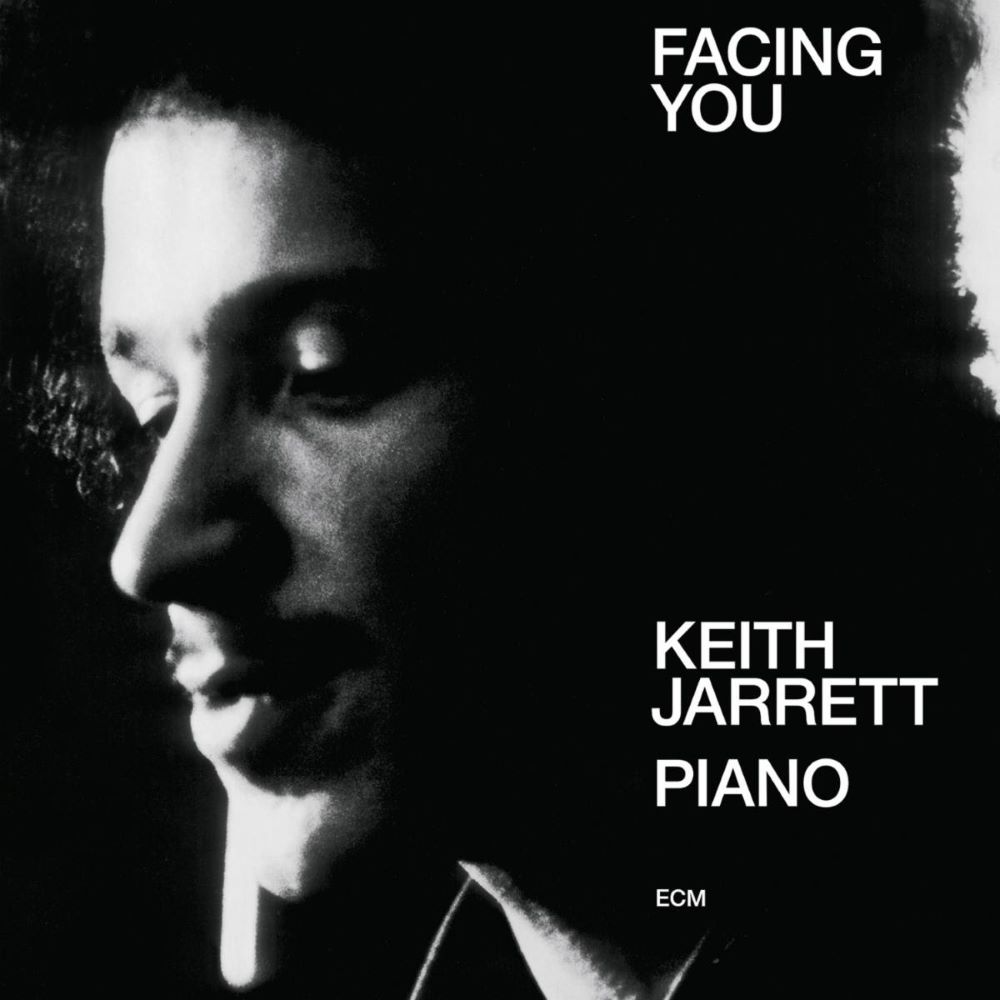
Keith Jarrett | "Facing You" 50th Anniversary | ECM

Keith Jarrett’s Debut ECM Album
Facing You To Celebrate
50 Year Milestone Anniversary

On November 10, 1971 pianist Keith Jarrett entered the Arne Bendiksen studio in Oslo Norway to record his ECM debut, Facing You. This album of solo piano pieces, which now has its 50th anniversary, was produced by Manfred Eicher and engineered by Jan Erik Kongshaug.

Facing You was the auspicious start to a celebrated landmark run of recordings that created a new solo piano paradigm, with albums including: Solo Concerts: Bremen/Lausanne; The Köln Concert; Sun Bear Concerts; The Melody at Night, With You and Jarrett’s latest release, Budapest Concert.

“I was on tour with Miles Davis and had met Manfred around this time,” Jarrett recalled. “He had written me about a proposed collaboration with Chick Corea but I was set on recording solo. I thought it would be a novel idea to not prepare and was totally comfortable with my decision despite a tight afternoon schedule while strictly playing electric piano on the tour.”

Jarrett reminisced about the initial idea of recording solo. “Prior to the recording, Manfred and I went to a classical concert at the university in Heidelberg in which I performed solo. I improvised between a couple of standards and was encouraged by the positive reaction.”

“When he plays alone, Jarrett pushes his creativity to its limits. It’s almost scary to hear someone who apparently relies so totally on the spirited, flowing, almost effusive directions of his muse, yet the muse seems to never let him down. His inspirations seem to be as prolific and varied as his compositions. […] It may well be the finest album of jazz piano solos since Art Tatum left us, and it is without a doubt the most creative and satisfying solo album of the past few years.”
— Rolling Stone (1972)

"Although his most famous solo recording, The Köln Concert, and all subsequent solo recordings, are much better known to the public, for me his first solo recording, Facing You, reigns supreme. Its innovative approach to composition and musical development was shocking at the time. Jarrett radiated as much warmth, heart and beauty in his playing as he did virtuosity and intellect. Jarrett’s playing represents new and innovative levels of harmonic, rhythmic and melodic development bundled with the vastest creativity imaginable. It was a new standard of playing in its time and still is today."
— JazzTimes (2011)

Friday, November 5, 2021

Jorge Rossy / Robert Landfermann / Jeff Ballard - Puerta (November 5, 2021 ECM)

Jorge Rossy turns to vibraphone and marimba and delivers a trio set filled with momentous originals for his ECM leader-debut. Marked by their immediate melodic appeal, the vibraphonist’s lines are in lively interplay with his colleagues, Robert Landfermann on bass and Jeff Ballard on drums. After Jorge’s recent contribution on drums to Jakob Bro’s trio with trumpeter Arve Henriksen on Uma Elmo, the present line-up sees him focusing on his own music. On Puerta the Spaniard shines as he navigates a programme that proves him as much an eloquent composer as a powerful melodic voice.
1 POST-CATHOLIC WALTZ (Jorge Rossy) 06:15
2 TAÍNOS (Jorge Rossy) 06:07
3 ADAGIO (Jorge Rossy) 04:47
4 MAYBE TUESDAY (Jorge Rossy) 08:01
5 CARGOLS (Chris Cheek) 04:34
6 SCILLA E CARIDDI (Jorge Rossy) 05:43
7 PUERTA (Jorge Rossy) 03:54
8 S.T. (Jorge Rossy) 05:54
9 VENTANA (Jorge Rossy) 04:21
10 ADIÓS (Jorge Rossy) 04:35

Jorge Rossy   Vibraphone and Marimba
Robert Landfermann   Double Bass
Jeff Ballard   Drums and Percussion


CONCERTS

January 06 Jorge Rossy/Robert Landfermann/Jeff Ballard Porgy & Bess Vienna Austria
January 07 Jorge Rossy/Robert Landfermann/Jeff Ballard Woippy, Atrium Metz France
January 08 Jorge Rossy/Robert Landfermann/Jeff Ballard Sunside Club Paris France
January 09 Jorge Rossy/Robert Landfermann/Jeff Ballard Ronnie Scott's Jazz Club London United Kingdom
January 11 Jorge Rossy/Robert Landfermann/Jeff Ballard Fasching Stockholm Sweden
January 12 Jorge Rossy/Robert Landfermann/Jeff Ballard Zig Zag Jazz Club Berlin Germany
January 13 Jorge Rossy/Robert Landfermann/Jeff Ballard Kofferfabrik Fürth Germany
January 14 Jorge Rossy/Robert Landfermann/Jeff Ballard Domicil Dortmund Germany
January 15 Jorge Rossy/Robert Landfermann/Jeff Ballard Lantaren/Venster Rotterdam Netherlands
January 16 Jorge Rossy/Robert Landfermann/Jeff Ballard Bimhuis Amsterdam Netherlands
November 18 Jakob Bro/Arve Henriksen/Jorge Rossy Festival Bielsko Biala Poland
January 18 Jakob Bro/Arve Henriksen/Jorge Rossy Fossé des Treize Strasbourg France
January 19 Jakob Bro/Arve Henriksen/Jorge Rossy Bee-Flat-Turnhalle Bern Switzerland
January 20 Jakob Bro/Arve Henriksen/Jorge Rossy Flagey Brussels Belgium
January 21 Jakob Bro/Arve Henriksen/ orge Rossy De Roma Antwerp Belgium
January 22 Jakob Bro/Arve Henriksen/Jorge Rossy Bilderhaus Gschwend Germany
February 24 Jakob Bro/Arve Henriksen/Jorge Rossy Domicil Dortmund Germany
February 25 Jakob Bro/Arve Henriksen/Jorge Rossy Bimhuis Amsterdam Netherlands
February 26 Jakob Bro/Arve Henriksen/Jorge Rossy Cultural Center of Echternach Echternach Luxembourg
March 15 Jakob Bro/Arve Henriksen/Jorge Rossy Bijloke Gent Belgium
March 18 Jakob Bro/Arve Henriksen/Jorge Rossy Bergamo Jazz Festival Bergamo Italy

Friday, October 29, 2021

Eberhard Weber - Once Upon A Time (Live in Avignon) October 29, 2021 ECM

Once Upon A Time Live in Avignon, recorded at Avignon’s Théâtre des Halles in August 1994, presents Eberhard Weber’s unique approach to the solo recital. The album sees the bassist balancing compositions from his albums Orchestra and Pendulum with a vibrant rendition of “My Favorite Things” and his own “Trio for Bassoon and Bass”, revealing fresh aspects of his distinctive musical diction. Reviewing one of the bassist’s live shows the year this album was recorded, the Financial Times marvelled at Weber’s musicianship, insisting that “it is hard to imagine that anyone else could play what Weber plays“. Condensed into a concise programme, Once Upon A Time Live in Avignon captures the essence of Eberhard Weber’s solo performance.

1 PENDULUM (Eberhard Weber) 06:31
2 TRIO FOR BASSOON AND BASS (Eberhard Weber) 12:42
3 READY OUT THERE (Eberhard Weber) 05:52
4 SILENT FOR A WHILE (Eberhard Weber) 06:04
5 DELIRIUM (Eberhard Weber) 07:31
6 MY FAVORITE THINGS (Richard Rodgers, Oscar Hammerstein II) 06:09
7 AIR (Eberhard Weber) 03:47

Eberhard Weber   Bass

Ayumi Tanaka Trio - Subaqueous Silence (October 29, 2021 ECM)

Subaqueous Silence, pianist Ayumi Tanaka’s leader debut for ECM – following critically acclaimed releases with Thomas Strønen (Lucus, Bayou) – is a strikingly original statement. Tanaka met bassist Christian Meaas Svendsen and drummer Per Oddvar Johansen shortly after arriving in Oslo a decade ago and they have been developing their musical language together, exploring the implications of Ayumi’s compositions. Deep interest in the work of Norwegian improvisers prompted Tanaka’s move to the West, but she also speaks of a growing awareness of her own cultural roots; there is an ascetic rigour in her playing, as well as a sense of space suggesting affinities with Japanese classical music. Ayumi views the trio as “more like a chamber ensemble. We share a flow of energy, even in silence.” Per Oddvar Johansen’s subtle drumming has previously distinguished recordings with Trygve Seim, Christian Wallumrød and others. Christian Meaas Svendsen makes his first ECM appearance on Subaqueous Silence; his intensely expressive arco bass on “Black Rain” is among the album’s highlights.

1 RUINS (Ayumi Tanaka) 06:39
2 BLACK RAIN (Ayumi Tanaka) 04:52
3 RUINS II (Ayumi Tanaka) 02:42
4 ICHI (Per Oddvar Johansen, Christian Meaas Svendsen, Ayumi Tanaka) 03:35
5 ZEPHYR (Per Oddvar Johansen, Ayumi Tanaka) 03:04
6 TOWARDS THE SEA (Per Oddvar Johansen, Christian Meaas Svendsen, Ayumi Tanaka) 04:14
7 SUBAQUEOUS SILENCE (Ayumi Tanaka) 09:25

Ayumi Tanaka   Piano
Christian Meaas Svendsen   Double Bass
Per Oddvar Johansen   Drums


CONCERTS
November 28 Thomas Strønen/ Ayumi Tanaka/ Marthe Lea BRAND! Jazz festival Mechelen Belgium
December 07 Ayumi Tanaka Trio Jazzclub Unterfahrt Munich Germany
December 08 Ayumi Tanaka Trio Bærum Kulturhus Sadvika Norway

Enrico Rava | Edizione Especiale | Available October 29 via ECM

Trumpeter Enrico Rava's
Musical Enthusiasm Returns With
New Live Recording Edizione Speciale

Quartet Features Francesco Diodati,
Gabriele Evangelista, and Enrico Morello


Enrico Rava delivers a characteristically outgoing performance in this live recording from Antwerp’s Jazz Middelheim festival. In the summer of 2019, the doyen of Italian jazz was in buoyant mood as he zigzagged between celebrations marking ECM’s 50th anniversary and his own 80th. For these concerts, the core of his current quartet with guitarist Francesco Diodati, bassist Gabriele Evangelista and drummer Enrico Morello was augmented with guests to form a special unit, an Edizione Speciale able to rove across the totality of Enrico’s musical enthusiasms. To differing degree, all the players heard here have been inspired by Enrico Rava’s example: he has been a mentor to most of them and, in turn, draws fresh energy from their spirited interaction. “I give them a lot of freedom,” he has said of his sidemen, “because I trust them. I have to trust them, and they have to trust me – at that point, everything is possible.”
 
Always a special case among the improvisers, Rava (born in Trieste in 1939) stood out in the late 1960 and early 1970s era of the new music, as a tradition-conscious player in the inner circle of the free blowers. This is apparent on some of his earliest recorded appearances - with Steve Lacy on The Forest and the Zoo, for instance, or with Manfred Schoof on European Echoes or with Carla Bley in the massed ranks of Escalator Over the Hill.
 
“I always felt connected to the tradition of jazz, and started to discover a more ‘Italian’ way of feeling the music which to me means giving greater importance to the melody”, Rava explained in the book Horizons Touched. The trumpeter/flugelhornist gradually dove deeper into his “personal musical world, which represents a synthesis of the many experiences of my life.” This meant jazz from New Orleans to Ornette Coleman and beyond, influences from Italian classical and popular music, and also “the feeling of South America, in a way my second home, with tango and Brazilian music…I’m putting all the musics that I love together making something that is still essentially jazz but also unmistakably my music.” 
 
The repertoire of Edizione Speciale expresses this autobiographical flavour from the first moment. “Infant” begins with briefly unaccompanied Rava flugelhorn, soon to introduce a theme that moves initially like one of Ornette’s themes for his early group with Don Cherry, as saxophonist Francesco Bearzatti plays tight unisons with Enrico. The entry of guitarist Gabrieli Evangelisti subverts the association in an explosion of sound-colour and by the time Giovanni Guidi, one of Rava’s most gifted protégés, arrives with a boiling piano solo the feeling is established that this music, brimming over with personality, can go anywhere, swinging with insouciant recklessness from mood to mood.
Michel Legrand’s “Once Upon A Summertime” is gradually untethered from associations with the Miles Davis/Gil Evans collaboration on Quiet Nights, with poetic and limpid Guidi piano easing the ballad into freer areas which coalesce into Rava’s “Theme for Jessica Tatum” from his Noir collection of darkly cinematic tunes. 
 
“Wild Dance”, title track of the Rava Quartet’s 2015 album, proposes balletic movement over a floating pulse with flugelhorn juxtaposed against distorted electric guitar texture, which Rava refers to as “clouds of sounds.” “The Fearless Five”, meanwhile, takes us back to the heyday of Enrico’s group with the late Roswell Rudd, with roots in Dixieland and the lurching rhythms of Thelonious Monk, while always reaching for other freedoms. 
 
“Le Solite Cose/Diva” brackets a piece that was a favourite of Enrico’s duo with Stefano Bollani together with another noir-ish portrait, which Rava has returned to on several occasions (including Wild Dance). And finally, there is a carnival-spirited account of the popular Cuban tune “Quizás, Quizás, Quizás”. (Guidi has recorded it previously for ECM on his own album This Is The Day). Rava’s Edizione Speciale ensemble uses its syncopated groove as a launching pad for cheery solos from each of the band members. Enrico Morello, whom Rava hails as “the best drummer in Italy right now”, elegantly negotiates the shifting Latin rhythms.

Enrico Rava made his earliest ECM recordings on The Pilgrim And The Stars (1975) and The Plot (1976), with his international quartet with John Abercrombie, Palle Danielsson and Jon Christensen. Since then he has been heard in many other contexts including, recently, the album Roma, with a quintet co-led by Joe Lovano and also featuring Giovanni Guidi, Dezron Douglas and Gerald Cleaver (recorded 2018). Edizione Speciale is Enrico Rava’s 18th recording for ECM.  Further recordings are in preparation. 

1 INFANT 13:01
2 ONCE UPON A SUMMERTIME / THEME FOR JESSICA 16:58
3 WILD DANCE 06:17
4 THE FEARLESS FIVE 12:57
5 LE SOLITE COSE / DIVA 09:43
6 QUIZÁS, QUIZÁS, QUIZÁS 05:24

Enrico Rava   Trumpet & Flugelhorn
Francesco Bearzatti   tenor saxophone
Francesco Diodati   Guitar
Giovanni Guidi   Piano
Gabriele Evangelista   Double Bass
Enrico Morello   Drums


CONCERTS
November 01 Enrico Rava Elbphilharmonie, kleiner Saal Hamburg Germany

Friday, October 22, 2021

Fred Thomas / Aisha Orazbayeba / Lucy Railton - Three Or One (J.S. Bach) October 22, 2021 ECM

Here is Johann Sebastian Bach in transfigured light: with organ chorale preludes, vocal cantata movements and orchestral sinfonias – 24 pieces in all – transcribed for trio and solo piano by Fred Thomas, and threaded into a compelling new sequence by Manfred Eicher. On Three Or One, Bach’s idiom is respectfully explored by three innovative players, a process Thomas describes as “quietly joyful,” and the trio pieces, primarily drawn from Bach’s Orgelbüchlein, acquire a fresh character in the hands of Kazakh violinist Aisha Orazbayeva and British cellist Lucy Railton, musicians more often associated with contemporary composition’s cutting edge. Fred Thomas, who makes his ECM New Series debut here, has always worked across contexts and genres, and considers the trio’s wide-ranging experience “an incitement to creativity. Bach often re-used his own material and it is no surprise it came out differently each time. With his imaginative, technical and improvisatory powers, do we really believe that Bach would play the same thing the same way twice?” It’s a good question, and the key to the approach taken on Three Or One.

JOHANN SEBASTIAN BACH - SCHÜBLER CHORÄLE
1 Ach bleib bei uns, Herr Jesu Christ, BWV 649 02:34

JOHANN SEBASTIAN BACH - ORGELBÜCHLEIN
2 Herr Christ, der ein'ge Gottes Sohn, BWV 601 01:59
3 Ich ruf zu dir, Herr Jesu Christ, BWV 639 02:22
4 Durch Adams Fall ist ganz verderbt, BWV 637 02:22

5 ERBARM DICH MEIN, O HERRE GOTT, BWV 721 (Johann Sebastian Bach) 04:46

JOHANN SEBASTIAN BACH - CANTATA 'DER HERR DENKET AN UNS' BWV 196
6 Sinfonia 01:54

JOHANN SEBASTIAN BACH - ORGELBÜCHLEIN
7 Alle Menschen müssen sterben, BWV 643 01:39
8 Der Tag, der ist so freudenreich, BWV 605 01:15
9 Christe, du Lamm Gottes, BWV 619 01:23
10 Liebster Jesu, wir sind hier, BWV 633 00:02 - 03:48

JOHANN SEBASTIAN BACH - CANTATA 'HERR, GEHE NICHT IN'S GERICHT MIT DEINEM KNECHT' BWV 105
11 Aria 04:59

JOHANN SEBASTIAN BACH - CANTATA 'WEICHET NUR, BETRÜBTE SCHATTEN' BWV 202
12 Aria 02:51

JOHANN SEBASTIAN BACH - CANTATA 'O HEIL'GES GEIST- UND WASSERBAD' BWV 165
13 Aria 02:09

JOHANN SEBASTIAN BACH - CANTATA 'ALLEIN ZU DIR, HERR JESU CHRIST' BWV 33
14 Aria 03:58

15 PARTITA 'WENN WIR IN HÖCHSTEN NÖTEN SEIN', VERS III, BWV ANH. II 78 (Johann Sebastian Bach) 00:54

16 GELOBET SEIST DU, JESU CHRIST, BWV 723 (Johann Sebastian Bach) 02:10

JOHANN SEBASTIAN BACH - PARTITA 'O GOTT, DU FROMMER GOTT', BWV 767
17 VIII 03:09

JOHANN SEBASTIAN BACH - ORGELBÜCHLEIN
18 O Lamm Gottes unschuldig, BWV 618 04:11
19 Jesu, meine Freude, BWV 610 02:59

20 ALLEIN GOTT IN DER HÖH SEI EHR, BWV 711 (Johann Sebastian Bach) 02:30

JOHANN SEBASTIAN BACH - ORGELBÜCHLEIN
21 In dulci jubilo, BWV 608 01:10
22 Gott, durch deine Güte, BWV 600 00:44
23 Das alte Jahr vergangen ist, BWV 614 02:17

JOHANN SEBASTIAN BACH - SCHÜBLER CHORÄLE
24 Meine Seele erhebt den Herren, BWV 648 03:04

Fred Thomas   Piano
Aisha Orazbayeva   Violin
Lucy Railton   Violoncello

Parker Quartet / Kim Kashkashian - Gyögy Kurtág: Six Moments Musicaux & Officium Breve / Antonín Dvořák; String Quintet OP. 97 (October 22, 2021 ECM)

On their ECM New series debut, the Boston-based Parker Quartet, hailed by the Washington Post for “exceptional virtuosity and imaginative interpretation,” play music of György Kurtág and are joined by violist Kim Kashkashian, one of the quarter’s early mentors, to play Dvořák. In this powerful programme of contrasts, Dvořák’s outgoing String Quintet No. 3, composed in America in 1893, is framed by two of Kurtág’s concentrated, meticulously-shaped works – the Six Moments musicaux (2005) and the Officium breve in memoriam Andreae Szervánszky (1988/89). Throughout, the Parker Quartet’s feeling for colour and texture is in evidence. The quartet’s insights into Kurtág’s soundworld have been developed through extensive work with the Hungarian composer. The album was recorded at Zürich’s Radio DRS Studio.

GYÖRGY KURTÁG - MOMENTS MUSICAUX OP.44
1 Invocatio [un fragment] 01:30
2 Footfalls ... mintha valaki jönne ... 02:46
3 Capriccio 01:32
4 In memoriam Sebõk György 03:35
5 Rappel des oiseaux... [Étude pour les harmoniques] 02:31
6 Les adieux [in Janáceks Manier] 02:48

ANTONÍN DVORÁK - STRING QUINTET NO.3 IN EB MAJOR OP.97
7 Allegro non tanto 09:30
8 Scherzo, Allegro vivace 05:58
9 Larghetto 10:05
10 Finale, Allegro giusto 08:34

GYÖRGY KURTÁG - OFFICIUM BREVE IN MEMORIAM ANDREAE SZERVÁNSZKY, OP.28
11 Largo 00:25
12 Più andante 00:44
13 Sostenuto, quasi giusto 00:40
14 Grave, molto sostenuto 00:32
15 (Fantasie über die Harmonien des Webern-Kanons) Presto 00:42
16 (Canon a 4) Molto agitato 00:20
17 Canon a 2 (frei, nach op.31/VI von Webern) Sehr fliessend 00:39
18 Lento 00:38
19 Largo 00:56
20 [Webern: Kanon a 4 (op.31/VI)] Sehr fliessend 02:21
21 Sostenuto 02:39
22 Sostenuto, quasi giusto 00:41
23 Sostenuto, con slancio 01:06
24 Disperato, vivo 00:48
25 Arioso interrotto (di Endre Szervánszky) Larghetto 01:14

Parker Quartet   
Daniel Chong   Violin
Ken Hamao   Violin
Jessica Bodner   Viola
Kee-Hyun Kim   Violoncello
Kim Kashkashian   Viola


CONCERTS
October 10 Parker Quartet Ashmont Hill Chamber Music Dorcester, MA United States of America
October 14 Parker Quartet University of South Carolina Recital Columbia, MA United States of America
October 17 Parker Quartet University of South Carolina Family Concert Columbia, MA United States of America
October 21 Parker Quartet Music Toronto Toronto, ON Canada
November 19 Parker QuartetBlodgett Chamber Music Series, Paine Hall, Harvard Univ. Cambridge, MAU United States of America
November 21 Parker Quartet CU Presents Boulder, CO United States of America
November 22 Parker Quartet CU Presents Boulder, CO United States of America

Friday, October 8, 2021

Craig Taborn | Shadow Plays | Available October 8 via ECM

Pianist and Composer Craig
Taborn Returns After a Ten Year Hiatus
with His Release Shadow Plays


Ten years have passed since Craig Taborn’s Avenging Angel album was released, bringing strikingly fresh ideas to the solo piano idiom. “It reflects Mr Taborn’s galactically-broad interests,” said the New York Times, “along with his multifaceted technique,” while the Guardian saluted Craig’s “world of whispered, wide-spaced figures, ringing overtones, evaporating echoes and glowering contrapuntal cascades”.
 
In the interim Taborn has appeared in ECM contexts large and small. We’ve heard him in his trio with Thomas Morgan and Gerald Cleaver on Chants and in his Daylight Ghosts quartet with Chris Speed, Chris Lightcap and Dave King. He’s played piano duets with Vijay Iyer on The Transitory Poems, performed Ches Smith’s music on The Bell, contributed to Roscoe Mitchell’s AACM tribute Bells for the South Side, and to Chris Potter’s music for ensemble and strings on Imaginary Cities. Alongside all of these activities, the solo music has continued to gather strength.
 
Over the last decade Taborn has refined and developed his approach, attaining new high ground with Shadow Plays. For Craig the recording is “part of the same continuum as Avenging Angel. Where that was a studio recording, this one is live, but that process of spontaneous composition goes onward.” The new album is a stunning live recital from the Mozart-Saal of the Wiener Konzerthaus, where the programme was headlined Avenging Angel II. In this fully improvised concert, Craig explores sounds and silences, swirling colours, densities and forms, creating new music with both poetic imagination and an iron grip on his material. His control of his craft as he unerringly creates narratives and structures from the hint of a revealed pattern, following where intuition and experience lead him, is extraordinary.
 
“When you improvise,” Taborn told writer Adam Shatz, in a New York Times interview, “you’re observing and creating at the same time. To make the next move, you have to get really close to what’s going on.”
 
“Free improvisation” can mean many things. For Taborn, in this context, this is not a matter of automatic writing or stream-of-consciousness self-expression but of keeping in focus both the larger frame of the concert and the concise statements shaped from the moment-to-moment detail of the music. “A lot of my interests revolve around trying to extend the boundaries you can create in…” Craig Taborn has noted. “Rather than simply free-flowing as I travel from Point A to Point B, I am really trying to construct and to organize the material as it emerges, in real time. And what is created in this way feels different to music using pre-composed elements.”
 
Taborn is a great improviser in any context, and highly regarded for his capacity to get to the heart of the music, whatever the setting. In the solo work connections to ‘jazz’ are not always self-evident, but in the flux of the piece retrospectively called “Conspiracy of Things”, allusions to the history of the music from stride piano onwards seems to flash past at lightning speed. In all pieces, ideas are explored, at multiple levels. Emotions too – tenderness and fierceness co-exist in pieces thoughtfully titled “Discordia Concors” and “Concordia Discors,” concepts that reflect the notion of unity through diversity. “I name the pieces,” Taborn said in a recent interview with Bomb magazine, “after they are finished and in consideration of their programmatic position – in a way the titling is the final stage of composition. And I intend the titles as invitations to extend the musical experience into other areas.” The inclusiveness of his work – subtly informed by music and art of many traditions – invites new associations and open responses.
Born in Detroit in 1970, Craig Taborn studied at the University of Michigan. He first came to wider attention in the groups of saxophonist James Carter. His first ECM appearance was with Roscoe Mitchell’s Note Factory on the album Nine To Get Ready (recorded 1997).
 
Currently on the road in Europe with cellist Tomeka Reid and drummer Ches Smith, Craig Taborn undertakes a solo piano tour in February 2022 with dates including Tampere, Finland (February 1), Live Lab, Helsinki (February 2), Nasjonal Jazzscene Victoria, Oslo (February 3), Musikförening, Vanersborg, Sweden (February 4), Halmstad, Sweden (February 5), Fasching, Stockholm (February 6), Sendesaal, Bremen (February 7), Domicil, Dortmund (February 10), Birdland, Neuburg (February 11), Son d’hiver Festival, Paris (February 12) and Bimhuis, Amsterdam (February 13). More details at www.ecmrecords.com
 
Craig Taborn’s Shadow Plays, produced by Manfred Eicher, was recorded live at the Wiener Konzerthaus on March 2, 2020.

1 BIRD TEMPLARS (Craig Taborn) 17:02
2 DISCORDIA CONCORS (Craig Taborn) 08:57
3 CONSPIRACY OF THINGS (Craig Taborn) 05:50
4 CONCORDIA DISCORS (Craig Taborn) 11:59
5 A CODE WITH SPELLS (Craig Taborn) 08:09
6 SHADOW PLAY (Craig Taborn) 18:37
7 NOW IN HOPE (Craig Taborn) 05:47

Craig Taborn Piano


CONCERTS
November 07 Craig Taborn Plages Magnétiques Brest France
November 11 Craig Taborn EnjoyJazz Festival, dasHaus Ludwigshafen Germany
November 12 Craig Taborn Jazz d'Or Strasbourg France
November 13 Craig Taborn Flagey Brussels Belgium
November 15 Craig Taborn De Singer Rejkevorsel Belgium
November 16 Craig Taborn Institut Francais Berlin Germany
February 03 Craig Taborn Nasjonal Jazzscene Victoria Oslo Norway
February 04 Craig Taborn Vänersborgs Musikförening Vänersborg Sweden
February 05 Craig Taborn Halmstad Sweden
February 06 Craig Taborn Fasching Stockholm Sweden
February 07 Craig Taborn Sendesaal Bremen Germany
February 10 Craig Taborn Domicil Dortmund Germany
February 11 Craig Taborn Birdland Neuburg Germany
February 12 Craig Taborn Son d Hiver Paris France
February 13 Craig Taborn Bimhuis Amsterdam Netherlands
April 22 Craig Taborn Kaleidophon Ulrichberg Austria

Friday, September 24, 2021

Mathias Eick | When we leave | Available September 24 via ECM

Norwegian Trumpeter and Composer
Mathias Eick Returns to Musical Storytelling
with When we leave


Mathias Eick is among the most immediately recognizable soloists to have emerged from the Norwegian jazz scene, and his wistful trumpet sound and strongly melodic compositions have met with a positive response around the world. When his ECM leader debut The Door was issued in 2008, US magazine JazzTimes described the trumpeter’s tone as “plaintive and spare,” while emphasizing that, “like all good bandleaders, his focus is on the interaction of his musicians. The contrast of his restraint and the energy around him constitutes the album’s driving tension.”

Over the years, Eick has focused and strengthened his approach on both fronts, as soloist and ensemble leader, with concepts for the band adjusted to meet the needs of each project, as well as what The Guardian has described as “a cinematic interest in musical storytelling.”

Skala (recorded 2009 and 2010), for instance, introduced the two-drummer format, latterly a hallmark of much of Eick’s work. Midwest (2014), a meditation on the voyage of Norwegian music to North America, brought violin into the ensemble sound along with colours and textures from folk music. Ravensburg (2017) turned the spotlight on Eick’s own biography, looking, with affection, at his Norwegian and South German family roots. The full group heard on Ravensburg returns for When we leave, augmented by Stian Carstensen’s pedal steel guitar – last heard in an Eick context on The Door - and the saga continues.

Mathias Eick sees When we leave as “a natural continuation of Ravensburg, almost a Ravensburg 2. More of everything.” Where its predecessor drew portraits of friends and family and sketched some personal interactions, the new album follows its protagonists through a troubled year. A sense of narrative could be drawn from the interplay of titles and musical atmosphere: “The songs and titles on When we leave play upon each other, draw inspiration from each other.”

Meanwhile the Eick band continues to grow in confidence and range. Violinist Håkon Aase, increasingly recognized as one of the outstanding improvisers of his generation (his ECM credits also include two albums with Thomas Strønen’s Time Is A Blind Guide ensemble), augments the bandleader’s solos with lines that draw upon folk traditions as well as jazz. There is mystery, too, in the way that the violin leans into the delicate swell of Stian Carstensen’s pedal steel. Eick: “Stian’s carpet of harmonies adds a feeling of depth - and the combination with the violin creates a special sound. I’m always searching for sounds that are unique and stand out of time.”
Powerful drummer Torstein Lofthus has played in contexts from pop to free jazz (including sessions with US saxophonist Sonny Simmons) and is known also for his contributions to exploratory rock group Elephant9. When Ravensburg was released, Eick explained his decision to add a second drummer: “I wasn’t trying to make the drumming bigger but rather more three-dimensional. What’s going on in the area of rhythm is very much like what’s happening between Håkon and myself, where a similar idea of shadowing and call and response is taking place.” Co-drummer Helge Andreas Norbakken digs into the textures of the music, creatively detailing the rhythm and working freely with sound as he has on ECM recordings from the Jon Balke/Amina Alaoui project Siwan to the “percussion think-tank” Batagraf or Jon Hassell’s Last Night The Moon…, as well as Mathias Eick’s Midwest.

Andreas Ulvo, a pianist of lyrical gifts, draws inspiration from classical music, in his own projects juxtaposing Satie and Rodrigo with free playing, and working across a broad range of idioms. Latterly he has been collaborating with Swiss harpist Giovana Pessi in a new project: an ECM release is in preparation. In parallel with his musical activities he is also a photographer, and has contributed images to albums by Dans les arbres and Giovanna Pessi/Susanna Wallumrød, among others.

Bassist Audun Erlien’s particular groove, informed by years of playing soul and funk music, has been part of the Eick band sound since The Door. Erlien can also be heard with Nils Petter Molvaer on Solid Ether.

Mathias Eick was born into a musical family in Norway in 1979 and took up the piano at the age of five, followed by trumpet a year later. A multi-instrumentalist, he also plays vibraphone, double bass, guitar and keyboards, although the trumpet was always “the instrument closest to my heart” as he once put it. He has been the recipient of numerous awards, including the including the International Jazz Festival Organization’s “International Jazz Talent” prize, the Statoil Scholarship and the DNB Prize.

When we leave was recorded at Oslo’s Rainbow Studio in August 2020. It was produced by Manfred Eicher. The Eick band presents music from the album in concert at Nasjonal Jazzscene Victoria, Oslo (September 17), Collage Festival, Copenhagen (October 2), Jazzfest, Brno, Czech Republic (November 1), and Schloß Elmau, Krün, Germany (November 20).

1 LOVING (Mathias Eick) 05:24
2 CARING (Mathias Eick) 06:09
3 TURNING (Mathias Eick) 05:36
4 FLYING (Mathias Eick) 05:10
5 ARVO (Mathias Eick) 05:30
6 PLAYING (Mathias Eick) 05:20
7 BEGGING (Mathias Eick) 04:54

Mathias Eick Trumpet, Keyboard, Vocals
Håkon Aase Violin, Percussion
Andreas Ulvo Piano
Audun Erlien Bass
Torstein Lofthus Drums
Helge Andreas Norbakken Drums, Percussion
Stian Carstensen Pedal Steel Guitar

CONCERTS
October 02 Mathias Eick Quintet Collage Festival Copenhagen Denmark
November 01 Mathias Eick Quintet Jazzfest Brno Czech Republic
November 18 Mathias Eick Quintet Schloß Elmau Krünb Germany

Friday, August 27, 2021

Andrew Cyrille Quartet - The News (August 27, 2021 ECM)

Andrew Cyrille’s album The News carries forward the story from The Declaration of Musical Independence, the 2014 ECM recording described by Down Beat as “an unabashed exploration into time, pulse space and atmosphere…ambitious yet simple, rich yet stripped-down, challenging yet infinitely satisfying.” The New York Times cited the album as evidence of a “late career renaissance” for the drummer.

A force in improvisation for more than sixty years, Cyrille has played across the landscape of jazz from Coleman Hawkins’s The Hawk Relaxes to Cecil Taylor’s Unit Structures, led his own bands, and worked extensively with Milford Graves, Walt Dickerson, David Murray, Muhal Richard Abrams, Oliver Lake, Reggie Workman and many, many more. His first ECM appearance was on 1970’s Afternoon of a Georgia Faun, Marion Brown’s album with Chick Corea, Anthony Braxton, Bennie Maupin and Jeanne Lee. Half a century later Cyrille appeared with his Lebroba trio with Wadada Leo Smith and Bill Frisell at Lincoln Center’s 50th birthday tribute to the label.

For The News, recorded at Sound on Sound Studio in New Jersey in August 2019, David Virelles was drafted as last-minute replacement for old associate Richard Teitelbaum, whose involvement had been ruled out by ill-health. Virelles had previously played with Cyrille and Ben Street in contexts including the group Continuum. Gently guiding from the drums, Cyrille gives his revised line-up plenty of freedom while also shaping, subtly, the group’s sonic identity with his flowing sense of pulse.

The title track “The News” revisits a conceptual piece that Andrew first recorded on a solo percussion album, The Loop, made for the Italian Ictus label in the late 1970s. Here a newspaper is placed over the snare drum and toms and played with brushes. In the quartet version, Frisell, Virelles and Street all impressionistically extend its rustling, whispering textures on their own instruments.

“Leaving East of Jordan” is a tune by AACM-associated pianist Adegoke Steve Colson. Cyrille has previously played it both with its composer and with the group Trio 3 with Oliver Lake and Reggie Workman. Cyrille’s “With You In Mind” is also a piece that has gone through diverse interpretations: there are earlier recorded interpretations in trio with Hentry Grimes and Bill McHenry and in duo with Greg Osby. Here the music takes off from Andrew’s unaccompanied spoken word introduction with the band amplifying its sentiments, with a particularly tender guitar solo from Bill Frisell.

The guitarist has three tunes here “Mountain”, “Baby” and “Go Happy Lucky”, the last of which, as an abstracted blues, has a distant kinship with Duke Ellington’s “Happy Go Lucky Local.” Frisell has recorded extensively for ECM, from early leader dates such as In Line and Rambler to the recent duet projects Small Town and Epistrophy with Thomas Morgan. Along the way there has also been a long association with Paul Motian and Joe Lovano documented on recordings from Psalm (1981) to Time and Time Again (2006). Frisell has also contributed to other recordings of enduring significance including Paul Bley’s Fragments, Kenny Wheeler’s Angel Song, Marc Johnson’s Bass Desires, Jan Garbarek’s Paths, Prints and Gavin Bryars’s After the Requiem.
 
David Virelles. who contributes the tune “Incienso” to the programme and shares composer credits with Cyrille on the exploratory “Dance of the Nuances”, first appeared on ECM with Chris Potter in 2011. Albums with Tomasz Stanko followed (Wisława, December Avenue) as well as Virelles’s own recordings Mbókò, Antenna and Gnosis.
 
Ben Street and Andrew Cyrille have collaborated in contexts including the trio of Danish pianist Søren Kjærgaard. The bassist’s ECM credits include albums with the Billy Hart Quartet (All Our Reasons, One Is The Other) the Ethan Iverson/Tom Harrell Quartet (Common Practice), and the Aaron Parks Trio (Find The Way).

1 MOUNTAIN (Bill Frisell) 08:25
2 LEAVING EAST OF JAVA (Adegoke Steve Colson) 08:49
3 GO HAPPY LUCKY (Bill Frisell) 05:21
4 THE NEWS (Andrew Cyrille) 05:34
5 INCIENSO (David Virelles) 05:35
6 BABY (Bill Frisell) 05:34
7 DANCE OF THE NUANCES (Andrew Cyrille, David Virelles) 07:24
8 WITH YOU IN MIND (Andrew Cyrille) 07:11

Andrew Cyrille   Drums
Bill Frisell   Guitar
David Virelles   Piano, Syntzesizer
Ben Street   Double Bass