Showing posts with label Outside in Music. Show all posts

Friday, March 25, 2022

NEW RELEASE: Roxy Coss Quintet's 'Disparate Parts' due out March 25, 2022 (Outside in Music)

Roxy Coss Quintet releases set of dynamic, collaborative new music on Disparate Parts due out March 25, 2022 via Outside in Music

“An artist who writes and performs with undeniable intention” 
— DownBeat 

“[Coss] plays with a clean, straight-ahead tone, creating lines rich in thought” 
— JazzTimes 

“A nimble-fingered young tenor saxophonist whose career is starting to take off”
— The New York Times 

In 2018, the Roxy Coss Quintet established its sound. Today, the band is evolving its concept. Outside in Music is proud to announce the March 25, 2022 release of their newest record, Disparate Parts. The anticipated follow up to Coss’ acclaimed release Quintet (2019), Disparate Parts features familiar personnel in a brand new context: Coss on tenor and soprano saxophone, Alex Wintz on guitar, Miki Yamanaka on piano and keyboards, Rick Rosato on bass and Jimmy Macbride on drums. Known for their conversational expression, the artists approach fresh ideas with a sacred connection to their tradition-informed identity. Together, they navigate new harmony, rhythmic modulations and wildly diverse textures across 14 tracks of original music framing the impetus for the album: Coss’ four-movement suite, “The Body,” “The Mind,” “The Heart” and “The Spirit.” 

Recorded by Chris Sulit at Trading 8s Studio, and mixed, mastered and associate produced by Johannes Felscher, Disparate Parts creates a kaleidoscope of sound that serves the quintet’s bold, ever-refining expression. Distinct gestures join together to form extended ideas and permutations without surrendering their respective characters. Throughout the writing process, Coss remained inspired by a steady stream of micro and macro adjustments — in her life and the lives of those around her — centered around loss, resilience and renewal. Often navigating the unknown and unexpected, she would return again and again to thoughts around our daily rituals of compartmentalizing, and sought to explore how she and her fellow artists might communicate those ideas through music. 
Photo by Desmond White

“Everything for me goes back to being a woman in jazz [laughs],” says Coss, who also serves as album producer. “That is my identity. And, oftentimes, the different things that I do in my life are either for a certain part of me or accessing a certain part of me, and they’re not integrated. And each of these pieces of the suite are the disparate parts. As the project progressed, I went through the life changes of being pregnant and, now, being a new mom, and felt that concept manifesting itself even more so in my own life.”

Typically, Coss releases music while in the midst of working out new compositional ideas. Because of the pandemic lockdown and her pregnancy, the suite took its time to materialize; the rest of the album would follow in waves of collective inspiration. “It took me a few months to get back to the place where I was thinking about music, composition, practicing,” says Coss. After a period of rest followed by one of mourning, she sought ways to reconnect with tunes and sketches she’d begun realizing before the pandemic. “It was such a different relationship with the music because I wasn’t performing regularly. It was as though I was holding the potential of what this music represents.” 

Seven months pregnant, Coss entered the studio with her trusted bandmates to record the entire suite; related originals “Mabes” and the album title track; and contributions from Wintz, Macbride and Yamanaka, a new layer of collaboration that feels integral to the direction of the band’s expression. “At this point, we all understand what the Roxy Coss Quintet sound is,” she says. 

Explosive and visceral, “The Body” introduces a new sonic chamber of RCQ. Textural crunch from Wintz complements moments of playful interaction and hard swinging handoffs. “I wanted that rock sound, that heavy hitting sound,” says Coss. Conjuring a meditative awakening, “The Mind’s” first moments fold into snaky melodies and rhythmic subversions. Coss’ goal was to explore what indecision and overthinking might sound like. Coincidentally — or, perhaps, consequently — “The Mind” became her most puzzling piece to compose. “I had a really hard time figuring out the form of this tune which is not typical for me,” she says. By contrast, “The Heart” emerged intuitively: “Once I wrote it, it was written.” Tender at moments, doleful and contemplative at others, “The Heart” proffers a brief and mystifying solo from Rosato. The final movement of the suite came together as a collaborative gesture; melody serves as connective tissue on “The Spirit,” featuring Coss on soprano, lyrical and deliberate. “It’s less of a clear form,” says Coss, “we didn’t delineate between soloists.” 

Enhancing conceptual impact around disparate parts, Coss sought to honor the nature of her quintet. “We’re very different people,” she says, “but we have come together to form a band with an identifiable sound.” Not surprisingly, the title track revealed itself in pieces and layers. Coss sat at the piano with what she initially believed to be sketches of four different tunes: “Then I began thinking, ‘I think they all might be one tune.’” Moving in and out of sections and elemental choices, the through-composed form lends itself to each quintet member’s artistic tendencies. “We move through each person taking the lead, and the sections are dictated by their different personalities,” she says. 
Jimmy Macbride, Alex Wintz, Roxy Coss, Rick Rosato, Miki Yamanaka
(courtesy of Roxy Coss)

Wintz’s “Ely, MN” presents an energetic challenge the artists rise to meet. “It’s the perfect fit [for the band] in terms of vibe,” says Coss, “and it’s really fun to play on.” Wintz stretches colorful melodies across rugged harmonic terrain before Coss and Yamanaka respond with their own lyrical twists and patterned exploration. Written for the late mentor of countless young artists, Harold Mabern, “Mabes” features a sweet and dirty rumination in 3. Yamanaka’s samba-inspired “Sunburn” serves as a vehicle for each artist to act as lead improviser. Macbride’s atmospheric “Warm One” — which spotlights the young drummer’s nuanced, reflexive touch — closes out the recorded setlist as the penultimate track before Yamanaka’s “February (take 2),” one of five short takes punctuating the album’s progression. Coss, who opted to include all five takes, views each as an interlude with its own of-the-moment feeling: “I really like where these go. It’s super representative of these disparate parts.” 

The release of Disparate Parts reveals a new phase of Coss’ life and her creative expression, and puts forth layered, new concepts for her quintet to explore. “I’m still feeling this idea of having disparate parts of myself represented in different areas of my life, but it is even more prevalent now that I’m a new mom,” she says. “I’m exploring and expressing this idea through my music — especially in this particular moment.”

1. February (Take 3)
2. Part I The Body
3. Part II The Mind
4. Part III The Heart
5. Part IV The Spirit 
6. February (Take 5)
7. Disparate Parts
8. Ely, MN
9. February (Take 1)
10. Mabes 
11. Sunburn
12. February (Take 4)
13. Warm One
14. February (Take 2)

Roxy Coss on tenor and soprano saxophone
Alex Wintz on guitar
Miki Yamanaka Music on piano and keyboards
Rick Rosato on bass
Jimmy Macbride on drums

Friday, March 18, 2022

Quentin Angus - The State of Things (March 18, 2022 Outside In Music)

Described by critics as a "Lord of the strings"- The Age (Michael Dwyer), "The Future of Jazz Composition"- Paul Williams (ASCAP), Quentin Angus is excited to release his next album "The State of Things". Angus describes this release as a reflection on the next stage of his career and life as a professor and father. Joined by a cast of incredible musicians including Michael Mayo (Voice and Lyrics), Can Olgun (Piano), Desmon White (Bass), and Nate Smith (Drums) they do their versions of popular songs such as "Pure Imagination" and "What a Wonderful World" along with originals such as Angus' "Broken Bones" and "Enigma".

1. Broken Bones 06:13
2. Pure Imagination 06:14
3. The State of Things 06:25
4. Enigma 05:43
5. Somewhere Over The Rainbow 04:58
6. New York Muster 06:10
7. What a Wonderful World 05:28
8. New Beginnings 06:36

Quentin Angus (Guitar)
Michael Mayo (Voice and Lyrics)
Can Olgun (Piano)
Desmon White (Bass)
Nate Smith (Drums)

Friday, March 11, 2022

NEW RELEASE: Trumpeter Grace Fox's debut album 'ELEVEN O’SEVEN' alongside all-female large ensemble, due out March 11 (Next Level)

Next Level announces the March 11th release of Eleven O’ Seven, the breakout album from rising trumpeter Grace Fox, introducing her groundbreaking all-female ensemble, the Grace Fox Big Band

Next Level, an imprint of Outside In Music, is pleased to announce the March 11, 2022 release of Eleven O’ Seven, the debut album from rising trumpeter and bandleader Grace Fox. On Eleven O’ Seven, Fox premieres her powerful all-female ensemble, the Grace Fox Big Band. This multigenerational, multiethnic group ushers in the next era of musical ingenuity featuring some of the brightest young artists of our time. The album was recorded at Milkboy the Studio in Philadelphia over the course of four days in August 2021.  On Eleven O’ Seven, Fox presents decidedly modern arrangements of innovative, insightful and hopeful compositions for a brighter future – and that future is female.

Fox remarks: “Growing up studying Black American Music it was very clear that jazz is a heavily male-dominated industry. Oftentimes I would be the only woman in an ensemble which would make me feel disconnected”. Fox found inspiration and empowerment upon first listening to the powerful all-female ensembles ‘The International Sweethearts of Rhythm’, and ‘The Diva Jazz Orchestra’. Fox was moved to create a big band of her own, an outfit that could feature some of the most formidable young female artists within the jazz idiom. 

A student at the prestigious Manhattan School of Music, Fox sourced the players for the Grace Fox Big Band predominantly through social media. “I had met some of these musicians before, but for a good portion, this was the first time I had reached out, only sharing mutual connections. Some of these women came from across the country for this experience (made possible by Blue Collar Records) most having never met me in person. Everyone was so eager to connect and make music together which is a beautiful feeling to have within an ensemble,” Fox notes. The group is comprised of female musicians from different stages of life and from all across the country. Noa Zebley, the group’s baritone saxophonist, was entering her senior year of high school when recording this album, while the group’s lead trombonist Hailey Brinnel is an educator in Philadelphia. Despite the group’s diversity in age and background, the Grace Fox Big Band charges its way through potent compositions and stunning musical interchange as a powerful, cohesive unit.

Evidenced from the very first downbeat of the album opener “Right on Red”, the band’s enormous sound draws from classic big bands as well as from modern jazz influences such as Maria Schneider, Roy Hargrove, Brad Mehldau and Kamasi Washington. The laid-back groove opens the floor for sizzling solos from the horns, demonstrating some masterful interplay between the soloists and the group’s rhythm section. “The Gospel” introduces a soulful motif traded by the different sections of the ensemble and displays masterful dynamic sensibilities from the group. Fox borrows the changes to the classic composition “Strasbourg / St. Denis”, ending with an homage to the great Roy Hargrove. “I Just Found Out About Love” highlights the band’s versatility with a lush arrangement of the McHugh / Adamson classic. This vocal arrangement features guest vocalist and older sister of the bandleader, Alexis Fox. Alexis is also featured on the album’s closing track, “Stars”. The bandleader indicates “I originally wrote Stars as an accolade to her for being such a positive role model in my life.”
Photo of Grace Fox courtesy of the artist

Two tunes that perhaps best exemplify Grace Fox’s compositional prowess are “Echelon” and “Sterility”. Fox began writing “Echelon” in March 2020 when the world first shut down. A senior in high school at the time, Fox composed this piece as a means to wade through the waters of uncertainty presented by that confusing period, informed by the stages of grief. The piece begins with a simple melody on the piano, the motif that carries us through the composition. The lead tenor picks it up with the piano and then the trombone and tenor two join, symbolizing the feeling of being “alone together”, each horn playing the isolated melody together. Fox indicates “An echelon is an arrow-shaped formation that geese make in the sky when traveling together. I felt like we were all in this echelon formation, traveling in the same direction and unsure of where we were going.” Later, the chart picks up and the motif is altered to add tension, highlighting the second stage of grief, anger. The chart ends how it began, accepting and embracing the new normal.

During the pandemic as musicians searched for ways to safely create music with other musicians, most found themselves playing music alone in their rooms, recording their instrument to a click track to be lined up with other player’s recordings.“Sterility” captures Fox’s distaste for this “sterile” method of music-making. “Playing to a click track alone in my room became depressing. I felt that my creative freedom was taken away during this time, as every note had to line up perfectly with a backing track. It was music under a microscope, everything had to be perfect which made the music itself sound sterile.” The piece has a constant pulse to emulate the click track, and a metronome was used while recording which can actually be heard by the listener in some sections. The end of the chart represents the frustration with the click track, and the last note is unresolved because we are still in this pandemic – the tension has not yet been released. Jade Elliott plays EWI on this chart, highlighting the use of technology in virtual music.

“As a woman in this industry, oftentimes we are afraid of being discriminated against based on gender. It was an amazing experience to see the other side of that. I am proud of how diverse the band is, having women of different races, ethnicities, sexualities, and backgrounds which helped to create a welcoming and supportive environment,” Fox exclaims. Introducing the world to the formidable Grace Fox Big Band, Eleven O’ Seven is a snapshot of jazz luminaries on the rise.

1. Right on Red 07:16
2. Gospel Interlude 02:13
3. The Gospel 06:00
4. I Just Found Out About Love 02:29
5. Echelon 09:25
6. Sterility 06:57
7. Stars 06:46

Friday, February 18, 2022

Anna Laura Quinn - Open the Door (February 18, 2022 Outside in Music)

With a voice rightly praised as a "well-worked instrument" whose stylings and energy "bring new vitality to classic tunes by the likes of Cole Porter and Duke Ellington," (Holly Devon, ANTIGRAVITY Magazine), vocalist and arranger Anna Laura Quinn steps forward boldly with Open the Door, a selection of nine deeply emotive, introspective, and textured arrangements that stand as landmark tributes to how music - and the musicians and experiences she has encountered - has profoundly shaped her into the person, musician, and creator that she is today.

New Orleans-based vocalist Anna Laura Quinn is rapidly gaining notice for her particular blend of contemporary jazz, well-loved tunes from the American Songbook, French and Brazilian music, and more, and delivered with style, emotional power, and sensitivity, and a joie de vivre that recalls the charm and mystique of a bygone era. A self-proclaimed "jazz acolyte," Anna uses her voice to convey her deep regard for the legacy of jazz music to audiences of all ages, backgrounds, and musical proclivities.

1. Talking to the Sun
2. Comes Love
3. Speak Low
4. Very Good Advice
5. Love for Sale
6. Cry Again
7. Open the Door
8. The Single Petal of a Rose
9. Wouldn't It Be Lovely

Anna Laura Quinn - Vocals
Ed Barrett - Guitar
Ben Fox - Bass
Brad Webb - Drums
Kate Campbell-Strauss - Tenor/Bari Sax
Brent Rose - Tenor Sax

Friday, February 11, 2022

Saxophonist Adam Larson Presents “With Love, From Chicago” due out February 11, 2022 via Outside in Music

Celebrated Saxophonist and Author Adam Larson Announces the Release of the Fiery With Love, From Chicago, The First in the Instrumentalist’s Trilogy of Trio Releases on Outside in Music, out February 11, 2022

☆☆☆☆ - All About Jazz

" This is the first trio recording Adam Larson has released; his exciting thematic explorations and his powerful musicianship plus the joyful, intense, musical, rhythmical playing of Clark Sommers and Dana Hall makes one hope this is the first of many collaborations."
- Step Tempest

Outside in Music is pleased to announce the February 11, 2022 release of the spirited new album from saxophonist Adam Larson, With Love, From Chicago. This adventurous trio recording marks the first of a recorded trilogy that Larson plans to release over the next 18 months. Each consecutive release will feature the incomparable saxophonist alongside a new chordless trio, surrendering the support of harmonic accompaniment for the freedom and melodic interplay associated with trio outings of this nature. On With Love, From Chicago, Larson explores his relationship with a city where he gained the confidence to develop into the artist that he is today. On this release, Larson is joined by two of Chicago’s finest instrumentalists, bassist Clark Sommers and drummer Dana Hall.

Described by critic Howard Reich of The Chicago Tribune as “a player for whom the word ‘prodigious’ was coined”, and by Nate Chinen of The New York Times as “the sort of jazz musician who gets flagged early on as a promising talent and then hustles to meet every requirement for success”, Larson has garnered numerous awards that distinguish him as one of the most promising artists of his generation. A preeminent force on the jazz scene, Larson has released five critically acclaimed albums, and performs regularly at such notable venues as Birdland, the Village Vanguard, the Blue Note, The 55 Bar, and Smalls. Beyond maintaining an active touring and recording schedule, Larson continues to be a sought-after clinician and master class presenter at notable high schools and colleges throughout the country. Larson is currently on faculty at UMKC where he is the head of the Arts Entrepreneurship program, and has also authored 12 successful jazz etude books that are currently being sold in over 45 countries.

Growing up just two hours downstate of Chicago (in Normal, IL), Larson’s love affair with the city actually began after the saxophonist moved to New York City and began to regularly perform in Chicago as a member of the Winard Harper Group. Larson notes “It was on that tour that Howard Reich (former critic for the Chicago Tribune) gave me a favorable performance review, which gave me the confidence to proceed at that point in my career. In a way, Chicago became a city that provided me with some external validation that I feel was crucial in my development. I really do love the city of Chicago and I’m thankful for all of the opportunities to perform over the years as both a leader and a sideman, as well as the numerous educational events I’ve done in the Chicago-land area.”

“When I began to map out the idea of creating a trilogy of trio recordings I looked to capture different musicians in cities that have played historical significance in my development and success as a musician,” reflects Larson. After the saxophonist first collaborated with Sommers and Hall in 2014 at a performance at Chicago’s The Jazz Showcase alongside saxophonist and mentor John Wojciechowski (whose tune “Twirl” is included on this record as an homage), he knew that he needed to dig into these musical relationships deeper. “The main concept of the album is to showcase the musical and personal relationships and trust that has developed between the trio through various experiences over the years and I’m quite certain the result is one of the best recorded examples of my playing, to date.”
Photos of Adam Larson courtesy of the artist

Immediately perceivable by the listener is the trust and synergy between these three fine players. Chances are taken, split-second decisions are made, and every step of the way, the trio navigates its way through the harmonic landscape of these brilliant compositions with power and finesse. With Love, From Chicago begins with Larson’s sprightly “Angolan Babysitter”. Larson delivers the lively melody with a fervor, supported by the steadfast rhythm section’s tight-knit groove. Highlighting the diversity of Larson’s sphere of influences, the piece was heavily inspired by a rhythm that the composer heard and studied during a six-week tour in Africa, and the song’s B section is influenced by a 2Pac song called “I Ain’t Mad at Cha”, as both songs share similar bass motion. 

“Twirl” is a composition by John Wojciechowski. This piece is one of many that really highlight the group’s stunning facility on their instruments and tremendous capacity for listening. In the fashion of some of the most essential chordless trio recordings such as Sonny Rollins Live at the Village Vanguard and Joe Henderson, State of the Tenor, the tenor saxophonist has to do much of the harmonic heavy-lifting, stating the harmony by outlining the chord changes within their improvisation. Larson has certainly proven himself up to the task, spinning melodic and rhythmic motifs in a staggering way, and using the inherent additional space created by the absence of a chordal instrument to his advantage. This is especially true on this bright-tempoed, vibrant, playful piece.

Larson notes “Tierney’s Song” is written for my wife, Tierney. It took me a long time to write a song that I felt confident accurately reflected the beauty of my wife. I try very hard with this song to keep the melody singable- my wife and I met at MSM as she was finishing her Master’s in vocal jazz performance while I was finishing up my undergrad. She’s got a beautiful voice and I really enjoyed the touring we did together for a bit right after school. I tried to write with something that was “singable” in mind.” The album concludes on a truly powerful note with Sommers’ “Firestarter”. The piece features Sommers’ blisteringly fast walking-bass alongside Hall’s commanding percussive musings, underscoring some virtuosic melodic invention from the bandleader.

“As a trio, I think our sound is rather unique as it’s very hard to find a core rhythm section that has played together for nearly 20 years, like Clark and Dana have”, Larson notes. With Love, From Chicago captures a thrilling inventive energy between Larson and his Chicago-based collaborators, the album is a testament to the vitality and vibrancy of the jazz tradition in the Windy City and beyond. 

1. Angolan Babysitter 6:23
    Larson

2. The Time You Forgot You Knew 5:20
    Sommers

3. Kansas to Chicago 6:16
    Sommers

4. In Waiting 7:04
    Sommers

5. We See 5:25
    Monk

6. Twirl 4:43
    Wojciechowski

7. Portrait of Jennie 7:40
    J Russel Robinson

8. Root Fruit 5:28
    Larson

9. Tierney’s Song 5:25
    Larson

10. Firestarter 4:30
      Sommers

Adam Larson - tenor saxophone
Clark Sommers - bass
Dana Hall - drums

Friday, January 28, 2022

NEW RELEASE: Pianist Mathis Picard Presents LIVE AT THE MUSEUM due out January 28, 2022 via Outside In Music

Pianist, Composer and Producer Mathis Picard Announces the Release of Live at the Museum, a Thrilling Live Solo Piano Recording, out January 28th, 2022 on Outside In Music

Celebrated pianist Mathis Picard announces the January 28, 2022 release of Live at the Museum, a thrilling solo piano venture recorded live at The National Jazz Museum of Harlem. Recorded in January 2019, the album is a sonic journey through which Mathis explores the museum of his own life in music, honoring and spotlighting his roots in jazz, classical and electronic music. Through Picard’s own refined curatorial lens, Live at the Museum honors the works of the great classical and jazz composers that were so influential to Picard’s personal musical journey with daring and evocative interpretations of classic pieces, and an impressive array of Picard’s own compositions. Both outwardly expressive and inwardly introspective, Live at the Museum cements Picard’s stature as a truly incomparable, revered innovator of his generation. 

Picard’s first solo release offers a new lens through which to view an artist who so seamlessly merges stride, contemporary jazz, classical and electronic music stylings to create his own singular voice. The NYC-based French and Malagasy pianist’s classical training began as a toddler, when he was enrolled at the Suzuki Institute in Pittsburgh, and continued during his pre-teen years at a classical boarding school, Chethams School of Music in Manchester, England, which fostered his love and appreciation for classical composers Maurice Ravel and J.S Bach. However, it wasn’t long until the object of Picard’s fascination became stride piano upon first hearing Oscar Peterson, Fats Waller and Art Tatum. “I found support and belonging within the music of these composers,” Picard reflects. His musical upbringing continued internationally between his studies at the Conservatoire de Fontainebleau and the Centre De Musique De Didier Lockwood, both in France, then in Glasgow under Strathclyde University’s Director of Jazz, Gerri Rossi. As time went on, his comprehension of these challenging standards empowered Picard to explore a wider array of piano styles. After moving to the United States and continuing his collegiate musical path at the Juilliard School, he eventually began touring nationally with his own group ‘Mathis Sound Orchestra’ and shared stages with the likes of Ron Carter, Braxton Cook and Wynton Marsalis. Live at the Museum invites listeners to explore Picard’s early influences and inner musical world.
“I spend a lot of time on the road,” Picard notes, “…the endless ricochet between load-ins and sound checks, lobby calls and pit stops can create a mirage in which life seems to be happening around you, but without you. However, when I am able to find a piano tucked away in a rehearsal room or hotel lobby, I am able to find myself. I find it incredibly grounding to sit down, connect, and create. My personal practice gives me the opportunity to inspect my inner world as I feel it through the piano; and, from this inner world, I am able to share. This process of finding and sharing has kept me glued to music my whole life so that, whether I am connecting to the work of my predecessors or working out my own compositions, I discover joy and presence in spending countless hours at the piano.”

Live at the Museum captures a particularly vibrant evening of live music at the National Jazz Museum of Harlem in New York City. The event featured live painting and drawing, a dance area, face painting and an eager, attentive audience of listeners. Picard recalls that it was “quite the party!” Despite it being a frigid January night, Picard only remembers the heat in the room when he listens back. The album was recorded on location by sound engineer Todd Carter.

From the very first refrains of the fiery “The Creation of the World” by John Lewis, Picard’s hallmark sound is noticeable – a confluence of his inspirations, assembled with grace. “Cuttin Out” is a composition by Willie “The Lion” Smith, one of the kings of the Harlem Stride School. In these cutting sessions, pianists took turns experimenting with a song, altering it to the best of their creative and technical abilities, with the most brilliant version being declared winner. “Although the energy of winning has never been my goal with music, I love this communal practice as a way to show yourself, dig into your story, and share it with the world. Freedom and connection, not winning, is what attracted me to the music.”

Interlude pieces “Earthlude” and “Firelude” are inspired by the use of loops and sequencing within electronic music – another love of Picard’s. Ravel’s “Le Gibet” was introduced to Picard in his early school years. “The piece demanded a technical command that required so much work and guidance.” Picard adds, “There were harmonies within the music that I didn’t quite understand yet, but I kept it by my side. Years later, when I began to learn this music solely aurally, I finally found a real personal connection to the music and began to take liberties with the ideas within the composition. In this way, I attempt to continue the inner musical conversation that the composer would have intended.”

Continuing with the theme of honoring his predecessors, “Like Blue” is a composition dedicated to Thelonious Monk, while “Clouds” is dedicated to Duke Ellington. “Woodland Fantasy” draws inspiration from an album called The Lion & The Tiger which features the piano/drum duet of Willie “The Lion” Smith and Papa “Jo” Jones. This composition is played with the same instrumentation, featuring stunning interplay between Picard and drummer Savannah Harris.

Live at the Museum comes as Picard is fresh off the heels from his critically-acclaimed genre-bending debut EP World Unity which was released in 2020 (Outside In Music). World Unity put Picard on the map as “a fascinating name to follow in any context” (All About Jazz). Long awaited, Picard finally presents his first solo piano outing allowing his unbridled invention to be heard in a pared-down context – a celebration of his inimitable sound.

1. The Creation Of The World (John Lewis)
2. Cuttin Out (Willie “The Lion” Smith)
3. Earthalude (Mathis Picard)
4. Snake Song (Mathis Picard)
5. Leia’s Theme (John Williams)
6. Like Blue (Mathis Picard)
7. Firelude (Mathis Picard)
8. Le Gibet (Maurice Ravel)
9. In A Mist (Bix Beiderbecke)
10. Clouds (Mathis Picard)
11. Woodland Fantasy (Willie “The Lion” Smith) Featuring Savannah Harris on drums

Friday, January 21, 2022

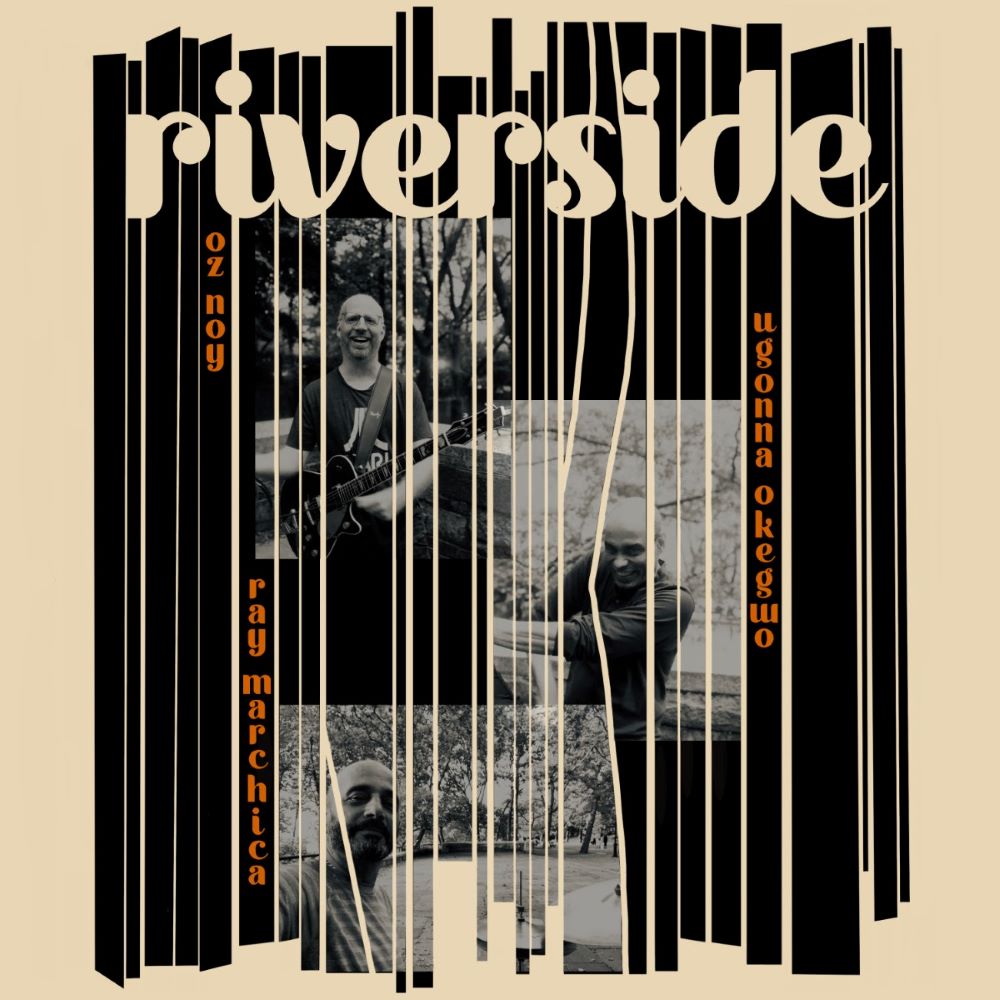
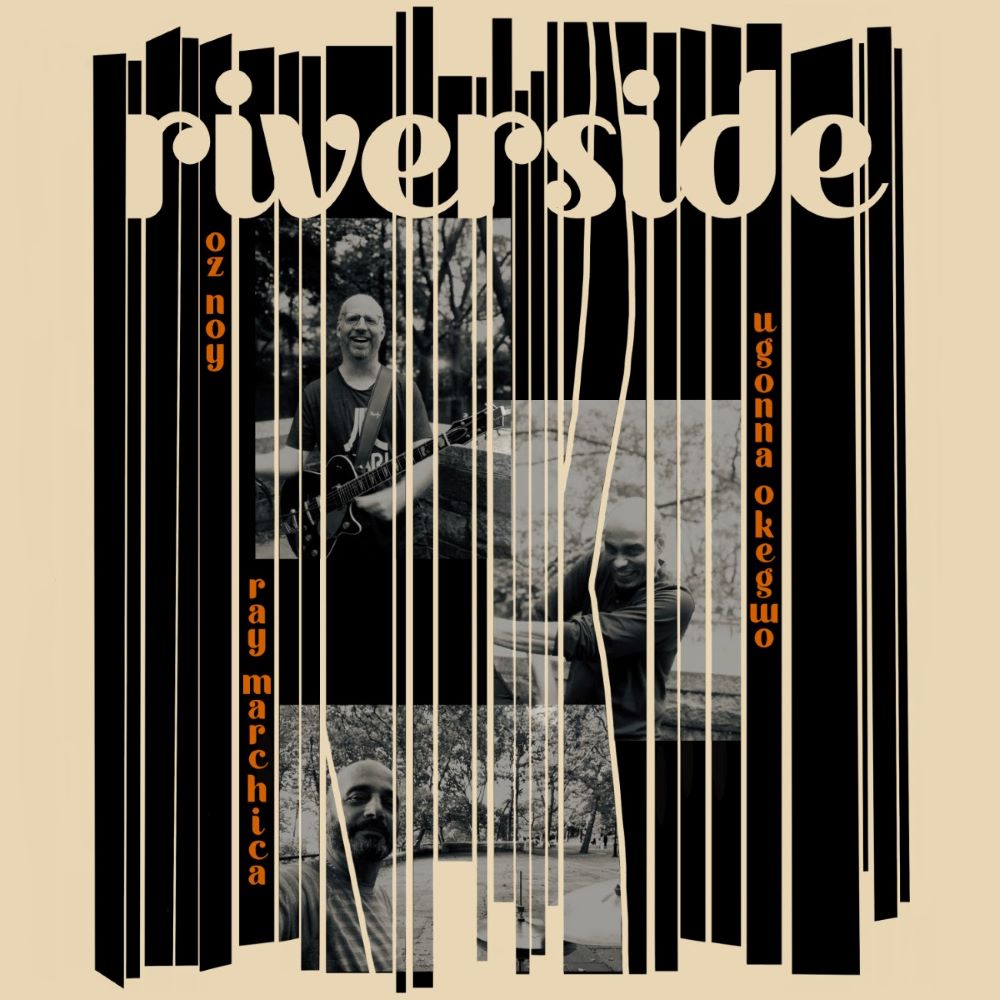
Oz Noy, Ray Marchica & Ugonna Okegwo's 'RIVERSIDE' (January 21, 2022 Outside in Music)

Oz Noy, Ray Marchica and Ugonna Okegwo present Riverside, a new trio recording out January 21, 2022 via Outside in Music

Oz Noy, Ray Marchica and Ugonna Okegwo are pleased to present Riverside, out on January 21, 2022 via Outside in Music. Their first release as a trio, Riverside is a fresh, life-affirming collection of standards that stems from the group’s spontaneously assembled outdoor jams held in Riverside Park, New York City during lockdown.

As individuals, this dynamic trio has a wide range of performing credits – Okegwo as a celebrated sideman with Jacky Terrasson and Tom Harrell, Marchica as a Broadway and session player (plus two albums as a leader) and Noy as one of fusion’s most sought after individual voices. All three have worked on the New York scene for the past two decades, so when the COVID-19 lockdown hit, it was a huge blow to both their livelihoods and their creative spirits. Then, summer came around, and the chance presented itself for housebound musicians to meet up and play outdoors. Oz called upon his neighbors Ugonna and Ray and invited them down to the park for a jam session – Ugonna on upright, Marchica with a small drum set, and Noy on electric guitar, with a battery-powered amp. 

Their spot was pretty picturesque. “We set up perfectly: you could look down to the Hudson River, and then across to New Jersey – it was a lovely environment being there,” reflects Okegwo. It helped the group find a sound too. “It was almost like a little venue,” says Noy, and they weren’t the only ones taking advantage of the accidental bandstand-like coves the park is blessed with. “There were multiple little stages, some people playing bluegrass, some classical. When we started playing, there was nobody in the park, but by October time, people were thinking ‘oh, maybe we can do this too’. We were pioneers,” says Marchica.

The sessions went on through the summer months until the weather turned in October. But instead of packing up entirely, the group went into the studio, satisfied that they had created  a sound, and a feeling amongst the group. “It saved me, it saved all of us – musically and mentally,” says Marchica.

The beauty shines throughout the trio’s creative, yet hands-off, arrangements. “All The Things You Are” opens with a Monk-ish kilter, Noy breezily sweeping over the changes and into some mysterious territories, particularly in the vamped ending, which stretches time effortlessly. “Anthropology” nimbly tiptoes through Charlie Parker’s choppy lines, and “Have You Met Miss Jones” continues the rhythmic trickery, skidding along as Noy veers between lithe straight playing and relaxed swing.
“Billie’s Bounce” is given a makeover by Noy, who ‘figured out a way to play it as a ballad, a slow blues harmonized in a different way’. “Riverside Blues” adds another dimension to the record, a shuffling 12/8 blues-rock written at one of the jams in the park. 

“6/8 Lunch Break” is a chance for Marchica to strut his stuff on an extended solo interlude. Then comes an intriguingly free-form take on “Out Of Nowhere” that embraces the opaque, before a barnstorming take on “Donna Lee”, where Noy shows serious chops. It’s arranged sparsely, letting solo contributions from Noy and Marchica unfurl naturally before an abrupt full stop brings the trio to a halt.

“This Could Be a Start of Something Big” is apt for the group; in what was Okegwo’s first encounter with the standard, the group’s arrangement grew organically week-by-week, in tandem with the rapidly developing bonds tying the trio together. The album ends on a different note – “Sunny” injects Bobby Hebb’s classic track with a healthy dose of musical serotonin, in a rocking, soul-fueled cover that transports the group right back to where they started – the sun-soaked surroundings of Riverside Park.

1. All The Things You Are
2. Anthropology
3. Have You Met Miss Jones
4. Billie's Bounce
5. Riverside Blues
6. 6/8 Lunch Break
7. Out Of Nowhere
8. Donna Lee
9. This Could Be The Start Of Something Big
10. Sunny


Tuesday, January 18, 2022

The Adam Larson Trio - With Love, From Chicago (February 11, 2022 Outside in Music)

1. Angolan Babysitter
2. The Time You Forgot You Knew
3. Kansas to Chicago
4. In Waiting
5. We See
6. Twirl
7. Portrait of Jenny
8. Root Fruit
9. Tierney's Song
10. Firestarter

Adam Larson - tenor saxophone
Clark Sommers - bass
Dana Hall - drums

Mathis Picard - Live at the Museum (January 28, 2022 Outside in Music)

Live at the Museum is the thrilling sophomore venture from adventurous pianist-composer Mathis Picard. Recorded in January 2019 at the National Jazz Museum in Harlem, this solo piano work is a sonic journey through which the French-Malagasy artist explores the museum of his own life in music, honoring and spotlighting his roots in jazz, classical, and electronic music. Through Picard's own refined curatorial lens, Live at the Museum honors the works of the great classical and jazz composers that were influential to Picard's personal musical journey with daring and evocative interpretations of classic pieces, and an impressive array of original compositions. Both outwardly expressive and inwardly introspective, Live at the Museum cements Picard's stature as a truly incomparable innovator of his generation.

Live at the Museum comes as Picard is fresh off the heels from his critically-acclaimed genre-bending debut EP World Unity (Outside in Music). Long awaited, Picard finally presents his first solo piano outing allowing his unbridled invention to be heard in a pared-down context - a celebration of his inimitable sound.

1. The Creation of the World
2. Cuttin' Out
3. Earthalude
4. Snake Song
5. Leia's Theme
6. Like Blue
7. Firelude
8. Le Gibet
9. In A Mist
10. Clouds
11. Woodland Fantasy

Friday, January 7, 2022

Have You Heard? Oz Noy, Ugonna Okegwo, Ray Marchica "All The Things You Are" (January 7, 2022 Outside in Music)

Their first release as a trio, Riverside is a fresh, life-affirming collection of standards that stems from the group’s spontaneously assembled outdoor jams held in Riverside Park, New York City during lockdown.

As individuals, this dynamic trio has a wide range of performing credits – Ugonna Okegwo as a celebrated sideman with Jacky Terrasson and Tom Harrell, Ray Marchica as a Broadway and session player (plus two albums as a leader) and Oz Noy as one of fusion’s most sought after individual voices.

All three have worked on the New York scene for the past two decades, so when the COVID-19 lockdown hit, it was a huge blow to both their livelihoods and their creative spirits. When, summer came around, and the chance presented itself for housebound musicians to meet up and play outdoors. Oz called upon his neighbors Ugonna and Ray and invited them down to the park for a jam session – Ugonna on upright, Marchica with a small drum set, and Noy on electric guitar, with a battery-powered amp. The sessions went on through the summer months until the weather turned in October. But instead of packing up entirely, the group went into the studio, satisfied that they had created a sound, and a feeling amongst the group. We welcome their debut single, "All The Things You Are".


Friday, October 29, 2021

Dave Meder's UNAMUNO SONGS AND STORIES (w/ Miguel Zenón, Philip Dizack) is out October 29, 2021

Celebrated Pianist, Composer and Educator Dave Meder Announces His Impassioned Sophomore Release Unamuno Songs and Stories, Out October 29 via Outside in Music

Outside in Music is thrilled to announce the October 29th release of Unamuno Songs and Stories, the latest album from pianist and composer Dave Meder. This release is a stunning response to recent sociopolitical turmoil in the United States, using the writings of Spanish Civil War-era philosopher Miguel de Unamuno as a historical analogy. Making poignant statements about this “critical moment” in American history, Unamuno Songs and Stories aims to celebrate life with themes of hope, love, and peace just as much as it serves to raise awareness of the growing threats to American democracy. Meder’s potent pianistic refrains are heard here alongside bassist Marty Jaffe, drummer Michael Piolet, trumpeter Philip Dizack and alto saxophonist Miguel Zenón. The official release celebration of Unamuno Songs and Stories will take place at the Soapbox Gallery in NYC on November 16th. More performances are scheduled through the United States; more information can be found here and below. 

“It feels as though we are at a societal breaking point”, Meder exclaims, “Increasingly, our political discourse pits factually justified positions against pure misinformation, and independently verifiable truth against “personal truth.” It forces us into tribes, so that pride and ego prevent us from evolving in our own understanding of the world.” The artist finds historical context for this polarized political climate in the life and work of a complex figure: Miguel de Unamuno (1864 – 1936), a Basque/Spanish philosopher, poet, novelist, essayist, and academic most known for his work in the lead-up to the Spanish Civil War. Unamuno was a complicated man whose life and work are marked by the conflict between liberalism and staunch Catholicism, and his documentation of democracy sliding gradually into dictatorship has long fascinated Meder. “In 2020, when a global pandemic, a renewed struggle for racial reckoning, a fraught national election, and a contentious political transition left so many of us scrambling to explain it all…I reached again for Unamuno.” The music of Unamuno Songs and Stories is centered firmly around the jazz tradition while drawing thoughtful influences from an array of sources including Bach chorales, the blues, minimalism, and the piano works of Spanish composer Isaac Albéniz. 
Dave Meder by Adrien H. Tillmann

“When I compose, I find that improvised solos usually serve as means to a musical end, not ends in and of themselves… all solos on this album have a purpose within the overarching compositional structure of the piece. The soloists cannot simply “improvise” – they must know the function of their solo relative to the rest of the composition. If they fail to achieve the musical goal that I set for their improvisation, the whole composition fails to reach its potential in that performance. As a composer, it is a risk to delegate such tremendous responsibility to other players, especially given they had nothing to do with the initial creation of the music. It certainly takes time to find the right kind of artist for such a project: one who can not only “blow the horn” but can also be a “co-composer”, I could not be more pleased with how Marty, Michael, Philip, and Miguel beautifully merged their own individuality with my compositional vision on these tracks,” explains Meder. 

Meder’s true stroke of genius is two-fold; the seamless integration of Unamuno’s subject matter, ideologies and methodologies into his own compositional process and his ability to communicate within these evocative compositions with nuance, grace and great intensity. This is perhaps most evident in the composition “I Look For Religion in War”, a spirited piece derived from a line in an Unamuno philosophical essay entitled “De la correspondencia de un luchador” (“From the Writings of a Warrior”). The essay itself twists our conventional idea of peace by casting it as a fleeting, temporary form of reality. True serenity, as Unamuno suggests, can be found in the regularity of warfare and battle. As such, Meder employs a somber, driving ostinato reminiscent of a war chant, as he and trumpeter Philip Dizack improvise beautifully atop – demonstrating the grace within warfare. At the point in the piece where the gnashing, fighting and struggle is reaching a climax, the music collapses into an idyllic, hymn-like melody loosely influenced by the piano works of Spanish composer Isaac Albéniz, followed by a rhapsodic bowed bass solo. At this point, we have become comfortable with the idea that the human struggle itself is our religion, and by the tone of the music, we have come to “worship” it as such.

“The Lake and the Mountain” is a musical representation of two primary symbols from Unamuno’s best-known work, “San Manuel Bueno, Mártir” (Saint Emmanuel the Good, Martyr). The short story centers around Don Manuel, the priest of a fictional rural village and his spiritual doubts – the mountain symbolizes faith and its promise of eternal life while the lake represents internal struggles, doubts and complexities. Meder remarks “Using the inimitable musical voice of Miguel Zenón, we attempt to paint this sense of spiritual duality, conflict, and agony.” Through its instrumentation and dynamic sensibilities, the piece highlights the duality and raw emotion of the original story.
Miguel Zenón, Dave Meder, Michael Piolet, Marty Jaffe by Adrien H. Tillmann

“Exile” is an allusion to Miguel de Unamuno’s time in physical exile from Spain (1924-1930). The writer’s outspoken critics of the Primo de Rivera dictatorship cost him his position at the University of Salamanca and forced him to leave the country until a republic was reestablished in 1931. But, on a deeper level, the piece embodies the feelings of mental and emotional exile: the sensation of profound disillusionment at the actions of leaders and fellow citizens. Beginning with a tender bowed bass solo from Marty Jaffe, the piece reflects the notion of physical, emotional and mental exile and re-assembly as a people. As Meder notes “The group begins as a unified society, playing the melody together, but we quickly become exiled from each other, pursuing our own paths, rhythms, phrases…conversing here and there but largely existing independent of one another. As the piece builds, we begin to come together again.. And all the while, we are beginning to build something together: a grand and beautiful musical metropolis, if you will, where everyone maintains their individual voice while being an integral part of the whole. More importantly, everyone has an equal right to express their individual voice within this whole. Eventually, we reach a sort of catharsis, an outpouring of love and beauty, and the recognition of the collective pain we have experienced. Back together again, we return to the melody in a new spirit: one of hope, optimism, and a sense of rebirth.”

Unamuno Songs and Stories comes as Meder is fresh off the heels from his critically-acclaimed debut release Passage through which the pianist established himself as a uniquely versatile and broad-minded artist. Meder’s panoramic musical approach has earned him slots in the Thelonious Monk International Jazz Piano Competition, the American Pianists Awards, the ASCAP Young Jazz Composers Award, and the International Songwriting Competition. Meder has headlined at a host of prominent performance venues and educational residencies around the world including Jazz at Lincoln Center, Smalls Jazz Club, The Kennedy Center and Beijing Normal University’s International Music Festival. Meder is a recent recipient of the prestigious Fulbright US Scholar Award for Visual and Performing Arts, which brings him to Egypt as a guest artist and lecturer in 2022.

1 A Song of Secret Love (6:40)
2 Augusto’s Dilemma (6:48)
3 Meditation: Doubt (1:00)
4 I Look For Religion In War (8:14)
5 If Ever I Would Leave You (4:59)
6 The Lake and the Mountain (7:29)
7 Meditation: Faith (1:26)
8 Century Rag (6:18)
9 Exile (7:50)

Monday, October 18, 2021

André Carvalho - Lost in Translation (October 2021 Outside in Music)

Humanity is creating a more and more interconnected world. In less than 50 years, we have developed new forms of communication, not only much faster and more accessible, but also with an increased capacity of conveying what we want to express and say. Apparently, the space for misunderstanding should be smaller. However, there are still moments when we are unable to express exactly what we want, lacking words that serve the purpose. These would be extremely precious for the clarity of our speech.

If it is a fact that there is, and probably always will be, a gap between meaning and interpretation, emotion and intention, it is also true that by expanding our lexicon, we automatically increase our expression capacity. However, if there is no such word in our language, it does not mean that there isn’t in another.

This is how the so-called untranslatable words entered my world and inspired me to write a new cycle of compositions titled “Lost in Translation”. These words can be the solution to things we have always thought, but never knew how to name them. Or, they can even mean something we never thought of, opening up our mind for new perspectives and cultivating the imagination.

Words are without any doubt a tool and, like any tool, they are born after a certain need. That’s why it is so curious to notice that a given culture doesn’t have a word for a certain idea / object / action even if this is present in their lives. At the same time, another culture felt the need to create their own word. It is also extremely curious and sometimes hilarious to observe that some of these untranslatable words are occasionally associated with the lifestyle, the geographical location or even the philosophy of a particular culture. A great example is Karelu, a Tulu word that means the mark left on the skin by wearing something tight.

Although we want to systematically differentiate and leave our mark in the world, the truth is that we are all made of the same material. That’s why languages have an enormous weight and are responsible, in large part, for acculturation. It is in this process that the identity of a civilization is created. For me, these unique and distinct characteristics make the world so special and Human civilization so interesting.
It’s unquestionable that music is a language and curiously an universal one. From the most remote tribes of Papua New Guinea to the cosmopolitan and avant-garde movements of large cities, music serves as a "vehicle" for communication and interaction. It’s this link between language and music, unique words and unique musical moments that “Lost in Translation” explores. If learning a new word is, by itself, already a rewarding and exciting thing, if we add music to this learning process, the experience will surely be enhanced.

Wittgenstein said that "the limits of my language mean the limits of my world". I truly believe this. This does not mean that the world is not bigger than what we know. In fact, it is bigger and deeper than what we really know and the mental projection we create of it, that is, our reality. That is why, I believe that as we learn new words, our conscience becomes more sensitive to others, we become more empathetic and our world becomes richer.

The same happens as we are in contact with unfamiliar music. That’s also why “Lost in Translation” embraces the unknown, by having a very strong improvisational and spontaneous component, making each performance very unique.

Musically, this new cycle was inspired by the influences that I have absorbed in recent years, not only because I am exposed to the New York Jazz scene, but also because I travel regularly to other countries. The relentless search for new sounds has led me to discover and explore musical areas such as improvised music, experimental music and contemporary classical music. 

1. Luftmensch 05:42
2. Kilig 05:10
3. Uitwaaien 08:40
4. Goya 04:04
5. Alcheringa 05:08
6. Kalpa 05:21
7. Karelu 08:41
8. Murr-ma 02:36
9. Mångata 04:54
10. Boketto 03:40
11. Resfeber 05:01
12. Wabi-sabi 02:12

José Soares - alto saxophone
André Matos - guitar
André Carvalho - double bass and composition

João Almeida - trumpet (4, 7, 11)

Recorded at Teatro Municipal Amélia Rey Colaço in December 2020.
Mix and master by Tiago de Sousa.
Artwork by Margarida Girão.
Out on Outside in Music.

Friday, October 8, 2021

Trumpeter Skyler Floe's Debut Album ABSTRACTION due out October 8th, 2021 via Next Level

Trumpeter Skyler Floe Announces Captivating Debut Album Abstraction,
out October 8th via Next Level

Next Level, an imprint of Outside in Music, is thrilled to announce the October 8, 2021 release of Abstraction, the debut album by rising star trumpeter Skyler Floe. On this nine-track collection of compelling original compositions, the New York-based musician showcases his voice as both a composer and soloist. Floe’s debut release is both a nod to the music of today and a showcase of the artist’s well-versed vocabulary in the history of jazz, calling upon his roots as a native of the greater Seattle area as well as a former resident of Indianapolis. Joining Floe are four of the top musicians on the Indianapolis jazz scene including tenor saxophonist Sean Imboden, pianist Steve Allee, bassist Nick Tucker, drummer Chris Parker and special guests saxophonist Greg Ward and vocalist Samantha Louise. 

Born and raised in Lynnwood, Washington, a suburb north of Seattle, Skyler Floe first began playing music as a child. After picking up the trumpet for the first time at age 10, Floe went on to play in the highly-decorated Mountlake Terrace High School jazz band, and as a senior, participated in the Essentially Ellington Jazz Festival, where Wynton Marsalis awarded him the Outstanding Trumpet Soloist Award. He went on to attend Central Washington University, and during this time started to develop a reputation as a star trumpeter in both the jazz and classical realms. After finishing his studies at CWU, Floe spent two years studying at the Institute of Jazz in Graz, Austria under the tutelage of Jim Rotondi. While in Graz, Floe performed and recorded with musicians from all over the world in Austria’s lively jazz scene. He eventually formed his own group with some of these musicians named The Chordless Quartet. Following his time abroad, Floe went on to complete his MM in Jazz Studies at Indiana University, where he is currently an associate instructor at Indiana University’s Jacobs School of Music. In 2019, Floe was one of five trumpet players selected to compete in the prestigious Carmine Caruso International Jazz Trumpet Competition. Floe now resides in New York City. 
The music featured on Abstraction reflects several pivotal moments from Floe’s life – particularly from the past ten years, and notably those that had an impact on how he hears and interprets music. “An abstract is a removal of unnecessary details until only the most important points remain. This album is the result of taking my musical journey through that process. Boiling down my adult life into the moments that forever changed how I hear music,” Floe shared. While the inspiration ranges from a ten year period, the majority of the music on Abstraction was written recently, with the oldest composition dating back only to 2017. “When revisiting some of my older compositions, I realized that what they had been missing all along were arrangements that adequately told the stories that inspired their conception in the first place. Ultimately, that was the focus of this album; to have the composition, arrangement, and performance of each tune be in sync with the story behind it.”

“The album kicks off with “Terrace”, a lyrical homage to the town Floe grew up in, Mountlake Terrace, the place where he remembers falling in love with jazz. “I listened to the albums of trumpet greats Roy Hargrove, Wynton Marsalis, and Maurice Brown non-stop and loved any tune with an odd-meter and groove that made you move. I used to look back at my musical tastes from that time and scoff at how ‘unrefined’ they were. But this composition acts as a revitalized appreciation for the jazz albums that started it all for me. Whether they are timeless or not, they are timeless to me,” reflects Floe. 

The wryly titled “Opinionated (is Putting it Lightly)” is the trumpeter’s oldest composition on the album, written during his time in Graz. During this period, Floe was obsessively consuming the chordless quartet albums of Ornette Coleman and Miles Davis’ second quintet bootlegs, and was enamored by these musicians’ ability to be unapologetically themselves. “These albums helped me realize that if I wanted to make my unique mark on this music, I also had to be comfortable with who I am even when others didn’t dig it,” he reflects. “Opinionated” follows a narrative throughout it’s 7+ minutes: the opening head represents Floe as he is, “opinionated to a fault”, and the trumpet solo that follows represents self-reflection. The new material on the final head-out represents that he has found acceptance. 

Tones shift on the title track, which features the stunning vocals of Samantha Louise, and her original lyrics. Intended at first to be a short lullaby, “Abstraction” evolved into one of the album’s most complex arrangements. Another highlight alongside the gloss of Louise’s voice is bassist Nick Tucker’s impressive solo.

The centerpiece of Abstraction is a three-part suite comprising three dynamic movements: I. A Short Climb in Bare Feet, II. Reason’s Last Pitch, and III. The Plunge. “There have been a few times in my life when I’ve reached a point of no return; where I needed to just jump in and see where the current takes me. Sometimes after making a decision like that, I can’t help but wonder what my life would have been like had I gone down road A instead of B,” reflects Floe. This trio of pieces describes the “self-inflicted turmoil” the artist often endures before making an important decision. 
Photos of Skyler Floe by Anna Powell Denton

Next up is “Odd Chicago”, an homage to the Windy City and its thriving jazz scene. When in Indiana, Floe would often travel to Chicago to check out its music and consequently found himself thrown into unfamiliar musical situations.” These experiences are mirrored on “Odd Chicago”, which is filled with uneven phrase lengths and unconventional harmonic rhythms and forms.

Scorcher “For Real” is an ode to the incomparable Woody Shaw. One of Floe’s favorite trumpeters, the young musician has always found solace when revisiting Shaw’s vast catalogue. This burning blues features fiery solos by the horns, as well as a rapturous drum solo from Chris Parker. Abstraction closes with “The Top Floor”, a musical showcase of the top-notch musicians featured on the record. Very little direction was provided by Floe when this track was recorded, allowing each musician to bring their own musical personalities to the table. “I knew I could trust each of them to follow their ears first and foremost and the end result was something truly original and free of preconceived notions.” 

With the release of Abstraction, Skyler Floe establishes himself as a fresh and innovative new voice on the contemporary jazz scene. This project releases via Next Level and will be available on all platforms on October 8, 2021. 

1 Terrace (5:11)
2 Opinionated (is Putting it Lightly) (7:24)
3 Abstraction (feat. Samantha Louise) (8:04)
4 I. A Short Climb In Bare Feet (3:04)
5 II. Reason’s Last Pitch (5:34)
6 III. The Plunge (3:16)
7 Odd Chicago 6:51
8 For Real (3:44)
9 The Top Floor (10:23)