Showing posts with label Nels Cline. Show all posts

Friday, March 25, 2022

The Michael Leonhart Orchestra presents 'The Normyn Suites', due out March 25, 2022 (Sunnyside Records)

The Michael Leonhart Orchestra presents The Normyn Suites, a new masterwork to be released on March 25, 2022 via Sunnyside Records 

Featuring appearances by Elvis Costello, Bill Frisell, Joshua Redman, JSWISS, Larry Goldings, Nels Cline, Donny McCaslin and more 

Release show at Rizzoli Bookstore on April 10, 2022

‘The Normyn Suites’ is an elegy; to listen is to spend time in that space of loss, reckoning, questioning, and mourning. At the same time, though, with each note, each phrase, we are propelled back into life."
– Alexandra Horowitz, author of Our Dogs, Ourselves: The Story of a Singular Bond 

"Threads the needle between pop and experimental music seamlessly… gorgeous." 
– Forbes

Sunnyside Records is proud to announce the March 25, 2022 release of The Normyn Suites by the Michael Leonhart Orchestra. The Normyn Suites is both a requiem and celebration, inspired by the life and death of the bandleader’s 15-year-old dog, a female mini dachshund named Normyn. The third album by the Michael Leonhart Orchestra features a pair of suites – the first of which is an exploration of the stages of grieving, while the second is a reflection on love and loss. In keeping with the MLO’s eclectic musical palette, the album features several collaborations with Elvis Costello, with contributions by Bill Frisell, Nels Cline, and JSWISS as well as two bonus offerings with Donny McCaslin. The release of The Normyn Suites will be celebrated at Rizzoli Bookstore in New York City on April 10. 

“The Normyn Suites is an elegy; to listen is to spend time in that space of loss, reckoning, questioning, and mourning. At the same time, though, with each note, each phrase, we are propelled back into life,” reflects author Alexandra Horowitz in the stirring liner notes. The first part is titled “The Normyn Suite #1: (Soundtrack to the Five Stages of Grieving)”, and was inspired by “The Kübler-Ross Grief Cycle”, a model introduced by Elisabeth Kubler-Ross in her 1969 book On Death and Dying. “The Five Stages of Grief” is a critically acclaimed study on how humans handle loss.

For this suite in five parts, Leonhart expands the MLO’s live performance palette of brass, woodwinds and strings to include choir and found percussion over gritty breakbeat drums. 
Leonhart shares, “I wanted “Denial” and “Anger” to have an emotional tension and raw quality, almost a whiplash effect, before the contemplative soloing of Bill Frisell over the peaceful “Catharsis”.” The fourth composition, “Nostalgia” opens with a nod to the main melody of “The Dunes Of Cahoon Hollow” (from “Suite #2), orchestrated for choir and monophonic synths before Jim Pugh (trombone) and Walt Weiskopf (tenor sax) take turns as instrumental narrators. Leonhart’s years with Pugh and Weiskopf as part of the Steely Dan horn section inspired him to choose them specifically for their expressiveness and personal experiences with loss. The final movement of the suite,“Acceptance” starts with Leonhart’s mother Donna singing a wordless melody over chamber strings. Leonhart utilizes gospel harmonies and a written soli over a soulful 6/8 groove to represent the peace and empowerment that come with the true recognition of personal heartbreaking loss. 

“The Normyn Suite #2: (Love & Loss)” is a collection of six pieces Leonhart began composing in the final weeks of Normyn’s life, when she was physically too weak to walk and began to lose her appetite. Leonhart would bring her to the studio where she would rest in her favorite bag on top of the grand piano while he played and composed. The six pieces “May The Young Grow Old” (featuring Larry Goldings), “Waking From Sedation” (featuring Bill Frisell), “Freedom From The Pain”, “Unconditional Love”, “La Preghiera”, and “The Dunes Of Cahoon Hollow” take listeners on an dazzling sonic journey.
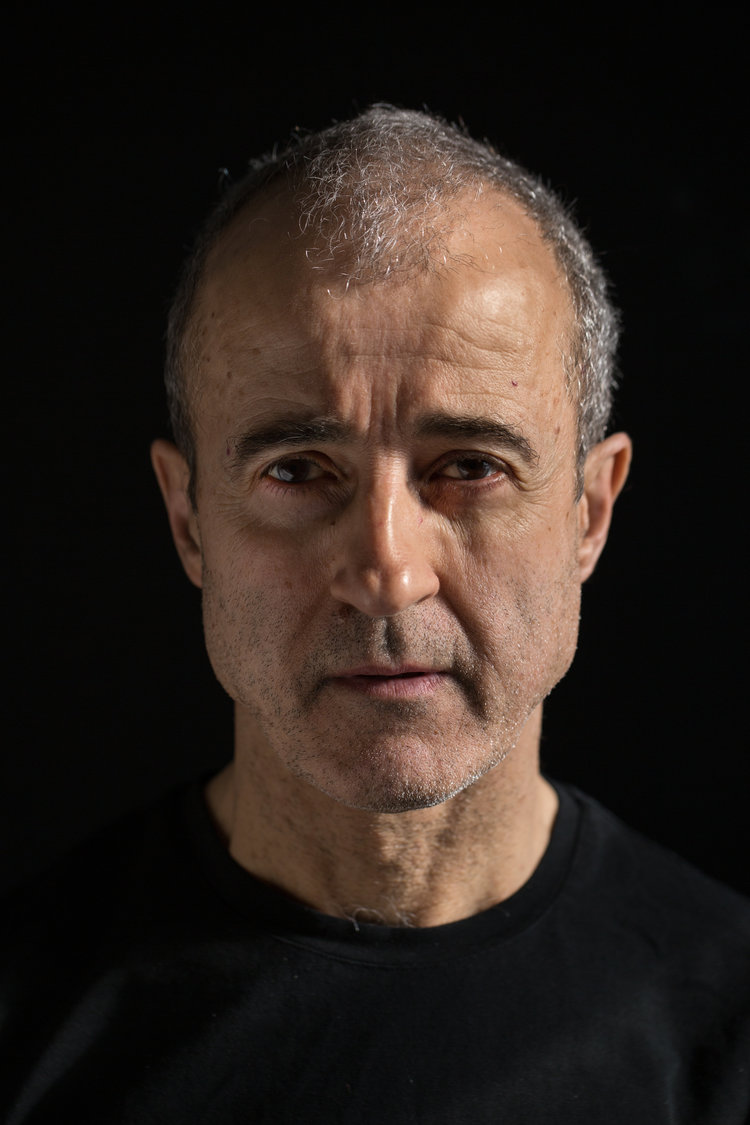
Photos of Michael Leonhart by Shervin Lainez

In addition to the two suites, the album features three songs co-written with Elvis Costello during the quarantine. There are two versions of “Shut Him Down” bookending the suites — one with Joshua Redman, playing his late father Dewey’s newly restored tenor saxophone for the first time on record, the other with Chris Potter on bass clarinet. Costello performs spoken word on “Radio is Everything”, featuring legendary guitarists Bill Frisell & Nels Cline who also co-wrote the songs with Leonhart and Costello. The final collaboration is the driving “Newspaper Pane”.

Two bonus tracks, “Kenny Dorham” and “Wayne Shorter”, present the debut recording of Leonhart’s organ quartet featuring Donny McCaslin. These two songs were initially composed as a birthday tribute to each of these jazz legends, two of Leonhart’s favorite small group composers.

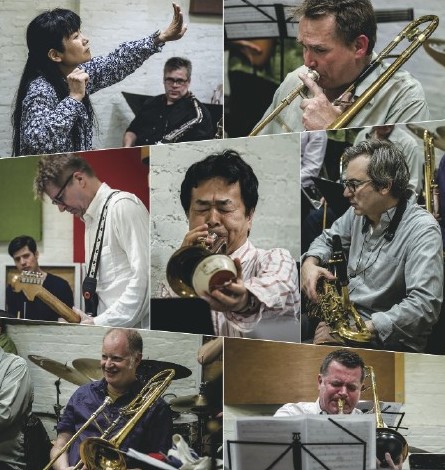
The Michael Leonhart Orchestra developed its singular sound over the course of its monthly residencies at Jazz Standard, one of New York’s most prestigious jazz rooms. Pre-pandemic, Leonhart was steadily honing his vision there, with unconventional instrumentation and a shapeshifting community of sought-after players from a variety of cutting-edge scenes and disciplines. Leonhart’s approach to the MLO is informed by his many other activities and wide-ranging credits: he’s a top-level jazz trumpeter and longtime member of Steely Dan; a gifted and distinctive pianist; a singer, songwriter and film composer; a session player with credits including the Bruno Mars/Mark Ronson megahit “Uptown Funk“; an accomplished orchestrator (Nels Cline’s Lovers) and producer (Donald Fagen’s Sunken Condos, Sachal Vasandani’s Slow Motion Miracles). The polyglot musical worldview Leonhart has developed as a result stamps the MLO’s work at every moment. And the joy he gets from it is infectious. 

Hailed as “a blazing hot mess of awesome” by The New York City Jazz Record, the Michael Leonhart Orchestra (MLO) traverses a huge swath of musical terrain, guided by the highly developed ears, ceaselessly omnivorous tastes and playful yet meticulous artistry of its leader, Michael Leonhart.

The Michael Leonhart Orchestra features a who’s-who of today’s contemporary musical talent including Keyon Harrold, Catherine Russell, E.J. Strickland, Freddie Hendrix, Eric Friedlander, Ryan Keberle, and more.

1 Shut Him Down
2 The Normyn Suite #1: Denial
3 The Normyn Suite #1: Anger
4 The Normyn Suite #1: Catharsis
5 The Normyn Suite #1: Nostalgia
6 The Normyn Suite #1: Acceptance
7 Radio Is Everything
8 The Normyn Suite #2: May the Young Grow Old Featuring
9 The Normyn Suite #2: Waking from Sedation
10 The Normyn Suite #2: Freedom from the Pain
11 The Normyn Suite #2: Unconditional Love
12 The Normyn Suite #2: La Preghiera
13 The Normyn Suite #2: The Dunes of Cahoon Hollow
14 Shut Him Down (Video Edit)
15 Newspaper Pane
16 Kenny Dorham
17 Wayne Shorter

Friday, August 27, 2021

Douglas J. Cuomo (feat. Nels Cline and the Aizuri Quartet) - Seven Limbs (August 27, 2021 Sunnyside Records)

Composer Douglas J. Cuomo’s new piece, Seven Limbs, is unique and unusual. The suite features the simultaneous performance of inspired improvisations by guitar genius Nels Cline and meticulously-notated music performed by the Grammy-nominated Aizuri Quartet. Inspired by an ancient Buddhist prayer, also called Seven Limbs, it is music of great power that is put in service to a spiritual ideal, in the tradition of John Coltrane’s A Love Supreme and the music of Arvo Pärt.

Cuomo began his musical studies as a jazz guitarist, having studied at both Wesleyan and Miami University, but his interests led him away from instrumental performance to the world of composing, where he remained mainly self-taught. Cuomo found success in the early 1990s writing music for film and television, including the highly regarded drama series, Homicide: Life on the Street. After 15 years in the industry, Cuomo decided to step back and focus on composing for passion projects in theater and contemporary classical fields.

Also a practicing Buddhist, Cuomo writes describing why he choice to compose around the Seven Limbs: “The practice is about exploring your mind and facing what’s there. I tried to make the music reflect the same thing — stillness, turmoil, suppleness, resistance, euphoria, high drama. I wrote it to be like a dream, like looking inward and discovering a terrain.”

Seven musical movements aurally represent the seven parts of this particular prayer, namely: “Prostration,” “Offering,” “Confession & Purification,” “Rejoicing,” “Requesting the Turning of the Wheel of Dharma,” “Beseeching the Buddhas Not to Pass Away,” and “Dedication.” To illustrate the emotive depth of the practice, Seven Limbs presents a kaleidoscopic array of sounds and moods, evoking moments of meditative tranquility, battles with inner demons, and sudden, profound bolts of clarity. Like the mind, the music is by turns wild and unruly or calm and single-pointed.
The music on seven limbs was written specifically for Cline and the Aizuri Quartet, a string quartet composed of violinists Emma Frucht and Miho Aegusa, violist Ayane Kozaasa, and cellist Karen Ouzounian. Cuomo says: “I intended to allow Nels the opportunity to play in all the different ways that he does - explosively and delicately, with lots of electronic effects or totally acoustic. His range drew me to him for this project but equally important, even in his sonic mayhem mode, he is always wonderfully sensitive and reactive to what’s going around him musically. And the first time I heard the Aizuri Quartet, I was knocked out by their sound, precision, and rhythmic suppleness. They have such a beautiful musical and personal energy, and it just beams out at you from the stage. I knew I could write the kind of demanding music I was imagining and they would just eat it up.”

This is not the first time Cuomo has combined jazz improvisation with other musical forms. He is currently composing a major piece for saxophonist Joe Lovano and full orchestra to be performed next year by a number of major orchestras throughout the world. Cuomo’s two chamber operas written for the Brooklyn Academy of Music, Arjuna’s Dilemma and Savage Winter, both combine contemporary classical ensembles with improvising musicians from the jazz, North-Indian classical, and rock musical traditions.

“My goal for this kind of writing has always been to build a landscape that is slightly unfamiliar for all the players," Cuomo says, "where the ground is always shifting a bit in unexpected ways. I want them all to be able to do what they do best, but in a slightly different context than they are used to."

Despite being written and recorded during the COVID pandemic, Seven l\Limbs was a true collaboration. Cline and Cuomo met with instruments in hand to talk guitar sounds just before lockdown. Cuomo Skyped and exchanged written music and rough iPhone recordings with the Aizuri. Then in February of 2021, everyone assembled for rehearsal, three livestreams, and the recording of the piece. Though masked and socially distanced, the joy everyone felt to be in a room making music together after so many months of isolation was palpable and it shows in the recording. 

1. Prostration - Part I
2. Prostration - Part II
3. Prostration - Part III
4. Offering - Part I
5. Offering - Part II
6. Offering - Part III
7. Offering - Part IV
8. Confession & Purification - Part I
9. Confession & Purification - Part II
10. Rejoicing - Part I
11. Rejoicing - Part II
12. Requesting - Part I
13. Beseeching - Part I
14. Beseeching - Part II
15. Beseeching - Part III
16. Dedication - Part I
17. Dedication - Part II
18. Dedication - Part III

Douglas J. Cuomo - composer
Nels Cline - guitars & electronics

Aizuri Quartet:
Emma Frucht - violin
Miho Saegusa - violin
Ayane Kozasa -viola
Karen Ouzounian - cello

Monday, June 21, 2021

Tim Berne - 7x (June 2021 Screwgun Records)

1. Chang 06:55
2. The Water People (For Brian Horner) 08:45
3. 7x 09:43
4. Flies 07:17
5. A Pearl In The Oliver C. 04:15
6. Showtime (For Don And Thelma Cline) 12:07

Tim Berne: Alto Saxophone on all selections
Alex Cline: Percussion on Chang, Water People, Flies and Showtime
Nels Cline: Electric 6-String Guitar on Chang, 7X and Showtime Electric 12-String Guitar and Hawaiian Steel Guitar on Water People
Vinny Golia: Baritone Saxophone on Chang, 7X, Flies, Pearl and Showtime Flute, Bassoon and Khene on Water People
Roberto Miranda: Bass on all selections
John Rapson: Trombone on Flies, Water People and Showtime

All Compositions Tim Berne Party Music BMI

℗©1980 EPC 36K

Recorded at Intermix Studio in Los Angeles, January 8, 1980 Special thanks to Michael Preussner for the wonderful gong Recording equipment supplied by Recording Services Co., Studio City

Recording Engineer: Bruce Bidlack Mastered by Bob Ludwig, Masterdisk Album Cover Design by Kikuchi-Oji Design, Inc., New York Front Cover Photography: Alan Kikuchi

Executive Producers: Gary Halvorson and Big Al Produced by Brian Horner, Alex and Nels Cline and Tim Berne

Back Cover Photos: Harry Zeitlin

Printed in The USA

Friday, April 6, 2018

The Nels Cline 4 - Currents, Constellations (BLUE NOTE April 13, 2018)

Guitarist Nels Cline debuts a new band with the April 13 release of Currents, Constellations (Blue Note) featuring The Nels Cline 4, an intrepid unit that builds upon Cline’s acclaimed collaboration with guitarist Julian Lage by adding the fierce and versatile rhythm section of bassist Scott Colley and drummer Tom Rainey. The album’s lead single “Imperfect 10” is available to stream or download today


Guitarist Nels Cline debuts a new band with the April 13 release of Currents, Constellations (Blue Note) featuring The Nels Cline 4, an intrepid unit that builds upon Cline’s acclaimed collaboration with guitarist Julian Lage by adding the fierce and versatile rhythm section of bassist Scott Colley and drummer Tom Rainey. The album’s lead single “Imperfect 10” is available to stream or download today

The Nels Cline 4 will celebrate the album’s release with a show at (le) poisson rouge in New York City on April 16. Tickets go on sale here on Friday, March 9 at 12:00pm ET. A European tour will follow, with Cline joined by Lage, Rainey, and bassist Jorge Roeder.

Of all the rich and varied projects guitarist Cline has pursued since his emergence as a leader in the late 1980s, his two-guitar duo with Lage, documented on the 2014 Mack Avenue album Room, ranks among the most special. “When Julian and I started playing together it kicked my ass hard,” Cline told JazzTimes around the time of Room’s release. “At the same time it inspired me and refreshed my soul.” Lage, for his part, declared he had “found his people” playing with Cline: “At last I found a scenario where … you could be free and adventurous, you could utilize sound and be extremely melodic and evocative.”


“Even in the earliest days of the duo we used to say, ‘I wonder what we’d do if we ever had a rhythm section,’” Cline recalls. In 2016 he decided to find out by inviting Colley and Rainey to collaborate with he and Lage during a residency at The Stone in New York City. “I brought in a few themes and we just kind of went for it. Everyone was enthusiastic about continuing the work.”

Known as the lead guitarist of Wilco since 2004, and one of Rolling Stone’s “100 Greatest Guitarists,” Cline is coming off the success of his 2016 Blue Note debut Lovers, a “quietly ravishing double-album” (NY Times) featuring Cline with a large ensemble conducted and arranged by Michael Leonhart that was “wildly inventive in its watercolored way” (Rolling Stone). On Currents, Constellations Cline embraces a sparser but edgier instrumentation, which serves the adventurous thrust of the music, brimming as it does with raw energy and wild beauty.

1. Furtive (Nels Cline)
2. Swing Ghost '59 (Nels Cline)
3. Imperfect 10 (Nels Cline)
4. As Close As That (Nels Cline)
5. Amenette (Nels Cline)
6. Temporarily (Carla Bley)
7. River Mouth (Parts 1 & 2) (Nels Cline)
8. For Each, A Flower (Nels Cline)


2018 Tour Dates:

April 16 - New York, NY - (le) poisson rouge - ON SALE 3/9

April 20 - Geneva, CH - AMR - Sud des Alpes - TICKETS

April 21 - Oslo, NO - Nasjonal Jazzscene, Victoria - TICKETS

April 25 - Berlin, DE - ZigZag Club - TICKETS

April 26 - Madrid, ES - Sala Clamores - TICKETS

April 27 - Munich, DE - Unterfahrt Jazzclub - TICKETS

April 28 - Ferrara, IT - Torrione San Giovanni - Jazz Club Ferrara - TICKETS

April 30 - Istanbul, TU - Babylon Bomonti Istanbul - TICKETS

May 2 - Kortrijk, BE - Belgium De Kreun - TICKETS

May 4 - Liége, BE - La Cité Miroir - TICKETS

Tuesday, February 20, 2018

Bobby Previte - Rhapsody (RareNoise Records 2018)


In 2015, Previte received the Greenfield Prize in music at the Hermitage Artist Retreat to create a new work. Terminals Part II: In Transit (or RHAPSODY) is the result. RHAPSODY is the second in a three-part series exploring the experience of travel. Terminals Part I: DEPARTURES, is a set of five concertos written for the visionary percussion group SO Percussion and five improvisers. This piece premiered at Merkin Hall in New York City in 2011 and the recording was released on Cantaloupe Music in 2014. In RHAPSODY, the improvisers from DEPARTURES, each of whom had been selected based on their ability to separately carry fifteen-minute concertos, were thrown together into one ensemble.

Beginning from the point of view of a passenger sitting comfortably in an airplane, RHAPSODY twists and turns, until the traveler finally arrives at a strange shore - on a raft.

What is the experience of being in transit? Separated from your home but not yet at your destination, you are neither here nor there, confined with strangers in an intimate environment for a predetermined amount of time. Uncomfortable, yet somehow free. To travel is to be bound with these strangers by faith—faith in the vessel which carries you, faith in the people who operate it, and ultimately, faith in the strangers waiting at your destination.


"In what may prove to be a landmark event, New Music New College presented the world premiere of Bobby Previte’s “Rhapsody (Terminals Part II: In Transit)” at the Mildred Sainer Pavilion on the New College of Florida campus before a near-capacity and highly enthusiastic audience on Friday evening. The concert was the result of Previte winning the 2015 Greenfield Prize.

Composer Previte and his ensemble delivered a remarkably energetic and compelling performance. Their skill and unflagging energy proved to be essential to the performance of this challenging composition, focusing on a sometimes obscure scenario: a recreation of the experience of being “in transit” in life. Many of us have experienced the pervasive combination of both the excitement of discovery and the lack of traditional roots as we move forward in our lives and careers, but have seldom heard this sensation expressed publicly and so expertly as in this intense performance."

- SARASOTA HERALD TRIBUNE


Jen Shyu - voice, er hu
Zeena Parkins - harp
John Medeski - piano
Nels Cline - acoustic guitar, slide guitar, twelve string guitar/p>
Fabian Rucker - saxophone

Rhapsody will be released February 23rd 2018 as CD, double LP and multiple download formats

Pre-Orders start February 16th 2018

Wednesday, November 22, 2017

Satoko Fujii: Satoko Fujii Orchestra New York - Fukushima (LIBRA RECORDS 2017)


Satoko Fujii Confronts the Fukushima Nuclear Accident
in Major New Work for Orchestra New York

Fujii's nuanced musical response to the disaster features some of her most powerful composing for improvisers

"Satoko Fujii's large ensemble music is one of a kind... For avant big band, this is an outfit on the cutting edge." -Grego Edwards, Gapplegate Music Review

"... a triumph of modern big band music, powerfully brought to life by an immensely talented group." -Stuart Kremsky, Journal of Jazz Record Collectors reviewing 2014's Shiki

"The Ellington of Free Jazz." -Cadence Magazine


Fujii conducts ensemble featuring Tony Malaby, Ellery Eskelin, Nels Cline, Dave Ballou, Natsuki Tamura, Joey Sellers, Joe Fiedler, Curtis Hasselbring, Stomu Takeishi, Ches Smith, Andy Laster, Oscar Noriega, and Herb Robertson.


Gathering together her all-star Orchestra New York to record for the tenth time, composer-pianist Satoko Fujii releases Fukushima (Libra, available December 15, 2017), a deeply moving and personal contemplation of the nuclear power plant disaster that shook Japan and the world in 2011. Fujii conducts the 13-piece ensemble in a monumental album-length composition that runs the emotional spectrum from despair to hope. With her characteristic attention to form, texture, and melody, she also provides a platform for some of New York's best improvisers, many of whom were founding members of the band 20 years ago, to make powerful statements of their own. The close collaboration between composer-conductor and performers results in one of the most riveting and moving socially conscious musical statements in recent memory.

"Right after the accident, I was afraid that we might not be able to live in Tokyo or even anywhere else in Japan," Fujii says. "A crazy-big area was affected by radiation and our country is not big. The distance between Tokyo and Fukushima is only around 200 kilometers. I felt hopeless. Of course, there were some people who didn't think it was a serious problem. The worst thing for me was the election right after the Fukushima accident. People still supported the politicians who said we need nuclear reactors. Other people in Japan thought differently and didn't support those politicians. And I have found people all over the world who think differently, as well. Fukushima is one of those issues that connects deeply with other matters in the world now-money, power, nationalism."

Fujii's musical response conveys the full weight of her feelings. Her assured handling of drama and pacing have never been more evident or used to such telling effect. The hour-long piece opens with the simple sound of air passing through instruments, echoing the sound of human breathing, creating a sense of vulnerable humanity that suffuses the entire work. "In the context of Fukushima, the breathing or air sound is peaceful, calm, and life-affirming for me," she says.
Shaping the music in real time as she conducts, Fujii leads the band on a spiritual journey through sorrow, rage, and ultimately to a stunning sense of hope and optimism. "I know we human beings can live brightly in any situation and circumstance," Fujii says. "I would like to believe it is not too late for us to make a change for the better."

Of course, Fujii's compositions are incomplete without improvised contributions from her remarkable ensemble. "My charts for large ensemble are not like classical music that can be played only by reading," she says. "With my charts, I need great improvisers to play and develop them. And with all these improvised parts, I need to conduct and give cues to the band to make the charts work, come together, and feel alive. I feel like the whole band is my instrument."


And what an instrument she has in this band, which includes saxophonists Tony Malaby and Ellery Eskelin, guitarist Nels Cline, trumpeters Dave Ballou and Natsuki Tamura, trombonists Joey Sellers, Joe Fiedler and Curtis Hasselbring, and the blue-chip rhythm team of bassist Stomu Takeishi and drummer Ches Smith, among others. With an ear for creative combinations of voices and contrasting textures and density, Fujii deploys them in different combinations, ranging from solo to duos and trios to full ensemble improvisation, throughout the course of the performance. Highlights include the close interplay between baritone saxophonist Andy Laster and guitarist Cline on the first track (the piece is continuous, but split into five tracks on the disc) and Oscar Noriega's melodic solo cradled by a lovely brass choir on Track 3. A sustained series of alternating passages for duet pairings of trumpeter Herb Robertson with drummer Smith and bassist Takeishi with guitarist Cline highlight the fourth track.

Fujii is also making available a second version of Fukushima, featuring her singing on Track 2. CDR copies of the vocal version of the composition can be ordered on her website: www.satokofujii.com/.

Fujii always tackles big musical ideas in her big band writing and sometimes turns to life's deepest spiritual issues as well. With this ambitious album, her first extended piece for large ensemble that addresses social issues, she has made another step forward with her art. "I just would like to have the listener take in the whole piece as an experience," she says, "and feel something."

Critics and fans alike hail pianist and composer Satoko Fujii as one of the most original voices in jazz today. She's "a virtuoso piano improviser, an original composer and a bandleader who gets the best collaborators to deliver," says John Fordham in The Guardian.

In concert and on more than 80 albums as a leader or co-leader, she synthesizes jazz, contemporary classical, avant-rock and Japanese folk music into an innovative music instantly recognizable as hers alone. Over the years, Fujii has led some of the most consistently creative ensembles in modern improvised music, including the ma-do quartet, the Min-Yoh Ensemble, and an electrifying avant-rock quartet featuring drummer Tatsuya Yoshida of The Ruins.

Her ongoing duet project with husband Natsuki Tamura released their sixth recording, Kisaragi, this year. "The duo's commitment to producing new sounds based on fresh ideas is second only to their musicianship," says Karl Ackermann in All About Jazz. Aspiration, a CD by an ad hoc band featuring Wadada Leo Smith, Tamura, and Ikue Mori, was released this year to wide acclaim. "Four musicians who regularly aspire for greater heights with each venture reach the summit together on Aspiration," writes S. Victor Aaron in Something Else.

She records infrequently as an unaccompanied soloist, but her latest solo album, Invisible Hand, led Dan McClenaghan in All About Jazz to praise her "stream of ideas, eschewing repetition and cliché in the crafting of her solo work, her loveliest and most accessible music." Fujii has also established herself as one of the world's leading composers for large jazz ensembles, leading Cadence magazine to call her, "the Ellington of free jazz."

Thursday, January 28, 2016

Ben Goldberg - Orphic Machine (2015)


Orphic Machine is an ambitious project from clarinetist/composer/bandleader Ben Goldberg, which is arguably a way you could describe any Goldberg project, but he reaches both further out and further back to find his chief motivation this time. Instead of taking his primary cues from a music beacon like Steve Lacy, Thelonious Monk, or even Bob Dylan and Sebastian Bach, Goldberg found inspiration from an old college professor back at Brandeis University in the late ’70’s.

Back then, poet Allen Grossman taught a course on “The Representation of Experience” which introduced Goldberg to the idea of thinking about things unconventionally. Those ideas planted seeds in the young Goldberg that never left him, but also became more poignant during a recent period of deeper reflection. That’s when he decided to revisit Grossman from both his personal recollections and Grossman’s book of maxims The Sighted Singer: Two Works on Poetry for Readers and Writers — a sort of poetry about the role of poetry in mankind — to craft a set of music around these powerful precepts.

Since this is an album built around philosophical poetry and Goldberg is an instrumentalist, it presented a special challenge to Grossman’s former student; though one he’s not unaccustomed to facing. It’s the way he met the challenge that makes Orphic Machine (on sale from BAG Production Records/Royal Potato Family) succeed as a musical tribute to the ideas he encountered over thirty-five years ago. First, he needed Grossman’s verses to be recited in such a way that the words and the melodies blend into a seamless single being. Enter violinist Carla Kihlstedt, whose breathy, lithe delivery brings to life the words, singing them as if it were another instrument.

For this endeavor, in fact, there are an assemblage of exceptional musicians but knowing Goldberg’s career, he clearly picked them because his deep familiarity with them and trust in them, another key ingredient that makes this abstract idea convert into concrete results. Joining Goldberg’s clarinet and Kihlstedt’s violin and vocals are Ron Miles (trumpet), Rob Sudduth (tenor sax), Myra Melford (piano), Nels Cline (electric guitars), Kenny Wollesen (vibes), Greg Cohen (bass) and Ches Smith (drums). Goldberg knows exactly how to deploy all this talent at his disposal, where everyone gets solos but it never feels like they are the variety; it’s all part of the overall fabric of the music. Often more prominent is how, in using jazz and classical music arrangement techniques, they work together to form the complex character of each of Goldberg’s compositions, each of which slices across musical boundaries in forming mini-suites on every track.


Take, for instance, “Immortality,” beginning with Cohen’s ruminative bass figures, segueing into a soft march to match Kihlstedt’s floating recitals, and a chamber sequence sandwiched a rock shuffle that thanks to Cline’s rhythm guitar sounds not too unlike the Rolling Stone’s “Beast of Burden.” Gradually, a dominant note emerges, seemingly from Wollesen’s vibes and gets increasingly insistent as one by one everybody joins in playing it to bring the song to a rousing conclusion.

For most albums, that would be the apogee, but several other tracks are just as aspiring. “Reading” is launched by just a handful of sung poetry, followed by Cohen’s own interpretation of the phrases on bass, and some crafty layering of clarinet, sax, trumpet and violin and vibraphone followed by a swinging solo turn by Melford. The other players return with the meticulously weaved score, a perfect balance of jazz and avant chamber music. Cline’s menacing guitar lurks just behind the front line, embedding yet another element into an eclectic mixture. “Care,” at least as it begins, is a pretty folk strain which suits Kihlstedt’s voice rather well. A syncopated motif led by Smith’s pliant rhythms makes up a key part of an arrangement perfectly fit the elegant, sophisticated melody that unfolds. That would be plenty good enough for this performance but Cline breaks out with some stinging blues phraseology just as Kihlstedt completes her final stanza.

The whole package of these ten tunes culminates into the title song. After a delicate piano intro by Melford, Kihlstedt’s airy voice suddenly appears out of nowhere, repeating the line “The Orphic Machine is the poem: a severed head with face turned away that sings,” which may appear weird in print but the ingenuity lies in Goldberg fashioning music around these and other Grossman aphorisms in such a way that they don’t sound weird at all…and even makes perfect sense sometimes put in this context. The song proceeds in a quiet, almost chamber music manner until Cline’s signature Nordic rage takes over more than nine minutes in, leading a circular figure that recalls (but does not mimic) the extended coda of the Beatles’ “I Want You (She’s So Heavy).” It puts a raucous exclamation point on the album, a release that seemed to be building up and lurking for the entire project. And yet, totally unexpected.

Allen Grossman, by the way, passed away just last year. Orphic Machine is a testament to the immortality of forward-thinking ideas that keep the soul of its originator alive after the body has passed. It’s also testament that a part of Grossman remains alive in Goldberg, who has sublimely assimilated so many disparate influences, and is able to distill them into a product he projects through his own, kaleidoscopic lens.


Ben Goldberg: clarinet
Carla Kihlstedt: vocals, violin
Ron Miles: trumpet
Rob Sudduth: tenor sax
Myra Melford: piano
Nels Cline: guitar
Kenny Wollesen: vibes
Greg Cohen: double bass
Ches Smith: drums

01. Reading
02. Line of Less Than Ten
03. Bongoloid Lens
04. Immortality
05. The Inferential Poem
06. How to Do Things with Tears
07. Care
08. The Present
09. What Was That
10. The Orphic Machine


JAVI