Showing posts with label Nicholas Payton. Show all posts

Saturday, March 19, 2022

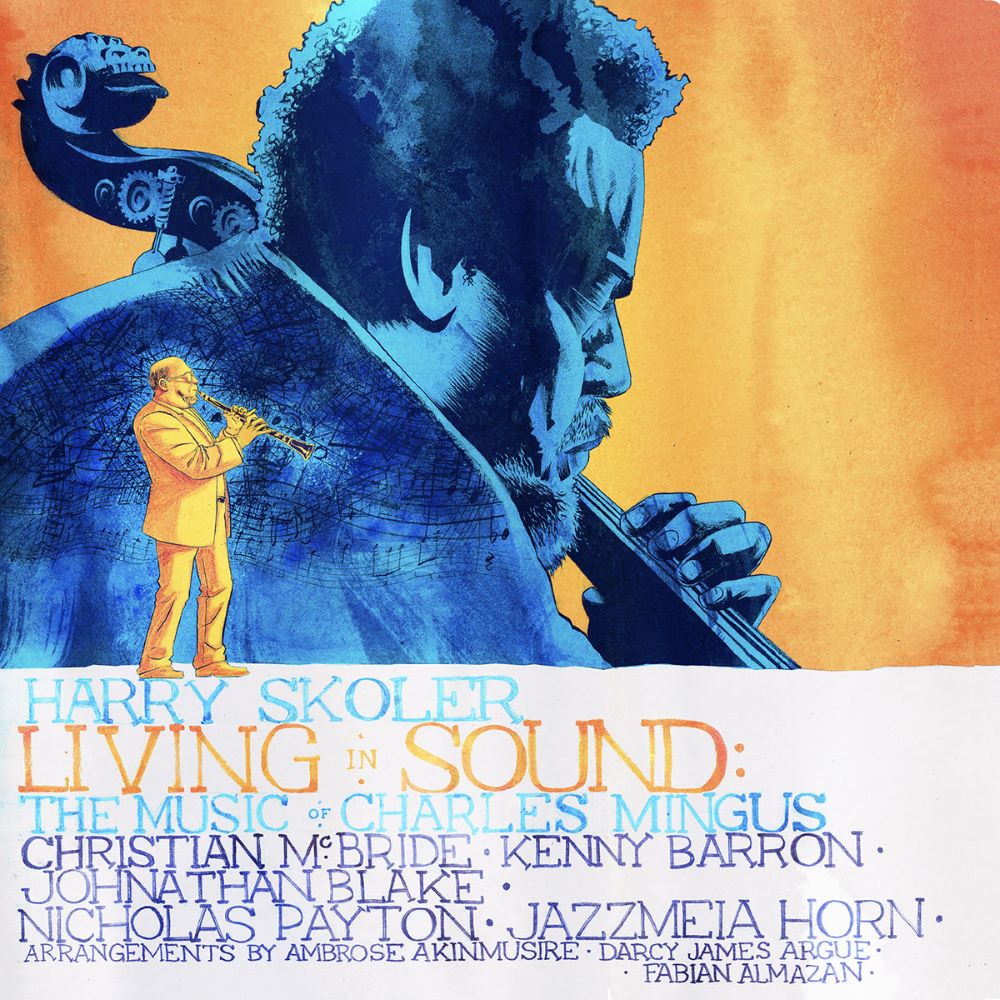
Harry Skoler - Living In Sound: The Music of Charles Mingus (April 22, 2022 Sunnyside Records)

The righteous and bombastic nature of the great bassist/composer Charles Mingus made him a polarizing personality. His unique personality, combined with his groundbreaking music, were magnetic for open-minded listeners. Clarinetist Harry Skoler discovered Mingus and his music early in life. This discovery would change his entire trajectory as a person and musician, which Skoler celebrates on his new recording, Living In Sound: The Music of Charles Mingus.

Skoler had a challenging adolescence while growing up in Syracuse, New York during the 1960s and early 1970s. While seeking solace from a traumatic event, he discovered the world of Charles Mingus, initially from the bassist’s Mingus Moves LP (Atlantic, 1974). The overwhelming impact on Skoler led him to investigate both Mingus’s legendary musical oeuvre and his autobiography, Beneath the Underdog. Mingus’s words and music resonated with the young musician. It is as though he had found truth in the work of one artist.

It wasn’t long before Skoler was able to experience Mingus in the flesh at Syracuse University’s Jabberwocky student club. The experience was beyond anything that Skoler had experienced up until then. Mingus’s powerful presence and command were larger than life. The experience was imprinted deeply on Skoler and is represented in an original graphic story by Dave Chisholm included with Living In Sound.

Over forty years later, Skoler already had a wonderful career as a working musician and professor at the celebrated Berklee College of Music. In 2018, his life was saved from a ruptured artery; then depression set in. This is when Skoler met saxophonist Walter Smith III. Meeting Smith proved to be the catalyst and spark that Skoler needed. Skoler immediately felt that he needed to record again and asked Smith if he would be willing to produce a new album, to which Smith agreed.

It was the collaborative effort of Skoler and Smith that proposed a project celebrating Mingus with strings. Skoler was excited by the possibilities and the project went forward with Smith suggesting the string quartet, jazz accompanists, and arrangers for the pieces. The producer was able to gather an all-star group, which included pianist Kenny Barron, bassist Christian McBride, drummer Johnathan Blake, trumpeter Nicolas Payton, and vocalist Jazzmeia Horn. A string quartet of violinists Megan Gould and Tomoko Omura, with violist Karen Waltuch and cellist Noah Hoffeld was also commissioned.

The recording features arrangements by some of the brightest compositional minds in jazz, namely Darcy James Argue, Ambrose Akinmusire, and Fabian Almazan. The pieces to be performed were selected ad hoc by the arrangers or by Skoler and Smith. The arrangers were trusted to do whatever they wanted in the arrangements. The pieces were ready in August 2021, when Skoler met the band and string quartet at Sear Sound for two days of recording.

The recording begins with Fabian Almazan’s arrangement of “Goodbye Pork Pie Hat,” bittersweet strings leading to Skoler’s laid back reading of one of Mingus’s most beloved tunes. Darcy James Argue twists “Peggy’s Blue Skylight” dramatically, as the rhythmic strings bounce intricately off one another and McBride and Barron stretch out on their individual solos. Argue created a perfect showcase for Skoler on “Duke Ellington’s Sound of Love,” providing an at times lush, then spare, arrangement allowing the clarinetist to dial into the same wistful feelings of respect and love for Mingus’s hero, Duke Ellington, with the aid of McBride’s supportive bass.

Mingus’s striking “Remember Rockefeller at Attica” is filled by Almazan’s pen with the chilling effect and violence that its namesake event inspired; Skoler’s pained screaming through his clarinet, and Payton’s thoughtful trumpet are highlights of the recording. Akinmusire’s arrangement of Don Pullen’s “Newcomer” is nuanced and deep, the tune being from the Mingus Moves LP that was the origin of Skoler’s Mingus appreciation. Brilliant vocalist Jazzmeia Horn brings Doug Hammond’s “Moves” to life, the subtlety and strength of her voice amplified by the meditative tone poem arranged by Almazan.

Argue chose to tackle “Sue’s Changes” for a thrilling and inventive suite with ever changing emotions and transitions, played masterfully by the ensemble and providing Payton some true solo highlights. “Invisible Lady” is a gorgeous, mysterious piece loved by Skoler; Akinmusire’s arrangement provides languid, noirish tones. Skoler’s original, “Underdog,” was completed under the wire, although the conception was developed over months. The composer wrote the piece just prior to the final recording session as a sketch that provides freedom for all the musicians to express themselves without hindrance.

The music that Harry Skoler, Walter Smith III, and their brilliant cast recorded on Living In Sound captures the many moods of the iconoclastic Charles Mingus. There are shades of tumult, harmonic depth, conceptual depth, and abandon. A perfect tribute to the legend to mark his centennial year. 

1. Goodbye Pork Pie Hat
2. Peggy's Blue Skylight
3. Duke Ellington's Sound of Love
4. Remember Rockefeller at Attica
5. Newcomer
6. Moves
7. Sue's Changes
8. Invisible Lady
9. Underdog

Harry Skoler - clarinet
Kenny Barron - piano
Christian McBride - bass
Johnathan Blake - drums
Jazzmeia Horn - vocals
Nicholas Payton - trumpet
Megan Gould - violin I
Tomoto Omura - violin II
Karen Waltuch - viola
Noah Hoffeld - cello

Tuesday, March 8, 2022

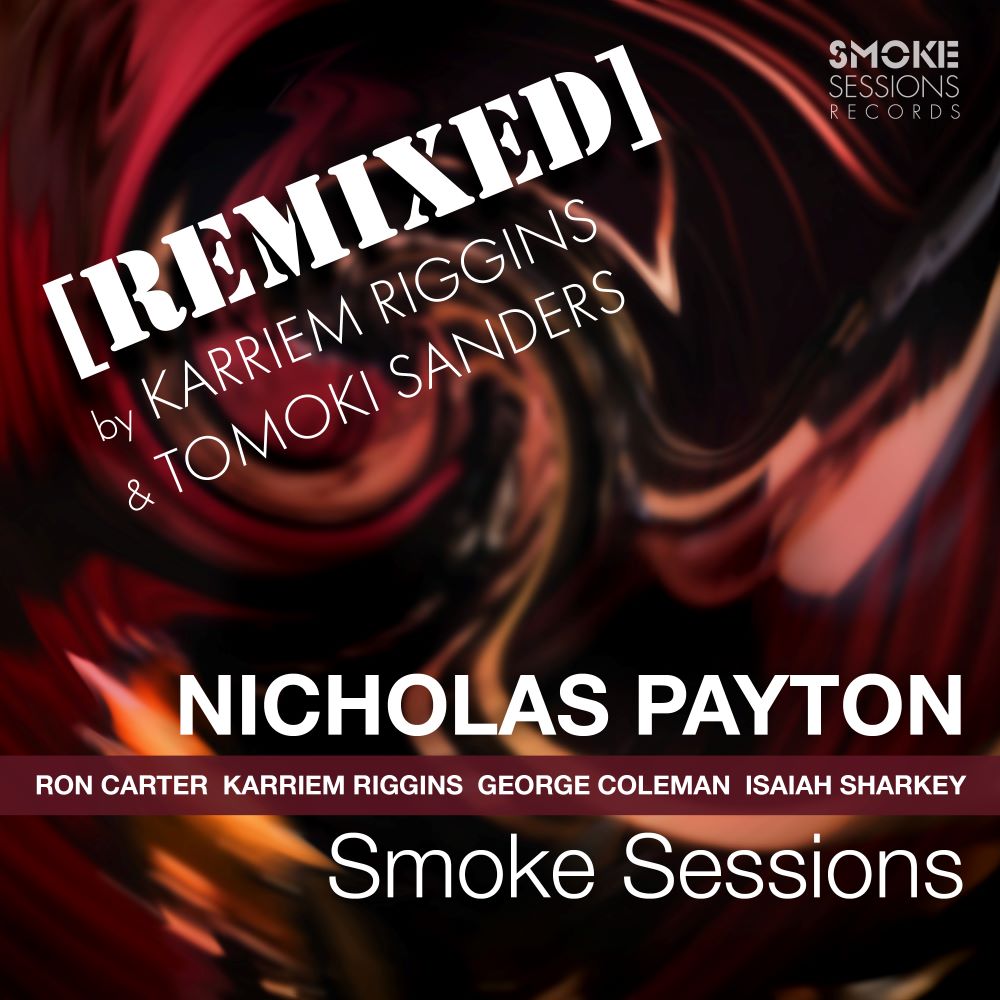
Nicholas Payton | "Smoke Sessions (Remixed)" | Available March 8 via Smoke Sessions Records

Innovative Trumpeter, Keyboardist and Composer
Nicholas Payton Transforms the Music from Latest
All-Acoustic Trio Album on New Remix EP
 
Smoke Sessions (Remixed) Due Out March 8, 2022
via Smoke Sessions Records

EP Features Genre-Blending Remixes by
Karriem Riggins and Tomoki Sanders
and Special Guest Isaiah Sharkey

Though it’s never simple (or advisable) to pin Nicholas Payton down to a particular genre or style, the renowned trumpeter/keyboardist/composer’s two recent releases for Smoke Sessions Records have found him in relatively traditional acoustic trio mode. He was accompanied by the powerhouse rhythm section of bassist Peter Washington and drummer Kenny Washington on 2019’s live Relaxin’ With Nick, then with the generation spanning trio of drummer Karriem Riggins and legendary bassist Ron Carter on 2021’s acclaimed Smoke Sessions.

But Payton, it turns out, had more transformative intentions in mind for the latter session. On his new EP Smoke Sessions (Remixed), due out March 8 via Smoke Sessions Records, he turns the raw material of four of the album’s tracks over to Riggins and the rising star multi-instrumentalist producer Tomoki Sanders to create remixed versions of the tunes refracted through the lens of the hip hop generation.

This post-modern hybrid approach to what others may view as disparate genres is central to much of Payton’s discography, so it certainly makes sense that he would hear the potential for such electronic reimagining in the music he recorded with Carter and Riggins. “Many of my projects have a remix component built into them already,” he explains. “I felt giving those types of production treatments to an all-live acoustic session would speak more to the times in which we live. It gives the folks a bit of both worlds.”

Riggins, the drummer for the original Smoke Sessions album, puts on his producer hat for three of the four tracks on the remix EP. It’s a role he’s as comfortable playing as the one he essays behind the drumkit – he’s done production work for many of hip hop’s most creative artists, including Common, The Roots, Erykah Badu and Kanye West.

“Production and mixing [are] a significant part of Karriem’s body of work,” Payton says. “I hired him as the drummer on the session with this in mind.”

For his part, Riggins refers to Payton as, “one of those geniuses… He set the bar high and it’s always super inspirational being around him and playing music with him."

The original “Levin’s Lope” already brought inspiration full circle, taking a Ron Carter-inspired bassline from Payton’s “Cyborg Swing” and giving it to the man himself; the oft-sampled Carter now provides robust inspiration for a new Riggins beat and swirling melody. Payton’s Rhodes playing on “Gold Dust Black Magic,” which also featured guitarist Isaiah Sharkey, ripples out into a cosmic dub beat in Riggins’ hands, while guest saxophonist George Coleman’s sultry tenor sound is shrouded in stark, airy new atmospherics until a bold, funky new beat hammers into place.

The EP’s final track is another case of ricocheting inspiration. The young, uncategorizable multi-instrumentalist Tomoki Sanders, who Payton calls, “one of my favorite up and coming musician/producers,” provided a beat that helped inspire the original version of “Hangin’ In and Jivin’;” his remix amplifies and reconstructs the muscular groove at the heart of the tune.

While he insists that, “it’s never my intent to decide what anyone gets from my music,” Payton does hope that Smoke Sessions (Remixed) helps cement in listener’s minds his notion that all music co-exists in a continuum, and that genre classifications are inherently limiting. It’s an argument that on these four tracks he makes through the most enticing and infectious of means.

“I hope it highlights there’s not such a disparity between more traditional styles and current ones,” he says. “It’s all just music.”

"Smoke Sessions" was produced by Nicholas Payton and Paul Stache,
and recorded live in New York at Sear Sound's Studio C on a Sear-Avalon
custom console at 96KHz/24bit and mixed to 1/2" analog tape.
Available in audiophile HD format.

Nicholas Payton · Smoke Sessions (Remixed)
Smoke Sessions Records · Release Date: March 8, 2022

For more information on other Smoke Sessions Records releases, please visit:

Friday, October 29, 2021

Nicholas Payton | "Smoke Sessions" | Available October 29, 2021 via Smoke Sessions Records

Multi-Instrumentalist and Composer Nicholas Payton
Realizes Long-Cherished Dream to Record with
Iconic Bassist Ron Carter on Stunning New Album

Album Features Longtime Collaborator
Karriem Riggins and Special Guest Appearance
by Legendary Saxophonist George Coleman
 
Smoke Sessions, Due Out October 29, 2021
via Smoke Sessions Records,
Plus Four-Song Remix EP Forthcoming

For a young Nicholas Payton, Miles Davis’ 1966 album ‘Four’ & More, captured live two years earlier at Lincoln Center’s Philharmonic Hall, provided a template for what music could – and should – be. Now long established as one of the most renowned musicians and composers on the scene, Payton has convened two of the legendary musicians who played with Davis on that album, bassist Ron Carter and special guest saxophonist George Coleman, to craft some exemplary sounds of his own.

With Smoke Sessions, set for release on October 29, 2021 via the label of the same name, Payton finally realizes his long-cherished dream of leading a session with Ron Carter on bass. To reignite the chemistry of the album he’d fallen in love with decades before, he also invited George Coleman to contribute to a pair of tunes. (A third contributor to ‘Four’ & More, pianist Herbie Hancock, is represented by the composition “Toys,” but Payton fills the keyboard chair on the date as well as playing trumpet). Rounding out the quartet is the esteemed drummer Karriem Riggins, a longtime collaborator of Payton’s who helps ensure that the music bridges generations as well as styles.

“Miles Davis' ‘Four’ & More was the album that really inspired me to take up music seriously,” Payton explains. “Ever since then, Ron Carter has been an idol and a favorite musician of mine. As long as I’ve been leading bands I’ve patterned my choice of bassists by the metric of how much Ron they have in their playing. When I’ve looked for pianists in my band over the years, it's often predicated on how much Herbie they have in their sound. So this album is really a dream come true for me.”

Far from a tribute or a look back, however, Smoke Sessions is a wholly contemporary new album that vibrantly captures Payton’s open-eared blend of swing, funk, soul and hip-hop influences with Riggins’ expansive fluidity behind the kit and Carter’s renowned, rock solid majesty on the bass. Payton seizes the opportunity to engage with that recognizable voice in multiple forms, taking both the Miles and Herbie roles as trumpeter, pianist and keyboardist via the multi-instrumentalism that has become a thrilling trademark of his approach.

While Payton has crossed paths with Carter on a number of occasions over the years, he’d never been able to persuade the famously exacting bassist to appear on one of his own dates before now. “He finally started giving me the time of day,” Payton says with a laugh. “Once I had his interest I hurried up and locked it in before he changed his mind.”

Whatever the delay, Carter spoke highly of the bandleader in the wake of recording Smoke Sessions. “I was quite pleased and had fun playing with him as a piano player as well as a trumpet player,” the bassist said. “Listen to him play trumpet. He’s listening to my response to what he does — if the trumpet players of today want to try to put him in a place, he should be up there because he listens to what the bass player contributes to his solo.”
The album opens in high-spirited fashion, with the elastic groove of Payton’s aptly named “Hangin’ and a Jivin’” before Coleman makes his first of two appearances on the sultry “Big George.” “I feel like George didn't get as much credit as he deserved for being a part of Miles's experimentations in alternate changes and chord progressions,” Payton says. “That's why the songs on the album with George tend to be basically four-bar vamps – those four-bar turnarounds and what they would do with them were so influential in changing the landscape of how musicians play chord changes. It was important to me to get into that stuff that they did back in the 60s. George being there was like the cherry on top.”

Those concepts are explicitly referenced in the title of “Turn-a-Ron,” Coleman’s second guest spot, which gives the two masters plenty of space to interact with one another. The bassist is also paid homage on “Levin’s Lope,” which references his middle name while repurposing the bassline of “Cyborg Swing,” from Payton’s Quarantined with Nick album. “The sound of how I hear bass in an ensemble comes basically from Ron Carter and Ray Brown, so a lot of the music that I write is tailor made for what Ron does. I didn't have to make any alterations to accommodate him because I write with his sound in mind anyway.”

The two-part “Lullaby for a Lamppost,” dedicated to New Orleans music legend Danny Barker, takes its structure from a New Orleans funeral procession – slow and dirge-like at first, then celebratory as the body is laid to rest. “Danny Barker gave me my first regular gig at this club on Bourbon Street in New Orleans called the Famous Door,” Payton recalls. “The tune is my homage to him, to his mentorship and the dedication he had to educating the youth in New Orleans.”

“Q for Quincy Jones,” originally recorded on Payton’s 2015 Letters album, pays tribute to another wide-ranging musical icon whose production skills, Payton remarks, “have been part of the fabric of the sound of music in the 20th century from Dinah Washington to George Benson to Michael Jackson.” The composer adapted “Gold Dust Black Magic” from his orchestral work of the same name, premiered earlier this year by the Louisiana Philharmonic Orchestra.

The remaining two pieces are drawn from the songbooks of two of Payton’s most formative keyboard influences: Hancock’s aforementioned “Toys,” originally recorded on 1968’s Speak Like a Child with Carter on bass; and Keith Jarrett’s achingly beautiful “No Lonely Nights.”

The recording of Smoke Sessions, Payton concludes, was “like a pinch-myself moment… I used to pretend I was playing with [these musicians] when I was a child, and now it’s happening. I literally felt like I was walking on air. To have someone I've listened to on record and admired from afar actually be a part of something that I created was just beyond my wildest imagination. I remained in a dream state for a couple of months afterwards.”

"Smoke Sessions" was produced by Paul Stache and Nicholas Payton,
and recorded live in New York at Sear Sound's Studio C on a Sear-Avalon
custom console at 96KHz/24bit and mixed to 1/2" analog tape.
Available in audiophile HD format.

Nicholas Payton · Smoke Sessions
Smoke Sessions Records · Release Date: October 29, 2021

For more information on other Smoke Sessions Records releases, please visit:

Monday, March 15, 2021

Benito Gonzalez - Sing to the World (May 14th, 2021 via Rainy Days Records)

Emerging Piano Talent Benito Gonzalez

Releases his Fifth Recording of Originals:

the Inspired, Moving, Dancing Sing to the World 

on St. Petersburg, Russia-based Rainy Days Records

With propulsive pulse and Afro-Latin percussive drive, Benito Gonzalez places rhythm at the core of his exhilarating new album, Sing to the World, set for a May 14 release. All of the ten songs on his fifth album, and first released on the St. Petersburg, Russia label Rainy Days Records, combine to create a sense of wonder and enchantment as Gonzalez takes a stellar step into the future of his jazz journey. He’s assembled an impressive team of collaborators, including Christian McBride, Essiet Okon Essiet, Jeff “Tain” Watts, and Nicholas Payton as well as rising stars Russian drummer Sasha Mashin, trumpeter Josh Evans and saxophonist Makar Kashitsyn.

Sing to The World is a musical exploration into the concept of freedom that recognizes the dignity of us all as individuals. Music is the most powerful tool we have to make a change in the world, uniting as one outside of cultural or religious differences. We are living in a world where all are searching for freedom because its inherently valuable role in human progress. Sing to the World is about this universal search for freedom, about being present, being aware, and trying to allow the moment to come to us.

The title track of Sing to the World, with its harmonic invention and pianistic power, is influenced by two McCoy Tyner tunes, “Fly with the Wind” and “Song of the New World.” “McCoy played with so much energy and with such a depth of harmony. If you hear that kind of harmony, you can push the music to its limit. It’s open to infinity. That’s my concept for the whole album—play with openness and trust. That’s what I want to give to the world,” says Gonzalez.

As for enlisting jazz powerhouses in the new album, Gonzalez says McBride and Watts embrace the rhythmic core. “They hear the way I perceive the music. They understand where I’m coming from and execute brilliantly. I like strong beats rooted in Africa which is where my father’s ancestors came from. I like it when people dance to this music. Tain and Christian come from the same place. You can hear the dance beats when they play,” says Gonzalez. “The African sensibility and relationship with the drums has usually permeated the best of jazz and American music. Benito embraces that language as part of his commitment to the spiritual, healing part of the music. As a drummer, it’s really fun to play with and bounce off of, in order to get to a vibration that’s vital and always in style.” explains Watts.

As for bringing Payton on board, Gonzalez says, “Nicholas is the best trumpet player today, and I thought he would be a great addition for my album giving his direction in the music,” says Gonzalez.

Highlights on Sing to the World include Gonzalez’s dazzle of keys on “Sounds of Freedom” which he says is inspired by “the troubling situations in our world today. People are looking for freedom in places like my home Venezuela, in Russia, the U.S. People are searching, fighting for freedom,” says Gonzalez.

Others include “Views of the Blues,” an energized outing inspired by Coltrane’s open-sound sensibility of playing the blues, and the moving, lyrical “Offering,” featuring a terrific McBride solo. “When I was seven years old in Venezuela, I played the organ at church. I was playing beautiful melodies. This song is based on that. It’s not a hymn but a reminder of the hymns I played as a kid. It’s a story. It’s my interpretation of that period in my life,” says Gonzalez.

In addition to his slow-to-upbeat originals, Gonzalez adds to the set list two compositions that have never been recorded by their composers: Roy Hargrove’s soulful “Father”and Jeff “Tain” Watt’s beauty “412.” Benito singles out ”Father” as one of his favorite songs on the album. “It’s about my personal relationship to Roy. In 2006, we attended jam sessions every Thursday night. He sat down at the piano one night and taught me the changes to this song. We played it often, but he never recorded it” he says.

As for the Tain tune, Gonzalez learned it when the two were both teaching summer jazz camp at the New Jersey Performing Arts Center (NJPAC ). “Having known Benito for years, it’s been a pleasure to witness both his growth, and his love and respect for the music in notes and spirit. His seriousness and focus were apparent years ago in the young man I’d chat with during trips; always friendly and seeking, never pushy. I’m proud to see him today as a bright light and leader in the music” says Watts. “I was messing around on the piano one day, and Tain gave me the chart. I’ve always loved this ballad. He’s played it on occasion but never recorded it,” says Gonzalez about “412.”

What’s impressive about Gonzalez is that he’s not willing to sit still for too long. He’s already got future projects in mind. Recently named a Steinway & Sons artist in 2020, emerging piano talent Benito Gonzalez continues to reveals himself as an inspired and versatile artist on his fifth album, Sing to the World.

1. Sounds of Freedom
2. Views of the Blues
3. Father
4. Offering
5. Visionary
6. Smile
7. Sing to the World
8. 412
9. Flatbush Avenue
10. Colors

Benito Gonzalez — piano
Nicholas Payton — trumpet (1,3,6,8)
Christian McBride — bass (2-10)
Sasha Mashin — drums (1,3,6,7,9,10)
Jeff “Tain” Watts — drums (2,4,5,8)
Essiet Okon Essiet — bass (1)
Josh Evans — trumpet (9)

Musical producer — Benito Gonzalez
Co-produced by Sasha Mashin
Executive producer — Eugene Petrushanskiy

Recorded at Big Orange Sheep Brooklyn, NY
Recording Engineer — Chris Benham
Assistant Engineer — Kevin Thomas

Additional recording at Cinelab Studio, Moscow
Recording Engineer — Igor Bardashev
Mixed and Mastered by Mike Marciano of Systems Two

Sunday, March 14, 2021

Yohan Giaume - Whisper of a Shadow (February 2021)

French Composer/Trumpeter Yohan Giaume Presents Whisper of a Shadow Opus 1, a Sonic Celebration that Traces the Musical Lineage Between Europe, Africa and America Through the Eyes of Romantic Composer Louis Moreau Gottschalk

Whisper of a Shadow is a Cross Cultural Project Featuring Evan Christopher, Herlin Riley, Nicholas Payton, Roland Guerin, Aaron Diehl, and More
Giaume explains, “By exploring these cultures from inside, traveling back and forth to different countries seeking the roots of the music, I started to discover pieces of the puzzle of the musical family tree and the links that interconnect the various cultures. Music is like a tree, everything is connected, every musical line or rhythm you play is the shadow of something that came from somewhere and it is fascinating to me to see how cultural heritage continues to exist after centuries of geographical transformations. It shows how music is powerful, essential in a society, and how vital it is to have continuum from the past to present time.” Giaume began in Cuba and South America, but it was New Orleans that left him rapt. “I had a strong feeling of recognizing a part of myself in that culture and city.” He also made an unexpected discovery during his journeys to the Crescent City: Louis Moreau Gottschalk, the Louisiana romantic Creole composer and pianist, had taken almost the same route in his travels as Giaume did two centuries apart. During Gottschalk’s time, he was one of the first, if not the first, American composer to inspirationally embrace Afro-Creole music. Gottschalk was heavily inspired by Afro-creole folk songs that his Haitian nanny sang to him when he was child.

Giaume discovered a song that Gottschalk never used in his compositions, although it was very familiar to him, he reimagined it as his own arrangement, sublimated by Christopher’s interpretation. In New Orleans the melody of “Lisette Quitté la Plaine,” once a very popular tune, was labeled as an Afro-creole song, but in his research Giaume discovered that the melody was originally part of the melodic repertoire used in operettas vaudevilles in France during the 18th century and the lyrics were a creole parody of Jean-Jacques Rousseau’s opera “Le Devin du Village.” In his composition “Lez African E La” Giaume was inspired as well by another old afro-creole folk melody “Quan Patate La Cuite“ that Gottschalk used for his famous piece named “Bamboula”. In this track, Yohan pays a special homage to the enslaved that gathered on Sunday afternoon in Congo Square at Gottschalk’s era.
Another example of Giaume’s compositional process is what he did with the melody of Gottschalk’s piece titled “Morte!! (She is dead).” “One of my most powerful experiences was to attend Snooks Eaglin’s funeral in the streets of New Orleans. It is the first time I saw a funeral that celebrates a life and life, in general, with such beauty,” explains Giaume. “I was moved by the emotional strength and grace of this experience where the procession is accompanied by a riveting and soulful music. Gottschalk’s melodic lamentation sounds like a hymn and it moved me by its grace and its simplicity. That melody walked with me and infused the whole development of my composition called “Life Circle” inspired by the jazz funeral procession.”

Whisper of a Shadow in summary is much more than a musical album. It is an artistic invitation to slow down, step back from our time, enter into a journey through times and spaces, and celebrate what a multicultural experience can offer. Giaume concludes, “I found my roots through my journey in the culture of others which were entwined with so many others. We all have a shared commonality even if nothing suggests it; but to discover it, one must go out of one’s own comfort zone to explore it.”
1. Le Poète Mourant 06:49
2. Mascarade 04:48
3. Lisette 05:44
4. Cold Facts 02:54
5. The Promise of Dawn 06:12
6. Bamboula Dreams Part 1 02:01
7. Bamboula Dreams Part 2 01:53
8. Lez African E La 06:12
9. Life Circle Part 1 - Death 07:01
10. The Passage 01:20
11. Life Circle Part 2 - Birth 04:30

Yohan Giaume (Compositions / Arrangements / Musical Director / Trumpet) 

Evan Christopher (Clarinet / Collaborating partner)
Aaron Diehl (Piano)
Herlin Riley (Drums)
Roland Guerin (Bass)
Tristan Liehr (Violin)
Louis-Jean Perreau (Violin)
Emmanuel Francois (Viola)
Thomas Ravez (Cello)

Additional musicians:

Nicholas Payton (Trumpet on tracks 5, 9, 11)
Terrance Taplin (Trombone on tracks 9, 11)
Greg Hicks (Trombone on tracks 9, 11)
Matt Perrine (Tuba on tracks 9, 11)
Chuck Perkins (Spoken word / poetry and lyrics on tracks 2, 4, 6, 10, 11)
Nell Simmons, Kid Merv, Troy Sawyer, Casme Barnes, James Germain (Choir on tracks 8, 11)
Philippe Makaïa (Vocal and Percussions on track 8)
Bago Balthazar (Percussions on track 8)
Bruce Sunpie Barnes (Lyrics on track 8)

Recorded at Esplanade Studio in New Orleans 
by Misha Kachkachishvili assisted by Jesse Snider 
Recorded at Sextan Studio in Paris 
by Vincent Mahey assisted by Arthur Gouret. 

Mixed by Steve Reynolds 
Mastered by Gene Paul and Joel Kerr at G&J Audio, Union City, NJ

Artwork by Guillaume Saix
Nicholas Payton appears courtesy of Paytone Records.

Executif production by Yohan Giaume.
Produced by Life Celebration Project.

Wednesday, August 22, 2018

Kaveh Rastegar - Light Of Love (ROPEADOPE RECORDS 2018)


Those who have been paying close attention have realized by now that Kaveh Rastegar has been the secret weapon behind some of the most thrilling music of the last 20 years, across a wide spectrum of styles. 

As a bassist, Rastegar is best known as a founding member of the genre-blurring, GRAMMY® Award-nominated quintet Kneebody, though he’s also toured the world with superstars like John Legend (and also appeared as his fictional counterpart in the beloved musical La La Land), recorded with Shania Twain and Beck, served as musical director for singer/hitmaker Sia, and worked with R&B sensation Sabrina Claudio as both songwriter and co-producer. As a songwriter, he’s penned songs with and for heavy-hitters like Bruno Mars, Cee Lo Green, Meshell Ndegeocello, De La Soul and Ciara, among many others. 

Now, with the release of Light of Love, Rastegar is intent on being a secret no more. On his debut album as a leader, the bassist and songwriter strides boldly into the spotlight with a set of songs that draw on every aspect of his wildly diverse résumé to create a wholly individual sound. Like its striking cover art, Light of Love is a college – of influences, experiences, and collaborations – that merge to form a mosaic portrait of Rastegar’s talents and interests. Featuring an all-star line-up of gifted singers and musicians, the album (due out August 10 via Ropeadope) features songs as compelling as they are uncategorizable, fueled by entrancing grooves, unexpected twists and captivating storytelling. 

Rastegar refers to Light of Love as a “family album,” bringing together a cast of longtime friends and collaborators to craft songs that unite jazz-club virtuosity with pop-chart soul. The roll call of singer-songwriters includes Amy Kuney (aka AMES), Becca Stevens, Gaby Moreno, Dawn Richard, David Garza, Mike Viola, and Rastegar himself, riding the waves of sound created by drummers Chris Dave (D’Angelo, Robert Glasper) and Scott Seiver (Tenacious D, Aimee Mann), trumpet great Nicholas Payton, keyboardists Brandon Coleman (Stevie Wonder, Kamasi Washington) and Jeff Babko (James Taylor, Martin Short), and guitarists Chris Bruce (Seal, Bettye Lavette) and Josh Lopez (Macy Gray, Black Eyed Peas). 


“This album is a long time coming,” says Rastegar. “I wanted to make something that bridges the gaps between all the different musical worlds that I find myself in -- music that feels really good and also uses all of these voices.” 


The results range from the smoldering cosmic love song “Accidents Waiting to Happen” to the swampy blues-rock lurch of “As Long As You Love Me;” the stripped-down soul of “A Little Too Late” to the intimate but anthemic “Cuento Illogico;” the sensual groove of “Lavender” to the Velvet Underground inspired drone-pop of “Bad Ideas.” The title track basks in its finger-snapping groove while “Roll Call” lays back into a late-‘70s SoCal vibe reminiscent of the Doobie Brothers. “Long March” surges with a bracing stop-start funk, the perfect foil for Nicholas Payton’s acid-tongued trumpet. 

If the songs’ memorable melodies wrap around some unfamiliar contours, that’s most likely due to the unique circumstances of the album’s songwriting. Rastegar entered the studio on separate occasions with Dave and Seiver, engaging the inventive drummers in loose, freewheeling jam sessions. Rastegar took those recordings, isolated some of the more inspired moments, and built songs around these improvised rhythm tracks. He collaborated with the singers in different ways; some were sent tracks and composed their own lyrics, while others got together with Rastegar in the studio to hash out the songs together. 


“What I’ve learned as a songwriter is that there’s a thousand different ways to write a song,” Rastegar says. “I’ve always been a big fan of all kinds of music, but when I was younger I never really thought about why they were made. I just assumed that they sprouted up like flowers. But as I’ve stepped out as a songwriter and a producer, I’ve found that each song makes its own statement. The way this music came together, with a lot of freedom in the initial recording, there ended up being a lot of surprises that you wouldn't normally have if you’d written the chords and the melody first.” 

Several of Rastegar’s improvisations with Dave ended up as compelling miniatures in their own right, elaborated to become instrumentals like the futuristic funk of “Tom Tom” and the shimmering synth-pop of “Cat Woman.” album ends with a solo bass arrangement of Caetano Veloso’s “Luz Do Sol” that shows off the tender beauty of Rastegar’s playing. 

“Bad Ideas,” Rastegar’s debut as a vocalist, presages a forthcoming singer-songwriter project that will feature him as sole front-man. With his debut, however, Rastegar wanted to display his panoramic talents through a wider lens. Light of Love does just that, offering infectious tunes and scintillating virtuosity, eclectic approaches with a singular vision.


1. Bad Ideas (Kaveh Rastegar -bass, guitars, voice, Scott Seiver -drums) 

2. Cuento Ilogico featuring Gaby Moreno (Kaveh Rastegar- electric bass, upright bass, guitars, Chris Dave -drums, percussion, Jeff Babko -Keyboards, Gaby Moreno- voice) 

3. Cat Woman featuring Chris Dave (Kaveh Rastegar- basses, keyboards Chris Dave -drums, percussion) 

4. Roll Call featuring Mike Viola (Scott Seiver -drums, Kaveh Rastegar -bass, Jeff Babko -rhodes, Mike Viola- voice) 

5. Tom Tom featuring Chris Dave (Kaveh Rastegar -basses, keyboards, Chris Dave- drums, percussion) 

6. Light Of Love featuring David Garza (Kaveh Rastegar- basses, Chris Dave -drums, percussion, Jeff Babko -rhodes, David Garza- voice) 

7. As Long As You Love Me (Scott Seiver- drums, Josh Lopez- guitar, Kaveh Rastegar -bass, guitars) 

8. Accidents Waiting To Happen featuring Ames (Scott Seiver- drums, Brandon Coleman -keyboards, Chris Bruce- guitar, Josh Lopez -guitar, Kaveh Rastegar -bass) 

9. Long March featuring Nicholas Payton (Scott Seiver- drums, Brandon Coleman- keyboards, Garrett Smith - trombone Chris Bruce - guitar, Josh Lopez -guitar, Kaveh Rastegar- bass, Nicholas Payton- trumpet) 

10. Lavender featuring Dawn Richard (Scott Seiver -drums, Brandon Coleman -keyboards, Chris Bruce- guitar, Josh Lopez- guitar, Kaveh Rastegar -bass, Dawn Richard -voice) 

11. A Little Too Late featuring Becca Stevens (Kaveh Rastegar- basses, guitars, keyboards, Scott Seiver- drums, percussion, Becca Stevens -voice) 

12.Luz Do Sol (Kaveh Rastegar- basses, Chris Dave -drums, percussion)

Friday, March 31, 2017

Kevin Eubanks - East West Time Line (MACK AVENUE RECORDS 2017)


Guitarist Kevin Eubanks’ Unique Perspective on
Musical Landscape of East and West Coasts
Shines with New Mack Avenue Records Release


East Coast Band (Side A) Features:
Nicholas Payton, Orrin Evans,
Dave Holland and Jeff “Tain” Watts

West Coast Band (Side B) Features:
Bill Pierce, Rene Camacho,
Marvin “Smitty” Smith and Mino Cinelu


Joining Eubanks on this stellar outing are longtime collaborator and former Berklee College of Music schoolmate, drummer Marvin “Smitty” Smith, who fuels the West Coast outfit alongside seasoned session bassist Rene Camacho, percussionist Mino Cinelu and saxophonist Bill Pierce.

Smith’s East Coast counterpart on this bi-coastal session is the irrepressibly swinging Jeff “Tain” Watts, a force of nature on the kit who combines with bassist Dave Holland, Philadelphia-based pianist Orrin Evans and New York trumpeter Nicholas Payton for a potent lineup. Together these great musicians bring out the best in Eubanks’ six-string prowess and ignite his searching instincts throughout the sessions in Los Angeles and New York.


Side A
1) Timeline 
2) Watercolors 
3) Poet 
4) Carnival 
5) Something About Nothing 
6) Take The Coltrane

Side B
7) Captain Senor Mouse 
8) Cubano Chant 
9) What's Going On 
10) My One And Only Love


Friday, February 10, 2017

Nicholas Payton - Afro-Caribbean Mixtape (2017) 2 CD


The trumpeter’s new album fuses the traditions of his hometown, New Orleans, with modern jazz, hiphop, mixtape and spoken-word cultures.

By LARRY BLUMENFELD / WSJ

Early in a recent performance at Dizzy’s Club Coca-Cola, within Jazz at Lincoln Center, a casual listener might have assumed Nicholas Payton to be a keyboardist with a fondness for Fender Rhodes electric piano and a way with a slow tempo. Minutes later Mr. Payton lifted a trumpet to his lips with his right hand and began to blow, while playing keyboard with his left, and a fuller profile began taking shape. Soon—his horn now gripped in both hands—Mr. Payton revealed the strength, agility, sweetness and bite upon which he established a career more than 20 years ago.

On trumpet, Mr. Payton can ignite a room with a fiery solo or silence it with a tender passage; he did both at Dizzy’s. Yet these days his music doesn’t rely on those abilities or that horn.

Mr. Payton arrived on jazz’s scene cast as a gifted neotraditionalist. He has spent the decades since departing from that mold. His new release, “Afro-Caribbean Mixtape” (Paytone/Ropeadope), out Friday, is his clearest and boldest expression of an aesthetic he’s long pursued. It’s sprawling (two CDs with more than two hours of music), involves more than a dozen musicians, and yet sounds focused and personal.

That cohesion is due largely to tightly interlocked elements: the flexible, quicksilver rhythmic dialogue between Joe Dyson’s trap set and Daniel Sadownick’s hand percussion; the layers of texture woven by Mr. Payton and Kevin Hays, who both play keyboard and piano on several tracks; and the dance of accents from bassist Vincente Archer and turntablist DJ Lady Fingaz.


There’s also a strong conceptual through-line. Beginning in 2011, Mr. Payton has raised a fuss online with blog posts rejecting the term “jazz” as limiting, or worse; he proposed the moniker, “Black American Music.” This new album lends more graceful expression to his argument—for an enduring black aesthetic that bows to jazz masters without implying servitude, and that embraces African influence across several genres. Words prove critical here, too. In the mix—sometimes buried, other times clear—are sampled snatches of spoken-word sources, manipulated by the turntablist. On “Jazz Is a Four-Letter Word,” the voice of Max Roach (from a 1993 interview that Mr. Payton found on YouTube) describes an unbroken line of ingenuity from Charlie Parker to Michael Jordan to Michael Jackson. On the title track, Greg Kimathi Carr, head of Howard University’s Afro-American Studies Department, explains “African ways of knowing.”

Still, nothing seems academic. The album flows, moving joyously from, say, Mr. Payton’s trumpet playing, supporting by a string quartet, on “Jewel,” to the disco-tinged funk of “Junie’s Interlude.” Some tracks ride easy grooves, others move fitfully within densely constructed soundscapes. There are compelling examples of Afro-Cuban rumba and, yes, modern jazz, but these all seem like momentary means toward a larger and unified end.

Mr. Payton’s wide-ranging liner note cites a paternal ancestor in his native New Orleans, who is said to have played with Buddy Bolden and to have formed Henry Payton’s Accordiana Band “before anyone was thinking about jazz.” His own problem with the word “jazz” is the sense that someone else is trying to box him in. “Afro-Caribbean Mixtape” is a work of great rigor and discipline, steeped in jazz tradition and yet utterly unbound.


Friday, October 14, 2016

Nicholas Payton - The Egyptian Second Line (2016) ROPEADOPE RECORDS


In the spirit of reclaiming that which colonization sought to destroy, I'm releasing the first single from my upcoming album Afro-Caribbean Mixtape at the top of Columbus Day weekend. Like a piece of African patchwork, this track is comprised of a lot of different elements — some old, some new. The main body of this record was constructed from the end vamp of a tune I wrote for Dr. Greg Carr (chair of African-American studies at Howard University) called, “Kimathi.” In fact, throughout the piece, you can hear my turntablist, DJ Lady Fingaz, scratching a sample I chopped from one of his interviews. I constructed a new work by cutting and pasting the best moments of Kevin Hays and I playing keyboards on top of the extended jam, and superimposed that over the groove laid down by bassist Vicente Archer, drummer Joe Dyson, and percussionist Daniel Sadownick. I did this with the help of my mix engineer, Blake Leyh (The Wire, Treme). 

Towards the beginning of the piece, you'll hear a chant from vocalists Yolanda Robinson, Jolynda Phillips, and Christina Machado. It's from a thing my father made up while walking through his childhood neighborhood of 13th Ward New Orleans back in the 1940s, “Na-na ni-ta ho-ho. Left, right. Left, right.” Thirty years later, as an elementary school band teacher at McDonogh #15, he had us chant this whenever we marched in second line parades. It recalls the syllabic prayers of ancient languages used in modern dance songs like Mani Dibango's “Soul Makossa,” of which Michael Jackson borrowed for “Wanna Be Startin' Something.”  

The centerpiece of the single is my recitation of a poem I wrote back in 2006 in the aftermath of the flood commonly referred to as “Katrina.” It's called “The Egyptian Second Line.” The gist of the poem toys with the theory that somehow Africans submitted to slavery in an attempt to become better versions of themselves. After the ladies chirp the hook, I step away from the keyboards and embrace the instrument I'm most known for — the trumpet — and blow a few before we take it out. With this song, I am channeling the energy of the ancestors to help give Africa back to herself in the best way I know how, through the power of music. 

In New Orleans, a “second line” is the procession where we dance in the streets to music played by a brass band to celebrate either life or death. When I think about what an Egyptian second line looks like, I think of the imagery of that photo of Louis Armstrong serenading his wife, Lucille in front of the Sphinx — again Africans giving Africa back to herself.


Released October 7, 2016

1. The Egyptian Second Line 14:56
2. The Egyptian Second Line (Instrumental) 14:55

Nicholas Payton: trumpet, spoken word, Fender Rhodes, Hammond B-3, Clavinet 

Kevin Hays: Fender Rhodes 

Vicente Archer: acoustic bass 

Joe Dyson: drums 

Daniel Sadownick: percussion 

DJ Lady Fingaz: turntable, sampler 

Yolanda Robinson: background vocals 

Jolynda Phillips: background vocals 

Christina Machado: background vocals 

Composed by Nicholas Payton (BMI) 

Produced by Nicholas Payton 

Recorded, mixed, mastered, and designed using the PAYTONEsonic™ programming process 

Recording Engineer: David Stoller 

Assistant Engineer: Emily Eck 

Mixing Engineer: Blake Leyh 

Recorded at The Shed, New Orleans, LA 

Mastering: Michael Fossenkemper, Turtletone Studios, NYC 
turtletonestudio.com 

Art Direction: Nicholas Payton 

Cover Painting: Ayanna Bassiouni 

Cover Design: Ayanna Bassiouni


Tuesday, October 4, 2016

The Wee Trio - Wee + 3 (2016) BIONIC RECORDS

http://theweetrio.com/

The Wee Trio, James Westfall (vibes), Dan Loomis (bass) + Jared Schonig (drums), proudly announce the September 30, 2016 release of their fifth recording, Wee + 3, recorded at Systems Two in Brooklyn, NY, and featuring three musicians who are near and dear to the members of the Trio; the legendary trumpeter/composer Nicholas Payton (tracks 4, 5 & 6), guitarist/composer Nir Felder (tracks 1, 10 & 11), and pianist/composer Fabian Almazán (tracks 2, 3 & 9). Inviting guests to join this established, working group was born out of the band’s collective love of collaboration.

Wee + 3 is an album about relationships. Dan Loomis is from Middle America, Jared Schonig is from the West Coast and James Westfall is from the South. Together they have traveled to every corner of the country and the songs on this album celebrate their individual roots and their travels together. The bonds that The Wee Trio formed as a band happened very soon after they all moved to New York City and has strengthened over the years. In short, musically and personally, they are thick as thieves, and their camaraderie is fully explored and realized on the band’s previous four recordings, Capitol Diner Vol. 1 (2008), Capitol Diner Vol. 2 – Animal Style (2010), Ashes To Ashes – A David Bowie Intraspective (2012) and Live at The Bistro (2013). With Wee + 3, the fans are bearing witness to the first expansion of the trio as they welcome in three critically acclaimed, world-class musicians to the fold. Each guest artist has a unique personal relationship with the individual members of the band and all of the music on this record was composed for each of these guest artists, creating a stylistic spectrum that takes the listener through three different worlds, but all within the galaxy of The Wee Trio.

The guest artists also represent three distinct narrative points in the history of the band. Dan Loomis explains further, “Nicholas Payton is the prelude to our story as a band. We say that the trio connects so well because we had listened to so many of the same records. Mr. Payton’s music was definitely an important part of all our lives. His playing, his intention as a bandleader, and his compositions were important building blocks for all of our own musical conceptions and development. Nir Felder is the present tense in the story of the band. We all met Nir very soon after we moved to the city and played with him a lot in our first years here. Our encounter with Fabian Almazán is a look to the future. Jared has known Fabian for a several years, but James and I just started playing with him for this project. Fabian plays with relentless creativity that really brings out the best side of the band. We love to play familiar material and take a lot of risks with it – push it to see what new options we can find hidden in it. With Fabian we got a chance to expand that approach to a quartet setting and bring it some new material that we wrote especially for him. We think the results are magical!” In drummer Jared Schonig’s words, this record was, “really a dream for us to make, both compositionally and musically. We had many long discussions over two years, deciding who our guests would be, and we feel that we made such great choices. To add a fourth musical voice was like taking cake and putting more frosting on it just for the fun of it.”


http://theweetrio.com/

 More about the music on WEE + 3:
“R T 3” (feat. Nir Felder) – This song is the sound of the ocean as nearly as bassist Dan Loomis can capture it. You can hear the seagull cry in the intro. “My mother grew up in California and spent a lot time exploring the Pacific coast. I was born in Redwood City but raised in the Midwest. I always loved my trips back to California and I never feel right visiting without at least one visit to the ocean,” said Loomis.

“Titan UP” (feat. Fabian Almazán) – Westfall grew up in Houston, Texas and was an avid Houston Oilers fan. In the mid 1990’s the Oilers packed their bags and relocated to Tennessee changing their name to the Titans. Since Westfall’s recent arrival to his new home in Nashville, he has re-adopted the NFL franchise that moved away from him.

“Climb” (feat Fabian Almazán) – An epic composition written by Schonig to feature both Almazán’s creativity and Loomis’ strength moving around the bass. The title represents the climb to the top that we all inevitably face daily in life.

“Sabotage” (feat. Nicholas Payton) – One of the nation’s best venues is in St. Louis, MO (Loomis’ hometown), Jazz at the Bistro. The Wee Trio played there many times and even spent a weekend recording a live album there (Live at The Bistro from 2013). Loomis explains, “The second night of the recording we went to play our first set only to discover (mid-song!!) that the microphone cables had been cut!! We never found the culprit but clearly someone set out to sabotage the band! Thus Jared had a title for his new song.”

“No Justice” (feat. Nicholas Payton) – This song is a tribute to Loomis’ hometown, St. Louis, and particularly the suburb of Ferguson. “We have all been angered and saddened by the senseless violence by police against so many black youth across our country. But these events take on another dimension when they happen close to home. In the aftermath of tragic events like these, one thing that we can do is come together to make our voices heard against a culture that allows such actions. My partner and young boys have been to many demonstrations protesting these events and my kids’ favorite chant at these demonstrations is ‘No Justice, No Peace!’” said Loomis.

“Belle Femme De Voodoo” (feat. Nicholas Payton) – “As a former resident of New Orleans, this piece was written as a homage to the city. I spent the better part of 15 years living there and the city’s influence will always be burned in my personality. One of the city’s biggest musical influences today is Nicholas Payton. I’ve had the privilege of sharing the stage with him about a dozen times while living there and each of those gigs was a huge learning experience that I never took for granted. Having him be a part of this record was an honor. It was only fitting that Nicholas would be featured on a song written for New Orleans. Nicholas’ style is the perfect blend of Old New Orleans and New World,” said James Westfall.

“Lola” – This is a composition by Meshell Ndegeocello that Schonig arranged for the band. Schonig says “The band originally decided against having covers on this recording, but made an exception for an exceptional artist that we all admire.”

“Sound Evidence” – The lone original trio composition comes from Schonig after he sought out to write something both rhythmically interesting yet open enough for the harmonic instruments to have complete freedom while improvising. The title comes from Schonig’s brother, who made an astute observation during a game of ping-pong with the band to prove a certain shot had hit the table!

“Redwood” (feat. Fabian Almazán) – This is a tribute to Redwood groves in Northern California. “Walking through them you can have a feeling in an endless horizontal and vertical space. This song tries capture that expansiveness,” said Loomis.

“Gibbs Street” (feat. Nir Felder) – Schonig and Loomis met at Eastman School of Music in downtown Rochester, NY. This piece by Schonig is a homage to his experience there, balancing all that life is throwing at you. “Sometimes college can seem incredibly chill and then one moment chaos can ensue; whether it be with schoolwork, gigs, relationships- I tried to encapsulate all of that in this piece,” said Schonig.

“Apparition” (feat. Nir Felder) – “Nir is one of our favorite guitarists because, like The Wee Trio, he’s not afraid to rock out. Performing the song quartet gave us the opportunity for me to personify a wraith during the melody. The composition’s simplicity gave the trio enough room to stylistically take the direction in a more organic world that is true to our influences. The composition is one big launching pad for a shredding Nir Felder solo meant to kick ass and melt faces,” said Westfall.
http://theweetrio.com/

 01. RT3 6:31
02. Titan Up 3:15
03. Climb 6:30
04. Sabotage 4:58
05. No Justice 7:20
06. Belle femme de voodoo 5:23
07. Lola 3:51
08. Sound Evidence 4:16
09. Redwood 6:31
10. Gibbs Street 6:10
11. Apparition 7:53

James Westfall (vibes)
Jared Schonig (drums)

Special Guests
Nicholas Payton (trumpet)
Nir Felder (guitar)
Fabian Almazán (piano)