On July 2, 2000 John Hebert, Bruce Hall, Rez Abbasi and I got together to play some Bill Evans tunes in Bruce Hall's Brooklyn home studio. Bruce was recording into a now-obsolete digital recording platform (mini disc) at the time, there was a lot of mic bleed, small room, mini-disc....it wasn't Avatar. Despite this the end product sounds remarkably good. Bruce did some beautiful playing and some beautiful engineering here. As far as any of us can remember we just got together to record in this two guitar configuration that one time although we had all played together on many different gigs and recording projects...in a lot of ways New York was and is a small town. We were pretty much reading through some Evans tunes, coming up with quick arrangements, recording and moving on to the next tune. It's got a really nice vibe and for all you guitar players, Rez is absolutely burning.
We met at Bruce's house, read through some tunes, hung out afterward, did a lot of bullshitting and for the next 20 years didn't give the recording much thought, if any. Then...about a year ago Bruce remixed the tunes we recorded and sent us all a copy. It was an emotional experience for me to hear this so many years later and I think for the others as well. All the great memories I have of playing with these stellar musicians, all the miles between then and now, the gratitude that I felt and still feel to these musicians that I admire and respect for including me and for the commitment, heart, soul and talent they put into any and all music that they make. I think you can hear all that in this recording. We got it mastered through Gene Paul at GandJ Audio - Gene and Joel Kerr did a freaking great job on that. Huge thanks to Bruce Hall for his hosting, playing and engineering.
Bruce Saunders / July 16, 2021
1. Bill's Hit Tune 05:11
2. Children's Play Son 04:57
3. Twelve Tone Tune 03:47
4. Re: Person I Knew 06:06
5. Showtype Tune 05:07
Rez Abbasi - Guitar
Bruce Hall - Drums/Engineer
John Hébert - Bass
Bruce Saunders - Guitar
Recorded S. Portland St, Brooklyn, NY on July 2, 2000
Co-produced by multi-Grammy winning recording engineer Jim Anderson, original soundtrack features acclaimed guitarist Rez Abbasi
White Lotus is multi-instrumentalist, singer and composer Min Xiao-Fen’s original soundtrack to The Goddess, a 1934 silent film from China’s cinematic golden age. Best known for her genre-breaking performances on the four-string pipa, Min has collaborated with artists like Wadada Leo Smith, Randy Weston, John Zorn and Bjork. White Lotus also features the work of acclaimed guitarist Rez Abbasi, co-producer and multi-Grammy winning recording engineer Jim Anderson, and Grammy-nominated immersive sound producer Ulrike Schwarz.
Min Xiao-Fen arrived in the United States in 1992 feeling a “need for something new.” She had grown up in Nanjing, where her father was a pipa master. He taught her his instrument, and also to sing Beijing Opera. The family also knew the music of Bach, Beethoven, and Mozart. Min’s sister became a prominent erhu virtuoso and her brother a symphonic conductor. When Min graduated from high school in 1977, the Cultural Revolution had not quite subsided – music conservatories remained closed. Min successfully auditioned for Nanjing’s leading traditional music ensemble and wound up playing eighty concerts a year, including European tours. Meanwhile, Min began singing in Chinese clubs, backed by saxophone, electric guitar, and drums. Min’s voice proved adaptable to cooler Western styles. Some of her father’s colleagues were not pleased.
A turning point came in New York City when John Zorn invited Min to improvise – which she had never attempted. That led to performing Thelonious Monk tunes for Jazz at Lincoln Center. She thought Thelonious Monk “was actually a monk. My contact with his music felt physical,” she recalls. Her transformational Monk renditions remain a Min Xiao-Fen signature.
This Chinese-American fusion is one of the highest achievements in present-day world music. It is wondrously explicable. China’s seismic political and cultural upheavals produced an earthquake of creativity. Conservatory-bound composers wound up in the countryside, absorbing folk music styles exploring timbre in ways they had never imagined. And – following Chinese speech, in which tonal infections impart meaning – Chinese folk tunes subtly manipulate pitch, sliding between notes that are separately voiced by keyed Western instruments. A generation of important Chinese composers, paradoxical beneficiaries of enforced rural relocation, wound up studying in the West. For many, Bela Bartok became a lodestar for his way of retaining the spontaneity and savage beauty of folk elements. And so Chinese composers discovered a middle ground between Chinese and Western instrumental performance – a musical kaleidoscope sounding “Asian” to American ears for its sighing speech-song and taut percussion patterns, yet equally foreign, in harmonic idiom, to Chinese audiences.
This new music spawned a virtuosity of which Min is a peak exemplar. Her musical adventures have led in many directions. The present collaboration with Rez Abbasi, whose virtuosity is as protean as Min’s, is special. Born in Karachi, raised in Southern California, Rez is a keen student of jazz, ethnic, and classical music. The resulting combination of pipa, guqin, ruan, and sanxian – all plucked instruments – with acoustic and electric guitars produces a limitless range of juxtaposition: of similarity and imitation; of dialogue and contradiction. The strumming physicality, the skittish passagework, the delicacy of inflection accessible to both players yields a veritable lexicon of East/West fusion. To this are added the complex melismas, shifting vibratos, and rapid-fire ornamentation of Min’s vocalism, as rooted in scat as in timeless Chinese tradition.
The ethnomusicologist Marc Perlman once remarked that “musical borders can be crossed, but the value of crossing them depends on the degree to which you respect them.” Some hybrids are slapdash. The intermingling of styles in White Lotus is complete and comprehensive.
From the liner notes by author, concert producer, and teacher Joseph Horowitz
Acclaimed guitarist/composer Rez Abbasi wins 2021 Guggenheim Fellowship in Music Composition
Abbasi is one of a diverse group of artists, writers, scholars, and scientists selected to receive the honor
Guitarist and composer Rez Abbasi, one of the most celebrated artistic voices of his generation, has been named a 2021 Guggenheim Fellow in Music Composition. He’s one of 184 artists, writers, scholars and scientists, 13 in the area of Music Composition, receiving this year’s award. A veteran of fourteen albums as a leader, his deep musicality has been applied with equal conviction to contemporary New York acoustic jazz, the Qawwali and Indian Classical traditions of South Asia and the heady fusion sounds of the 1970s, each time applying the filter of his own musical personality to deliver inimitable results.
“I am truly honored and grateful to be named a Guggenheim Fellow,” says Abbasi. “The award is a concrete affirmation that embracing my intuition and artistic values was the right thing to do.”
The Guggenheim Fellowship is one of the most distinguished awards an artist can receive. Since 1925, the Foundation has awarded nearly $400 million to more than 18,000 individuals. The Foundation offers “fellowships to exceptional individuals in pursuit of scholarship in any field of knowledge and creation in any art form, under the freest possible conditions. After a rigorous review involving hundreds of distinguished scholars and practitioners, the Foundation’s Board of Trustees appoints Fellows on the basis of past achievement and notable promise for future accomplishments.”
Chosen from almost 3000 applicants, the 2021 Fellows represent a broad range of disciplines and pursuits. “A Guggenheim Fellowship has always been meaningful,” says Foundation President Edward Hirsch, “but this year we know it will be a lifeline for many of the new Fellows at a time of great hardship, a survival tool as well as a creative one. The work supported by the Fellowship will help us understand more deeply what we are enduring individually and collectively, and it is an honor for the Foundation to help them do what they were meant to do.”
Guitarist and composer Rez Abbasi is among a rare breed of artists that continue to push boundaries while preserving the traditions he has embraced. Consistently placing on DownBeat’s International Critics Poll alongside luminaries Bill Frisell and Pat Metheny since 2014, Abbasi continues to forge new ground with his many multi-dimensional projects.
“Abbasi is living, breathing proof that jazz music can be as vital and boundary-pushing as ever.” – AllAboutJazz.com.
Born in Karachi, Pakistan, migrating to the vastness of Southern California at the age of four, schooled at the University of Southern California and the Manhattan School of Music in jazz and classical music, and undertaking a pilgrimage in India under the guidance of master percussionist Ustad Alla Rakha, Abbasi is a vivid synthesis of many influences. Making New York home for the past 25 years, he has developed a singular sound both as a composer and an instrumentalist.
Among Abbasi’s recent projects is a commission by the New York Guitar Festival to create and perform a live score to the 1929 silent film A Throw of Dice. His Silent Ensemble recorded the score and released the album in 2019. He also received two highly coveted composition grants from Chamber Music America in order to complete a trilogy of albums with his acclaimed ensemble, Invocation.
In 2018 Unfiltered Universe, featuring bandmates Vijay Iyer and Rudresh Mahanthappa, was released as the completion of the trilogy. Like the previous two albums, Things to Come and Suno Suno, Unfiltered Universe received accolades worldwide. With fifteen albums of mostly original compositions, Abbasi’s wide-ranging projects continue to capture provocative sounds seldom heard in today’s music. In 2021 he is featured on a duo album White Lotus with Min Xiao-Fen.
Rez Abbasi has established an enviable reputation over the course of his fourteen album releases as leader: not simply as one of the finest guitarists of his generation, but also as a musical alchemist with the ability to parlay his continent-crossing range of influences into consistently fresh and innovative compositions and reframings of the tradition. His deep musicality has been applied with equal conviction to contemporary New York acoustic jazz, the Qawwali and Indian Classical traditions of South Asia and the heady fusion sounds of the 1970s, each time applying the filter of his own musical personality to deliver inimitable results. Commissioned to present a project on Django Reinhardt from the Freight & Salvage’s Django Festival in California, he boldly redefined his engagement by turning the focus away from Django, the codifier of the Sinti guitar vocabulary, and onto Django, the composer.
For Django-shift Abbasi keenly listened to Django’s full catalogue of music before choosing seven of his original pieces and two classic tunes that Django was greatly associated with. The arrangements were soon created for a contemporary trio format, with Neil Alexander on organ and electronics and Michael Sarin on drums. The results give a fascinating and original insight into an often overlooked attribute of Django’s genius.
Abbasi has kept Djangos’ melodies intact and then infused each piece with his own compositional voice, adding elements of metric and harmonic expansion and allowing his collaborators room to add their own personalities to the mix. “Neil tells a story when he improvises – he has a storehouse of musical knowledge but never just plays licks, which has always been central in my own approach to improvising. I’ve been playing with Michael for 25 years and he remains one of my favourite drummers. Both are very creative in how they sustain yet depart from various musical traditions, which is what it’s all about for me. I live that!”
‘Diminishing’ is couched in a 6/8 feel and viewed through the lens of Abbasi’s profound engagement with another great jazz composer, Thelonious Monk. “When I was working on Django-shift I was also immersed in Robin Kelley’s book on Thelonious Monk. It influenced me in surprising ways and I started hearing connections in their compositions. There’s a joy and bounce within both their styles so I approached arranging a few of Django’s tunes with Monk in mind.” For ‘Swing 42’ Abbasi created an opaque bass line in a 7 beat cycle as a counterpoint to the more direct melody before positioning the band towards a freer section for the solos, climaxing in a rhythmic contraction inspired by Carnatic music.
‘Heavy Artillery’ has a folk-like chordal guitar intro before moving into the solid blues-tinged main theme, while ‘Django’s Castle’ is enlivened by altered harmony and the characterful voices of Abbasi’s otherworldly fretless guitar playing and Alexander’s scintillating synth solo. ‘Anniversary Song’ was a favourite of Django’s, here re-presented with a very contemporary breakdown and a natural-sounding odd-meter groove: “I wanted to capture the forward momentum of classic swing, but not with a straight four-to-the-floor feel.”
The band delivers ‘Cavalerie’ with a deceptively simple mid-tempo reading, though Abbasi adds his own personality through subtle rhythmic and harmonic extensions, while the normally up-tempo ‘Douce Ambience’ unfolds beautifully as a newly arranged ballad. ‘Hungaria’ expresses the playful nature of the band’s approach with camouflaged metrical shifts and rousing, joyful solo trades and an impressive feature for Sarin. To conclude, Kurt Weill’s ‘September Song’ is transformed into a textural duo on fretless guitar and organ with the subtlest of rubatos for a memorable sign-off.
By radically recontextualising the compositions, Abbasi has taken his own journey towards the essence of Django’s music. “One of the stronger feelings I get from Django’s music is euphoria, and I resonate deeply with that, but equally enjoy the darker phenomena of music – both sides of the coin! I didn’t realize how prolific a composer Django was until working on this recording because the focus had always been on his heroic playing. I hope Django-shift introduces this aspect of his genius to a broader audience that may have also been hypnotized by his playing.” These unique interpretations, alive with imaginative compositional interpolations and inspired improvisations, reframe this timeless music for the modern age.
1. Diminishing 05:07
2. Swing 42 05:32
3. Heavy Artillery 05:26
4. Django's Castle 06:03
5. Anniversary Song 07:20
6. Cavalerie 06:51
7. Douce Ambiance 04:13
8. Hungaria 04:04
9. September Song 03:56
Rez Abbasi - fretted and fretless acoustic guitars
Neil Alexander - organ, electronics and synthesizers
“PACJE has no peer in melding classical and jazz within an ethnically informed chamber setting.”
- Elliot Simon, The New York City Jazz Record
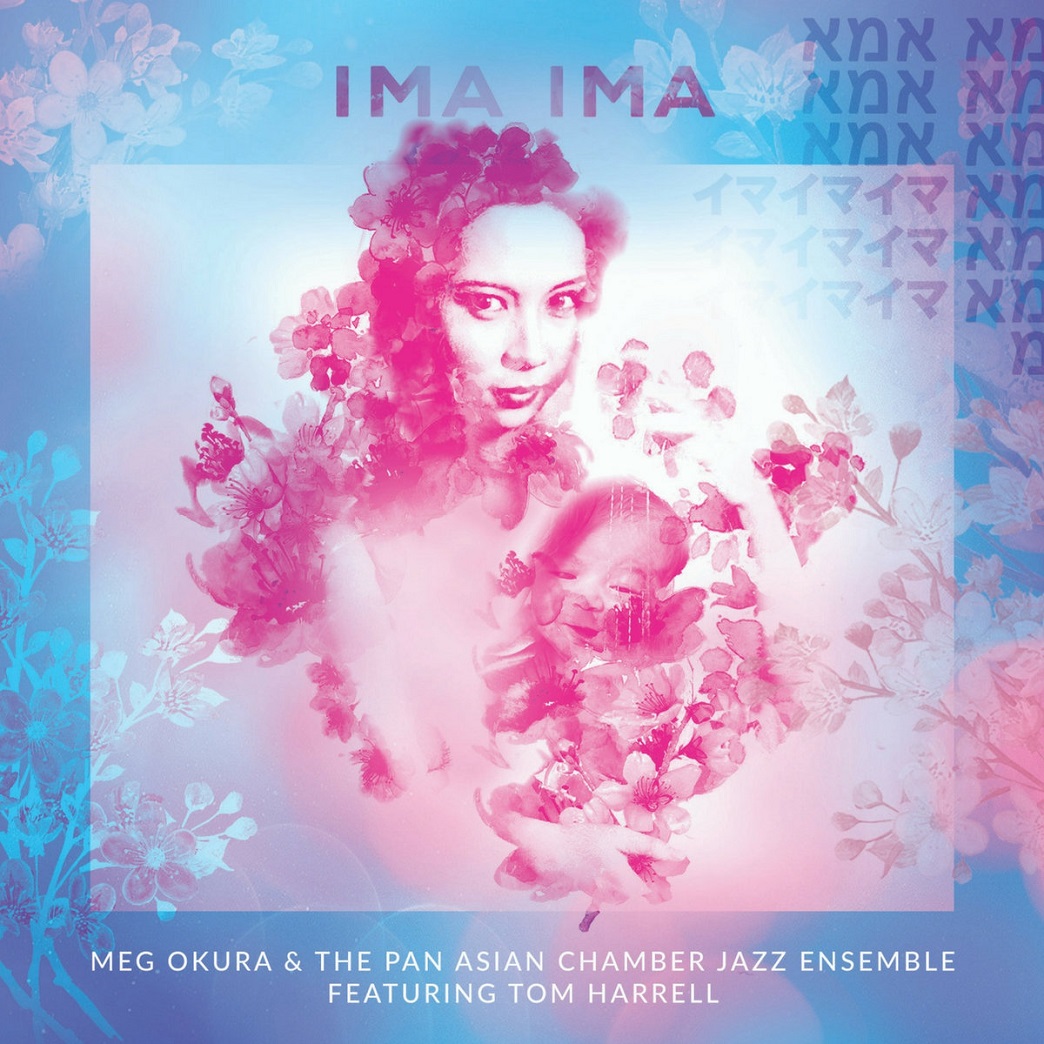
The ensemble’s self-titled debut album “Meg Okura’s Pan Asian Chamber Jazz Ensemble” was one of the “2006 Best Albums” of the Independent Music Awards. The Pan Asian Chamber Jazz Ensemble has since released Naima (2010), Music of Ryuichi Sakamoto (2013), and the forthcoming Ima Ima (2018) to critical acclaim. The group has performed over 50 concerts and festivals nationally and internationally, including NYC Winter Jazzfest, Lincoln Center, Levitt Pavilion (CA), KL International Jazz Festival in Malaysia and sold-out concerts in Japan. A native of Tokyo, Ms. Okura moved to New York after making her solo debut at Kennedy Center as at 19. She studied at the Juilliard School as a classical violinist, only to switch to jazz upon graduation. Since then, she has performed and recorded with jazz masters including Michael Brecker, Steve Swallow, Lee Konitz, and Tom Harrell, earning her place as “the queen of chamber jazz.” (All About Jazz) She has appeared on several dozens of albums and soundtracks as a violinist and erhu player. Her composer credits appear on films such a documentary, The Congregation, or TV Series, Louie, among others. She has also written for C. Eule Dance, the New York Symphonic Ensemble, Sirius String Quartet, the J-Orchestra (18- piece jazz orchestra), and the Pan Asian Chamber Jazz Ensemble. She has received numerous grants and awards including Metlife Creative Connections Grant (Meet The Composer), Brand Personality Award (Asia Pacific Brands Foundation), Manhattan Community Arts Fund (Lower Manhattan Cultural Council), Jerome Composers Commissioning Program (American Composers Forum), and most recently, New Music USA Project Grant.
Guitarist/Composer Rez Abbasi Melds Jazz and South Indian Music with a Bold, Original Vision on Unfiltered Universe, due out October 6
The third part of a trilogy with Abbasi's South Asian-inspired supergroup Invocation, the album features Rudresh Mahanthappa, Vijay Iyer, Johannes Weidenmueller, Dan Weiss and guest cellist Elizabeth Mikhael
"Producing so vivid a music that it can almost be tasted, Abbasi sounds like no one who has gone before him. His compositions are sheer genius."- Raul D'Gama Rose, All About Jazz
"Abbasi creates a sinuous, sometimes haunting and always evocative blend of contemporary jazz and Asia influences."- Time Out NY
It seems natural to refer to the music of Rez Abbasi as a hybrid, given the guitarist/composer's penchant for combining the traditions of South Asian music with his own modern jazz voice. That description ceases to fit as soon as one hears the music, however. In Abbasi's singular approach, this merging of influences feels less like a chimera, a patchwork of distinctive yet still identifiable parts; it is instead an evolution, a wholly new creature that bears distinctive traces of its antecedents yet has a form and beauty all its own. Such is the case with Abbasi's 12th album, Unfiltered Universe (due out October 6, 2017 on Whirlwind Recordings), the third album in a trilogy exploring different South Asian musics with his stellar quintet Invocation. The band brings together five leading voices in forward-looking jazz, all of whom have extensively studied diverse South Asian traditions, often in collaboration with one another: Abbasi, saxophonist Rudresh Mahanthappa, pianist Vijay Iyer, bassist Johannes Weidenmueller, and drummer Dan Weiss. Where Invocation's 2008 debut Things To Come highlighted the influences of North Indian Hindustani music with guest vocalist Kiran Ahluwalia, and their 2011 follow-up Suno Suno, the Qawwali music of Abbasi's native Pakistan, Unfiltered Universe takes as its point of departure the Carnatic music of South India. Abbasi's experience with Carnatic music can be traced back at least to Mahanthappa's 2008 release Kinsmen, a collaboration with South Indian saxophonist Kadri Gopalnath that merged jazz and Carnatic musicians, and continued through a 2015 project with the Indian-American Ragamala Dance Company. His studies and listening have persisted throughout the intervening years, allowing him to absorb its influence and create new music under its sway that is far from a literal interpretation of its surface qualities. The title Unfiltered Universe refers to the way in which a lifetime of globe-spanning influences were allowed to emerge directly from Abbasi's subconscious into his music. "The idea was to operate from my intuition first while creating these compositions and then later use the thought process to manipulate the music, he says. "It's unprocessed and unfiltered, shining a light on the universe within me. It really brought the fruits of my experiences to the forefront." Such an intuitive approach to composition was a fresh experience for the guitarist, who likens the approach to Jackson Pollock's action painting. "I wanted to let the influences hit the empty canvas and allow that to speak to me as opposed to having a foundational idea of what I was going to create," Abbasi explains. "I didn't want to impose preconceived rhythms or ideas; I wanted to get the essence and energy of what I've taken away from playing with Carnatic musicians and dancers, and to tie that in with everything I've done previously." To realize the music Abbasi reconvened his quintet Invocation, a supergroup of innovative jazz artists who have explored similar territory in disparate ways in their own work. Both American-born musicians of Indian descent, Mahanthappa and Iyer have both delved into South Asian traditions with highly acclaimed results. Weiss has brought intensive tabla studies to his inventive approach to the drum kit, while Weidenmueller has co-authored books on metric modulation via his studies in Carnatic percussion.
It's a rare group of musicians whose experiences and collaborations have made them uniquely prepared to seize on every nuance of Abbasi's compositions. "I chose these individuals because I knew that whatever I bring to the table, it's going to be supplemented by the wide-ranging history that each carries. With this group, that history contains a fortified education in Indian music and so we don't need to discuss anything Indian, per se - it's already there. For instance, if Dan plays a particular rhythmic idea from his tabla studies, all of us will be able to grab onto it intuitively. That's one reason why the communication is so stimulating within the ensemble." Throughout Unfiltered Universe, the music surges with a uniquely propulsive groove, with sinuous melodies that follow surprising, exotic contours. The title track morphs from meditative to frenetic, while opener "Propensity" bristles with a darting, angular energy. "Thin-King" earns its play on words by managing to juggle the cerebral and the playful, while the 12-minute "Turn of Events" gathers from the abstract to the urgent and disintegrates back again, "Disagree to Agree" captures the tenor of discourse in our current moment in its teeth-gritting tension, and "Dance Number" closes the album with a buoyantly erratic groove that both tempts and challenges the listener to move. The end result of these converging lifetimes of experience, creation, collaboration and study, (un)filtered through the lens of Abbasi's intuitive writing approach, is a strikingly individual voice that never explicitly references its influences but instead evokes the atmospheres and feelings inherent to them. "As a jazz listener you may not necessarily hear the Carnatic influence," Abbasi says, "but you'll definitely hear something different, and ultimately that's what counts."
Abbasi has received multiple composition grants in recent years. Unfiltered Universe was supported in part by a New Jazz Works grant from Chamber Music America and the Doris Duke Foundation. It is the 2nd CMA grant he has received for his group Invocation. Most recently he was commissioned by the NY Guitar Festival to compose and perform a live score to the 1929 Indian silent film, A Throw of Dice. The premiere took place in NYC in May with a reprise performance scheduled for September 16th at the Ellnora Guitar Festival in Urbana, IL.
Guitarist and composer Rez Abbasi is an artist who continually pushes new boundaries. Born in Karachi, Pakistan, and raised in Southern California, he studied at the USC and the Manhattan School of Music in jazz and classical music, supplemented by a pilgrimage in India under the tutelage of master percussionist Ustad Alla Rakha. Abbasi's music is a vivid synthesis of all the above stated influences and genres. Voted #1 "Rising-Star Guitarist" in 2013's DownBeat Critics Poll and placed in the "Top-Ten Guitarists" in 2015 & 2016, guitarist and composer Rez Abbasi has become one of the most significant musicians on the current scene. Making New York home for the past 25 years, Abbasi has created a unique sound that is stimulated by his jazz pedigree and Indian-Pakistani upbringing. With twelve albums, multiple awards and composition commissions, Rez Abbasi continues to find creative ways to enrich diverse audiences with his musical projects.
Cover art and high res images available below for download “In his hands, the globe’s music feels relentlessly new and progressive.” - LA Times
"absorbing...engaging...and he’s judicious with his impressively fluent technique." - New York Times
Born in Pakistan’s teeming commercial metropolis Karachi and raised in Southern California, Abbasi is anything but a usual jazz player himself. He’s spent his creative life navigating the crossroads of disparate musical realms.
While best known for his work as an improviser, and composer, Abbasi also performs internationally with Kiran Ahluwalia, and serves as musical director, arranger and producer in their evolving artistic collaboration. Their creatively charged relationship has resulted in several Juno Award-winning albums hailed as world music masterpieces (such as 2008’s Wanderlust and 2011’s collaboration with Tuareg rockers Tinariwen, Aam Zameen/Common Ground). Over the years he’s performed with a dazzling pantheon of giants such as Ruth Brown, Peter Erskine, Kenny Werner, Barre Phillips, Tim Berne, Michael Formanek, Gary Thomas, Dave Douglas, Mike Clark, Ronu Majumdar, Kadri Gopalnath, Vishwa Mohan Bhatt, Greg Osby, Howard Levy and many others.
A junction is the point at which several things converge. For the visionary and award-winning jazz guitarist Rez Abbasi, his new band Junction weaves together musical currents he’s spent his career navigating. Abbasi has been at the center of some of the most enthralling and culturally expansive music of the past two decades, and his Cuneiform debut Behind the Vibration introduces a bracing new body of music, a sinewy 21st century approach to jazz-rock inspired by his far-flung influences.
In myriad inspired collaborations, from the South Asian jazz synthesis of alto saxophonist Rudresh Mahanthappa’s Indo-Pak Coaltion to the Punjab-meets-Tuareg vocal flights of Kiran Ahluwalia, Abbasi has manifested an uncommon gift for creating new sounds in settings deeply inflected by traditional forms. In his own projects, the Pakistani-American musician has displayed similarly fierce creativity, like his gorgeous unplugged reimagining of jazz-rock classics with the Rez Abbasi Acoustic Quartet’s (RAAQ) critically hailed 2015 album Intents and Purposes (Enja), and his all-star quintet (and sometimes sextet) Invocation with Mahanthappa, Vijay Iyer, bassist Johannes Weidenmueller, drummer Dan Weiss, (and latest addition cellist Elizabeth Means).
“Everything I do musically is stimulated by call and response,” Abbasi says. “I did the Acoustic Quartet project of covers from the ‘70s jazz-rock period and that impacted me to want to do an electric project of all originals. The new album reflects a continuum of what I’ve been doing all along – finding fresh orchestrations to present my music through. In some ways this project connects me more directly back to my first love, the energy that comes out of rock music. I wrote new tunes for this band and it was time for all these musical worlds to collide.”
Junction, the electric project that Abbasi formed to bring his original tunes to life, features Mark Shim on tenor saxophone and the electronic MIDI Wind Controller, Ben Stivers on keyboards, B-3 organ and Rhodes, and drummer Kenny Grohowski. The band is a supremely maleable ensemble that has forged a poised and texturally accute group approach. While exploring a vivid palette of electronic sounds and aggressive grooves, Junction maintains the dynamics, precise calibration, and interactive imperative of an inspired jazz ‘acoustic’ combo.
Sonically surprising, the album opens with “Holy Butter,” a piece inspired by a collaboration with classical South Indian dancers. In the first of many sonic feints, what sounds like a deeply funky bass solo is actually Shim getting down with his MIDI Wind Controller. Indeed, not having a defined bass player is a significant element of Junction, opening up the band’s sound as Stivers and Shim alternate low end responsibilities.
Inspired by the Arab Spring, “Groundswell” is a slowly ascending tune that, while originally written for another ensemble, comes home in Junction, with Stivers on B-3—“the first electric keyboard instrument,” Abbasi notes—and a searing Abbasi solo followed by Shim’s oragami-angular tenor. If that piece evokes the mounting of external pressure, “Uncommon Sense” suggests a wending internal spiritual journey with a hypnautically sinuous opening guitar line. As Abbasi puts it, “The title refers to a ‘sense’ that’s beyond our five and one that’s more difficult to connect to due to the clutter in our minds.” Before long, the becalmed lyricism gives way to a frantic search powered by Grohowski’s exceptionally deft trap work.
A sparsely decorated noir scene that emerges and departs without pausing for a solo, “And I You” is a brief, cinematic mood piece that arrives mid-album like a shimmering urban oasis. “Self-Brewing” is one of the album’s most fusion-y pieces, with a steeplechase theme introduced by Abbasi and Shim on Midi Wind Controller. The album closes with “Matter Falls,” a mid-tempo anthem that hints at South Asian cadences. Both grand and invitingly intimate, it’s a crunching tune that points to further explorations. Clearly, Junction is just one stop on a spectacularly rich and incident-filled sojourn.
More than a meeting place, Junction is a communion of four distinct voices. Born in Jamaica and raised in Richmond, Virginia, saxophonist Mark Shim has been a stand out on the New York scene since the mid-1990s. He first gained attention via bari legend
Hamiett Bluiett, who featured him on his classic 1995 album Young Warrior, Old Warior (Mapleshade). He went on to work with heavy weights like Elvin Jones, Betty Carter, David Murray, Greg Osby, and the Mingus Big Band. More recently, he’s played a key role in the adventurous bands led by altoist Steve Lehman and pianist Vijay Iyer.
“Mark is a ridiculous tenor saxophone player, but he’s also really into production, working with drum machines and producing people’s records,” Abbasi says. “He’s tapped into the Zeitgeist, the vibe that’s going on now and I’m open to all of it.” Raised in Las Vegas in a highly musical family, trained in classical and jazz, Ben Stivers got his start on the Miami studio scene collaborating extensively with the Bee Gees. A highly versatile player, he’s been sought out by the likes of Ricky Martin, Chris Botti, Matchbox Twenty, and Jose Feliciano. Since moving to New York, he’s also worked extensively in jazz settings. Drummer Kenny Grohowski is engaged in a similarly expansive array of projects. Raised in Miami, he’s a member of several internationally acclaimed ensembles, including bassist Lonnie Plaxico’s band, the heavy metal band Secret Chiefs 3 and Haitian singer Emeline Michel’s Acoustic Quintet. He’s collaborated with artists ranging from Vernon Reid, John Zorn and Bobby Sanabria to Bill T. Jones, Cassandra Wilson, Giovanni Hidalgo, and Daniel Bernard Roumain (a.k.a. DBR). “You don’t have many musicians as eclectic as these in the past,” Abbasi says. “For example, Kenny has all this modern heavy metal language and then he can turn around and earnestly play like Paul Motian or Tony Williams. Ben has been musical director and keyboardist for some huge pop acts but has also performed my complex Hindustani-influenced jazz music. The versatility is pretty unusual and tangible and that’s what this project is about, capturing and containing that vastness of energy in a ‘jazz’ experience.” Born in Pakistan’s teeming commercial metropolis Karachi and raised in Southern California, Abbasi is anything but a usual jazz player himself. He’s spent his creative life navigating the crossroads of disparate musical realms. Growing up in Torrance, he first gravitated to the guitar under the sway of rock bands like Rush, Van Halen and Led Zeppelin. Straight ahead jazz had caught his ear by the time he started Palos Verdes High School and he thrived in the school’s respected band program (future tenor sax star Mark Turner was a classmate). He had his first guitar epiphany when a friend took him to see Joe Pass and Ella Fitzgerald. “I was 16 and at that age, technique and virtuosity are elements that bring you in,” Abbasi says. “The idea that an older gentleman could play circles around Eddie Van Halen was really striking. I realized I had a lot of work ahead of me. That same year, I saw Allan Holdsworth, the polar opposite of Pass, and that was another ear and eye opener that lead me into a different direction.” I do still love Pass and Holdsworth, but they didn’t end up becoming big influences, rather, in combination they revealed two very opposing sides of jazz.” He wasn’t drawn to Hindustani music until he happened to attend a private party down the street from his house where tabla maestro Zakir Hussain was performing with santoor master Shivkumar Sharma “and it blew me away,” he recalls. “I felt that same elation when I saw Pass and Holdsworth. Sitting five feet away from these gentlemen, I was amazed by the striking sounds coming out of their instruments. I thought, I’ve got to get more involved with this side of my life, my roots.” After attending the University of Southern California, Abbasi made the move to New York City in the late 1980s to study jazz and classical music at Manhattan School of Music (while immersing himself in North Indian classical music on a pilgrimage to India under the tutelage of tabla giant Ustad Alla Rakha, Zakir Hussain’s father). He made his recording debut as a leader in 1995 with Third Ear. Recognized as a strikingly original voice, Abbasi released a series of landmark sessions in the succeeding two decades focusing on his original compositions, including 2005’s Indo-jazz Snake Charmer with Indian-born vocalist/songwriter and now wife, Kiran Ahluwalia, and 2009’s Things To Come (Sunnyside) with Ahluwalia, Vijay Iyer, Rudresh Mahanthappa, Johannes Weidenmueller and Dan Weiss (an album hailed by DownBeat as one of the decade’s top CDs). In many ways 2009 was a banner year, as Abbasi received a prestigious Chamber Music America commission to compose new works for the same ensemble, Invocation. He also formed the Rez Abbasi Acoustic Quartet, or RAAQ, with vibraphonist Bill Ware, drummer Eric McPherson and bassist Stephan Crump, to explore both originals and cover tunes. He introduced a new trio with bassist John Hebért and drummer Satoshi Takeishi on 2013’s Continuous Beat (Enja), a group that like RAAQ interprets originals and ingenious modern jazz compositions. While best known for his work as an improviser, and composer, Abbasi also performs internationally with Kiran Ahluwalia, and serves as musical director, arranger and producer in their evolving artistic collaboration. Their creatively charged relationship has resulted in several Juno Award-winning albums hailed as world music masterpieces (such as 2008’s Wanderlust and 2011’s collaboration with Tuareg rockers Tinariwen, Aam Zameen/Common Ground). Over the years he’s performed with a dazzling pantheon of giants such as Ruth Brown, Peter Erskine, Kenny Werner, Barre Phillips, Tim Berne, Michael Formanek, Gary Thomas, Dave Douglas, Mike Clark, Ronu Majumdar, Kadri Gopalnath, Vishwa Mohan Bhatt, Greg Osby, Howard Levy and many others.
With this newest album, Behind the Vibration, realized via his new electric Junction, Abbasi takes another bold step, embracing his rock ‘n’ roll roots with a bear hug that encompasses post-bop, South Asian traditions, and state of the art sonics. “More than anything that I’ve ever recorded, this album is the convergence of everything I’m interested in,” he says. “The musicians I’ve chosen are versatile enough to pull it off. It’s not only all of the influences that have come up to this point, it’s also the process of merging it with the technology of today. This is music that could’ve only happened now.”
Mark Shim – tenor saxophone & midi wind-controller
Ben Stivers – keyboards, B3 organ, Rhodes
Kenny Grohowski – drums
All compositions by Rez Abbasi – Feroza Music, BMI.
Recorded at Systems Two, Brooklyn by Michael Marciano, August 21–22, 2015.
Mixed at Systems Two by Michael Marciano, Rez Abbasi & Max Ross.
Mastered at Turtletone Studio by Michael Fossenkemper.
Cover photo by Rez Abbasi.
Band photos by Kiran Ahluwalia.
Package design by Bill Ellsworth.
Thank You: Kiran Ahluwalia; my parents; my in-laws; Robert Abbasi; Rudresh Mahanthappa; Tom Chang; Brice Rosenbloom; George Wein; Vikas & Jaishri Kapoor; Ted Makler; James & Mike at Red Hook Jazz Fest; Chris Tarry; Jaimeo Brown; Michael Marciano; Nancy Marciano; Max Ross; Steve and everyone at Cuneiform; Michael Fossenkemper; and, of course, Mark, Ben and Kenny for the music!
Rez Abbasi uses D’Angelico guitars, D’Addario strings, DVmark & Evans amps, and Reunion Blues bags.