Amaryllis is a six-song suite performed by a newly formed sextet of master improvisers, including Halvorson, Patricia Brennan (vibraphone), Nick Dunston (bass), Tomas Fujiwara (drums), Jacob Garchik (trombone), and Adam O’Farrill (trumpet). The Mivos String Quartet joins for three of the songs, making this the largest ensemble for which Halvorson has written to date. The suite showcases Halvorson’s many musical influences from jazz, experimental, new music, and beyond.
Wednesday, March 16, 2022
Mary Halvorson - Belladonna (May 13, 2022 Nonesuch Records)
Belladonna is a set of five compositions written for Halvorson on guitar plus The Mivos Quartet: Olivia De Prato (violin), Maya Bennardo (violin), Victor Lowrie Tafoya (viola), and Tyler J. Borden (cello). It is Halvorson’s first time writing for a string quartet. Mivos’ parts are through-composed and augmented by Halvorson’s guitar improvisations.
Sjostrom / Casserley / Florodos / De Joode / Kujala / Narvesen / Taramontana / Schiaffini / Wachsmann and others - SoundScapes # 3 FESTIVAL MUNICH - 2021 SchwereReiter (March 26, 2022 Fundacja Słuchaj)
Ulrich Habersetzer (BR-KLASSIK)
14 musicians from nine different countries went on a sound journey directed only by their own musical fantasy, no borders – except one, more about that later.
The venue, the newly built „Schwere Reiter“ in Munich, is perfect for this: clear acoustics, clear architecture.
In the middle of the covid pandemic, in a short time when concerts were possible, such an intense and open exchange could happen, two days in a row, on October 1st and 2nd 2021 – a stroke of luck. A music that moves, stimulates, perhaps upsets, has been recorded there.
The Berlin based saxophone player Harri Sjöström, born in Finland, is the creator of these collaborations and he named them „SoundScapes“: Landscapes of Sounds. It started as a concert series in Berlin in 2013. In 2016 and 2018 “SoundScapes Festivals” happened in Helsinki and now the third one took place in Munich in 2021.
People with open and curious ears can move around in this scenery of sounds. You can walk through a tender braid of notes from a trombone and a violin, embracing each other.
You can marvel at tiny tone dots from a guitar and a quartertone accordion, expanded by soft electronic sound pieces. You can get carried away by the pull created by two drums and a vibraphone. Or you can be amazed by a piano dancing freely to floating frequencies from different wind instruments.
The concept of „SoundScapes“ says that all players are involved at the first and the last part of the two day festival. All other sections have line-ups from duo to quintet, hand-picked by Harri Sjöström and agreed with all the members. There’s only one limit: each performance should not last longer than 15 Minutes.
This might be seen as a harsh breaking of the rules of free improvisation, but in this case it’s also a stroke of luck! There are no timewasting settle ins, no soloistic ego trips, no lengths. Only with great togetherness and space-giving respect can such a dense but open music be created.
This recording was edited very little, no instrumental constellation has been left out. It shows the whole path through the landscapes of sounds that Harri Sjöström and his great associates have walked during these two festival nights. A music that opens doors and stretches rooms. Insert, listen, get involved!
1. 1.1. SoundScapes - Opening Night Tutti Orchestra 15:36
2. 1.2. The Player Is #1 Kalima, Heather, Mureddu 06:43
3. 1.3. The Player Is #2 Gordoa, De Joode, Schiaffini, Wachsmann 10:51
4. 1.4. The Player Is #3 Kujala, Sjöström 08:09
5. 1.5. The Player Is #4 Floridis, Schiaffini 09:10
6. 1.6. The Player Is #5 Casserley, Gordoa, Heather, Narvesen 14:26
7. 1.7. The Player Is #6 Tramontana, Wachsmann 13:08
8. 2.1. The Player Is #7 De Joode, Narvesen, Tramontana, Sjöström, Wachsmann 08:32
9. 2.2. The Player Is #8 Bauer, Floridis, De Joode, Schiaffini, Tramontana 06:32
10. 2.3. The Player Is #9 Casserley, Mureddu, Sjöström, Wachsmann 12:30
11. 2.4. The Player Is #10 Gordoa, Schiaffini 11:02
12. 2.5. The Player Is #11 Bauer, Floridis, Heather, 11:06
13. 2.6. The Player Is #12 Casserley, Kalima, Kujala 13:33
14. 2.7. SoundScapes - Silence To Sound, Tutti Orchestra 10:44
Matthias Bauer – double bass
Lawrence Casserley – signal processing instrument
Floros Floridis – bass clarinet & clarinet
Emilio Gordoa – vibraphone
Steve Heather – drums & percussion
Wilbert De Joode – double bass
Kalle Kalima – guitar
Veli Kujala –1/4 tone accordion
Libero Mureddu – piano
Dag Magnus Narvesen – drums & percussion
Giancarlo Schiaffini - trombone
Harri Sjöström – soprano, sopranino, alto saxophone
Sebastiano Tramontana – trombone
Philipp Wachsmann – violine & electronics
Credits:
Live concerts on 1st – 2nd October 2021 recorded by Bayerische Rundfunk at Schwere Reiter, Munich, Germany
Sound engineer: Frank Sattler and Marc Hoffmann
Sound technicians: Andreas Leis and Jürgen Schmid
Stage light & sound technicians: SchwereReiter technical crew: Zoro Babel & team
Mixing & mastering: Frank Sattler
Production assistant: Rita Mbeba
Live concert recording producer: Ulrich Habersetzer
Photos: single portraits by Cristina Marx/photomusix
Photos: group photos by Luciano Rossetti
Cover design: SEMAFOR
Executive producer: Maciej Karłowski
SoundScapes # 3 - Festival in Munich was organized & realised in cooperation with Hannes Schneider - Offene Ohren e. V., and recorded at Schwere Reiter (Scope – Spielraum für Aktuelle Musik, Christiane Böhnke-Geisse)
Artistic direction and concept: Harri Sjöström
SAMO SALAMON & NEW FREEQUESTRA - Free Distance, Vol. 2: Poems are Opening (March 2022 Fundacja Słuchaj)
During the first lockdown of the Covid era in spring 2020 my creative fire was still burning. All concerts were cancelled, but I still wanted to play and improvise. That's were the idea for long-distance improvisation came up. I sent emails to some of my friends and other musicians who I admired and hoped that they might be interested in doing such a project.
I'm really happy that some of the best improvisers in Europe were happy to participate in this project. I'm such a fan of all these players, they are monster improvisers, composers and bandleaders on their own as well. All tracks are completely improvised or could be even described as structured improvisation. Musicians sent me their tracks, based on an initial improvisation by myself. Then I cut, mixed and blended the music to actually make music. It was an incredibly fun project and challenge!
The title of the album and all the compositions are based on two poems by the great US poet E.E. Cummings, since poetry is my other artistic love and obsession.
1. 1.1. all in green 05:40
2. 1.2. went my love rifing 08:52
3. 1.3. on a great horse of love 04:18
4. 1.4. into the silver down 05:32
5. 1.5. for lean hounds 05:46
6. 1.6. crowched low 08:06
7. 1.7 and smiling 05:08
8. 1.8. the merry deer 04:04
9. 1.9. run before 06:12
10. 1.10. fleeter be they than dappled dreams 04:32
11. 2.1 roasetree 04:06
12. 2.2 you're the song to see 07:16
13. 2.3. whose all 09:18
14. 2.4 you're the sight to sing 03:34
15. 2.5. poems are opening 06:30
16. 2.6. as if 05:20
17. 2.7 and earth was playing 08:26
18. 2.8. at birthday 09:02
19. 2.9. each 04:04
20. 2.10. a whish no bigger 06:04
NEW FREEQUESTRA (Italy / Portugal / Slovenia / Spain / Sweden / Switzerland):
Emanuele Marsico – trumpet (CD 1 - 6,7,9; CD 2 – 5,7,8)
Alberto Mandarini - trumpet (CD 1 - 6,9; CD 2 – 5,8)
Mirko Cisilino – trumpet (CD 1 - 9; CD 2 - 3)
Luis Vicente – trumpet (CD 1 - 1,7,8,10; CD 2 – 1,6,7)
Emanuele Parrini – violin (CD 1 - 2,4,6,8; CD 2 – 5,6,8,9)
Marco Colonna – baritone and sopranino sax (CD 1 - 2,4,6; CD 2 – 3,4,5,7,8,10)
Achille Succi – alto sax and bass clarinet (CD 1 - 2,4,6,7,8; CD 2 – 2-10)
Albert Cirera – sax (CD 1 - 4,5,6,8; CD 2 – 7,8,9)
Fredrik Ljungkvist – sax (CD 1 - 4,6; CD 2 – 6,8)
Christoph Irniger – sax (CD 1 - 4,8)
Alberto Pinton – sax (CD 1 - 1; CD 2 - 4)
Beppe Scardino – sax (CD 1 - 2; CD 2 – 2,4,7)
Martin Küchen – sax (CD 1 - 3)
Samo Salamon – guitar (CD 1 - 3,4,6; CD 2 – 2,4,7,8,9)
Marcelo dos Reis – guitar (CD 1 - 1,7,8; CD 2 – 1,6)
Silvia Bolognesi – bass (CD 1 - 2,5; CD 2 - 2)
Vasco Trilla – drums (CD 1 - 4,6; CD 2 – 5,8)
All music improvised by the Freequestra. Mixed and mastered by Samo Salamon.
Liner Notes: Samo Salamon
Photo by Janin Vezonik
Graphic Design: Piotr Biegański
Executive producer: Maciej Karłowski
Etiquetas :
Fundacja Słuchaj,
New Freequestra,
Samo Salamon
Vince Abbracciante e Javier Girotto conquistano l'Orpheus Award come miglior produzione jazz con Santuario (Dodicilune)
VINCE ABBRACCIANTE E JAVIER GIROTTO CONQUISTANO L'ORPHEUS AWARD 2022 COME MIGLIOR PRODUZIONE JAZZ CON IL DISCO SANTUARIO PRODOTTO DALL'ETICHETTA LECCESE DODICILUNE.
Una bellissima notizia in casa Dodicilune: il fisarmonicista ostunese Vince Abbracciante e il sassofonista argentino Javier Girotto conquistano l'Orpheus Award 2022 nella categoria jazz grazie al progetto discografico "Santuario", prodotto dall'etichetta salentina e distribuito in Italia e all’estero da IRD e nei migliori store on li ne da Believe. Si tratta della dodicesima edizione del Premio della critica per le produzioni fisarmonicistiche italiane promosso dall'Associazione Promozione Arte con la direzione artistica di Gerlando Gatto, che coinvolge esperti e critici di riviste italiane e internazionali e che per il 2021 ha visto la segnalazione di ben 47 produzioni discografiche. Durante la cerimonia, trasmessa in streaming domenica 13 marzo, sono stati premiati anche il giovane salentino Michele Bianco (classica), il duo Luca Zanetti e Paola Torsi (world/popular music) e, con il Premio alla carriera, la cantante Antonella Ruggiero e il musicista e produttore Roberto Colombo.
«Lâ ™Orpheus Award è un premio molto sentito tra i fisarmonicisti, riceverlo per il secondo anno di seguito è un’emozione molto forte per me. So già che la mia ricerca sull’ignoto non finirà mai», precisa Vince Abbracciante, che aveva conquistato il premio anche nel 2019/2020 con "Terranima" (Dodicilune). «Devo tanto a Javier Girotto, suonare con lui mi permette di imparare sempre cose nuove, è un musicista straordinario sotto tutti i punti di vista e mi stimola ad andare sempre oltre i limiti. Ogni concerto è un flusso emozionale difficile da spiegare a parole e quelle energie siamo riusciti a catturarle anche in studio di registrazione. Nel disco “Santuario” abbiamo registrato nostre composizioni su un genere di difficile catalogazione. È una musica che viaggia tra il tango, il jazz, la world music, con tantissima improvvisazione e tanti arrangiamenti a due voci. In più abbiamo deciso di omaggiare un grande compositore argentino, Luis Bacalov. Desidero ringraziare l a mia etichetta, la Dodicilune, per credere così tanto in me. Questo premio è anche loro».
«Per me Santuario è stato un disco pieno di energia ed entusiasmo. Una vera collaborazione con un continuo scambio di idee, condivisione nelle composizioni e cura nel suono, nell'interplay delle improvvisazioni. Un lavoro discografico che mi ha dato la voglia di pensare al prossimo disco», racconta Girotto. «La fisarmonica è uno strumento che mi stimola e che mi riporta continuamente alle mie origini, che mi consente (grazie al suo potenziale tecnico) di poter andare ad oltranza a trovare nuovi orizzonti di espansione nei vari generi musicali (tradizionali, jazzistico, classico). Uno strumento che non ha limiti», prosegue il musicista. «Vince Abbracciante è uno strumentista in continua crescita. È un vulcano di idee e di stimoli. L'ideale per suonarci insieme».
Santuario propone undici composizioni originali del sassofonista argentino (“Santuario degli animali”, “Fugorona”, “Trama della Natura”, “2 de Abril”, “Aramboty”) e del fisarmonicista pugliese (“Ninar”, “En Mi”, “Fuga a Sud”, “Pango”, “Impressioni di Puglia” e “Soprano”) e la rilettura de “L'ultima chance” di Luis Bacalov, tema principale della colonna sonora dell’omonimo film di Maurizio Lucidi. Non è certo la prima volta che il jazz e le tradizioni argentine s’innamorano fino a finire in un abbraccio vigoroso, simile a un tango impetuoso e improvviso. Non è neanche la prima volta che la fisarmonica, strumento popolare (se si può dire) che porta nel suo corpo l’eco di un misto di tutti i folclori del mondo, s’imbaldanzisce per uscire con delizia dal suo universo tradizionale. Ma Abbracciante e Girotto (che alterna sax soprano e baritono e il flauto delle Ande), lirici e molto melodici, cercando sempre conversazioni intimiste con i loro strumenti, hanno la sensibilità e il talento di alzare questo esercizio di “stile” al più alto grado di compimento estetico e di poesia sentimentale. Insieme dal 2015, i due artisti propongono una musica originale, regalando “nuovi ponti tra il jazz, il folclore, il tango”, improvvisazione libera e scrittura neoclassica con stralci malinconici e passionali, raffinatezza espressiva del loro universo musicale che si rivolge tanto all’anima quanto al pensiero introspettivo.
Classe 1965, Javier Girotto nasce a Cordoba e ha la banda nel cuore grazie alla passione trama ndata dal nonno materno. Inizia suonando il rullante, il clarinetto piccolo fino ad approdare al sax e, dopo pochi anni al jazz, anche grazie a una borsa di studio del Berklee College of Music. Dopo l’esperienza negli Stati Uniti, dove segue le lezioni di Joseph Viola, George Garzone, Hall Crook e Jerry Bergonzi e impara “il mestiere”, suonando con Danilo Perez, George Garzone, Hall Crook, Bob Moses, Herb Pomeroy e tanti altri musicisti, a 25 anni arriva in Italia sulle tracce della sua famiglia di origini pugliesi. Tantissime le sue esperienze e le sue collaborazioni. Il suo progetto più longevo è sicuramente Aires Tango con Alessandro Gwis al pianoforte, Marco Siniscalco al basso e Michele Rabbia alla batteria e percussioni. Ha suonato e suona nei più importanti festival, teatri, rassegne e club in Italia e in giro per il mondo collaborando, tra gli altri, con Ralph Towner, Bob Mintzer, Randy Brecker, Paul Mc Candles, Paolo Fresu, Bob Moses, Danilo Rea, Michel Godard, Gia nluigi Trovesi, Rita Marcotulli, Roberto Gatto, Nada, Stefano Bollani, Fabrizio Bosso, Enrico Rava, Nicola Piovani, Samuele Bersani e molti altri.
Classe 1983, originario di Ostuni, Vince Abbracciante, a otto anni intraprende gli studi musicali con il padre Franco. Diplomato in musica jazz al Conservatorio “Nino Rota” di Monopoli sotto la guida di Gianni Lenoci e laureato in fisarmonica classica con lode e menzione speciale al Conservatorio Egidio Romualdo Duni di Matera con Gian Vito Tannoia, ha frequentato master class, seminari, corsi. Si è esibito in festival e jazz club in tutto il mondo suonando con numerosi musicisti (Juini Booth, John Medeski, Richard Galliano, Marc Ribot, Javier Girotto, Gabriele Mirabassi, Flavio Boltro, Fabrizio Bosso, Peppe Servillo, Lucio Dalla, Ornella Vanoni, Heidi Voge l). Nel 2006 si avvicina anche alle tastiere vintage. Nel 2009 progetta insieme a Carlo Borsini un nuovo sistema per il cambio dei registri della fisarmonica, che permette di ampliare la gamma sonora del suo strumento. Ha scritto colonne sonore per i film del regista Gianni Torres e ha pubblicato vari cd con The Bumps (trio completato da Davide Penta e Antonio Di Lorenzo) e con Paola Arnesano (Tango!, 2012 e MPB, 2017). Dopo “Introducing”, nel quale è affiancato dal leggendario bassista newyorkese Juini Booth (2012, Bumps Records) ha pubblicato per l’etichetta Dodicilune i due cd “Sincretico” (2017) e “Terranima” feat. Gabriele Mirabassi (2019). Nella sua carriera ha conquistato numerosi premi nazionali e internazionali. Dal 2000 è testimonial delle fisarmoniche Borsini di Castelfidardo. Dal 2017 il calco della sua mano destra viene conservato presso il “Museo Internazionale delle Impronte dei Fisarmonicisti” di Recoaro Terme (VI). Nel 2021 ha vinto (ex aequo con Simone Zanchini) l'Orpheus Award nella categoria jazz. In uscita anche il libro/cd "Io che amo solo te. Le Voci di Genova", produzione firmata da Dodicilune, Eskape e Coolclub, tratto dal concerto/spettacolo di Serena Spedicato (canto, voce recitante), Osvaldo Piliego (testi originali) con arrangiamenti firmati da Abbracciante affiancato da Nando Di Modugno (chitarra classica) e Giorgio Vendola (contrabbasso) e la regia di Riccardo Lanzarone.
Etiquetas :
DODICILUNE / IRD,
Javier Girotto,
Vince Abbracciante
Friday, March 11, 2022
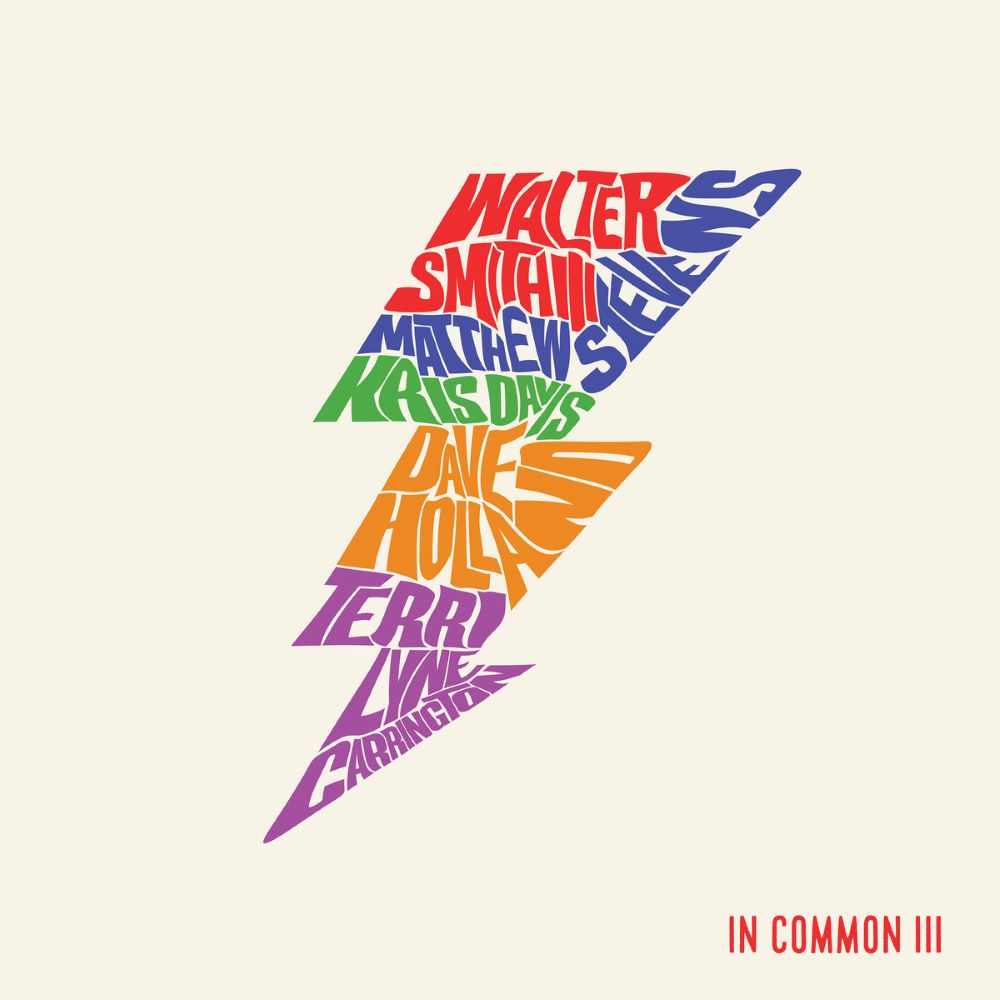
Walter Smith III & Matthew Stevens - In Common III (March 11, 2022 Whirlwind Recordings)
Walter Smith III and Matthew Stevens are two musicians at the forefront of developments in jazz and improvised music, listing the likes of Terence Blanchard, Ambrose Akinmusire, Esperanza Spalding and Christian Scott as collaborators. The pair started working together in 2017, and four years later, they’re back for the third iteration of their highly commended In Common project. Previous guests include Nate Smith, Linda May Han Oh and Marcus Gilmore; on In Common 3, Kris Davis takes the piano chair vacated by Micah Thomas, and completing the lineup are two legends of the game – Dave Holland and Terri Lyne Carrington.
What’s new, third time around? “It’s longer, freer, and yet more spontaneous,” says Smith. The successful In Common formula – inventive ‘one-page songs’ written with specific musicians in mind – disguises the through-line that uniquely shapes this record: “The spotlight is on the community of musicians as a whole,” Smith comments. “The general vibe is sculpted by the musicians’ interpretations of what we bring in.” Davis’ influential presence means the project leans into the aesthetics of free improvisation for the first time; the resulting soundworld lends itself to electronic manipulation, another first for the series. The span of fifteen tracks showcases the duo’s knack for reinvention, slipping into unfamiliar contexts without losing sight of the album’s focused essence.
Smith is keen to emphasise the standalone nature of the divergent In Common recordings. Some aspects carry through though, like their commitment to remembering lost influences – opener ‘Shine’ serves as both a thank you and an acknowledgement to McCoy Tyner, Wallace Roney, Chick Corea, Jimmy Health and Ellis Marsalis. That introduces the remaining fourteen tracks, that divide nearly exactly into spontaneously constructed ideas that introduce fully composed tracks.
‘Loping’ was Stevens’ part-tribute to Carrington and Holland: “being of a certain ilk and having come up a certain way, I knew they would have had a specific way of playing this track” – Smith and Stevens feature in their trademark coolly cast melodic divisi. The single riff of ‘Oliver’ dissolves into ‘Hornets’s slinky groove, where we catch a glimpse of the sense of humour amongst the group. ‘Orange Crush’ squeezes all the juice out of a lop-sided ostinato, a concentration of the In Common philosophy into a three-minute segment. Then comes ‘After’, which captures Smith’s “never-ending optimistic thoughts about things being better ‘after’” – the opaque whirrs of the ensuing ‘Lite’ show that outcomes are far from clear-cut.
‘For Some Time’ does provide Smith with some closure, however – a timeworn composition that “finally finds a solidified direction amongst this quintet,” as Carrington and David jostle for position. ‘Reds’ sees Stevens back to Holland’s 1990 album ‘Extensions’, and “those big beat, odd meter songs.” ‘Variable’ involved Smith venturing into non-determinacy – “it’s written to be played in many tempos, meters, and approaches, but was not discussed prior to recording it” – and, via ‘Dust’s twanging landscapes and ‘Familiar’s misty acquaintance, In Common 3 concludes with the pensive ‘Miserere’, an aptly reflective conclusion to this wide-ranging endeavour.
1. Shine
2. Loping
3. Oliver
4. Hornets
5. Orange Crush
6. After
7. Lite
8. For Some Time
9. Shutout
10. Reds
11. Variable
12. Prince July
13. Dust
14. Familiar
15. Miserere
Walter Smith III - saxophone
Matt Stevens - guitar
Kris Davis - piano
Dave Holland - bass
Terri Lyne Carrington - drums
Recorded at Clubhouse (June 4-6 2021)
Mixed by Jay Dudt
Mastered by Jay Dudt & Jesse Naus
Produced by Matthew Stevens & Walter Smith III
Executive Producer - Michael Janisch
Photography - Pierce Johnston
Album Artwork/Graphic Design - Dave Bush
Bill Easley - Diversitonic (March 11, 2022 Sunnyside Records)
A sixty-year career as a successful professional musician requires flexibility and perseverance. Woodwind master Bill Easley has been able to achieve this feat by being a fantastic musician and putting himself into promising musical situations. He believes the key to his success has been his attraction to diversity in both music and life. On his new recording, Diversitonic, Easley aims to make a personal statement utilizing musical influences that have impacted his life and career.
Originally from the small town of Olean in Upstate New York, Easley’s musical career began as a child under the leadership of his drummer father in the family band. As a fourth-generation musician, his early and varied musical experiences gave him a leg up wherever he settled, including New York City, Fairbanks, Alaska, and Memphis, Tennessee. On each of these moves, Easley was able to jump into the local scene and start working immediately. Also, he found himself mentored by many of jazz music’s legendary figures in the process.
Easley was a member of George Benson’s group for two years before settling in Pittsburgh, becoming a regular on the Hammond organ soul jazz circuit. During the 1970s, in Memphis, Easley cemented his credentials as a working pro, becoming a regular studio musician at Stax and Hi Records and touring with Isaac Hayes. Easley joined Mercer Ellington and the Ellington Big Band in the mid-1970s and, finally, relocated to New York City in 1980 where he became a regular in the Broadway show bands. He also became a regular in John Lewis’s The American Jazz Orchestra, David Baker’s Smithsonian Jazz Orchestra, and Wynton Marsalis’s Lincoln Center Jazz Orchestra.
Having relocated recently to Durham, North Carolina, Easley looked to the local music scene to provide collaborators on Diversitonic, including pianist Mark Wells and drummer John Hanks. Easley wanted to make an organ-based recording, as this had been a much beloved combination during his career. Easley brought in Philadelphia-born, New York City-based organist Kyle Koehler to provide that authentic swinging Hammond sound.
The recording is bookended by two Easley original tunes, “Wherever You Go” and “There You Are.” A chorus of birds gives way to a chorus of overdubbed saxophones and the funky pulse of “Wherever You Go,” guitarist Robert Bradford and percussionist Beverly Botsford adding some enticing textures. Bluesy organ introduces Benny Carter’s “When Lights are Low,” a favorite tune of Easley’s and one that he frequently calls on the bandstand. The gospel tinged take of Charles Strouse’s All In the Family theme, “Those Were the Days,” takes Archie Bunker and Edith straight to church. Duke Ellington’s pretty ballad, “I Didn’t Know About You,” allows pianist Wells a spotlight but also highlights Easley’s engrained focus on playing a straight melody.
A swinging version of the standard “I Should Care” is done in a breezy but propulsive manner, while Ellington’s “Isfahan” is motored with a loose New Orleans stride and highlights Easley’s easy melodic approach, one that would have pleased his hero, Johnny Hodges. The jump blues of Easley’s former boss Mercer Ellington’s “Things Ain’t What They Used To Be” is a toe tapping, feel good addition and features harmonica overtones from Bill Newton. The recording concludes with Easley’s “There You Are,” an in the moment collage of improvised alto saxophone and percussion.
Bill Easley realizes that society is divided, whether it be by race, gender, or any other device. He accepts those differences and celebrates them. Easley also believes that music is the equalizer. A universal tonic that brings people together, thus his homespun term that is the title of his highly listenable new recording, Diversitonic.
1. Wherever You Go
2. When Lights Are Low
3. Those Were The Days
4. I Didn't Know About You
5. I Should Care
6. Isfahan
7. Things Ain't What They Used To Be
8. There You Are
Bill Easley - saxophones & piccolo
Kyle Koehler - Hammond B3 organ
Mark Wells - grand & electric piano
John Hanks - drums
Beverly Botsford - percussion (tracks 1, 5, 8)
Robert Bradford - guitar (tracks 1, 7)
Bill Newton - harmonica (tracks 1, 7, 8)
Etiquetas :
Beverly Botsford,
Bill Easley,
Bill Newton,
John Hanks,
Kyle Koehler,
Mark Wells,
Robert Bradford,
SUNNYSIDE RECORDS
Ted Reichman - Dread Sea (March 11, 2022 Tripticks Tapes)
Dread Sea is a confluence of two streams of electroacoustic music that started to emerge in the fall of 2020 and continued through the spring of 2021. The pieces started as improvisations on an mbira and a tiny accordion, both going through complex systems of electronic treatments. These heavily transformed instruments resisted “playing” in the traditional sense, but contributed their own layers of sonic material: feedback, transpositions, distortions, intentional or accidental patterning. All of the material was played live, improvised in real time, and much of it was recorded on a mono cassette machine through its internal mic, placed a few feet away from my amplifier. The long form emerged gradually, through unexpected linkages discovered through editing, layering and collage.
As I listened back to these multi-layered pieces, I kept thinking about water, especially about traveling on water, like a long day trip on the Amazon River I found myself on in 2006, during which I encountered a heavily drugged juvenile sloth who tried to attack me. It traced a long, slow arc in the air with its claw. A story started to emerge along with the music, a journey from the place in Amazonas where the water of the Rio Negro meets the Rio Branco, to the village in the reeds where I met the sloth, to a frozen lake in Northern Maine some time in the distant past and back. The music doesn’t follow that story so much as it mirrors the process of time and geography flowing together, in waves of rhythm, tone and noise, all interacting and blurring into each other, like bodies of water.
-Ted Reichman
///
Ted Reichman was born in Aroostook County, Maine in 1973. He began studying jazz piano at the New England Conservatory Preparatory School in 1987 and went on to study experimental music and ethnomusicology at Wesleyan University with Alvin Lucier, Sumarsam, and his most important early mentor, Anthony Braxton. At Braxton’s urging, Reichman began playing accordion, the instrument that would become the basis of his work in music. After beginning his professional career with Braxton while still a student, Reichman moved to New York City where he worked with a panoply of musical greats in styles ranging from improvised music and jazz to rock and roll and various forms of Jewish music. In addition to his work with Braxton, which includes the first recordings and performances of “Ghost Trance Music,” he is best known for his ten-year-plus tenure with John Hollenbeck’s Claudia Quintet.
He also founded the music series at alt.coffee which would evolve into Tonic, one of the world’s most crucial venues for avant-garde music. He has been on the faculty of the New England Conservatory for over ten years and spent four years as an Assistant Professor of Film Scoring at Berklee. He currently lives outside Boston where he records, produces and mixes albums and composes music for films at his studio Subtext Sound System. His essays have appeared in The New York Review of Books and poetry in the The Brooklyn Rail and other publications.
Side A
Part 1 - Prelude/Sloth Story
Part 2 - Pine Marten
Part 3 - Deep Ankle
Side B
Inner Horizon Parts 1,2,3
Dread Sea's Return
Ted Reichman - accordion, amplified mbira, electronics, prepared piano, synthesizers, tape
Recorded October 2020 - May 2021
Cover Photo by Susie Ibarra
L'Ocell & Ferran Fages - El Declivi (March 11, 2022 Tripticks Tapes)
L'Ocell is the duo project of Àlex Reviriego (double bass) and Fernando Carrasco (acoustic guitar), since 2015. El Declivi, their third release, was recorded featuring Ferran Fages on electric guitar in an old church in Miànigues, a small town in the province of Girona (Catalonia), after a period of collaboration as a trio in which they performed several concerts.
Their free improvised music shapes cathartic and primitive drones and soundscapes. Dark beauty passages, with psych folk and early music reminiscences, are interfered and disrupted by unexpected apparitions of metallic noises, chaotic percussions and amorphous noises. The oases of harmonies degrade and collapse as a construction abandoned at the mercy of the relentless effects of time and nature.
The three musicians involved on this recording know each other well due to being part of Barcelona's improvised and weird music scene, and have played together on other projects such as Phicus and Ràdium, where Reviriego and Fages collaborate. Carrasco and Reviriego, in addition to L'Ocell, were part of Völga and have performed live together in many different ensembles and contexts.
1. Flamarada
2. Més enllà dels arbres negres
3. Núvol de fum
4. El declivi
5. Una estança gairebé nua
6. Llampec
7. Les veus esvaïdes
8. Els gestos del menyspreu
9. Raig verd
Fernando Carrasco: Acoustic guitar & objects
Àlex Reviriego: Double bass
Ferran Fages: Electric guitar
Recorded at Sant Romà de Miànigues church, Porqueres (Girona), June 26th 2018
Sound engineering & recording by Ralph Lopinski
Mixing & mastering by Ferran Conangla
All music by L'Ocell & Ferran Fages
Cover photo by Fernando Carrasco
Etiquetas :
Àlex Reviriego,
Fernando Carrasco,
Ferran Fages,
L'Ocell,
Tripticks Tapes
The Relatives - The Relatives (March 11, 2022 Tripticks Tapes)
The Relatives is a new group split between New York City and Philadelphia consisting of T.J. Borden (cello), James McKain (tenor sax), and Leo Suarez (drums/perc). After many sessions and live performances of various groupings, this self-titled release is the trio’s debut recording, displaying a personally refined approach to pointillistic communication, interplay and the construction/demolition of static foundations.
Arriving at the NorthEast megalopolis from distant isolation (Western NY, Southern Illinois, Central FL),The Relatives came about through a mixture of playing shows along the East Coast, various Spring Garden House sessions, lunches at Café Nhan, and lengthy discussions of many things musical and extra-musical. The group began specifically honing in on a trio language around the Winter of 2020 and started meeting for frequent sessions. In March of 2021, this recording was engineered in North Philly by Jared Radichel, and mixed/mastered by Nathan Corder. Outside of the group, Borden, McKain and Suarez all work in a wide spectrum of sound environments, but collectively approach The Relatives as a focused improvising unit, simultaneously digesting and emitting particles of influence and musical syntax.
1. Cult Numbers
2. Richard Roundtree
T.J. Borden - Cello
James McKain - Tenor Saxophone
Leo Suarez - Drums
Recorded by Jared Radichel, March of 2021 in Philadelphia.
Mixed and Mastered by Nathan Corder.
Artwork by Matthew Adis.
Etiquetas :
James McKain,
Leo Suarez,
T.J. Borden,
The Relatives,
Tripticks Tapes
Thollem - Obstacle Illusion (March 11, 2022 Astral Spirits)
Its simple intricacies wipe the ashen windshield
Feeling its sound intensely close with chirping resonance and soft clattering cats-tails Seeds blowing and quickly tumbling over the damp terrain
When peeking through the clouds, the eye grows
And trees like giant lashes, lashes out into the sun-drunk evening sky
Transported to the salon of dreams where the sound of pianos from a thousand hands Clear the moon’s gravitas and plunks playfully through the streets of another city’s wound
Sinking its broken tapestry claws into new and exciting forms
The resonance is in movement and time
The clarity speaks with a sharp tongue and warm hands
The heart seeps metallic and wanders straight to the meadow of love and kindness Modal synchronies chromatic asymmetries spread roots through wet terrain and things grow
It all grows and grows as bark strips itself from the tree with the prodding of singing rain Bowling its way through the foliage and turquoise petrified forest
Biting itself and eating naturally the fungus from below and shooting up high
Tender bits of golden leaves drifting upward and spiraling haphazard until the sky takes it into its mouth
Using its tongue as a weapon for resounding sound meditations
Splattering the artificial grass with shards of mercury tears and bleeding hands Wounded from too much sun and too much cold
But resilient like the earth, devouring everything
Growing and growing towards an unknowable scarred reality that bursts with every breath
Every ounce of feeling
Peeled and glowing these giant orbs
Projecting their way into other dimensions
While firmly in their own
The pounding of salt and the crackling of burnt rice
Sticking to the palms of the hand and rising and hammering these forms, these shapes, Into glorious resonant beings
Where the plums of Queens and Kings taste sweet
Until that social change renders their bombast sour in new cycles of flowing blood Respondent to itself and the stoppages they procure
Fluctuating in its remittent clots
Clinking ever so lightly on the windowsills of tomorrow's dreams
The hand of hands
The double and triple hands of these hands
Massage the rigor and let it flow
Let rigor loosen its grip on this hypercreativity
Simulacrum
The same of something different
The difference protrudes through the heavens
The difference defines the space around the frequencies
The difference is always there, it's never the same
It can’t be
The constant tapping of what is truly inside
Finding its way through the webs of endless possibilities Swarming itself, eating itself, growing its own food
Its own self-reliant self
Selflessly expounding this brilliant sound
That could only come from these hands
This heart
This exhausted inexhaustible being
Sound the organ of new life
Trill the notes into another shape
Carry the electric storm in your pocket and let it loose when it’s time
Let your pockets grow into enormous sails
Take to the sea
Watch the coast fade and touch your lips to the salt water
Wash your hands in this water and look at yourself in the reflection pool
Swim with the dolphins
Sing with the flying fish
The storm comes quickly and the ripping blasts from the sky
Whip your face and destroy nothing
The pain transforms into a kind of ecstasy
This beauty reverberates itself into another shape
This shape turns itself to you and speaks of nothing in particular
Until the fog that has now drifted so close begins to clarify
And these communications that were once impossible and not particular Become particular. Become the very thing it is made from
Condensation and salt and the weather and the wonderfulness of not knowing Skipping gently across the clear sheets of barely moving water
a tremendously long snake
Caressing the water into a long canal of cryptic whispering trace
We see so clearly how there can be no clarity there can be no rigor
Without the heart creating and gently thumping
In the crevices of time
Bursting its own knowledge
Into something miraculous
- Rob Mazurek December 9, 2021
words constructed in response to the music
Obstacle Illusion is born out of my love for a wide array of musics that I've experienced and studied over the years. The album includes edited live concert recordings from my 3-month European tour at the end of 2021 (Centro d'Arte in Padova, AngelicA Festival in Bologna and the Rassegna di Nuova Musica in Macerata). The first and fourth tracks are solo acoustic piano. The second and third tracks are solely with the Korg Wavestate: all live, no overdubs. This music is the result of a collaboration between myself and the engineers who developed these instruments as well as the halls, the audiences and the dynamics of the world at large. The music is genre-bending, code- switching, omni-idiomatic, internationalist, intersectional and intentional. It represents the culmination of my life’s experiences as a musician and a human being in dialogue with the universe.
Deep gratitude to these historical presenting organizations: Centro d'Arte Padova, AngelicA Festival and the Associazione Nuova Musica. These are institutions that have been presenting musicians for decades, supporting and introducing new and vital works to their communities and the world.
In memory of Stefano Scodanibbio, Enzo Carpentieri and Stephen Paul Trimboli Dedicated to Angela and Maresa
1. Assorted Selves
2. I Put My Shadow On The Wall
3. Cruising The Mystic Whole
4. The Way To The Way To The Way
Live concert recordings from:
Tracks 1 & 2 - Centro d’Arte dell’Università di Padova at Teatro Torresino in Padua on 28 October 2021.
Recording engineer: José Dicati (JD Service)
Grazie a Veniero Rizzardi, Stefano Merighi, Nicola Negri e Giorgia Masiero
Track 3 - AngelicA | Centro di Ricerca Musicale at Teatro San Leonardo in Bologna on 8 November 2021.
Recording engineer: Gianluca Turrini
Grazie Massimo Simonini e Elisabetta Beddini
Track 4 - Associazione Nuova Musica | Rassegna di Nuova Musica 39 at the Scuola Civica di Musica "Stefano Scodanibbio" in Macerata on 18 November 2021. Recording engineer: Andrea Lambertucci
Grazie a Gianluca Gentili e Maresa Scodanibbio
Mastered by Mikey Young
Photo credit: ACVilla at AngelicA Festival - Teatro San Leonardo
Artwork & Layout by Dylan Marcus McConnell

Stefanie Kunckler Ymonos - La sortie bleue (March 11, 2022)
Die Musikerin Stefanie Kunckler hat mit ihrem im Jahr 2017 gegründeten Ensemble Ymonos – nach zwei Alben – eine EP eingespielt. Aus ihren vier neuen Kompositionen spricht die Neugierde heraus auf das, was im Kollektiv damit passiert. Die vier Stücke lassen sich im zeitgenössischen Jazz verorten, die Komponistin präzisiert es jedoch mit einem Genre, das sie gleich selbst kreiert: Acoustic Nostalgic Future Jazz. Wie klingt Musik, die irgendwie in der Zeit hängen geblieben ist und gleichzeitig an der Zukunft kratzt? Instrumentiert von Akkordeon, Klavier, Bassklarinette, Kontrabass und Drums tut sich ein breites und zugleich luftiges Klangspektrum auf, satt samten, mit schlichter, präziser Perkussion und gedehnten, melancholischen Melodien.
Ausgehend von ihren neuen Kompositionen kam bei ihr auch der Wunsch auf, die Klangebene visuell erlebbar zu machen. Mit der Filmemacherin Elvira Isenring hat sie eine künstlerische Partnerin gefunden, welche in den verlassenen Räumen eines ausrangierten Werkhofes die musikalischen Stimmungen in unaufgeregt bewegtes Bild übertragen hat. Ping Pong Bälle hüpfen zu hingeworfenen Akkorden und flimmernden Einzelnoten, um in sorgfältig gesetzten, linearen Melodien zur Ruhe zu kommen. Neonröhren flackern rhythmisch, offene Türen führen in eine «sortie bleue», Humor blitzt zwischen Schranktüren hervor. Die Titel «Plangen» (auf Schweizer Mundart «sich sehnen»), «Der Klang der Zeit» und «La sortie bleue» stellen für Stefanie Kunckler das Zeitempfinden dar, der Blick auf Vergangenes und auf Zukünftiges.
1. Plangen
2. La sortie bleue
3. Der Klang der Zeit
4. Rugav
Philipp Hillebrand bcl
Raphael Ochsenbein acc, tp
Demian Coca p
Stefanie Kunckler db
Marcio de Sousa dr
Audio recording, Mix & Master: Andy Neresheimer
Studio: Hardstudios Winterthur
Co-producer: Radio SRF2 Kultur
Financial Support: Aargauer Kuratorium, Fachstelle Kultur Kanton Zürich
Etiquetas :
Demian Coca,
Marcio de Sousa,
Philipp Hillebrand,
Raphael Ochsenbein,
Stefanie Kunckler
Chiara Izzi (featuring Andrea Rea) - Poinciana (March 11, 2022 Dot Time Records)
Award-winning vocalist Chiara Izzi presents her new live recording project, Live in Bremen, marking her second album release on Dot Time Records. Due out March 11, 2022, Live in Bremen flaunts the New York-based, Italian singer-songwriter’s keen ear and dialectal brilliance as she tells stories in Italian, Portuguese, Spanish and English. By employing a piano-and-song format alongside the gifted pianist Andrea Rea, Izzi weaves together a variety of cultural subjects, creating an intimate and universal auditory experience for listeners all over the world.
With a foundation of American, Argentinian and Italian jazz music, Live in Bremen embodies a classical richness that is enhanced by Izzi’s stylistic method of blending her lyrics and languages. Borrowing approaches from her several different musical worlds, Izzi began this project by reimagining familiar standards and allowing each song’s original melodies and harmonies to dictate the language of her own arrangement and lyrics. This tactic is displayed on tracks like “Pavane For Peaceful Times,” where Izzi added English lyrics to the Gabriel Fauré composition.
“Through adding these new flavors to established works I hope to share a meaningful story, building on the authenticity already present in these pieces,” Izzi notes. “I am aiming to joyfully honor jazz and its iterations across borders and time while illustrating how artists continually learn, influence and borrow from one another. Music is a language we all know and share.”
Izzi takes inspiration from Esperanza Spalding’s arrangement of the Johnny Green original, “Cuerpo y Alma” (“Body and Soul”), presenting a slower reimagination of the tune, and offering room for Rea to improvise a playful, bouncing piano solo.
Paying homage to the Italian jazz repertory on her rendition of the D’Anzi-Bracchi classic “Tu, Musica Divina,” Izzi highlights the similarities between the well-known American songwriters and their unsung Italian counterparts.“Samba in Preludio” is a sonic artifact of the 1970s, resonating both Brazilian and Italian influences in a sulky ballad about a broken heart. “Miradas,” which translates to “look” or “gaze” in English, is a collaboration by Italian composer Nicola Corso and Yanina Lombardi. The longtime friendship between the pair is palpable in the inviting atmosphere of the opening composition.
Izzi’s final track travels close to her homeland. “Terra Nostra,” an Italian folk song from the vocalist’s home region, Molise, is sung in a local dialect. A depiction of Molise’s rich culture, lush landscapes and vibrant young community, “Terra Nostra” is a sentimental tune brimming with possibility.
By uniting a variety of dialects, Chiara Izzi showcases her command of several languages while simultaneously guiding her listeners through an advanced and enriching lesson in anthropology. Her carefully curated standards call upon a wide selection of artists, writers, places and ideas — all that have inspired her insightful, unique career. Live in Bremen offers more than the silken texture of a vocal-piano duo tape, but a rare example of a masterful communicator, a woman who is fluent in languages, art form and their multitudes.
1. Poinciana
Vocals by Chiara Izzi
Piano by Andrea Rea
Music by Nat Simon
Spanish lyrics by Yanina Lombardi
Recorded Live at the Studio Nord Bremen, Bremen Germany, December 9th, 2018
Editing, Mixing and Mastering by Pascal El Sauaf
Production Director Gregor Hennig
Produced by Johanan Bickhardt
Cover Photography by Kevin Gruetzner
Graphic Design by Dani Mari
Etiquetas :
Andrea Rea,
Chiara Izzi,
DOT TIME RECORDS,
Nat Simon,
Yanina Lombardi
Acclaimed Guitarist JUAN CARLOS QUINTERO's "TABLE FOR FIVE!" Coming March 11th (Moondo Music)
With nearly a dozen albums as a leader, Juan Carlos Quintero has established his reputation as not only a highly acclaimed guitarist, but as the owner of a successful Jazz and World music label. His first album was a 1990 self-titled recording that featured Wrecking Crew member, mentor, and friend Tommy Tedesco, who wrote about the session for his popular column in Guitar Player Magazine, thereby introducing Quintero to an international audience of guitar-playing enthusiasts. Quintero was soon a staple on NAC, World, Jazz and Smooth Jazz radio stations. JazzTimes wrote, "Quintero's acoustic and classical guitars sparkle...By virtue of imagination as well as style, Quintero clearly out-classes many of his modern Latin guitar-strumming contemporaries."
Quintero began his label, originally called Moondo Records, in 2000 to create a nurturing, supportive environment for artists. Over the ensuing decade, the label distributed and licensed music for top World Music and Jazz artists like Son De Madera, Sambaguru, Huayucaltia, Kleber Jorge, Sahnas, Marcos Ariel, Otmaro Ruiz, and Luis Villegas. The boutique label successfully distributed physical product to major retailers across the country; however, by 2010 digital distribution changed the physical retail landscape, and Quintero changed Moondo’s business model to license music directly to the entertainment media, specifically film and television.
Quintero never lost his passion to record new music and collaborate with creative artists, and in 2019 formed a distribution partnership with A-Train Entertainment and rebranded his label Moondo Music LLC to reflect the new digital distribution model. He began by releasing albums by renowned artists (Marcos Ariel, Diego Baliardo, Ricardo Silveira, Rique Pantoja) as well as his own out-of-print recordings, including the critically acclaimed Caminando in 2021, about which London Jazz News said, “The music in question is spirited, uplifting and dance-inflected and will surely have broad appeal, within and beyond the boundaries of jazz.”
The new album features Quintero’s longtime musical compatriots EDDIE RESTO/bass, JOE ROTONDI/piano, AARON SERFATY/drums, JOEY DELEON/percussion, and Quintero on electric guitar. Resto, Rotondi, and Serfaty have performed as a group with Quintero for so long, he considers them family. He had worked with DeLeon many times in other configurations and was very happy to have him join his intimate core group.
Quintero, who is known for his stylish, tasty work on the nylon string guitar, decided to record for the first time on the semi-hallow electric guitar to highlight the new direction of his music and label. Rather than focusing on the Latin repertoire, Quintero performs jazz standards, expanding the scope to include World Music as well as music from the Great American Songbook.
TABLE FOR FIVE is the first of his own albums that Quintero produced since his debut album in 1988. “Participating as a player while being responsible for all aspects of this recording was a daunting task,” says Quintero. “But my bandmates, my brothers, had my back in every way.” Although Quintero was the sole producer, the arrangements were a collaborative effort shared by the entire band. Quintero says, “We all had input in the process. We basically worked from an outline of the arrangements, improvising the music as we went. I didn’t want to over arrange the songs so much that we changed them into something completely different. I feel you need to trust the composer and honor his or her intention. The core of the music needs to survive your treatment.”
TABLE FOR FIVE comprises five jazz standards, three Latin standards, and two original compositions by Quintero. The album opens with “Alone Together” by Arthur Schwartz. The band played the tune often in live performances, but during the session switched gears, adding a bomba vamp at the end.
Quintero first heard “Mambo Balahu,” by legendary Cuban percussionist Armando Peraza, on a George Shearing record called A Latin Affair. The late Peraza spent decades with Santana, and Quintero recalls spending some enjoyable time with him several years ago. “I wish he were around to hear my take on his music” says Quintero. “The Gentle Rain,” by Brazilian guitarist Luiz Bonfa, is often performed by jazz groups. Quintero says, “Our take took shape in the studio and centered on the guitar riff serving as a motif anchoring the entire arrangement.”
For “Manha De Carnaval,” aka “Black Orpheus,” also by Luiz Bonfa, the band typically played a cha-cha-cha groove, but they took different approach for the recording by slowing it down and turning it into a lush bolero. “Table for Five … At The Cumbia Inn” was composed by Quintero. The rhythm refers to the traditional folk rhythms from Colombia. The rhythm is a constant crowd pleaser, and Quintero always plays a handful of original Cumbias in live performance. He wrote the song during the recording session and was inspired for the album title when he heard someone in a restaurant request a “table for five”.
“Song for My Father” is a standard by Horace Silver. The band plays it with a cha-cha-cha rhythm and features an extended solo between Serfaty and DeLeon. “Porque Si Quieres” (If You Want) is another composition by Quintero. Derived from Quintero’s album Caminando of 25 years ago, on this version, Quintero slowed it down and inserted new melodies and rhythms, creating a fresh, reimagined take on a 25-year-old song.
“Days of Wine and Roses” is an old chestnut by Henry Mancini. The concept for this straight-ahead arrangement is a nod to the big band arranging style set for a quintet. Quintero has been using “Giant Steps” as a warmup exercise almost every day for many years. This arrangement features a unique approach by including a rhythmic motif to bracket the song while providing a vehicle for Serfaty to improvise on the drum set.
TABLE FOR FIVE closes with the standard “Beautiful Love.” The song was recorded last and features a trio featuring Quintero, Resto, and Serfaty. Quintero says, “It was a first take, we know we captured a moment in the studio, we knew to walk away and let it be.”
Although TABLE FOR FIVE is somewhat of a musical departure for Quintero, it reflects the colorful sounds and diverse rhythms of his birthplace, Medellín, Colombia. And as always, Quintero’s guitar sound is fluid with more than a touch of romantic wistfulness. He and his tight-knit band of high caliber, seasoned musicians have created a project where their improvisatory approach does not overwhelm the music; rather, it allows those beautiful melodies to shine.
TABLE FOR FIVE will be available on Spotify, Amazon, iTunes and all digital platforms on March 11, 2022.
1. Alone Together
2. Mambo Balahu
3. The Gentle Rain
4. Manha De Carnaval
5. Table for Five…At the Cumbia Inn
6. Song For My Father
7. Porque Si Quieres
8. Days of Wine and Roses
9. Giant Steps
10. Beautiful Love
Juan Carlos Quintero, electric guitar
Eddie Resto, bass
Joe Rotondi, piano
Aaron Serfaty, drums
Joey DeLeon, percussion
Etiquetas :
Aaron Serfaty,
Eddie Resto,
Joe Rotondi,
Joey DeLeon,
Juan Carlos Quintero,
Moondo Music
Subscribe to:
Posts (Atom)