Showing posts with label Walter Smith III. Show all posts

Friday, March 18, 2022

Marquis Hill - New Gospel Revisited (March 18, 2022 Edition Records)

New Gospel Revisited is the new album from the fearless and formidable American composer and trumpeter Marquis Hill. A live recording that revisits and reinterprets his debut 2012 album New Gospel, this time round employing a band of super-heavyweight musicians including Walter Smith III, Joel Ross, James Francies, Kendrick Scott and Harish Raghavan. Marquis Hill’s rise over the last few years has been striking and there’s no letting up. Since winning the prestigious Thelonious Monk Institute Jazz Composition award he has demonstrated full command of his art and built a reputation for synthesizing what he describes as the essential elements of the Africa-American creative heritage including contemporary and classic jazz, hip-hop, R&B, house and neo-soul. Now, his sights are set even higher. New Gospel Revisited, is an extraordinary live recording that reimagines his debut as a leader with a new band, a new focus and a sharpened ear as a bandleader, composer and performer. The set is breathtakingly good with a band that sounds as inventive and creative as it reads on paper.

“… New Gospel was my debut album and my first completed production. To revisit this music in a fresh way, with a new band has been uniquely invigorating —and hugely rewarding.”
Marquis Hill

1. Intro (Live) 1.44
2. Law & Order (Live) 14.11
3. Walter Speaks (Feat. Walter Smith III) 2.16
4. The Believer (Live) 9.17
5. Oracle (Feat. Kendrick Scott) 2.1
6. New Gospel (Live) 6.04
7. Lullaby (Feat. Joel Ross) 3.21
8. Autumn (Live) 9.44
9. New Paths (Live) 2.24
10. A Portrait Of Fola (Live) 10.42
11. Perpetual (Feat. Harish Raghavan) 1.27
12. The Thump (Live) 8.03
13. Farewell (Feat. James Francies) 4.56

Marquis Hill - Trumpet
Walter Smith III - Tenor Sax
Joel Ross - Vibraphone
James Francies - Piano
Harish Raghavan - Bass
Kendrick Scott -Drums

Music composed by Marquis Hill - ASCAP (MHILLMUSIC)

Recorded live at Constellation, Chicago IL, by Anthony Gravino, 8th December 2019
Mixed by Dave Vettraino, 2019 in Chicago IL
Mastered by David Allen, 2019 in Chicago IL

Album Artwork by Oli Bentley, Split
Portrait Photograph by Chollette
Astrophotography — ‘The Butterfly Nebula’ by Gabe Shaughnessy

James Francies & Joel Ross appear courtesy of Blue Note Records

Produced by Marquis Hill
Executive producers Bryan Farina and Dave Stapleton

Matt Slocum - With Love and Sadness (March 18, 2022 Sunnyside Records)

With Love and Sadness, available on Sunnyside Records on March 18, 2022, was designed, recorded, mixed, and mastered as an all-analog experience (although it is also available on CD and as a high-resolution digital download for listeners who prefer those formats). The music was composed as a single work rather than as individual “tunes,” and the narrative arc is structured as a continuous whole with subplots shaped around and within the two sides of the LP. The result is as remarkable and rare as a fogbow, or a lenticular cloud; it is in accordance with Slocum’s overall aesthetic and his penchant for conveying beauty to the world, and a culmination of an immense talent (as a drummer and composer) and massive erudition. As Thomas Conrad wrote in JazzTimes Magazine (on Slocum’s Black Elk’s Dream), “A meticulous, deeply realized work, remarkable not only for its coherence as a single arc but also for its evolving, authentic poignancy...This dreamlike, lyrical, fervent, floating music is capable of erupting in joy or pain.”

Matt Slocum is a conjurer of emotions; lament, longing, contemplation, sadness, but also joy, hope and inspiration. After five acclaimed recordings of predominantly original music, “Slocum has emerged as one of the great young jazz drummers in New York City, and therefore all of jazz,” says The Minneapolis Star Tribune. “Slocum clearly places empathy and ensemble eloquence over solo fireworks, with sublime results.” While Slocum’s music carries much emotion and meaning, it also pulls from the listener’s own thoughts and feelings. As Ken Micallef reported in DownBeat Magazine, “like Wayne Shorter’s classic Blue Note albums, Black Elk’s Dream seems to ask questions, leaving the answers open to individual interpretation.” That is one of the gifts great artists bestow on us – to stimulate the willing into a greater awareness and inspired musing.
Photo: Chris Drukker

The structure of With Love and Sadness emerged during a trip to the Maine wilderness where Slocum reflected on the seemingly increasing depths of systemic racism in America and the possibilities for change. In his liner notes for the recording, Slocum writes, “As a result of pandemic-related closures, it was the first time my wife and I had traveled in many months. It felt like a new perspective, at least early in the journey. The shape of this composition outlines the evolution of my reflections throughout the course of that trip. The primary theme is introduced in the prelude and developed throughout the suite. Although the work journeys from B minor in the opening two movements to eventually reach D major in the final movement, most of the piece follows a sonic trajectory moving away from optimism, but clinging to a kind of blind hope and beauty (real or imagined) in our collective potential for change. The final movement, a rearrangement and development of the main theme, is inspired by Pat Metheny’s “Is This America?” It’s my understanding that Mr. Metheny composed that song as a musical response to the aftermath of Hurricane Katrina. Fifteen years later, I’m not sure that we’ve made a great deal of progress as a society.”

With Love and Sadness features Grammy-nominated pianist Taylor Eigsti, an important voice in the world of creative music and a musician whose “range of expression is not limited by illusory stylistic boundaries,” says Slocum; first-call bassist Larry Grenadier, who also appears on Slocum’s previous album, Sanctuary (Grenadier is a modern-day giant known for his 25-year association with the Brad Mehldau Trio, as well as consequential engagements with Pat Metheny, Paul Motian, Charles Lloyd, Joshua Redman, and Mark Turner); and saxophonist Walter Smith III, a modern master who is equally at home in a variety of musical settings – from performing with the Roy Haynes Quartet to co-leading an ensemble with Matthew Stevens and Joel Ross. Slocum writes, “There are shapes in Walter’s playing that I don’t hear anywhere else, and his dynamic range and depth of interaction with the rhythm section fill his music with mood, personality, and possibility.” Credit must also be given to the legendary recording and mixing engineer, James Farber, who, on an all-analog project such as this, is as much a part of the ensemble as the musicians. “Like great jazz musicians, James always brings his own identifiable sound to each project. He creates an inviting and inspiring sonic environment that allows the musical connection, as well as the balance within and between the instruments, to happen naturally in the recording studio,” states Slocum. 

1. Prelude
2. First Light
3. An Evolving Alliance
4. End of The Season
5. Precipice
6. An Abandoned Illusion
7. America Revisited

Matt Slocum - drums
Taylor Eigsti - piano & Fender Rhodes
Walter Smith III - tenor sax
Larry Grenadier - bass

Friday, March 11, 2022

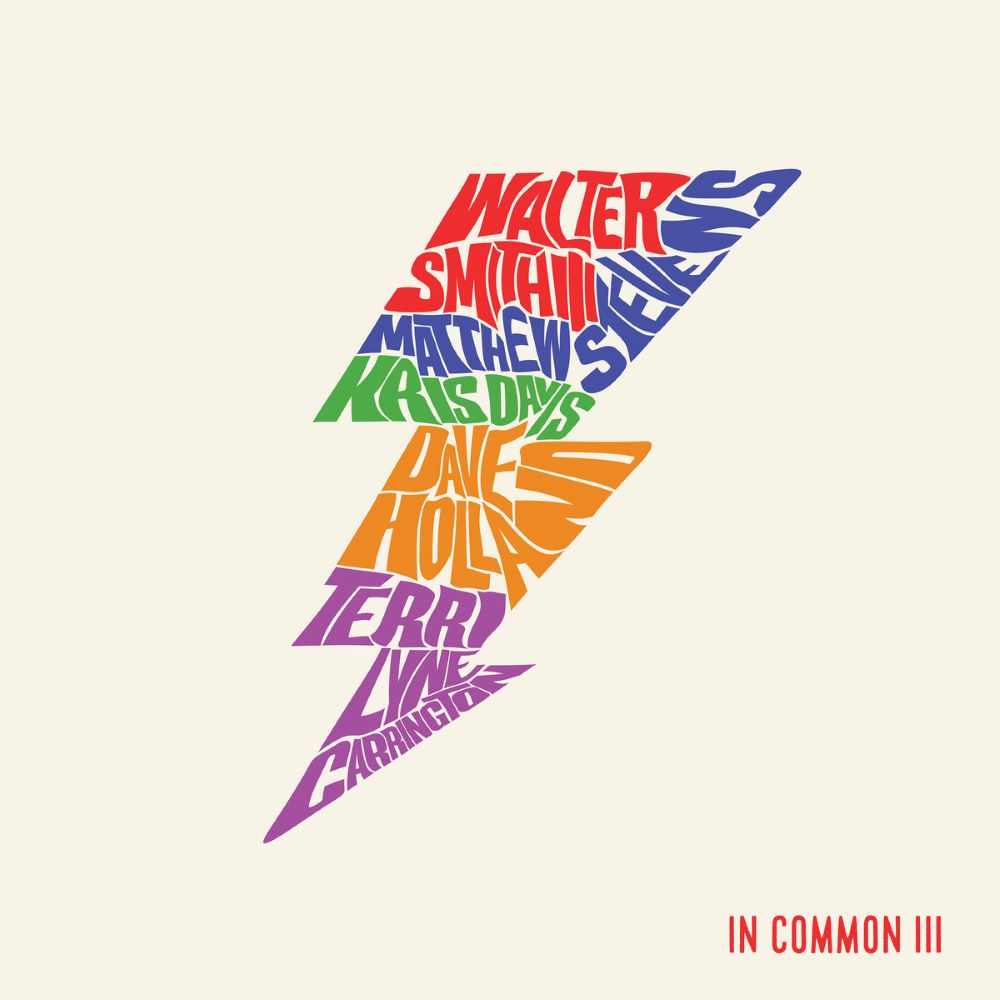
Walter Smith III & Matthew Stevens - In Common III (March 11, 2022 Whirlwind Recordings)

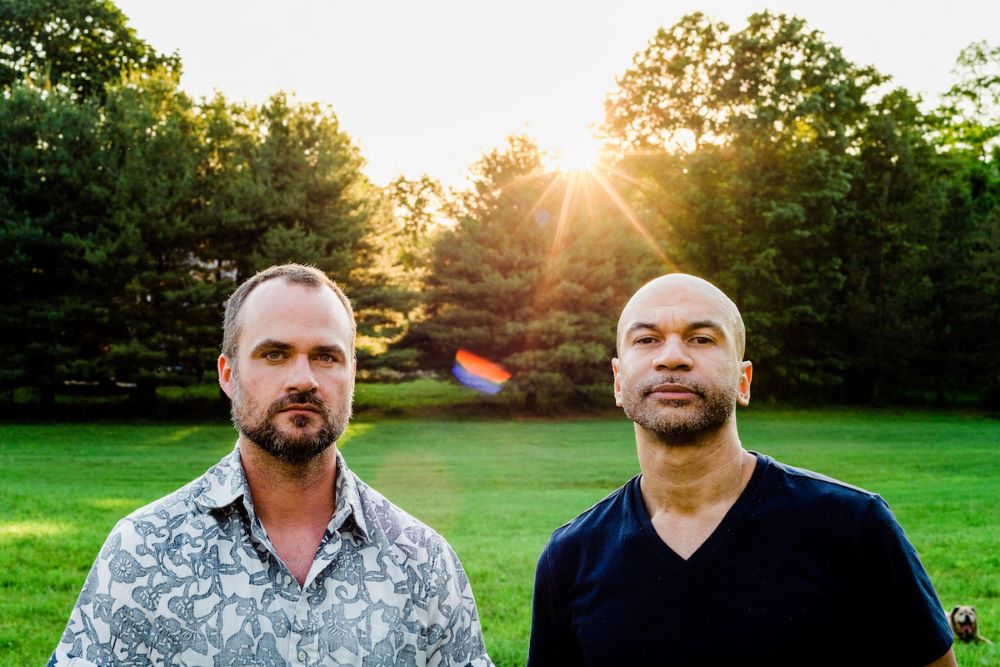
Walter Smith III and Matthew Stevens are two musicians at the forefront of developments in jazz and improvised music, listing the likes of Terence Blanchard, Ambrose Akinmusire, Esperanza Spalding and Christian Scott as collaborators. The pair started working together in 2017, and four years later, they’re back for the third iteration of their highly commended In Common project. Previous guests include Nate Smith, Linda May Han Oh and Marcus Gilmore; on In Common 3, Kris Davis takes the piano chair vacated by Micah Thomas, and completing the lineup are two legends of the game – Dave Holland and Terri Lyne Carrington.

What’s new, third time around? “It’s longer, freer, and yet more spontaneous,” says Smith. The successful In Common formula – inventive ‘one-page songs’ written with specific musicians in mind – disguises the through-line that uniquely shapes this record: “The spotlight is on the community of musicians as a whole,” Smith comments. “The general vibe is sculpted by the musicians’ interpretations of what we bring in.” Davis’ influential presence means the project leans into the aesthetics of free improvisation for the first time; the resulting soundworld lends itself to electronic manipulation, another first for the series. The span of fifteen tracks showcases the duo’s knack for reinvention, slipping into unfamiliar contexts without losing sight of the album’s focused essence.

Smith is keen to emphasise the standalone nature of the divergent In Common recordings. Some aspects carry through though, like their commitment to remembering lost influences – opener ‘Shine’ serves as both a thank you and an acknowledgement to McCoy Tyner, Wallace Roney, Chick Corea, Jimmy Health and Ellis Marsalis. That introduces the remaining fourteen tracks, that divide nearly exactly into spontaneously constructed ideas that introduce fully composed tracks.
‘Loping’ was Stevens’ part-tribute to Carrington and Holland: “being of a certain ilk and having come up a certain way, I knew they would have had a specific way of playing this track” – Smith and Stevens feature in their trademark coolly cast melodic divisi. The single riff of ‘Oliver’ dissolves into ‘Hornets’s slinky groove, where we catch a glimpse of the sense of humour amongst the group. ‘Orange Crush’ squeezes all the juice out of a lop-sided ostinato, a concentration of the In Common philosophy into a three-minute segment. Then comes ‘After’, which captures Smith’s “never-ending optimistic thoughts about things being better ‘after’” – the opaque whirrs of the ensuing ‘Lite’ show that outcomes are far from clear-cut.

‘For Some Time’ does provide Smith with some closure, however – a timeworn composition that “finally finds a solidified direction amongst this quintet,” as Carrington and David jostle for position. ‘Reds’ sees Stevens back to Holland’s 1990 album ‘Extensions’, and “those big beat, odd meter songs.” ‘Variable’ involved Smith venturing into non-determinacy – “it’s written to be played in many tempos, meters, and approaches, but was not discussed prior to recording it” – and, via ‘Dust’s twanging landscapes and ‘Familiar’s misty acquaintance, In Common 3 concludes with the pensive ‘Miserere’, an aptly reflective conclusion to this wide-ranging endeavour.

1. Shine
2. Loping
3. Oliver
4. Hornets
5. Orange Crush
6. After
7. Lite
8. For Some Time
9. Shutout
10. Reds
11. Variable
12. Prince July
13. Dust
14. Familiar
15. Miserere

Walter Smith III - saxophone
Matt Stevens - guitar
Kris Davis - piano
Dave Holland - bass
Terri Lyne Carrington - drums

Recorded at Clubhouse (June 4-6 2021)
Mixed by Jay Dudt
Mastered by Jay Dudt & Jesse Naus
Produced by Matthew Stevens & Walter Smith III
Executive Producer - Michael Janisch
Photography - Pierce Johnston
Album Artwork/Graphic Design - Dave Bush

Saturday, March 6, 2021

Walter Smith III - Still Casual (July 23, 2021 Whirlwind Recordings)

When Walter Smith III released his fourth album Still Casual in 2014, people listened, and the album was heralded as one of the top releases of the year. Now, fans of the saxophonist and composer can experience the tenorist’s wide-ranging release in a fresh new format on Vinyl *for the first time* on this special 2xLP, 180 gram limited edition printing in gatefold artwork.

Smith’s discography is pleasingly joined-up. As In Common 2 follows In Common, Still Casual references his 2006 solo debut Casually Introducing. The title might be another one of Smith’s trademark riffs, but the album is as committed to exploration as any other. Over the course of ten original tracks, Smith covers a swathe of musical and emotional ground.

The players assembled for Still Casual speak volumes for the quality of Smith’s company. Trumpeter Ambrose Akinmusire joins Smith for explosive soloing on ‘Fing Fast’ and ‘Something New’. In Common co-convenor Matthew Stevens provides reflective harmonic support and muted solo colours alongside the understated backings of Taylor Eigsti. Together, Harish Raghavan and Kendrick Scott provide moments of tension and intrigue from the backline, adding suitable punch to the opener ‘Foretold You’.

Chronologically, the album precedes the In Common projects, and comes right as Smith hits his stride as a composer and arranger. From the elaborate (‘About 360’, ‘Processional’) to the personal (‘Greene’ is dedicated to saxophonist Jimmy Greene, whose daughter was killed in the Sandy Hook school shootings in 2012), Smith shines across fast-flowing vernacular and reflective, tender tones. Still Casual showcases a group stretching themselves in a way that never seems hurried, delving into a powerful collective energy to test their limits instead.

1. Foretold You (Preview Only) 00:48
2. Kaleidoscope (Preview Only) 00:47
3. Something New (Preview Only) 01:15
4. Apollo (Preview Only) 01:25
5. Greene (Preview Only) 02:53
6. Processional (Preview Only) 01:19
7. Fing Fast (Preview Only) 01:19
8. July (Preview Only) 01:19
9. About 360 (Preview Only) 01:19
10. Goodnight Now (Preview Only) 01:19

Walter Smith III - tenor saxophone
Taylor Eigsti - piano
Matthew Stevens - guitar
Harish Raghavan - bass
Kendrick Scott - drums
Ambrose Akinmusire - trumpet

Friday, March 5, 2021

Dave Stryker - Baker’s Circle (2021)

After last year’s successful big band outing, Blue Soul, guitarist Dave Stryker is back with his hard-driving, deepgrooving B3 organ group on his new recording—Baker’s Circle. With the addition of cutting-edge tenor player Walter Smith III, Baker’s Circle features Stryker’s originals as well as a couple Eight Track gems and a tip of the hat to his former boss Stanley Turrentine. Along with Smith III, this fresh recording features Dave’s working band of Jared Gold on organ and McClenty Hunter on drums and adds Cuban percussionist Mayra Casales to three tracks as well.

Baker’s Circle starts with three Stryker originals. The hard-hitting “Tough” leads off with exciting solos by the whole band. Casales’ congas join in on the latin groove of “El Camino” followed by the bluesy 7/4 of “Dreamsong.” Cole Porter’s “Everything I Love” is a medium swinger after which Gold’s burning “Rush Hour” shows why Walter Smith III is considered one of the best of his generation. And Dave adds his Eight Track fingerprint to Leon Russell’s “Superstar” and Marvin Gaye’s “Inner City Blues.”

Says Stryker: “Composer and educator David Baker was in my corner from the time I met him at a jazz camp when I was 17 till he hired me to take over as guitar professor at Indiana University a few years ago. I used to see him standing outside the Music School on a circular drive waiting for is wife Lida to pick him up. I named the song ‘Baker’s Circle, in his memory.”

Baker’s Circle closes with “Trouble (No. 2),” a grooving shuffle originally recorded by Stryker’s former boss, the great Stanley Turrentine. This caps a diverse program that showcases Stryker at his best—modern playing with the groove and soul that comes from years of experience.

1. Tough – Dave Stryker 7:27
2. El Camino – Dave Stryker 7:39
3. Dreamsong – Dave Stryker 5:24
4. Everything I Love - Cole Porter 6:11
5. Rush Hour – Jared Gold 4:59
6. Superstar – Leon Russell, Bonnie Bramlett, & Delaney Bramlett 3:40
7. Baker’s Circle – Dave Stryker 4:18
8. Inner City Blues – Marvin Gaye & James Nyx Jr. 5:45
9. Love Dance – Ivan Lins, Gilson Peranzzetta, & Paul Williams 5:19
10. Trouble (No. 2) – Harold Logan & Lloyd Price 6:38

Dave Stryker - guitar
Walter Smith III - tenor sax
Jared Gold - organ
McClenty Hunter - drums
Mayra Casales - percussion (#2, 7, 8)

Produced and arranged by Dave Stryker
Executive Producer - Rick Simpson
Recorded January 11, 2019 by Chris Sulit at Trading 8s Studio, Paramus NJ
Mastered by Ed Littman

Saturday, February 13, 2021

Long time musical associates Walter Smith III and Matthew Stevens perform in a multiplicity of projects at the vanguard of the international jazz & improvised music scene, touring and recording with Esperanza Spalding, Ambrose Akinmusire, Christian Scott, Terence Blanchard, Dave Douglas, Terri Lyne Carrington, Bill Stewart and Roy Haynes as well as their own respective groups.

They first collaborated in 2017, gathering a wish-list band of musical peers, booking a studio, and presenting them with compositions written for the occasion. The resulting album was widely praised for its freshness and spontaneity and they’ve returned with ‘In Common 2’ to explore the same parameters, adjusting the personnel to produce an intriguingly different but equally dynamic album. “We loved the way it turned out” says Smith “We had the opportunity to do something different together: what I like to call ‘One Page Songs’ - simple forms, so that we can just show up and get to the music quicker.” As in the first project, Smith and Stevens picked a selection of their favourite rhythm section players of mutual acquaintance - Linda Oh on bass and Nate Smith on drums - plus a player from a different generation, so that rising piano star Micah Thomas takes the place of Joel Ross’ vibes. The material was specially written to suit the character of the resulting band, favouring short, concise statements of melody - ‘We’re trying to do something different from what we’d do on our own. We’re going off what we imagine the band will sound like, and continuing to focus on being direct, melodic and interactive.”

‘Roy Allan’, the only non-original was included as a homage to its composer, the late lamented Roy Hargrove, performed as a brief heartfelt duet. ‘Lotto’ is a collective improvisation from a theme by Stevens with a thrilling dialogue between him and Smith that ends in a fortuitous perfect unison. ‘Cowboy’ was humorously explained by Stevens to Nate Smith as an ‘open, cowboy feel’ and the name stuck. A loping bass groove provides a trance-like backing for textured and expressive playing by all. Smith’s composition ‘Clem’ derives its central imagery from his love of super- immersive, character driven video games: Clem herself is an orphan child who grows up into a fearless zombie-killing adult over the course of the game Walking Dead, and the song maps the arc of her journey from innocence to kick-ass. Video games also provided the inspiration for ‘Van De Linde’, written by Smith for a character from Red Dead Redemption - ‘a nefarious guy who works on many levels. It’s written in 5/4 with 5/8 cycles hidden within it - kinda like the character’s secret agenda!’ - while ‘Little Lamplight’ is inspired by the post-apocalyptic game scenario of Fallout 3 - starting with a simple, muted statement and building into a towering climax.

‘General George Washington’ was constructed by Smith around a nagging two-note riff that suggests a playground taunt, reflecting his ambivalence towards the slave- owning Father Of The Nation. Stevens wrote ‘Provinces’ to evoke his childhood in Canada through its carefully paced melody, exploring both remembered and imagined landscapes from his past. By contrast, he wrote ‘Opera’ while on a recent tour with Esperanza Spaulding: “I wanted to write something piano-driven and dramatic, and what’s more dramatic than opera?” Smith drew his inspiration for ‘Type Rider’ from Brad Meldhau’s video for ‘Highway Rider’ - a vision of driving down a California highway into a limitless freedom.

In Common 2 manages to be at once free and highly structured, melodically accessible yet thoroughly contemporary. With many of the songs recorded in a single take, the album highlights the inventiveness and immediacy of a shared vernacular spoken in a vital corner of New York’s music community.

 1. Roy Allan 01:06

2. Lotto 04:27

3. Cowboy 05:38

4. Clem 05:16

5. Van der Linde 03:35

6. Provinces 05:52

7. General George Washington 04:04

8. Little lamplight 02:05

9. Opera 03:42

10. Type rider 03:21


Walter Smith III - tenor saxophone

Matthew Stevens - guitar

Linda May Han Oh - double bass

Micah Thomas - piano

Nate Smith - drums

Pre-order

Saturday, August 25, 2018

Connie Han - Crime Zone (MACK AVENUE RECORDS October 12, 2018)


22-Year-Old Pianist Connie Han

Brings Jazz into Neo-Noir Territory On

Mack Avenue Records Debut CRIME ZONE 

With her debut Mack Avenue Records album CRIME ZONE (available October 12), next generation Los Angeles pianist Connie Han has created an edgy blend of modern and traditional jazz. Han’s parents, both practicing classical musicians, instilled an appreciation for music and a strong work ethic in Han very early on, enrolling her in piano lessons at the age of five. 

“Learning the piano as a child was a gift. By the time I became interested in jazz at the age of 14, I had great technical proficiency on my instrument allowing me to focus all of my energy on the more sophisticated elements of jazz music. More importantly, I was able to tackle the social equation of learning how to play with others. It takes a lot of time and patience to internalize the essence and heartbeat of jazz.”

The 22-year-old’s connection to jazz began at the Los Angeles County High School for the Arts where she met and was mentored by drummer Bill Wysaske, who produced CRIME ZONE and has also become the musical director of her trio. Han shares her LACHSA alumni status with several major players in the entertainment industry such as Josh Groban, Jenna Elfman, Christina Milian and GRAMMY® Award-nominated jazz pianist and composer Gerald Clayton. After a three-week stint at UCLA, Han immediately began her professional piano career at 17-years-old; a step that Han believes gives her an overall edge against most players her age.

“Because I never received training from a formal jazz piano teacher, most of my musical perspective actually came from interacting with a professional drummer when I was just a youngling, trying to hang on for dear life. I think that experience has given me a unique edge which informs the heavily percussive elements of my playing.”


CRIME ZONE features Han’s in-the-groove working trio which includes Wysaske on drums and Edwin Livingston on bass. She’s also enlisted the considerable talents of guest players tenor-saxophonist Walter Smith III and trumpeter Brian Swartz for the album.


Recently signed to Mack Avenue Records after her independently produced 2015 album, The Richard Rodgers Songbook, Han has seized this opportunity: the pianist’s upcoming release highlights a powerful statement that is a mix of respect and knowledge of the past, combining an exciting and innovative vision for her musical future.

CRIME ZONE opens with “Another Kind of Right,” a tune Han wrote in tribute to the Freddie Hubbard tune, “One of Another Kind.” Han states, “the bridge is a very tough, swaggering Freddie Hubbard style of playing. Bill Wysaske arranged and curated a lot of what goes on there. It was his idea to transition from acoustic piano to Rhodes at my solo, giving the music a breath of fresh air. It’s definitely inspired by that post-bop, pre-fusion sound straight out of the late ‘60s and early ‘70s.”

The expansive title track featuring the swinging sax accompaniment of Smith III, which winds to a stoop midway through before restarting with a lively interplay between Han, exemplifies much of the style and aesthetic thrust that the pianist wants her debut to embody.

“This record is really meant to be a statement about being rebellious but within the tradition,” Han explains. “It’s provocative and fresh in its own way, while still having one foot in the past and honoring the jazz tradition. The title, CRIME ZONE, reinforces how I hope to brand myself as an artist, which in the end is being a provocateur of creative music.”

The title track demonstrates the futuristic visual and aesthetic element that Han has brought to the zeitgeist surrounding CRIME ZONE, one that draws its inspiration from films like Blade Runner and the 1988 Japanese animated film, Akira. “Not only does jazz capture the rebellious spirit of cyberpunk culture,” says Han, “but also the forward-thinking essence of science fiction. These traits are important to my musical philosophy as well as my style as an artist and person.”


The up-tempo “Southern Rebellion” is a Han original in C minor that features the pianist’s speed and stamina. It’s a tune she wrote which was focused on challenging herself to not think like a piano player. Han explains, “I had been listening to a lot of early ’70s Elvin Jones with Dave Liebman and Steve Grossman, where the harmony is more free since there isn’t any piano to dictate the harmony. That concept heavily guided my melodic inspiration for ‘Southern Rebellion,’ while my tough post-bop piano influences like Kenny Kirkland and McCoy Tyner informed it’s rhythmic angularity and aggressiveness.”

One of the things that sets Han apart from most of her contemporaries is her skill on the always distinctive Fender Rhodes. As the title suggests, another Han original “Grüvy,” she playfully taps into that super tasty, laid back Rhodes flavor, one that recalls the playing of Bob James, but also nods again to Han’s musical education. “It’s an instrument that has always been a part of the consciousness of my piano heroes, like Herbie Hancock and Chick Corea. I wouldn’t say it has a pop vibe but it’s definitely more mainstream,” says Han.

She acknowledges the influence of another one of her heroes, Joe Henderson, by covering his “Shade of Jade” which was originally recorded on his Mode For Joe album. Han explains, “The concept for the entire arrangement is actually based on just four bars of Joe Chambers’ polyrhythmic comping on the head of the original recording.”

On CRIME ZONE, Han has staked her claim as a fresh new voice on jazz piano, one whose sense of visual style might even draw audiences who normally wouldn’t listen to straight-ahead jazz. “Even though jazz is meant to be fearless in its creative limits, I strongly believe in preserving the musical foundation,” Han states. “As a new artist, I want to show that it is possible to create infinite fresh ideas without having to deconstruct the building blocks of the jazz language. To me, that language is universal.”

1 Another Kind of Right
2 Crime Zone 7:34
3 By the Grace of God
4 Pretty Women
5 Southern Rebellion
6 Grüvy
7 A Shade of Jade
8 Member This
9 Is That So?
10 Extended Stay


Monday, January 15, 2018

Walter Smith III - Twio (WHIRLWIND RECORDINGS February 16, 2018)


The joyful freedom of Ferde Grofé’s ‘On the Trail’ captures precisely the intended spirit of Walter Smith III’s new album Twio. Collaborating closely with established colleagues in double bassist Harish Raghavan and drummer Eric Harland, the ​Texas-native, California-based tenor saxophonist & composer presents his own illuminating vision of the saxophone trio while also inviting, along the way, guest appearances by Joshua Redman (tenor saxophone) and Christian McBride (double bass). 

Working and touring for the last fifteen years, playing multi-layered compositions in different configurations with artists such as Terence Blanchard,​ Roy Haynes,​ Sean Jones, Ambrose Akinmusire and with his own bands, Smith also began to revisit classic jazz songs. He elaborates: “I would try and alter tunes quite radically by rearranging, reharmonizing and altering meters to a point where I was barely playing the original song; but realized that I was confusing the point of playing the songs, so I began to interpret them more directly, as they were first meant to be played. For this album, out of around twenty recorded songs, I chose nine pieces that I have a particular relationship with and have always loved playing, including some which are maybe less frequently heard”. 


While that concept appears straightforward, this recording (the saxophonist’s fifth as leader) reveals much about the ultra-confidence and musicality which these established players bring to the table, entering the studio to intuitively share ideas and discover uncharted paths. Taking sparkling dual-tenor feature ‘Contr​a​fact’ as an illustration (crafted around ‘Like Someone in Love’, but in a five meter), Smith explains: “I simply sent Josh the melody and we showed up and played... With no rehearsal, it was just ‘OK, here we go’; and that’s what I wanted for this project – just fun and live; an open sound without a chordal instrument defining the harmony, rhythm or direction. I had ideas for endings, for example, but on once instance after I had said to Christian, “We’ll close it like this”, when we got to that point he did something different which was perfect because it helped the music feel loose. We were all receptive to that organic process”. 

Here, Thelonious Monk’s ‘Ask Me Now’ waltzes and trips through “a million chord changes”, Smith ever the ebullient, characterful melodicist; then Harish Raghavan’s pacey, bass propulsion of the popular Jerome Kern ‘Showboat’ tune, ‘Nobody Else But Me’, is embellished by Harland’s coruscating percussion. Sammy Fein’s amiable ‘I’ll Be Seeing You’ becomes buoyed by McBride’s clear, strutting bass; and the evergreen groove of Wayne Shorter’s ‘Adam’s Apple’ is fascinating in fizzing drum-featured trio guise. Two duo spots offer Carl Fischer’s ‘We’ll Be Together Again’ for sax and drums (“one of the best A-sections of a song ever written”) and a blithe sax-and-bass promenade on Gigi Gryce’s ‘Social Call’. Jimmy Rowles’ ‘The Peacocks’ is bathed in luscious tenor sonorities, and that Dayna Stephens arrangement of ‘On the Trail’ is a six-minute wonder as Smith and Redman josh genially across the rhythm section. 

“I was pleased that Twio ended up being so close to what I wanted it be”, enthuses Smith. “It was unlike any other recording I've done, because there was nothing for me to actually prepare other than go along to the studio, play and hang out. The point of the album is ‘community’ – normally when we tour with original music, it's hard to invite people up on the stage to join the band because they are simply unfamiliar with that particular repertoire that I or someone else in the group has written. This project represents something that everyone of all levels can relate to because it presents familiar and accessible songs that we've all grown up playing. The plan is that when we tour, I’ll use that opportunity to invite the community to come sit in, have fun, and share ideas, which I imagined this music was all about in the first place.”


1 Ask Me Now (feat. Eric Harland & Harish Raghavan)
2 Nobody Else but Me (feat. Eric Harland & Harish Raghavan)
3 On the Trail (feat. Joshua Redman, Christian McBride & Eric Harland)
4 We'll Be Together Again (feat. Eric Harland)
5 I'll Be Seeing You (feat. Christian McBride & Eric Harland)
6 Adam's Apple (feat. Eric Harland & Harish Ragavan)
7 The Peacocks (feat. Eric Harland & Harish Raghavan)
8 Social Call (feat. Christian McBride)
9 Contrafact (feat. Joshua Redman, Christian McBride & Eric Harland)

Walter Smith III - tenor saxophone 
Harish Raghaven - bass (1, 2, 6 & 7) 
Eric Harland - drums 

Special guests 
Christian McBride - bass (3, 5, 8 & 9) 
Joshua Redman - tenor saxophone (3 & 9) 

Recorded at Sear Sound and GSI Studios by Chris Allen 
Mixed by Chris Allen 
Mastered by Paul Blakemore 
Produced by Chris Dunn 
Executive Producer for Whirlwind Recordings - Michael Janisch 

Original design by Julian Montague 
Photography by Jati Lindsay


FEB 2018 Walter Smith ‘Twio’ Launch Dates

12 – 606 Club, London, England
13 – Porgy n Bess – Vienna, Austria
14 – Jazzclub Unterfahrt – Munich, Germany
15 – Birmingham Conservatoire + East Side Jazz Club – Birmingham, England
16 – Sunset Jazz Club – Paris, France
17 – Sunset Jazz Club – Paris, France
18 – Unity Jazz Club – Göteborg, Sweden

Saturday, April 15, 2017

Olli Hirvonen - New Helsinki (EDITION RECORDS 2017)


Olli Hirvonen is a dynamic and virtuosic Finnish-born, New York based guitarist. Winner of the Socar Montreux Jazz Electric Guitar competition in 2016 (the jury was presided over by John McLaughlin), Olli releases his second album, New Helsinki on Edition Records. New Helsinki is an album that promises to ignite the attention of the international media and fans worldwide with its deft infectious melodies, irresistibly bold grooves and intense inventive soloing. A musician with a larger vision and a commanding spirit, Olli Hirvonen, is a supremely gifted guitarist and composer. With New Helsinki Hirvonen has thrown down his calling card and demonstrated the promise that will inevitably thrust his career and profile in an upward trajectory towards international acclaim.

Born in Finland, in 1989, Olli Hirvonen moved to New York in 2011 to study at the prestigious Manhattan School of Music. As Olli explains:

I wanted to live in NYC  since I started to practice jazz seriously. I knew that this was a place where the “tradition” of it is still breathing and evolving, instead of it being just a piece of history…Moving to NYC felt very natural. It’s definitely a very difficult city to live in (ask any musician and they’ll tell you that!)…but people here are willing to make sacrifices, and reject a comfortable life for the pursuit of something else: improvement of their expression, and knowledge of the music. This struggle connects all the musicians here, and makes the community here unique…

On comparing the Helsinki scene with New York, Olli explains: I think the special thing about working as a musician in NYC is that I can play so many more gigs …there’s a no better way to “pay your dues” like playing jazz four hours a night four times a week for some years, which I have definitely done. ..”

New Helsinki presents seven original compositions by Hirvonen. The intense and vibrant opener  ‘Arps’, clearly sets the scene for what’s to come.  Musically, he’s woven influences from all areas he’s been exposed to. ‘Before getting serious about jazz, I was totally into rock and metal, My Finnish background is definitely an important part of my music, but as jazz is definitely black American music, I would never want to avoid the core elements that make it what it is, it’s language, rhythm, and improvisation’.

New Helsinki is a bold and ambitious album with a clear statement of  intent. One thing is for sure, a new and important artist has arrived on the international scene and one to watch from both sides of the Atlantic.


1 Arps 4.08
2 Gravity 10.29
3 Invisible 11.47
4 Fundamental 6.12
5 N.E.B 4.09
6 Absolute 11.55
7 Lavola 6.50

Walter Smith III tenor saxophone
Adam O’Farrill trumpet
Luke Marantz piano & rhodes
Marty Kenney bass
Nathan Ellman-Bell drums 

All music by Olli Hirvonen


Saturday, February 25, 2017

Mar. 5: Rising saxophonist Walter Smith III opens Jazz at Princeton’s spring season


Rising saxophonist Walter Smith III opens Jazz at Princeton’s spring season on Sunday, March 5

“Walter Smith III is an inspired young saxophonist and composer with a lot to say…” – Joe Lovano

“…consistently emerging as an identifiable voice among the masses.” – All About Jazz

Jazz at Princeton University, helmed by acclaimed saxophonist/composer Rudresh Mahanthappa, presents a diverse and compelling spring 2017 season (March 5-May 13), starting with an appearance by guest artist and saxophonist Walter Smith III. With Princeton’s Small Group I, Smith performs music from his most recent album Still Casual on Sunday, March 5, 8 p.m. in Alexander Hall’s Richardson Auditorium. Admission is $15, $5 students. For tickets call 609-258-9220 or visit tickets.princeton.edu.

Although it may appear Smith is a young gun on the scene at age 33, he is widely recognized as an adept performer, accomplished composer, and inspired educator. He’s performed and/or appeared on over 75 recordings with a wide range of artists including Terence Blanchard, Eric Harland, Roy Haynes, Jason Moran, Terri Lyne Carrington, Joe Lovano, Christian Scott, and Christian McBride. Smith holds degrees from the Berklee College of Music, Manhattan School of Music, and Thelonious Monk Institute of Jazz. His most recent release, the 2014 Still Casual, features Taylor Eigsti, Matt Stevens, Kendrick Scott, Harish Raghavan, and Ambrose Akinmusire. Originally from Houston, Smith is on the Jazz Studies faculty at the IU Jacobs School of Music.

Other concerts in the series include Steve Lehman’s Sélébéyone (March 28), Small Group 1 and Small Group A (April 12), Small Group A (April 23), Jazz Vocal Collective I and II with Darmon Meader (April 27), Creative Large Ensemble with Billy Childs (May 13).

Jazz at Princeton University serves to promote this uniquely American music as a contemporary and relevant art form.  Our goals are to convey the vast musical and social history of jazz, establish a strong theoretical and stylistic foundation with regard to improvisation and composition, and emphasize the development of individual expression and creativity. Offerings of this program include academic course work, performing ensembles, master classes, private study, and independent projects.