Monday, March 7, 2022

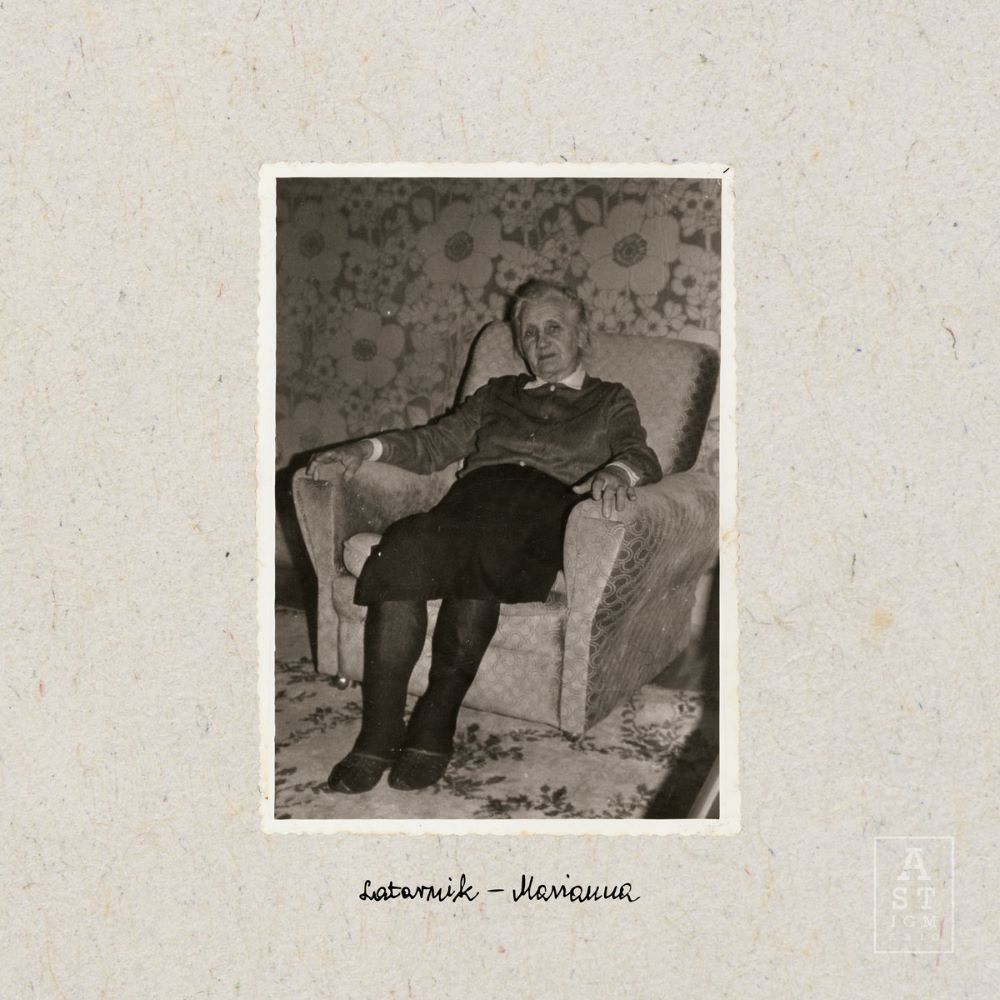
Latarnik - Marianna (March 29, 2022 Astigmatic Records)

Marek Pędziwiatr has been part of the scene for over a decade now. He has gained recognition thanks to projects such as EABS and Błoto & Jaubi. Still, he has never emphasized his name through the prism of these bands, betting instead on collective work. The time has come now for Marek to present his debut album entitled Marianna, featuring him alone as Latarnik performing in a piano solo formula.

Being sought after for years as a producer for other artists and as a composer and keyboardist for his own bands, he put his solo work on hold. In between all these activities, "Latarnik" was emerging slowly in Marek's head. Under his new alias, along with the Pakistani band Jaubi, he recorded one of the most important albums of 2021, Nafs at Peace, recognised by Pitchfork, The Guardian, DownBeat and Bandcamp.

Latarnik, repeatedly awarded in Jazz Forum magazine's polls as Poland's greatest synth virtuoso, decided to reveal himself to listeners from a completely different angle. Influenced by the sound of solo recordings by Thelonious Monk, Ahmad Jamal, McCoy Tyner and Emahoy Tsegué-Maryam Guèbrou, he gave up electronics in order to record (in an intimate way) a debut album commemorating his great-grandmother, using a hundred-year-old Steinway & Sons grand piano and analogue tape.

The encounter with the main character begins in Maradtken (now Maradki), a place hard to find on the map, yet offering a very interesting story of remembrance and passing. In the early Iron Age a fortified settlement built by the people of the West Baltic Barrow culture was located there and it was bustling with life for many more centuries. The village was partially destroyed in the 18th century after a cholera cemetery had been established there. Around 1800, on a small hill a remarkable mill was built that remained a focal point of residents' life up until the outbreak of the Second World War.
Marianna was Masurian. She was born in 1898, under Prussian rule, into a Polish- and German-speaking family. She spent her youth among Evangelicals being a devout Catholic herself, at the same time practicing traditional folk rites. She could cure people, she collected herbs, prepared potions and cast spells against illnesses. She had her own philosophy of life based on folk wisdom, which constituted a decalogue of her own, but she also relied on the extraordinary protection of the "Most Holy Mother of God". Marianna passed away at the age of 88, shortly before Marek was born. He only knew her from family stories which he then encapsulated in the emotional piano compositions on the album. Marianna is no longer with us, nor is the wooden mill in Maradki. In spite of this, the remembrance and peculiar recipes for life live on in the family, just as the afterimages of history in the old photographs from Maradtken have survived. Her story is universal: one of identity and wandering, of terror, the trauma of war, and perpetual scarcity. It is the story of an entire generation to which Marianna belonged passed on to us by our grandparents.

The Marianna album will be released by Astigmatic Records on CD and LP in both regular and limited (B1 poster included) editions, as well as on all streaming platforms. The release of the album is scheduled for Piano Day - March 29, 2022. 

1. Maradki (Sabat)
2. Panna
3. Antoni
4. Głód
5. Marta
6. Strach 1945
7. Wspomnienie
8. Berlin
9. Zniknięcie

Latarnik - Steinway & Sons piano

All the pieces were recorded on 03-04/11/2021 at Radio Opole's Studio M. im SBB.
Sound engineer: Andrzej Czubiński and Paweł Patyniak
Mix: Andrzej Czubiński
Mastering: Marco at Analogcut
Executive producer, A&R, manager: Sebastian Jóźwiak
Photos: Hubert Misiaczyk, Pędziwiatr family archive.
Graphic design: Dagna Okrzyńska

Ken Vandermark - Snapshots: Volume 4 | Poland (March 15, 2022 Catalytic-Sound)

All income generated from the sale of "Snapshots: Volume 4/Poland" will be sent to Marek (Mark) Tokar, Ukrainian bassist and friend living in Lviv, who has just joined the army to defend his country; as well as any Ukrainian humanitarian aid organizations he suggests.

Kilogram Records is excited to present “Snapshots: Volume 4/Poland,” the final installment of Ken Vandermark’s series of limited edition, 7-inch singles of improvised solo music, released during 2021 and the first part of 2022.

Each 45 contains four improvisations which use Ken’s full instrumentation: tenor & baritone sax, Bb & bass clarinet. The recordings have been issued by Kilogram at three-month intervals since March of 2021, include cover art from photographs that Ken has taken during his international touring schedule, and each single has been dedicated to countries that have had tremendous impact on his work: Japan, Austria, Brazil and, now, Poland. The music for the first three editions of the “Snapshots” project was created at Ken’s home in Chicago, on volume one by presenting four “micro-improvisations,” on the second installment by overdubbing improvisations to create duos, and on the third by extending the overdubbing principle to develop trios.

In late autumn of 2021, Ken was able to return to Poland to perform for the first time after a two year hiatus caused by the COVID-19 pandemic. The idea of recording the final edition of “Snapshots” in the country whose artists helped influence the material seemed ideal. After the five solo concerts that took place at the end of October, which utilized compositions written for his album, The Field Within A Line (Corbett vs. Dempsey), he spent a day recording in a country home outside of Gdansk. Ken realized that, in order to record quartets for “Snapshots: Volume 4/Poland,” all four improvised components would need total clarity, otherwise the superimposed results would sound like mud. The solution was to put each instrument into a different sonic register, while playing against expectations and conventions (for example, creating a baritone part for its highest range and a Bb clarinet part in its lowest). The strategy worked, and provided a fitting conclusion to a set of musical statements unlike any in Ken’s career, that are dedicated to the Polish artist Katarzyna Kobro, writer Stanisław Lem, composer Witold Lutosławski, and good friend and record/concert producer, Marek Winiarski.

Every volume in the series has been pressed in a hand numbered edition of 100 copies, at 40 PLN, or $10 each, with digital versions selling at 20 PLN, or $5. European fans can order copies of Snapshots 4 directly from Kilogram (www.serpent.pl), and from Catalytic Sound, which also represents North American distribution (catalyticsound.com). The entire project will be compiled on a CD, also to be released by Kilogram, that will collect all the material from each single, plus bonus tracks that did not fit onto the initial 45s, adding to the range of this unique set of recordings.

Kilogram Records will officially release “Snapshots: Volume 4/Poland” on March 15th. Each previous edition sold out almost immediately, and pre-orders of the final installment are being accepted now.

<><><><><><><><><><><><><><><><><><><>

The Snapshots series began in the spring of 2021 as a special solo music project proposed by Ola Trzaska for Kilogram records. During a good part of 2020, I had been developing a new system for the solo format, something that I had wanted to work on for several years and which I finally realized because there was little else possible due to the onset of Covid. That material was compositionally based and documented in September of 2020 on the album, The Field Within A Line, released by Corbett vs. Dempsey. To be honest, when Ola presented the idea of creating another set of solo music after a year of doing little else, I knew it was going to be a challenge.

Then, taking Man Ray’s phrase, “I have no problems, I only have solutions,” to heart, I started to look at the parameters of what Ola had proposed: a series of four 7” singles to be released at regular intervals over the course of a year. One of the creative difficulties was the time limitations presented by a 45. After the C vs. D album, with pieces designed to be reconfigured into longer compositions, writing new music that had to be within three to four minutes in order to fit on a side of a single seemed too restricting. By chance, Damon Locks introduced me to the Quakers recording, Supa K: Heavy Tremors, at the same time as I was trying to figure out what to do for the Snapshots project. The longest of fifty tracks on that Quakers album is 1:45, and the average tune length is about 60 seconds. It then struck me- why not approach a 45 of improvised music in a similar way, by creating two "micro-improvisations" of about a minute and a half each per side, every piece using a different instrument?

That idea was realized on Snapshots: Volume 1/Japan. The initial strategy quickly evolved on Volume 2/Austria, by overdubbing my improvisations to create duos, a concept inspired by the album I did with Nate Wooley in the summer of 2021, The Chicago Manual of Style (Superpang), where we developed material by sharing music files and layering the parts. The next edition, Volume 3/Brazil, extended the overdubbing principle to trios. Surprisingly, I found that the process was not an additive one (like on the second edition, where 1+1=2), but was much more similar to Sergei Eisenstein’s concept of montage (where A+B=C). When the first two improvisations were layered together they created a unique, single artifact that the third needed to respond to. Understanding that principle prepared me for Snapshots: Volume 4/Poland, and helped me organize an effective recording strategy that incorporated 4 components on every piece.

The music for the first three editions of the Snapshots series was created at my home in Chicago. In late autumn of 2021, I was able to return to Poland to play concerts for the first time in two years . The idea of recording the final volume of the series in the country whose artists inspired the material seemed like an ideal way to complete the project. After a series of five solo performances that took place at the end of October, where I worked with compositions written for The Field Within A Line, I borrowed Mikołaj Trzaska’s baritone sax and bass clarinet, and spent a day recording at the Trzaska’s country home outside of Gdansk. In addition to what had been learned from working on the third edition of the series, I realized that all four improvised components needed for each piece would demand total clarity, otherwise the results could sound like mud. The solution to this problem was to focus on “range” and put each instrument into a different sonic register, while also playing against expectations and conventions (for example, creating a baritone part for its highest range and a Bb clarinet part in its lowest). The strategy worked, and gave a fitting conclusion to a set of musical statements that are unlike any I’ve made.

I’d like to thank Ola Trzaska for the opportunity to create the Snapshots project for Kilogram. It will conclude with a CD compilation of all the singles, along with a number of bonus tracks that would not fit on the original albums. It’s also important for me to state how important Poland has been for me as a source of inspiration for many years, as a place to work and to meet so many creative and generous individuals. The pieces on Snapshots: Volume 4/Poland are dedicated to just a few of them.

-Ken Vandermark, Chicago

1. Doskonała próżnia [A Perfect Vacuum] (for Stanisław Lem) / Gry zamiast łańcuchów [Games Not Chains] (for Witold Lutosławski) 03:12

2. Tancerz i taniec [The Dancer And The Dance] (for Marek Winiarski) / Koniec [The End] (for Katarzyna Kobro) 03:16

All music by Ken Vandermark (Twenty First Mobile Music/ASCAP-Cien Fuegos)
Performed on tenor sax, bass clarinet, Bb clarinet, and baritone sax

Recorded by Ken Vandermark at the Trzaska’s country home outside of Gdansk on November 2nd, 2021.  Mixed by Ken Vandermark with assistance from Ola Trzaska. Mastered by Dave Zuchowski at One Room Studio.  

Design by Iwona and Paweł Duczmal

Aaron Parks / Matt Brewer / Eric Harland - Volume One (March 2022)

In August of 2021, Eric Harland, Matt Brewer and I got together for an impromptu recording session. We didn’t rehearse, or talk much about the music, or listen back after takes; after such a long period of pandemic isolation and remote music-making, it felt restorative to just play in real time without any agenda. The three of us have been friends for over twenty years now and have a deep history both on and off the bandstand, and I think that you can hear that sense of fellowship in the music. There’s something playful and imperfect and joyous and raw in these recordings, and we hope they bring some measure of happiness to you as you listen.

1. Greetings 06:31
2. All The Things You Are 07:18
3. Aspiring to Normalcy 09:13
4. Centering 03:51
5. Maiden 09:13
6. Eleftheria 07:02
7. Of Our Time 05:42

Aaron Parks, piano
Matt Brewer, bass
Eric Harland, drums

Recorded by Josh Guinta at GSI Studios
Mixed by Chris Allen
Mastered by Nate Wood

"Greetings" and "Eleftheria" are by Aaron Parks
"All The Things You Are" is by Jerome Kern & Oscar Hammerstein II
"Aspiring to Normalcy" and "Of Our Time" are by Matt Brewer
"Centering" is by Frank Kimbrough
"Maiden" is by Eric Harland

Biodad - Long Live Biodad (March 2022)

March 2022 marks the third anniversary of the death of Justin Haynes.

Biodad was a duo comprised of me, Felicity Williams (voice), and Justin Haynes (guitar). In many ways the project had already failed; we couldn’t seem to get it off the ground. We made and then abandoned a plan to record 100 songs. All that survives from those sessions is a handful of half-finished mixes, the best of which are available here. Thanks to Jean Martin for sprucing up the mp3s, and to Deirdre O’Sullivan for her support.

For much of his adult life, Justin faced significant challenges with mental health and addiction. As I'm sure many have experienced in many contexts, with him there were moments of sublime collaboration and deep pitfalls of hurt and confusion. It's hard to assess what it all amounts to. I miss Justin, as I know many people do.

<><><><><><><><><><><><><><><><><><><>

"This collection is being released as a fundraiser for the Tranzac (a non-profit arts centre in Toronto that is a real hub for a sprawling community of musicians). Justin had a special relationship with the Tranzac. He performed there often in the early-mid 2000s, and eventually worked there as a cleaner. As with many of Justin’s special relationships, this one became complicated, and Justin was banned from entering the premises for the last ten-plus years of his life. This might be a stretch, but I see that relationship as symbolic of Justin’s involvement with the music community as a whole. He stood apart and was in constant dialogue with it, even when he was (at times) not welcome. As someone who loves both the Tranzac and Justin, I see this recording as an appropriate reunion." 
 
-Nick Fraser, March 2022 

<><><><><><><><><><><><><><><><><><><>

"Biodad is not a singer plus accompanist, but two musicians in dialogue; two musicians engaged more than anything, in listening.

Biodad is a great admirer of the duos of Ran Blake and Jeanne Lee; Norma Winstone and John Taylor; Ornette Coleman and Charlie Haden; Gary Peacock and Bill Frisell; Sidsel Endresen and Django Bates; Ivor Cutler and Phyllis King, Loren Mazzacane Connors and Suzanne Langille, Arto Lindsay and himself."

- Justin Haynes

<><><><><><><><><><><><><><><><><><><>

"Low Road" is a demo Justin had sent me, which I only recently discovered when I was going through old emails. I hope many more remnant Haynes recordings surface in the years to come.

<><><> 

1. Time Remembered 04:52
2. Rise Up, My Love 01:51
3. Down The Line 05:07
4. Low Road 01:26
5. I'll Never Stop Loving You 03:57

Felicity Williams (voice)
Justin Haynes (guitar)

Joe McPhee / Michael Bisio / Fredrick Lonberg-Holm / Juma Sultan - The Sweet Spot (March 2022 Catalytic-Sound)

1. Malachai [11:20]
2. AMS [6:27]
3. Free 3 [5:32]
4. Human Being [6:05]
5. e320 [9:28]
6. The Sweet Spot [5:43]
7. For Django [9:56]

Recorded by Ken Helmlinger on January 26th 2021 at Hurley, New York, USA

Cello – Fredrick Lonberg-Holm
Double Bass – Michael Bisio
Percussion – Juma Sultan
Tenor Saxophone, Soprano Saxophone, Vocals – Joe McPhee

Mastering: Jean-Pierre Bouquet, L’autre Studio, Vaires-sur Marne, FR
Poem: Joe McPhee
Liner notes: Michel Dorbon
Photograph: Albert Brooks
Cover design: Max Schoendorff
Cover realization: David Bourguignon
Executive producer: Michel Dorbon

Dave Rempis / Elisabeth Harnik / Michael Zerang - Astragaloi (March 2022 Catalytic-Sound)


This trio didn’t know how lucky they had it. They were certainly happy to perform again when this concert was recorded at the ArtActs Festival in St Johan Austria in early March 2020. Although their first outing was back in 2013 in Harnik’s hometown of Graz - a live concert broadcast through the Austrian National Radio/ORF, the band has had a sporadic performance history. So the opportunity to reunite for this festival performance was already special. Little did they know what lay ahead though, with a pandemic that was actually breaking out right around them in the Alpine ski areas of Tirol, Austria, an epicenter that would soon be tied to COVID’s spread around Europe by international vacationers. This opening night of ArtActs ‘20 would be one of those last care-free times, when one could sit until the wee hours at the bar with friends, celebrating a night of music- making with laughter and cheer, and with no concern for a shared breath.

Thankfully, these three took advantage of the opportunity to produce a stellar document of their performance. Astragaloi is the third release by this trio formation, after the digital-only Wistfully which came out in 2016 on Aerophonic, and 2020’s Triple Tube issued on cd by Not Two. While some of those records have flown under the radar because of the trio’s sparse performance schedule, that doesn’t diminish the musical simpatico that these three have enjoyed for years. Ever since Harnik’s introduction to the Chicago scene at the 2008 Umbrella Music Festival when she was a featured visiting artist, she’s actively maintained the relationships she built there, including with Rempis and Zerang. Aside from their work as a trio, all three have worked together in duo contexts since that first meeting.

On Astragaloi, it may be Harnik’s wide-ranging abilities that tie things together in such an astounding way. At one moment her preparations inside the piano turn the instrument into a quietly percussive zither, while at another her full- throated insistence at the keyboard draws out the resonance of a full orchestra. Skittering, plucking, pounding, caressing. And while she has the sheer energy to keep up with Rempis’ firebreathing tendencies, she also knows how to rein him in to quieter, more abstract spaces that explore breathy nuance and pinpoint texture. Zerang meanwhile displays the singular approach that he’s developed on the drum kit, rooted in his Middle Eastern upbringing and the significant abilities as a hand percussionist that he developed early on. That approach frees him as an improviser from so many of the tropes common to “drummers,” as he pushes the instrument beyond groove to focus on color, density, articulation, dynamics, and drive, in a way that creates an uncommon unity within the group. There are no specialized duties here, all three of these improvisers roll up their sleeves to keep the narrative momentum moving forward using every tool at their disposal.

Astragaloi is a joint release between Aerophonic and Idyllic Noise in Austria, which releases the same material on vinyl later this spring!! 

1. Milkvetch 09:55
2. Macateta 05:07
3. Locoweed 04:16
4. Lafo Litupa 14:44
5. Goats-thorn 07:39

Recorded at ArtActs Festival in Sankt Johan in Tirol, Austria, March 6th, 2020

Dave Rempis – alto/tenor saxophone
Elisabeth Harnik – piano
Michael Zerang – drums/percussion

Recorded and mixed by Markus Massinger
Mastered by Dave Zuchowski
Design by Make Amazing
Produced by Dave Rempis

Fennessy / Bishop / Smith - CERBERUS: BARK / BITE (March 2022 Balance Point Acoustics)

1. BARK 22:06
2. BITE 24:51

Sean C. Fennessy - cornet/stuff
Jeb Bishop - trombone/things
Damon Smith - double bass/objects

Recorded live at Machines with Magnets, Pawtucket Ri May/December 2018

Sun Ra & His Arkestra - Omniverse (Expanded) March 2022

Omniverse, recorded in New York in 1979 and released that year on Sun Ra's Saturn label, has been gathering dust for too long. It's a fine, overlooked item in the vast Ra catalog. The tracks aren't so much compositions as they are excursions, with only a few memorable themes or recurring motifs. It's pure jazz, somewhat "inside" (for Sun Ra), with little of the aggressiveness and confrontation for which the bandleader was known. (Track 5, "Visitant of the Ninth Ultimate," is an exception.) Omniverse is a very intimate album, offering lots of reflective piano in trio, quartet, and quintet settings, with spare horns. But instead of exhibiting a keyboard showcase, Sun Ra engages in dynamic interplay with the rhythm section. Moreover, the horns are featured largely as soloists; there are few ensemble passages.

Three of the works (tracks 3, 4 and 5) exist as recordings only on this album; there are no documented concert performances of these titles. "West End Side of Magic City" (a reference to the bandleader's birth town of Birmingham, Alabama) doesn't reappear in the known repertoire for twelve years—it surfaces at a May 1991 Atlanta concert, and was reprised in August at a New York club date (for which the piece was announced from the stage as "Vita Number 5"). "The Place of Five Points" is known to have been performed at a smattering of gigs between 1985-1988.

The massive and authoritative Campbell/Trent discography, The Earthly Recordings of Sun Ra (2nd ed.) lists personnel provided retrospectively by drummer Samarai Celestial, whose account includes two baritone saxophones and trumpet on tracks 4 and 5, as well as Ra overdubbing drums on 5. However, no baritone or trumpet can be heard on either track, although there are baritone and muted trumpet on track 3, and there is a second drummer on track 1. (This is not a knock on The Earthly Recordings, which is encyclopedic in scope, and which has required the authors to sort through contradictions, uncertainties, and unknowables inherent in the cosmic legacy of Sun Ra.) An LP copy with a plain white label turned up on eBay, and bears a circular pen inscription indicating six musicians, who are listed here.
There was no official album sleeve for the Omniverse LP. Existing copies feature hand-artwork and pasted graphics on generic cardboard sleeves. One of these has been adapted for the "cover" of this digital release.

The 2021 Modern Harmonic CD edition included two bonus tracks, both of which were issued for the first time on two of our expanded digital releases: a Sun Ra solo piano rendition of "Over the Rainbow," one of Sunny's favorite and often-performed standards. This performance originated from Germany's Moers Music Festival in June 1979, and was added to our digital remastering of the all-solo piano album AURORA BOREALIS. Finally, "The Sound Mirror," featuring the Arkestra, is not the version which appeared as the title track on Saturn #19782 in 1978. This performance, believed to date from late 1977 or early 1978, features a tighter arrangement and greater sonic clarity. We first issued it on the digital remastering of TAKING A CHANCE ON CHANCES. The versions of both tracks are identical to the digital versions found on those two albums, so pardon the overlap.

– I.C.

NOTE: This is a 2021 remaster of Omniverse, which is also available from Modern Harmonic on LP and CD. The CD and digital editions contain two bonus tracks (details below). The following liner notes are adapted from our 2015 five-track digital reissue of the original Saturn album.

1. Place of Five Points 04:17
2. West End Side of Magic City 05:58
3. Dark Lights in a White Forest 10:42
4. Omniverse 08:33
5. Visitant of the Ninth Ultimate 09:25
6. Over the Rainbow (piano solo) 02:54
7. The Sound Mirror (live 1977) 09:02

All tracks produced by Sun Ra
Produced for reissue by Irwin Chusid

Tracks 1 thru 5 recorded at Variety Recording Studios, New York, September 1979
Track 6 recorded at the Moers Music Festival, Germany, June 1979
Track 7 recording date and location unknown, ca. 1977-78

Sun Ra: piano, 2nd drums (1)
John Gilmore: tenor sax (1–5)
Michael Ray: trumpet (3)
Charles Davis: baritone sax (3)
Hayes Burnett: bass (1–5)
Samarai Celestial [Eric Walker]: drums (1–5)

Personnel on track 7 can be identified if you know the styles of Ra's sidemen.

Digital restoration by I.C.
Mastering by Joe Lizzi

All titles composed by Sun Ra © Enterplanetary Koncepts (BMI)
except "Over the Rainbow" by Arlen & Harburg © EMI Feist
Issued under license from Sun Ra LLC. Thanks to Thomas Jenkins, Jr.

Cover design by Irwin Chusid and Jon Hunt, adapted from a hand-colored Saturn sleeve

Friday, March 4, 2022

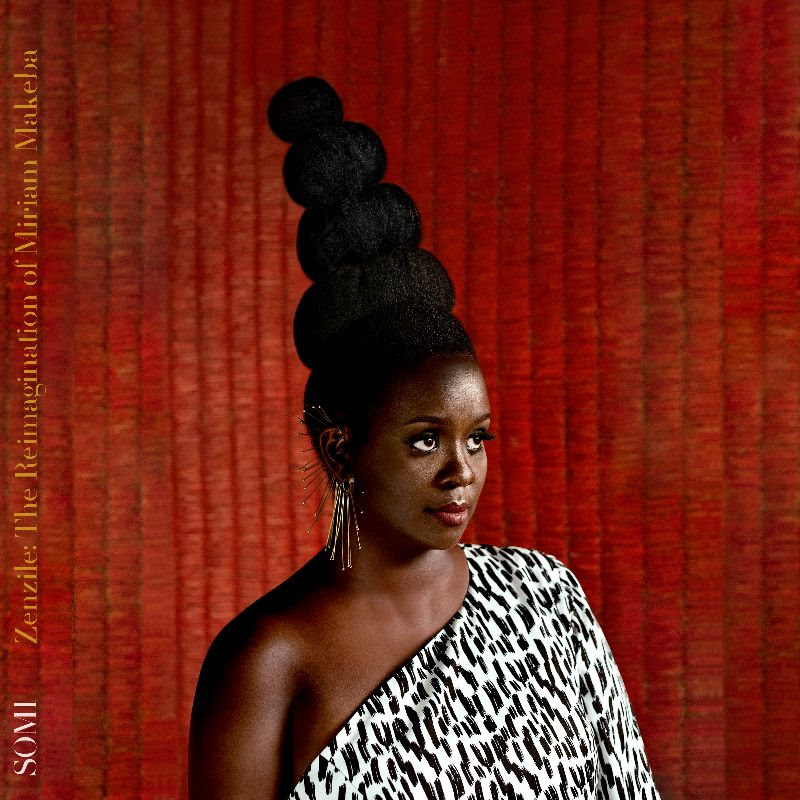
GRAMMY-Nominated Vocalist Somi's 'Zenzile: The Reimagination Of Miriam Makeba' (Salon Africana)

Grammy-Nominated, Internationally Acclaimed Vocalist Somi's Zenzile: The Reimagination Of Miriam Makeba is out now

New Album Honors Groundbreaking South African Singer, Songwriter, And Civil Rights Activist Miriam Makeba

Special Guests Include Angelique Kidjo, Gregory Porter, Ladysmith Black Mambazo, Seun Kuti and more

Album celebration at the Apollo Theater on March 19, 2022

☆☆☆☆ – Downbeat Magazine

“… a colorful portrait of Miriam Makeba’s diverse catalog.” – Jazz Times 
Photo of Somi by Chris Schwagga

On March 4, 2022, GRAMMY-nominated vocalist and songwriter Somi released her new album, Zenzile: The Reimagination Of Miriam Makeba,  a celebration of the late Makeba’s invaluable musical contributions and messages of social justice. The album, which will be released on the artist’s Salon Africana label, features Somi’s renditions of some of Makeba’s best known songs—both Makeba’s own compositions and covers. This updated release date is set to honor Makeba on what would have been her 90th birthday. On March 19, Somi will celebrate the release of this monumental album at the historic Apollo Theater. More information can be found here. 

Regarded as one of Africa’s first international superstars, Makeba (whose given name is ‘Zenzile’) elevated the spirit of a continent, including her native South Africa. Her courage, however, was met with three decades of political exile from her homeland followed by blacklisting in the United States after her marriage to civil rights activist Stokely Carmichael. Somi’s lifelong love of Makeba’s music and personal strength led to a record that she hopes will inspire a rediscovery of Makeba’s life and work. Somi adds, “This album is my attempt to honor the unapologetic voice of an African woman who inevitably made room for my own journey and countless other African artists. In short, I owe her. We all do.” 

In recognition of Makeba’s resonance throughout Africa and the diaspora, Somi invited a number of special guests to perform on the record. From South Africa, Grammy-winning male vocal group Ladysmith Black Mambazo, singer-songwriter Msaki, vocalist and activist Thandiswa Mazwai, and jazz pianist-composer Nduduzo Makhathini join Somi for the tribute. Guests also include GRAMMY-winning American jazz singer Gregory Porter, Nigerian singer-musician Seun Kuti (Fela Kuti’s youngest son), and GRAMMY-winning singer-songwriter and activist, Angelique Kidjo.

To further celebrate the work of Makeba, Somi stars in Dreaming Zenzile, her original musical theater production based on the life of Makeba under the direction of Obie-award winner Lileanna Blain-Cruz. On September 10, this electrifying portrait of Makeba kicked off the ‘21-’22 theater season at The Repertory Theatre of St. Louis (The Rep). The rolling world premiere production journeyed on to the McCarter Theatre Center in Princeton earlier this year, to ArtsEmerson in Boston last month, and to an Off-Broadway run in New York City co-produced by the National Black Theatre, New York Theatre Workshop and Apollo Theater, all in partnership with Octopus Theatricals, starting May/June 2022. The soul-stirring production includes a live jazz band playing original music and reinterpretations of Makeba’s remarkable catalog while telling the story of her extraordinary life journey.

In addition to Somi’s upcoming album and theater production, 2021 brought the artist her first GRAMMY nomination. Holy Room: Live at the Alte Oper, recorded with the Frankfurt Radio Big Band, was nominated for Best Jazz Vocal Album. The album also won an NAACP Image Award for Outstanding Jazz Vocal Album. 

Late last year, Spotify announced its partnership with Somi as the latest African singer to join its EQUAL Music Program. The EQUAL Music Program is a global initiative that Spotify has created to cultivate gender equality in music and support female creators under one brand. In celebration of the partnership and new music, Somi was featured on a billboard in Times Square.

In addition, Somi was recently featured in “The Arts Interrupted,” an episode of PBS Great Performances that examined artistic challenges and potential for growth during the Covid shutdown.

Zenzile: The Reimagination of Miriam Makeba Tracklist

1. Umhome
2. House of the Rising Sun
3. Milele feat. Seun Kuti & Thandiswa Mazwai
4. Hapo Zamani 
5. Love Tastes Like Strawberries feat. Gregory Porter
6. Khuluma feat. Msaki
7. Pata Pata 
8. A Piece of Ground
9. Kwedini
10. Lakutshon’ilanga
11. Olili
12. Mbombela
13. Jike’lemaweni feat. Angelique Kidjo
14. Nonqonqo feat. Ladysmith Black Mambazo
15. Malaika
16. Ring Bell, Ring Bell
17. Mabhongo feat. Nduduzo Makhathini

Roberto Occhipinti - The Next Step (March 4, 2022 via Modica Music)

Bassist Roberto Occhipinti presents The Next Step due out March 4, 2022 via Modica Music

Modica Music is delighted to announce the release of Roberto Occhipinti’s latest record The Next Step on March 4, 2022. Joining Occhipinti to explore a tightly synthesized collection of influences from his diverse career are two musicians with roots in the Toronto music scene – pianist Adrean Farrugia and two-time GRAMMY winning drummer Larnell Lewis. 

Bassist Occhipinti is an established presence on both the Canadian and International jazz scenes. A five-time Juno Award recipient, Occhipinti is in demand across an astounding range of contexts. The latter part of his career has seen Occhipinti recording with a number of Cuban musicians, on projects with Hilario Duran and Jane Bunnet in particular, but there are few formats Occhipinti hasn’t been involved in, from playing bass in Canada’s top-rate orchestras, to cutting-edge contemporary music, to Latin American performances, and work with top musicians from Africa and Asia. Performing credits span from John Cage and Terry Riley to Stevie Wonder, Tony Allen and Damon Albarn.

The Next Step, Occhipinti’s sixth release as leader, looks to synthesize his diverse collection of musical interests via a classic jazz format. During the pandemic, Occhipinti was fortunate to keep recording (he owns a recording studio, and heads up Modica Music). That precious time was used to consolidate the projects he was involved in, and move into a new creative space of his own – the piano trio: “I decided I would concentrate my own efforts on doing a piano trio project, one my favorite musical combinations.” This is Occhipinti’s first trio project as leader, taking inspiration from a host of the jazz greats. “It’s always been a favorite form of mine, from the time I started playing bass after hearing Ray Brown in the Oscar Peterson Trio, then moving on to the classic Bill Evans trio with Scott LoFaro, and finally in my work with the Hilario Duran Trio.”

It’s an important contribution to the world of bass-led trios, to which Occhipinti adds his own individual colorings. “My other recording projects were for larger ensembles with winds and strings. For The Next Step, I would be the string section, using techniques I learned in my career playing classical and contemporary music.” The result is a thoughtful, thorough synthesis of elements from a diverse and successful career.

The album opens with title track “The Next Step”, written as a memorial to recently departed friends, which introduces Occhipinti’s core sound – expressive bow-work and lightly textured string overdubs. Adrean Farrugia balances the roles of supportive accompanist and thoughtful soloist with ease, and the track breaks out into a loose jazz waltz, packed full of misty extended harmonies.
Every year on August 1st, Occhipinti celebrates “Emancipation Day” in Owen Sound, Ontario at the terminus of the Underground Railroad. Opening with Lewis’s expectant drums, the track has a Tony Allen-esque Afrobeat flavour, another chance to hear the twisting, turning piano trickery of Farrugia. “The Peacocks” is a ballad by Jimmy Rowles, to which Occhipinti adds atmospheric overdubs to his tenderly expressive solo work.

Though the record was partly an opportunity for Occhipinti’s solo delivery to shine, there is equal space for pianist Adrean Farrugia too. Occhipinti wrote Il Muro (The Wall) for him: “In a challenging year, he was always enthusiastic about playing, always wanting to move forward.” There are hints of Mulgrew Miller in the inlaid counterpoint and flowing piano; Lewis too throws himself into his solos in what becomes a sequence of open-hearted contributions. 

“O Cessate Di Piagarmi” sees Occhipinti reach for another of his multitude of influences. The piece was originally written by Alessandro Scarlatti in 1640, and takes shape in a cool ballad featuring singer Ilaria Corciani’s voice, inventively arranged and reharmonized by Occhipinti. 

Where O Cessate began as a film commission, “Three Man Crew” responded to a different brief – Occhipinti was challenged by collaborator Manuel Valera to write a piece in 30 minutes, and threes run through the track – triple time, three bar phrases, and performed, in its refined version, by the trio. It lilts along, Lewis and Farrugia sensitively accompanying Occhipinti’s dynamic touches, before settling on a groove that Lewis tries his level best to break out of.

“Opus Pocus” is Occhipinti’s hat-tip to Jaco Pastorious (“a major influence on my musical aesthetic, not only for the bass playing but also his composing and breadth of musical interests.”) It creeps along with a slinky beat, as a twisting folk melody works its way round the ensemble, moving into a grooving, blues-rock track closer to a Weather Report or Herbie cut. “Steveland” is another dedication – to Stevie Wonder, whom Occhipinti got to work with on his legendary Songs in the Key of Life tour. A tender Stevie-esque melody emerges after a quieter and freer opening, and there are clutches of Wonder-ish harmonic language scattered throughout.

Another foundational piano trio Occhipinti managed to see in the flesh was that of the great McCoy Tyner. “A Tynerish Swing”, the closing track, is a joyous tribute to the Real McCoy, a jaunty end to an album that covers a lot of ground and sees a new trio in sparkling form.

1. The Next Step (8:13)
2. Emancipation Days (6:12)
3. The Peacocks (3:51)
4. Il Muro (6:37)
5. O Cessate Di Piagarmi (4:25)
6. Three Man Crew (7:15)
7. Opus Pocus (4:57)
8. Steveland (7:39)
9. A Tynerish Swing (6:07)

Roberto Occhipinti - Bass
Adrean Farrugia - Piano
Larnell Lewis - Drums

Ilaria Crociante - Vocals on “O Cessate”

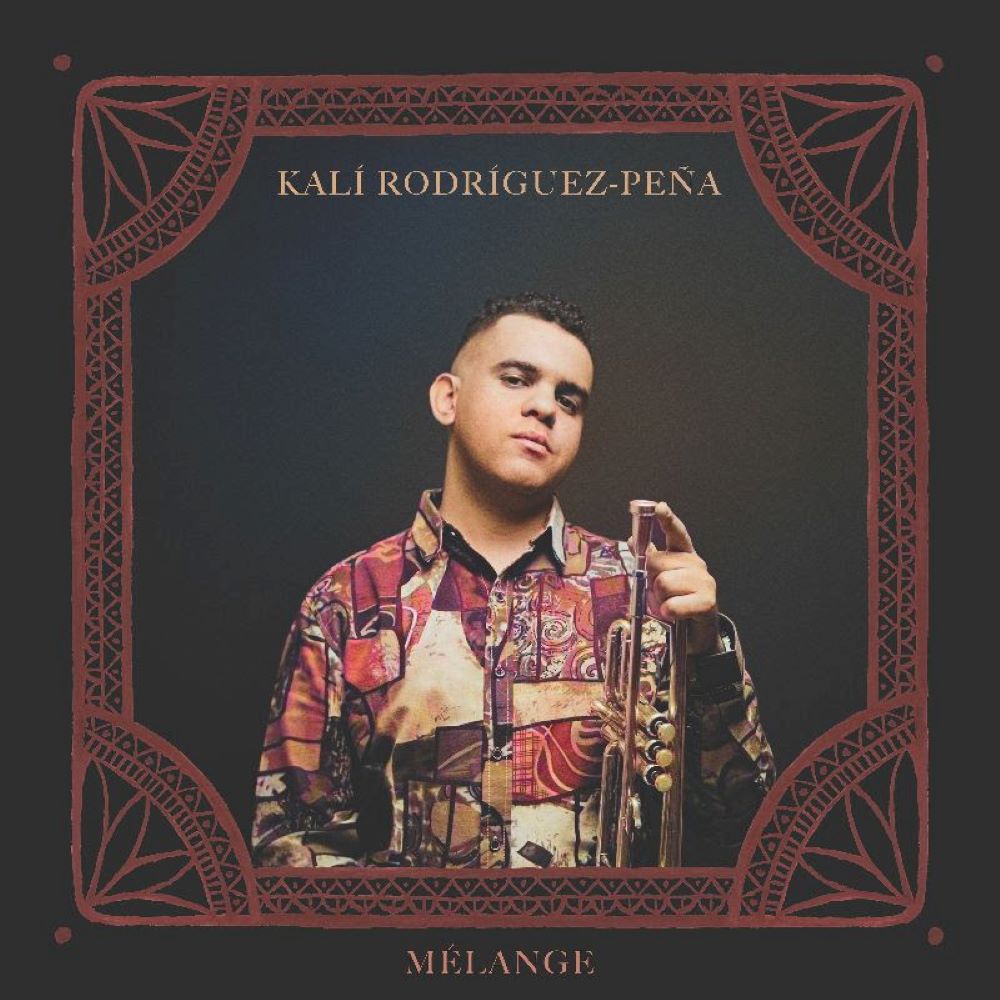
Kalí Rodríguez-Peña - Mélange (March 4, 2022 Truth Revolution Records)

Trumpeter and composer Kalí Rodríguez-Peña blurs the lines between genres as he pays homage to the 21st-century mindset with his hard-grooving debut, Mélange, out March 4, 2022 via Truth Revolution Records

Trumpeter and composer Kalí Rodríguez-Peña has become a steadfast part of the New York music scene. From his upbringing in Cuba to his time at the Manhattan School of Music, from his open-minded approach to the concept of genre to his clear vision of musicality as a bandleader, Kalí has a determination, a passion, and an optimism in his music that dance and flow around each other like the audiences to whom he plays once his melodies enter the air. Now, after leading the consistent entourage he’s proud to call his band and musical family over the past five years, Kalí deemed it high time to step into the studio and capture the vivacious interplay and unpredictably joyous musical discourse that has so enraptured his live listeners over the previous half-decade. With musical influences that reach far beyond the Americas and a perspective on music that remains grounded in tradition yet distinctly relevant to the present, Kalí is proud to release Mélange on March 4, 2022 on Truth Revolution Records.

Like many of the musicians who come to New York and thrive, Kalí found that the experience of adapting and learning to understand the monumental city and its plethora of nuance was one that was defining. “Coming to New York,” Kalí tells, “I wanted to grasp all the knowledge I could about the city, its people, and its culture.” During his drive for knowledge, Kalí quickly saw a striking similarity to Havana, where he had previously lived in Cuba: everyone was fighting in their own way for a chance to make it every day. As he spent more time in New York, this became one of the driving factors that led him to empathize with and understand the bustling city around him, and it is in this common ground that connected him both to the music and the wider world. It was these experiences and these lessons from the city that began to inspire him and, ultimately, the music he would create. “Each song was inspired by an experience, a story, and life lesson,” Kalí says, “So I [can] say that the music aims to be descriptive, and even autobiographical.”

The title of the album, Mélange, is taken from the French word for “mixture,” and was chosen by Kalí as an apt way to succinctly understand the music that has brought him to where he now is, as well as how he sees his music as positioned in the present. Drawing from bebop and post-bop; Cuban timba, salsa, and rumba; and world music from India and the Caribbean, Mélange truly does stand by its translated definition and creates an eclectic yet seamless blend of musical traditions and heritages that, when combined, shine with a mosaic ebullience. In addition to representing the blend of traditions present on the album, Mélange also embodies Kalí’s unique perspective on music and its reception in the present. “The way most people listen to music today – the playlist – is a mélange of different albums and artists,” explains Kalí. “By doing this, one’s mind eventually blurs what we call genres, and starts associating different styles of music as choices of how to combine notes and rhythms.” Kalí’s view has led him, both in performance and composition, to think of his genre-fluid music not simply as the sum of its myriad influences, but as an entirely new category in the listening experience. “I call it 21st century music, millennial music, or playlist mode music,” he says.
Kalí’s 21st century music view notwithstanding, the music present on Mélange draws on a distinctive lineage and heritage to which Kalí seeks to pay homage with his debut. “Something that makes this album special is its focus on rhythms and groove,” Kalí tells. While Mélange does indeed feature the harmonic depth and breadth that has so long been associated with jazz and creative music, it also seeks to honor the African and Afro-Caribbean roots from which many jazz elements stemmed. “Many musicians come from an academic world where the focus is more on the European elements, which are also a part of this music of course, but by doing so they forget sometimes the [elements] that correspond to Africa and the Caribbean which were fundamental in the conception of jazz and all kinds of Black American Music,” says Kalí. “The joy that the audience feels when listening to something they can tap their feet to is something that I can’t describe in words and I’m proud to say that we captured some of that in this album.”

As a performer and composer, Kalí was heavily influenced by the stylings of trumpeters Freddie Hubbard, Fats Navarro, Woody Shaw, Miles Davis, and Clifford Brown, and the compositional intricacies of writers spanning a range from Wayne Shorter and Thelonious Monk to Chucho Valdés, Ambrose Akinmusire, and most everything in between. These influences become noticeable when one sees the opening track of Mélange is none other than Shorter’s immortal standard, “Yes or No.” Artfully arranged by Kalí to leave his distinctive spin on the track, this piece was considered a must-have tip of the hat to one of his great influences. “To not have a Wayne song on my first album would have been like a sin for me!” proclaims Kalí. Shorter’s writing is immediately followed by “A Student is Not a Disciple,” the first of many breathtakingly imaginative original compositions by Kalí. Based on a specific raga and tala from the Indian Carnatic music tradition, Kalí composed this piece after studying under Samir Chatterjee at the Manhattan School of Music. Its title is derived from the traditional Indian method of studying music: finding a guru, living with them and becoming their disciple, and finally, through emulation of their holistic practices, earning the right to be called a musician. Showcasing his ability to orchestrate through timbres and tone, Kalí wrote “La Historia de Eréndira,” a composition based on a short story by the Colombian author Gabriel García Marquez. This piece audibly captures and conveys the magical realism that is so beloved in the author’s writings. Another standard on the album, “Like Someone In Love” was arranged by Kalí as a challenge for himself. Demonstrating to listeners that his musical styles and aesthetics can be applied to something familiar, Kalí took the familiar melody of the standard but reharmonized it, adjusted its form, and added timba elements. “It sounds like something I would have written,” Kalí laughs, “but I’m still playing a standard.”
The personnel on Mélange are taken from the consistent working band Kalí has been leading for the past five years. A mix of nationalities, backgrounds, and musical personalities, Kalí’s band unites through their shared professionalism and love for the music.  Mélange boasts a scintillating cast and features Kalí’s long-time friends Kazemde George on tenor saxophone and Zack O’Farrill on drum set, as well as Gabriel Chakarji on piano and keyboards, Bam Bam Rodríguez on bass, and Víctor Pablo García on percussion. Each musician on the album Kalí views as family, and he respects their input as such. “In my music every musician is an integral part of the composition,” Kalí says. “I believe that trusting the instinct and the knowledge of the people you have chosen to play with is an essential component in playing creative music.” One of the quintessential elements Kalí praises his band for is their communication and the powerful, energizing spontaneity that is derived from that. “They are always going to different places in the gigs, so every song feels fresh at every performance,” Kalí says.

With Mélange, Kalí establishes himself not simply as a powerful trumpeter, but firmly asserts himself as a holistic creative voice to be heeded. Armed with his unique take on genre and music in the present, Kalí is able to build worlds within songs that are both familiar and entrancingly new with a vivacity that keeps audiences moving, hollering, and listening again and again.

1. Yes or No 06:32
2. A Student is Not a Disciple 08:03
3. La Historia de Eréndira 07:16
4. Drume Mobila 06:12
5. Like Someone in Love 07:09
6. Interlude 02:38
7. Thinking of the Universe 08:16
8. Las Memorias de las Calles 07:39
9. Se Acabó 06:39

Tomas Fujiwara’s Triple Double album March 4, via Firehouse 12

Drummer/composer Tomas Fujiwara reconvenes his unique sextet Triple Double for a collection of exhilarating new music inspired by dance and protest

March, due out March 4, 2022 via Firehouse 12 Records, features drummers Fujiwara and Gerald Cleaver, guitarists Mary Halvorson and Brandon Seabrook, and trumpet/cornet players Ralph Alessi and Taylor Ho Bynum

"Deliberately seeing double in the cause of exploratory jazz, Fujiwara brings together instrumentalists primed to rub each other in all the right and creatively wrong ways."
– The New Yorker

"[The six musicians’] collective talent and Fujiwara’s innovative leadership make for a tonic of unpredictability… A triple scoop of great music."
– Britt Robson, JazzTimes

Tomas Fujiwara’s Triple Double celebrates album Friday, March 4 at The Stone, NYC
Tomas Fujiwara, photo by Brian Cohen

Parsing out the various combinations possible within Tomas Fujiwara’s Triple Double feels something like wandering through a hall of mirrors. Look at it one way and you might see two horn/guitar/drum trios; turn slightly and suddenly it becomes three paired artists taking their shared instruments in radically different directions. Despite the unusual instrumentation of the ensemble, however, Triple Double is at its core a group of six distinctive individuals, each among the most innovative and singular voices in contemporary creative music – drummers Tomas Fujiwara and Gerald Cleaver, guitarists Mary Halvorson and Brandon Seabrook, and trumpeter Ralph Alessi and cornet player Taylor Ho Bynum. 

On the sextet’s second album, March (due out March 4, 2022 via Firehouse 12 Records), Triple Double has also become a band in the most thrilling sense, sharing a scintillating chemistry and a sense of musical mission that remains evident no matter how far apart the various pairings and triplings stretch the music in far-flung directions.
Tomas Fujiwara's Triple Double, photo by Nicki Chavoya

“On the first album [2017’s Triple Double], the band was still relatively new,” Fujiwara explains. “There were a few people in the group that had never played together before. Since then we’ve spent a lot more time touring and playing together, so I feel like those connections and the rapport within the group have really deepened. That influenced my writing for this album because now I had a reference point for different places the band had gone, and I was also conscious of where else I wanted to push us as a group.”

The formation of Triple Double did bring together some new pairings – Alessi and Bynum had never crossed paths, and the drummers had never had the opportunity to share the stage despite Fujiwara’s longheld admiration for Cleaver. At the same time, the grouping also reconvened some well-established hook-ups (to borrow the name of another Fujiwara ensemble). Bynum and Halvorson are both among Fujiwara’s most frequent collaborators, in each other’s ensembles as well as (in Fujiwara and Halvorson’s case) in the collective trio Thumbscrew. Triple Double grew out of a trio that the drummer formed with Alessi and Seabrook.

“When I first put the band together I made a pretty exhaustive list of all the different combinations of the six of us,” Fujiwara says. “On this album I really wanted to hone in on the subtle shifts that can happen with the addition and subtraction of different musicians in the ensemble. It feels like there are endless possibilities, which is really exciting.”

Opener “Pack Up, Coming For You” offers perhaps the most explicit example. The tune begins with the trio of Fujiwara, Bynum and Halvorson. After they trade improvisations their counterparts emerge and the second trio takes over for a time. Finally all six combine and the full scope of the group dynamic is revealed. Like its predecessor, March includes an improvised duet by Fujiwara and Cleaver in tribute to the bandleader’s childhood teacher, Alan Dawson.

The unique combination of instruments is in some ways a challenge, offering little guidance for a composer. At the same time, Fujiwara found the lack of precedent refreshing. “Not having a blueprint can be challenging,” he explains, “but at the same time it can be quite liberating and inspiring. If you’re leading a guitar trio and want to do something personal with it, it can be difficult to get out from under the shadow of all the great guitar trios that came before. With this there isn't that history, so it takes away expectations. That challenge is fun for me.”
Tomas Fujiwara's Triple Double, photo by Nicki Chavoya

Fujiwara took on several disparate challenges in the crafting of March. His vibraphone playing is given a much more prominent role, while the floating, airy “Life Only Gets More” was instigated by the fact that drummers are so rarely asked to solo over ballads. The album was also recorded fairly quickly and spontaneously, despite the challenging material – an approach prompted by Fujiwara’s love of classic Blue Note Records.

“On many of the sessions they would just call in a group of musicians, they’d show up, the bandleader would have some charts on the music stand, they’d run through them and just record them. And yet they're now eternal classics that we love. I wanted to capture some of that magic.”

Like the name of the ensemble, the new album’s title also folds multiple meanings into a deceptively simple word. At its most basic, March is the month of the album release – but of course it’s a loaded date, falling exactly two years after much of the world went into pandemic lockdown and ensembles like Triple Double were suddenly indefinitely separated. The gulf has proved a long one for this band in particular, having recorded the album in late 2019.

But March also implies movement, as suggested by the felt assemblages that grace the album’s colorful artwork. The multi-hued group embracing on the cover could be dancers stepping in rhythm or protesters parading for a cause. All of those meanings danced in Fujiwara’s head as he penned the music for March, especially as he titled the tunes in the midst of the tense protests that erupted throughout 2020.

“There's something about marching that is very evocative to me,” the drummer explains. “It's a coordinated activity that always has a group intent behind it – which could be peaceful, violent, revolutionary, stifling or joyful. Marching can take on so many different forms, but it's always a group activity for a group cause that represents those intentions or feelings by a show of numbers together in one direction. Oftentimes it's not about getting from point A to point B, it's simply the act of marching and of being together that expresses the point.”


Tomas Fujiwara
Described as “a ubiquitous presence in the New York scene…an artist whose urbane writing is equal to his impressively nuanced drumming,” Brooklyn-based Tomas Fujiwara is an active player in some of the most exciting music of the current generation. He leads the bands Triple Double (with Gerald Cleaver, Mary Halvorson, Brandon Seabrook, Ralph Alessi, and Taylor Ho Bynum), 7 Poets Trio (with Patricia Brennan and Tomeka Reid), and Tomas Fujiwara & The Hook Up (with Jonathan Finlayson, Brian Settles, Halvorson, and Michael Formanek); has a collaborative duo with Bynum; is a member of the collective trio Thumbscrew (with Halvorson and Formanek); and engages in a diversity of creative work with Anthony Braxton, John Zorn, Halvorson, Matana Roberts, Joe Morris, Bynum, Nicole Mitchell, Ben Goldberg, Reid, Amir ElSaffar, Benoit Delbecq, and many others. In 2021, he won the DownBeat Critics Poll for Rising Star Drummer, and premiered two suites of new music as part of his Roulette Residency: “You Don’t Have to Try” (with Meshell Ndegeocello) and “Shizuko” (with Bynum, Reid, Rafiq Bhatia, and Davi Vieira). “Drummer Tomas Fujiwara works with rhythm as a pliable substance, solid but ever shifting. His style is forward-driving but rarely blunt or aggressive, and never random. He has a way of spreading out the center of a pulse while setting up a rigorous scaffolding of restraint…A conception of the drum set as a full-canvas instrument, almost orchestral in its scope.” 

Cameron Undy - Ghost Frequency (March 4, 2022 Earshift Music)

Ghost Frequency is Cameron Undy’s solo guitar album showcasing his fascination with ancient rhythms of the African diaspora, what he refers to as “ghostly artefacts”. The music’s apparent simplicity hides the inner geometric workings by this deep thinking artist. Ghost Frequency is a major work that sheds new light on Undy’s musical vision with 11 original compositions that present an exquisite and original musical statement.

From the artist:
The Ghost Frequency project is born from my fascination with ancient rhythms of the African diaspora. The idea that these rhythms evolved over thousands of years through human dance, ceremony and ritual is such a powerful one. That the vast majority of this evolution has gone unrecorded and never to be heard again, yet enriches such a wide variety of contemporary music is somewhat mind-blowing!

These rhythms are like ghostly artefacts, that when I ‘pick them up’ and ‘play’ them I can never be totally certain that I am ‘seeing’ them for what they are/were. And yet these distant relics of aeons past fill me with inspiration and imagining, of an everlasting connection with ancient civilisations. Like looking at the light from a star that burnt out millions of years ago they are as real and present as a footprint in the sand from a morning walk yet the sources of each are intangible in the present.
If you go looking for specific African rhythms in my music you may struggle because what I am playing are reflections, shadows and stellations of these ‘ghosts’. Rhythms I have created using natural sequence and generative, rule based principles of analog transformation. They are geometric distortions of the original archetypes, allowing me to enter ‘other places’ in my mind and body previously unknown. I am very grateful to African ritual culture and to Western scientific thinking for the paths made available to me to reach this ‘place’.

Widely known with a deep love of funk, afro-beat, avant-garde jazz and 20th century Classical music, Undy has performed as bassist on countless albums and released two albums with his afro-funk-jazz cult band 20th Century Dog, Bone and Mad Stream. In 2021 he released a self-produced beats album, Blood Shot (Earshift Music). Undy is also known as co0owner of the former Sydney club Venue 505 and Acoustic Ritual.

1. Ghost
2. Footprint
3. Orbit
4. Stars
5. Reflection
6. Sand
7. Shadow
8. Jellyfish
9. Wood
10. Magnolia
11. Shed

Cameron Undy - acoustic guitar

Recorded by Richard Belkner at Free Energy Device Studios, 2021
Cover image by Gordon Undy
Inside image by Sally Flegg
Design by Brodie McAllister

All compositions by Cameron Undy

About the Music

Ghost - The mind may think of music and the body play it so the soul may express.
Footprint - A footprint in the sand is like a shadow of movements past.
Orbit- The balance of the cosmos is unseen yet the most powerful force we know.
Stars - Distant relics of aeons, filled with imagining
Reflection - Reflections are distortion, sometimes more beautiful than reality.
Sand - Time, dissolved into a billion grains.
Shadow - Shadows reveal light, time, space and dimension.
Jellyfish - Their form is unaltered by the flow of the ocean yet never appears the same twice.
Wood - Wood records everything from birth to death.
Magnolia - An ancient genus, symbolic of everlasting connections.
Shed - Any place or time, where and when I practice music (usually not a shed)