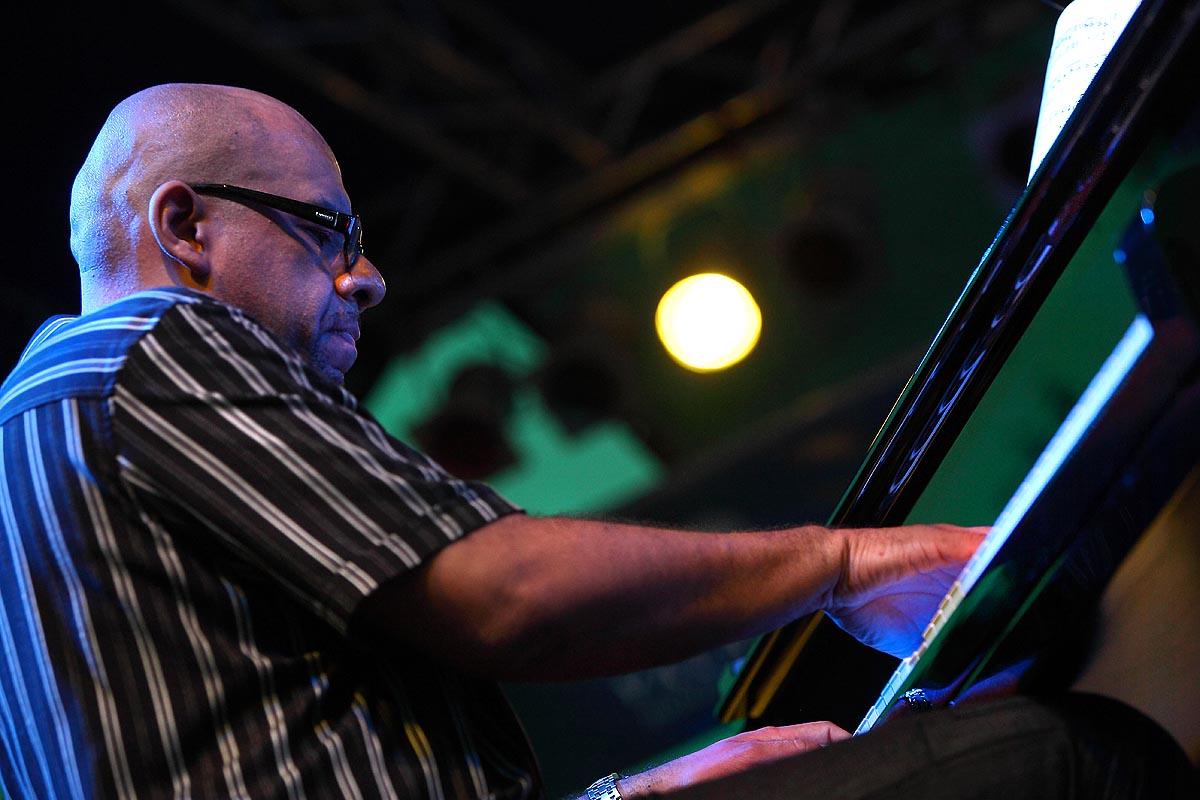
I’m happy to announce the release of my new duo album „Little Peace Lullaby“!!!
2014 italian master pianist Stefano Battaglia and me met at Vienna’s famous concert hall, the Musikverein, to record my cycle of songs entitled „Little Peace Lullaby“. Inspired by scandinavian, mediterranean, persian and in particular eastern european contemporary romantic music the „Lullabies“ are a collection of personal dedications and love songs for people who have enriched my life. Now the songs appears by famous german jazz label Enja/Yellowbird Records.
With the silent and subtle „Little Peace Lullabies“ I would like to thank all the people who support my work and believe in my music – all my listeners!!!
Playing with great italian piano master Stefano Battaglia is like coming home. Everything is easy, you always feel comfortable and together we are telling wonderful small musical stories. Our collaboration started in 2013 when I wrote a message to Stefano just to tell him that I’m a big fan of his music. Within an hour he replied and two months later we met for the first time and started our corporate journey into our musical universe. Since then we’re working most of the time in the duo context.
Our music is inspired by contemporary classical, scandinavian, mediterranean and oriental music as well. In 2016 our first album „Little Peace Lullaby“ was released. Recorded in the so-called „Glaeserne Saal“, part of the world famous viennese Musikverein, „Little Peace Lullaby“ is a subtle cycle of love songs. Stefano and me have performed meanwhile a lot together and toured countries like Austria, Poland, South Korea, Turkey and the Iran. Beside the duo we also perform regularly in trio setting with persian Sufi goddess Sahar Lotfi. In late 2016 together with Stefano and the highly talented young austrians Judith Ferstl and Judith Schwarz on double bass and drums I’ll present a completely new quartet program.
'He reminds me of the young Django Bates, and the impression Django made on me in the 1980s - great improv chops, strong character as a player and a composer, evident love of the jazz tradition without wanting to repeat the past, very English sense of humour. He’s the kind of artist you always want to stay tuned in to, because you know he’s going to keep on coming up with surprises.’ JOHN FORDHAM
Elliot Galvin is one of the rising stars of UK jazz. A superbly gifted composer and pianist, whose maverick imagination and magpie like ability to blend a disparate world of influences into his own unique musical vision has seen him compared to Django Bates, although in truth he sounds like no one except himself. From deconstructing standards to creating his own microtonal melodica, Galvin’s music is both playful and deadly serious, drawing on a wide range of influences from Keith Jarrett to Stravinsky, Ligetti, Deerhoof and the Beatles as well as the films of David Lynch, the Dada movement and the literature of James Joyce.
A regular collaborator with Laura Jurd, he also plays in a free improv duo with Mark Sanders. But his main artistic vehicle is the Elliot Galvin Trio, which in 2014 was announced winner of the European Young Jazz Artist of the Year Award in Germany. That same year they released their debut album ‘Dreamland’ to rave reviews, with the Guardian calling it “audaciously accomplished” ****, Jez Nelson (BBC Radio 3, Jazz on 3) saying it was “Perhaps one of the strongest debuts that I've heard from a UK artist in a long while... extremely bold and progressive" and The German magazine 'JazzThing' naming it as an album of the year.
Punch is their second album and their debut for Edition Records.
PHRONESIS TICKET COMPETITION
We have a pair of tickets to give away for our 'Parallax' album launch show at Cadogan Hall in London on Sunday 12th
"The Mingus Suite" del compositore e arrangiatore Adriano Clemente è un ritratto jazz in sette movimenti ispirati dalla musica di Charles Mingus. Il disco - prodotto da Dodicilune e distribuito in Italia e all'estero da IRD e nei migliori store digitali a partire dal prossimo 27 maggio 2016- è un'idea che si è sviluppata nel 2013 partendo da alcune melodie composte da Clemente per il suo Akashmani Ensemble basate sulla struttura blues tipica della tradizione di Ellington e Mingus.
«Mentre i vari movimenti prendevano forma coerentemente, ebbi l'idea di un potenziale pezzo teatrale che metta in scena la morte del grande bassista e compositore mentre suona sul palco, ricordando quello che Mingus stesso aveva scritto nelle sue note di copertina a "Mingus at Monterey": una strana cosa successe mentre eseguivo "A Train". Mi attraversò la paura di morire. E la superai. Stavo guardando il cielo, e mi dissi: "Bene, eccomi qui, tesoro. Signore, credo che sia giunto il momento". Suonerò ancora meglio perché voglio essere perfetto quando morirò», precisa Clemente, in quest'opera affiancato da Francesco Lento (tromba), Mario Corvini(trombone), Daniele Tittarelli (sax alto), Marco Guidolotti(sax baritono, clarinetto, clarinetto basso), Riccardo Fassi(piano), Dario Rosciglione (contrabbasso), Andrea Nunzi(batteria), Roberto Ottaviano (sax soprano) e Raffaele Toninelli (contrabbasso).
Il primo tempo, "Inner Fires" (Fuochi Interiori), raffigura Mingus che suona durante il suo ultimo concerto con la sua band, e riflette una delle caratteristiche delle composizioni di Mingus nei cambi di tempo e di alternanza degli stati d'animo feroci e pacifici. Dopo un’introduzione, un assolo di contrabasso improvvisato di Dario Rosciglione conduce alla sezione centrale del primo movimento, eseguita in tempo veloce. Nel secondo movimento, "Memories of Duke" (Ricordi di Duke), Mingus ricorda la sua infanzia, quando ascoltò per la prima volta "East St. Louis Toodle-Oo" di Ellington alla radio, citato brevemente alla fine del motivo. La coda al pianoforte è stata improvvisata da Riccardo Fassi.
"Urban Jungle" (Giungla Urbana), il primo intermezzo, è il suono della città presente intorno al club dove Mingus sta suonando, con il tipico caos e la violenza. È formato principalmente da cinque linee melodiche con le quali gli artisti hanno la libertà di interagire. Nel terzo tempo, "Circus" (Circo), Mingus ritorna con la mente ai giorni della sua infanzia. La sezione centrale è stata completamente improvvisata in studio, con Mario Corvini al trombone come solista principale.
Sul palco la band suona un blues minore ("Blues in Rags" (Blues Vestito di Stracci, quarto movimento), dove tutti i musicisti hanno la possibilità di eseguire un assolo, dopo il quale segue il secondo intermezzo, "Night City Blues" (Blues di città nella notte), su di una struttura blues di dieci battute. Il quinto tempo ritrae Mingus addormentato, in una ballata ispirata al famoso "The Man who Never Sleeps" ("L'uomo che non dorme mai"), con assoli di Marco Guidolotti al clarinetto, Dario Rosciglione al basso e Francesco Lento alla tromba.
Dopo una ripresa di "Urban Jungle" come terzo intermezzo, la band suona "Last Blues" ("L’Ultimo Blues"), una variazione su “Goodbye Porkie Hat” o "Theme for Lester Young", la melodia che Mingus compose sul palco dopo aver appreso della morte del grande sassofonista, che in questo caso rappresenta la morte dello stesso Mingus. Il brano inizia con un assolo improvvisato di Daniele Tittarelli seguito da un'introduzione scritta. Gli assoli sul tema sono di Daniele e di Riccardo Fassi. Il settimo ed ultimo tempo, "Requiem", si apre con un’introduzione straziante improvvisata sul clarinetto basso da Marco Guidolotti e continua con lo stile delle funeral marching bands di New Orleans, con assoli di Mario Corvini al trombone e di Francesco Lento alla tromba. Alla fine del "Requiem", il basso di Mingus riecheggia ancora in una sezione improvvisata da Dario Rosciglione, il quale riprende poi il tema del primo movimento, "Inner Fires" ("Fuochi Interiori"): il suo spirito sopravvive nella sua musica come i fuochi interni del suono primordiale, la forza creativa dell'universo.
Oltre alla suite sono presenti due composizioni. La prima è "Brown Bear’s Love Waltz" (Il Valzer d’Amore dell’Orso Bruno), il cui titolo originale era "Waltz for Sun Ra", con il baritono di Marco Guidolotti che espone il tema. L'ultimo brano, "For my Father", è eseguito dal compositore stesso al pianoforte in coppia con Roberto Ottaviano al sax soprano. Le linee sinuose del soprano esprimono l'ascesa dell'anima umana come un uccello liberato dalla sua gabbia.
Liner Notes (short english)
"The Mingus Suite, a Jazz Portrait in Seven Movements inspired by the music of Charles Mingus (1922-1979), is an idea that started in 2013 after I had composed a few tunes based on the blues structure for my Akashmani Jazz Ensemble. While the various movements took shape into a coherent whole, I thought of a potential theatrical piece showing Mingus's death while playing on the bandstand, remembering what he himself had written in "Mingus at Monterey": A weird thing happened during "A Train". The fear of my death surged through me. And I overcame it. I was looking at the sky, and I said "Well, here I come, baby. Lord, I guess this is it." So I'm just gonna play better cause I want to sound good when I die. The first movement, Inner Fires, depicts Mingus playing his last concert, and reflects one of the characteristics of his compositions in the tempo changes and alternation of fierce and peaceful moods. After an intro by the horns, an improvised bass introduction opens the way to the up-tempo first section. In Memories of Duke, Mingus remembers his childhood, when he listened for the first time to Ellington's "East St. Louis Toodle-Oo" on the radio. The coda on the piano is an improvisation. Urban Jungle, the first interlude, is the sound of the city with its chaos and violence. Circus, whose central section has been improvised, brings Mingus back to his childhood. He wakes up from his reverie and the band plays Blues in Rags, the fourth movement, and then a second interlude, Night City Blues. The fifth movement, While You Are Asleep, is a ballad inspired by "The Man who Never Sleeps". After a reprise of Urban Jungle, the band plays Last Blues, a variation on "Theme for Lester Young", the tune that Mingus composed on stage after knowing of his death, and here a representation of his own death. An improvised solo followed by an introduction for alto opens the song.
The last movement, Requiem, is opened by the mourning sound of a bass clarinet improvisation, and continues in the style of the funeral marching bands. At the end, Mingus's bass again resounds in an improvised section, leading to a reprise of Inner Fires: his spirit survives in his music as the creative force of primordial sound. Besides the suite, we have two compositions, Brown Bear's Love Waltz, and For my Father, which was composed a few days after my father's death and recorded as a duet with Roberto Ottaviano. The sinuous lines of his soprano express the ascent of the human soul like a bird set free from its cage." Adriano Clemente
TRACKLIST
The Mingus Suite
1st mov. 1) Inner Fires
2nd mov. 2) Memories Of Duke
interlude 3) Urban Jungle I
3rd mov. 4) Circus
4th mov. 5) Blues In Rags
interlude 6) Night City Blues
5th mov. 7) While You Are Asleep
interlude 8) Urban Jungle II
6th mov. 9) Last Blues
7th mov. 10) Requiem/Inner Fires Reprise
11) Brown Bear's Love Waltz
12) For my Father
All compositions and arrangements by Adriano Clemente (Dodicilune edizioni)
(P) 2016
Dodicilune ED357
8033309693576
MUSICISTI
• AKASHMANI ENSEMBLE (1 - 11)
francesco lento, trumpet
mario corvini, trombone
daniele tittarelli, alto sax
marco guidolotti, baritone sax, clarinet, bass clarinet
Un disco a piano solo es, ante todo, un acto de desnudez tanto musical como emocional. En esta nueva producción, el pianista de Córdoba, Eduardo Elia, reafirma su camino de salir al ruedo sin medias tintas, con dominio de standards y tres composiciones propias. El piano bascula entre el jazz y su profundo mundo interior, sin contaminar la escena con virtuosismo vacío. Once temas que son materia prima para la profundización, apuntando a un enfoque íntimo y oscilante; que se erige como una declaración detenida en el tiempo en un presente continuo. Aquí hay variados cielos que transmiten distintas proyecciones de luz. Una travesía musical rica en sorpresas, colores y contrastes.
Andy Brown's previous album, Soloist (Delmark 5019), received outstanding reviews in JazzTimes, Jazziz, Vintage Guitar and in Down Beat where Scott Yanow described Andy as "a fixture on the Chicago jazz scene since 2003 ... a superior mainstream guitarist". Direct Call features a rarity in jazz today - a working band. Several years of performing weekly at Andy's Jazz Club has given this quartet a cohesive and tight-knit sound that can only be gained through countless gigs together. With Jeremy Kahn, piano, Joe Policastro, bass and Phil Gratteau, drums, the album features an eclectic mix of standards, Brazilian music and jazz compositions.
Andy Brown, Swing Master: "Appel Direct"
Theoretically, I should not be able to write that the Chicago-based guitarist Andy Brown is in fact a Swing Master. He is certainly too young and too healthy. He's been on a skateboard. He might even lack the maladjustments so common to Great Artists. But these things have not limited his creative magic.
There's more delightful evidence at hand, a new Delmark CD, DIRECT CALL, which I would gladly dub SWING MASTERPIECE OF 2016.
The three other masters here are Phil Gratteau, drums; Jeremy Kahn, piano; Joe Policastro, string bass. Like Andy, they know what and where it is.
The session was recorded in Chicago last September - beautiful sound thanks to my non-relative Scott Steinman: THE JEEP IS JUMPIN / PRISONER OF LOVE / EL CAJON / FUNK IN DEEP FREEZE / APPEL DIRECT / RELAXING / ONE MORNING IN MAY / CATCH ME / ELA E CARIOCA / FREAK OF THE WEEK.
In a crime novel whose name I forget, someone said, less politely, "Everybody can talk but not everyone has things to say." The art of swing improvisation is not something learned from the Real Book or from copying gestures to fool an audience. (Ending a performance of SHINY STOCKINGS with three Basie chords doesn't make it Basie.)
Compelling, light-hearted, authentic swing and melodic improvisations are a matter of years of study - usually on the job. The members of this quartet, although not Elders chronologically, are wise players whose art comes from playing, listening, thinking, feeling.
Some like their jazz to be startling, even abrupt. It has to be "innovative" and "adventurous." I wouldn't deny them such pleasures, but music that shouts BOO! in my ear is not for me. I warm to jazz that delicately balances the familiar and the surprising, with comfort the result, as if I were a passenger with a driver I wholly trusted. This comfort is felt immediately in the opening choruses of APPEL DIRECT. "These players know how to sustain feeling and build on it; they won't let me down or disappoint me."
Although the CD is in no way a repertory project, I could settle into the joy of experiencing and anticipating right from the start: the same way I feel when (let us say) I heard Teddy Wilson, Milt Hinton, and Jo Jones play an eight-bar introduction. Basie and Charlie Christian. Jimmie Rowles, Jim Hall, Leroy Vinnegar, Frank Butler. You can supply your own names. Mastery and ease.
I urge you to check out the CD, and, even better, share the music with others . . . or do that most radical thing, hear this quartet in a Chicago club or elsewhere. I believe that you will feel uplifted, rewarded - by the sweetness of PRISONER OF LOVE, the rare energy of CATCH ME and the other swinging tunes. It's a beautifully integrated quartet, with each player generously giving of himself to the band. And now I will play APPEL DIRECT again.
For his fourth Criss Cross recording, pianist Luis Perdomo offers a swinging affair, on which a crackling quintet of New York first-callers interprets 7 originals by the leader (the centerpiece is the well-wrought six-piece "Spirits and Warriors Suite" that gives the CD its title), Clifford Jordan's iconic jazz standard "Glass Bead Games," and the classic ballad "Portrait of Jenny".
Propelled by drum grandmaster Billy Hart and bassist Ugonna Okegwo, who lock in like life-long partners, tenor saxophonist Mark Shim and trumpeter Alex Sipiagin, a Criss Cross regular, uncork cogent solos, some inflamed, some nuanced.
Perdomo, 44, plays throughout with the old soul clarity, grit, maturity and freshness that have earned him deep respect from the best and brightest representatives of the hardcore jazz and Afro-Caribbean practitioners on the international playing field.
1. Face Up (Luis Perdomo) 5:11 2. Sensei (Luis Perdomo) 7:39 3. Aura (Luis Perdomo) 6:40 4. Ralph (Luis Perdomo) 6:22 5. Her Eyes (Luis Perdomo) 7:09 6. Year One (Luis Perdomo) 7:45 7. Glass Bead Games (Clifford Jordan) 6:56 8. Little Church (Hermeto Pascoal) 4:50 9. Portrait Of Jenny (J. Russell Robinson) 8:21
Luis Perdomo (P) Alex Sipiagin (Tp / Flh) Mark Shim (Ts / EWI [5]) Ugonna Okegwo (B) Billy Hart (D)
After 13 Criss Cross sideman appearances, including four with the all-star collective Opus 5, Boris Kozlov, one of New York's busiest and most respected bassists in a multiplicity of genres, makes his leader debut for the label with Conversations At The Well.
Joined by the distinguished guitarist David Gilmore of Steve Coleman and Five Elements fame, and the increasingly prominent drummer Rudy Royston, Kozlov guides and grounds their creative navigation of repertoire by Bill Evans, Charles Mingus, Herbie Hancock, Duke Ellington,Wayne Shorter, Keith Jarrett, Ornette Coleman and Thelonious Monk, concluding the proceedings with a vivid, spontaneously generated blues.
1. Five (Bill Evans) 6:28 2. Conversation (Charles Mingus) 5:49 3. Orbits (Wayne Shorter) 6:14 4. Semblance (Keith Jarrett) 7:20 5. Prelude To A Kiss (Duke Ellington) 9:09 6. Eye Of The Hurricane (Herbie Hancock) 6:12 7. Latin Genetics (Ornette Coleman) 5:46 8. Headless Blues (Boris Kozlov / David Gilmore / Rudy Royston) 4:51 9. Pannonica (Thelonious Monk) 5:26
Boris Kozlov (B) David Gilmore (G) Rudy Royston (D)
Hard to believe it will be twenty years ago next year that the hard bop ensemble One For All debuted with Too Soon To Tell on the fledgling Sharp Nine label. Formed as a group that regularly played together at an uptown Broadway club called Augie's, each member was just at the start of their own budding careers. Even today, it continues to be a surprise that these gentlemen still find the time to assemble for the occasional record date or live appearance.
Much has transpired since 1997. Augie's was transformed into Smoke, the club that continues to thrive and provides the imprimatur for the record label documenting the set at hand. Fifteen albums are to be found in the band's oeuvre, including four on Sharp Nine, five for Criss Cross Jazz, four for the Japanese Venus label, and two live concert recordings. Indeed on the cusp of starting their third decade together as a band, this fittingly titled set brings into focus all of the best qualities of these gentlemen, including their composing talents and singular musical voices. It also happens to be their first new release in five years.
The proceedings open with the Steve Davis original "Easy." Those crisp snare hits from drummer Joe Farnsworth announce that we are indeed in for a pleasurable ride. The warm timbre of the three-piece horn section is a trademark of this unit and it's all here to enjoy from the very first note. The tempo picks up with David Hazeltine's "Buddy," a tribute to his mentor and fellow pianist Buddy Montgomery. The sprightly bossa tempo brings some joyous shouting from trumpet ace Jim Rotondi.
Hazeltine is also responsible for the cheery arrangement of "It's Easy to Remember" and another tribute in the guise of "K-Ray." Dedicated to recently deceased drummer Killer Ray Appelton, this one is a brisk and swinging ditty that finds Farnsworth in all his glory. Particular attention should be paid to the sound the drummer achieves. His toms are tuned high and his ride cymbal has a nice, dry ping, all of which are individualistic and very pleasing. His solo statements are articulate and engaging and never wear out their welcome.
Both Davis' "Daylight" and Eric Alexander's "Frenzy" are ebullient numbers that bristle with excitement. The former speaks with a jaunty Latin-esque voice while the latter is straight ahead swing buoyed by John Webber's rock solid bass lines. For Rotondi's contributions, there's the 16th note groove of "For Curtis" and the long-lined "Ruth," both of which settle into a pleasurable platform for soloing. Although it goes without saying, both Davis and Rotondi are chock full of great ideas and say much over the course of their many solos.
Alexander, Davis, Hazeltine, and Rotondi have largely served as the band's main arrangers/writers over the course of the band's history. It is then a pleasure to find that this date marks the first time all six members contribute to the program. Webber's "Babataya" recalls some of the funky gems from the Blue Note era, such as Lee Morgan's "Party Time." Farnsworth's "Hey,Stevie-D" makes for a fine shuffle that puts Alexander in the mood to strut his stuff. And speaking of Alexander, his gorgeous ballad "Ghost Ride" serves as moment of calm in an otherwise pretty upbeat session.
Over the course of The Third Decade's eleven generous tracks, we get to hear a well-honed machine operating at peak power. Even though distances often keep these six gentlemen apart, one can only hope their new home at Smoke Sessions will provide for further releases and the we won't have to wait another five years before the next one.
"Guapo" is Spanish for "sharp-dressed man" (or woman), and the title—and launch—track of Scott Jeppesen's exceptional solo debut sure conjures such an image. El Guapo is stylish, diverse and expert; released on Oct. 1, 2013, it is one of the best albums of that year.
Jeppesen is a protean saxophonist who also plays bass clarinet. A restless, inventive player, he delivers eight memorable originals, a resonant, intimate version of Richie Beirach's "Elm" and an effervescent take of Cole Porter's "Don't Fence Me In" that draws this fine album to a close.
The subtext here seems to be communication. Tracks four through seven bear titles referring to conversations, attitudes, and psychological deals. Take "Maybe Later," featuring Jeppesen on bass clarinet. The longest track on this worked, thoughtful disk, it starts ruminative and pretty, much like "Prayer for Sandy Hook" toward the end. But it evolves into something arch and witty as Jeppesen, the bass of Dave Robaire his underpinning, tosses the melody to John Daversa, a brassman—he's on flugelhorn here —of restraint and dramatically reluctant drive. Every solo purpose. Every solo, like Jeppesen's tone, is dry, too, even the ringing one by guitarist Larry Koonse.
Jeppesen switches to soprano sax for "No Drama," a tricky cut of slink and sass, a chamber-jazz bolero which showcases the rhumba talents of pianist Josh Nelson and sexy bass goading. Every tune has surprises; that's largely due to the startlingly crisp and detailed production of Jeppesen and Daversa.
The metrically demanding, funky "Overlapping Conversations," sparked by Dan Schnelle's elastic drumming, keeps the narrative going, building momentum and tension until Jeppesen and Koonse, whose doublings are one of the album's signature voicings, ties the bow.
And while each of the four tracks in this mini-suite within the album's broader framework stands by itself, they all seem to "talk" to each other. At the same time, while the album is sophisticated and Jeppesen's compositions refreshingly unpredictable, this cool dude of a disk never sacrifices accessibility on the altar of the abstract.
Jeppesen is a multi-instrumentalist at home in a variety of styles and settings. He's played with everyone from jazz artists Dave Koz to Maria Schneider, as well as the pop-rock guitarist Steve Millerand soul icon Stevie Wonder. While the pop and soul influences aren't prominent on "Guapo," the album always swings, and the musicianship is effortless no matter how mutable and challenging the track.
While "El Guapo" may not be the shape of jazz to come, it's jazz at its most shapely. Let's hope Jeppesen, his tone penetrating and spare, his improvisations compact and purposeful, his approach generous and intelligent, continues to deliver jazz of such exceptional quality.
1. El Guapo 05:40 2. Elm 06:13 3. Great Odin's Raven 05:38 4. I Tend To Agree 07:04 5. Maybe Later 07:39 6. No Drama 03:49 7. Overlapping Conversations 05:46 8. Hidden 07:07 9. Prayer For Sandy Hook 06:14 10.Don't Fence Me In 04:59
Scott Jeppesen - Saxophones and Bass Clarinet John Daversa - Trumpet and Flugelhorn (Tracks 3 and 5) Larry Koonse - Guitar Josh Nelson - Piano and Keyboard Dave Robaire - Bass Dan Schnelle - Drums