Tuesday, January 18, 2022

Misha Tsiganov - Misha's Wishes (January 2022 Criss Cross Jazz)

Misha Tsiganov, who lived in Leningrad in the former Soviet Union until he emigrated to the U.S. in 1991, at 25, has never shied away from a challenge. That’s apparent from the levels of complexity that Tsiganov embeds in the 18 arrangements and 9 originals on his three prior Criss Cross albums – The Artistry of the Standard (Criss 1367), Spring Feelings (Criss 1384), and Playing With The Wind (Criss 1401).

As written in the liner notes for Spring Feelings, Tsiganov has established “a signature blend of mixed meters, shifting tempos, changing keys and reharmonization that he deploys in order to insure ‘that something is happening always, so the listener doesn’t fall asleep.’”

Tsiganov’s latest, Misha’s Wishes, doesn’t eschew technical complexity. But the feel of this sophisticated, emotionally nuanced program – performed by old friends trumpeter Alex Sipiagin, tenor saxophonist Seamus Blake, bassist Boris Kozlov and drummer Donald Edwards, themselves leaders of multiple Criss Cross dates, with whom Misha Tsiganov feels such simpatico that he once postponed a recording session until all were available – is different than its predecessors.

1. Fire Horse (Misha Tsiganov)  7:14
2. Strike Up The Band (George Gershwin)  8:32
3. Misha's Wishes (Misha Tsiganov)  5:35
4. There Was A Birch Tree In The Field, So What (Russian Folk Song)  6:10
5. Lost In Her Eyes (Misha Tsiganov)  2:18
6. Just A Scale (Misha Tsiganov)  6:08
7. Give Me Five (Misha Tsiganov)  8:21
8. Hope And Despair (Misha Tsiganov)  7:15
9. Comrade Conrad (Bill Evans)  7:21
10. Are You With Me (Misha Tsiganov)  7:51

Total Time: 66:47

Recorded September 9, 2021 in Astoria, NY, USA by Mike Marciano

Misha Tsiganov (P / Fender Rhodes)
Alex Sipiagin (Tp / Flh)
Seamus Blake (Ts)
Boris Kozlov (B)
Donald Edwards (D)

David Binney Quartet - A Glimpse Of The Eternal (January 2022 Criss Cross Jazz)

Between 2004 (Bastion of Sanity) and 2016 (The Time Verses), alto saxophonist David Binney made nine albums for Criss Cross as either leader or co-leader, presenting predominantly his distinctive original music. Much of it emanated from his interactions in New York – his home from 1981 until 2018, when he moved to Los Angeles – with a cohort of local musicians comprising a who’s who of contemporary improvisers. During that intense and productive 12-year span, Binney recalls, he often spoke with Gerry Teekens – who founded Criss Cross in 1981 and sustained the label until he died in October 2019, leaving a legacy of over 400 albums, all of them good, some of them classics of the jazz idiom – about making a ballads record. Teekens´ son promised his father to keep the legacy alive and the label going, and after an 18-month recording hiatus he approached some of his´ father’s favorite artists to revive Criss Cross and launch it into the 2020s. One was Binney, who took the opportunity to suggest, “Maybe I should  inally do that ballads record in honor of your father.”

The tenth Criss Cross album with Binney’s imprimatur, A Glimpse of the Eternal, is, he says, “completely different than anything I’ve ever done – chilled out, an honest and pleasant vibe, nothing too complicated or intense.” If that self-description seems at odds with the intense, complex tonal personality that Binney has presented on his 30-album discography since 1990...well, that was his intention. He explains: “Initially, I wanted to do something like those almost commercial records from the ’50s or ’60s or ’70s, like a Gene Ammons record I have where he plays these balladlike tunes for 2½-3 minutes.” He adds: “All the guys were superenthusiastic about doing a straight-ahead ballads record.”

1 Our Place 03:09
2 In A Way 04:50
3 Ambivalence 06:47
4 Vibe Changer 04:13
5 Craig 03:08
6 Blue Sky 05:45
7 Nightfall 08:34
8 Dave 02:35
9 Group 01:27
10 A Glimpse Of The Eternal 03:32
11 The Cat And The Moon 04:55
12 Craig 2 01:49
13 I Had The Craziest Dream 06:06

David Binney - alto sax
Graig Taborn - piano
Eivind Opsvik - bass
Dan Weiss - drums

Tower of Power Announces Nationwide Spring Tour

Legendary Soul-Funk-R&B Band Tower of Power Celebrates
50th Anniversary Release, 50 Years of Funk & Soul:
Live at the Fox Theater – Oakland, CA – June 2018,
with Nationwide Spring Tour

First Major Tour Since Onset of Covid-19 Pandemic

Upcoming Tower of Power U.S. Tour Dates

February 11 & 12 | Montbleu Resort Casino and Spa | Stateline, NV
February 15 | Ponte Vedra Concert Call | Ponte Vedra, FL
February 17 | Nancy and David Bilheimer Capitol Theatre | Clearwater, FL
February 19 | Parker Playhouse | Ft. Lauderdale, FL
February 20 | The Plaza Live | Orlando, FL
February 22 | Variety Playhouse | Atlanta, GA
March 3 | Tupelo Music Hall | Derry, NH
March 4 | Plymouth Memorial Hall | Plymouth, MA
March 5 | Chevalier Theater | Medford, MA
March 7 | Whitaker Center for Science and the Arts | Harrisburg, PA
March 9 | Community Arts Center | Williamsport, PA
March 10 | The Ridgefield Playhouse | Ridgefield, CT
March 11 | The Warehouse at FTC | Fairfield, CT
March 14 & 15 | Sony Hall | New York, NY
March 17 | MGM Northfield Park | Northfield, OH
March 19 | Lindenwood Theater | Saint Charles, MO
April 23 | Soundstage at Graceland | Memphis, TN
Tower of Power (photo courtesy Mack Avenue Records)

Tower of Power, legendary Bay Area funk band, announces today their initial details surrounding a late winter / early spring 2022 tour; one that will dip them down into Florida and select Northeastern markets for the first time since the onset of Covid in 2020. The band was last on the road in the fall of 2021 but hasn’t paid a true visit to Florida or the Northeast since before 2020. With this tour, spanning over 15 cities, Tower of Power returns to some of their favorite markets to bring their much needed inimitable blend of soul, funk, rock, R&B, and jazz to rejuvenate fans both old and new. 
 
The band, whose timeless classics such as “What Is Hip?” “So Very Hard to Go,” “You’re Still A Young Man,” and many more, have truly withstood the test of time. In 2018, Tower of Power got together for two memorable evenings in Oakland, the city that started it all, to celebrate its landmark 50th anniversary with a few thousand friends, family and fans. The window-rattling grooves and raucous party spirit of ToP has been a balm for the soul throughout the band’s half-century existence, but the release of 50 Years of Funk & Soul: Live at the Fox Theater – Oakland, CA – June 2018 couldn’t have come at a better time.  
 
Now, the legendary soul-funk-R&B group is set to return to the road with the first major tour since the onset of the Covid-19 pandemic. Beginning in February, they'll visit over 20 markets in nearly a dozen states to celebrate the release of their recent album in commemoration of their 50th anniversary.
Available now from Artistry Music/Mack Avenue Music Group, the high-spirited live album and video offers a reminder of the communal joys of the live music experience, something that’s been sorely missed over this staggering pandemic year. Released as a 3-LP set, a 2-CD/DVD combo, a standalone DVD, as well as digitally, 50 Years of Funk & Soul is the next best thing to hearing these brilliant musicians in person. Fittingly for such a special occasion, Tower of Power went all out for these hometown shows, supplementing the core 10-piece band and its iconic horn section with additional horns and a string section.  
 
Bandleader and saxophonist Emilio Castillo also invited back a few elite ToP alumni, including saxophonist Lenny Pickett (musical director of the Saturday Night Live band); keyboardist Chester Thompson (Santana); guitarist Bruce Conte and former vocalist Ray Greene, who shows off his trombone prowess. They join the renowned modern line-up of the band, featuring co-founder Stephen “Doc” Kupka on baritone sax, longtime drummer David Garibaldi, and lead vocalist Marcus Scott. Adding a bittersweet tinge is the presence of founding bassist Francis “Rocco” Prestia, who passed away in September 2020. 
 
“People come up to me all the time and say, ‘Wow man, 50 years! We can't believe it,’” laughs Castillo. “You can't believe it? I'm the one that can't believe it. We've been through a lot of ups and downs and learned a lot along the way. We've affected a lot of people's lives and done a lot of work that we're very proud of. The band has a real family atmosphere. It's been very rewarding.”
 
Castillo was only 17 years old when he met Kupka and started to assemble the band that would become Tower of Power. “I had no vision at all,” he recalls now. “I just loved playing soul music. My idols were a local band called The Spyders and they had gigged in Sacramento. I thought, ‘Man, if I could just get to Sacramento that would be it.’ That's literally how small my vision was.”
 
The band has long since surpassed Castillo’s admittedly modest aspirations, traveling the world, enjoying hit singles on their own and backing some of the most legendary artists of the last 50 years – a list that includes Otis Redding, Elton John, Santana, the Grateful Dead, John Lee Hooker, Aerosmith, Bonnie Raitt, and countless others. In the process they’ve defined an “Oakland soul” sound as instantly recognizable as those from Castillo’s hometown, Detroit, as well as inspirations like Memphis and Philadelphia. 

Artistry Music · Release Date: March 26, 2021 

For more information on Tower of Power, please visit: towerofpower.com

Armaroli / Schiaffini 4tet - Monkish (’round about Thelonious) January 18 2022 Dodicilune - Ird

ARMAROLI - SCHIAFFINI 4tet
MONKISH (’ROUND ABOUT THELONIOUS)
DODICILUNE

Prodotto dall’etichetta pugliese Dodicilune, distribuito in Italia e all’estero da IRD e nei migliori store on line da Believe Digital, martedì 18 gennaio esce “Monkish (’round about Thelonious)” di Armaroli - Schiaffini 4tet. 

Giancarlo Schiaffini (trombone) e Sergio Armaroli (balafon cromatico e vibrafono) aggiungono un nuovo capitolo alla loro prolifica collaborazione tornando sulla musica di Thelonious Monk. Ma se nel precedente “Deconstructing Monk in Africa” (Dodicilune 2021),  proponevano in duo una suite di quasi un'ora nella quale l’improvvisazione faceva da raccordo tra il pianista e compositore statunitense, l’Africa e la musica contemporanea europea, in questo disco i due musicisti e improvvisatori si esibiscono, affiancati da Giovanni Maier al contrabbasso e dallo sloveno Urban Kušar alla batteria, in dodici tra le più celebri composizioni monkiane (Friday The 13th, Bemsha Swing, Pannonica, Blue Monk, Misterioso, Crepuscule With Nellie, Blues Five Spot, Evidence, Raise Four, Oska T., Ba-lue Bolivar Ba-lues-are, Blue Hawk).

«Il programma è ampio ma colpisce tuttavia che, tra le composizioni scelte, ben tre (delle cinque che lo componevano) provengano da Brilliant Corners, lo storico album del 1957 nel quale il pianista illuminava “Pannonica” con gli sfavillanti suoni della celesta», sottolinea il filosofo e critico musicale Neri Pollastri nelle note di copertina. «Una scelta emblematica, perché la musica che viene qui sviluppata svela all’ascolto un continuo susseguirsi di “angoli brillanti”, evidenziati soprattutto da Armaroli ora con i suoni scintillanti del vibrafono, ora con quelli appena meno fulgidi, ma sempre luminosi del balafon cromatico - raro strumento burkinabè che qui funge quasi da alter ego del pianoforte - ai quali il contrabbasso di Maier fa costantemente da contrappunto, donando loro ancor più fulgore. Questo singolare gioco dialettico di chiari e scuri - che ha momenti esemplari, per esempio in “Blue Monk”, “Crepuscule with Nellie” e “Oska” - costituisce la cifra della lettura di Monk offerta dal quartetto, per colore del suono e struttura che fa da bussola all’interazione delle voci», prosegue. «In esso s’inserisce, commentando con il suo caratteristico stile parlante, il trombone di Schiaffini, muovendosi con libertà e grandissima misura quasi sempre attorno ai temi, che lascia invece agli altri illustrare. Oltre all’inventiva e all’appropriatezza degli interventi, colpisce come il trombone riesca a far timbricamente da tramite tra vibrafono/balafon e contrabbasso. Assai singolare il ruolo svolto da Kusar, anch’egli sovente coinvolto con finalità di commento - sia ritmico, sia timbrico - alla struttura costruita da Armaroli e Maier, ma che occasionalmente prende il posto del primo nel far “brillare angoli”, come accade per esempio nell’avvio di “Misterioso”, non a caso ritmicissima e nel prosieguo della quale è per una volta il trombone a esporre il tema. Non mancano comunque situazioni del tutto singolari, come in “Ba lue Bolivar Ba lues are” - con un lungo e suggestivo duetto tra trombone e contrabbasso, a cui fa seguito un secondo, più breve ma non meno intrigante, tra balafon e batteria - o in “Pannonica” - l’incipit della quale è un corale addensarsi di voci», continua Pollastri. «Un Monk in parte tradizionalmente rispettato - i temi a far da guida alle improvvisazioni, libere ma non caotiche - e in parte, giustamente, tradito e riletto alla luce della contemporaneità - il contrabbasso che disegna linee melodiche, l’unico fiato che commenta e divaga, la batteria che pennella timbricamente. Un Monk dai suoni splendidi, che rinnova ancora una volta il proprio fascino, così come rinnovano il loro i suoi eccellenti interpreti».
Giancarlo Schiaffini, compositore-trombonista-tubista, nato a Roma nel 1942, laureato in fisica, autodidatta in musica, ha partecipato alle prime esperienze di free-jazz in Italia negli anni ’60. In quel periodo ha cominciato la sua attività di compositore ed esecutore nel campo della musica  contemporanea e del jazz. Nel 1970 ha studiato a Darmstadt con Stockhausen, Ligeti e Globokar e ha fondato il gruppo strumentale da camera Nuove Forme Sonore. Nel 1972 ha studiato musica elettronica con Franco Evangelisti, collaborando con il Gruppo di Improvvisazione di Nuova Consonanza fino al 1983. Nel 1975 ha fondato il Gruppo Romano di Ottoni, con repertorio di musica rinascimentale e contemporanea. Fa parte della Italian Instabile Orchestra. Ha tenuto corsi e seminari in Italia, presso la Hochschule di Freiburg i. B., Melba e Monash University (Melbourne) e la New York University. Ha insegnato nei conservatori “Gioacchino Rossini” di Pesaro, “Alfredo Casella” di L’aquila e nei corsi estivi di Siena Jazz (strumento, improvvisazione, composizione). Ha collaborato con John Cage, Karole Armitage, Luigi Nono e Giacinto Scelsi. Ha partecipato, come compositore ed esecutore, a numerosi festival e stagioni concertistiche. Qualche esempio: Teatro alla Scala, Accademia di Santa Cecilia, Biennale Musica di Venezia, Autunno Musicale di Como, IRCAM, Upic e Festival d’Automne di Parigi, Reina Sofia di Madrid, Ars Musica di Bruxelles, Europa jazz Festival du Mans, Jazz a Mulhouse, Tramway (Rouen), Wien Modern, Aspekte di Salisburgo, Donaueschinger Musiktage, Moers, Tage fuer Neue Musik di Zurigo, Fondazione Gulbenkian di Lisbona, Alte Oper di Francoforte, Filarmonica di Berlino, Festival di Gibellina, FIMAV di Victoriaville (Canada), Nuova Consonanza, Bimhuis di Amsterdam, JazzYatra (India), Darmstadter Ferienkurse, Pomeriggi Musicali e Musica del nostro tempo (Milano), UNEAC di Cuba, Maggio Musicale Fiorentino, Lincoln Center e Hunter College (New York), New Music Concerts di Toronto e molti altri. Dal 1988 collabora con la cantante e autrice di testi Silvia Schiavoni per la composizione ed esecuzione di performance multimediali originali e su letteratura, pittura (Joyce, Gauguin, Ibsen, Boccioni, Ammaniti e altri), con immagini di Ilaria Schiaffini. Nel 2000 è stato Composer in Residence all’International Composers & Improvisers Forum Munich. Ha registrato per le radio nazionali in Italia, Austria, Canada, Olanda, Messico, Germania, Francia, Svezia, Spagna. Sono state a lui dedicate composizioni da numerosi autori come Scelsi, Nono, Alandia, Amman, Castagnoli, Dashow, Guaccero, Laneri, Mencherini, Renosto, Ricci, Villa-Rojo. Ha inciso dischi per BMG, Curci, Cramps, Edipan, Horo, Hat Records, Pentaflowers, Pentaphon, Red Records, Ricordi, Vedette. BMG, Curci, Edipan, Pentaflowers, Ricordi hanno pubblicato sue composizioni. Ha pubblicato per Ricordi un suo trattato sulle tecniche del trombone nella musica contemporanea e per Auditorium Edizioni “E non chiamatelo jazz” sull’improvvisazione musicale, “Tragicommedia dell’ascolto”, “Immaginare la musica” e “Errore e pregiudizio”. A Giancarlo Schiaffini è stata dedicata una voce dalla Biographical Encyclopedia of Jazz (Oxford University Press) e dall’Enciclopedia della Musica (Utet/Garzanti).

Sergio Armaroli è vibrafonista, percussionista, compositore, didatta e artista totale, la cui attività spazia in diversi campi artistici e musicali. Quello del jazz è forse  il più praticato: "Considero il jazz come attitudine propriamente sperimentale che ha assoluta necessità di essere raccontata". Ha studiato presso l'Accademia di Belle Arti di Brera e al Conservatorio Giuseppe Verdi di Milano. Si è perfezionato all'Accademia della Fondazione Arturo Toscanini di Parma e all'Accademia del Teatro alla Scala di Milano conseguendo il titolo di professore d'orchestra. Ha frequentato inoltre l'Instituto Superior de Arte de L'Habana a Cuba. Ha suonato in diverse orchestre classiche, si è perfezionato sulla marimba e ha seguito corsi di batteria tenuti da Joey Baron, Han Bennink, Trilok Gurtu e Dom Um Romao. Ha al suo attivo diverse composizioni per il teatro e ha partecipato a diverse formazioni orchestrali italiane ed europee, nonché a una serie di registrazioni di musica classica e da camera. Nell'ambito del jazz si esibisce come vibrafonista e percussionista. È fondatore e leader del gruppo Axis Quartet composto da Nicola Stranieri alla batteria, Marcello Testa al contrabbasso e Claudio Guida al sax. Con lo stesso ha pubblicato nel 2010 Prayer and Request, un lavoro interessante, dove l'improvvisazione si sposa con le partiture scritte, gli interventi dei singoli agiscono in equilibrio con il gruppo, tesi alla ricerca di un equilibrio costante. La critica ha accolto molto bene il disco, così come, in una chiave diversa, Early Alchemy, un viaggio all'interno dell'espressività percussiva come atto primitivo della musica". Scheda a cura di Flavio Caprera (tratto dal Dizionario del jazz italiano Universale Economica Feltrinelli, Milano, 2014). Con l’etichetta Dodicilune, Armaroli ha pubblicato, tra gli altri, “Prayer and request” (2010) e “Vacancy in the Park” (2015) con Axis Quartet, “Early Alchemy” (2013) un solo di marimba, “Tecrit” (2014) con Riccardo Sinigaglia (santur elettrico, flauti barocchi ed elettronica), "Micro and More Exercises" (2016) e "Deconstructing Monk in Africa" (2021) con Giancarlo Schiaffini, "Structuring the Silence" con Fritz Hauser (2017), “From The Alvin Curran Fakebook - The Biella Sessions” con il quartetto guidato da Alvin Curran, "To play Standard(s) Amnesia" con il suo quintetto e Billy Lester (2017), "Lux Ferrari Exercises d'Improvisation" con Giancarlo Schiaffini, Walter Prati e Francesca Gemmo, "Close (your) Eyes Open Your Mind" con Walter Prati, "Trigonos" con Andrea Centazzo e Giancarlo Schiaffini (2018), "TrioPlusTrio" con Giancarlo Schiaffini, Walter Prati, Roger Turner, Chris Biscoe e John Pope e "Meeting for two" con il pianista statunitense Billy Lester (2020).

1 - Friday The 13th
2 - Bemsha Swing
3 - Pannonica
4 - Blue Monk
5 - Misterioso
6 - Crepuscule With Nellie
7 - Blues Five Spot
8 - Evidence
9 - Raise Four
10 - Oska T.
11 - Ba-lue Bolivar Ba-lues-are
12 - Blue Hawk

All compositions by Thelonious Monk

Sergio Armaroli - vibraphone, chromatic balafon
Giancarlo Schiaffini - trombone
Giovanni Maier - double bass
Urban Kušar - drums, percussion

• PRODUCTION DATA (TIMING-ANNO-NR CAT-BARCODE)
Total time 58:11 STEREO DDD
(p) 2022 DODICILUNE (Italy)
(c) 2022 DODICILUNE (Italy)
www.dodicilune.it
CD DODICILUNE DISCHI Ed514  
8033309695143

• RECORDING DATA
Produced by Sergio Armaroli and Maurizio Bizzochetti, Gabriele Rampino, Dodicilune
Label manager Maurizio Bizzochetti (www.dodicilune.it)
Recorded 19, 20 February 2020 at Il Pollaio, Ronco Biellese (Bi), Italy
Mixed and mastered 20 February 2020 at Il Pollaio, Ronco Biellese (Bi), Italy
Sound engineer Piergiorgio Miotto
Cover painting by Sergio Armaroli
Photos by Piergiorgio Miotto
Contact: www.sergioarmaroli.com, www.giancarloschiaffini.com

The Adam Larson Trio - With Love, From Chicago (February 11, 2022 Outside in Music)

1. Angolan Babysitter
2. The Time You Forgot You Knew
3. Kansas to Chicago
4. In Waiting
5. We See
6. Twirl
7. Portrait of Jenny
8. Root Fruit
9. Tierney's Song
10. Firestarter

Adam Larson - tenor saxophone
Clark Sommers - bass
Dana Hall - drums

Mathis Picard - Live at the Museum (January 28, 2022 Outside in Music)

Live at the Museum is the thrilling sophomore venture from adventurous pianist-composer Mathis Picard. Recorded in January 2019 at the National Jazz Museum in Harlem, this solo piano work is a sonic journey through which the French-Malagasy artist explores the museum of his own life in music, honoring and spotlighting his roots in jazz, classical, and electronic music. Through Picard's own refined curatorial lens, Live at the Museum honors the works of the great classical and jazz composers that were influential to Picard's personal musical journey with daring and evocative interpretations of classic pieces, and an impressive array of original compositions. Both outwardly expressive and inwardly introspective, Live at the Museum cements Picard's stature as a truly incomparable innovator of his generation.

Live at the Museum comes as Picard is fresh off the heels from his critically-acclaimed genre-bending debut EP World Unity (Outside in Music). Long awaited, Picard finally presents his first solo piano outing allowing his unbridled invention to be heard in a pared-down context - a celebration of his inimitable sound.

1. The Creation of the World
2. Cuttin' Out
3. Earthalude
4. Snake Song
5. Leia's Theme
6. Like Blue
7. Firelude
8. Le Gibet
9. In A Mist
10. Clouds
11. Woodland Fantasy

Monday, January 17, 2022

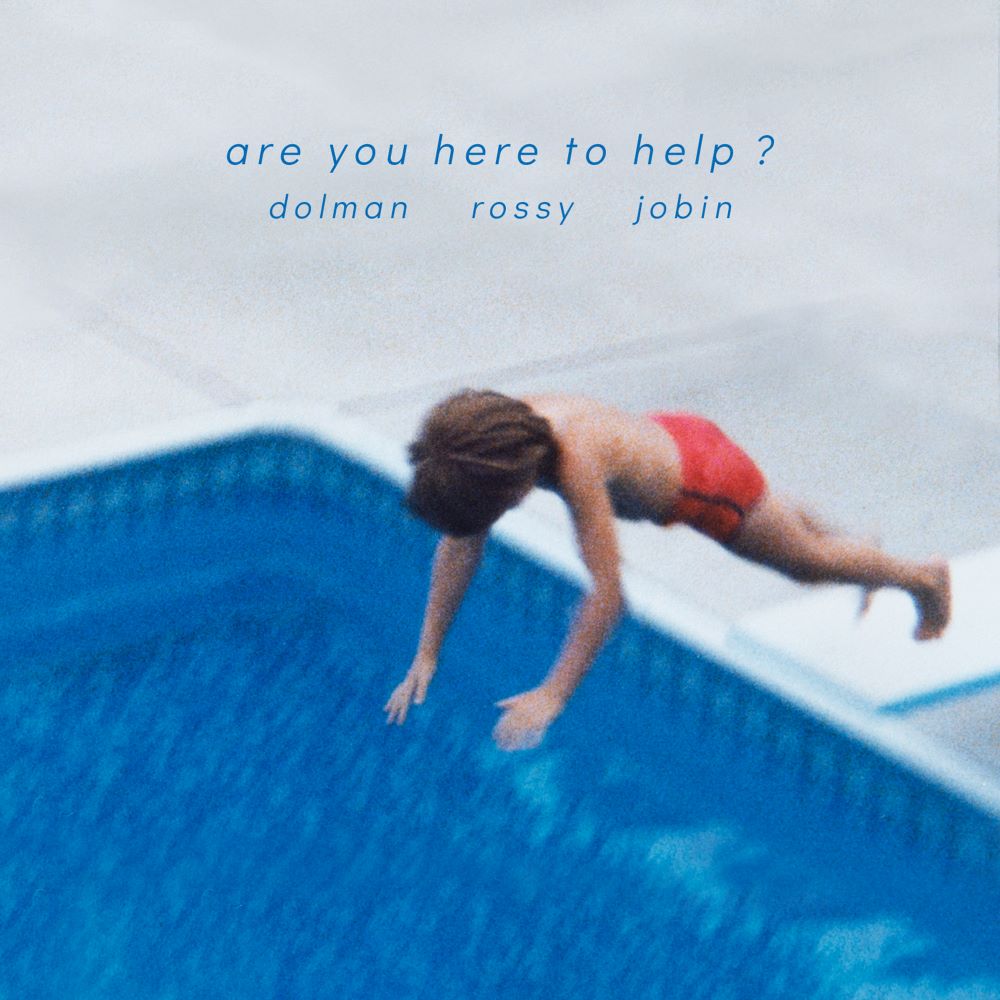
Dolman / Rossy / Jobin — Are You Here To Help? (CD/ Digital) March 18, 2022

DOLMAN / ROSSY / JOBIN 

Are You Here To Help?

Out: March 22nd, 2022 (CD/ DL)

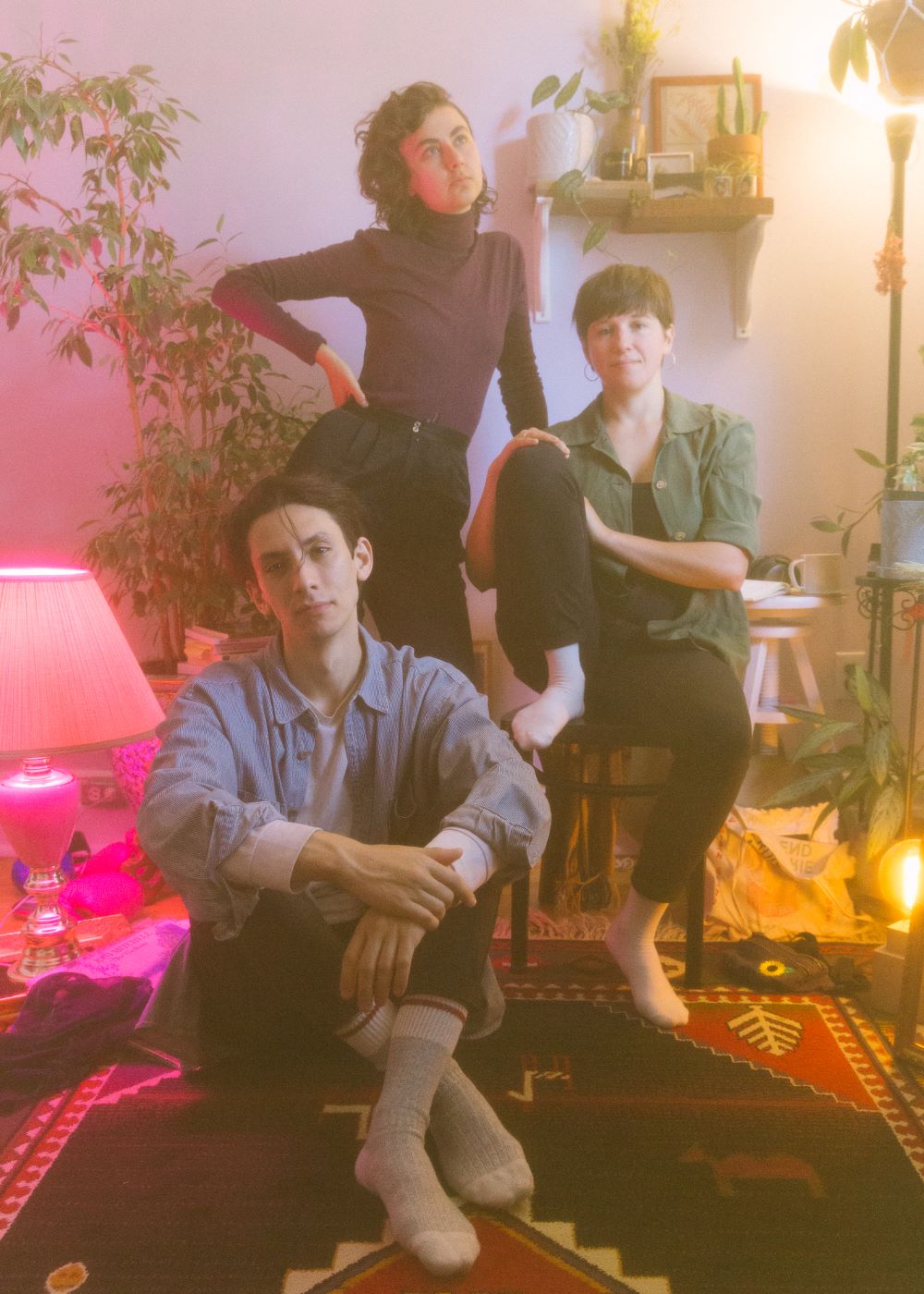
There's something undeniably immediate and elemental about music that employs only drums and voices—two of humankind's most universal means of expression. The striking debut album of Montreal trio Dolman / Rossy / Jobin largely eschews the raw, exuberant force one might associate with such instrumentation. Instead, the group turns toward more delicate channels to articulate a vivid awareness of their unusual ensemble's evocative potential. Led by drummer and composer Aaron Dolman, the band's lineup is completed by vocalists Sarah Rossy and Eugénie Jobin, the latter of whom occasionally plays vibraphone. Are You Here To Help? unfurls an alluringly elusive soundworld and uses a diverse array of vocal and percussive sonorities to conjure intimacy and profound vulnerability.

Dolman's compositions speak with a clear and distinct artistic voice, while leaving leaving ample room for both improvisation and silence. His writing derives its unique personality through the disarming nakedness of the band's sound palette. Rather than working to conceal its apparent limitations, he embraces his group's in-built minimalism as well as the intrinsic features of each constituent element. There's a straightforwardness to Dolman's melodic ideas; a folk-like transparency that's matched by the gentle precision of Rossy and Jobin's delivery. And while this ensures that the singing retains a certain crispness and economy, there are always deviations from the expected—sometimes in the form of subtle jazzish inflections, other times in full-on textural excursions. A little over half of the album's tracks feature original texts, which are remarkably congruent with the band's unadorned sound. Dolman's use of language is efficient yet emotive, managing to subtly reference imagery from folk songs and jazz ballads, while remaining concise and personal. His drumming is similar—spartan, sophisticated, prone to surprising twists. Often, he seems content to underline the sung phrases with tidy, elegant accompaniment punctuated with thoughtful ornamentation. However, when his playing eventually becomes more extrovert—and it does—it  imbues the music with unconventional momentum, deliberate yet rousing.

Even as the three musicians drift into more nebulous territory, melody and pulse remain close at hand, lending cohesion and amiability to the hovering sonorities they generate collectively. There's a feeling of candour at every turn—no matter where the music falls along the continuum between lyricism and abstraction.  Their wondrous, haunting, and thoroughly original take on the early Joni Mitchell tune “The Fiddle and the Drum”—the album's lone cover—is telling. Dolman unfolds a rousing, dynamic solo, as Jobin and Rossy intone the song in a dreamlike, staggered unison, eventually finishing the piece with a minute of faint acapella.
Photo by Pipa Jones

Part of what makes this collaboration so potent is that the singers both lead and compose for their own groups, each of which also blends exploratory minimalism and song. Sarah Rossy's 2019 album The Conclusion folds hushed yearning into strange atmospherics, and threads beautiful snaking melodies through volatile ensemble arrangements.  Marc Chénard of La Scena Musical praised one of Rossy's live engagements at Montreal's Off Jazz Festival as: “Shimmering with quiet intensity, full of subtle timbral and dynamic shadings.“ “Introspective as it may seem,” he continued, “it is also adventurous, both from a melodic and harmonic angle.” Where Rossy's work seems to emerge from a similar world to Sidsel Endresen or Jenny Hval, Eugénie Jobin's equally compelling Ambroise project has shades of mutant folk such as Josephine Foster and Eric Chenaux. Ambroise's 2018 recording À la tonalité préférable du ciel on Delphine Dora's Wild Silence label was praised by French experimental music site Inactuelles as follows: “La voix d'Eugénie se fait plus fine encore, module chaque mot avec une infinie délicatesse.” Jobin is also a member of acclaimed composer and musician Isaiah Ceccarelli's new quartet, House of Gold.

Montreal's Aaron Dolman made his recorded debut in November 2019 with the pastoral quintet disc Nostalgia and Other Fantasies. Showing equal affection for improvised musics and folk idioms, the heartfelt collection swayed between evocative melodies, energetic improvisations and ethereal soundscapes. Japan's long-running Jazz Life Magazine enthused of it: “With a mixture of jazz, avant-garde, folk, and bluegrass, drummer Aaron Dolman, only in his twenties, has perfected his own unique style.”At the moment, Dolman is based in Basel, Switzerland until August 2022. There, he is participating in FocusYear, a program that assembles a small international ensemble to work and perform with a remarkable selection of visiting artists under the musical direction of the acclaimed German guitarist Wolfgang Muthspiel. The 2021/22 visiting artists include Aaron Parks, Jeff Ballard, Larry Grenadier, Guillermo Klein, Linda May Han Oh, and Becca Stevens. An in-demand accompanist, Dolman has also played alongside the likes of  André White, Sasha Berliner, Jean-Michel Pilc, Kevin Dean, Mike Rud, Yesseh Furaha-Ali and Josh Rager, as well as members of Canada’s diverse folk music scene, such as Connie Kaldor and Folle Avoine. You can find his full bio here.

1. Two Boats and the Lighthouse Keeper
2. Giving (With)
3. Together
4. The Mountain Sighs a Heavy Breath
5. Borrow a Memory
6. Apart
7. Are You Here to Help? (Intro)
8. Are You Here to Help?
9. The Fiddle and the Drum*
10. When We Get There
11. To Hold Love

Aaron Dolman — drums / compositions
Sarah Rossy — voice 
Eugénie Jobin — voice & vibraphone (tracks 2, 4 & 8)

Music and Lyrics by Aaron Dolman, except * by Joni Mitchell.
Produced by Aaron Dolman. Recorded and Mixed by Jon Kaspy at Studio
Dandurand in Montreal, QC. Mastered by Piper Payne at Infrasonic Sound.
Graphic Design by Anita Cazzola and Sam Boer

Tony Overwater | Atzko Kohashi - Crescent (January 2022 Challenge Records)

Atzko & Tony’s latest album, "Crescent" was recorded on February 14, 2021 at Beauforthuis, a music venue and a former church, in Austerlitz in the Netherlands. In the midst of a prolonged pandemic, it was an exceptional recording where two musicians entrusted their passion to their instruments. Atzko & Tony immediately bonded through a deep desire to realize the recording and put their best into the project. The duo was deeply inspired by Coltrane’s Crescent.

The beautiful acoustic of the church building, combined with the beauty of the surrounding snowfields, resulted in an impressive recording. Only five months after the recording, the album "Crescent" was released by Studio Songs in Japan, and it is scheduled to be released worldwide in January 2022 by Jazz in Motion records.

It is said that people have long considered the gradually waxing moon to be a symbol of the fulfilment of their wishes, and that praying to the crescent moon was a special occasion. The crescent moon, which reflects the sunlight and waxes day by day, is like a piece waiting to be fully formed. You do not just entrust your dreams but you set your sights and your hopes, looking forward to the future and preparing to take action. It is no wonder that Coltrane's Crescent connected with their hope to realize this recording session.

1 Wise One 05:11
2 What's New 04:52
3 Lonnie's Lament 07:03
4 De Boot 06:52
5 Crescent 04:56
6 Nightfall 04:01
7 Mr. Syms 04:55
8 Our Spanish Love Song 05:36
9 As Long As There's Music 04:55

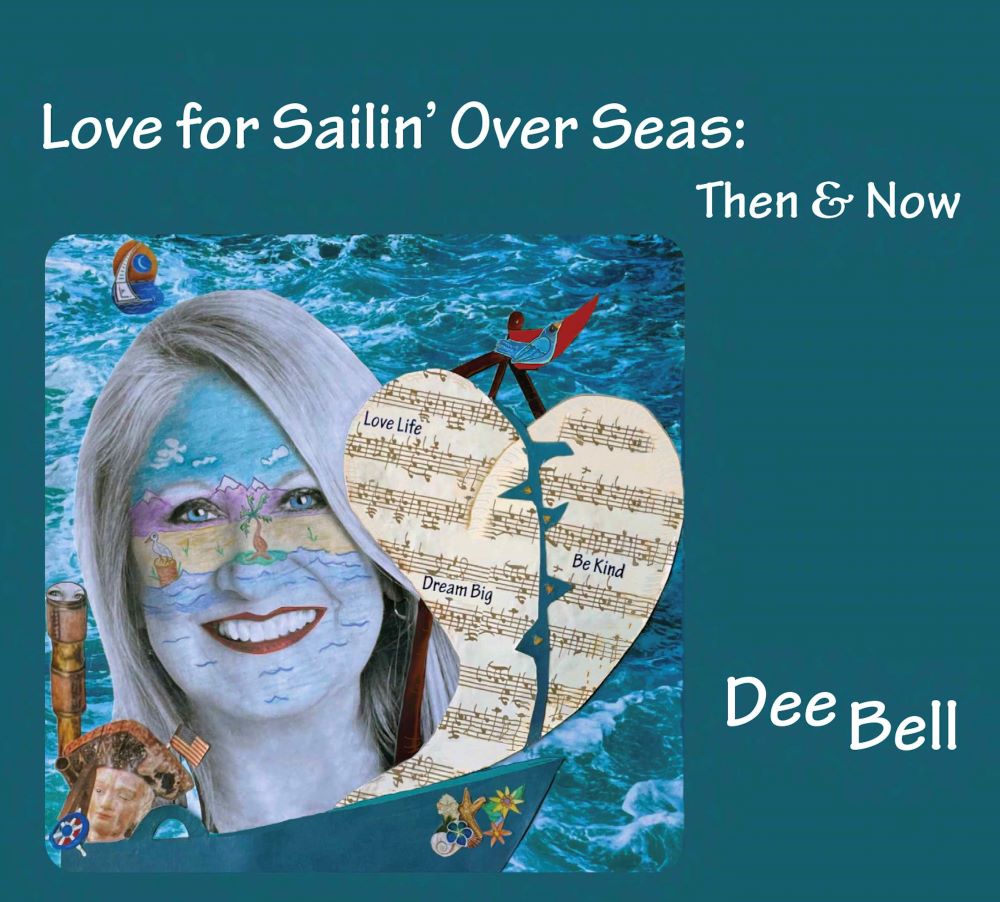
Dee Bell - Love for Sailin’ Over Seas: Then & Now (January 2022 Laser Records)

Indiana-born, San Francisco Bay Area vocalist-lyricist-performer Dee Bell, elicted notice for her mellifluous sound from the late Eddie Jefferson, who told her “that’s a fine sound mama, just keep on singin’.” Less than a year later, that same unique sound was championed by the late Eddie Duran and Stan Getz for Dee’s first album on the Concord Jazz label, followed by a second Concord album with Eddie, and with Tom Harrell. These were followed by four recordings on the Laser label, including this new release with two new “Now” songs, and 8 popular “Then” favorites from Dee’s previous Laser releases which include her lyrics for Ivan Lins By Chance, and Don Sebesky’s You Can’t Go Home Again, and her arrangement of You’re My Thrill.

Jazz critics have reviewed her sound as “warm with West Coast sophistication, husky, pure-voiced, haunting, jazzinflected, pure, tender, with supple phrasing that takes you inside the lyrics.” Influences of Chris Connor, June Christy, Peggy Lee, Irene Krahl, Anita O’Day, Cleo Laine, and more are present in her style.

Love for Sailin’ Over Seas: Then & Now kicks off with a joyful Marcos Silva samba arrangement of Abbey Lincoln’s I Got Thunder with Lubambo’s masterful and felicitous guitar solo, and I’ll String Along with You showcases Lubambo’s acoustic guitar deft elegance. The 8 re-releases, with 7 of the full 10, arrangements by Marcos Silva deserve new ears.

Bell has collaborated with Marcos Silva, Houston Person, Romero Lubambo, Erik Jekabson, John Stowell, Andy Narell, and Michael Spiro, to name just a notable few. She has performed domestically and internationally for many years.

Albums: Let There Be Love, One by One: Concord Jazz | Sagacious Grace, Silva.Bell.Elation, Lins, Lennox, & Life, and new release, Love for Sailin’ Over Seas: Then & Now: Laser Records.
Track Listing

“Now”
1. I Got Thunder [and it rings] 4:04
2. I’ll String Along with You 4:33

“Then”
3. Harvest Moon 4:16
4. Beijo Partido [Broken Kiss] 4:53
5. You’re My Thrill 5:42
6. By Chance [Acaso] 5:39
7. Boa Nova 5:13
8. You Can’t Go Home Again 5:39
9. Watch What Happens 5:39
10. The Face I Love 3:16

Dee Bell - VOCALS
Marcos Silva – Electric & Acoustic Pianos
the late Al Plank, Piano
Romero Lubambo – Electric & Acoustic Guitars

John Stowell – Electric Guitar
Scott Thompson – Electric Bass
Tyler Harlow – Electric & Acoustic Bass

John Wiitala, Acoustic Bass
Celso Alberti – Drums
Colin Bailey, Phil Thompson, Zack Mondlick – Drums
Erik Jekabson – Flugelhorn
Houston Person, Chris Sullivan – Saxophone
Michael Spiro – Congas, Percussion

Friday, January 14, 2022

OUT TODAY: Single from “Interpret It Well” / Ches Smith with Frisell, Maneri and Taborn (Pyroclastic Records)

Drummer/vibraphonist/composer Ches Smith leads a breathtaking all-star quartet with guitarist Bill Frisell, violist Mat Maneri and pianist Craig Taborn

Interpret It Well, due out May 6, 2022 via Pyroclastic Records, features stunning explorations of Smith’s ethereal compositions

“A smartly unruly drummer active in devious art-rock and outsider jazz."
– Nate Chinen, New York Times

"[The] nondescript term ‘drummer’ doesn’t get near the chemistry of earworm hooks, sharp-end jazz innovation and global-musical openness of New York percussionist/composer Ches Smith."
– John Fordham, The Guardian

Album Preview Concerts March 30 & 31 at The Stone at the New School, NYC

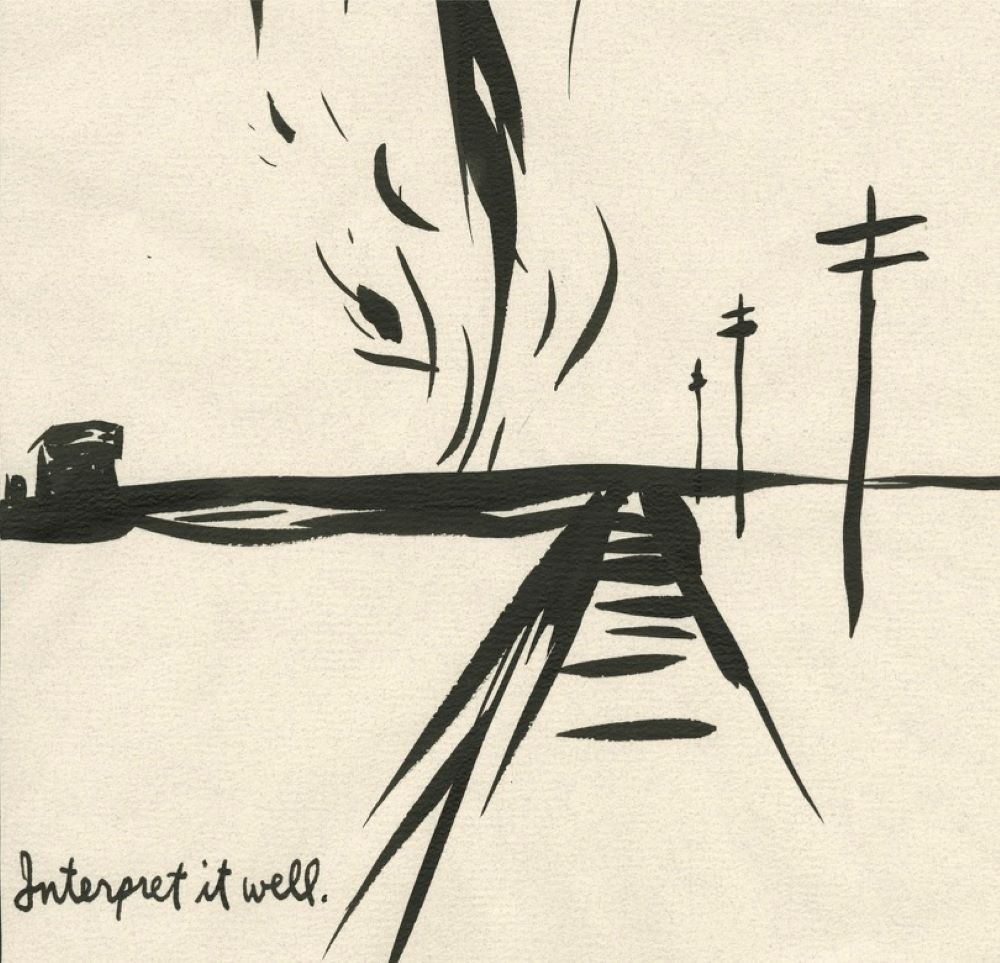
Interpret it well,” reads the script text in Raymond Pettibon’s mysteriously evocative drawing. A few thick black ink strokes describe an enigmatic landscape – the telephone poles, the railroad track and the building in the distance seem obvious enough as markers of desolation, but the swirl of lines on the horizon are more ambiguous. The steam from an approaching train? An oncoming tornado? Hope or dread, connection or destruction, all depend on interpretation.
 
It’s a fitting choice of cover art for drummer/vibraphonist/composer Ches Smith, whose entrancing new album Interpret It Well borrows Pettibon’s three-word prompt as both title and instruction, for bandmates and listeners alike. The album, due out May 6, 2022 from Pyroclastic Records, is his second with keyboardist Craig Taborn and violist Mat Maneri, the much-anticipated follow-up to the trio’s acclaimed 2016 ECM release The Bell. This time out the band becomes a quartet with the addition of master guitarist Bill Frisell, whose contributions bring additional depth, space and texture to a group already rich in all three qualities.
 
It was that sense of openness and exploration, in fact, which intrigued Frisell in the first place. The guitarist attended a Ches Smith Trio concert in late 2018, following which he contacted the drummer with questions about the compositions. “Bill was very nice about the gig – effusive, actually,” Smith recalls. “He told me that he felt the tunes were accessible but challenging at the same time. There's something about the way Craig and Mat and I play together, where we extrapolate to the max but the music feels like the pieces. So I thought Bill might be interested in playing them with us.”
 
It took more than a year for schedules to align, but Frisell was finally able to join the trio for a performance in early 2020. The combination gelled immediately – “Bill felt like a natural part of the band,” Smith writes in his liner notes – but the demands on everyone’s time meant that a recording with all four would prove next to impossible to book.
 
Everyone knows what comes next – the pandemic happened, and suddenly time was all anyone had. Smith reworked his compositions with the newly forged quartet in mind, and the band went into the studio that October when life began to resume some semblance of normalcy (for the first time, at least).
© Kesler Pierre

The results are absolutely striking. As he did for the trio incarnation on The Bell, Smith writes compositions that are minimal but indelible; skeletal enough to allow these remarkable improvisers space to roam far afield yet so vivid that the core image is never lost amidst the daring embellishments.
 
Which brings us back to the Pettibon drawing – what Smith’s music shares with the artist’s work is that idea of a distinctive landscape evoked with a few sketchy lines, with vast stretches of the mysterious left in the spaces between. “There are definitely maximal moments on this record,” Smith says. “But when I think of the music in my head, it's fairly minimal. I like a lot of music where nothing seems to be happening.”
 
That may be true of the music on Interpret It Well in broad terms, but listen closely and a great deal is happening just beneath the misleadingly placid surface. The album is bookended by “Trapped” and “Deppart” (“Trapped” spelled backwards), two alternate versions of the same brief piece, a haunting, repetitive melody that slowly accrues power one voice at a time. “That’s one of the most minimal things I've ever written,” Smith says. “It's simultaneously a bar, a melody and a chord, and people can approach it however they want.”
 
The title track begins with Smith’s tentative, querying vibraphone, with the other voices gradually gathering around him like a deepening fog. The picture eventually comes into focus only to give way to Taborn’s stuttering, agitated solo, which ushers in the urgent, ferocious final section. The piece has been inspiring to artists outside of the band as well – artist/filmmaker Frank Heath, whose works have been described as “poetic interventions into systems of communication, information and understanding,” has created a new film to accompany “Interpret It Well.” The piece will be available May 6 via the Ches Smith and Pyroclastic websites.
 
Frisell contributes a high lonesome intro to “Mixed Metaphor,” soon matched by Maneri’s forlorn bowing. Smith (on vibes) and Taborn then take over for a labyrinthine duet, ultimately leading into a spiraling vamp. The sparse “Morbid” is a ballad of sorts, an elegy unfurling at an achingly slow pace, luxuriating in the evanescent sound while all four take care not to shatter the exquisitely delicate atmosphere. “Clear Major” takes on a more forceful tone, beginning with Taborn’s insistent patterns. The piece is a three-part suite, the volleying first section followed by the lurching rhythms of the middle and the intricately woven lines of the final – each movement separated by clamorous improvisations that deconstruct the composition in order to rebuild again. The complex “I Need More” proceeds at a brisk pace rife with tension, finally exploding into Frisell’s razor-sharp, searing solo. 
 
Interpretation is central to Ches Smith’s compositional approach, and here it yields absolutely breathtaking results. “Bill, Mat and Craig can all turn the ensemble in a new direction on a dime by playing one phrase,” Smith says. “What I love about this band is the way that over time, they'll all change their parts – Craig adding harmony or Mat embellishing the written material to keep it fresh. I’ve played with the two of them a lot over the years, but the music turns out different every time. And I know Bill’s playing very well, but he constantly surprised me. Interpret It Well is really my way of encouraging them – it could be the unspoken credo of the band.”

1. TRAPPED 2:27
2. INTERPRET IT WELL 13:39
3. MIXED METAPHOR 16:26
4. MORBID 7:20
5. CLEAR MAJOR 15:29
6. I NEED MORE 11:42
7. DEPPART 2:36

Ches Smith, drums, vibes
Craig Taborn, piano
Mat Maneri, viola
Bill Frisell, guitar

Ches Smith – Interpret It Well
Pyroclastic Records – PR 19 – Recorded October 12-13, 2020
Release date May 6, 2022

January 14: SINGLE from Legendary poet Nikki Giovanni and saxophonist Javon Jackson in historic collaboration

Tenor Saxophonist Javon Jackson Joins Forces with Renowned African American Poet, Activist and Educator in Historic Collaboration

The Gospel According to Nikki Giovanni connects with the ancestral stream while putting a jazzy new perspective on timeless hymns and spirituals

Why would one of poetry’s most revered voices want to curate a jazz saxophonist’s album of gospel hymns and spirituals? “These songs are so important,” says Nikki Giovanni, one of Oprah Winfrey’s 25 “Living Legends” and a Maya Angelou Lifetime Achievement Award winner for 2017. “They comforted people through times of slavery, and during recent years we needed them to comfort us again. But a lot of the students today do not know about the history of these songs, and they should. So I’m out here putting water on the flowers, because they need a drink.”

Giovanni’s historic collaboration with saxophonist-composer and former Jazz Messenger Javon Jackson has yielded The Gospel According to Nikki Giovanni, available February 18, 2022 on his Solid Jackson label. “The spirituals have been around so long,” says the renowned poet, activist and educator, who came to prominence in the 1960s and ’70s as a foundational member of the Black Arts movement following the publication of such early works as 1968’s book of poetry Black Feeling, Black Talk/Black Judgment and 1970’s Re:Creation. “Some spirituals have been updated and stayed around and some have been lost over time,” Giovanni notes “So for me, it’s just helping to keep something going. And I do it because there’s a need.”

Jackson brings his bold-toned, Trane-inspired tenor lines to bear on a series of hymns, spirituals and gospel numbers hand-picked by Giovanni, who was also the first person to receive the Rosa L. Parks Women of Courage Award. And the 78-year-old poet makes a rare vocal appearance on the tender ballad “Night Song,” singing a song identified with her close friend, the late civil rights activist and High Priestess of Soul, Nina Simone. “Nina was a friend of mine, and I knew that one of her favorite songs was ‘Night Song’,” she explains. “And even though I’m not a singer, I told Javon I wanted to sing it because I just wanted Nina to be remembered.” Jackson, who flew to Nikki’s home in Roanoke, Virginia, to record her vocal track on the existing instrumental tracks, says, “I sat beside her when she sang it and by the time she finished that chorus, I was deeply moved. I just love the fragile nature of the way she treated it. It was very emotional.”

Joined by an outstanding crew comprised of pianist Jeremy Manasia, bassist David Williams and drummer McClenty Hunter — the same lineup that appeared on Jackson’s 2018 album For You and his 2020 follow-up, Deja Vu — Jackson interprets gospel staples like “Swing Low, Sweet Chariot,” “Wade in the Water,” “Didn’t My Lord Deliver Daniel” and “Leaning on the Everlasting Arms” with authoritative tenor tones, deep walking bass lines and an organic sense of group swing. “It’s the first time I worked in a collaborative manner,” Jackson says. “The project is personal for me. I come from a lineage of devout Christians, and that has afforded me the chance to connect with that ancestral stream.”
© Shaban_R._Athuman

The Gospel According to Nikki Giovanni came about through a serendipitous meeting between the two principals when Jackson, a faculty member of The Hartt School at the University of Hartford and director of its Jackie McLean Institute of Jazz, invited Giovanni to speak to his students there. As he recalls, “Ever since I’ve been at the University of Hartford, I felt that the school would be well-served to bring great scholars of color and scholars who were freedom fighters and activists, if you will. So I brought in Dr. Cornel West, Sonia Sanchez, Angela Davis and Michael Eric Dyson. Then in February of 2020, I brought Nikki Giovanni.”

The renowned poet’s appearance at the University coincided with her receiving an honorary doctorate there. And as Jackson recalls, “After Nikki spoke to the students, she noticed that the Hank Jones and Charlie Haden CD of hymns and spirituals (1994’s Steal Away) was playing in the auditorium. She said she loved it and wanted to hear more, and just then I was hit with the idea. Two days later, after she returned to her home in Roanoke, I contacted her and said, ‘Would you be willing to pick 10 hymns? And that’ll be my next recording.’ She got back to me in a few days and gave me the 10 selections.”

The collection opens with the driving shuffle “Didn’t My Lord Deliver Daniel,” a spiritual recorded by Paul Robeson in 1937. Jackson delivers the melody in straightforward fashion with golden tenor tones before Manasia “goes to church” on his piano solo. The minor-key “Wade in the Water” is lifted by a mid-tempo swing feel, paced by Williams’ deep walking basslines and Hunter’s steady, syncopated ride-cymbal pulse. After Jackson delivers a robust tenor solo and Manasia follows suit with an earthy piano solo, Christina Greer enters, dropping some wisdom from Giovanni’s poem “A Very Simple Wish.” As Jackson explains, “For this, I reached out to Markeysha Davis, an assistant professor of Africana studies and literature at the University of Hartford. She is really a fan and knows Nikki's work far better than I do. Nikki’s got 50 years’ worth of poetry, so I didn’t know where to begin. But I sent Markeysha John Coltrane’s ‘Spiritual’ to give her an idea of what we were trying to do, and she came back with that poem.”

The quartet’s rendition of the dirge-like “Sometimes I Feel Like a Motherless Child” carries the somber feeling of Coltrane’s “Equinox,” while their interpretation of “Mary Had a Baby, Yes Lord” recalls Trane’s powerful civil-rights era requiem, “Alabama.” “Leaning on the Everlasting Arms,” one of Giovanni’s favorites from her own Baptist church upbringing, is rendered at a loping beat, conveying a distinctive Southern gospel feel. “A lot of times when I’ve heard this song in church, it's a little faster, a little more upbeat,” Jackson says. “I wanted to make it slower, where I could really expose the melody a lot more and lay on some of those phrases—so I could be as emotive as possible with the melody, as if I was playing in church with people in the audience.”

“I’ve Been ’Buked,” a spiritual sung by Mahalia Jackson in front of the Lincoln Memorial during the March on Washington on August 28, 1963, where Dr. Martin Luther King also delivered his famous “I Have a Dream” speech, opens with some dramatic unaccompanied arco bass work by Williams before the full band enters with Jackson conveying the melody simply and deliberately. “In a perfect world, I would love to have had David bowing with Paul Robeson singing that melody,” says the leader. “The bow is so beautiful because, to me, it’s close to the human voice in a way.”
© Shaban_R._Athuman

Jackson and company render the normally somber “Swing Low, Sweet Chariot” as a buoyant calypso. In fact, you can hear the saxophonist directly quoting from Sonny Rollins’ most famous calypso, “St. Thomas,” midway through the song. Bassist Williams, being from Trinidad, is uniquely qualified to provide the requisite bounce on this ebullient calypso rendition of this well-known African American spiritual. “Doing that song this way is a reminder that the departure or the transition doesn’t have to be one of sadness,” says Jackson. “We don’t want it to be where the person or persons listening to the CD become downtrodden. We want it to be celebratory. It’s like what Art Blakey always used to tell us: ‘You cry when they come in, and you rejoice when they go out.’ I never forgot that.”

The most intimate piece of the collection is the gentle hymn “Lord, I Want to Be a Christian,” performed as a rubato duet between Jackson’s tenor sax and Manasia’s piano. The quartet closes on a rousing note with a swinging “I Opened My Mouth to the Lord,” which again features Williams’ deeply resonant bass carrying the melody and Jackson in strong ‘speechifying’ mode on tenor sax. Manasia also turns in an exhilarating piano solo here, and even drummer Hunter gets a solo taste near the end of this triumphant closer.  

Captured live at Telefunken Studios in South Windsor, Connecticut, the 10 tunes on The Gospel According to Nikki Giovanni were all done without the use of headphones, another first for Jackson. “I’ve never done a recording before in a studio where I didn’t use headphones, so it felt like performing a gig,” he says. “We never counted off a piece and there were no endings, where I might dictate or give a direction towards an ending. I really wanted to do it just like if you’re in church, where there’s a preacher talking and all of a sudden the choir begins. So each time, whether the bass would start the tune or the piano or myself, there were no count-offs because I wanted to make it as natural as possible.”

“This music is something that people will probably be a little surprised to see coming from me,” Jackson says. But given the state of the world, it could be just in time. Both poet and saxophonist stand on the shoulders of their ancestors on The Gospel According to Nikki Giovanni.


A New Wave of Jazz: LAST CALL

Last call and a kind reminder for our pre-order bundle as this one expires this Saturday January 15th when all 3 cds are officially out. So grab this one and support our little label. Keep the fire burning.

ANTON MOBIN & MARTINA VERHOEVEN - CURE AND MOUND (cd)

JOHN EDWARDS & DIRK SERRIES - MELANCHOLIA (cd)
 
TOM JACKSON & COLIN WEBSTER - THE OTHER LIES (cd)
 
Order/listen to the album on our bandcamp or our website.

The album is part of the pre-order bundle : 30 EUR for all 3 new titles (incl.worldwide postage), valid through January 15th, 2022.  Official date of release : January 15th, 2022.

Marcel Baliński Trio - Opalenizna i Wiatr (January 14, 2022)

Founded by a Polish jazz pianist and composer Marcel Baliński, the Marcel Baliński Trio made its debut appearance at the Warsaw SPATiF Club in the early winter of 2019, presenting compositions included on this album.

The sonoristic explorations, and the intelligent manipulation of primitivist harmony, which is scuppered into dissonance by the ebb and flow of emotion, betray the group’s chief inspirations – the neoclassicism of Igor Stravinsky and the achievements of the post-war European avant- garde.

Although Baliński writes for the traditional jazz trio, he rejects the conventional division of labour presupposed by the format. As a result, Baliński’s music moves away from the standard head-solo-head framework, towards organically developing structures. Most compositions presented on Opalenizna i Wiatr (Suntan and Wind) weave successive layers of improvisation around the kernel of short, asymmetrical phrases. The trio tows a powerful cargo of harmonic contrasts, untamed improvisation and tender, yet subtle, melody. By seeking innovation in the realm of jazz trio expression, Baliński presents a well thought out and persuasive debut.

1. Spadochroniarz 06:46
2. Żołnierzyk 05:46
3. Marmur 05:20
4. Opalenizna i Wiatr 09:50
5. Nienamolny Aksamitny 04:15
6. Wariacje 09:32

Marcel Baliński - upright piano, keyboard (6)
Franciszek Pospieszalski - double bass
Krzysztof Szmańda - drums, vibes (5)

Recorded in 2020 at the Tonn Studio in Łódź, Poland

Pete Malinverni 'On the Town – Pete Malinverni plays Leonard Bernstein' – Jan 14 via Planet Arts Recordings


Pianist Pete Malinverni pays tribute to iconic composer Leonard Bernstein with his all-star trio featuring bassist Ugonna Okegwo and drummer Jeff Hamilton

On the Town – Pete Malinverni Plays Leonard Bernstein, due out January 14, 2022 via Planet Arts Recordings, harkens back to an inspiring “only in New York” meeting between
the two passionate musicians
 
" Pete Malinverni is a pianist with a forthright and elegant style."
– Nate Chinen, New York Times
 
" Pianist Pete Malinverni is a wild cat. [His] playing can be dark, gritty and oddly rapturous…he digs into the piano and emerges with exotic treasure."
– Karl Stark, Philadelphia Inquirer

Having spent four decades on the New York City jazz scene, pianist Pete Malinverni has crossed paths with countless revered artists and come away with a host of tales to tell. But few moments measure up to the time that Malinverni met the iconic composer/conductor Leonard Bernstein.
 
The seeds planted in that meeting decades ago come to fruition on Malinverni’s stunning new album, On the Town – Pete Malinverni Plays Leonard Bernstein. Due out January 14, 2022 via Planet Arts Recordings, the album reimagines nine Bernstein favorites, along with a new Malinverni original penned in tribute to the composer, for an all-star trio featuring bassist Ugonna Okegwo and drummer Jeff Hamilton.
At the time of that fateful meeting, Malinverni had a steady gig at an upscale restaurant in the city. One night the swanky nightspot was chosen as the site of the opening night cast party for Franco Zeffirelli’s production of “Tosca” at the Metropolitan Opera. As Malinverni played through a selection of arias at the piano, Bernstein walked in, and the young pianist immediately launched into the composer’s “Lucky To Be Me.” Bernstein recognized the homage and, following a trip detour to the men’s room (where a friend of Malinverni’s broke the protocols of polite society and touted the pianist’s virtues), proceeded to spend a considerable portion of the evening hanging around the piano.
 
“Real musicians want to hang out with the band,” Malinverni says, recalling those magical hours. “Bernstein was this gray eminence I’d see on TV, and I’d listened to his ‘Young People’s Concerts’ in high school. So he was a definite presence in my life even though I’d never met him.”
 
Malinverni still recalls that encounter – which included introductions to other notables at the party, including legendary songwriters Betty Comden and Adolph Green – as “one of the great moments of my musical life.” To this day he remains touched by Bernstein’s magnetic attraction to musicians of any stature.
 
“His public image was of a guy who knew his stuff and was super passionate about it. But I found out that night that as passionate as he seemed, he was even more so. When I saw him in the flesh, it was electric. His head poked through the clouds, and the piano somehow seemed a more exalted place then and thereafter.”
 
If that weren’t inspiration enough, the story takes another slight twist: some time later, Malinverni befriended a bartender at one of the nightclubs where he performed regularly, whose wife happened to be Bernstein’s personal chef. The composer had given her a sheaf of blank staff paper, which the bartender then gifted to Malinverni. The pianist hung onto it for nearly thirty years, finally using it to write the arrangements for the present recording. “The last arrangement I had to write turned out to use the last piece of staff paper I had left,” Malinverni recalls. “I'm always looking for signs, and that made everything feel right.”
Exploring these brilliant songs with such a gifted and intuitive trio felt incredibly right as well. Malinverni’s first opportunity to pay tribute to Bernstein arrived on the occasion of the composer’s 2018 centennial, when the pianist was commissioned to arrange many of these pieces for a four-horn ensemble featuring Joe Lovano at Purchase College, where Malinverni is Chair of the Jazz Studies Program. But when it came time to record the music, he determined to pare the music down to a trio setting.
 
“I love playing trio, and the music really took on a life of its own in this format,” Malinverni says. “Ugonna Okegwo and Jeff Hamilton are real artists. You know, if you go scuba diving you discover that there are just as many colors underwater, but the spectrum is the reverse of what you see up here on the surface. I found that in playing Bernstein’s music with these amazing musicians: there were all these textures and colors underneath the music that they could really bring to light.”
 
Another bond that Malinverni shares with Bernstein is a deep love for New York. Through his selection of tunes from the composer’s oeuvre, Malinverni also made the album a love letter to the metropolis that he’s called home since trekking down from his hometown of Niagara Falls in 1980. Titles like “New York New York,” which opens the album, and “Lonely Town” make the reference explicit; other pieces are culled from Big Apple-centric shows like “Wonderful Town,” “West Side Story” and “On the Town.”
 
The sole exception is the trio’s heartfelt take on “Simple Song,” from Bernstein’s “Mass.” The piece is in keeping with Malinverni’s tradition of including a spiritual piece on every one of his albums, a nod to his 18-year tenure as Minister of Music for Brooklyn’s Devoe Street Baptist Church. The album closes with Malinverni’s “A Night On the Town,” a playful refraction of Bernstein themes and ideas that spotlights the composer’s enduring influence.
 
“I always tell my students, ‘They don't say silence is golden for nothing,’” Malinverni says. “So if you're going to disturb the silence, you better be playing something. Starting with Bernstein’s compositions, every note you add better serve that song. But this is also my record, and I think he would have appreciated that. Bernstein was cool with seeing how things go today as opposed to sticking with how they went yesterday. He was a real jazzer in a lot of ways.”

1. New York New York 5:05
2. Lucky to Be Me 5:37
3. Somewhere 5:18
4. Cool 5:33
5. Simple Song 6:05
6. I Feel Pretty 6:00
7. Lonely Town 5:56
8. Some Other Time 5:04
9. It`s Love 8:04
10. A Night on the Town 6:09

(by Pete Malinverni, Malinverni Music)

Pete Malinverni, piano
Ugonna Okegwo, bass
Jeff Hamilton, drums