Friday, October 22, 2021

Paolo Gaiba Riva - Expeditions (October 22, 2021 WE INSIST! Records)

Since 2014 I’ve had the luck, possibility (and guts?) to dedicate my life to exploring some parts of the world, driven both by curiosity and needs.

The chosen way (the only one possible, for me) has been to undertake long tours. Jumping on this adventure, with no idea of what to expect, requires open brain, ears and good adaptability.

What I have found since, is an endless count of good and bad experiences (which would not have probably happened as much, if I’d stayed at home).

The people and the different cultures with whom I’ve had the pleasure to collaborate, have changed my point of view on many things (which would not have probably happened if I stayed home). Moreover, I will never forget how kindly I have been welcomed by complete strangers, who eventually became friends.

The way some people manage to keep going, with more or less issues, is remarkable. In these cases all the crap happening in the world seems like it vanishes and what remains reaches a fulfilling empathy brought in not only by music related situations (concerts, festivals and recording sessions), but also by simply chitchatting, going out for food, walking around.

What we do is pushed forward by our necessities. Apparently hard listening sounds, in order to awake, isolate, risk, protest, ask, celebrate, cure, inform, annoy, pray…

I heartily thank the musicians I’ve had the pleasure to collaborate with and whoever hosted, invited and organized an event, walked, loved, hated and travelled beside. I wish you all the best in life.

I acknowledge that what I do is good for nothing and that by traveling I support a system that is enemy to all (which would not have probably happened if I stayed home).

Time to stop all this will come…

1. Lost between the temple and... 01:30
2. You always come back here 04:17
3. Fatal allergy 03:28
4. Toi même 05:42
5. When you start thinking it's... 01:57
6. No need to talk 04:23
7. It's rainy and we keep on... 02:27
8. In the wood 04:37
9. Do everything or nothing 04:18
10. Almost there 03:57
11. Vaijè en la Puna 02:14
12. Y al final 03:53

Music by the musicians who played it
Liner notes by P.G.R.
Cover painting by Kim Bomi 2018, ink on paper
Inside photo by P.G.R. - Akita, Japan, 17.12.2017
Mixed and mastered by Gianmaria Aprile
Edited by Gianmaria Aprile, P. G. R. and Giancarlo Locatelli

Luiz Morais - In the Weave (October 22, 2021)

‘In the Weave’ is the second album of composer, arranger and 7-string guitarist Luiz Morais. With all original compositions and arrangements, this is the work of a true melodist, drawing from the Brazilian tradition forged by the likes of Tom Jobim, Baden Powell and Moacir Santos and weaving new threads and connections to contemporary Jazz. From the unique rhythmic force of the Brazilian guitar tradition, Morais builds his intricate and vibrant weave of sounds. Masterfully produced by legendary Brazilian trombonist and arranger Vittor Santos (The Ipanemas), it features top instrumentalists including Marcio Bahia (Hermeto Pascoal) on drums, Marcelo Martins (Djavan) on flutes/alto sax and Alberto Palau (Perico Sambeat, Charles McPherson) on piano.

1. Pra Cantar Samba
2. Psycho Choro
3. Vittor's Trombone
4. Waltz for Us Two
5. A Gig as a Waiter
6. Celeste
7. Scorpio
8. Little Treat for my Love
9. Damian's Feats
10. Capricorn

Composed and Arranged by Luiz Morais
Produced by Vittor Santos

Marcelo Martins - Flute/ Alto Saxophone
Marcelo Cebukin – Alto Flute/ Bass Flute
Yuri Villar – Tenor Saxophone
Cristiano Alves – Clarinet
Batista Junior – Bass Clarinet
Diogo Gomes – Trumpet
Vittor Santos – Trombone/ Arrangement for ‘Little treat for my love’
Luiz Morais –7 String Guitar / Electric Guitar
Gustavo Pereira – Electric Guitar
Pedro Carneiro Silva – Piano
Lourenço Vasconcelos - Vibraphone
Romulo Gomes – Double Bass
Marcio Bahia - Drums
Mateus Xavier – Percussion

Special Guests:
Luis Barcelos – Mandolin in Pra cantar Samba
Alberto Palau – Piano in ‘Little treat for my love’
Karthika Vaidyanathan – Voice in ‘Waltz for us two’

Kazemde George - I Insist (October 22, 2021 Greenleaf Music)

'I Insist' is a reflection of the experiences, circumstances, and people that have made me who I am. Through this music, I hope to express my identity: my blackness, my manhood, my youth, and my full Caribbean-American self, along with all of the histories and systems that brought me here and now. I also hope that these songs reflect my many musical influences. My goal is to channel great masters like John Coltrane, J Dilla, and João Gilberto, as well as the teachers who have guided me, and the peers who I have competed with, learned from, and those who have encouraged or inspired me.

This music also reflects a learning process that I could not have realized without my many musical collaborators. That includes the musicians who have recorded on this project: Sami, Isaac, Adam and Tyrone, but also my greater musical community. I have been pulling out these charts on unsuspecting band members almost every week, at the various jam sessions and events I have hosted around Brooklyn for the past several years. That is how this music was developed, and that is where this music lives for me, but I am excited to let it venture out in this new format. I hope it finds you well!

I Insist is dedicated to my mother, Katrina Scott-George.

- Kazemde George
1. Things Line Up
2. Coasts
3. Balance
4. Skylight
5. Haiti
6. I Insist
7. Happy Birthday
8. Parkside
9. This Spring
10. Understanding

Kazemde George, tenor saxophone
Sami Stevens, vocals
Isaac Wilson, Wurlitzer and piano
Tyrone Allen II, acoustic bass
Adam Arruda, drums

Production Credits:
Executive Producer: Dave Douglas
Produced by Kazemde George
Recorded at Big Orange Sheep in Brooklyn, NY on December 11-12, 2019
Engineered Christopher Benham
Mixed and mastered by Dave Darlington
Photography by Kirsten Noelle
Artwork by HAMO
Graphic design by Lukas Frei

All compositions by Kazemde George (Kazemde Reese Ayodele George / ASCAP) except:
“Skylight” and “Happy Birthday”, composed by Kazemde George with lyrics by Sami Stevens (Sami Stevens / ASCAP)

Thursday, October 21, 2021

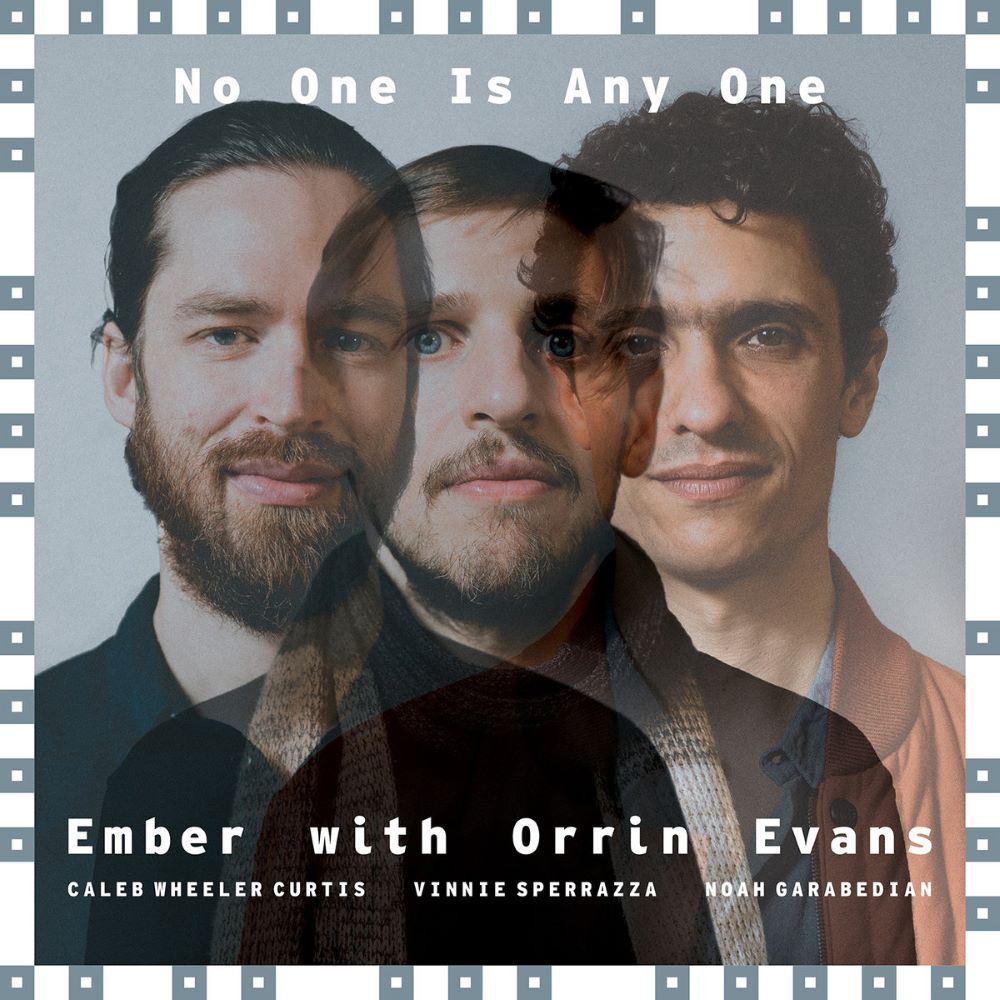
Ember with Orrin Evans - No One Is Any One (October 29, 2021 Sunnyside Records)

Music making is enhanced when the music is made with friends. The ability to involve peers who are experiencing life in a similar way makes communication and organization more natural. The Ember band is composed of three Brooklyn based jazz musicians and comrades. The group’s new recording, No One Is Any One, shows that the bond and aesthetic that the members have built is solid yet expandable, with the addition of pianist Orrin Evans for a handful of tracks.

Ember came together in 2017 when saxophonist Caleb Curtis, bassist Noah Garabedian, and drummer Vinnie Sperrazza began to assemble at rehearsals that would become as much conversations on music and values as actual playing. The members realized quickly that their openness and stylistic breadth led them quickly to a place of comfort in performance, their deep relationships leading to their understanding of musical needs and inspiring hopes of further development.

Garabedian and Sperrazza came from backgrounds in grooving, instrumental R&B music, while Curtis was more devoutly in the jazz world. The Brooklyn jazz scene provides a hospitable, if maybe under-recognized, scene of musicians who can reach across genre boundaries to make creative music.

Ember’s initial recording, New Year, came out under the names of the three members in 2018. The group’s first thought for recording was to approach the process casually, perhaps recording an album of standards. Instead, the members decided to write their own music, music that felt like standards rather than the overly complicated exercises that many in their community focus on. Ember wanted their music to be approachable in their everyday, musical life. Tunes that they could return to as part of their own canon.

A South Arts Grant in 2019 allowed Ember to tour and be clinicians for two weeks. The musicians developed a new set of music for the tour and committed it to memory, so that they would be naked on stage. Just the music and the possibilities within. Ember had intentions of recording the new material in March 2020 when the pandemic struck.

After months of isolation, Curtis, Garabedian, and Sperrazza began to meet in Brooklyn’s Prospect Park in impromptu rehearsals as performances. The organic nature of the meetings and the group’s desire to move forward led them to set up a recording at the Samurai Hotel studio at the end of July.

Curtis invited his friend and frequent collaborator Orrin Evans to join the group on the recording session. The involvement of Evans could be seen as an intermingling of two musical scenes, as the Philly based pianist has become well known for his post-bop inflected original music and for becoming the Bad Plus’s second pianist. But, in reality, it was a mutually beneficial arrangement that solidified Ember’s aesthetic and accessibility.

The recording begins with Curtis’s “Reanimation (Zombie Tune),” a tongue in cheek piece with a humble but rocking bassline from Garabedian, the ear taught tune establishing Ember’s sound identity immediately. Garabedian’s solo bass introduces his “Josephine and Daphne,” a piece inspired by Jack Lemmon and Tony Curtis’s characters from Some Like It Hot, who find meaning in their lives when they adopt female personas to be in an all-woman jazz band. The blues-forward sound of Sperrazza’s “No One Is Any One” finds its essence in simplicity; its title is derived from the writer’s discourse on, and eschewal of, the cult of personality. “Pilot Light” shows another element of Ember’s identity, composing in real time through collective improvisation.

Curtis’s sharp and snappy “Glass House” is inspired by woodwind legend Thomas Chapin’s groundbreaking trio, the song approximating the group’s ability to balance chaos and fragility. Curtis’s mesmerizing “Peace of Deoxygenated Sleep” comes from his hour-long piece, Bottom Feeders, and is meant to mirror the quiet at the bottom of the ocean. Orrin Evans’s gorgeous sound adds additional resonance to the weight of the piece. Evans returns on Curtis’s “Thomas,” another unsettled, attention grabbing piece that once again channels Thomas Chapin’s fearlessness.

Written in a sudden burst of inspiration in a 15-minute span, Sperrazza’s “Graceful Without Grace” is a thoughtful piece that reflects on the Protestant idea of God’s grace being inherent. Garabedian’s “Chia-Sized Standing Desk” is evocative of something never heard before, an experimental composition that shows Ember’s appreciation for the AACM’s meditative sound worlds. The recording concludes with Sperrazza’s “Harvey Pekar” from his suite called One Day, the composition taking its name from the well-known jazz critic who had a talent of finding beauty where there usually wasn’t any.

The depth of the band Ember’s collaborative energy and understanding are eye and ear opening. Caleb Curtis, Noah Garabedian, and Vinnie Sperrazza create music that is inspirational and meaningful on their new recording, No One Is Any One. 

1. Reanimation (Zombie Tune)
2. Josephine and Daphne
3. No One Is Any One
4. Pilot Light
5. Glass House
6. Peace of Deoxygenated Sleep
7. Thomas
8. Graceful Without Grace
9. Chia-Sized Standing Desk
10. Harvey Pekar

Caleb Wheeler Curtis - alto saxophone
Noah Garabedian - bass
Vinnie Sperrazza - drums
Orrin Evans - piano (6-9)

Jacqueline Kerrod '17 Days in December' (December 3 on Orenda Records)

Harpist Jacqueline Kerrod delves boldly into new territory
on her debut solo release
 
 
Kerrod’s diverse credits include work with Anthony Braxton, serving as principal harpist with NY City Opera, and performances with Anohni, Rufus Wainwright and Kanye West
 
"Kerrod is a fearless improviser and experimentalist, using extended techniques in a fashion that would sound like mistakes in less sure hands."
– Mike Eisenberg, Avant Music News
 
“[The] exceptionally virtuosic and sensitive harpist Jacqueline Kerrod… drew many different tonal colors from her instrument. ”
– Timothy Hutto, Classical Source
 
“I sometimes think I should have picked a different instrument,” jokes South African-born harpist Jacqueline Kerrod
Classically trained from the age of 9, Kerrod has had a vibrant and varied career as a freelancer in New York City. She has played principal harp with top orchestras and performed with elite chamber groups, contemporary music ensembles, and pop superstars like Anohni, Rufus Wainwright and Kanye West. But although she consistently worked at a very high level, these opportunities failed to provide an outlet for her own creative voice.
 
“Although I had dabbled in improvisation and writing my own music, it took a back seat as I continued my studies in the US and began my professional career in NYC. Even so, that little voice in my head was there, reminding me of the music I was really drawn to and my desire to make it myself.”
 
Kerrod’s journey of personal sonic discovery has now yielded her debut solo album, 17 Days in December, due out December 3, 2021 via Los Angeles-based Orenda Records. The album results from a month-long series of daily improvisations on acoustic and electric harp that Kerrod undertook in the basement of her home in Princeton at the height of the Covid-19 quarantine. But its origins date back long before the pandemic, to a six-year journey in a pop duo and the inspiration of working with master composer/improviser Anthony Braxton.
 
Kerrod was initially enlisted to play with the ensemble for Braxton’s opera “Trillium J.” That led to an invitation to join the saxophone innovator on the latest iteration of his musical system, ZIM Music – the results of which can be heard on his new 11-hour recording 12 Comp (ZIM) 2017. She later joined Braxton in duo performances in Europe and the US. Their performance from Bologna was released on the Italian label I dischi di Angelica in 2020. These opportunities became a plunge into the deep end of the improvised music realm for the harpist.
 
“I found it exciting and terrifying to be inside of those performances,” Kerrod recalls. “As a classical musician the process is so much about learning things perfectly and meticulously preparing so that you lessen the odds of messing up. I rarely felt free from needing to control the outcome. Playing with Braxton was such a shift because you have to be in the moment. That feeling of being able to move through unfamiliar territory and discover new things is such an adventure. I truly rediscovered my joy for music and my instrument.”
Prior to crossing paths with Braxton, Kerrod was immersed in the realm of new music with the likes of the International Contemporary Ensemble (ICE), the Argento Chamber Ensemble, Talea Ensemble, Wet Ink, Alarm Will Sound and Metropolis Chamber Ensemble; and she championed South African composers with more than a dozen works written for her. She also branched away from the classical world as half of the pop duo Addi & Jacq (with vocalist Addi McDaniel), where she developed her skills on the electric harp using guitar pedals and a looper, and with songwriting.
 
“Having all of these experiences with different genres and approaches opened up a whole new world of music to me,” Kerrod says. “Through them I started my listening journey into the world of free improvised music, free jazz, country blues, you name it! I realized that there are no boxes that one needs to climb into. You can and should always be yourself.”
 
Kerrod set up a basic studio at home to continue her evolution, but the lockdown accelerated the process and led to the experiments that comprise 17 Days in December. The harpist set out each day with no fixed agenda or any intention of releasing the results formally. She simply set a timer for 40 minutes, started recording, and let her ideas flow. There is no overdubbing or looping on the album, and no preparations on the harp. She used a screwdriver-like harp tool on one track (“December 5: Screwed”) a small glass bowl on another (“December 28: Glassy Fingers”) and a viola bow (December 29: Rust On Bow) and used delay, whammy and distortion/overdrive pedals on her electric harp. Two acoustic tracks (December 7: Gentle Jangle and December 2: Fluttering Alberti) use software effects in Ableton. Otherwise, the improvisations make use of the natural sounds possible with the unaltered harp..
 
The shimmering opening track, “December 1: Trill to Begin,” draws directly from one of Braxton’s twelve Language Musics. The trill was Kerrod’s solution to Braxton’s Long Sounds language, sustaining a drone despite the harp’s natural tendency for sonic decay. The warped menace of “December 21: Chatterbox” introduces the unusual sounds of her electric harp. Each day’s improv wrings rich discoveries from a different notion, from abstract memory of jazz on “December 9: An Impression” to agitated frenzy on “December 8: Sugar Up” to repurposed classical technique on “December 2: Fluttering Alberti.”
 
“In retrospect, these seventeen improvisations feel like a personal celebration,” Kerrod concludes. “At the time I felt like the top blew off and the music came tumbling out. I felt an incredible amount of joy, truth, warmth, clarity, and reverence for all the sounds – including those I was taught not to make! I want to continue reveling in that feeling, alone and with others, in whatever forms that may take.”

1. December 1: Trill to Begin
2. December 21: Chatterbox
3. December 7: Gentle Jangle
4. December 9: An Impression
5. December 8: Sugar Up
6. December 16: Glare
7. December 17: Strummed I
8. December 28: Glassy Fingers
9. December 14: Broken: In 3
10. December 2: Fluttering Alberti
11. December 4: Can-Can
12. December 29: Rust on Bow
13. December 30: Strummed II
14. December 5: Screwed
15. December 13: Sunday
16. December 22: Blips ‘n’ Blops
17. December 20: Sweet Dreams

Jacqueline Kerrod - Acoustic and Electric Harp

Recorded & produced by Jacqueline Kerrod
Mixed & additional sound production (tracks 2, 3, 7,12, 17) by Weston Olencki
Mastered by Ryan Streber

Cover Art by Eron Rauch
Design by Dan Rosenboom
Photo by Claudia Paul

Jacqueline Kerrod 17 Days in December
Orenda Records – Orenda 0093 – Recorded Dec. 1-30, 2020
Release date December  3, 2021

Friends & Neighbors - The Earth is # (October 2021 Clean Feed Records)

No, Roligheten, Johansson, Grönberg, Strøm and Østvang aren’t newcomers in the Flat Earth Society. They’re stating something much more exciting than a pizza-like world: that the Earth is music, with all its flats and sustains. That music as they love it is the Sixties and Seventies free jazz sound, the one invented by the likes of Ornette Coleman, Archie Shepp, Pharoah Sanders and John Carter. Energetic and melodic free jazz, to be more specific, with simple and suggestive tunes you can sing, as pop or folk songs, but with complex, multi-layered, improvised developments that can go to the extremes of rage and joy. Friends & Neighbors are, as you know by now, a Scandinavian band, but they’re as authentic and hot driven as the real thing, and we only can distinguish them from the music played 50 years ago because they stretch those ideas from the past to the limit and go deeper with the embraced expressionism, in a sort of hyper-realistic approach. Can the metaphor of something be more than that something? Check it for yourself.

1. Halifax 09:02
2. Untitled 06:34
3. Salad Days 02:51
4. The Earth Is # 09:26
5. Father´s Birthday 08:36
6. Sidelinja 03:58
7. Joseph 10:15

André Roligheten - tenor saxophone, flute, bass clarinet and bass saxophone
Thomas Johansson - Trumpet, flugelhorn and percussion
Oscar Grönberg - piano
Jon Rune Strøm - double bass
Tollef Østvang - drums and percussion

Tracks 1 and 6 by Tollef Østvang (TONO/NCB) | Tracks 2 and 4 by Oscar Grönberg (TONO/NCB) | Track 3 by André Roligheten (TONO/NCB) | Tracks 5 and 7 by Jon Rune Strøm (TONO/NCB)

Recorded April 9th, 10th and 111h, 2021 by Dag Erik Johansen at Athletic Sound, Halden, Norway | Mixed by Ingar Hunskaar | Mastered by Fridtjof Lindeman
Produced by Friends & Neighbors | Executive production by Trem Azul | Design by Travassos | Photo by Peter Gannushkin

Pedro Carneiro | Carlos "Zingaro" - Elogio das Sombras (October 2021 Clean Feed Records)

The return of the master violinist Carlos “Zingaro” to the Clean Feed catalogue is something to applaude, as it is the continuation of the label’s attention to the improvising side of the also Portuguese percussionist Pedro Carneiro, one of the top marimba players of contemporary classical music worldwide (performing on a custom made marimba with a damper pedal on this recording!), after the release of his duo with Pedro Melo Alves. The recording of “Elogio das Sombras” dates back from 2012 and such marvel of sounds and musical ideas risked to remain forever inside a drawer. The combination of a marimba and a violin is rare in any context, but we can state with little margin of error that this is the first time ever it happens in the creative jazz/free improvised music field.

Of course, there’s classical resonances all along, because that’s where these incredible musicians come from, but the inventiveness of the improvisations reunited in this opus (with its title translatable as “Eulogy of the Shadows”) have the cutting edge of the most “off-off” free jazz ever played (and what to expect differently from “Zingaro”?). It would be a crime, not to have this at the reach of public ear.

1. ar 03:01
2. inicio 02:07
3. fulgor 02:23
4. clarão 08:56
5. vestígio 02:59
6. traço 04:31
7. luminescência 05:51
8. luz 06:27
9. penumbra 05:20
10. treva 02:38
11. obscuridade 06:48

Carlos “Zingaro” - violin
Pedro Carneiro - marimba with damper pedal

All music by Pedro Carneiro and Carlos Zíngaro

Recorded by Emídio Buchinho at Auditório Vianna da Motta, Escola Superior de Música de Lisboa (ESML), September 11 and 12, 2012 | Curated and edited by Pedro Melo Alves in July 2021 | Mixed by Gérard de Haro | Mastered by Nicolas Baillard at Studio La Buissonne, Pernes-les-Fontaines, France
Produced by Pedro Carneiro | Executive Production by Pedro Costa for Trem Azul | Photo by Emídio Buchinho | Design by Travassos

The Rite of Trio - Free Development of Delirium (October 2021 Clean Feed Records)

"Six years after the internationally acclaimed GETTING ALL THE EVIL OF THE PISTON COLLAR!, the uncontested masters of jambacore - André B. Silva, Pedro Melo Alves and Filipe Louro - strike again with a powerful new album in which they give full throttle to their nonsensical, humoristic, ironic, cynical, in-your-face and yes, crazy, musical post-post modernist concept. The music is made of the debris of past avant-gardes, coming from jazz, contemporary classical music, metal, punk and some other frontlines of counter-cultural expression. The result is a delirium of sounds and forms, as the title promises.

It provokes us, as in “You Don’t Mind if We Laugh” and “Ego.Death”; confuses us in “C2H3Cl3O2”, and it makes you believe that there’s still space for something different, uncompromised, committed and new. The Rite of Trio may be playing us around, but the music is damn serious and it will, for sure, affect you in pleasant, though somewhat strange ways. Are you prepared for this sonic assault?"

1. Captive Stagnation of Equilibrium 03:13
2. Open Letters 02:53
3. Mind & Matter 05:47
4. Tear Down Your Dwellings 03:18
5. You Won’t Mind If We Laugh 02:13
6. Images of Control 03:37
7. Ego.Death 06:26
8. Bagel.Death 04:50
9. Put Up New Dwellings 02:17
10. DELKRUM 02:38
11. Closed Letters 03:33
12. C2H3Cl3O2 04:40
13. Free Development of Delirium 04:06

André B. Silva - electric guitar, acoustic guitar
Filipe Louro - doublebass, electric bass, acoustic guitar
Pedro Melo Alves - drums, electronics

All compositions by The Rite of Trio

Recorded and mixed by João Brandão at Arda Recorders, Porto, Portugal on June and July 2021 | Mastered by Miguel Pinheiro Marques at Arda Recorders, Porto, Portugal
Production by The Rite of Trio | Executive production by Pedro Costa | Design by Travassos

Pedro Melo Alves' Omniae Large Ensemble - Lumina (October 2021 Clean Feed Records)

“We sure are alive”, writes Pedro Melo Alves in the liner notes of “Lumina”. It’s true, the music inside is a survival chant: we made it, after two years of a science fiction-like nightmare. And suddenly, there’s some light. The Portuguese composer and drummer was the winner in 2016 of the Bernardo Sassetti Award with the first version of his Omniae Ensemble concept. At the invitation of the Guimarães Jazz Festival in 2020, during a brief interval between lockdowns, he transformed the original septet to a 23-elements large ensemble, adding electronics, tuba, clarinet, flutes, bassoon, cello, classical guitar, three singers and a maestro (Pedro Carneiro, also known as a percussionist in both the contemporary classical and improvised music fields) to the original mix and writing new, defying and more inclusive, in terms of vocabularies and grammars, scores for it. “How do we even start to look for all that ungraspable light?”, Melo Alves asks. Well, this is how. 

1. Ubi 30:57
2. Phelia 21:00
3. Onírea 22:59

Pedro Carneiro - maestro
Pedro Melo Alves - drums and percussion
José Diogo Martins - piano
Mané Fernandes - electric guitar
Pablo p. Moledo - doublebass
Clara Saleiro - flutes
João Pedro Brandão - flute and alto saxophone
José Soares - alto saxophone
Albert Cirera - tenor and soprano saxophone
Frederic Cardoso - alto and bass clarinet
Álvaro Machado - bassoon
Gileno Santana - trumpet
Xavi Sousa - trombone
Ricardo Pereira - trombone
Fábio Rodrigues - tuba
Luís José Martins - classical guitar
Luís André Ferreira - cello
Alvaro Rosso - doublebass
Mariana Dionísio - voice
Nazaré da Silva - voice
Diogo Ferreira - voice
João Miguel Braga Simões - percussion
João Carlos Pinto - eletronics
All compositions and arrangements by Pedro Melo Alves

Recorded live by João Bessa at Centro Cultural de Vila Flor, Guimarães, on the 22nd of November 2020, Part of Guimarães Jazz 2020, by invitation of Ivo Martins | Edited by Pedro Melo Alves | Mixed and mastered by João Bessa
Produced by António Fernandes | Executive production by Pedro Costa for Trem Azul | Design by Travassos | Photo by Matilde Cunha, art direction and post-production by ELLEONOR

Sten Sandell | Lisa Ullén - Double Music (October 2021 Clean Feed Records)

This one is for all the piano lovers overthere. If you’re a fan of the Scandinavian scene, you already know that Sten Sandell is one of the main representatives of that rich cauldron of creative jazz in Europe. And if you’re attentive to what’s new and fresh and creative in the jazzosphere, you already heard about the Korean-born, but living in Stockholm, Lisa Ullén, also a pianist. Yes, this is a piano duo, playing “Double Music” as the title states. And that means you have piano sounds coming from everywhere, as if you were in the middle of the ocean and there’s nothing but water around you and sun above.

That’s why the liner notes of the album are… a poem about music as a ship “traveling at the speed of sound through a sea of chords and discord”, on the lookout for “ways of harboring all the harmonics”. Sandell and Ullén sew a fishnet of pure pleasure, letting themselves follow the music where it takes them wave after wave, “finding paths navigable”. And we go with them, unware of the liquid travel, seated at our homes, in Summer bliss.

1. Double Music I 07:50
2. Area with Twenty Fingers 10:09
3. Twenty Fingers 07:57
4. Crossing 06:52
5. All or Nothing 07:31
6. Onyx I 07:27
7. Onyx II 07:23
8. Double Music II 05:07

Sten Sandell piano
Lisa Ullén piano

All music by Sten Sandell and Lisa Ullén | All rights reserved STIM/NCB

Recorded at Musikaliska February 2021 by by Mats Äleklint | Mixed and mastered by Mats Äleklint
Inside photo by Mats Äleklint | Liner notes by Emil Strandberg | Produced by Sten Sandell and Lisa Ullén | Executive production by Pedro Costa for Trem Azul | Design by Travassos

Ritual Habitual - Pagan Chant (October 2021 Clean Feed Records)

Portuguese bassist Gonçalo Almeida made Rotterdam as the basis of a busy activity with musicians from different geographic origins and his trio with Riccardo Marogna and Philipp Ernsting is one of the most prolific. The name Ritual Habitual (alliterations included, we can translate it as Usual Ritual) says it all about the purposes at play: to create ritualistic music with the repetition of motives as a method, rooted in the free jazz tradition and updated with electronic manipulations. “Pagan Chant” is presented as a tribute to the masters John Coltrane, Albert Ayler, Don Cherry and Charlie Haden, even if it doesn’t sound as any of them. 

In other words, the band imagine a new kind of pagan, tribal, music with the freedom aesthetics of the “black power” period of jazz history and the 21st century colors of electro-acoustic music, in a kind of retro-futuristic approach which reminds that the present is only a construction, the result of the confluence of what comes from the past and what is beginning to happen.

1. The Womb 15:43
2. Rite of Passage 09:41
3. Psilocybe Cubensis 03:50
4. Pagan Chant 05:05
5. Dionysus Carnival 07:11
6. The Eulogy 07:17

Riccardo Marogna tenor saxophone, bass clarinet & synthesizers
Gonçalo Almeida double bass
Philipp Ernsting drums

All music by Ritual Habitual

Recorded by Edwin Willemen at Sante Boutique Studio, Rotterdam | Mixed by Ritual Habitual at iii Sound Studio, The Hague | Mastered by Giovanni di Domenico, Brussels
Produced by Ritual Habitual | Executive production by Pedro Costa for Trem Azul | Design by Travassos

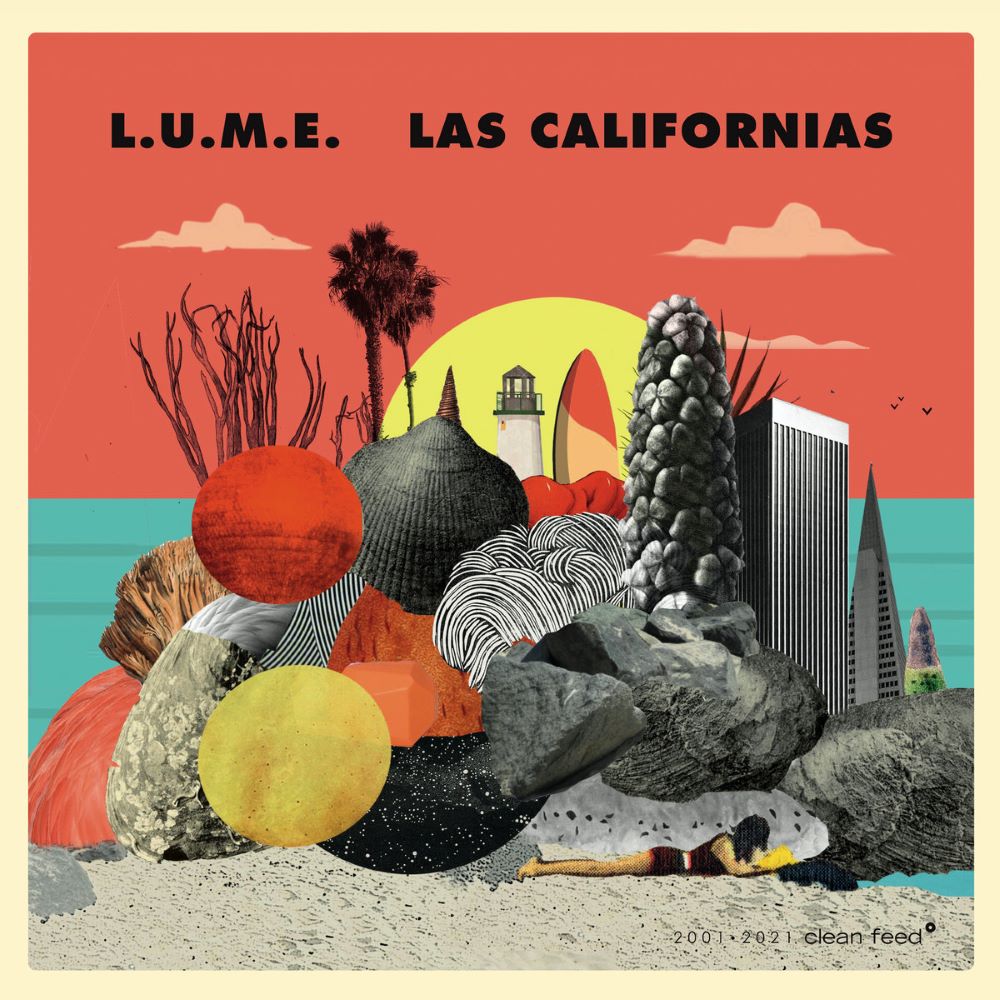
L.U.M.E. (Lisbon Underground Music Ensemble) - Las Californias (October 2021 Clean Feed Records)

Marco Barroso’s LUME (“fire” in English, but in truth the acronym of Lisbon Underground Music Ensemble) comes back with a reformulated alignment of musicians and a new collection of compositions challenging the jazz big band format with a chamber ensemble feeling and lots of funk-rock grooves. The coordinates are the same as before in this third opus, but they come in “Las Californias” both refreshed and matured. It seems a paradox, but as the most Anarchist of proverbs declare: paradoxes are liberating. Time and experience solidify an idea and it’s simultaneously the condition to make something new with old ingredients.

Barroso renews the jazz orchestral patterns introducing classical materials and urban popular flavors on it: that’s what LUME made a difference at the start. Now he also renews his own formulas, taking the resulting music to other destinies, opening its paths from where they seemed to end. Doing that, he manages to create mind puzzling pieces that also invite you to dance, which is an achievement in itself. 

1. Isto 00:06
2. Las Californias 04:50
3. Shroomdinger 06:35
4. AM phantasies I 01:16
5. AM phantasies II 01:22
6. AM phantasies III 02:51
7. AM phantasies IV 02:14
8. AM phantasies V 02:37
9. AM phantasies VI 00:29
10. Dr. Tulp 04:31
11. Bugalu 07:38
12. Cleptofonie Fantastique 08:15

Marco Barroso​ composition, direction, piano
Manuel Luís Cochofel​ flute
Paulo Gaspar​ soprano clarinet
João Pedro Silva​ soprano saxophone
Tomás Marques alto saxophone
Mateja Dolsak tenor saxophone
Elmano Coelho​ baritone saxophone
Sérgio Charrinho, Jéssica Pina, Ricardo Carvalho​ trumpets
Rúben da Luz, Eduardo Lála, Mário Vicente​ trombones
Miguel Amado​ eletric bass
Vicky Marques​ drums

All pieces composed by Marco Barroso

Recording and production: Joaquim Monte, Bernardo Centeno e Francisca River, at Namouche Studios, Lisbon, Portugal | Mixed by Joaquim Monte at Namouche Studios
Mastered Simon Wadsworth at Namouche Studios | Post-production assistance: Fernando Matias | Executive production by Pedro Costa for Trem Azul | Design by Travassos

Wednesday, October 20, 2021

Fred Hersch to release major new album Jan. 7, 2022

Pianist/Composer Fred Hersch reemerges from pandemic isolation with an ambitious new album pairing jazz piano trio with string quartet
 
Breath By Breath, due out January 7, 2022 via Palmetto Records, features a stunning new suite inspired by Hersch’s meditation practice performed by Hersch with Drew Gress, Jochen Rueckert, Rogerio Boccato, and the Crosby Street String Quartet

"[Fred Hersch is] a pianist, composer and conceptualist of rare imaginative power.” 
– Nate Chinen, The New York Times

“Hersch’s work has developed an intensity of intelligence and emotional directness unparalleled among his peers.”
– Steve Futterman, The New Yorker 

Album release concerts January 4 – 9 at Village Vanguard, NYC 
Pianist Igor Levit premieres new Hersch work January 13 at Carnegie Hall

Iconic pianist/composer Fred Hersch was an early adopter of new technologies and new ways forward when the pandemic hit in early 2020. But he’s also been among the most eager to return to live performance and collaboration now that life has begun to resume some semblance of normality. In August he returned to the studio to record one of his most ambitious projects to date: Breath By Breath, his first album ever pairing jazz rhythm section with string quartet.
 
“I’ve put all my streaming gear away,” declares Hersch, whose lockdown months started off with daily performances on Facebook and culminated in last year’s solo release Live From Home. “It was great while that was what it was, and now I'm in this place where it's live or nothing.”
 
Due out January 7, 2022 via Palmetto Records, Breath By Breath draws inspiration from the pianist’s longtime practice of mindfulness meditation, centered on the new eight-movement “Sati Suite.” But while the album is certainly contemplative and lustrous, it’s far from being merely an ambient backdrop for blissful relaxation – the music on Breath By Breath is as fully engaged and emotionally rich as any that Hersch has made over the course of his remarkable career.

In part that’s due to the musicians Hersch has enlisted for the album. Bassist Drew Gress was a member of the pianist’s first trio and has been an inspiring bandstand partner for more than three decades. Jochen Rueckert is one of the most in-demand drummers on the modern scene, having played with such greats as Kurt Rosenwinkel, Mark Turner, Melissa Aldana and Pat Metheny. The Crosby Street String Quartet, named for the NYC address where they first rehearsed with Hersch, combines four of the city’s busiest freelance string players: violinists Joyce Hammann and Laura Seaton, violist Lois Martin, and cellist Jody Redhage Ferber. 

“String quartets have been some of my favorite music to listen to my whole life,” Hersch explains. As he writes in the album’s liner notes, “I grew up listening to string quartets as a very young musician in Cincinnati. My piano teacher was the wife of the cellist in the famous LaSalle Quartet. I used to lie on the rug in their living room as an elementary school student while they rehearsed, quietly following along, hearing how the viola part meshed with the first violin, or the second violin and the cello. And ever since I started studying composition at age eight, almost all of my music has always focused on four melodic parts - so string quartets are a natural musical configuration for me.” 
The string writing on Breath By Breath spotlights the broad scope of Hersch’s compositional imagination. With each piece the quartet seems to take on a new role in relation to the piano trio: a lush background on one tune, an equal partner in dialogue on the next, an abstract instigator on yet another. “It was important to me that we record live with the strings so I could interact with what they were playing,” Hersch says. “I didn't want to lay down the music and then have them come in later and overdub. I felt like the fun of the project was to do it live.”

“Sati” is a Pali word meaning “mindfulness” or “awareness,” an idea that is central to Hersch’s meditation practice – which itself took on an even more profound importance during the pandemic. “It basically saved me,” he says with no hint of exaggeration. “Meditation is not about not emptying your mind; it's about observation. The phrase I like to use is, ‘relax, allow and observe.’ When I meditate it’s about recognizing sensations or thoughts as they come in and out, observing them and realizing that they're just phenomena. The brain thinks, and there's nothing wrong with that.”

The first movement, “Begin Again” references the cycle of renewal that begins fresh with each moment. Other pieces touch on different aspects of the process. “Know That You Are,” the composition that initiated the suite, refers to the foundational instruction, “When you sit, know that you are sitting and when you breath, know that you are breathing.” The often frantic activity of a mind struggling to be at rest is the subject of “Monkey Mind,” while “Mara,” which features a guest appearance by percussionist Rogerio Boccato, is the name of the god who tempted Buddha with wine, women and wealth.

Bringing meditation to the forefront of his music brings Hersch full circle in a sense, as he recognized when he began the practice decades ago. “When I started, I realized that in a way I've been meditating my whole life – but on a piano bench. I close my eyes when I play and I go into in that world. Occasionally I get distracted, but I don't get wrapped up in it. Instead of my breath being an anchor, the anchor is the sound that I get, the tactile feeling of my fingers on the keys, hearing the space around the music, and leaving that space for other musicians to contribute.”

Breath By Breath, then, is a recognition that meditation has been a way for Hersch to align his daily existence with the enlightened state he reaches while playing the piano. With the release of this captivating new recording, the rest of us are fortunate enough to glimpse that place and to feel its life-affirming impact on our own hearts and souls.

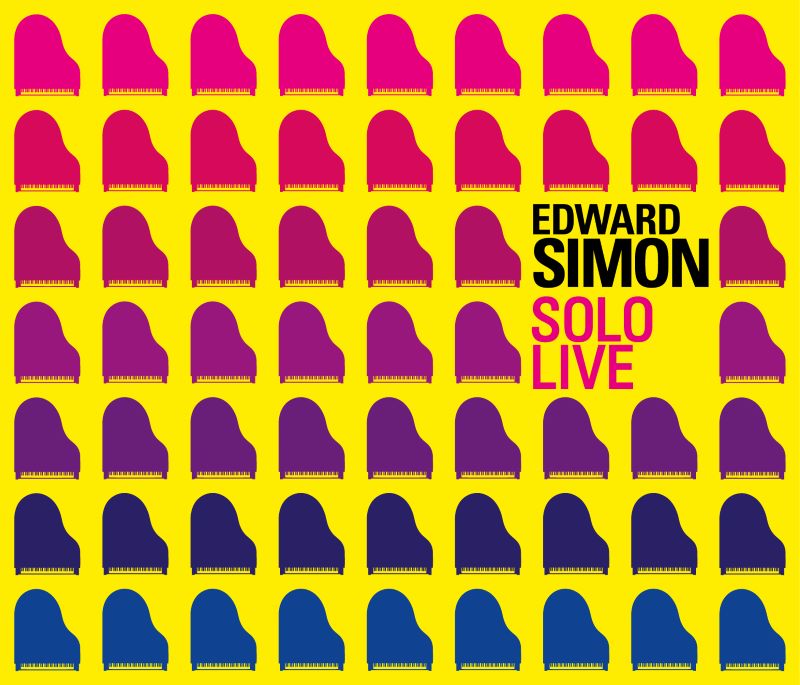
Edward Simon - Solo Live (October 2021 Ridgeway Records)

On his 15th album as a leader, pianist Edward Simon delivers a gorgeous statement with Solo Live, his first unaccompanied recording

Available October 2021 via Ridgeway Records

Edward Simon has been at the center of the jazz scene for the past quarter century, helping shape the music’s evolution through a series of seminal ensembles and recordings. Now acclaimed as a pianist, composer, arranger, educator and bandleader, he provided a jolt of inspiration as a young sideman in bands led by Bobby Watson, Greg Osby and Terence Blanchard. As a leader, he’s recorded a series of groundbreaking albums featuring renowned peers similarly devoted to merging kindred currents in jazz and Latin American music. But he’s never made an album like Solo Live, scheduled for release on Ridgeway Records on October 15, 2021. 
 
Recorded at Oakland’s Piedmont Piano Company on his 50th birthday in 2019, Solo Live is Simon’s first unaccompanied recording (and only his second album documenting a concert). Unedited, it’s a ravishing portrait of one of jazz’s most eloquent improvisers investigating a setting that’s become one of his primary outlets during the pandemic. Long leery of performing alone, a situation that leaves a pianist “really exposed,” he described the Piedmont Piano date as “a leap of faith. But I plan to be doing more solo piano playing and recording.” 
 
The Venezuelan-born Simon is best known for all-star collaborations such as the collective trio Steel House with bassist Scott Colley and drummer Brian Blade. Holding down the piano chair since 2010, he’s the longest-serving current member of the SFJAZZ Collective. In 2020, Ridgeway Records released 25 Years, a two-disc anthology drawn from 13 earlier albums focusing mostly on his original compositions and arrangements designed for players such as tenor saxophonists Mark Turner and David Sanchez, altoists Miguel Zenón and David Binney, bassists Ben Street, John Patitucci and Joe Martin, and vocalist Luciana Souza and Gretchen Parlato. 
 
Without an illustrious supporting cast, Simon was left to his own devices on July 27th, 2019, a celebratory night surrounded by family and friends in Piedmont Piano Company’s piano-filled showroom. While Solo Live reconfigures the order of the pieces he performed, the album reflects the concert’s carefully calibrated ebb and flow, with the first three tracks unfolding in the original sequence. Opening with a breathtaking version of Billy Strayhorn’s “Lush Life,” Simon gives a master class in dynamics, flow, and melodic invention. 
 
“It’s an extraordinary tune, just one of those timeless pieces that’s so profound,” Simon said. “You play what’s on the page, but to make it your own you have to internalize it and figure out how to give it a spin that’s uniquely yourself.”
 
Simon has clearly assimilated the solo work of piano greats like Keith Jarrett, and Chick Corea, who he credits with providing inspiration for his take on “Lush Life.” It’s the opening track on Corea’s Expressions, a 1994 solo piano album that also turned Simon’s ear to “Monk’s Mood,” one of Thelonious’s most sublime ballads. Simon displays exemplary patience as he strolls inquisitively through the melody, letting the tempo shift to accentuate Monk’s reverie. 
 
“Chick doesn’t play it in strict time and that’s the approach I took as well,” Simon said. “One of the beauties of playing solo is that it offers great flexibility with respect to how you play time. You can be very articulate about the time or completely free of it and everything in between because you don’t have to worry about being in sync with others.”
 
Simon digs into the knotty rhythms of “Monk’s Dream” while revealing the tune’s steely harmonic architecture. Swinging with authority, he captures Monk’s singular combination of sly, earthy humor and intellectual curiosity. 
“His music is introspective,” Simon said. “It’s one of the things that attracts me to it. It’s asking for you to look into it, but not necessarily reaching out to you. There’s a mystery to it that I really love. The chords he places around the melody and the harmonic rhythm,  where the chords fall, are really unexpected.”    
 
Simon’s composition “Country” is the album’s longest track. Originally recorded by Steel House on the collective trio’s eponymous 2015 debut album, Simon’s joyous solo rendition, with its . spritely, spinning melody evokes the leaping sense of possibility inspired by moving across a sun-steeped landscape. It’s a piece that seems to call out for lyrics, and it’s likely Simon will record the tune again with Luciana Souza singing her original verse.
 
The album concludes much as it started, with a classic American ballad interpreted with patience and deep empathy. Simon caresses Gershwin’s astoundingly sad and beautiful “I Loves You, Porgy” with hushed intensity and tenderness. “It’s one of those timeless pieces, like ‘Lush Life,’ if you allow yourself to open up to it, it can take you to those unearthly places,” he said. “It takes a certain level of maturity before you can capture that feeling. You have to allow yourself to feel that vulnerability.”
 
Solo Live is both a snapshot of a particular night and a harbinger of future developments for Simon. A relative newcomer to solo recitals, he’s spent the past couple of years focusing on the demanding format. “It takes some time to develop your voice as a soloist,” he said. “I feel like I’m still finding my way. There are several other pianists who do that really well and have made a strong mark. I’m listening to what the masters have done, taking what inspires me and trying make it my own, which is pretty much the process of jazz. Learn what the masters have done, and take it from there.”
 
As his anthology 25 Years vividly documented, Simon is a master himself who has played an essential role in expanding jazz’s frontiers in recent decades. At this point he’s spent far more of his life in the United States than his homeland, but Venezuela still provides the life-sustaining marrow of his music. Born July 27, 1969 in the oil port of Punta Cardón, he grew up in a household filled with music. His father hailed from Curaçao in the Dutch West Indies, and he instilled a love of music in his sons, percussionist Marlon Simon, trumpeter Michael Simon and Edward. 
 
The brothers performed music for dancing at local fiestas and events, tapping into an array of rhythms from Venezuela and beyond. “My older brother played timbales at the time, and we had our band, playing private parties and anniversaries,” he says. “In a way that strong connection with the dance floor and dancers left a great imprint on me. To this day, a groove is an important element in my music.” 
 
Simon was serious enough about the piano that at the age of 15 he left Venezuela and moved by himself to Pennsylvania to enroll at the Philadelphia Performing Arts School, a now-defunct private academy. He continued his classical studies, but he also discovered jazz, and eventually connected with Philly masters like bassist Charles Fambrough and guitarist Kevin Eubanks, who encouraged him to move to New York. Landing in Manhattan in 1988 at the age of 19, he quickly established himself as a vital new voice. A five-year stint with the great altoist Bobby Watson and a nine-year run with trumpeter Terence Blanchard firmly established Simon as one of his generation’s leading accompanists. 
 
While many of his early albums were released on European labels with little North American distribution, his three projects for Sunnyside have earned widespread acclaim. On 2013’s Live in New York at Jazz Standard his mastery of the trio format was front and center as he stretched out with Brian Blade and John Patitucci. He followed up with his most ambitious project, 2014’s Venezuelan Suite, a groundbreaking synthesis of post-bop and traditional Venezuelan forms and rhythms for his 10-piece Ensemble Venezuela. And on 2016’s Latin American Songbook he interpreted songs drawn from all across Latin America with Adam Cruz and Joe Martin. 
 
In many ways, Simon is just getting started. As with 25 Years, an anthology that refocused attention on the sweeping breadth of his work, Solo Live reflects Simon’s recently established role as associate artistic director of the Bay Area nonprofit Ridgeway Arts, an arts organization, label and presenter founded and run by Jeff Denson, the bassist, composer and dean of instruction at the California Jazz Conservatory. Simon has some beautiful surprises in store. 

Monday, October 18, 2021

Nick Maclean - Can You Hear Me? [double album] October 31, 2021 Browntasauras Records

This double album, a debut SOLO PIANO release from award-winning Toronto pianist Nick Maclean, takes influences from jazz piano greats like Bill Evans, Keith Jarrett, and Brad Mehldau as it traverses jazz standards, spontaneous improvisations, and epic, original odysseys - all suffused with courageous risk taking and musical exploration springing from Maclean's in-the-moment inspirations and shaped by producer Brownman Ali's guidance. This release is a true collaboration between Maclean and Ali, showcasing a deep musical relationship of trust and mutual respect. Thus its completion represents Maclean's most personal and intimate recordings to date with all the intriguing challenges, opportunities and possibilities that go with it.

1. Dolphin Dance
2. All Of You
3. Someday My Prince Will Come
4. Why The Caged Bird Sings
5. Difficulties Of Discernment
6. Rational Discourse
7. It Could Happen To You
8. Circle Of Influence
9. Estratagema (feat. Brownman Ali)
10. Blackbirds
11. Spartacus Love Theme / Nardis
12. Tell Me Something I Don't Know
13. Footprints
14. Things Ain't The Way They Used To Be
15. Variations On A Porkpie Hat
16. The Truth Of It
17. Message To My Unborn Child
18. Zion

Nick Maclean -- piano
Brownman Ali -- producer, percussion, drum set
Chalet Studio -- recording studio (David Chester, owner)
Justin Meli -- tracking engineer
Josh Bowman -- mix engineer
Luisito Orbegoso -- percussion mix engineer
Justin Gray -- mastering engineer
Browntasauras Records -- record label
Neil Padaloy -- album cover art
Dave Restivo -- liner notes

Trio In Transit - Trio In Transit (October 2021 zoar records)

In 1967, in an effort launched by reading the obituary of John Coltrane, I began to immerse myself in jazz with important guideposts being the books Black Music by Amiri Baraka (LeRoi Jones), Four Lives In The BeBop Business by A.B. Spellman and As Serious As Your Life by Val Wilmer. Denis Charles was featured in Wilmer's book and appeared as an important figure in the others. My ears led the search and Denis' sound from records by Cecil Taylor, Roswell Rudd, and Steve Lacy became deeply imprinted. A few months after moving to NYC in 1979, I paid a visit to drummer Mark E Miller's building on E. 7th St, where I would soon be living. There in front, chatting with Miller was Denis himself! I was awestruck - a living legend, one of my sonic heroes. Denis, as always, was sweet and humble - he lived across the street and we soon became friends. More time passed and I began to acquire the ability to book infrequent gigs of my own and Denis and I began an informal trio with bassist Jay Oliver with performances at Cub 57 and Ali's Alley.

After Jay moved to Europe, my old friend Steve Piccolo joined the group and we were scheduled to play Soho's Performing Garage. Our "book" was a set of simple core gestures designed to be catalysts for our improvising. Denis' Caribbean heritage was revealed in his groove yet expanded in all directions from his position at the crux of the free-jazz movement during its creative peak. Drumming for Denis always told a story filled with secret smiles and nods to friends and ancestors. Steve and I had both been students of Roswell Rudd and we absorbed his joy in ancient and future cultures, his methods, his sense of orchestration, and his insistence on the narrative arc. Whether consciously or not, we applied our learnings in our playing with Denis. The operative word for this trio was indeed 'transit' as we never again played in this format. Sadly, Denis passed from this plane in 1998. Steve and I continue our collaborations on many different fronts.

The time of covid engendered a variety of novel activities. I acquired a high-quality cassette deck and began the sometimes-tedious task of digitizing recordings from my archives with the thought of possibly releasing the better ones. I was excited to come across a document of this trio's brief existence. Though the sound quality on the cassette was quite challenging, I applied whatever forensic-audio techniques I had at my disposal to upgrade this audio to at least listenable levels which may now be heard, a sonic intersection between free jazz and no-wave. 

1. Opening The Box 09:54
2. Tone Time 09:21
3. Careless 09:00
4. Flurries 09:55
5. Detrit R Us 05:09
6. Cornered 13:56
7. Lectric 06:55
8. Intercession 06:26

Elliott Sharp - soprano, alto, and tenor saxophones; fretless and electric guitars
Denis Charles - drums
Steve Piccolo - electric upright bass

All music by Elliott Sharp, Denis Charles, Steve Piccolo

Produced by Elliott Sharp
Recorded in concert at The Performing Garage, NYC, June 1981
All compositions published by zOaR Music - BMI

André Carvalho - Lost in Translation (October 2021 Outside in Music)

Humanity is creating a more and more interconnected world. In less than 50 years, we have developed new forms of communication, not only much faster and more accessible, but also with an increased capacity of conveying what we want to express and say. Apparently, the space for misunderstanding should be smaller. However, there are still moments when we are unable to express exactly what we want, lacking words that serve the purpose. These would be extremely precious for the clarity of our speech.

If it is a fact that there is, and probably always will be, a gap between meaning and interpretation, emotion and intention, it is also true that by expanding our lexicon, we automatically increase our expression capacity. However, if there is no such word in our language, it does not mean that there isn’t in another.

This is how the so-called untranslatable words entered my world and inspired me to write a new cycle of compositions titled “Lost in Translation”. These words can be the solution to things we have always thought, but never knew how to name them. Or, they can even mean something we never thought of, opening up our mind for new perspectives and cultivating the imagination.

Words are without any doubt a tool and, like any tool, they are born after a certain need. That’s why it is so curious to notice that a given culture doesn’t have a word for a certain idea / object / action even if this is present in their lives. At the same time, another culture felt the need to create their own word. It is also extremely curious and sometimes hilarious to observe that some of these untranslatable words are occasionally associated with the lifestyle, the geographical location or even the philosophy of a particular culture. A great example is Karelu, a Tulu word that means the mark left on the skin by wearing something tight.

Although we want to systematically differentiate and leave our mark in the world, the truth is that we are all made of the same material. That’s why languages have an enormous weight and are responsible, in large part, for acculturation. It is in this process that the identity of a civilization is created. For me, these unique and distinct characteristics make the world so special and Human civilization so interesting.
It’s unquestionable that music is a language and curiously an universal one. From the most remote tribes of Papua New Guinea to the cosmopolitan and avant-garde movements of large cities, music serves as a "vehicle" for communication and interaction. It’s this link between language and music, unique words and unique musical moments that “Lost in Translation” explores. If learning a new word is, by itself, already a rewarding and exciting thing, if we add music to this learning process, the experience will surely be enhanced.

Wittgenstein said that "the limits of my language mean the limits of my world". I truly believe this. This does not mean that the world is not bigger than what we know. In fact, it is bigger and deeper than what we really know and the mental projection we create of it, that is, our reality. That is why, I believe that as we learn new words, our conscience becomes more sensitive to others, we become more empathetic and our world becomes richer.

The same happens as we are in contact with unfamiliar music. That’s also why “Lost in Translation” embraces the unknown, by having a very strong improvisational and spontaneous component, making each performance very unique.

Musically, this new cycle was inspired by the influences that I have absorbed in recent years, not only because I am exposed to the New York Jazz scene, but also because I travel regularly to other countries. The relentless search for new sounds has led me to discover and explore musical areas such as improvised music, experimental music and contemporary classical music. 

1. Luftmensch 05:42
2. Kilig 05:10
3. Uitwaaien 08:40
4. Goya 04:04
5. Alcheringa 05:08
6. Kalpa 05:21
7. Karelu 08:41
8. Murr-ma 02:36
9. Mångata 04:54
10. Boketto 03:40
11. Resfeber 05:01
12. Wabi-sabi 02:12

José Soares - alto saxophone
André Matos - guitar
André Carvalho - double bass and composition

João Almeida - trumpet (4, 7, 11)

Recorded at Teatro Municipal Amélia Rey Colaço in December 2020.
Mix and master by Tiago de Sousa.
Artwork by Margarida Girão.
Out on Outside in Music.