Friday, February 19, 2021

Yoko Miwa Trio - Songs of Joy (February 2021 Ubuntu Music)


Songs of Joy, due out February, 2021 via Ubuntu Music, features the pianist’s longtime trio with drummer Scott Goulding and bassist Will Slater on songs by Billy Preston, Thelonious Monk, Richie Havens and Duke Jordan alongside new original compositions

“Yoko Miwa has been gifted with both extraordinary musical skills and the pure spirit that is necessary for great art. We love her musical gifts and her beautiful spirit as well.” – Ahmad Jamal

"The group dynamic bounces with joy… Oscar Peterson and Benny Green come to mind stylistically, with Miwa’s always engaging melodies dancing around propulsive rhythms." – Dan McClenaghan, All About Jazz

“Miwa is a virtuoso pianist with dazzling technique always in the service of interaction and exchange of ideas.”  – Donald Elfman, NYC Jazz Record
2020 was a trying year for all of us, and pianist Yoko Miwa suffered more than her fair share of challenges. Like most musicians during this unprecedented pandemic, she suddenly found herself without the opportunity to perform. The recording of her new album was postponed and her trio’s longtime home base, Les Zygomates Wine Bar & Bistro in Boston, closed its doors for good. Worst of all, her father passed away after a battle with Alzheimer’s Disease.

So Miwa would certainly have been forgiven if her delayed return to the studio had resulted in an uncharacteristically somber set of music. Instead she emerged with Songs of Joy, a welcome dose of optimism and uplift that shines like a ray of hope through the dark clouds overhead. Due out February 12, 2021 via Ubuntu Music, Songs of Joy features Miwa’s longstanding trio with bassist Will Slater and drummer Scott Goulding, along with a guest appearance by bassist Brad Barrett, another regular collaborator. The album combines songs that have provided solace and inspiration to Miwa with five original pieces composed as a means of escape from the lockdown routine.

“Once the pandemic started, I decided to write something every day,” Miwa explains. “I just tried to sit down at the piano and play whatever I felt on that day. Of course I was frustrated, but I tried to stay positive.”

The songs that emerged from this less-than-ideal incubator reflect Miwa’s persevering spirit, her jazz-inspired spontaneity and her classically-trained virtuosity – all characteristics that have been recognized by no less an authority than legendary pianist Ahmad Jamal, one of Miwa’s idols. “At 90 years plus, I have known and heard most of the great pianists, [including] Art Tatum, Oscar Dennard, Phineas Newborn, Nat Cole, Dodo Marmarosa, Johnny Costa, Erroll Garner, and on and on,” Jamal says. “Not to mention the pianists performing the European Classical works that I have followed as well. In Pittsburgh where I was born, and where some of the aforementioned are also from, we had to study both American Classical Music as well as the European Classical forms. Yoko Miwa is the result of both worlds. She is amazing and will continue to grow.”

The Yoko Miwa Trio has been performing together regularly for a decade and a half, with a Saturday night residency at Les Zygomates for much of that tenure. For the past several years they’ve also spent Friday nights at the Cambridge sushi bar The Mad Monkfish. At least once a year they perform there with legendary singer Sheila Jordan, who introduced Miwa to Billy Preston’s “Song of Joy.” The tune, which also inspired the title of the album, is suffused with warmth and deep emotions in the trio’s intimate, reverent rendition. The idea expressed in Preston’s simple, heartfelt song – “With every note I play, I play with love… With all the happiness this melody brings” – provided the guiding spirit of the session.

The album opens with Richie Havens’ “Freedom,” which the singer-songwriter performed at Woodstock (as captured in the famed concert film). Miwa’s thunderous left hand reveals the inspiration of McCoy Tyner, and the tune’s mood channels the ecstatic spirituality of the classic John Coltrane Quartet.
Tyner is one of several formative influences to whom Miwa pays tribute through her original pieces on Songs of Joy. The boisterous swing of Bobby Timmons and Benny Green, two of the pianists whose brilliant sound was forged in the crucible of Art Blakey’s Jazz Messengers, anchors the finger-snapping groove of “Small Talk.” The bright, dancing “The Rainbirds” was inspired by the compositional style of Kenny Barron. And the lush, elegant “Inside a Dream” bears the unmistakable imprint of perhaps Miwa’s most important idol, Bill Evans.

Naturally, Miwa’s compositions couldn’t help but be affected by the times in which they were written. The steely “Largo Desolato” feels haunted yet determined, evoking the unnaturally empty streets of New York City at the height of the pandemic. The gorgeous ballad “The Lonely Hours” is dedicated to Miwa’s father, who spent many of his final days alone due to quarantine conditions. “I couldn't go back to Japan to see him because of the pandemic,” she laments. “He was in the hospital alone; even my family couldn't be with him when he passed away. It was really sad.”

The rollicking “Tony’s Blues” was penned for Miwa by Tony Germain, former assistant chair of the piano department at Berklee College of Music, where Miwa is an associate professor. “Tony wrote this song for me right before the original recording date, and I really liked it,” Miwa says. “He just retired, so this is a great present for him.”

The work of Thelonious Monk is a constant in Miwa’s repertoire, and here she performs a muscular take on one of her favorites, “Think of One.” Sheila Jordan also provided an entrée to the blistering “No Problem,” a piece by the singer’s ex-husband, pianist Duke Jordan, that has become a staple of the trio’s sets. The album ends with a reflective take on the folk classic “Babe I’m Gonna Leave You,” by way of the famous Led Zeppelin version and graced by Brad Barrett’s entrancing arco playing.

Despite a few months of enforced time off, the Yoko Miwa Trio hasn’t lost a step on Songs of Joy, their exhilarating chemistry evident and lively throughout the album’s many moods. Circumstances may have been far from ideal (“This is definitely the first album I recorded with a mask on,” Miwa laughs), but it ends up offering a balm for beleaguered audiences. “When we went into the studio, it had been four months since I’d played with my trio,” Miwa recalls. “I was a little bit nervous, but once we got there I felt so excited and inspired by being together again. That joy and happiness came up from my music. Everything was joy, and I hope the listener can hear it too.”
1. Freedom (Richie Havens)
2. Largo Desolato (Yoko Miwa)
3. Song of Joy (Billy Preston)
4. Small Talk (Yoko Miwa)
5. The Lonely Hours (by Yoko Miwa)
6. No Problem (Duke Jordan)
7. The Rainbirds (Yoko Miwa)
8. Think of One (Thelonious Monk)
9. Inside a Dream (Yoko Miwa)
10. Tony’s Blues (Tony Germain)
11. Babe I’m Gonna Leave You (Anne Bredon)

Will Slater - bass
Scott Goulding - drums

Miguel Zenón & Luis Perdomo - El Arte Del Bolero (2021 Miel Music)


On September 28, 2020, in the midst of the pandemic, alto saxophone icon Miguel Zenón and pianist Luis Perdomo recorded a concert at The Jazz Gallery in New York City which was livestreamed in November. When they listened to the recording of the concert, they knew it was something to share.
 
Miguel writes in the liner notes to the album: “As an instrumentalist, I spend a lot of my time working on making the saxophone an extension of my creative process. This process is always filtered through interpretation and expressiveness, and more often than not I find myself looking up to some of my favorite singers (people like Ismael Rivera, Cheo Feliciano and Andy Montañez) as sources of inspiration. In their individual voices I can hear a reflection of their unique personalities, all manifested at the highest level through their interpretation of songs. These melodies become vehicles for their creativity a canvas on which they’ll portray their feelings and states of mind. 
 
But these are not just any songs. These are songs they have heard hundreds of times, familiar pieces of music they know very well, and that is sort of the way I feel about the repertoire on this album. We chose compositions from the Bolero era that we could just play right away, without giving it a second thought: songs from the times of our parents and grandparents that somehow stuck around long enough for us to get to know them and truly love them. They are all as essential to our development as the music of Charlie Parker, John Coltrane or Thelonious Monk, but perhaps even more familiar. When we play these songs, we can hear the lyrics in the back of our minds—something that provides a very deep connection, one that is hard to replicate in any other situation. It really is almost beyond familiar. These songs are part of us.
 
We recorded this music as a live show, all in one take, without much preparation other than discussing tonalities and some basic elements on form. We were more than pleasantly surprised with the results and decided that they deserved to be shared. There is nothing like making music with someone else, finding a common language we can grab onto and then just going and exploring that together. We hope this comes across here, and that you enjoy the music.”

About The Music

- Como Fue: Popularized by the great Benny Moré, this song has long become a Latin-American standard. Luis and I have been playing the song for years, usually in the key of Eb. We decided to play it in Db here, mainly inspired by a recent immersion into the music of Billy Strayhorn.

- Alma Adentro: A song we previously recorded with a larger ensemble on a 2012 album of the same name. Sylvia Rexach, the composer of this piece, is a favorite of my mother’s, and I was exposed to her music as a young child. This is a song that always brings back feelings of longing and deep nostalgia, a yearning for things no longer there.

- Ese Hastío: Ray Barreto recorded this under the title of “Piensa En Mi” on his legendary 1979 album Rican-Struction, which is the version that Luis and I fell in love with. I had never played the song before, but Luis suggested it since he had recorded the piece as an instrumental on his album Pathways. It ended up fitting perfectly into our program.

- La Vida Es Un Sueño: Written by the Cuban genius Arsenio Rodriguez, a revolutionary artist who changed the course of Latin-American music forever. Blinded by a tragic accident as a child, Arsenio moved to the United States later in life in hope that doctors there could find a cure to his condition. Legend has it that, shortly after finding out from his doctors that this would not be the case, he wrote this song. The last verse says it all: “La realidad es nacer y morir / Porque llenarnos de tanta ansiedad / Todo no es mas que un eterno sufrir / El mundo esta hecho de infelicidad.”

- Que Te Pedí: Immortalized by Latin diva “La Lupe” in her seminal 1965 version (recorded with Tito Puente), this song has since become an anthem for lost love and heartbreak all over Latin-America. We had performed this before, but this was the first time we played it as a duo.

- Juguete: This classic, written by the legendary Bobby Capo, was popularized by Cheo Feliciano on his 1972 album La Voz Sensual de Cheo. It’s certainly of those songs that is constantly quoted everywhere and never gets old. We’ve been playing it for a while and decided to do it a little faster here, with an extended vamp at the end to close things out. 

1. Como Fue (Ernesto Duarte, Peer International Corp.) - 7:57
2. Alma Adentro (Sylvia Rexach, Peer International Corp.) - 9:45
3. Ese Hastío (Juan Manuel Solís Fernandez, Copyright Control SONY/ATV) - 6:47
4. La Vida Es Un Sueño (Arsenio Rodriguez Scull, Peer International Corp.) - 9:42
5. Que Te Pedi (Fernando Lopez Mulens/Gabriel Luna De La Fuente, Peer International Corp.) - 7:11
6. Juguete (Bobby Capó, Edward B. Marks Music Company) - 10:26


Recorded Live at The Jazz Gallery (NY, NY) September 28th, 2020
Mixed by Danilo Pichardo and Miguel Zenón
Mastered by Danilo Pichardo

Klaus Ignatzek & Susanne Menzel / In​-​Tandem (February 2021 nagel heyer records)

Bereits die ersten Takte der CD In-Tandem von Klaus Ignatzek und Susanne Menzel ziehen mich in ihren Bann - südamerikanische Rhythmen begrüßen den Hörer mit dem ersten Stück Samba de Amor und erzeugen unmittelbar gute Laune. Das gelingt nicht jeder Jazz-CD. Die Stimme der jungen Sängerin Susanne Menzel, die auf In-Tandem ihr Debüt gibt, beeindruckt durch ihre sinnliche Ausdruckskraft und ihr warmes Timbre. Überzeugend präsentiert sie die schwierigsten Gesangspassagen souverän und emotionsgeladen, diese Stimme hat eindeutig Star-Potenzial. Wie das Booklet verrät, stammen alle Songtexte aus der Feder von Susanne Menzel und so stellt sie neben ihren herausragenden Gesangsqualitäten gleich noch ihr lyrisches Talent unter Beweis. 

Keine oberflächlichen Floskeln erwarten den Hörer, sondern interessante Themen und Geschichten mit Tiefgang. Die Kompositionen auf In-Tandem schuf allesamt Klaus Ignatzek, der im In- und Ausland schon viele Jahre einen brillianten Ruf als Pianist und Komponist genießt. Entsprechend hoch sind meine Erwartungen an In-Tandem und sie sollen nicht enttäuscht werden. Die insgesamt 12 Stücke bieten eine große musikalische Bandbreite in unterschiedlichen Stimmungen, von kraftvoll und dynamisch bis ruhig und romantisch, das macht die CD sehr abwechslungsreich und spannend.

Klaus Ignatzeks Klavierspiel auf In-Tandem überzeugt durch enormen Einfallsreichtum und virtuose Soli, die er in eingängige Melodien einbettet und damit eindrucksvoll beweist, dass man als Jazzer der 1. Liga sehr wohl Songs auf höchstem Niveau komponieren kann, die nicht unmelodiös oder schwer zugänglich sein müssen. Die großartigen Bandmitglieder Peter Weniger, Saxophon, Martin Wind, Bass, und Hans Dekker, Drums, runden das Hörerlebnis nicht zuletzt dank ihrer großen Spielfreude gelungen ab. An In-Tandem werden außer der Jazz-Fangemeinde auch Musikliebhaber ihre Freude haben, die sich mit Jazz bislang etwas schwer taten, diese CD ist rundum empfehlenswert! (Liz Arden, kultura-extra)


1. Samba de Amor 04:36

2. Light in the Dark 07:38

3. Running Man 04:22

4. No Words 08:14

5. Message for Art 06:07

6. My Home 07:10

7. Her Own World 05:56

8. Herbie's Invitation 05:05

9. Close the Door 07:02

10. Roamin' 03:11

11. Time Will Tell 07:50

12. Chase the Time 06:00


All music composed by Klaus Ignatzek. All words by Susanne Menzel


Klaus Ignatzek – piano

Susanne Menzel – vocals

Peter Weniger – tenor saxophone

Martin Wind – bass

Hans Dekker – drums

Michael and Peter Formanek – Dyads (2021 Out Of Your Head Records)

Michael and Peter Formanek started making music and improvising together before Peter started school. Regular visits to their home from friends and colleagues like Tim Berne, Jim Black, Marty Ehrlich and many others only served to normalize this as being an essential part of human interaction. During much of their time living in Baltimore and as Peter began to study music formally (first on guitar then on saxophones and woodwinds), it was just part of daily life to have musicians come by to play, rehearse, or just hang out. This eventually turned into regular groups and collaborations that performed in local venues in and around Baltimore. For Peter’s eighteenth birthday they played a night of Michael’s music at the Cornelia Street Cafe with a lineup of Tim Berne and Peter Formanek on saxophones, Jacob Sacks on piano, Jim Black on drums, and Michael Formanek on bass. Peter went to University of Michigan in Ann Arbor in 2013 to study with the great Andrew Bishop, and sometime after Peter’s graduation in 2017 he and Michael decided to perform as a duo. They embarked on their first tour together in November 2019 spanning the upper midwest, mid-Atlantic, and northeastern US, and soon after booked a studio date to record the music presented here as Dyads.

Dyads (OOYH 008) is the debut recording by Michael and Peter Formanek as a duo. That being said, there are likely very few (if any) debut recordings that were a lifetime in the making, and that showcase such a deep musical connection as this one. Both musicians contribute compositions, and listeners will recognize the rhythmic deceit and compelling melodic twists that are distinguishing features of the elder Formanek’s style. While the compositions are strong and engaging, the true marvel of the recording, and what Michael and Peter have spent decades developing, is in the improvising. They follow one another through an incredible range of sonic territory, often turning on a dime in nearly telepathic displays of musical intuition (one might say it is in the DNA). One Formanek may also stubbornly hold their ground as the other bounces, scrapes, and squeals around it, but in a way that only serves the music, and creates an array of textures in what could be a limiting instrumental combination in less inventive hands.

To anyone even casually aware of the modern jazz scene, Michael Formanek is an instantly recognizable name, not only as one of the most formidable bassists active today, but as a singular and prolific compositional voice. Immediately upon hearing him (either live or on recording) listeners are drawn to the deep, dark tone he produces on the bass, as well as a virtuosic technique and nimbleness that truly no other performer on the instrument can replicate. What is remarkable, and obvious just a few minutes into Dyads, is that at the young age of 25 Peter Formanek has already started to develop a similarly unique voice on reeds. There are the obvious influences of those prominent saxophonists (Berne, Ehrlich, etc) that were in his orbit at a very young age, and it is easy to make a comparison to Michael’s Bloodcount bandmate Chris Speed, as Peter has chosen to focus on the tenor saxophone and clarinet as Speed does. But what is clear from this recording is that Peter is forging his own path, and is already makng valuable contributions to the substantial output of the modern creative saxophonists that came before him. Without question we will be hearing much more from Michael and Peter Formanek for years to come, both as leaders and collaborators. The hope is that after such an exceptional debut as a duo on Dyads they won’t make us wait too long for a follow-up recording together.
BIOS:

Michael Formanek’s music is always “graceful in its subversions, often even sumptuous,” as The New York Times has aptly noted. Whether it’s for a small band or a large ensemble, the American bassist-composer creates modern jazz that is earthy yet atmospheric, always alive with dark-hued melody and bone-deep rhythms, rich in dynamic possibility and the sound of surprise. Even with decades of experience to his credit – he got his start as a Bay Area teenager playing with the likes of Joe Henderson and Tony Williams – Formanek has made some of his keenest creative leaps in recent years, documented on a sequence of justly lauded recordings. He managed an amazing hat trick with three consecutive ECM albums scoring rare five-star reviews in DownBeat. These included two discs—Small Places (2012) and The Rub and Spare Change—featuring a powerhouse quartet with saxophonist Tim Berne, pianist Craig Taborn and drummer Gerald Cleaver. The third was a magnificent record–-The Distance (2016)—that showcased his compositions for an all-star big band, playfully dubbed Ensemble Kolossus. Formanek’s first album for the Intakt label—Time Like This (2018)—saw him leading his new Elusion Quartet with saxophonist Tony Malaby, pianist Kris Davis and drummer/vibraphonist Ches Smith to “soul-stirring” effect, according to All About Jazz. He recorded and released another album on Intakt in October 2019 for his Very Practical Trio entitled Even Better, featuring the altoist Berne and guitar luminary Mary Halvorson. Thumbscrew, a collaborative trio also with Halvorson and drummer Tomas Fujiwara, is one of Michael’s most active projects, having recently released The Anthony Braxton Project in June of 2020, and a new album of their originals, Never Is Enough, is due out in February 2021 on Cuneiform. In August of 2020 he exhumed a phenomenal 2014 live set of his ECM quartet that was released on Out Of Your Head Records’ digital-only Untamed series under the title Pre-Apocalyptic. His newest solo bass recording Imperfect Measures will be released in the April of 2021 on Intakt.

Along with his activities as a leader, Formanek has always been an in-demand collaborator by a wide range of musicians across multiple generations. Born in San Francisco in 1958, Formanek has performed in myriad contexts since he was a precocious member of the Tony Williams Lifetime at just 18 years old. In addition to working early on with such figures as Joe Henderson, Eddie Henderson and Dave Liebman, the bassist went on to perform with masters from Gerry Mulligan and Stan Getz to Freddie Hubbard and Fred Hersch, his activities only broadening once he moved to New York City in 1978. Among his peers, Formanek has worked with Tim Berne as a kindred spirit over several decades, including making a duo album with the saxophonist—Ornery People—and performing extensively in Berne’s iconic Bloodcount band in the ’90s. The bassist also released a solo LP—Am I Bothering You?-–via Berne’s Screwgun label in 1998. Thumbscrew has released four lauded albums via Cuneiform, including companion discs of originals (Ours) and covers (Theirs), issued in 2018. Formanek’s early albums as a leader included a string of releases for Enja from 1990 to 1996: the quintet LPs Wide Open Spaces and Extended Animation, as well as the septet discs Low Profile and Nature of the Beast. As a sideman, Formanek has recorded with a who’s who in jazz and beyond: Fred Hersch, Uri Caine, Dave Burrell, Jane Ira Bloom, Gary Thomas, Jack Walrath, Joe Maneri, Harold Danko, Lee Konitz, Freddie Redd, Art Pepper, Chet Baker and even Elvis Costello, along with appearing on albums led by such frequent partners as Berne, Marty Ehrlich, Mary Halvorson, Tomas Fujiwara, Tony Malaby, trumpeter Dave Ballou, saxophonist Ellery Eskelin, drummer Devin Gray and pianist Angelica Sanchez. michaelformanek.com

Peter Formanek is an improvising multi-woodwind performer, composer, educator, and a lifelong student of music. Hailing from Baltimore, he recently graduated from the University of Michigan with a Bachelor of Fine Arts degree. Still, he's been studying music with a Ph.D.-level teacher his whole life: his father, Michael Formanek. His recent senior recital at Kerrytown Concert House drew a wide audience, but also proved he's a "musician's musician" with a number of projects featuring established Detroit area heroes Tim Flood, Andrew Bishop, and Piotr Michalowski, as well as up-and-coming musical collaborators Cory Tripathy, Tristan Cappel, Christopher Tabaczynski, Ben Willis, Jon Taylor, Kenji Lee, and more. Peter’s other projects include Galen Bundy’s Project 206 which released an EP, Volatile, in April 2020.

1. Two, Not One (7:18)
2. Wandering, Searching, Digging, Uncovering (3:44)
3. After You (4:27)
4. The Woods (4:40)
5. Push Comes To Shove (7:32)
6. How Was The Drive? (4:39)
7. There's No There There (4:14)
8. Hoarse Syrinx (4:39)
9. Wavy Lines (5:04)
10. Hurricane (5:16)
11. Ballad of the Weak (6:49)
12. DNA (7:58)
13. That Was Then (5:54)

Composer Credits:

Tracks 1 and 3 - Peter Formanek
Tracks 5, 7, 11 and 13 - Michael Formanek (Formtone Music - BMI)
Tracks 2, 4, 6, 8, 9, 10, and 12 - Michael and Peter Formanek

Peter Formanek - tenor saxophone, clarinet
Michael Formanek - double bass

Recorded by David Amlen at Sound on Sound Studio, Montclair NJ on December 30, 2019
Mixed by Nathaniel Morgan at The Forest, Brooklyn NY in May 2020
Mastered by Nick Lloyd at Firehouse 12, New Haven CT in October 2020

Scott Clark - This Darkness (2021 Out Of Your Head Records)

“A haunting, reverent quality that is most heartfelt. One of the best debuts I’ve heard from a previous unknown band.” –Bruce Lee Gallanter, Downtown Music Gallery on Bury My Heart

“He has this really interesting way of swinging […] it always feels totally in control; I sense that his ride cymbal will never let you down. It feels personal to him, and I like that.” –NPR’s A Blog Supreme

This Darkness (OOYH 007) is the debut solo drum set recording by Richmond-based musician Scott Clark. To call it a solo drum set album is misleading (though it is a solo drum set album), as it defies preconceived ideas as to what one might expect the format to sound like. That the album opens with 7-minutes of a harmonica drone before you hear a single note of drums is only one such example. This recording will take you out of our world for 45-minutes if you allow it to do so. There is space. There is a sense of calm, and there is incredible patience. It shows Clark to be a musician of emotional integrity, and a creative force in the jazz and improvised music world that will continue to demand attention for many years to come. In group performances (most often heard with his own band the ScottClark4tet) he brings raw energy, and an explosive free-jazz attitude that can light a fire under any ensemble should he choose to explore that path in the moment. He also plays with incredible restraint, and possesses a gravitational pull that brings collaborators into his own world of space and often subdued sonic exploration. This Darkness is more of the latter approach, exploring sound, space, and at times quiet ideas at length, but is a fully realized artistic statement from a musician who continues to develop a singular voice in creative music.

The album is inspired by the poem Let This Darkness Be a Bell Tower, written by the Bohemian-Austrian poet Rainer Maria Rilke. A few weeks before recording This Darkness a friend gave Clark a copy of the poem written on a small piece of paper, and he would read it a few times a day leading up to the session. As he set up in the studio in May 2019, he placed the small piece of paper on a music stand and decided in that moment the recording session would begin with the poem in mind. Approaching a poem as a score is something that Clark had explored in the past, but was not necessarily his intention as he planned his first solo recording. On his previous records, Bury My Heart and ToNow (both released on Clean Feed Records), he followed a similar process in that the compositions were written to convey moments in Native history expressed through music. To apply a similar process to this poem, though slightly more abstracted and improvised in nature, feels like a natural progression in his development as a composer. The album as it is presented here was performed in a single take, recorded in the same order heard on This Darkness. After a short break Clark returned to the studio to document some other ideas he had planned for the day-long session, but it was clear to both he and the engineer that the record was already complete. What we hear on This Darkness is indeed a complete album no matter where the inspiration lies, and one that does not feel the need to indulge any preconceived notions as to what a solo drum album should be.

Let This Darkness Be a Bell Tower (written by Rainer Maria Rilke, translated by Joanna Macy and Anita Barrows).
Quiet friend who has come so far,

feel how your breathing makes more space around you.
Let this darkness be a bell tower
and you the bell. As you ring,

what batters you becomes your strength.
Move back and forth into the change.
What is it like, such intensity of pain?
If the drink is bitter, turn yourself to wine.

In this uncontainable night,
be the mystery at the crossroads of your senses,
the meaning discovered there.

And if the world has ceased to hear you,
say to the silent earth: I flow.
To the rushing water, speak: I am.

Sonnets to Orpheus II, 29

1. Quiet Friend 15:44
2. Who 07:52
3. Has Come So Far 03:06
4. Let This Darkness 04:32
5. Be A Bell Tower 11:17
6. And You The Bell 06:57

Thursday, February 18, 2021

Adam Rudolph – Focus and Field (Meta Records)

Visionary composer and percussionist Adam Rudolph draws inspiration from Jo Ha Kyu, the spiritual concept behind Japanese Noh theater, for imaginative new album

Focus and Field, via Meta Records, features a stunning 8-piece offshoot from Rudolph’s ground-breaking Go: Organic Orchestra

Throughout his storied career, visionary percussionist and composer Adam Rudolph has continually ventured into unexplored regions of sound – some of them real, as his studies and travels have taken him around the world and into diverse cultures; and many of them imaginary, as he melds wide-ranging traditions into startlingly original music or conjures fantastic realms that he both envisions and investigates. As Rudolph describes his approach, “With every record and every concert, I’m always trying to do something I’ve never done before.”
 
Rudolph accomplishes that daunting goal yet again with his breathtaking new album Focus and Field, due out December 4, 2020 via the percussionist’s own Meta Records label. The new eight-piece ensemble, an offshoot of his Go: Organic Orchestra, gathered for a mesmerizing performance at New York City’s Roulette in March, mere days before the world seemed to stop with the impact of the global pandemic. The fragile yet utterly captivating mood summoned by Rudolph and his ensemble seems in retrospect to be prescient, a stunning showcase of the healing and communal powers of spontaneous composition.
 
“The performance that night felt like one inhalation and one exhalation, shared by musicians and the audience,” Rudolph recalls. “The music is geared towards the interconnectedness of what we would call ‘things’ in western thought, and everybody at the concert was tuned in with a powerful focus. It was a really magic night, and my goal was to hold the magic of that space for as long as we could without breaking the spell.”
 
The stunning possibilities of Rudolph’s restless inventiveness have never been more evident than in his most recent releases. With his 2019 masterwork Ragmala: A Garland of Ragas, he combined his Go: Organic Orchestra with the Indian classical musicians of Brooklyn Raga Massive to create what DownBeat called “a gorgeously complex tapestry of sounds, hues and sensations.” He followed that with Imaginary Archipelago, an album strikingly different in concept, scale and sound, teaming with longstanding collaborators Hamid Drake and Ralph M. Jones to venture into an undiscovered country of sonic invention, fusing the influence of ancient traditions, real and imagined, with modern technology and techniques.
 
Focus and Field takes yet another unexpected turn into elusive territory, of a piece with the arc of Rudolph’s work but wholly distinctive. Given the instrumentation, which combines western classical instruments like viola, bassoon and clarinet with Japanese and Asian instruments (shinobue, taiko drums, piri, saenghwang, shakuhachi, etc.), it would be tempting for the uninitiated to characterize the album as a meeting of eastern and western traditions. But Rudolph is quick to reject such “travelogue” intentions; the ensemble was inspired by what the composer hoped would be a scintillating chemistry between the individual musicians and the unique palette provided by the collected sounds – but always with his own singular compositional/conducting concept to direct them.
 
Taking a new approach to his original style of conducting, Rudolph was inspired by the concept of Jo Ha Kyu, which has its origins in ancient Japanese Gagaku court music and is central to Noh theatre. Each part of the concept represents a stage in the expansion and contraction of energy: Jo the origination, Ha the breakdown and disordering, Kyu the acceleration towards a conclusion. 

“Jo Ha Kyu is an overarching way of understanding the relationship of how things move in nature with the arts,” Rudolph describes. It’s really about the expansion and contraction of energy, which also relates to the idea of yin and yang. It’s a simple but profound idea, because it gives you a framework for the process.”
 
The core elements that Rudolph employs on Focus and Field will be familiar to followers of Go: Organic Orchestra – Cosmograms, the evocative scores that resemble the spiral arms of a sonic galaxy and work like harmonic puzzles able to be assembled and reassembled in various combinations; Ostinatos of Circularity, the layered polyrhythms that give the music its propulsive motion and complexity; along with illuminating passages written in traditional western notation, which can be cued at key moments but played with remarkable freedom of expression.
 
But the pieces employed on Focus and Field are entirely new and keyed to the Jo Ha Kyu concept, which creates something identifiably Rudolph’s but intriguingly fresh. At times the music summons comparisons, if merely conceptual ones, to anomalous antecedents from Toru Takemitsu to Morton Feldman to the Art Ensemble of Chicago to Rudolph’s peerless mentors, Yusef Lateef and Don Cherry.
The music maintains a thrilling tension throughout, a held breath remarkably sustained until the final cathartic release. The centerpiece of the album is the nearly 30-minute opening track, “Tsuzumi,” which features the powerful and dramatic vocals and shamisen playing of Sumie Kaneko, one of three new collaborators. Also new to the fold are piri and saenghwang player gamin, esteemed as a national treasure in her native Korea, and the great Kodo dancer Chieko Kojima, who of course can’t be heard on the album but whose presence was key to shaping the music during the concert’s second half.
 
The lyrics that Kaneko chose for “Tsuzumi” are from a 12th-century poem by Ryojin Hisho, relating the journey of a female shaman to bring the drum to her people. It’s an apt choice, of course, given the centrality of the hand drum to Rudolph’s music (he’s often likened his approach to conducting his ensembles to playing his arsenal of drums) and results in an evocative, sweeping narrative rife with mystery and vivid mental imagery. “It became this incredible opera,” Rudolph describes, still in awe. “It was so powerful that she was able to summon the courage and the imagination to go into these incredible realms with us.”
 
The rest of the ensemble members are longtime collaborators or members of the amorphous Go: Organic Orchestra. Renowned flutist and percussionist Kaoru Watanabe, with whom Rudolph originated the project, has been a member of the Orchestra since the inauguration of its New York incarnation in 2005. Rudolph’s relationship with multi-woodwind virtuoso Ned Rothenberg dates back even further, to 1974 when both were students at Oberlin College. 
 
Violist Stephanie Griffin, bassoonist Sara Schoenbeck, clarinetist Ivan Barenboim and flutist Michel Gentile are all Go: Organic Orchestra veterans and were part of the massive version of the ensemble on Ragmala. And unlike Go: Organic Orchestra, where he sticks strictly to conducting, Rudolph does pick up his hand drums during the second piece, “Focus and Field,” spotlighting another side of his vibrant musical personality.
 
“I was so inspired working with this group of musicians,” says Rudolph. “They were able to focus their incredible virtuosity to the center of the process and aesthetic I was seeking. As I conducted we were able to breathe and phrase together to generate organic form.”
 
The results are a spellbinding display of Rudolph’s spiritual approach to music, which echoes his practice of T'ai Chi Ch'uan in its melding of movement and meditation. “I try to follow my intuitive sense of where the music wants to breathe,” he says. “You’re trying to flow and connect everything into one fluid gesture to keep your mind in this state of meditation, where the ego isn’t pushing it one way or another. It’s effortless action.”

1. Tsuzumi 28:47
2. Focus and Field 07:00 video
3. Mu Wi 09:24

Sumie Kaneko – vocal, koto, shamisen
Stephanie Griffin – viola
Kaoru Watanabe – shinobue, noh kan, fue, taiko, percussion
gamin – piri, saenghwang
Sara Schoenbeck – bassoon
Ned Rothenberg – shakuhachi, bass clarinet
Ivan Barenboim – b flat clarinet, contra-alto clarinet
Michel Gentile – c, alto, and bass flutes, bamboo flutes
Adam Rudolph – handrumset

Junk Magic – Compass Confusion (Pyroclastic Records)

Junk Magic – 2004 record title, and current pseudonym for Craig Taborn –
explores sonic subversion and mingling identities on anticipated follow-up
Compass Confusion

“Collages of dark and dirty parts, musical cast-offs, so to speak, that have been artfully
reattached.” — Patrick Sisson, PopMatters
“More rewards await, rich and replete.” — Phil DiPietro, All About Jazz
For more than a decade, Junk Magic has been honing a collective sound that relies on individual expressions, imagination and subversion. Appearing first as a 2004 album title under pianist-composer Craig Taborn’s name, Junk Magic has transitioned into a sonic identity comprising electronic sound design, production techniques and elements of improvised music.

Compass Confusion presents a holographic snapshot of the Junk Magic sound. “Everything is warped by something else,” says Taborn, who serves as album composer and producer. “You’re still trying to capture things ‘in a moment,’ in a certain sense. But then also, because of how the process works, you’re not. There’s a lot of time to craft things after the fact.”

Compass Confusion features Chris Speed on saxophone, Erik Fratzke on bass, Mat Maneri on viola, David King on drums and Taborn on piano, keyboards and synthesizer. Together, they disarticulate boundaries that imply separation of live music and digital production. “I don’t really view using creative methods in ambient techniques as a ‘different side’ of musical expression,” says Taborn. “It’s all the same expression. But this album is definitely leaning in to the production process as opposed to relying more heavily on the live playing.”

Compositional and textural layers, as well as pacing and extended ebb and flow, emerge intentionally throughout the recording. The artists honor space. They harness movement through time. Using methods that challenge perception and embrace subversion, they develop sound narratives unique to each track that create a story arc across the entire album. The interplay’s the thing. “Laser Beaming Hearts” introduces a cast of characters, layering and mingling their identities, not only through sound design but melody.

“Whenever I hear a melody, it really does set up an identity, a character,” says Taborn, who seeks, at times, to subvert a character’s initial impact by elevating a textural element or an ambience. Often, that relationship inverts. First conjuring an ocean inside a seashell alongside echoing heartbeats, “Dream and Guess” soon moves into a new melody beautiful, mysterious and primed for sonic disruption.
Rather than disorient — despite its title — the album constantly reorients the listener. Many tracks, including “The Science of Why Devils Smell Like Sulfur,” feature sound chambers, through which the artists freely move. Within these chambers, textures layer, flicker, persist, and stories develop; sound collage may enhance as melody recedes. “There are different methods of attending compositionally,” says Taborn. “If I were writing a traditional tune, it would be melody and some chord changes; if I were writing a hip hop track, I would focus more on beats, loops and sound design; if I were writing strictly ambient music, I would focus on the sound relationships, how the shapes are evolving with certain sonic elements. On a lot of these pieces, I’m really playing with the foreground and background of all those things.”

While Taborn’s process serves a fixed vision, his approach preserves spontaneity. He populates each chamber by listening and responding to what he hears. “Each tune kind of has a radically different process,” he says. “I do think about narrative, because it moves through time, but it’s the narrative of these sound worlds, moving between them.”

The artists entered sessions in Minneapolis and Brooklyn knowing each studio hit would be one step of the process. Most of the album’s construction would come together away from mics and amps. Still, Taborn asserts an aesthetic throughout Compass Confusion that reflects his expansive foundation in live, improvised music. Deep admiration for hip hop and EDM production techniques notwithstanding, Taborn seeks to preserve solo performances artists throw down in the studio. “To a large extent, what you hear is what people played in the order that they played it,” he says. “I don’t cut up performances. And that’s not an ethos, it’s just an aesthetic. I’m not cutting up a drum solo and making loops, but I’m doing other things that might trick you into thinking it’s looped.”

Mixed and mastered in Taborn’s native Minneapolis by Brett Bullion (The Bad Plus) and Huntley Miller (Bon Iver, Kassa Overall), respectively, Compass Confusion presents a confluence of expressions within a collective sound. “We’re improvisers,” says Taborn. “While a lot of this material is written, there’s so much improvising in the playing. Even in my approach to making tracks, making beats in the studio, it’s still improvisational. You’re working on things in the moment.”

***

Junk Magic, over the years, has featured countless acclaimed artist-composers, including Craig Taborn, Chris Speed, Erik Fratzke, Mat Maneri, Aaron Stewart, Mark Turner and David King (The Bad Plus). Bonding improvisational aesthetic with digital production and electronic music techniques, the project ethos challenges existing perceptions of sound design. A 2004 self-titled release garnered praise from Pitchfork, PopMatters and All About Jazz, which acknowledged the sound’s “staggering futuristic potential.” Anticipated followup Compass Confusion, released on Pyroclastic Records, positions Junk Magic on the rolling crest of acoustic wave expansion.

1. Laser Beaming Hearts 07:10
2. Dream and Guess 05:37
3. Compass Confusion/ Little Love Gods 08:55
4. The Science Of Why Devils Smell Like Sulfur 10:37
5. The Night Land 04:10
6. Sargasso 08:35
7. Sunsets Forever 05:31

Chris Speed - tenor sax, clarinet
Mat Maneri - viola
Erik Fratzke - bass
David King - acoustic and electronic drums

Nate Wooley – Seven Storey Mountain VI (Pyroclastic Records)


“Wooley’s investment [is] in the imaginative and emotional side of an experience that’s both physical and not.” — Justin Cober-Lake, PopMatters 

“The prettiest, most progressive campfire music ever.” — Zachary Woolfe, The New York Times
Genre-defiant trumpet player and composer Nate Wooley brings together artists from seemingly disparate musical communities with the release of Seven Storey Mountain VI on Pyroclastic Records, the sixth iteration of his ecstatic song-cycle.  

In the spirit of creation through energetic confrontation, Wooley engages 14 artists who identify with varied and mingling musical lineages, using their musical histories and strengths as the building blocks of the composition. Seven Storey Mountain features contributions from core collaborators: drummers Chris Corsano, Ryan Sawyer and Ben Hall, and violinists C. Spencer Yeh and Samara Lubelski — all of whom Wooley considers the series’ “nuclear family.” 

“The SSM family has grown over time, but these artists have played on almost every single one,” says Wooley. The album’s extended family comprises lauded pedal steel guitarist Susan Alcorn; Rhodes players Emily Manzo and Isabelle O’Connor; and electric guitarists Ava Mendoza and Julien Desprez, the latter of whose playing Wooley describes as “kind of like someone threw a machine gun into a blender.” 

This movement of the Seven Storey Mountain song cycle, which began in 2007, is the first completely new version since Seven Storey Mountain V which Wooley recorded in the fall of 2015. In the interim, his ensemble has grown and his composition has developed through multiple performances across Europe, Canada and the United States.
This release also reflects the first version of Seven Storey Mountain that utilizes song material outside of Wooley’s original composition, using the first eight lines of Peggy Seeger’s 1979 song “Reclaim the Night” as a compositional and emotional touchstone throughout the piece. As the album releases from the peak of its ecstatic energy, channeling its momentum into a new resonance, listeners encounter an all-female choir performing an arrangement of Seeger’s anthem by Wooley and singer-composer Megan Schubert, who led the choir and lent her singing and speaking voice to both performance and recording.

Seven Storey Mountain VI premiered live in November, 2019 at Saint Peter’s Episcopal Church in Manhattan to an audience whose members encountered music that rose from almost silent humming to the raw power of the 21-person choir that concludes the piece. The group recorded the next afternoon under the guidance of studio and production master Ron Saint Germain (Bad Brains, Sonic Youth, Ornette Coleman), who captured, preserved and elevated that thrilling energy on the record. “This is the most beautifully reproduced version I’ve ever had of not only the monolithic sound of the ensemble but the ecstatic spirit of the music,” said Wooley.

In a measured act of resistance toward playlist culture that often exalts the digestible single, and in an effort to translate the live experience to tape, Wooley chose to present the entire album as an extended 45-minute track. 

“In performance, the idea behind that has a lot to do with duration,” he says. “You should sit and listen to it, especially in the space where it’s incredibly loud and the sound bounces around. It’s meant to give an ecstatic feeling. And I wanted it to feel full on the record, to flow from one bit to the next.”
As with all Seven Storey Mountain releases, the music culminates in a massive arc of energy when, according to Wooley, the artists are playing at their rawest, most vulnerable states of consciousness. “A lot of the parts can feel aggressive,” he says. “I view all of that as something that is necessary to the production of something new. That feeling of ecstasy has to come from some sort of pressure.” 

Producing a new version of Seven Storey Mountain, so much depends upon new readings of existing work. Wooley integrates samples, melodic loops and essential patterns from past SSM recordings and live performances, stripping down any layers of sound or construction he deems inessential. This compositional process not only serves to connect the music from one SSM to the next but to continue the project’s familial legacy, often including manipulated mixes of past collaborators who may not appear on the current version’s release. 

Another hallmark of the Seven Storey Mountain sound philosophy is the collaborative paradigm Wooley has termed “mutual aid music.” Rather than chart out music for the album in a singular format, he meets his collaborators where they flourish as individuals. Some of his fellow artists prefer chord charts; others prefer to learn music through listening and oral direction; while others feel most comfortable reading meticulously notated orchestral scores. All of his collaborators thrive somewhere on the spectrum between notation and improvisation. 

“Integrating the mutual aid music paradigm is a big deal for me because it goes beyond the piece of music itself,” says Wooley. “It’s a way for communities to come together without everyone having to learn a separate language.” In many ways, communion is key to Seven Storey Mountain VI, from the inclusive composition process to the gathering of “family” musicians; from sharing of the ecstatic experiences to engaging a broader community via Wooley’s album’s royalties donation to the National Council Against Domestic Violence. Through its spirited confrontation comes energetic creation.

At 13, trumpet player and composer Nate Wooley began playing professionally with his father, a big band saxophonist in Clatskanie, Oregon. In 2019, he debuted as a soloist with the New York Philharmonic. Considered one of the leading lights of the American movement to redefine the physical boundaries of the horn, Wooley has gathered international acclaim for his idiosyncratic trumpet language. Since moving to New York in 2001, he has become one of the most in-demand trumpet players in Brooklyn’s intersecting jazz, improvised, noise and new music scenes. He’s performed regularly with John Zorn, Anthony Braxton, Eliane Radigue, Annea Lockwood, Ken Vandermark and Yoshi Wada, and premiered works for trumpet by Christian Wolff, Michael Pisaro, Annea Lockwood, Ashley Fure, Wadada Leo Smith, Sarah Hennies and Eva-Maria Houben. In 2016, he received the Foundation for Contemporary Arts Grants to Artists Award. Nate currently works as editor-in-chief of their online quarterly journal Sound American.

1. Seven Storey Mountain VI 45:01

Samara Lubelski, C. Spencer Yeh - violins
Chris Corsano, Ben Hall, Ryan Sawyer - drums
Susan Alcorn - pedal steel guitar
Julien Desprez, Ava Mendoza - electric guitars
Isabelle O’Connell, Emily Manzo - keyboards
Yoon Sun Choi, Mellissa Hughes, Megan Schubert - voices

Composed by Nate Wooley

Choral arrangement by Nate Wooley
and Megan Schubert

Angelica Sanchez with Marilyn Crispell – How to Turn the Moon (Pyroclastic Records)

Angelica Sanchez shapeshifts form and formless

alongside Marilyn Crispell with release of How to Turn the Moon


“Ms. Sanchez improvises with crisp articulation and muscular command. Her chords, both dense and

concise, offset free improvisations that reflect careful attention to narrative clarity.”

— Giovanni Russonello, The New York Times

For the past two decades, pianist-composer Angelica Sanchez has shocked, bent and blurred lines and perceptions that separate composition from improvisation. How to Turn the Moon, her first release on Pyroclastic Records, offers a momentary culmination of that expression.

Within the expansive nature of her piano duo debut, Sanchez explores intimacy and transformation alongside creative colleague and mentor, pianist-composer Marilyn Crispell, whom Sanchez first heard on a Fred Anderson record when she was just 16. Together, the artists allow their shared moments to expand Sanchez’s short-form written compositions and co-create spontaneous ones.

Across 10 tracks of original material, Sanchez and Crispell find points of departure, reentry and rippling expansion. They explore their own interpretations of space and texture, seeking always to complement each other’s expressions – and express a truthful sound. The idea of creating short compositions designed for expansion – designed for players to begin in the middle of the form, should the moment desire it – excites and challenges Sanchez. “It’s not such an easy thing to figure out,” she says, “and it only works with people that you trust.”

“Windfall Light” at times sounds scripted – even reminiscent of a written suite. Entirely improvised, the track serves as one of many extended moments of deep, active listening between Sanchez and Crispell that settles and expands and transforms. “There are certain parts where it almost felt like we went into set harmony,” says Sanchez, who contends she and Crispell continually allowed for shifting in context throughout the piece.
“Sullivan’s Universe,” named for a painting by folk artist Patrick Sullivan, features an improvised gesture but for the short-form composition introduced in its entirety as the end of the track. Another instance of compositions as codas appears on “Ancient Dream,” a tune beginning in wild strummed resonances from inside the piano.

Sanchez tends to let melody lead her though written form and improvised expression, rendering a range of texture within her playing. “Lobe of the Fly” includes parallel passages as well as expressions of counterpoint, while “Ceiba Portal” – the longest written form on the recording – according to Sanchez, moves into “circular melodies” toward the end of the piece.

Drawing inspiration from patterned and un-patterned ways the human form imitates nature, Sanchez nurtures her expression away from the piano as earnestly as she does in front of it. As many have on past records, track titles on How to Turn the Moon emerge from her varied connections to nature and neuroscience. “Twisted Roots” relates in part to the composition’s snaky counterpoint, and evokes the underground image of a tree. An iteration of that same image prompted titling “Lobe of the Fly,” which Sanchez named for Santiago Ramón y Cajal’s drawings that feature cells in the optic lobe of a fly and resemble trees and roots.

She titled “Calyces of Held” for one of the central nervous system’s largest synapses, meditating on a related idea that cells often communicate with one another despite a lack of synapse connection.
This kind of profound, unfacilitated communication serves the creative union between Sanchez and Crispell. The two had been nurturing a friendship for more than a year when they entered into an artistic partnership with the intention of recording How to Turn the Moon. After roughly six months of ideas sharing, they booked two days to rehearse and record at Nevessa Production Studios near Woodstock, New York – Crispell’s preferred recording space. “We didn’t discuss much before the recording,” says Sanchez, “we just sat down, enjoyed each other’s presence and went for it.” On the album, engineer Chris Andersen helps serve its subtle transitions from scripted to spontaneous gesture, and enhance both artists’ tendencies toward mutual experimenting.

Though she’s drawn to through-composed music, “playing without a net,” alongside someone she trusts and reveres inspires and truly challenges Sanchez. “I still get excited when I sit down at the piano,” she says, “because you don’t know what’s going to happen.” How to Turn the Moon rises in earnest to that challenge.

Pianist, composer and educator Angelica Sanchez has released a number critically-acclaimed albums as a leader over the course of her evolving career. The Arizona native moved to New York in 1994, seeking opportunities to develop artistic relationships with such similar-minded artists as Marilyn Crispell, Wadada Leo Smith, Paul Motian, Richard Davis, Jamaladeen Tacuma, Nicole Mitchell, Rob Mazurek, Tim Berne and Mario Pavone. Her work has received favorable press from local, national and international outlets, including JazzTimes, NPR, The New York Times, New York City Jazz Record and Chicago Tribune. Her most recent trio project Float The Edge featuring bassist-composer Michael Formanek and drummercomposer Tyshawn Sorey and has received worldwide praise from critics and peers. Sanchez holds a Master of Fine Arts in Jazz Arranging from William Paterson University, and currently works as lecturer at Princeton University.

Marilyn Crispell has been a composer and performer of contemporary improvised music since 1978. For 10 years, she was a member of the Anthony Braxton Quartet and the Reggie Workman Ensemble, and has performed and recorded extensively as a soloist and with players across the U.S. as well as internationally. She’s worked with dancers, poets, filmmakers and visual artists; as an educator, she’s led workshops in improvisation. Crispell is the recipient of three New York Foundation for the Arts Fellowship grants, a Guggenheim Fellowship and a Mary Flagler Cary Charitable Trust composition commission.

1. Lobe of The Fly 02:45
2. Ancient Dream 05:19
3. Calyces of Held 08:05
4. Space Junk 03:10
5. Celba Portal 08:10
6. Windfall Light 05:01
7. Twisted Roots 02:32
8. Sullivan's Universe 07:00
9. Rain In Web 03:39
10. Fires In Space 04:19

Angelica Sanchez - Piano (left channel)
Marilyn Crispell - Piano (right channel)

All compositions are by Angelica Sanchez except Space Junk, Windfall Light and Rain in Web by Angelica Sanchez & Marilyn Crispell

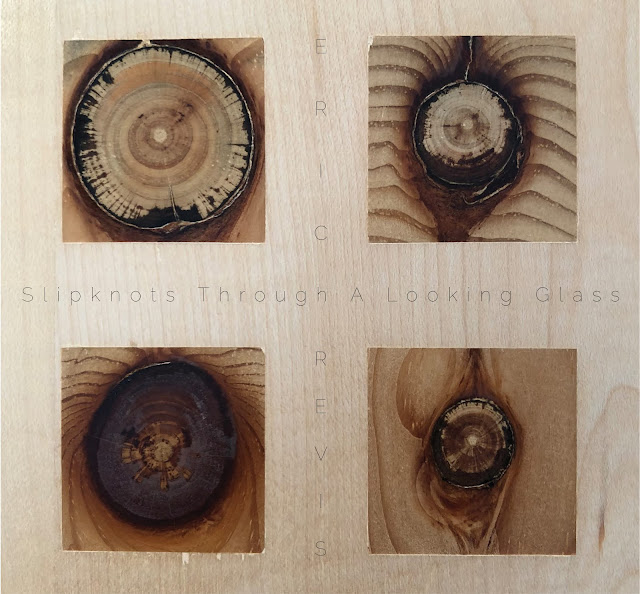
Eric Revis - Slipknots Through A Looking Glass (Pyroclastic Records)

Eric Revis flexes conceptual sensitivity with release of 
Slipknots Through A Looking Glass 

Featuring Revis with Chad Taylor, Kris Davis, Darius Jones and Bill McHenry

“A bassist with a strong rhythmic compass and a stout, beefy tone” — The New York Times


A highly skilled master of sound and sense, GRAMMY award-winning bassist and composer Eric Revis has crafted his artistic legacy around asking the same question again and again: Why not? Experimenting remains integral to his expression. Over the years, the critically-acclaimed artist’s willingness to traverse the unknown has prompted collaborative partnerships with Branford Marsalis, Nasheet Waits, Kris Davis, Peter Brötzmann and Jason Moran.

Heralded by critics as “powerful,” “raw” and “fierce,” Revis’ playing frequently becomes mischaracterized by way of omission. While he plays and composes with master-level intensity, the intrinsic vulnerability present in any form of experimenting — and deeply present in Revis’ artistry — rarely yields recognition among music writers. “I don’t mind those kinds of descriptions or monikers,” he says, “but not when it’s at the negation of everything else. There may be an air of robustness around my music, but there is a lot of sensitivity and intellectual content.”

Poised to challenge those limited views of Revis’ expression, Slipknots Through a Looking Glass — his eighth solo-led album, and first release on Pyroclastic Records — explores new territory alongside familiar travelers: drummer Chad Taylor, pianist Kris Davis and saxophone masters Darius Jones and Bill McHenry. “The band is kind of an amalgam of groups I’ve previously recorded with,” says Revis, who sought to combine the energies of various project iterations on a single record.

Much of the album’s music — primed for enquiry and collaborative input — emerged during several weeks of solitude. Through a partnership with The Jazz Gallery, the LA native received a 2017 grant from The Rockefeller Foundation to spend some time at the Kykuit estate in Pocantino Hills, NY. Two compositions from that retreat found their way on to Marsalis’ 2019 GRAMMY-nominated recording The Secret Between the Shadow and the Soul. Revis sought to interpret the remaining music through a range of treatments — both scripted and spontaneous — on Slipknots Through a Looking Glass, an album that exposes the full flower of his conceptualism. Master producer Ron St. Germain serves as production and mixing engineer for the recording – an instrumental force in the development of its character, at once sprawling and intimate. 

Beginning as a developing conversation between Revis and Taylor, “House of Leaves” represents a conceptual flex for Revis as a composer. The track centers around textural shapes — each, according to Revis, its own island. Exploiting space, the artists leave one island and reenter “nothingness” before traveling to the next. “It was interesting to see how the band could collectively navigate these islands,” says Revis. “Without giving it over to the musicians entirely, the process was more, ‘I have this sparse idea; let’s develop it into this next sparse idea, and then go on from there.”
Rendered as a “visceral approach to melody,” according to Revis, “Vimen” serves the artist’s appetite for exploring energies that surround the music — and the session — thoroughly and critically. “I wanted more emphasis on the energy than on exact notes or notation,” he says. He asked his collaborators to approach title track “SpÆ” with similar controlled spontaneity. “We kind of deconstructed the composition,” says Revis. The trio tune features Davis on prepared piano and Taylor on mbira. “We just played,” he says. 

Incorporating three separate takes, the track features crossfades leading from one take to the next. “It’s almost like if you had people speaking in three separate rooms, and then you put them together — all of a sudden you have this great conversation that, even though it was intended to be about disparate things, really makes a whole lot of sense.” 

An artist fascinated by the surrealist movement, Revis keeps a digital journal of images and concepts flashing before him so that he might one day use them in his music. “The image of slipknots through a looking glass came up and I thought, ‘Wow — this is really cool.’” Immediately he connected his own artistry to the image’s inherent symbolism: the slipknot’s ephemeral nature further complicated by its reflection through the looking glass — was it even there to begin with, and where does it go when it disappears? “All those ideas are very, very much a part of this record,” he says. “The idea of a journey — although it wasn’t something that I set out to do, it’s a theme that runs through all of this record.” 

How listeners might interpret his music matters less to Revis than the act of composing and recording it. “We can hear things and say, ‘Wow, I feel a certain foreboding quality about this,’ and the next person says, ‘Wow, this is such a happy song,’ or for example, Tchaikovsky being able to evoke all this emotional gravitas and almost melancholy — out of major chords! He’s able to exact pathos from major chords.” 

“Hopefully, it’ll be heard,” he says. “When somebody really doesn’t like something, I think that’s incredibly honest and beneficial. If [my music] truly evokes real happiness, that is absolutely beautiful. But if it makes you uncomfortable, that’s a real emotion. And to have something do that — I think that that’s amazing.”

1. Baby Renfro 04:59
2. SpÆ 04:47
3. Earl & The Three-Fifths Compromise 07:14
4. Slipknots Through A Looking Glass, Part 1 02:21
5. Shutter 04:43
6. ProByte 06:19
7. Slipknots Through A Looking Glass, Part 2 01:28
8. House Of Leaves 07:07
9. When I Become Nothing 03:30
10. Vimen 11:33
11. Slipknots Through A Looking Glass, Part 3 03:10

Kris Davis Piano
Bill McHenry Tenor Saxophone
Darius Jones Alto Saxophone
Chad Taylor Drums, Mbira
Justin Faulkner Drums on Tracks 1 and 3

All compositions by Eric Revis except:
Track 2: Eric Revis, Kris Davis and Chad Taylor
Track 5: Darius Jones Track 9: Bill McHenry