Saturday, February 3, 2018

SkyDive Trio- Sun Sparkle (HUBRO MUSIC 2018)


Olavi Louhivuori is a wonderful, sparkling Finnish drummer and percussionist with high energy and a real, positive vibe to his playing, inviting and challenging his fellow musicians to stretch for the utmost of creativity and musicality.

He has studied drums and composition at the Sibelius Academy. He has received the “Young Nordic Jazz Group” award three times with three different bands: the Joona Toivanen Trio, the Ilmilekki Quartet and the Sun Trio.

Olavi has played and toured extensively with the polish trumpeter Tomasz Stanko was well as Anthony Braxton, Marilyn Crispell, Susanne Abbuehl, Kenny Wheeler and. He has releases several album with his own bands and under his own name and received the Finnish Emma Award for Oddarang in 2007.

Olavi also composed a drum-concerto for a full symphony orchestra with himself as a featured soloist.

Thomas T Dahl, guitar
Olavi Louhivuori, drums
Mats Eilertsen, bass

Tour
7. Feb Tromsø Jazzklubb, Norway
8. Feb Hamar Jazzklubb, Norway
9. Feb AdLib Jazzklubb, Bodø, Norway
25. May Nattjazz, Bergen, Norway


Guitarist Thomas T. Dahl studied at the Trondheim Conservatory of Music and made his breakthrough with the prize-winning band Krøyt, featuring vocalist Kristin Asbjørnsen. He has an amazing instrumental capacity, equally at home in various styles and genres, chordal structures, sonic cinematic landscapes and more modern pop/rock-oriented projects really using the full potential of his guitar, the rich full string sound combined with tasty drops of electronic treatments. He writes beautiful, intriguing compositions, featured on Sun Moee.

Thomas has released albums with the band BMX with Per Jørgensen, Dingobats with Eirik Hegdal, and has collaborated with Erlend Skomsvoll, Jon Balke, Hilmar Jensson, Nils-Olav Johansen, Jim Beard, John Inderberg and produced Highasakites debut album. He is also associate professor at the Griegacademy in Bergen.

Mats Eilertsen, from Trondheim, Norway, has a special warm and lyrical way of treating the bass, being steady and experimental at the same time, bringing it all together and yet showing openness, willingness, and constantly searching for new sounds.

He is a very active and productive musician, a and has over the years appeared on albums by ECM-associated bands and artists like Tord Gustavsen Ensemble, the Source, Wolfert Brederode Quartet, and Parish, as well as Håkon Kornstad Trio, Food with UK saxophonist Iain Ballamy, Jacob Young Band, Solveig Slettahjell’s Slow Motion Orchestra and Håvard Wiik Trio.

He has released several albums in his own name on the Hubro-label and also made a commissioned work, Rubicon, for a 7-piece ensemble at the VossaJazz-festival in 2014.

He has also had the opportunity of performing with international stars such as Pat Metheney, Joshua Redman, Lee Konitz, Bobo Stenson, Kenny Wheeler, Tomasz Stanko, and participated on nearly 100 albums by now.

Olavi Louhivuori is a wonderful, sparkling Finnish drummer and percussionist with high energy and a real, positive vibe to his playing, inviting and challenging his fellow musicians to stretch for the utmost of creativity and musicality.

He has studied drums and composition at the Sibelius Academy. He has received the “Young Nordic Jazz Group” award three times with three different bands: the Joona Toivanen Trio, the Ilmilekki Quartet and the Sun Trio.

Olavi has played and toured extensively with the polish trumpeter Tomasz Stanko was well as Anthony Braxton, Marilyn Crispell, Susanne Abbuehl, Kenny Wheeler and. He has releases several album with his own bands and under his own name and received the Finnish Emma Award for Oddarang in 2007.

Olavi also composed a drum-concerto for a full symphony orchestra with himself as a featured soloist.

Friday, February 2, 2018

TY - A Work of Heart (jazz re:freshed 2018)

On March 2nd 2018, the real mayor of Brixton, AKA acclaimed and respected rapper/producer Ty returns with 5th longplayer ‘A Work Of Heart’. Produced predominantly and written by Ty, this hip hop classic is a proper artist album that elevates the genre in an ambitiously artistic manner, akin to Kendrick Lamar and Kanye West.

The crisp and bouncy audiophile production is suffused with evocative, flavour-filled samples, live instrumentation and a heady, groovy atmosphere, whilst clever but accessible, vivid and entertaining lyrics are delivered with a grown-man hip hop finesse and honest, bullshit-free directness.  

With wit, subtlety and humour Ty tackles subject matter ranging from Brixton, depression, poverty, racism, family, hip hop and the creative process, to philosophical musings on life and even imagined film soundtracks.

Despite being Ty’s masterwork, he also finds plenty of space to accommodate others, with a cast of guests including Durrty Goodz (now known as OG Rootz), Tall Black Guy, Wayne Francis from United Vibrations and the legendary Umar Bin Hassan from The Last Poets.


As the title suggests, Ty poured all of his heart into making this record, and it’s clearly audible; the hypnotic double-time roller ‘Eyes Open’ invites listeners to keep their senses sharp, acting as a subliminal invitation on how best to appreciate the rest of this record that reveals further sonic, musical, lyrical and thematic layers with repeated listens. 

With a liquid, spiritual soul beat, the deeply lyrical ‘Somehow Somewhere Someway’ is simultaneously a tribute to crowd-fuelled hip hop energy, a mantra to restoring faith in yourself and a prime example of Ty’s total synergy between music and rapping.

With a nod to Roy Ayers ‘Brixton Baby’ masterfully captures the bittersweet essence of one of London’s most currently prominent areas, in a celebration of coming from somewhere and the opposite to a hip hop postcode war.

The melancholy bass clarinet of ‘Marathon’ sets the tone for Ty’s glimpse of anxiety, depression and general struggle poetically being documented but not bemoaned, with a message of pushing on - both from a personal perspective and universally.

Maternal tribute ‘You Gave Me’ offers this album’s equivalent of Ty’s perennial anthem ‘Music 2 Fly 2’, and paints a picture of family sacrifice over a long period of time.

‘As The Smoke Clears’ features beats by Tall Black Guy, who Ty came into contact with via the popular Facebook group he started for producers called The Beat Inn. The concept and challenge they came up with together was to pick 2 films and create music for certain scenes. Verse 1 is about a scene from Paul Haggis’ ‘Crash’ and verse 2 is about the rape scene from Tyler Perry’s ‘For Coloured Girls’.

Ty values hip hop as a high art form. He set out to create an album where every beat, sound and idea were thought-out, then thematically and coherently fused to create what he considers a perfect whole.

“I wanted to move away from the hip hop album approach where a bunch of disparate beats by different producers and different rappers with stock rhymes are strung together” he explains.

“With every guest, every sample, lyric and instrument I thought about whether they suit the themes and mood of the song, then decided what to include accordingly.

As the songwriter and producer, I created whilst thinking what the album is actually telling you. This is my life work, it’s how I feel, and it’s a catharsis.

I want to upgrade the view of hip hop; rappers need to view their artform as important, which is why I have lyrics like ‘every rhyme written should be in a museum’. This music should be treated with importance and a lasting high value”, he concludes.

Ty has released 4 critically acclaimed albums; ‘Awkward’, ‘Upwards’ (Mercury nominated) and ‘Closer’ on Ninja Tune’s Big Dada imprint,  plus ‘Special Kind Of Fool’ on BBE.

He has collaborated with De La Soul, Tony Allen, Roots Manuva, Bahamadia, and Speech from Arrested Development.

He has two radio shows; the educational ‘Reaching Out’ on Soho Radio, which features intelligent discussion on academia with a hip hop connection and ‘Awkward Audio’, which is an outlet for new hip hop.

Recently Ty participated in workshops alongside the hotly-tipped MC Mist, in support of young emerging artists in Birmingham, which were organised by Levi's Music Project and filmed by Boiler Room.

The Jazz re:freshed record label has been doing big things since its official inception in 2016, and this is its biggest thing to date. From their popular weekly live residency in West London, to the annual JAZZ RE:FEST festival on the Southbank, Jazz re:freshed are building on the organisation’s mission to provide services and support independent, UK jazz and jazz influenced artists. Co-founder Adam Rockers says, "It is an honour for us to have TY on our label because for years we have respected him and his forward thinking approach to hip-hop and the musicality he brings to the genre." 


1. ‘WorKINGTro’
2. ‘Eyes Open’
3. ‘Somehow Somewhere Someway’
4. ‘Brixton Baby’
5. ‘Work Of Heart’
6. ‘Marathon’
7. ‘No Place To Run’
8. ‘You Gave Me’
9. ‘Harpers Revenge’
10. ‘Folks Say People Say’
11. ‘World Of Flaws’
12. ‘Raindrops’
13. ‘The Raspberry’
14. ‘As The Smoke Clears


Augusto Pirodda - Kosmima (EL NEGOCITO RECORDS 2018)


Augusto Pirodda plays solo, to the rhythm of his piano, and makes this intensely poetic and fascinating journey. He constantly searches for new ideas, avoids stereotypes and stylistic barriers. Like a tightrope walker, he moves effortlessly between jazz and free improvisation. 

Augusto Pirodda is known from his trio with Gary Peacock and Paul Motion and his quartet with Ben Sluijs, Marek Patrman and Manolo Cabras.

1. Kosmima 1:41
2. Jompro 2:54
3. Bootprints 2:36
4. Alter Ego 2:55
5. Bollad 3:04
6. Bass Thing 1:11
7. By Thirds 5:53
8. Dark Prelude 4:10
9. Momentino In Tre 1:51
10. Crystal Waltz 2:47
11. Prelude #2 1:31
12. Long Time No Sea 5:16
13. Thrilling 1:38
14. Between 3:17

Augusto Pirodda piano

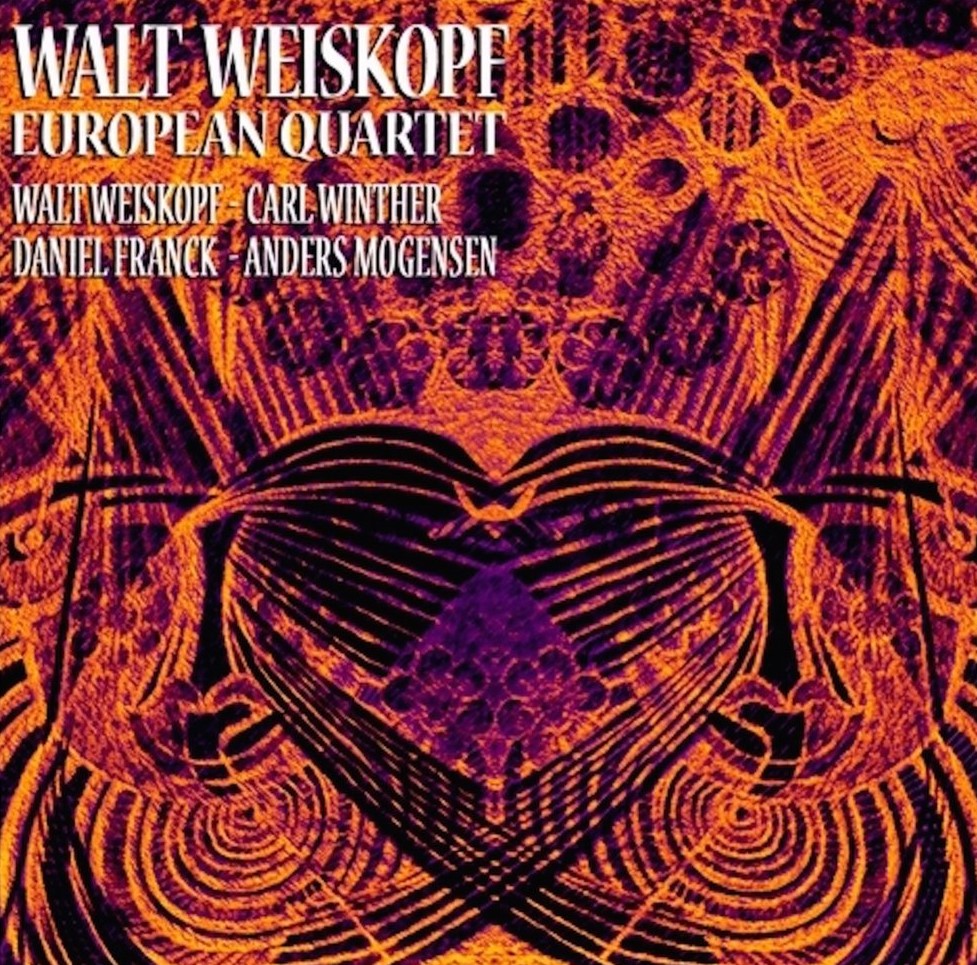
Walt Weiskopf: Walt Weiskopf European Quartet (2018)


For more than a decade Walt Weiskopf has been part of the legendary band Steely Dan. Weiskopf took over the seat after Chris Potter, and has thru that position made some name for himself.

Weiskopf has realeased more than 10 albums in his own name, featuring jazz icons such as Brad Mehldau, Bill Stewart and John Patitucci.

Weiskopf has chosen to work with a European trio that are considered state of the art.

Winther, Lang, Mogensen are all three well estimed jazzmusicians, and known as the Best swingin' trio around Europe. They have individually toured and recorded with jazz greats such as Kevin Hays, Kurt Rosenwinkel, Jerry Bergonzi, Bob Berg, Brecker Brothers, Lew Soloff, Tim Hagans, David Liebman.

1 Kma (feat. Carl Winther, Daniel Franck, Anders Mogensen) 5:30
2 Gates of Madrid (feat. Carl Winther, Daniel Franck, Anders Mogensen) 8:53
3 Wizard (feat. Carl Winther, Daniel Franck, Anders Mogensen) 7:21
4 See the Pyramid (feat. Carl Winther, Daniel Franck, Anders Mogensen) 6:40
5 Darth (feat. Carl Winther, Daniel Franck, Anders Mogensen) 9:04
6 Soul Eyes (feat. Carl Winther, Daniel Franck, Anders Mogensen) 8:18
7 Bolivia (feat. Carl Winther, Daniel Franck, Anders Mogensen) 6:51


Walt Weiskopf - sax
Carl Winther - piano
Andreas Lang - Bass
Anders Mogensen - drums

Gianni Vancini - Get Your Groove On (ALFA MUSIC 2018)


AlfaMusic announces the release of the album Get Your Groove On, scheduled for the beginning of 2018. Gianni Vancini’s record (he has been several times in the American charts of Billboard, Smoothjazz.com etc), has been entirely recorded in Los Angeles, and boasts all internationally renowned musicians and special guests.


“Gianni Vancini has a unique and wonderful relationship with the Saxophone! He can make you feel so many memorable moments, as the music comes straight from his heart and soul. Gianni’s music is so may things, crisp, refreshing, exciting,soulful, tender and filled with great passion! “Get Your Groove On” is an album brimming with amazing music featuring artists such as Terry Wollman, Greg Manning, Selina Abright, Jeff Lorber, Kenya Hathaway, Kirk Whalum and Alex Al … all whom contribute to this totally fantastic album, making it a Top Favourite with me!!! Gianni is passionate and professionalabout his music, this is shown in his ability to create such a wonderful masterpiece for us to appreciate and enjoy!” David Snashfold – Founder of Smooth Jazz Appreciation Society (London – UK)

BAND

Ricky Lawson: Drums
Alex Al: Bass
Darryl Williams: Bass
James East: Bass
Stan Sargeant: Acoustic Bass
Darrell Crooks: Guitar
Sheldon Reynolds: Guitar
Greg Manning: Keys

SPECIAL GUESTS

Kenya Hathaway: Vox
Terry Wollman: Guitar
Jeff Lorber: Fender Rhodes
Selina Albright: Vox
Kirk Whalum: Tenor Saxophone
Renato Falaschi: Acoustic Piano
Earl Buffington: Vox

Giampiero Locatelli - Right Away (AUAND RECORDS February 23, 2018)


“Right Away” is Italian pianist’s Giampiero Locatelli debut album. Out for Auand Records on February 23rd (distributed by Goodfellas / Jazzos.com), the recording features Gabriele Evangelista on double bass and Enrico Morelli on drums. Choosing to work with a trio proves to be the best way to fully accomplish his vision of music: it’s the ideal, logical result of Locatelli’s composition approach and music manipulation. Evangelista and Morello’s contribution is key to let the music take its final shape.

A mixed music education – never limited to a specific music field, but rather open to contemporary and improvisation – takes the band far away from the ordinary piano trios and shapes their music as innovative. The trio is conceived as the operating center in a music idea that swings between improvisation and written music.

Even with no strictly melodic background, Locatelli’s gift is a special outgoing ability, which always grants his compositions’ complex layers a touch of spontaneity. Among the 8 originals are tracks inspired by Bach (Inspire me) and Escher (Toward Backward), minimalist and jazz ballads (From the last Frame and Like a Gentle Mood), and the complete upheaval of the very idea of a piano trio, as in the title track Right Away.

The recording will be presented live on April 16th at Jazz Club La Sosta in Villa San Giovanni (RC, Italy).


Dino Plasmati & LJP Big Band (Special Guest Bobby Watson) - Matera encounters (ALFA MUSIC 2018)


There’s no time to waste!

When you listen to the first notes coming from the piano, you immediately get caught in the flow of music and emotions coming from the nine tunes chosen by Dino Plasmati for a special encounter: his LJP Big Band with the great US jazz soloist Bobby Watson.


Guitarist, conductor and ensemble’s leader, Dino Plasmati chose the repertoire with care following some precise guidelines: a lively, joyful and constantly changing music able to lift the magnificent spirit of the band; a different approach to jazz tradition seen through uncommon/unique interpreters and composers; and last but not least, a superior strength coming from a larger ensemble, the impulse given by brass and wind sections and the dynamics that only a big band can perform/offer.

These are the distinctive features that clearly and consistently show the character of the LJP Big Band.

The amused and daring character of the band is soon revealed, together with the ability to captivate the audience with an effervescent mood amplified by a repertoire always performed in a dynamic and straightforward style. What’s more, even if the ballads keep a mellow sound, they never get schmaltzy but they are enlivened by an intense verve.

And finally, the funky nuances of Admiral's horn, the sparking reinterpretation of Soul Kitchen by the Doors, the hard-bop boost given by Groovin’ Hard and the close dialogue among sections in the intro of Big Mama Case remove all doubts and state the intentions of the band.

The presence of Mr Bobby Watson counterbalances the choice of working with tunes and authors/musicians who, although sticking to tradition, belong mainly to a newer generation when compared to big historical figures. As in the case of the saxophonist, we are dealing with musicians who breached the path marked by their predecessors in order to find new expressive possibilities. And, “standing on the shoulders of Giants”, to quote Isaac Newton, they emphasized their own personal intuitions and taste, thus proving that jazz music can evolve even from its inwards.

First as a member of Art Blakey’s Jazz Messengers and afterwards as solo performer, Bobby Watson followed the same pattern: a predominant acoustic dimension, the coherent adherence to tradition without losing the opportunity to raise his distintive voice and suggest his own modern vision of the jazz language.


The combination of the soloist and the big band provides a fertile ground to put all that into place: dialogues and call-and-response among sections, the possibility to play with arrangements and to expand the tunes beyond the ‘usual’ sequence of theme and solos; the effect of dynamics. All these elements not only return but also multiply the expressive Energy that defines their character.

Dino Plasmati has been combining his activity as musician in smaller groups and his role as leader of the LJP Big Band for a long time now: the guitarist led his “creation” as a lab where growing and learning through constantly new challenges is the key and where different energies are channelled in order to be able to work with great International artists.

And so, there’s no time to waste...the piano has cued the music, soon the sections will rise up to play the first theme and soloists will get ready for their performances: we are already in the mood for music!

Fabio Ciminiera

Produced by Dino Plasmati & MiFaJazz Ass.
Production coordination Fabrizio Salvatore (AlfaMusic)
BOBBY WATSON and LJP BIG BAND
Bobby Watson alto sax
Nico Marziliano piano
Francesco Fossanova bass
Vito Plasmati drums

Saxophones
Michele Munno (as)
Claudio Chiarelli (as)
Angelo Manicone (ts)
Tommaso Capitolo (ts)
Vincenzo Appella (bs)

Trombones
Franco Angiulo
Raffaele Amato
Vincenzo Pace
Nino Bisceglie (bass tbn)

Trumpets
Luciano Palmitessa
Marco Sinno
Nicola Di Marzio
Emanuele Lamacchia

Soloists
1 - DOIN’ BASIE’S THING
Nico Marziliano (pf), Bobby Watson (as)

2 - BIG MAMA CASE
Dino Plasmati (g), Claudio Chiarelli (as), Nico Marziliano (pf), Bobby Watson (as)

3 - GROOVIN’ HARD
Angelo Manicone (ts)

4 - BASICALLY BLUES
Franco Angiulo (tbn), Angelo Manicone (ts), Boby Watson (as), Dino Plasmati (g)

5 - OVER THE RAINBOW
Bobby Watson (as)

6 - BROADWAY
Bobby Watson (as), Dino Plasmati (g) 7-ADMIRAL’S HORN Soloist: Bobby Watson (as)

7 – ADMIRAL’S HORN
Bobby Watson (as)

8 - DONNA
Nico Marziliano (pf), Bobby Watson (as)

9 - SOUL KITCHEN
Marco Sinno (tp), Claudio Chiarelli (as), Dino Plasmati (g), Bobby Watson (as)

Dumbo Station - Tirana cafè (ALFA MUSIC 2018)


Tirana Cafè è l'esordio discografico di Dumbo Station.

Questo lavoro costituisce la sintesi dei nostri primi due anni insieme, ed ha assunto molteplici aspetti prima di giungere alla sua forma attuale.

Il nostro incontro ci ha spinti verso il confronto con nuovi orizzonti musicali, ed ognuno dei brani contiene al proprio interno una traccia di questi percorsi.

Dumbo Station nasce a ottobre 2015 dall’incontro tra Paolo Zou (chitarra), Benjamin Ventura (pianoforte e tastiere) Stefano Rossi (basso elettrico) e Davide Savarese (Batteria). 

Il gruppo intraprende fin da subito un'intensa attivià concertistica, diventando la resident band della Roma Groove Session, realtà musicale che sta rapidamente prendendo piede nel panorama musicale romano, ispirandosi alle jam multistilistiche del nord Europa. Grazie a questa collaborazione il gruppo ha l’opportunità di accompagnare settimanalmente artisti della scena musicale romana e non solo (alcuni degli artisti accompagnati: Maurizio Giammarco, Dario Deidda, Greg Hutchinson, Michele Papadia, Fabio Zeppetella, Pierpaolo Principato, Stefano Sabatini, Phil Aelony, Davide Shorty, Lello Panico, Antonello Sorrentino, Marta Colombo).

Parallelamente all’attività concertistica il quartetto è impegnato fin dalla sua nascita nella produzione del proprio album d’esordio, che comprende esclusivamente brani originali. Il risultato è un lavoro estremamente eclettico, che spazia dal Jazz moderno al Jazz tradizionale, dal funk al gospel, fino ad arrivare al nu soul; il tutto mantenendo come capisaldi l’interplay e l’improvvisazione.

Il lavoro discografico, intitolato “Tirana Café”, è stato registrato nel mese di maggio (2017) con la partecipazione di Maurizio Giammarco, Vincenzo Presta, Elvio Ghigliordini e Davide Shorty, e pubblicato per l'etichetta romana AlfaMusic.

1 DUMBO STATION ft. Maurizio Giammarco 4.52
2 BIG ONE ft. Elvio Ghigliordini 6.57
3 NARVALO 6.15
4 YOUR POISON ft. Davide Shorty 4.08
5 SUGO FORENSE 5.44
6 STUTTER ft. Elvio Ghigliordini 5.27
7 GYRO 0.34
8 SMASHING SUSHI ft. Vincenzo Presta 6.04
9 PRAISE THE LORD 4.00
10 DR. GATTOLONIO ft. Maurizio Giammarco 5.56
11 TRIATHLON 3.34

All composed by Paolo Zou
Lyrics by Davide Sciortino 

Paolo Zou guitar
Benjamin Ventura piano and keyboards
Stefano Rossi electric bass
Davide Savarese drums

CD Special guests appearance:

Elvio Ghigliordini (flute)
Maurizio Giammarco (sax)
Vincenzo Presta (sax)
Davide Shorty (voice), per gentile concessione di Macrobeats record.

Produced by Dumbo Station
Production coordinator: Fabrizio Salvatore for AlfaMusic Label&Publishing

Aurélien Dumont Ensemble Linea - STILLNESS (ODRADEK RECORDS)


Stillness is my second monographic album. It is the result of a particularly close collaboration with Ensemble Linea and its director, Jean-Philippe Wurtz.

Apart from bringing together works written for small ensembles, from the quartet to the sextet, the choice of the programme emphasises a particular aspect of my music, namely that of fixity and temporal suspension.

Aurélien Dumont

Stillness is the result of a close collaboration between composer Aurélien Dumont and Ensemble Linea, along with its director, Jean-Philippe Wurtz.

As well as bringing together works written for small ensembles, from the quartet to the sextet, the choice of programme emphasises a particular aspect of Dumont’s music: a tension between the permanent and the ephemeral.

The five pieces featured on the CD were conceived as five soundscapes comprising fragile and mysterious materials. Their structures were inspired by the Japanese concept of Tokowaka, mirroring the identical construction and deconstruction of the Shinto temples at regular intervals and for more than 1300 years. This process, as reflected in Dumont’s mesmerizing music, is a means of fusing the infinite with the transient; movement with fixed elements; consistency with difference.

Works featured on the disc include Fiocchi di silenzio, a short and intimate three-voice dialogue between silence, delicate materials, and elements taken from Gabrieli’s motet, O magnum mysterium. Berceuse et des poussières explores noisy musical combinations which find their origin in the first movement of Beethoven’s third Piano Concerto. In Sérieux Gravats, we can hear reminiscences of the prélude Ondine by Debussy, the composer who most influences Dumont’s style. 7 Vallées, in its aesthetic approach to sound design, explores minimalist sonorities which echo both our inner worlds, and our relationships with the outside world.


Founded in Strasbourg by pianist and conductor Jean-Philippe Wurtz in 1998, Ensemble Linea has much in common with the Odradek ethos: since its beginnings, the group has been committed to promoting a democratisation of contemporary music, giving priority to the encounter with the audience, and to openness towards other artistic disciplines.


Thursday, February 1, 2018

JAZZ AGE CULTURE


"Hip flasks of hooch, jazz, speakeasies, bobbed hair, 'the lost generation.' The Twenties are endlessly fascinating. It was the first truly modern decade and, for better or worse, it created the model for society that all the world follows today." (from Kevin Rayburn, "Two Views of the 1920s.")

The Flapper Era

For most, a “flapper” is a merely a young woman from the 1920s. Unfortunately, her significance and importance has been forgotten. She’s been regulated to nothing more than an inspiration for Halloween costumes.

Yet, remembering “flappers” illuminates the changing mores of Western culture after World War I. Flappers were a major part of the decade of the 1920s. The same decade that laid the foundation of our “modern” society.

Women of the 21st century, and in many regards men, owe a huge debt to the flappers. They proved that “well-behaved women seldom make history.”

Definition

What does it mean when we say “flapper?” 

The word likely originated as a description of a young bird learning to fly and then used to described young women in general.

In England, the word “flapper” has referred to both a “young girl” (whose pigtail flapped around) and a “prostitute.” 

By the end of the 19th century, the English used “flapper” to describe prostitutes and as a derogatory remark for a young woman. 

The word appeared in print as early as 1903.

In 1920, the movie The Flapper portrayed a character that we’d now consider the epitome of the term.

Beyond the simple “young woman of the 1920s,” a flapper can also be defined by her fashion, attitude, and technology. Those areas were shaped by the three great events of the second decade of the 20th century: World War I, 1918 flu pandemic, and Prohibition.

Flapper Fashion

Flappers wore knee-length dresses that seldom had sleeves. By today’s standards, such a frock is tame. In 1920s, it was radical.

Flappers wore their hair short, usually in a bob. Hitherto, women had long hair. Again, a radical departure.

Tastemakers had a lot to do with the simple silhouette casted by the flappers’ frock. Another influence was the ease at which these dresses could be made. Women of modest means and talent were able to sew flapper dresses at home.

While class distinctions were eroding in the 1920s, wealthy women still wore elaborate, ornate dresses and poor women were left to window shop. Nonetheless, a large swarth of women between those extremes were able to be fashionable.

It should be noted that flapper apparel was unrestrictive. It allowed them to move (and for that matter breathe).

For men, it’s odd to think about clothes prohibiting movement, but in the 1920s, women had only recently abandoned the corset.

When we write that flappers wore unrestrictive garb we’re not being figurative. Literally, Flappers wore garments that allowed them to be mobile and participate in the same activities as men.

Attitude

Flappers showed disdain for convention, tradition, and authority. They drank, smoke, and were causal about sex. They rejected Victorian gender roles that shackled their mothers and grandmothers.

Part of their attitude was a reaction to 100 million people (depending on what numbers you use) that died in World War I and from the 1918 flu pandemic. 

Basically, five percent of the world’s population died in a five-and-a-half-year period. Flappers learned first-hand the fragility of life. They decided to live in the now and have as much fun as possible.

Many women worked in factories during World War I and didn’t want to return to homemaking. Some were landing careers in the historically male dominated fields of medicine, law, and aviation.

A booming economy, and the rise of consumerism, also shaped flapper’s progressive attitudes. Women had disposable income and companies had products to sell them.

In the United States, Prohibition was extremely unpopular and fostered a spirit of unlawfulness. It was “cool” to break the law and drink.

Finally, women received the right to vote in 1920. That inspired flappers to seek the same economic, political, and sexual freedoms as men.

Technology

Flappers coincided with the rise of jazz, the dominate popular music of the 1920s.

Jazz was the perfect soundtrack for flappers, the roaring twenties, and the general excesses of the decade. The music was new, exciting, and drenched in possibilities.

Since the beginning of the 20th century, popular music and technology have been linked. The rise of Jazz was also connected to advances in technology.

Jazz artists utilized the relatively new phonograph to promote their sound. Sure, phonographs were still a few years from being ubiquitous, but it definitely helped the genre gain popularity.

One such recording artist was Bessie Smith. Smith was not only a favorite amongst flappers, and a woman who embodied the attitude of the 1920s, she also inspired legends like Billie Holiday and Janis Joplin.

Another technological advancement to the flapper lifestyle was the proliferation of the automobile. The car allowed women to leave the home and explore their world.

Famous Flappers

Famous women who projected the flapper lifestyle included Clara Bow, Louise Brooks, Joan Crawford, Anita Loos, and Colleen Moore. The fictional character, Betty Boop, was inspired by flappers.

Although he was not a flapper, F. Scott Fitzgerald certainly helped popularize the movement.

Contrary to popular belief, Dorthey Parker was not a flapper. She criticized the fad in “Flappers: A Hate Song.”

End of Flappers

Flappers didn’t fade away. They vanished in the blink of an eye. The cause of their hasty departure was the Wall Street Crash of 1929. 

The extravagances that flappers enjoyed in the 1920s were gone as quickly as they came. The economic conditions of the Great Depression meant overconsumption was over.

Flappers, as well as the world, had to make do with less. There was no money for fashion, alcohol, or jazz. By 1934, all remnants of flapper fashion were gone from the popular culture landscape.

While they were around, flappers laid the foundation for further advancements in feminism and women’s rights. Say what you will about them, but at least they made history.


The Harlem Renaissance

"Harlem was not so much a place as a state of mind, the cultural metaphor for black America itself." (from Henry Louis Gates Jr., Rhapsodies in Black, 1997)

Occurring concurrently with the flapper era was the Harlem Renaissance. While flappers strived for equal freedom for women, the Harlem Renaissance did the same for African Americans. Yet, their medium wasn’t fashion. It was art.

Like the name suggests, the Harlem Renaissance was based in New York City. Harlem is a neighborhood in the borough of Manhattan.

The literature, poetry, and music produced by the Harlem Renaissance uplifted African Americans. Using the parlance of the day, the movement’s aim was to create a “New Negro.” 

Through art, the Harlem Renaissance challenged racism and stereotypes. It moved African American culture out of the country and into the city. 

The Harlem Renaissance had no set artistic parameters. Its main thrust was dignity, promoting integration, and supporting progressive politics.

The lack of a clear artistic structure hurt the renaissance from within. There were African American intellectuals who disapproved of how some artists of the Harlem Renaissance depicted the black experience. To put it another way, high art clashed with low art.

African Americans fueled the Harlem Renaissance both artistically and commercially. White Americans participated on the periphery through admiration and patronage.

Unfortunately, there were some white Americans drawn to the Harlem Renaissance by white guilt and “primitivism.”  Primitivism is believing a culture is “primitive” and then experiencing that “primitive culture” because it’s an oddity. 

Many modern scholars and intellectuals look at the Harlem Renaissance as a failed American experiment a failed civil rights movement.

Certainly, scholars and intellectuals can debate the efficacy of the Harlem Renaissance’s politics. What’s not up for debate is the art the movement produced that continues to inspire and enlighten Americans of every ilk.

Notable Harlem Renaissance People

Names associated with the Harlem Renaissance include:

Langston Hughes
Gwendolyn Bennett
Sterling Brown
Beauford Delaney
Meta Vaux Warrick Fuller
Marcus Garvey
Zora Neale Hurston
James Weldon Johnson
Richard Bruce Nugent
Ann Lane Petry
Dorothy West

Sarah Lancman - A contretemps (JAZZ ELEVEN 2018)


« She’s truly a great new voice for jazz » : that’s what Quincy Jones said about Sarah Lancman when she won the first prize of the international SHURE jazz voice competition 2012, in Montreux.

After the success of her album « Inspiring Love » recorded in New York, the singer Sarah Lancman comes back with a new release called « A Contretemps » surrounded by a prestigious team : The pianist Giovanni Mirabassi ( 17 disques d’or, Victoire de la Musique, Django d’or,) who currently played with Chet Baker, Steve Grossman, Eliott Zigmund, Glenn Ferris and many others, Gianluca Renzi (Ari Hoenig, André Ceccarelli, Kevin Pays…) on doubleness, Gene Jackson (Herbie Hancock Trio, Diane Reeves, Christian McBride , Joe Lovano…), and as special guest the japanese singer and flugelhorn player TOKU (13 albums, recorded artist from Sony Jazz Japan).

Sarah Lancman : vocal, composition ( piano on " Conjugaison Amoureuse")
Giovanni Mirabassi : piano, composition
Gianluca Renzi : doublebass
Toku : vocal & Fluggelhorn

Vinkeloe | Smith | Nordeson - Elegans (BALANCE POINT ACOUSTICS 2018)


This trio has all of the quality of Vinkeloe's well-known trio recordings with Barre Phillips or the late Peter Kowald (both with drummer Peeter Uuskyla), but due to Smith's very original playing, and Nordeson's exciting performances on drums and vibraphone, the trio takes on a character of its own. Of course, Vinkeloe's playing is as stellar as ever.

According to double-bassist and occasional Biggi Vinkeloe collaborator Barre Phillips, “The music of Biggi Vinkeloe, with her beautiful melodies, instrumental tone and lush phrasing, the delicate, tasteful rhythmic offerings and harmonic richness of Kjell Nordeson plus the warm depth and microtonal colorings of Damon Smith all add up to a very enjoyable recording.” 

According to Marc Medwin of the Bagatellen web site, “I chose a late evening to audition this latest Nuscope offering for the first time, and now it never sounds quite right during the day. The duo and trio explorations exist, by and large, in afterglow, in the calm but magical world of overtone and shadow I associate with moonlight. The music is not reticent—far from it! It ebbs and flows with the quiet certainty of expectation, making the occasional moments of more extreme light and darkness more vivid. 

The opening to “Kinkajou” is one such instance; Smith’s puckish arco scoops and Nordeson’s percussive twitters giving rise to one of the disc’s most overtly dramatic exchanges. Vinkeloe, far from drawn into the serio-comic fray, exudes long-toned admonishments, she and Smith seeming to have swapped roles to engage in some beautifully orchestral interplay. Her flute work on “Parish”, on the other end of the spectrum, sounds an “Oriental” clarion call amidst ominous rumbles and microtonal clusters, Smith’s shredding moans and sighs sounding like the remnants of some butchered coral. Indeed, it’s hard to tell where bass ends and percussion begins before an uneasy calm is eventually restored. 

These are moments of obviously polarized unrest though, and much of the disc’s reflectivity can be gauged from the title track. What might be a military cadence, if Nordeson chose to engage stereotype, pervades the texture, his drum work a series of loosely defined in-tempo patterns that always seem to break down at the last moment. Vinkeloe and Smith dodge and weave, emerging repeatedly from Nordeson’s fractured structures only to be shoved, gently, in another direction. 

Most beguiling though, bespeaking midnight, is “Today, the sun is Blue”, a gorgeously contrapuntal Smith/Vinkeloe duet; the silence surrounding each gesture is magical, each phrase leads ineluctably into the next, maintaining a perfect but fragile blend of sound and silence, a recipe for disaster in the wrong hands. 

Many of the quieter moments here are so successful because the recording is absolutely first-rate. Nordeson’s subtle vibraphone is captured in a way that forms a perfect stereophonic contrast to the other players’ more sharply defined presences. The disc is a credit to Nuscope, whose output continues to be of the highest quality, and to this fine trio, from whom I hope to hear a lot more.” 

This disc is a stunning collection of duos and trios that is certain to have much lasting value for fans of both free jazz and free improvisation. The release features an 8-page booklet with liner notes from the great bassist Barre Phillips, and exciting new art from artist Caio Fonseca.

1. Today the Sun is Blue 03:21
2. Nattens 04:41
3. Elegans 07:23
4. Au petit Matin 02:50
5. Joilesse 03:35
6. Dwarswind 05:23
7. Separation 02:02
8. Lucidity 02:03
9. Parish 02:45
10. Chiche 03:19
11. Kinkajou 04:16
12. Carmin Fragile 04:56
13. Luer Bas Rouge 03:14
14. At the End of the Rainbow 05:15

Alto Saxophone, Flute – Biggi Vinkeloe
Artwork [Cover Art] – Caio Fonseca
Co-producer – Damon Smith, Russell Summers
Composed By – Biggi Vinkeloe, Damon Smith, Kjell Nordeson
Double Bass – Damon Smith
Drums, Vibraphone – Kjell Nordeson
Executive-Producer, Design [Graphic Designer] – Russell Summers
Liner Notes – Barre Phillips, Russell Summers
Mastered By – Alan Bise
Photography By [Biggi Vinkeloe] – Kristen Lidell
Photography By [Damon Smith and Kjell Nordeson] – Katherine J. Gin
Recorded By, Mixed By – Scott R. Looney

Recorded in Oakland, California on February 5, 2005 at 1510 Studios.
Mixed in Oakland, California on September 13, 2005 at 1510 Studios.
Mastered in Cleveland, Ohio on October 25, 2005 at the Cleveland Institute of Music.

Sly & Robbie + Nils Petter Molvær + Eivind Aarset + Vladislav Delay - Nordub (OKEH RECORDS 2018)


On “Nordub”, Grammy-winning Reggae legends Sly & Robbie team up with Norwegian Jazz innovator Nils Petter Molvaer to create a unique sound panorama, spanning the colorful atmospheres of Norwegian Jazz and the energetic grooves of Jamaica. Together with Eivind Aarset on guitars and Vladislav Delay on electronics, this is a band of musical soulmates, beyond all boundaries of genre. During a first tour in 2016 they received worldwide attention for their new project. Yet, the successful as innovative project just came together by sheer good fortune: Even though they had liked each other’s music for years, it was a coincidence that Mark van den Bergh – a friend of Sly & Robbie – ran into Nils Petter Molvaer at Java Jazz Festival.

“I got to know Mark at Java Jazz Festival in 2014,” says Nils Petter Molvaer. I told him that I’d been a fan of Sly & Robbie since the 80s, when they were releasing music with their Reggae band Black Uhuru. I like them for their creative unrest. They are innovators in so many ways, combining Dancehall, Soul, Hip Hop, Reggae and many other influences, and collaborating with such great musicians as Sting, No Doubt, Ben Harper and Carlos Santana. Mark told me that Sly & Robbie were great fans of my music as well, and the idea to work together was born. A few months later, in July 2015, we met at a festival in a little village in France, where we were supposed to play a concert together, though we’d never played together before.”

Robbie Shakespeare remembers: “It was totally crazy. Ever since I first heard Nils’ music in the late 90s, I’ve been fascinated by his atmospheric fusion of styles and his unparalleled trumpet playing. Now we were supposed to play together, though we’d never met before. But when I met Nils for the first time in this little village in France, I immediately liked him. He was cracking jokes and had back pain from the long trip there, just like me, so that created something. It was a great concert, in the end, that enabled us to go far beyond our comfort zones and to discover new ways of creating music.”

After the success of the initial concert in France, the new “band” decided to continue its collaboration and to go on tour in 2016. During the tour several new songs were created and Sly & Robbie, Nils Petter Molvaer, Eivind Aarset and Vladislav Delay were ready to record their first album together in Oslo: “Nordub”.


1 If I Gave You My Love
2 How Long
3 White Scarf in the Mist
4 Strange Bright Crowd
5 Norwegian Sword Fish
6 Was in the Blues
7 European Express
8 Dream Drifter
9 Rock-Stone Noah Bingie
10 Politically KKKorrrekkkttt
11 Neil Five

Sly Dunbar (dr)
Robert Shakespeare (b,p)
Nils Petter Molvaer (t)
Eivind Aarset (g)
Vladislav Delay (elec)