Belgian instrumentalists Glass Museum have found the perfect balance between piano and drums, where jazz and electronics collide, uniting the surgical precision of the best contemporary jazz, à la Gogo Penguin and Badbadnotgood, with the electronic influences of Jon Hopkins or Floating Points.
In motion since 2016, the duo consisting of keyboardist Antoine Flipo and drummer Martin Grégoire, have a rich history written around a powerful connection to duality. From the initial impact of the ‘Deux’ EP in 2018, to the synthetic and organic textures of the critically acclaimed 2020 album ‘Reykjavik’, Glass Museum has found its balance in symmetry.
Released 29th April via the groove-obsessed Sdban Ultra label, ‘Reflet’ was born out of a desire for freedom, a wish to innovate and travel differently. This new piece stands out as an artistic climax crafted at the crossroads of time and genres, an electronic proposition wrought by two brave hearts, tempered by the organic reflections delivered through computer free melodies. An album which places the human at the core of its compositions and in order to return to a more instinctive and instantaneous means of creation, the duo retreated to a secret location in one of the most remote parts of the Ardennes. It’s there, in the shade of spruces, that the album was first born.
Extremely cinematographic, ‘Reflet’ delivers a panoramic view point: jazz, breakbeat, minimal techno and deep house, collide on neo classical grounds. From the dynamic instrumentation of album opener ‘Caillebotis’ to the absorbing oscillations of ‘Shiitake’ and grand gestures of the album title track, ‘Reflet’ is an odyssey running through troubled times, an ode to night time, to life, dreams and to all rhythms that convey emotions beyond words. Like its immersive creative process, the album offers a counterpoint and, above all, endless perspectives. Elsewhere, the pulsing, melodic ‘Auburn’ and entrancing electronic textures of ‘Opal Sequences’ continue the exploration before the strutting ‘Kendama’ showcases the electronic sensibilities that are buried within their productions.
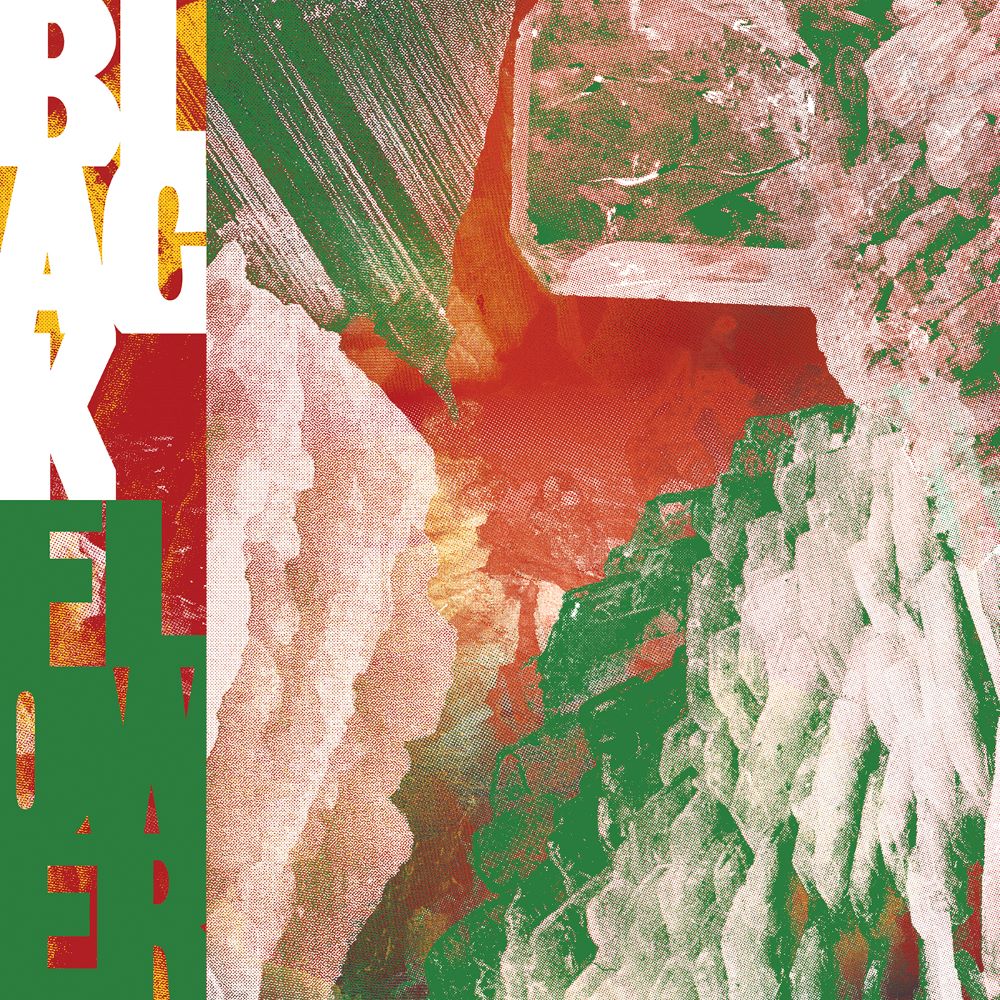
On the 26th November, five-piece hybrid jazz outfit Black Flower are set to release ‘Magma’, the second single taken from the band’s forthcoming album of the same name released 28th January via Sdban Ultra. “We present this latest single as a metaphor for what is to come - moments in time when music comes to the surface taking a concrete form, shared and used to amplify the beauty of life. Being the title track of the upcoming album it reflects a boiling, churning, silent energy. It is the core, the source. It is a state between solid and liquid and represents ancient energy and new potential. The track. An arching melody from the cornet gives way to an eruptive solo on baritone sax.” EMBED
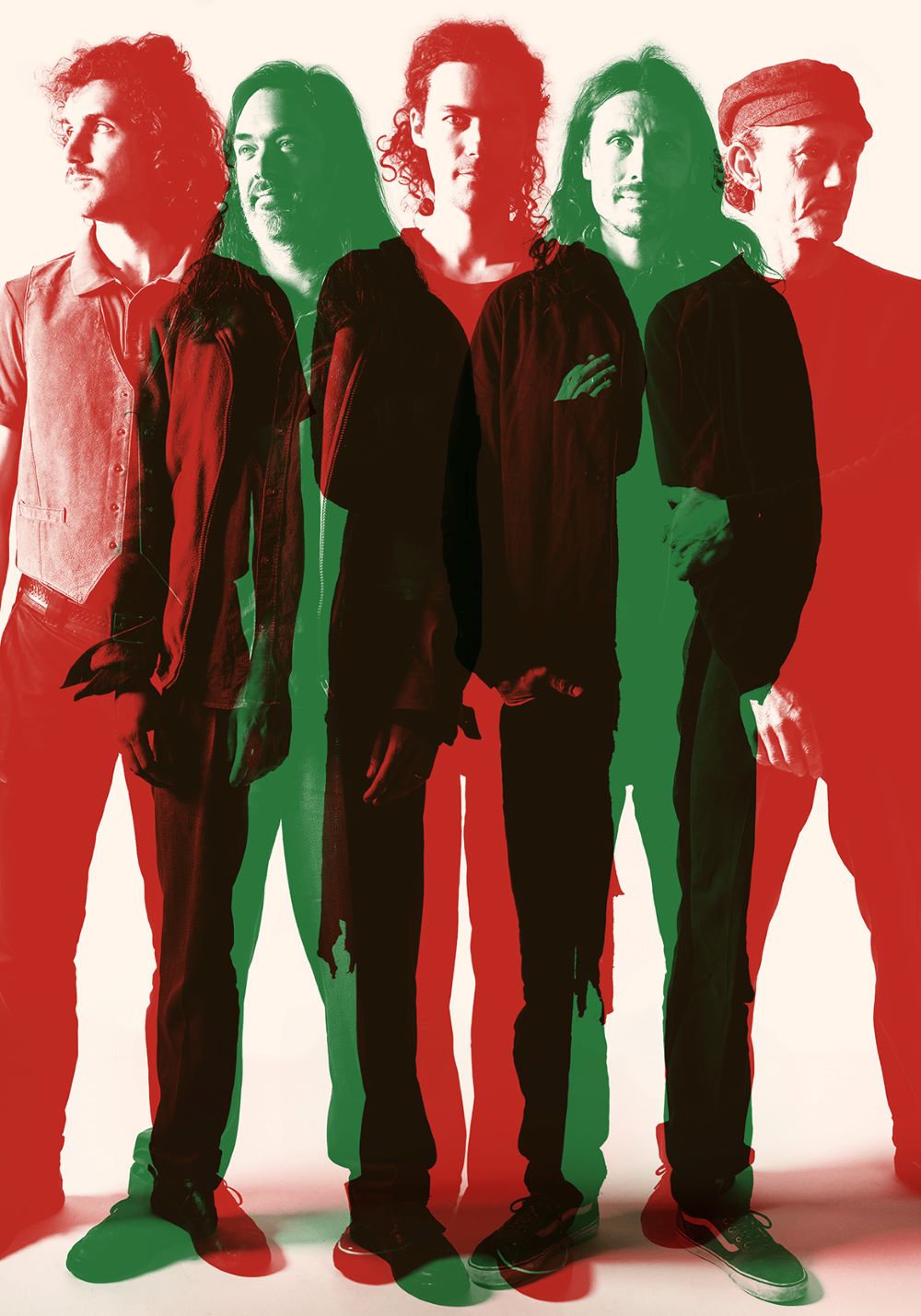
Black Flower is a band at the peak of their creative powers. Having received glowing praise for the 2019 album ‘Future Flora’ from Mojo, Songlines, BBC Radio 6 Music’s Gilles Peterson, BBC Radio 3’s Music Planet, Worldwide FM and Jazz FM among others, forthcoming album ‘Magma’ sees Black Flower embrace new synth and organ sounds from the band’s most recent recruit, Karel Cuelenaere. Piloted by Brussels-based saxophonist/flutist/composer Nathan Daems (Echoes of Zoo, Dijf Sanders), the quintet is a vibrant, hypnotic mix of Ethio jazz, afrobeat, psychedelia and oriental influences, inspired by Mulatu Astatke, Fela Kuti and varied western musical traditions.
Across ‘Magma’, Cuelenaere’s influence can be heard from the outset – his keys adding a swirling, mischievousness to album opener and title track ‘Magma’. Elsewhere, the shuffling drum patterns and flighty, flute-propelled ‘O Fogo’ are rich in texture and flow. Driving rhythms and Eastern influenced melodies serve as a rich source of pleasure that, like magma, become real and solid when finding its way to the surface. It’s the perfect metaphor for this album’s creational process. The pulsating, trance-inducing ‘Deep Dive Down’ continues the joyous process while singer-songwriter Meskerem Mees (winner of The Montreux Jazz Talent Award 2021) adds, her clear-as-spring-water vocals to the celestial ‘Morning in the Jungle’.
“Riveting playfulness and throttling sense of adventure”Mojo
“Music that will make you turn on, tune in and turn it right up”Songlines
“Bends the purist rules of world music to good effect”(The Independent)
“We’re fans of knitwear-loving Belgian five-piece Black Flower. Why wouldn’t you be?”The Artsdesk
“Brilliant”Gilles Peterson, BBC Radio 6 Music/Worldwide FM
With the much-trusted Frederik Segers on production and London-based visual virtuoso Raimund Wong (Total Refreshment Centre) on artwork duties, it all adds up to the psychedelic and exploratory identity of the band and are key elements that helped ‘Magma’ in its ascension from deep down up to the surface. A creative process solidified into vinyl, just as magma into rock.
Fellow musicians and spiritual henchmen are Jon Birdsong (dEUS, Beck, Calexico) on cornet, Simon Segers (Absynthe Minded, De Beren Gieren, MDCIII) at the drums, Filip Vandebril (Lady Linn, The Valerie Solanas) at the bass and Karel Cuelenaere (John Ghost) on keys.
Sdban Records is an independent record label, obsessed with grooves. Based in Ghent, Belgium, the label is home to such artists as De Beren Gieren, John Ghost, Glass Museum, ECHT!, Azmari Compro Oro and STUFF.
‘Black Chamber (Escape to the Sun)’, out on Sdban Ultra, is the brand new single by John Ghost. The Belgian band had been toying around with the idea of collaborating with a different artist for some time, and decided to join forces with Frank Wienk aka Binkbeats for this track. This Dutch producer, percussionist and multi-instrumentalist previously remixed tracks by Aphex Twin, Flying Lotus and Atoms For Peace.
Norwegian producer Jørgen Træen, well-known from his earlier collaborations with Jaga Jazzist, Kaizers Orchestra, the Hubro-label and Sondre Lerche, signed on as co-producer and took care of the final mix and mastering of ‘Black Chamber (Escape to the Sun)’. Træen was also the producer of Airships Are Organisms, the internationally lauded second album by John Ghost. ‘Black Chamber (Escape to the Sun)’ is reminiscent of that album’s cinematic themes and dreamy musical atmosphere, but has a more straightforward pop-direction because of Binkbeats’ contribution. The rhythmic approach is characteristic of the Dutch percussionist, while the composition’s dark sounds interact with frivolous elements in a striking way.
Frontman Jo De Geest: “In the studio Binkbeats often works with audio design. He is particularly versatile with this and has very strong personal views on the sound design of a project. Our musical styles are a nice fit as well. As a group we also wanted to stress the productional aspects and experiment with electronic components. This collaboration with Frank worked smoothly and gave us the opportunity to approach John Ghost’s music from different angles.”
‘Black Chamber (Escape to the Sun)’ signals a new evolution. Jo De Geest was inspired by Confessions of a Recovering Environmentalist, a book by Paul Kingsnorth in which he refers to a visit to the ‘Black Chamber’ in the caves of Niaux (France). The ancient animal drawings in the caves tell a sacred story about nature. Kingsnorth describes the Black Chamber as a kind of chapel in which our natural environment, so dear to us, triumphs. ‘Escape to the Sun’ refers to the ‘Space Race’ that began as an adventurous and heroic quest in the 50s, but has started to resemble an urge to flee a damaged environment that is increasingly beyond repair.
The B-side has the track 'Airships Are Organisms' from the latest John Ghost album in a Prins Thomas remix. One of Norway’s most renowned musical exports, Prins Thomas has fashioned a fresh direction for dance music. As with his peers Todd Terje, Hans-Peter Lindstrom, and some of the city’s legendary characters like the mysterious DJ Strangefruit, he has the very laid-back nature of his Oslo residence to thank for encouraging his path, one that has created a global ongoing fascination with retro-futurism and cosmic oddities.
Founded by saxophonist Vincent Brijs, BRZZVLL have been a household name in Antwerp and the Belgian jazz scene since 2008 but after a fifteen-year period, the sextet has decided to embark on a new chapter in their story with a name change and new line-up. Enter Lucid Lucia, named after Brijs’ eldest daughter and also the name of a track which first appeared on BRZZVLL’s 2016 album ‘First Let's Dance’. It also symbolizes a brighter, clearer sound.
On the 8th October, Lucid Lucia are set to release their self-titled debut EP. Searching to unwrap the bundle of complexity, contradictions and mystery that is a human life, across six tracks of jazz and space funk-infused grooves, Lucid Lucia look to the sound of Herbie’s ‘Head Hunters’ and Miles’ acid funk of the mid-70s for inspiration.
Continuing with an instrumental core, Lucid Lucia is a mind-expanding celebration centered on freedom and rhythm. Free-spirited saxes, futuristic-sounding keys, monstrous bass lines and shifting drum beats fuse, resulting in an uplifting and joyous celebration of jazz, funk and groove.
ECHT! – an instrumental, futuristic four-piece inspired by the concepts absorbed in electronic music and musical production. Taking inspiration from artists including Jonwayne, DJ Rashad, Deantoni Parks, J Dilla, Dorian Concept and Aphex Twin, ECHT! combine electro, hip-hop, trap, funk and futuristic jazz, resulting in a distinct and unique sound.
Echt means ‘vrai de vrai’ - ‘true’ or ‘real’ in brusseleir (Brabantian dialect of Brussels). The name is a direct reference to the fact that their sound transmission is ‘real’, performed with conventional musical instruments as oppose to computer music which the production might suggest. It also relates to the fact that none of the members of the band are originally from Brussels – bassist Federico Pecoraro is from Italy, keyboardist Dorian Dumont is from France and drummer Martin Méreau and guitarist Florent Jeunieaux are both from the Mons region on Belgium.
From the abstract patterns of ‘Permanent’ and melodic atmospherics of ‘Dunes’ to the futuristic funk of ‘Charlier’, ECHT! look to emulate the producer’s off-beats, the compressor’s swell, the repeating samples or the DJ’s transitions. Elsewhere, the trap-heavy sounds of ‘500gr.’ and subby bass stylings of ‘Champi’ push things forward, before the scatter rhythms of ‘Kiekebiche’ and weighty rumblings of ‘Drache’ integrate the inhuman heritage of electronic music and 're-humanise' it.
Counting BBC Radio 6 Music’s Gilles Peterson as a fan, in 2020, ECHT! were voted the third best band at the RedBull Elektropedia Awards under the ‘Fresh On the Scene’ catergory with debut EP ‘DOUF’ also receiving a nomination for ‘Best EP’.
Bram Weijters' Crazy Men is a thrilling take on Belgian jazz-rock and fusion from the 1970s. Consisting of musicians from a wide array of contemporary jazz bands including Lucid Lucia (ex BRZZVLL), Dans Dans, STUFF. and Cargo Mas, the ensemble is led by Antwerp based piano and keyboard player, Bram Weijters.
On a continuous quest to explore the roots of early Belgian jazz rock, the spark for this very special collaborative project was ignited by the reissue of composer, arranger, pianist, and keyboardist Koen de Bruyne’s 1974 rare Belgian gem, ‘Here Comes the Crazy Man!’ via Sdban Records in 2015, which spawned the release of Bram Weijters' Crazy Men’s debut album ‘Here They Come’ in 2019.
Continuing their obsession with premium experimental jazz-rock, ‘The Return’ takes further inspiration from the period with 14 reworking’s of compositions from artists including Philip Catherine, Placebo, Palle Mikelborg ensemble, Bob Porter, Cos and Koen de Bruyne. But this is no lazy rehash, copy or rip-off. Pyschedelic, free-spirited and infectiously groovy, ‘The Return’ perfectly captures the inspiring crossover energy that seemed to prevail in the Belgian jazz scene of the 70s. Take ‘Nineteen Seventy Fourths’ for example. Influenced by the Philip Catherine recording of the same name which appeared on the ‘September Man’ (1974) album, Bram Weijters' Crazy Men breathe new life into the track which floats anywhere between heavy funk and psychedelic jazz rock and also takes inspiration from the Palle Mikelborg ensemble live version performed at Jazz Middelheim in August 1974.
Elsewhere, a reworking of Placebo’s ‘Planes’ is inspired by two memorable live performances of the track from Marc Moulin’s jazz-fusion band; ‘Placebo Live in Temse’ (1972) and ‘Placebo Live in Bruxelles’ (1973). An all-out assault of crossover energy, it fizzes with dramatic trumpets and a racing rhythm section while ‘Carol’, originally recorded by Steve Houben, Mauve Traffic for the album ‘Oh Boy’ (1979) brings the pace right down and allows Weijters’ piano to take centre stage.
On June 11th, independent groove label Sdban Records will release Utopic Cities: Progressive Jazz in Belgium 1968-1979 featuring twelve essential compositions from a highly creative period in Belgian jazz. The release follows Sdban’s critically acclaimed Let’s Get Swinging: Modern Jazz in Belgium 1950-1970, released back in 2017.
Utopic Cities is an eclectic selection of forward-thinking jazz from the Belgian underground, including the left-field fusion of Marc Moulin’s Placebo, Koen De Bruyne and Solis Lacus; the intense post-bop of Jacques Pelzer and Lou MacConnell; the cutting edge soul jazz of Philip Catherine and Open Sky Unit or the otherworldly avant-garde of Babs Robert and the Brussels Art Quintet. Recorded in the aftermath of the revolutionary year 1968, this music is the fruit of a highly creative momentum in Belgian jazz history that produced a unique sound which distinguishes itself from its American source of inspiration by an indefinable characteristic that can be hardly better described than ‘Belgian’.
1. Placebo - S.U.S. 04:23
2. Solis Lacus - Utopic Cities 07:02
3. Open Sky Unit - Open Sky 05:38
4. Brussels Art Quintet - Vas-y Voir 05:30
5. Koen De Bruyne - Pathetic Dreams 09:03
6. Raphaël - Archangelo 12:52
7. Philip Catherine - Memphis Talk 04:02
8. Jacques & Micheline Pelzer Quartet - Face Reality 08:19
9. The Kenny Clarke-Francy Boland Big Band - Sakara 07:13
In the space between expectation and surprise, you will find Dutch-Belgian acoustic-electronic piano trio de beren gieren (The Bear Vultures), providing robust evidence that gold can still be mined from the union of piano, bass and drums. Based on the compositions of pianist Fulco Ottervanger, the trio use the power of improvisation on the quest for a new form and create a multi-layered, kaleidoscopic work of art. De Beren Gieren has been hailed as one of the hottest acts on the Belgian jazz scene and this September, the band will release their fourth studio album, the highly anticipated ‘dug out skyscrapers’, via Sdban Ultra. Raw energy, impressionist melodies and complex structures are generated via piano, bass and drums provoking polyrhythmic soundscapes with unexpected twists and sudden turns. With ‘dug out skyscrapers’, the trio trace back the essence of what characterizes their sound. An electro-acoustic approach weaves a spherical world of sound with added dynamism, humour and more than a touch of melancholy, projecting us forward into the future. de beren gieren hold the unique ability to change mood suddenly in a way that constantly holds the listener’s attention. This is a sound full of joy and vitality and confirms their reputation as one of the most adventurous jazz trios of the Benelux.
In the summer of 2017, Steiger won the young Jazz talent competition at Gent Jazz festival, which enabled them to realize the ‘Give Space’ project. Awareness of the moment in a place and time became the core of the musical storytelling, blurring the divisions of natural and industrial, inner and outer etc. The overall work is a blend of co-related atmosphere of the place, its properties, sounds, the moment and its traced records. “The space can be both inside and outside. This new environment will thus act as the 4th instrument in other words. Hereby we want to research and play with letting the space influence our music and vice versa, letting our music influence the space. This process will include recording 7 numbers at 7 different locations.”
The three musicians that make up Steiger all have a jazz background. Moreover, their studies at different music schools across Belgium (Ghent, Antwerp) and Scandinavia (Göteborg, Copenhagen) have broadened their perspective on listening, practicing and playing different musical genres as well as helped them approach music more sensuously. All three musicians have been active for some time in different musical projects with different genres as well as the theatre. As a result, they are able to persue an artistic result that is as relevant as possible to them. In September, Steiger will be one of twelve emerging jazz ensembles performing at the prestigious 12 Points Festival in Dublin. A unique networking opportunity for its participants, 12 Points is a valuable resource for festival bookers and jazz media.
Ghent's Steiger are a piano trio, but not in the classical sense. With their versatile style, influenced by different musical genres such as jazz, rock, pop, classical and electronic music, they try to find a balance between composition and improvisation through the use of experimentation and electronics. Considered pioneers of the Belgian jazz crossover scene, Steiger have been active for 6 years and have recently found themselves performing at major jazz venues in Flanders, picking up numerous accolades along the way.
The trio's highly anticipated sophomore album 'Give Space', released 14th September on Sdban Ultra, was recorded at 7 different locations, with the music composed to fit and fight these locations within a dialogue of acoustics, atmospheres and appetition. Field recordings, reverbs, ambient sounds, all collected within the search for the unpredictable, were given space within this dialogue as the essential part of the encounter. As a result, the locations emerge somewhat as a fourth member of the trio. The music - sometimes fixed, sometimes completely free - takes on an ever-changing journey into their multi-faceted world.
A collection of rare, previously unreleased studio and live recordings paying homage to the life and jazz of the enigmatic saxophonist
2 CD, vinyl and digital release includes 12 previously unreleased studio tracks and 8 unreleased live tracks from highly influential post-war Belgian jazz saxophonist
Groove-heavy record label SDBAN are pleased to announce the release of a collection of recordings from famed Antwerp saxophonist, Jack Sels.
One of the legends of Belgian Jazz and a highly influential figure on the post-war Belgian jazz scene, Sels died in 1970 at the mere age of 48, and he remains the country’s most mythical jazz musician, almost fifty years after his death. Throughout his career, he would play with jazz legends such as Dizzy Gillespie, Lester Young, Lou Bennett and Lucky Thompson, but he remained virtually unknown outside Belgium due to his reluctance to leave Antwerp.
Born 29th January 1922, Sels was the only child in a wealthy family. His father Joseph, whom he referred to as ‘The Boss’, held a high position at the maritime company, John P. Best. He was predestined to follow in his father’s footsteps and become a businessman himself, until the early death of both his parents changed everything. As a young adolescent, he inherited the family fortune which he spent in no time on everything in life that’s good: girls, champagne and jazz records. By now an avid jazz fan, Jack accumulated a notorious collection of original 78 rpm jazz records which ran up into the thousands. A family legend goes that one day he bought all the tickets of Antwerp’s famous cinema Rex, and handed them all out to passers-by on the street. “He was a millionaire, but he gave everything away,” explains Jack’s son-in-law and close friend Willy Van Wiele. “He hung out with people of a lower social class and adapted to them, instead of to the rich.” Jack’s good life however, ended with a bang when a World War II bombing destroyed the family house, including his precious record collection and everything else he had.
But this setback was not going to stop Jack from indulging even further in his love for music, and he began to study piano, and then taught himself the tenor saxophone while spending as much time as possible listening to his jazz idols, among them the tenor saxophonist Lester Young, trumpeters Miles Davis and Dizzy Gillespie and alto saxophonist Charlie Parker. The arrival of Dizzy Gillespie’s big band at Antwerp in 1948 made a lasting impression on Sels as well as the legendary Birth of the Cool sessions by Miles Davis’s nonet, which were crucial for his further development, and he decided to start his own big bands including the All Stars Bop Orchestra, including a young Toots Thielemans, and the Jack Sels Chamber Music Orchestra. In 1951, he travelled to Germany to perform for the American troops, and after his return to Antwerp he played in basement pubs, dance halls and jazz clubs and would later compose the soundtrack for the film ‘Meeuwen Sterven in de Haven’ (Seagulls Die in the Harbour) by Roland Verhavert. In 1959, he supported Nat King Cole and had the opportunity to perform with his idol Lester Young in Brussels. Later, a career working on radio programmes for the NIR, then later BRT, was short lived due to the musical restraints held upon him.
His first and only studio album came in 1961 and featured American musicians Lou Bennett and Oliver Jackson and young Belgian guitarist, Philip Catherine. However, on release, the sleeve failed to mention the famous artists involved in the recording and the album didn’t bring the long awaited breakthrough Sels craved, who had already given up on his jazz career by the time it was finally released. By 1966, Sels’s working opportunities in jazz had become so slim that he was forced to start working at the Antwerp harbour, where he helped to unload boats. During this period, he rarely performed in public anymore. Besides the irregular local gig, he occasionally appeared in schools and cultural centres, illustrating lectures about jazz history by jazz critic Juul Anthonissen. Instead he devoted his time to writing music, which he did on a small harmonium. It was while making music, sitting at his harmonium, that Sels suffered a fatal cardiac arrest on 21 March 1970. Once one of Belgium’s foremost modern jazz musicians, he died in poverty, largely forgotten and after a turbulent life.
Jack the hipster. A musician’s musician. The white negro from the docks. Jack Sels has been given many nicknames throughout the years. The Antwerp saxophone player who died at the mere age of 48 in 1970, remains Belgium’s most mythical jazz musician, both to those who knew him during his lifetime and those who only know him from the stories and there are quite some stories to be told about Jack Sels. Jean-Jacques ‘Jack’ Sels was born in Antwerp in 1922 and was the only child in a wealthy family. His father Joseph, whom Jack referred to as ‘The Boss’, held a high position at the maritime company John P. Best. The family inhabited a large house, where Jack was brought up strictly and traditionally, obliged to speak English to his father, Dutch to his mother Marie Louise, and French to his governess. Jack was predestined to follow in his father’s footsteps and become a businessman himself, until the early death of both his parents changed everything. Jack was at first placed under guardianship, but after a while prematurely declared an adult. As a young adolescent, he inherited the family fortune which he spent in no time on everything in life that’s good: girls, champagne and jazz records. By now an avid jazz fan, Jack accumulated a notorious collection of original 78 rpm jazz records which ran up into the thousands. A family legend goes that one day he bought all the tickets of Antwerp’s famous cinema Rex, and handed them all out to passersby on the street. “He was a millionaire, but he gave everything away,” explains Jack’s son-in-law and close friend Willy Van Wiele. “He hung out with people of a lower social class and adapted to them, instead of to the rich.” Jack’s good life however, ended with a bang when a World War II bombing destroyed the family house, including his precious record collection and everything else he had. JACK THE HIPSTER With not much more to lose, Jack decided to pursue a career as a jazz musician. By then he had started to play the saxophone, encouraged by his friend, the baritone and clarinet player Roger Asselberghs. In 1945, the year of the liberation, he joined the band of Mickey Bunner, one of the many orchestras that benefited from the post-war boom of the entertainment industry. The band played for the American G.I.’s in Antwerp at places called Cascade, The G.I. Club, and The 13th Port, and in the summer they played various gigs on the Belgian coast. Besides Asselberghs, Sels and Bunner (trombone), the band consisted of many future jazz talents like Jean Fanis (piano) and Rudy Frankel (drums). Tenor saxophonist Etienne Verschueren once looked back upon the Bunner band, recalling “Bunner was a talented showman, and the way he orchestrated was incredible. The music was in the Stan Kenton style, typically American. There was a trumpet, a trombone, six saxophones, even a bass saxophonist. Roger Asselberghs was on clarinet, Jack Sels on tenor saxophone, and I had to occupy myself with exactly those two guys, who couldn’t read a single note of music. I had to teach them the partitions. The bass player’s wife cooked dinner for the whole orchestra. We were what you would call hippies nowadays. People looked down on us: ‘Ugh, jazz musicians!’.” 1 After the early death of his wife Eugenie in 1946, Jack temporarily quit music and spent some time at sea. He found new inspiration in England, where he heard and met some of Britain’s foremost beboppers, including Ted Heath. Returned home, he immersed himself in the blooming Belgian bebop scene, befriending and playing with musicians like Bobby Jaspar, René Thomas, Jacques Pelzer, Sadi, and Francy Boland. Most of them played in the internationally renowned Bob Shots orchestra, one of the first bebop bands in Europe, and Jack occasionally sat in with this pioneering formation. In 1949, they recorded an untitled Jack Sels composition that, by suggestion of Bobby Jaspar, would later be named Jack the Hipster. At that time, Jack’s saxophone playing was mainly influenced by Wardell Gray, and he wore a pork pie hat just like his idol Lester Young. “Jack was 100% a jazz musician,” recalls bass and saxophone player Cel Overberghe. “He carried a certain vibe. He could have been an American and acted like one, with his special hat. He also spoke French and English perfectly, which contributed to his image. He had his ways to distance himself, to surround himself with a bit of mystery and to act like a star.”
TWENTY-ONE SOULS WHO LOVE BOP On February 18, 1948, Jack witnessed one of the most memorable jazz concerts ever performed in Belgium. The big band of Dizzy Gillespie toured Europe for the first time and with its unique Afro-Cuban bebop sound impressed many local jazz musicians, including Jack Sels. The concert marked the beginning of the most ambitious project in Belgian jazz history. “By the end of 1948, early 1949, everybody was called together to join Jack’s notorious big band,” Nic Fissette once explained. He was one of the trumpet players in Jack’s Bebop All Stars Orchestra, together with about everybody in Belgium who could play a bit of bop. “Jack made us wear overalls and big bow ties, the regular man’s work clothing. He said: ‘we are pioneers, man, we got to dress like working men. It was remarkable: every rehearsal everybody punctually came from the four corners of the country, even though there was not the least money to be made. Jay Cameron and Nat Peck even came with Bobby Jaspar and Jean Warland from Paris where they were working back then.” 2 The All Stars Bop Orchestra premiered for the public on May 20, 1949 at Galerie Artes in Antwerp. The leading magazine l’Actualité Musicale was lyrical about this “historical event in the history of Belgian jazz”, calling it “wonderful, fantastic, strong, powerful, great and beautiful”. About the band’s leader, critic Roland Durselen wrote that Jack Sels was “admirable, not only because of his qualities as a soloist, but also because of his intelligence, his latent poetry, his mystical feeling, his idealism and his belief in the value of his musicians.” 3
Later, Jack pasted some press clippings of the concert in a big notebook he kept for the rest of his life. Next to the clippings, he wrote: “The first real break for 21 souls who love bop”. Unfortunately, too ambitious to be true, the group disbanded a few months later after having played not more than a handful of concerts. Another equally ambitious project that Jack launched in February 1951 suffered the same fate: inspired by the Miles Davis Nonet and its landmark Birth of the Cool sessions, Jack Sels and his Chamber Music expanded Jack’s jazz combo with classical musicians, a combination which illustrated Jack’s musical mastery but which was commercially unviable. Nonetheless Jack had made his name as one of Belgium’s most forward thinking jazz musicians, and when Dizzy Gillespie returned to Belgium in 1952, Jack’s band was chosen to accompany the trumpet legend for his two concerts. JAMMING IN GERMANY In the early 1950s, Jack spent quite some time working in Germany, where the American army hired orchestras to play at the many bases it had set up after the War. After a small tour there at the end of 1951, during which he married his second wife Emilie Beeckmans, Jack assembled a new orchestra in September 1952 and departed for Germany again. At first consisting of Sels (ts), Jay Cameron (as), Roger Asselberghs (bs), Ack Van Rooyen (tp), Christian Kellens (tb), Jean Fanis (p), Benoît Quersin (b) and Rudy Frankel (d), the band’s time in Germany was turbulent and marked by difficult working and living circumstances and by as many musical lows as highs. After a short while already, pianist Jean Fanis had to return to Belgium to undergo serious eye surgery. Fanis later told in an interview: “I went back later on, but Jack didn’t have any gigs for the coming two months. He wanted us to wait for better times, but I couldn’t and returned to Antwerp. Jack was really mad at me. The following three years, he refused to speak to me.” 4 The band’s first stop was Frankfurt, at that time Germany’s jazz capital. After they had played at café Hippodrome, the German magazine Das internationale Podium called them “the best modern jazz band in the Montan-Union (a predecessor of the European Union, ed.)” and specifically praised the bandleader’s arrangements. “After that, the American army engaged us in Darmstadt to play in a black club,” Roger Asselberghs told the newspaper Le Matin upon his return to Belgium in April of 1953. “There, with five Jack, Benoît, Christian, Rudy and me – we could play with full joy, we could swing without making any commercial compromises. The atmosphere was extraordinary; we sometimes felt like we were playing in a club in Harlem. At night, after Darmstadt, we would return to Frankfurt where we often went to jam in an existentialist cave; we often encountered Hans Koller, the revered tenor saxophonist, and Jutta Hipp, an extraordinary pianist.” 5 But for every bit of success, there was a story of disappointment too. “At one time we played in the remainders of a hotel in Frankfurt which had suffered badly from the bombings,” Roger Asselberghs recalled later. “We played there for food and accommodation and a remuneration of one German Mark per day. The hotel owner was broke and tried to avoid us. Jack often spent half nights waiting on the stairs towards his room to get our money.” 6 Also, it turned out that not everybody was waiting for the band’s modern jazz sounds, and more often than not they performed for a crowd that was more used to gypsy or tango music, leading to heavy discussions between Jack and many club owners and impresarios. Jack was serious when it came to jazz, as shown by bass player Roger Vanhaverbeke’s first encounter with Jack Sels. Vanhaverbeke was called to Germany to replace Benoît Quersin, who left the band to work in Paris. “By that time, people already spoke about the great Jack Sels, and I wanted nothing more than to play with him,” said Vanhaverbeke, “but compared to Benoît Quersin, I was nowhere as a bass player. So Jack didn’t say a single word to me. It was really painful, as I admired him deeply. This lasted for nine whole months, until one night in Heidelberg, when we were playing the Sullivan Barracks. Jack always sat at the front of the stage, so he was playing with his back to us and I’ll never forgot that image. At one point, he turned around and said to me: ‘C’est ça men, c’est comme ça qu’on tire la basse.’ (‘That’s it men, that’s how you play the bass’). It gave me the shivers. It was Jack’s first compliment in nine months’ time.” 7
THE AMERICAN DREAM In the course of 1954, Jack got tired of Germany and returned to Antwerp. In 1955, he wrote and recorded the soundtrack to Seagulls Die in the Harbor (Meeuwen Sterven in de Haven), the first modern long play film in Belgian cinema. Jack’s dramatic score, ranging from pure bebop to progressive cinematic jazz, is proof of his brilliance as a musician and composer. In 1958, two of Jack’s recordings, Rain on the Grand’Place and Lady of Spain, appeared on a 10” called Jazz in Little Belgium, which was an overview of the Belgian jazz scene, issued for the occasion of the World Fair in Brussels. A year later Jack recorded an EP with none other than American tenor star Lucky Thompson in Germany called Bongo Jazz, of which the composition Ginger was named after Jack’s loyal dog who often accompanied him to jam sessions, howling out loud along with his boss’s solos. Since his return from Germany, Jack had started working regularly for the Belgian radio and TV broadcaster NIR as well, and in 1959 he even made a TV appearance with his idol Lester Young. But in spite of all these achievements, Jack struggled to make a living playing jazz. As a consequence, he occasionally recorded a few rock & roll sides under various pseudonyms to gain a little extra money. By the second half of the 1950s most of Belgium’s best jazz musicians had left little Belgium to successfully continue their careers abroad. Jack’s old friends Toots Thielemans, Bobby Jaspar and René Thomas had even crossed the Atlantic, where they were playing with American jazz greats like George Shearing, J.J. Johnson and Sonny Rollins respectively. So Jack too, started to dream of America. “Toots Thielemans tried to convince Jack to join him on the other side of the ocean,” remembers Willy Van Wiele. “They chattered about it for days and days. Jack’s wife said ‘over my dead body’. Jack replied ‘I can’t achieve anything in this country, it’s much too small.’ And he was right. Belgium, in those days, as a jazz musician… If there were twenty people at a concert, twelve of them didn’t understand a thing of it.” It has long been a myth that Jack never left Belgium because he was too attached to his hometown Antwerp. Yet he wrote letters to jazz impresarios George Wein and Leonard Feather, asking if they could help him to get to the USA. “Jack deeply wanted to go to America,” emphasizes Willy Van Wiele, “he said it dozens of times. Actually his wife could have gone with him, but she didn’t want to leave her family. And Toots kept insisting, until it suddenly stopped. Maybe they had an argument, I don’t know, but he stopped visiting.” “It’s difficult to say why Jack didn’t go to America. He was attached to his home, but maybe he was also a bit afraid of really having to make it over there, to really break through”, thinks Cel Overberghe, “but on the other hand, he did know all those American musicians and when they performed in Belgium, he didn’t hesitate to join them on stage or to show them some of his arrangements.” And so Jack never left Belgium but stayed at home in Antwerp, where he was the pivotal figure of the local jazz scene that started blossoming in the late 1950s and early 1960s. He was often found jamming in one of the many jazz bars like Zaziko, De Stal or Gard Sivik around the Stadswaag square, where a new generation of young musicians came to hear him play. “Jack was God to us back then”, recalls Cel Overberghe. “He was our musical father. He gave us advice. And once in a while, if we were good enough, we could even play together with him. And when we had had a gig, he would drive us home with his old Chrysler. Then he would stop in front of our door and started telling stories for an hour, an hour and a half. He really intrigued us with his stories. There was always some kind of morale. For us it was our school. He never thought us: ‘this chord is played this or that way’, no. It was about the atmosphere. He indoctrinated us with the jazz vibe, so that we felt like real jazz musicians.” BLUES FOR A BLONDE In 1961, Jack recorded what would be his first and only studio album. It featured two American musicians: Lou Bennett, who was living in Europe back then, on organ, and Oliver Jackson, who stayed around after a tour with Buck Clayton, on drums. The quartet was completed by the then eighteen-year-old guitar talent Philip Catherine. “I played in trio with Lou Bennett and Oliver Jackson for three days at a club in Brussels called the Blue Note. And Jack Sels came to hear us there and asked if we wanted to make an album with him,” recalls Catherine, who remembers Jack as a very kind man. “Nobody knew me back then, and yet he hired me. For the first record under his own name, mind you.” The quartet worked for two or three days at the Decca studios in Brussels, recording nine original compositions of which four were written by Jack. The combination of Lou Bennett’s organ and Jack’s saxophone resulted in a session in the soul jazz style which was made popular by Shirley Scott and Stanley Turrentine or Jimmy Smith. “I was listening to John Coltrane back then, so it was a bit old school, but it was really good. Jack wrote well and had an incredible feeling,” tells Philip Catherine. Three of the tracks were released on the somewhat ironically titled EP Jack Sel(l)s Jazz, but the entire session remained unissued until five years later, when it was marketed as a typical 1960s easy listening album by ‘The Sexy Sax of Sels and Swinging Friends’ and titled Sax Appeal, a play of words that matched the scantily clothed blonde model pictured on the sleeve. “I had recorded my first album and I didn’t dare to show it to anyone because of that picture,” recalls Catherine. But Catherine was eventually not credited on the sleeve of the LP anyway, and neither were Oliver Jackson or the very famous Lou Bennett. So his debut album didn’t bring the long awaited breakthrough for Jack, who had already given up his career in jazz by the time it was finally released. SAXORAMA When Elias Gistelinck became head producer of the jazz section of the Belgian Radio and TV (BRT) in 1963, Jack’s radio work increased. He recorded as a soloist and vocalist with The Clouds, which was the rhythm section of the BRT jazz orchestra led by guitarist Freddy Sunder, and especially with his own project Saxorama. The latter was another remarkable longtime dream of Jack: a band that consisted of nothing more than a reed section and a rhythm section. The orchestra featured saxophone players Emile Chantrain, Frans l’Eglise, Benny Couroyer, Pros Creado, Guy Dossche and Jack himself, while Jean Fanis or Jean Evans (p), Pit Barbarin or Roger Vanhaverbeke (b), Philip Catherine (g) and Al Jones (d) made up the rhythm section. The group generally played standards as well as original compositions by Francy Boland, who was then running the Kenny Clarke-Francy Boland Big Band in Germany, and by Jack. Saxorama appeared on the radio regularly and made well over fifty recordings, some of which are released here for the first time. They show how Jack, who never received formal musical training, had evolved into a versatile composer and arranger. As a saxophone player, Jack’s biggest influence by then was Sonny Rollins, whom he admired deeply. “The older Jack became, the more he returned to the sound of Coleman Hawkins, Ben Webster and Don Byas. And Sonny Rollins was somewhat similar, in the way he improvised,” explains Cel Overberghe. “Jack was a bit of a romanticist when it came to jazz. When my generation started to play avant-garde, he didn’t like it at all. He made remarks about it and said, in English, ‘Free jazz? Jazz has always been free’,” Overberghe adds, smiling. Jack’s radio days came to an end abruptly and for somewhat unclear reasons. “With Saxorama, I had the impression there were two worlds. Him and the others,” recalls Philip Catherine. “The others were more conventional, a bit square, and he was the crazy guy. Well, not crazy, because he was really serious about his music,” says Catherine. “Jack could be a difficult man,” adds Cel Overberghe. “He easily felt misunderstood by other musicians or by the people of the jazz section of the BRT.” Jack’s granddaughter Sandra Van Wiele thinks her grandfather never really liked to work for the radio, as “it was too strict, he wanted more freedom to play his own thing.” Yet, the sudden loss of his radio work was a major disappointment for Jack. In a 1964 letter to the program director of the BRT, he wrote: “at the eve of my twenty years as a jazz musician and pioneer I’m unemployed in my own country, where I chose to stay when in spring I didn’t accept foreign offers because I made my living here, as well as for family matters such as my grandfatherhood. Am I the victim of fate or given the boot, I’m thunderstruck and watch my condition with deep sadness and even some bitterness. (…) I have served the BRT with jazz music since my return from Germany in 1954-1955 with full devotion and besides Saxorama I was never asked as the leader of a jazz orchestra or asked to form a pure jazz ensemble. I was very happy with what I had, yet now I’m in a terrifying state that seems to announce my downfall as a human and the bitter end of a failed career.” SEAGULLS DIE IN THE HARBOR By 1966, Jack’s working opportunities in jazz had indeed become so slim that he was forced to start working at the Antwerp harbor, where he helped to unload boats as a marqueur. “It was so sad when he went to work in the harbor. That man had other capacities. I never understood how they got him so far to start working there,” says Willy Van Wiele. “I remember he once told my grandmother: ‘I don’t like it when I get money for my music. Because it makes it feel like work. And I love to do it, I want to do it for pleasure, I don’t want money for that,” adds Sandra Van Wiele. And even while working the docks, Jack remained a true jazz musician. Lode De Ceuster, a protest singer who worked at the harbor together with Jack, once recalled: “One day, Jack Sels was at the en clos, a space where the more expensive goods were stored. A shipment of saxophones had arrived and one of the crates was broken. And Sels was standing there, playing the saxophone, surrounded by all the dockers. Beautiful.” 8 During this period Jack rarely performed in public anymore. Besides the irregular local gig, he occasionally appeared in schools and cultural centers, illustrating lectures about jazz history by jazz critic Juul Anthonissen. Instead he devoted his time to writing music, which he did on a small harmonium. Ever ambitious, he even made attempts at composing complex symphonies in the Third Stream style. “I used to see him at night, the last inhabitant of the block still out on the streets, walking his dog at two or three o’ clock at night,” recalls Willy Van Wiele, “and later you looked up to his window and the lights would still be on, and then he was still writing music on his little organ.” His wife Emilie once said: “Jack was thinking about music all day long, nothing but music, music, music. If he had an idea at night, he woke up to write it down or to try it out on his harmonium or saxophone. Of course we had problems with the neighbors.” 9 It was while making music, sitting at his harmonium, that Jack suffered a fatal cardiac arrest on 21 March 1970. Once one of Belgium’s foremost modern jazz musicians, who had played with Lester Young, Lucky Thompson and Dizzy Gillespie, Jack Sels died in poverty, largely forgotten and after a turbulent life. Says Willy Van Wiele: “Jack once told me ‘Willy, to go through everything I’ve been through, to live the life I lived, you would have to live for a hundred years’.” Jack was only forty-eight when he passed away on that first day of spring in 1970.
Almost fifty years after his death, Jack Sels remains Belgium’s most intriguing jazz musician. Partly due to his limited discography, he is overlooked by a wider audience. Yet, his contribution to the development of the modern jazz scene in Belgium cannot be overestimated, and neither can his influence on his fellow musicians, to whom he was the embodiment of jazz. As vibraphone player Fats Sadi once said: “I loved Jack. He had never studied music and didn’t have the least bit of technique. But if Jack played, the gates of heaven opened. Jack was more jazz than jazz itself.” 10
Compilation and liner notes by Lander Lenaerts
Produced for reissue by Stefaan Vandenberghe
Special thanks to Sandra, Dennis and Willy Van Wiele, Gert Govaerts, Cel Overberghe, Philip Catherine, Marc van den Hoof, Anne-Marie Schenk-Asselberghs, Jan De Wilde at the library of the Royal Conservatory Antwerp, Peter and Marijke Anthonissen, Heidi Moyson at Resonant and Clifford Allen. Reconstructing Jack Sels’s life story and discography would have been impossible without the devoted people who have tried to keep Jack’s memory alive in the past. In this aspect we would particularly like to acknowledge the work of Edmond Devoghelaere.
1 Swingtime n°42, August 1979
2 Swingtime n°46, March 1980
3 l’Actualité Musicale n°65, 1949
4 Swingtime n°51, January 1981
5 Le Matin, 4 April 1953
6 José Plume – Belgische Jazzveteranen vertellen (Dannison Music, 2004)
7 José Plume – Belgische Jazzveteranen vertellen (Dannison Music, 2004)
8 Het Laatste Nieuws, 1990
9 Jazzmozaïek n°1, 2000
10 José Plume – Belgische Jazzveteranen vertellen (Dannison Music, 2004)
Ghent based pianotrio Steiger have earned their place in the ever growing peloton of young Belgian jazz innovators. As a result, they won the Young Jazztalent price at the 2017 Gent Jazz Festival. With their luscious and rigid grooves in minimalistic framing, they don’t take it so closely with traditions. They play jazz with a rock’n’roll attitude. Sdban Ultra is very pleased to present a sampler of their debut album ‘And Above All’ on a limited 10” vinyl. This release marks their introduction on Sdban Ultra, their sophomore album is expected next fall. ‘And Above All’ houses both jazz and modern compositions, avant-garde and experimental electronics. Steiger takes inspiration from jazz and refers to the traditions but equally pulls those apart, for example in the chaotic miniature 'Bachfag' and in the intimate 'Inverse/Reverse'. With 'Berlin Revisited' the band clearly chooses electronic instrumentation.
A new, twenty-track compilation focussing on a twenty-year period (1950-1970) of modern jazz in the little kingdom, featuring the leading players from that era. Due to the absence of its main players during the heydays of modern jazz, Belgium will not be remembered for a unique jazz sound or an extensive discography. However, the little country produced a number of highly talented musicians who played lead roles on the international jazz scene. 'Let's Get Swinging: Modern Jazz in Belgium 1950-1970' retraces their steps and presents some of their finest works, including guitarist Philip Catherine, saxophonist Jack Sels, multi-instrumentalist Jacques Pelzer and vibraphone player, percussionist and vocalist 'Fats' Sadi Lallemand.