Showing posts with label Pyroclastic Records. Show all posts

Friday, January 14, 2022

OUT TODAY: Single from “Interpret It Well” / Ches Smith with Frisell, Maneri and Taborn (Pyroclastic Records)

Drummer/vibraphonist/composer Ches Smith leads a breathtaking all-star quartet with guitarist Bill Frisell, violist Mat Maneri and pianist Craig Taborn

Interpret It Well, due out May 6, 2022 via Pyroclastic Records, features stunning explorations of Smith’s ethereal compositions

“A smartly unruly drummer active in devious art-rock and outsider jazz."
– Nate Chinen, New York Times

"[The] nondescript term ‘drummer’ doesn’t get near the chemistry of earworm hooks, sharp-end jazz innovation and global-musical openness of New York percussionist/composer Ches Smith."
– John Fordham, The Guardian

Album Preview Concerts March 30 & 31 at The Stone at the New School, NYC

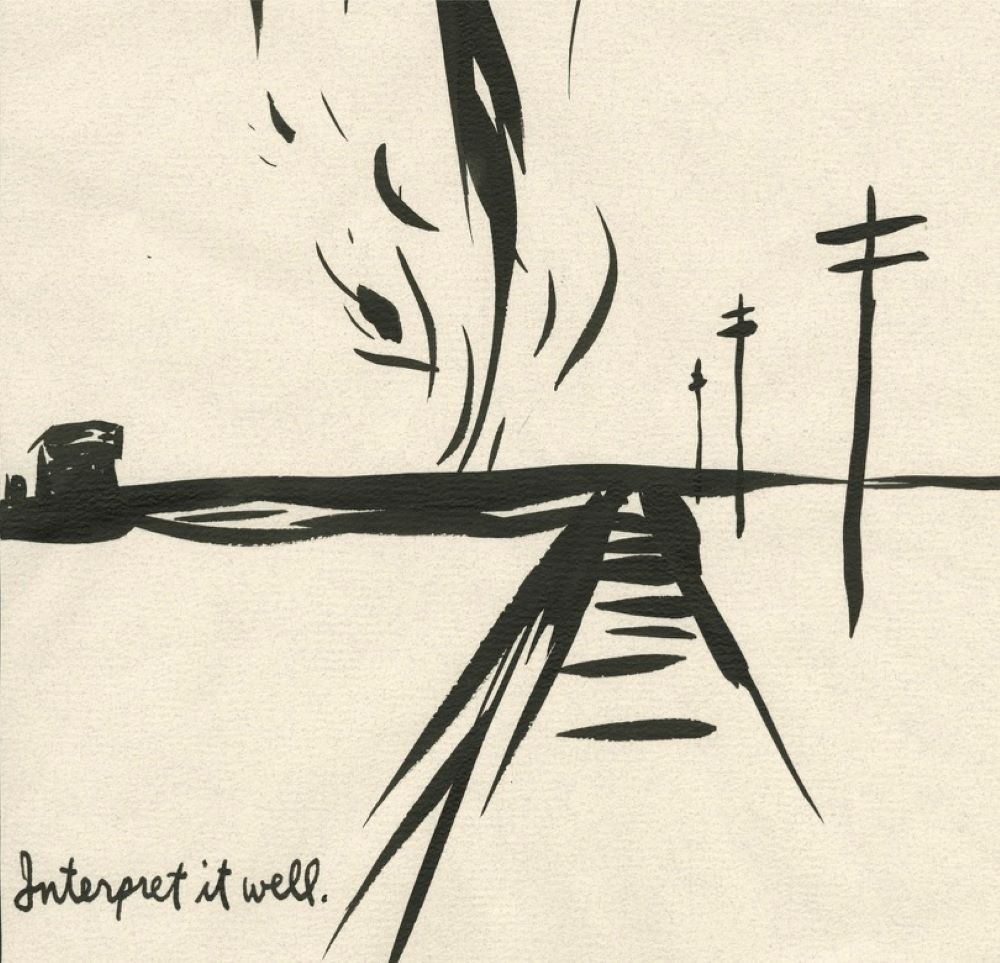
“Interpret it well,” reads the script text in Raymond Pettibon’s mysteriously evocative drawing. A few thick black ink strokes describe an enigmatic landscape – the telephone poles, the railroad track and the building in the distance seem obvious enough as markers of desolation, but the swirl of lines on the horizon are more ambiguous. The steam from an approaching train? An oncoming tornado? Hope or dread, connection or destruction, all depend on interpretation.
 
It’s a fitting choice of cover art for drummer/vibraphonist/composer Ches Smith, whose entrancing new album Interpret It Well borrows Pettibon’s three-word prompt as both title and instruction, for bandmates and listeners alike. The album, due out May 6, 2022 from Pyroclastic Records, is his second with keyboardist Craig Taborn and violist Mat Maneri, the much-anticipated follow-up to the trio’s acclaimed 2016 ECM release The Bell. This time out the band becomes a quartet with the addition of master guitarist Bill Frisell, whose contributions bring additional depth, space and texture to a group already rich in all three qualities.
 
It was that sense of openness and exploration, in fact, which intrigued Frisell in the first place. The guitarist attended a Ches Smith Trio concert in late 2018, following which he contacted the drummer with questions about the compositions. “Bill was very nice about the gig – effusive, actually,” Smith recalls. “He told me that he felt the tunes were accessible but challenging at the same time. There's something about the way Craig and Mat and I play together, where we extrapolate to the max but the music feels like the pieces. So I thought Bill might be interested in playing them with us.”
 
It took more than a year for schedules to align, but Frisell was finally able to join the trio for a performance in early 2020. The combination gelled immediately – “Bill felt like a natural part of the band,” Smith writes in his liner notes – but the demands on everyone’s time meant that a recording with all four would prove next to impossible to book.
 
Everyone knows what comes next – the pandemic happened, and suddenly time was all anyone had. Smith reworked his compositions with the newly forged quartet in mind, and the band went into the studio that October when life began to resume some semblance of normalcy (for the first time, at least).
© Kesler Pierre

The results are absolutely striking. As he did for the trio incarnation on The Bell, Smith writes compositions that are minimal but indelible; skeletal enough to allow these remarkable improvisers space to roam far afield yet so vivid that the core image is never lost amidst the daring embellishments.
 
Which brings us back to the Pettibon drawing – what Smith’s music shares with the artist’s work is that idea of a distinctive landscape evoked with a few sketchy lines, with vast stretches of the mysterious left in the spaces between. “There are definitely maximal moments on this record,” Smith says. “But when I think of the music in my head, it's fairly minimal. I like a lot of music where nothing seems to be happening.”
 
That may be true of the music on Interpret It Well in broad terms, but listen closely and a great deal is happening just beneath the misleadingly placid surface. The album is bookended by “Trapped” and “Deppart” (“Trapped” spelled backwards), two alternate versions of the same brief piece, a haunting, repetitive melody that slowly accrues power one voice at a time. “That’s one of the most minimal things I've ever written,” Smith says. “It's simultaneously a bar, a melody and a chord, and people can approach it however they want.”
 
The title track begins with Smith’s tentative, querying vibraphone, with the other voices gradually gathering around him like a deepening fog. The picture eventually comes into focus only to give way to Taborn’s stuttering, agitated solo, which ushers in the urgent, ferocious final section. The piece has been inspiring to artists outside of the band as well – artist/filmmaker Frank Heath, whose works have been described as “poetic interventions into systems of communication, information and understanding,” has created a new film to accompany “Interpret It Well.” The piece will be available May 6 via the Ches Smith and Pyroclastic websites.
 
Frisell contributes a high lonesome intro to “Mixed Metaphor,” soon matched by Maneri’s forlorn bowing. Smith (on vibes) and Taborn then take over for a labyrinthine duet, ultimately leading into a spiraling vamp. The sparse “Morbid” is a ballad of sorts, an elegy unfurling at an achingly slow pace, luxuriating in the evanescent sound while all four take care not to shatter the exquisitely delicate atmosphere. “Clear Major” takes on a more forceful tone, beginning with Taborn’s insistent patterns. The piece is a three-part suite, the volleying first section followed by the lurching rhythms of the middle and the intricately woven lines of the final – each movement separated by clamorous improvisations that deconstruct the composition in order to rebuild again. The complex “I Need More” proceeds at a brisk pace rife with tension, finally exploding into Frisell’s razor-sharp, searing solo. 
 
Interpretation is central to Ches Smith’s compositional approach, and here it yields absolutely breathtaking results. “Bill, Mat and Craig can all turn the ensemble in a new direction on a dime by playing one phrase,” Smith says. “What I love about this band is the way that over time, they'll all change their parts – Craig adding harmony or Mat embellishing the written material to keep it fresh. I’ve played with the two of them a lot over the years, but the music turns out different every time. And I know Bill’s playing very well, but he constantly surprised me. Interpret It Well is really my way of encouraging them – it could be the unspoken credo of the band.”

1. TRAPPED 2:27
2. INTERPRET IT WELL 13:39
3. MIXED METAPHOR 16:26
4. MORBID 7:20
5. CLEAR MAJOR 15:29
6. I NEED MORE 11:42
7. DEPPART 2:36

Ches Smith, drums, vibes
Craig Taborn, piano
Mat Maneri, viola
Bill Frisell, guitar

Ches Smith – Interpret It Well
Pyroclastic Records – PR 19 – Recorded October 12-13, 2020
Release date May 6, 2022

Friday, January 7, 2022

Tony Malaby 'The Cave of Winds' – Jan. 7 via Pyroclastic Records

Saxophonist/composer Tony Malaby reconvenes his stunning quartet Sabino with guitarist Ben Monder, bassist Michael Formanek and drummer Tom Rainey
 
The Cave of Winds, due out January 7, 2022 via Pyroclastic Records, draws inspiration from Malaby’s Covid-era sessions under a NJ turnpike bridge

" [The] tenor and soprano saxophonist Tony Malaby has earned a reputation as one of New York’s stalwart improvisers, through an array of sideman appointments and some rigorously rewarding albums."
– Nate Chinen, New York Times
 
" Malaby will play inside, outside and all around his saxophone, but never once will it sound out of place with whatever else is happening."
– Paul Acquaro, The Free Jazz Collective 

The 2020 pandemic forced most of us indoors, musicians included, resulting in a surfeit of new solo projects and home recordings. Saxophonist Tony Malaby took the opposite approach. Having hosted regular sessions at his home for years, resulting in countless new collaborations and inspired breakthroughs, he decided to take these creative get-togethers out into the streets (both as an antidote for cabin fever and out of consideration for his suddenly homebound neighbors).
 
Beginning in July of 2020, Malaby began hosting regular sessions underneath a turnpike overpass near his home in New Jersey. Leading a trio featuring bassist John Hébert and drummer Billy Mintz, Malaby invited such improvising luminaries as Tim Berne, Mark Helias, Ches Smith, William Parker and others to join him in the graffiti-covered, reverberant enclave that buzzed with the sound of nearby pedestrians, overhead traffic and the usual collision of nature and humanity that fuels the city.
 
“My artistic discipline comes from playing sessions,” Malaby says. “I just couldn't let that go. It was something I needed just to keep my head above water with everything that was happening with the pandemic and the [presidential] election. Everything was nuts, so I just had to go down there and throw sound with my guys. It got me through and kept me positive.”
 
The turnpike sessions proved to be not only a respite from Covid-related stir craziness but also a source of considerable inspiration for Malaby. The saxophonist felt rejuvenated by the freedom and unique sonic qualities of the space, elements that he wanted to carry into the studio. Feeling that a guitar quartet would make the ideal setting, he reconvened Sabino, the group with which Malaby recorded his debut album in 2000. With bassist Michael Formanek, drummer Tom Rainey and guitarist Ben Monder (stepping in for the original album’s Marc Ducret), he recorded the adventurous new album The Cave of Winds, due out January 7, 2022 via Pyroclastic Records.
 
While there are natural rock formations that share the name in both Niagara Falls and Colorado, The Cave of Winds is Malaby’s affectionate nickname for the turnpike bridge that he made his musical home for the better part of a year. “It was like a tunnel down there,” Malaby recalls. “Wild, crazy things would happen while we were playing in that cavern. Trucks were rolling by, sirens going off, birds singing. We would be down there in 30-degree February weather and the wind would be howling. It was incredible.”
 
The compositions that make up The Cave of Winds were directly inspired by Malaby’s tenure under the bridge. With the literal and figurative space offered by that environment, he was prompted to pen minimal pieces ripe for expansion by the trio and their guests; at the same time, they also are colored by a return to more traditional jazz contexts by this inveterate free improviser.
“Billy Mintz and John Hébert got me into playing standards and jazz repertoire again,” Malaby explains. That comes into play here. We still play freely, and so, you know, but doing that led me to think about harmonic color, the richness of my roots and the joy of playing changes with someone like Ben Monder.”
 
One of the most striking examples of this collision of the tradition and Malaby’s intrepid spirit is the album’s closing track, “Just Me, Just Me.” A contrafact based on the chord changes of the classic “Just You, Just Me” (memorably recorded by the likes of Nat King Cole and Thelonious Monk, among countless others), the tune is far more agitated experience than its jaunty predecessor, and while the title is a tongue-in-cheek play on the original it also captures the fervent individuality of these four musicians.
 
Similarly, the burnished bop melody of “Corinthian Leather” is a loose reinterpretation of Dizzy Gillespie’s “Woody ‘n You,” leading to unspooling invention from both Malaby and Monder as they stretch the flexible theme beyond recognition. Monder’s roaring heavy metal distortion introduces “Scratch the Horse,” which draws inspiration from the Native American ceremonies depicted in the Richard Harris western A Man Called Horse. “Recrudescence” is a hypnotic group improvisation reflecting on the cyclical nature of the musical life, interrupted though it may have been by recent events, while “insect Ward” suggests a sanctuary for Malaby’s restless, flitting soprano (parried by Formanek’s buzzing bowed bass). “Life Coach” is a duo improvisation by Malaby and Rainey dedicated to their former bandleader, bassist Mark Helias, whose presence the saxophonist insists he can hear in the rhythm and language they share.
 
The Cave of Winds marks the closing of a few chapters for Malaby. For one, it spells the end of the turnpike sessions and the period of research and exploration they represented. Coinciding with the lifting of pandemic-era restrictions, Malaby also left the New York area after more than 25 years for Boston, where he’s taken a position on the faculty of Berklee College of Music.
 
The album also brings Malaby’s career full circle as he embarks on this new venture. 20 years after the release of Sabino he revisits that quartet with three of his most longstanding collaborators. Malaby met Formanek while the saxophonist was still a student at William Paterson University, when both played with the Mingus Big Band. They were both enlisted by saxophonist Marty Ehrlich for a band that also included Tom Rainey on drums, forging a connection that would remain strong for the next three decades.
 
While Ducret was featured on the 2000 album, Ben Monder actually precedes him as Sabino’s guitarist, in an early version of the quartet that featured Jeff Williams and Ben Street. Malaby had initially heard the brilliant guitarist in Marc Johnson’s short-lived band Right Brain Patrol, then approached him at the bar of the Knitting Factory. They met again a week later on a session led by Guillermo Klein and have been working together regularly and fruitfully ever since.
 
Like the primal space its name implies, The Cave of Winds is vast and tempestuous, opening into a reservoir of mystery and inviting the curious to venture deep within. Encouraged by Malaby’s dauntless curiosity, these four stellar musicians delve into the furthest reaches and emerge with inspired riches.

1. Corinthian Leather
2. Recrudescence
3. Scratch the Horse
4. Insect Ward
5. The Cave of Winds
6. Life Coach (for Helias)
7. Just Me, Just Me

Tony Malaby - Tenor and Soprano Saxophones
Ben Monder - Guitar
Michael Formanek - Double Bass
Tom Rainey - Drums

All compositions by Tony Malaby (Chubasco Music/ Sesac) except 'Recrudescence' by Monder/ Formanek/ Rainey/ Malaby

Recorded at Samurai Hotel Studios on June 24, 2021
Mixed and Mastered by Mike Marciano at Systems Two Long Island

Graphic Design by Hidde Dijkstra
Cover Art: 'Lost in Thoughts' by Marieken Cochius
Photo by Peter Gannushkin

Produced by Tony Malaby
Executive Producer: Kris Davis


Friday, November 26, 2021

Sara Schoenbeck - Sara Schoenbeck (November 26, 2021 Pyroclastic Records)

This record documents long-term musical partnerships; duets with artists who have helped me refine my creative vocabulary. Yet my deepest musical relationship is with the bassoon itself, the kernel of my inspiration. It is the nurturer, the supporter, the quiet glue in an ensemble. It is awkward, huge, and demure. Even as a child, I was drawn to its uniqueness—its textures, timbres, and a sound that inspires movement.

While I certainly appreciate orchestral playing in the Western classical tradition, I felt boxed-in by the specifics of execution in a bassoonist’s traditional career path. I realized that the jumble of keys on the instrument encouraged microtonal exploration—as a young artist I made a book of multiphonics, and found that my other true love was experimental music. I dedicated myself to playing in as many different settings as possible, introducing my ears and my bassoon to jazz, hip hop, rock, electronica, creative improvisation, North Indian classical music, Carnatic music, Ghanaian music and dance, Haitian dance and Javanese dance. These experiences (including my Western classical origins) have informed my musical language and notion of line and melody. Whether improvising, interpreting, or composing, I question how to use extended technique to enhance the meaning of a phrase, deepen the emotional content of a melody, and create a narrative.

This is a journey over time, through a global pandemic, in different recording studios across North America to reach each collaborator.
1 O’Saris (Sara Schoenbeck) with Harris Eisenstadt - Drums
“O’Saris” celebrates the poignancy of a simple melody, staying rooted in Bb Major through plaintive repetitions, multiphonics and overtones. In its simplicity, the hope is that an emotional connection will form between performer and listener. Harris’ understated, colorful feel on the drums lays the groundwork for the quiet musings of the bassoon. We began playing as a duo in 2000 and have played this piece almost that long.

2 Sand Dune Trilogy (Sara Schoenbeck) with Nicole Mitchell - Flute
Nicole and I first met in the woodwind section of Anthony Braxton’s 12(+1)tet in 2006 and continued to play together in that ensemble and others. Nicole has an effortless way of interpreting written material, as demonstrated in her navigations of the microtonal material in this modular three-movement piece. “Sand Dune Trilogy” begins with a meditative overture, followed by slow grooves, and finally a dirge-inspired coda. Dedicated to the microtonalist and bassoonist Johnny Reinhard.

3 Lullaby (Low) with Nels Cline - Electric Guitar & Electric Bass
Nels Cline, a hero of the 90’s Los Angeles improv scene, blew me away when I first heard his intense and rocking sounds at a performance of Interstellar Space. To my great pleasure, we played together in Vinny Golia’s Large Ensemble beginning in 1999, and then on Nels’ Lovers album (Blue Note, 2016). More recently, I was introduced to the music of Low, fell in love with their slowcore aesthetic, and decided “Lullaby” deserved a bassoon / guitar interpretation.

4 Chordata (Improvisation) with Roscoe Mitchell - Soprano Saxophone
I studied Roscoe Mitchell’s chamber music and improvisations for many years before we first met in 2012, on a recording of his work “Would You Wear My Eyes?” My desire to improvise with him was realized in 2016, when we were the two soloists on S.E.M. Ensemble’s performance of his “They Rode for Them.” In 2019, Roscoe asked me to record “Cutouts for Woodwind Quintet.” In return, I asked if he would record this duet, which became an education for me in the contained development of granular ideas.

5 Auger Strokes (Matt Mitchell) with Matt Mitchell - Piano
I commissioned Matt to write “Auger Strokes” for this record, after being involved in two of his projects, including A Pouting Grimace (Pi Recordings, 2017). While staying true to Matt’s intricately rhythmic compositional style, silence becomes a dominant third voice in this chamber work. Within the through-composed form, there are improvisational sections and a certain elasticity of time between the two instruments.

6 Absence (Sara Schoenbeck) with Mark Dresser - Bass
I wrote this piece to pay tribute to a close friend and talented bassoonist, Marcuselle Whitfield, who died at the age of 28 in 1998. Somber chamber material bookends unfurling improvisation and a slow-but-celebratory groove. I have played with Mark on different projects since 2003, and deeply appreciate how his sense of boundless exploration stays rooted in compositional intent.

7 Anaphoria (Improvisation) with Wayne Horvitz - Piano & Electronics
Wayne has been a frequent musical partner for the past twenty years, starting with his Gravitas Quartet and leading to four different recorded collaborations. “Anaphoria” is based on subtle electronics and microtones, exploring a quiet and reflective sound world. Dedicated to the composer and instrument builder Kraig Grady and to the fictional Anaphoria Island where his music resides.

8 Suspend A Bridge (Improvisation) with Peggy Lee - Cello
Peggy and I met at the Time Flies Improvisation Festival in Vancouver in 2001 and have played together for years in Gravitas Quartet. Peggy has a wide color palette full of exploration, elegance, and ferocity. “Suspend A Bridge” offers varied terrain, in some places refined and contained, at others rocky with multiphonics and texture.

9 Sugar (Robin Holcomb) with Robin Holcomb - Piano & Voice
Robin’s soulful music has long been “go to” listening for me, and for the last decade I’ve had the pleasure of playing in her quartet. “Sugar” is a song from that band’s book. The droll sound of the bassoon lends itself to the instrumental sections woven between Robin’s beautifully understated verses and chorus. 

Tracks 1 & 3 recorded and mixed by Tony Maimone at Studio G, Brooklyn, NY
Track 2 recorded by Caio Carvalho at Pinch Recordings, Queens, NY
Track 4 recorded by Buzz Kemper at Audio for the Arts, Madison, WI
Track 5 recorded and mixed by Ryan Streber at Oktaven Audio, Mt. Vernon, NY
Track 6 recorded by Mike Harris at Signature Studio, San Diego, CA
Tracks 7 & 8 recorded by John Raham at Afterlife Studio, Vancouver, BC
Track 9 recorded by Julian Anderson at London Bridge Studio, Seattle, WA
Tracks 2, 4, 6, 8 and 9 mixed by Scott Lindner; Track 7 mixed by Eric Eagle

Mastered by Scott Hull, Masterdisk, Peekskill, NY

Publishing:
Tracks 1, 2, 4, 6, 7, 8 Sara Schoenbeck: puppykitty music (ASCAP)
Track 3 Low: 1238 Music (BMI)
Track 4 Roscoe Mitchell: Art Ensemble of Chicago Publishing (ASCAP)
Track 5 Matthew Tily Mitchell (BMI)
Track 7 Wayne Horvitz: Other Room Music (ASCAP)
Track 8 Peggy Lee (SOCAN)
Track 9 Robin Holcomb: Skippens Music (ASCAP)

Cover photo of Sara by Christina Beahan
Design and Layout by Spottswood Erving & July Creek for Janky Defense

Friday, November 12, 2021

Out Fri. Nov. 12: "Just Me, Just Me" – Single from Tony Malaby's upcoming album "The Cave of Winds"

Saxophonist/composer Tony Malaby reconvenes his stunning quartet Sabino with guitarist Ben Monder, bassist Michael Formanek and drummer Tom Rainey 

The Cave of Winds, due out January 7, 2022 via Pyroclastic Records, draws inspiration from Malaby’s Covid-era sessions under a NJ turnpike bridge 

" [The] tenor and soprano saxophonist Tony Malaby has earned a reputation as one of New York’s stalwart improvisers, through an array of sideman appointments and some rigorously rewarding albums."
– Nate Chinen, New York Times 

" Malaby will play inside, outside and all around his saxophone, but never once will it sound out of place with whatever else is happening." 
– Paul Acquaro, The Free Jazz Collective

The 2020 pandemic forced most of us indoors, musicians included, resulting in a surfeit of new solo projects and home recordings. Saxophonist Tony Malaby took the opposite approach. Having hosted regular sessions at his home for years, resulting in countless new collaborations and inspired breakthroughs, he decided to take these creative get-togethers out into the streets (both as an antidote for cabin fever and out of consideration for his suddenly homebound neighbors). 

Beginning in July of 2020, Malaby began hosting regular sessions underneath a turnpike overpass near his home in New Jersey. Leading a trio featuring bassist John Hébert and drummer Billy Mintz, Malaby invited such improvising luminaries as Tim Berne, Mark Helias, Ches Smith, William Parker and others to join him in the graffiti-covered, reverberant enclave that buzzed with the sound of nearby pedestrians, overhead traffic and the usual collision of nature and humanity that fuels the city. 

“My artistic discipline comes from playing sessions,” Malaby says. “I just couldn't let that go. It was something I needed just to keep my head above water with everything that was happening with the pandemic and the [presidential] election. Everything was nuts, so I just had to go down there and throw sound with my guys. It got me through and kept me positive.” 

The turnpike sessions proved to be not only a respite from Covid-related stir craziness but also a source of considerable inspiration for Malaby. The saxophonist felt rejuvenated by the freedom and unique sonic qualities of the space, elements that he wanted to carry into the studio. Feeling that a guitar quartet would make the ideal setting, he reconvened Sabino, the group with which Malaby recorded his debut album in 2000. With bassist Michael Formanek, drummer Tom Rainey and guitarist Ben Monder (stepping in for the original album’s Marc Ducret), he recorded the adventurous new album The Cave of Winds, due out January 7, 2022 via Pyroclastic Records.

While there are natural rock formations that share the name in both Niagara Falls and Colorado, The Cave of Winds is Malaby’s affectionate nickname for the turnpike bridge that he made his musical home for the better part of a year. “It was like a tunnel down there,” Malaby recalls. “Wild, crazy things would happen while we were playing in that cavern. Trucks were rolling by, sirens going off, birds singing. We would be down there in 30-degree February weather and the wind would be howling. It was incredible.” 

The compositions that make up The Cave of Winds were directly inspired by Malaby’s tenure under the bridge. With the literal and figurative space offered by that environment, he was prompted to pen minimal pieces ripe for expansion by the trio and their guests; at the same time, they also are colored by a return to more traditional jazz contexts by this inveterate free improviser. 
“Billy Mintz and John Hébert got me into playing standards and jazz repertoire again,” Malaby explains. That comes into play here. We still play freely, and so, you know, but doing that led me to think about harmonic color, the richness of my roots and the joy of playing changes with someone like Ben Monder.” 

One of the most striking examples of this collision of the tradition and Malaby’s intrepid spirit is the album’s closing track, “Just Me, Just Me.” A contrafact based on the chord changes of the classic “Just You, Just Me” (memorably recorded by the likes of Nat King Cole and Thelonious Monk, among countless others), the tune is far more agitated experience than its jaunty predecessor, and while the title is a tongue-in-cheek play on the original it also captures the fervent individuality of these four musicians. 

Similarly, the burnished bop melody of “Corinthian Leather” is a loose reinterpretation of Dizzy Gillespie’s “Woody ‘n You,” leading to unspooling invention from both Malaby and Monder as they stretch the flexible theme beyond recognition. Monder’s roaring heavy metal distortion introduces “Scratch the Horse,” which draws inspiration from the Native American ceremonies depicted in the Richard Harris western A Man Called Horse. “Recrudescence” is a hypnotic group improvisation reflecting on the cyclical nature of the musical life, interrupted though it may have been by recent events, while “insect Ward” suggests a sanctuary for Malaby’s restless, flitting soprano (parried by Formanek’s buzzing bowed bass). “Life Coach” is a duo improvisation by Malaby and Rainey dedicated to their former bandleader, bassist Mark Helias, whose presence the saxophonist insists he can hear in the rhythm and language they share. 

The Cave of Winds marks the closing of a few chapters for Malaby. For one, it spells the end of the turnpike sessions and the period of research and exploration they represented. Coinciding with the lifting of pandemic- era restrictions, Malaby also left the New York area after more than 25 years for Boston, where he’s taken a position on the faculty of Berklee College of Music. 

The album also brings Malaby’s career full circle as he embarks on this new venture. 20 years after the release of Sabino he revisits that quartet with three of his most longstanding collaborators. Malaby met Formanek while the saxophonist was still a student at William Paterson University, when both played with the Mingus Big Band. They were both enlisted by saxophonist Marty Ehrlich for a band that also included Tom Rainey on drums, forging a connection that would remain strong for the next three decades. 

While Ducret was featured on the 2000 album, Ben Monder actually precedes him as Sabino’s guitarist, in an early version of the quartet that featured Jeff Williams and Ben Street. Malaby had initially heard the brilliant guitarist in Marc Johnson’s short-lived band Right Brain Patrol, then approached him at the bar of the Knitting Factory. They met again a week later on a session led by Guillermo Klein and have been working together regularly and fruitfully ever since. 

Like the primal space its name implies, The Cave of Winds is vast and tempestuous, opening into a reservoir of mystery and inviting the curious to venture deep within. Encouraged by Malaby’s dauntless curiosity, these four stellar musicians delve into the furthest reaches and emerge with inspired riches.

1. Corinthian Leather
2. Recrudescence
3. Scratch the Horse
4. Insect Ward
5. The Cave of Winds
6. Life Coach (for Helias)
7. Just Me, Just Me

Tony Malaby - Tenor and Soprano Saxophones
Ben Monder - Guitar
Michael Formanek - Double Bass
Tom Rainey - Drums

All compositions by Tony Malaby (Chubasco Music/ Sesac) except 'Recrudescence' by Monder/ Formanek/ Rainey/ Malaby

Recorded at Samurai Hotel Studios on June 24, 2021
Mixed and Mastered by Mike Marciano at Systems Two Long Island

Graphic Design by Hidde Dijkstra
Cover Art: 'Lost in Thoughts' by Marieken Cochius
Photo by Peter Gannushkin

Produced by Tony Malaby
Executive Producer: Kris Davis

(c)(p) 2021 Tony Malaby & Pyroclastic Records

Tony Malaby’s Sabino – The Cave of Winds 
Pyroclastic Records – PR 18 – Recorded June 24, 2021
Release date January 7, 2022 

Friday, October 29, 2021

Sylvie Courvoisier & Mary Halvorson - Searching For The Disappeared Hour (October 29, 2021 Pyroclastic Records)

Pianist Sylvie Courvoisier and guitarist Mary Halvorson combine their singular voices in startlingly inventive form on their second duo collaboration

Searching for the Disappeared Hour, due out October 29, 2021 via Pyroclastic Records, finds the two acclaimed artists exploring notions of time through evocative original compositions and thrilling improvisations

"[Courvoisier and Halvorson are] two of New York’s most idiosyncratic and distinctive improvisers... [Their debut recording] Crop Circles is deeply chamber-like in its deft, interactive intimacy."
– Peter Margasak, Downbeat

"This meeting of two of the brightest minds on the edgier side of jazz today produces music that’s astonishing both in its fluency and ceaseless ingenuity."
– S. Victor Aaron, Something Else!

To paraphrase the late Douglas Adams, “Time is an illusion. Pandemic time doubly so.” On their brilliant new duo album, Searching for the Disappeared Hour, pianist Sylvie Courvoisier and guitarist Mary Halvorson make up for lost time with an hour’s worth of kaleidoscopic beauty and startling invention.

Due out October 29, 2021 via Pyroclastic Records, Searching for the Disappeared Hour marks the second collaboration for these two singular musicians. Their initial collaboration, 2017’s Crop Circles, was recorded after a single concert (at New York’s now-defunct Cornelia Street Café) and found them repurposing existing compositions for the duo context. By contrast, the music on Searching for the Disappeared Hour was composed expressly for the duo, taking stunning advantage of the chemistry and familiarity forged during tours of Europe and the States in the intervening years.

“I think this album is much more developed,” Courvoisier says. “When I wrote pieces for Mary, I really thought about all the possibilities of the guitar. And her music has pretty tonalities, great melodies and a very clear sense of harmony and melody, so I love to darken it.”

“We both have an affinity towards darkening things,” adds Halvorson, “which is great because you can start with a joyous melody and there's all kinds of room to mess with it. We're both really open to that. And Sylvie is great at adding harmonies and filling stuff in, so I was happy to leave space for her to do her thing, not only in the improvised sections but also within the written parts.”

Both Courvoisier and Halvorson are among the most idiosyncratic and distinctive voices in modern creative music, so a meeting between the two couldn’t help but venture into unexplored territory and return with thrillingly original results. With each new piece they revel in striking new ways of melding their sounds, utterly original yet very aware of the history of piano-guitar duos.

“People have this misconception that guitar and piano get in the way of each other,” Halvorson says, singling out the revered Bill Evans-Jim Hall album Undercurrent as a particularly strong refutation of that idea. “I've always personally enjoyed playing with pianists, and when you strip away everything else and have just the two instruments, I think they make a really great blend. There's such a wide sonic range you can achieve with that instrumentation." 

The evidence reveals itself immediately with Halvorson’s bracing opener, “Golden Proportion.” A collage piece stitched together from scraps of ideas the guitarist had collected over time, it works like a roiling stream of consciousness as lines and notion bubble up and dissipate, from a wiry guitar line to a funhouse-mirror “Moonlight Sonata.”
“They're not even really ideas – they’re like little nuggets of beginning of ideas,” Halvorson explains. “I put them on top of each other in a patchwork and I would give one of them to guitar and one to piano. It’s just a little vignette where we play around with these ideas and then it all unravels.”

Courvoisier’s “Lulu’s Second Theorem” is a Schrödinger box of a composition, somehow both playful and complex – a notion vividly captured by the fact that its titular theorist is in fact the pianist’s cat. Halvorson penned the tense ballad “Faceless Smears” on the most dramatic day of Congressional hearings for now- Supreme Court Justice Brent Kavanaugh, along with the companion piece “Last-Minute Smears,” recorded with her band Code Girl on last year’s Artlessly Falling.

“Moonbow” is one benefactor of the duo’s shared experiences, drawing on a mistake during the recording of Crop Circles. Halvorson accidentally played a unison piece a half step off, but the “gnarly” sound that resulted excited both of them. Courvoisier seized on that approach when composing this slowly unfolding tune. Halvorson’s “Torrential,” while built on a folk-inspired guitar melody, opens itself for two extended solo improvisations.

“Mind Out of Time” and “The Disappearing Hour,” both written by Courvoisier, suggest the skewed relationship with time that we’ve all endured over this unusual year and a half. Likewise Halvorson’s “Bent Yellow” feels urgent and constantly shifting, while “Gates and Passes” suspends time as its graceful melody hangs portentously in the air, basking in breath and silence.

The album is completed by three improvised pieces: the stark and strident “Four-Point Play,” with Courvoisier exploring the interior of the piano; the lovely and meditative “Party Dress,” captured in a moment when the duo was unsure that they were even being recorded; and the concluding “Blizzard Rings,” alternately taut, pointillist and ethereal, seeming to dissolve into air as the hour draws to a close.

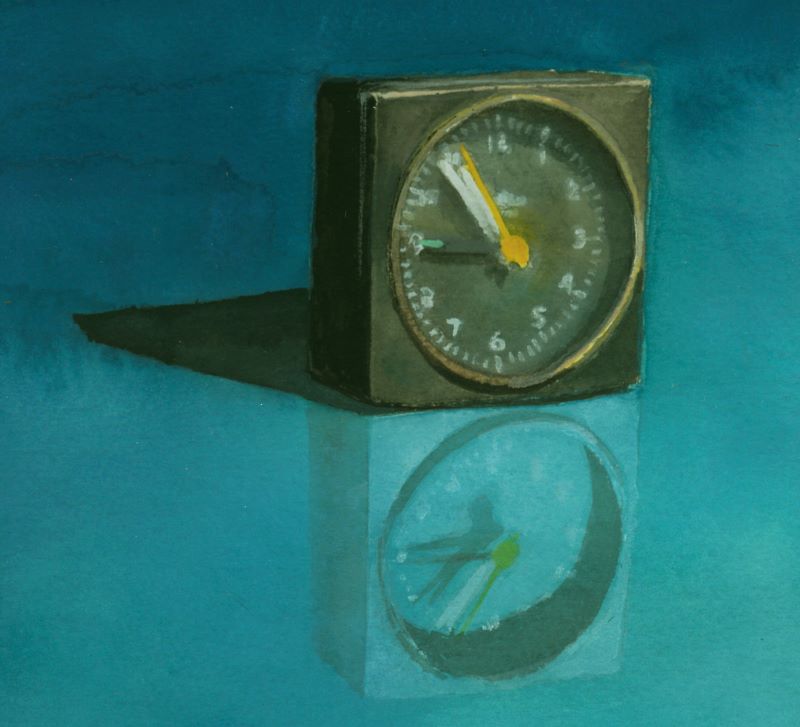
“Because of Covid, I think we’ve all had a weird relationship with time passing,” Courvoisier says, as Halvorson chimes in with her own interpretation of the album’s evocative title – vibrantly depicted in artist Dike Blair’s gouache images of clock in liminal spaces.

“A month would pass and I’d feel like no time had passed at al, or vice versa. It was very weird, and would leave you feeling disoriented all the time. At the same time, this album is almost exactly an hour long – so once you’ve listened to it an hour has disappeared.” Vanished, perhaps – but a well spent sixty minutes ripe with inspiring discoveries and inviting mysteries, elusive in the way it warps and transforms time.

1. Golden Proportion
2. Lulu's Second Theorem
3. Faceless Smears
4. Four-Point Play
5. Moonbow
6. Torrential
7. Mind Out Of Time
8. Party Dress
9. Bent Yellow
10. The Disappearing Hour
11. Gates & Passes
12. Blizzard Rings

Sylvie Courvoisier piano
Mary Halvorson guitar

Produced by David Breskin

Recorded by Ron Saint Germain & Ryan Streber at Oktaven Audio, Mount Vernon, NY June 2 & 3, 2021

Mixed by Ron Saint Germain at Saint’s Place, July 27 & 28, 2021

Mastered by Scott Hull, Masterdisk, Peekskill, NY

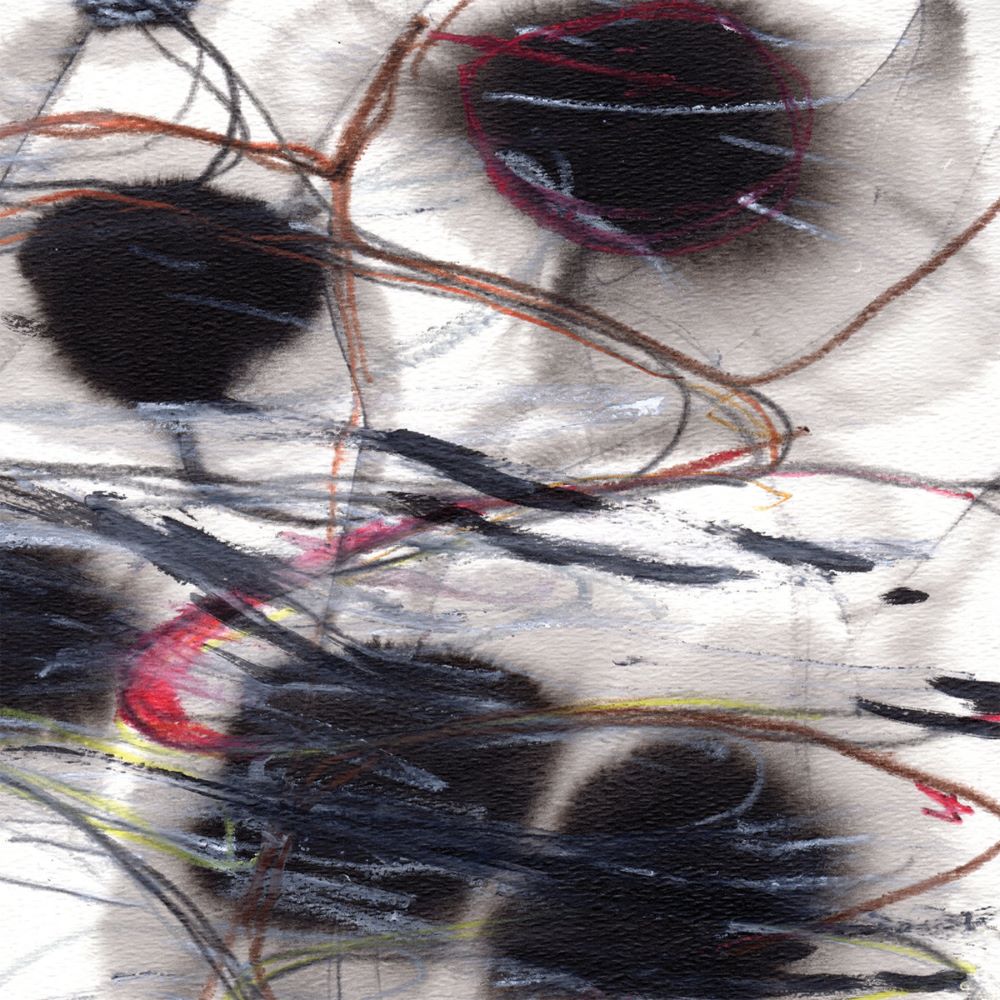
Album art: five gouaches by Dike Blair, courtesy the artist and Karma, New York City

Mary’s songs: 1,3,6, 9, 11 – Meltframe Music (BMI)
Sylvie’s songs: 2, 5, 7, 10 – Sylvie Courvoisier (SUISA, ASCAP)
Shared songs: 4,8,12

Album design and layout: Spottswood Erving and July Creek for Janky Defense

Tuesday, October 26, 2021

Oct 26: Ches Smith celebrates 'Path of Seven Colors' at Roulette in Brooklyn (live & live streamed)

© Mimi Chakarova

Ches Smith and We All Break celebrate Pyroclastic Records release
Path of Seven Colors
 
Live & live streamed on Tuesday, October 26 at Roulette in Brooklyn
 

Project melds Haitian Vodou and contemporary improvisation
 
5 stars “A tour de force of jazz innovation.”
– John Fordham, The Guardian
 
4 stars “[Smith] breaks new ground with We All Break, and with no template for this hybrid model, he has created something new and extraordinary. Highly recommended.”
– Karl Ackermann, All About Jazz
 
“I’ve been on the scene, and know a lot of people, but projects like this are the kind of thing you live for.”
– saxophonist and MacArthur Fellow Miguel Zenón 

Drummer/composer Ches Smith and his extraordinary ensemble We All Break celebrate their “sublime magnum opus” (Jazziz) Path of Seven Colors with an album release concert at 8 p.m. on Tuesday, October 26 at Roulette, 509 Atlantic Avenue, Brooklyn. The concert will also be live streamed free of charge on the night of the performance and archived for future viewing. 
 
The performance features the band from the album including Smith on drums and vocals, pianist Matt Mitchell; alto saxophonist Miguel Zenón; vocalist Sirene Dantor Rene; rising star bassist Nick Dunston; and Daniel Brevil, Markus Schwartz, and Fanfan Jean-Guy Rene on tanbou and vocals. Also performing will be vocalists Tossie Long and Lalin St. Juste. Tickets $20. For information call 917-267-0363 or visit https://roulette.org/event/ches-smith-and-we-all-break-path-of-seven-colors-record-release-show/.
 
Path of Seven Colors (Pyroclastic Records, June 11, 2021) – a remarkable merging of traditional Haitian Vodou music and au courant composition and improvisation – is earning wide critical acclaim.
“A groundbreaking album…stunningly original and mesmerizing in its ritualistic power.”
– Allen Morrison, DownBeat
 
“Ches Smith has produced one of the most significant, beautiful and exciting works of this first part of the century.”
– Aldo Gianolio, AudioReview
 
“Drummer-composer Smith, who has immersed himself in Haitian vodou music for nearly two decades, delivers a sublime magnus opus.”
– Eric Snider, Jazziz
 
“Inviting and engaging, playing to tradition without being beholden to it.”
– Kurt Gottschalk, Stereophile
 
“Path of Seven Colors is nothing short of stunning… It would be a shame if it does not end up on multiple Best Of lists for 2021.”
– Robert Bush, New York City Jazz Record
 
“Path of Seven Colors promises to make the spirits take notice.”
– Emily Pothast, The Wire

The project features deluxe packaging including two extensive booklets with photos, track-by-track narratives, and lyrics in Haitian Creole and English; it also includes a bonus disc of the 2015 eponymous recording by the original quartet (Smith, Mitchell, Brevil, and Schwartz). In addition, the ensemble’s music and collaborative process are highlighted by a 50-minute film “We All Break,” available on the release date via the websites of Pyroclastic, Smith, and award-winning filmmaker Mimi Chakarova.
 
While the band’s first album featured a quartet of three drummers with piano (and occasional vocals), the new recording uses an octet to orchestrate the material and greatly expands the vocal dimension, pushing the band into new terrain. “There is no existing model marrying traditional Haitian songs with original instrumental compositions and contemporary improvisation in this way,” says Smith. “We just had to keep trying things, in the spirit of experimentation, until the balance was right and we’d created our own mold.”
 
Smith’s dedication to Haitian Vodou began more than twenty years ago. “My attraction was instant and strong,” he says. “In 2000 I got called to accompany a Haitian dance class. I was captivated, likely because things central in the various musics I play – polyrhythm, polytonality, improvisation, extended timbral awareness, tension and release, channeled aggression and power, and most vitally surprise – I found again, and anew, in this traditional form.”
 
His compositional vision aimed to incorporate and transform elements of this tradition. “I wanted these elements – lead/chorus song structure, polytonal relations among singers and drums, conversations between the drums, and kase (‘breaks’) – at the center of each piece,” he says. “A traditional rhythm would be the foundation of each composition, while that rhythm’s spiritual, political, and visual associations could function as deep wells of information and feeling, levering the work into a new dimension.”
 
Pianist Mitchell’s melodic and harmonic sense, improvisational talents, and keen sense of rhythm made him a natural for the band. Smith also enlisted his master-teachers, Brevil and Schwartz. “I knew they would tell me straight whether this project was flying or not,” says Smith. He also brought in Jean-Guy Fanfan Rene, co-leader with Sirene Dantor Rene of Vodou-activism group Fanmi Asòtò. Smith also had an idea to pile-drive the bottom end, bringing in Nick Dunston: “I pictured a broad, taut, multi-colored tapestry dense with rhythmic detail in the low range of the music. This sound would include the contrabass for its harmonic and time-keeping roles, but also to function, slyly, as a fifth drummer.” Serendipitously, Ches played a gig with alto saxophonist Miguel Zenón, who expressed an interest in Haitian drumming. Smith says, “His playing on his own records, and his stunning compositions, told me he would be another force to push the music forward.” The final addition to the octet arose from Brevil’s suggestion to add a female voice. Enter Sirene Dantor Rene. “She sings with supreme conviction,” says Smith, “using traditional inflections in a voice wholly hers.”
 
Brevil began finding traditional Vodou songs, melodies and lyrics to nestle within Smith’s instrumental compositions. “Daniel composed many of the songs himself,” says Smith, “and fervently searched for others in the tradition, coming back with a multi-authored body of work. His curation brought up questions about the distinction between ‘traditional’ and ‘original.’ I once read that new songs may be created in a particular Vodou house and enter the tradition in that fashion. Perhaps this was happening before my eyes with Daniel’s original songs.”
 
The result is a triumphant, pioneering ascent, tracked and mixed beautifully by the legendary Ron Saint Germain. The band rehearsed and recorded for a week in February 2020 amidst mutual respect, focus, excitement, and a commitment to going all in on their trailblazing collaboration. Says Smith, “An almost uncanny feeling accompanied us the whole time. If I may be allowed a bit of speculation: if in Vodou the invisible becomes visible, here, perhaps, the inaudible becomes audible.”

Friday, September 17, 2021

Craig Taborn Launches 60 x Sixty

ANNOUNCING WORLDWIDE & FREE AVAILABILITY OF CRAIG TABORN’S NEW CONCEPTUAL WORK 

Sixty pieces of music in sixty minutes each about sixty seconds in length.

Pressing PLAY initiates a run of 60 tracks in a randomized order. The sequence ends after all 60 pieces play. The numbers relate to the ordinal position of each piece in the present playlist and are not intended titles or identifiers of the musical works. Every subsequent play shuffles the deck. In time new pieces may be added as others are removed.

This series is created with a diversity of musical processes and aesthetic parameters. The pieces relate to one another only in seeking to explore how malleable the perception of a 60-second span of time might be when subject to different sound worlds in succession. Do some pieces feel longer than others? What elements contribute to this subjective experience? How does time pass or not pass?

Press PLAY to begin the ride. It’s a singular journey each time.

— Craig Taborn
Born in Minneapolis, Minnesota, Craig Taborn has been performing piano and electronic music in the jazz, improvisational, and creative music scene for over twenty-five years. He has experience composing for and performing in a wide variety of situations including jazz, new music, electronic, rock, noise and avant garde contexts.

Taborn has played and recorded with many luminaries in the fields of jazz, improvised, new music and electronic music including Roscoe Mitchell, Wadada Leo Smith, Lester Bowie, Dave Holland, Tim Berne, John Zorn, Evan Parker, Steve Coleman, David Torn, Chris Potter, William Parker, Vijay Iyer, Kris Davis, Nicole Mitchell, Susie Ibarra, Ikue Mori, Carl Craig, Dave Douglas, Meat Beat Manifesto, Dan Weiss, Chris Lightcap, Gerald Cleaver, and Rudresh Manhathappa.

Taborn is currently occupied creating and performing music for solo piano performance (Avenging Angel), piano trio (Craig Taborn Trio), an electronic project (Junk Magic), the Daylight Ghosts Quartet, a piano/drums/electronics duo with Dave King (Heroic Enthusiasts) and a new trio with Tomeka Reid and Ches Smith as well as piano duo collaborations with Vijay Iyer (The Transient Poems), Kris Davis (Octopus) and Cory Smythe. He is also a member of the instrumental electronic art-pop group Golden Valley is Now and performs frequently on solo electronics.

Taborn lives in Brooklyn.

60 x Sixty Available at 60xsixty.com

Friday, June 11, 2021

Ches Smith & We All Break's Path of Seven Colors – Out This Friday, June 11 via Pyroclastic Records

Ches Smith’s We All Break melds elements of Haitian Vodou and contemporary jazz on groundbreaking new Path of Seven Colors
 
The recording and accompanying film showcase the band’s synergistic connection and exhilarating, alchemical mix of musical forms 
 
“I’ve been on the scene, and know a lot of people, but projects like this are the kind of thing you live for.” – saxophonist and MacArthur Fellow Miguel Zenón

Like most great art forms, jazz developed by combining previously distinct, disparate elements into something new. The musicians of We All Break follow in this tradition on their new release, Path of Seven Colors, available June 11, 2021 via Pyroclastic Records. The album, with its remarkable merging of traditional Haitian Vodou music and au courant composition and improvisation, offers eight evolutionary/revolutionary tracks performed by a collaborative octet of world-class musicians.

The brainchild of drummer/composer Ches Smith, We All Break features pianist Matt Mitchell, saxophonist Miguel Zenón, rising-star bassist Nick Dunston, vocalist Sirene Dantor Rene, and master drummers Daniel Brevil, Markus Schwartz and Fanfan Jean-Guy Rene. 

The release features deluxe packaging including two extensive booklets with photos, track-by-track narratives, and lyrics in Haitian Creole and English; it also includes a bonus disc of the 2015 eponymous recording by the original quartet (Smith, Mitchell, Brevil, and Schwartz). In addition, the ensemble’s music and collaborative process are highlighted by a 50-minute film “We All Break,” available on the release date via the websites of Pyroclastic, Smith, and award-winning filmmaker Mimi Chakarova. 

While the band’s first album featured a quartet of three drummers with piano (and occasional vocals), the new recording uses an octet to orchestrate the material and greatly expands the vocal dimension, pushing the band into new terrain. “There is no existing model marrying traditional Haitian songs with original instrumental compositions and contemporary improvisation in this way,” says Smith. “We just had to keep trying things, in the spirit of experimentation, until the balance was right and we’d created our own mold.”

Smith’s dedication to Haitian Vodou began more than twenty years ago. “My attraction was instant and strong,” he says. “In 2000 I got called to accompany a Haitian dance class. I was captivated, likely because things central in the various musics I play – polyrhythm, polytonality, improvisation, extended timbral awareness, tension and release, channeled aggression and power, and most vitally surprise – I found again, and anew, in this traditional form.”

His compositional vision aimed to incorporate and transform elements of this tradition. “I wanted these elements – lead/chorus song structure, polytonal relations among singers and drums, conversations between the drums, and kase (‘breaks’) – at the center of each piece,” he says. “A traditional rhythm would be the foundation of each composition, while that rhythm’s spiritual, political, and visual associations could function as deep wells of information and feeling, levering the work into a new dimension.”

Pianist Mitchell’s melodic and harmonic sense, improvisational talents, and keen sense of rhythm made him a natural for the band. Smith also enlisted his master-teachers, Brevil and Schwartz. “I knew they would tell me straight whether this project was flying or not,” says Smith. He also brought in Jean-Guy Fanfan Rene, co-leader with Sirene Dantor Rene of Vodou-activism group Fanmi Asòtò. Smith also had an idea to pile-drive the bottom end, bringing in Nick Dunston:  “I pictured a broad, taut, multi-colored tapestry dense with rhythmic detail in the low range of the music. This sound would include the contrabass for its harmonic and time-keeping roles, but also to function, slyly, as a fifth drummer.”  Serendipitously, Ches played a gig with alto saxophonist Miguel Zenón, who expressed an interest in Haitian drumming. Smith says, “His playing on his own records, and his stunning compositions, told me he would be another force to push the music forward.” The final addition to the octet arose from Brevil’s suggestion to add a female voice. Enter Sirene Dantor Rene. “She sings with supreme conviction,” says Smith, “using traditional inflections in a voice wholly hers.”
Brevil began finding traditional Vodou songs, melodies and lyrics to nestle within Smith’s instrumental compositions. “Daniel composed many of the songs himself,” says Smith, “and fervently searched for others in the tradition, coming back with a multi-authored body of work. His curation brought up questions about the distinction between ‘traditional’ and ‘original.’ I once read that new songs may be created in a particular Vodou house and enter the tradition in that fashion. Perhaps this was happening before my eyes with Daniel’s original songs.”

The result is a triumphant, pioneering ascent, tracked and mixed beautifully by the legendary Ron Saint Germain. The band rehearsed and recorded for a week in February 2020 amidst mutual respect, focus, excitement, and a commitment to going all in on their trailblazing collaboration. Says Smith, “An almost uncanny feeling accompanied us the whole time. If I may be allowed a bit of speculation: if in Vodou the invisible becomes visible, here, perhaps, the inaudible becomes audible.”

1. Woule Pou Mwen 02:41
2. Here's The Light 09:05
3. Leaves Arrive 09:39
4. Women of Iron 06:07
5. Lord of Healing 13:35
6. Raw Urbane 07:05
7. Path of Seven Colors 08:56
8. The Vulgar Cycle 11:29

Sirene Dantor Rene vocals
Miguel Zenón alto saxophone
Matt Mitchell piano
Nick Dunston bass
Daniel Brevil tanbou and vocals
Fanfan Jean-Guy Rene tanbou and vocals
Markus Schwartz tanbou and vocals
Ches Smith drums, percussion and vocals

We All Break dedicates this album to the memory of pi bon zanmi nou Eddy Jean (1970—2020).

Music composed by Ches Smith (Preposterous Bee Music, BMI)
Song lyrics and melodies by Daniel Brevil (BMI) and traditional

Recorded at Power Station New England by Ron Saint Germain in February 2020
Assisted by Patrick Smith and Evan Bakke
Mixed by Ron Saint Germain at Saint’s Place

Produced by David Breskin

Mastered by Scott Hull
Album Design & Layout
by Spottswood Erving & July Creek for Janky Defense (logo)
Cover photo by Mimi Chakarova
Translation assistance by Markus Schwartz and Daniel Brevil
Text editing assistance by David Breskin and Markus Schwartz
Pictured Drum and Writing by Jérôme “Junior” Simeon

Friday, May 14, 2021

SINGLE from Ches Smith's Path of Seven Colors Out Today

The single "Here's The Light" from Path of Seven Colors – the exhilarating album from Ches Smith's We All Break – is out today, May 14. The full album is slated for release June 11, 2021 via Pyroclastic Records

Melding elements of Haitian Vodou and contemporary jazz, the groundbreaking 
album offers eight evolutionary/revolutionary tracks performed by a collaborative octet of world-class musicians including Smith, pianist Matt Mitchell, saxophonist Miguel Zenón, bassist Nick Dunston, vocalist Sirene Dantor Rene, and master drummers Daniel Brevil, Markus Schwartz and Fanfan Jean-Guy Rene.

Thursday, February 18, 2021

Junk Magic – Compass Confusion (Pyroclastic Records)

Junk Magic – 2004 record title, and current pseudonym for Craig Taborn –
explores sonic subversion and mingling identities on anticipated follow-up
Compass Confusion

“Collages of dark and dirty parts, musical cast-offs, so to speak, that have been artfully
reattached.” — Patrick Sisson, PopMatters
“More rewards await, rich and replete.” — Phil DiPietro, All About Jazz
For more than a decade, Junk Magic has been honing a collective sound that relies on individual expressions, imagination and subversion. Appearing first as a 2004 album title under pianist-composer Craig Taborn’s name, Junk Magic has transitioned into a sonic identity comprising electronic sound design, production techniques and elements of improvised music.

Compass Confusion presents a holographic snapshot of the Junk Magic sound. “Everything is warped by something else,” says Taborn, who serves as album composer and producer. “You’re still trying to capture things ‘in a moment,’ in a certain sense. But then also, because of how the process works, you’re not. There’s a lot of time to craft things after the fact.”

Compass Confusion features Chris Speed on saxophone, Erik Fratzke on bass, Mat Maneri on viola, David King on drums and Taborn on piano, keyboards and synthesizer. Together, they disarticulate boundaries that imply separation of live music and digital production. “I don’t really view using creative methods in ambient techniques as a ‘different side’ of musical expression,” says Taborn. “It’s all the same expression. But this album is definitely leaning in to the production process as opposed to relying more heavily on the live playing.”

Compositional and textural layers, as well as pacing and extended ebb and flow, emerge intentionally throughout the recording. The artists honor space. They harness movement through time. Using methods that challenge perception and embrace subversion, they develop sound narratives unique to each track that create a story arc across the entire album. The interplay’s the thing. “Laser Beaming Hearts” introduces a cast of characters, layering and mingling their identities, not only through sound design but melody.

“Whenever I hear a melody, it really does set up an identity, a character,” says Taborn, who seeks, at times, to subvert a character’s initial impact by elevating a textural element or an ambience. Often, that relationship inverts. First conjuring an ocean inside a seashell alongside echoing heartbeats, “Dream and Guess” soon moves into a new melody beautiful, mysterious and primed for sonic disruption.
Rather than disorient — despite its title — the album constantly reorients the listener. Many tracks, including “The Science of Why Devils Smell Like Sulfur,” feature sound chambers, through which the artists freely move. Within these chambers, textures layer, flicker, persist, and stories develop; sound collage may enhance as melody recedes. “There are different methods of attending compositionally,” says Taborn. “If I were writing a traditional tune, it would be melody and some chord changes; if I were writing a hip hop track, I would focus more on beats, loops and sound design; if I were writing strictly ambient music, I would focus on the sound relationships, how the shapes are evolving with certain sonic elements. On a lot of these pieces, I’m really playing with the foreground and background of all those things.”

While Taborn’s process serves a fixed vision, his approach preserves spontaneity. He populates each chamber by listening and responding to what he hears. “Each tune kind of has a radically different process,” he says. “I do think about narrative, because it moves through time, but it’s the narrative of these sound worlds, moving between them.”

The artists entered sessions in Minneapolis and Brooklyn knowing each studio hit would be one step of the process. Most of the album’s construction would come together away from mics and amps. Still, Taborn asserts an aesthetic throughout Compass Confusion that reflects his expansive foundation in live, improvised music. Deep admiration for hip hop and EDM production techniques notwithstanding, Taborn seeks to preserve solo performances artists throw down in the studio. “To a large extent, what you hear is what people played in the order that they played it,” he says. “I don’t cut up performances. And that’s not an ethos, it’s just an aesthetic. I’m not cutting up a drum solo and making loops, but I’m doing other things that might trick you into thinking it’s looped.”

Mixed and mastered in Taborn’s native Minneapolis by Brett Bullion (The Bad Plus) and Huntley Miller (Bon Iver, Kassa Overall), respectively, Compass Confusion presents a confluence of expressions within a collective sound. “We’re improvisers,” says Taborn. “While a lot of this material is written, there’s so much improvising in the playing. Even in my approach to making tracks, making beats in the studio, it’s still improvisational. You’re working on things in the moment.”

***

Junk Magic, over the years, has featured countless acclaimed artist-composers, including Craig Taborn, Chris Speed, Erik Fratzke, Mat Maneri, Aaron Stewart, Mark Turner and David King (The Bad Plus). Bonding improvisational aesthetic with digital production and electronic music techniques, the project ethos challenges existing perceptions of sound design. A 2004 self-titled release garnered praise from Pitchfork, PopMatters and All About Jazz, which acknowledged the sound’s “staggering futuristic potential.” Anticipated followup Compass Confusion, released on Pyroclastic Records, positions Junk Magic on the rolling crest of acoustic wave expansion.

1. Laser Beaming Hearts 07:10
2. Dream and Guess 05:37
3. Compass Confusion/ Little Love Gods 08:55
4. The Science Of Why Devils Smell Like Sulfur 10:37
5. The Night Land 04:10
6. Sargasso 08:35
7. Sunsets Forever 05:31

Chris Speed - tenor sax, clarinet
Mat Maneri - viola
Erik Fratzke - bass
David King - acoustic and electronic drums