Showing posts with label Phil Haynes. Show all posts

Friday, August 20, 2021

OUT TODAY / Jim Yanda – A Silent Way: Exploratory Improvisations featuring Herb Robertson and Phil Haynes (August 20, 2021 via Cornerstone Jazz)

A Silent Way, due out August 20, 2021 via Corner Store Jazz, evokes the rich textures and absorbing atmospherics of the Miles Davis classic while striking out into startling new territory
 
"[Yanda] flaunts melodic imagination and a brisk feel for swing."
– Bob Doerschuk, DownBeat

“[Yanda] is a wonderful guitarist… He combines [Larry] Coryell’s looseness with [Jim] Hall’s precise tone in a unique burning style.”
– Jerome Wilson, Cadence

For even the most casual of jazz fans, the title of A Silent Way, the latest album by the exploratory guitarist Jim Yanda, will inevitably evoke the name of another album by one of the music’s most iconic figures. That’s no accident. Like Miles Davis’ In a Silent Way, Yanda’s trio excursion with trumpet player Herb Robertson and drummer Phil Haynes ventures into often stark, spacious, richly textured territories. 
 
Beyond that commonality, however, there’s very little chance that the two albums could be mistaken for one another – while each proposes a silent way, each carves its own distinctive path into the vast quietude. Due out August 20, 2021 via Corner Store Jazz, Yanda’s Silent Way is a constantly surprising and inventive conversation between three longtime collaborators determined to discover new possibilities with their respective instruments and the interaction between them.
 
“The connection is a little oblique,” admits Yanda. “But it's definitely there in the approach, the openness – the idea of letting the horn be out there playing ideas with the group responding. Something about that aesthetic allowed us to be audacious enough to call the project A Silent Way, which I think gives people a reference point to draw them into its world.”
 
Having some recognizable landmarks does help in navigating the mysterious, amorphous landscapes conjured by Yanda and his trio on A Silent Way. It can be equally effective, though, to simply allow oneself to get lost wandering its cavernous sonic spaces, delighting in the crunch and scrape of Haynes’ percussive arsenal, being lured along by Yanda’s wiry lines before getting startled by a sudden blast from Robertson’s trumpet. Sputtering horn bleats are shrouded in howling feedback, an insistent rattling is dissected by the skittering of fingers on strings, a nonsensical chorus of chattering voices erupts from Robertson’s synthesizer – it’s an array of sounds as seemingly limitless as it is fascinatingly abstract.
 
“Our sensibilities about space and texture are fostered by our common ethos,” Yanda explains. “There has to be a kind of deep listening and deep empathy there. From the first note, Herb opens an immediate portal into a subconscious space of pure creativity. Phil and I join him in that space and that fosters an incredible camaraderie.”
 
Despite the longevity of the relationships represented in the trio – Yanda and Haynes have been working together since their student days at Coe College in Cedar Rapids, nearly four decades ago, while both connected with Robertson through their Brooklyn rehearsal space, the Corner Store, in the 1990s – A Silent Way marks the first time that they’ve convened as a trio. 
Haynes and Yanda are typically found in more composed scenarios, such as Haynes’ “jazz-grass” string band Free Country, the genre-bending organ trio The Hammond Brothers with Steve Adams, and Yanda’s decades-long trio with bassist Drew Gress. Yanda and Robertson, meanwhile, share a long-running free improvisational duo, while Haynes and Robertson released a pair of improvised recordings on CIMP back in 2000, Ritual and Brooklyn-Berlin.
 
A Silent Way was recorded in Yanda’s New Jersey living room, the same space where it was born. The guitarist hosted a series of free improv sessions at his home, and invited Haynes and Robertson to join him one particularly fruitful day in early 2019, with engineer Jon Rosenberg expertly capturing the fragile atmosphere. “Right after the first session, it was universally agreed by all of us that there was something special here,” Yanda recalls. “We immediately said, ‘Let's do it again.’ So we had another couple of sessions throughout the spring, and eventually came to the realization that we should document this. We met over a weekend in June, rolled tape, and ended up with a tremendous amount of material.”
 
In another parallel to Miles’ In a Silent Way, Haynes took on the Teo Macero role, sifting through the hours of material to assemble the most captivating moments. That he found enough thrilling music to fill two full discs is testament to the scintillating chemistry shared by these three master improvisers. Despite the lack of strictures on the trio’s interactions, a definite architecture emerges from even the most sparse and ephemeral of pieces. 
 
“There's a tendency in free improvisation to make sound without listening deeply, because it’s so open and there are no rules,” Yanda says. “It's a much greater challenge to make what you're doing cohere with the overall context, to try to give things some form and structure.”
 
Yanda, Haynes and Robertson are all deeply attuned to that approach, each with his own long history of creating compelling music from the moment’s inspiration. A Silent Way is a particularly shining example of those tendencies, one that rewards the same close, focused listening and inspired discovery that the artists felt when creating it.

Jim Yanda – A Silent Way
Corner Store Jazz – CSJ 0126 0127 – Recorded June 29-30, 2019
Release date August 20, 2021
 

Friday, June 1, 2018

Two New Recordings by drummer Phil Haynes with Dave Liebman, Drew Gress, Hank Roberts and Jim Yanda


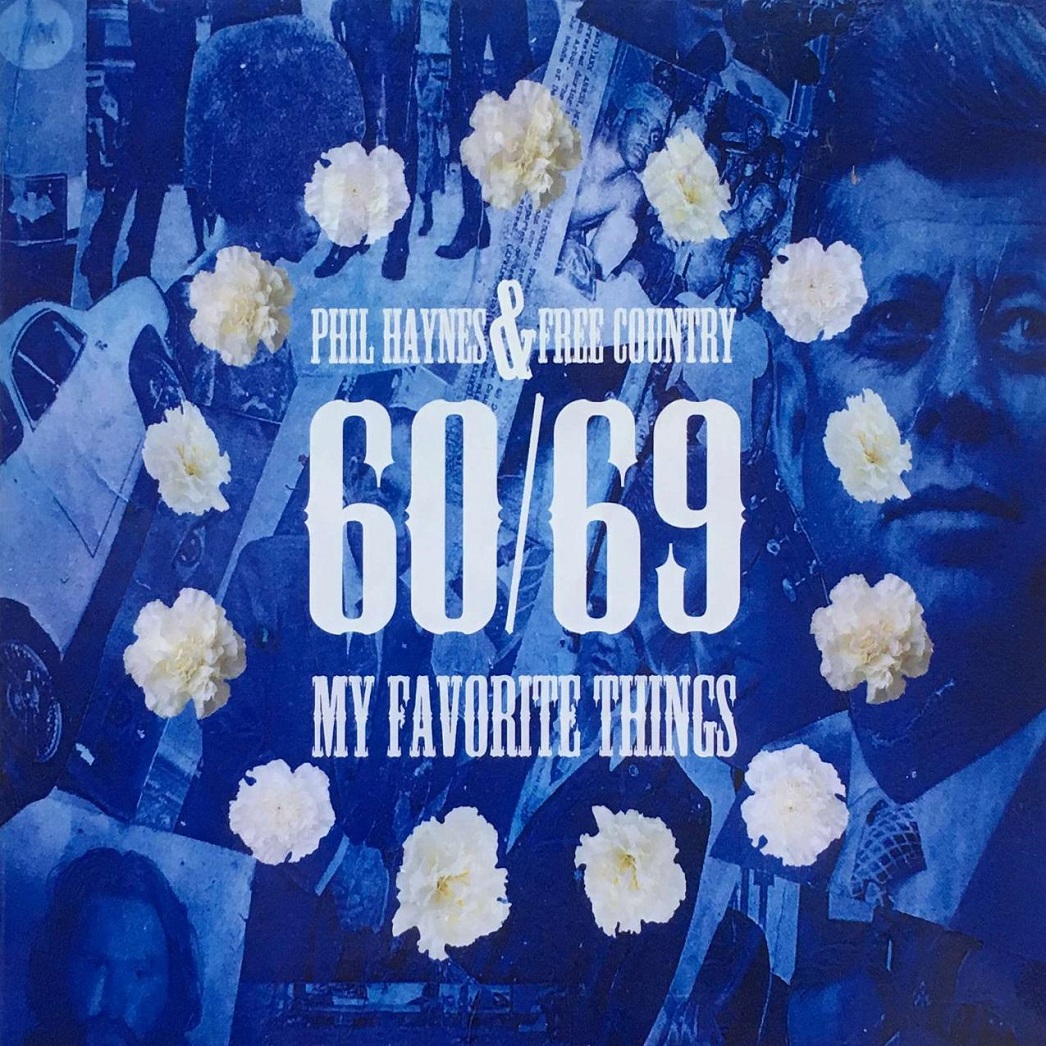
My Favorite Things (1960-1969) takes on The Beatles, Hendrix, Coltrane, James Brown and more with “jazz-grass” string band Free Country with Hank Roberts, Jim Yanda, Drew Gress

No Fast Food’s Settings For Three sparks inspired improvisation 
from bassist Drew Gress and NEA Jazz Master David Liebman

“[No Fast Food is] ridiculously good — One of the two best trios since the legendary Elvin Jones.”  
– CriticalJazz.com

“Just like Jack DeJohnette or Bob Moses, [Haynes] is broadening the beat by means of a significantly melodic component. You don’t have to be a prophet to foresee a great future.”
– Heinrich Oehmsen, Szene

It’s not that he has anything against whiskers on kittens, mind you, but these are a few of drummer Phil Haynes’ favorite things: creating in the moment with old friends, who just happen to be some of the most inventive improvisers on the scene; digging deep into the rich musical legacy of the 1960s; navigating original compositions that offer tricky surprises and wide open spaces, just perfect for inspired spontaneity. With a wide-ranging pair of new releases featuring his bands Free Country and No Fast Food, Haynes gets to indulge all of those faves alongside an amazing crew sure to make you forget any dog bites or bee stings. Both are due for release on June 1, 2018 through Corner Store Jazz.


My Favorite Things (1960-1969) concludes a trilogy by Haynes’ free-wheeling “jazz-grass” string band Free Country, where he’s joined by longtime collaborators Hank Roberts (cello and vocals), Jim Yanda (guitar) and Drew Gress (bass). Released over nearly two decades, the band’s three albums encompass nearly the entire history of American popular music in their own irreverent, stripped-down fashion: their 1999 debut focused on pre-1900 tunes from the Revolutionary War to Stephen Foster; The Way the West Was Won took on the first half of the 20th century, with cowboy songs and Hollywood movie soundtracks.

The concluding chapter narrows the focus to a single decade, but what a decade: over the course of two discs, the quartet takes on everything from John Coltrane, The Beatles and Jimi Hendrix to Burt Bacharach and the theme from Star Trek – as Haynes himself puts it, “you’ve got everything from schmaltz to the highest art.”

Beyond the fact that the ‘60s were the formative years for the band’s members, the decade is so ripe for extensive reinvention because, Haynes explains, “It was our last cultural revolution. This is the last decade that everybody agrees on, so this is a look at that psychedelic, diverse musical landscape. We face many of the same questions now that we faced then, and it will be interesting to see if there’s another social revolution.”

If there is, Free Country is here to provide the soundtrack. With Roberts’ wry baritone, the knotty interaction of the strings, Haynes’ loose-limbed, evocative percussion, and a profound conversational spark forged over decades of collaboration and the magical live sound born of recording in the round, the band captures the spirit of the 1960s with the urgency of now. “The ‘60s had this great American outpouring of creativity,” Haynes says. “There was music that everybody shared: Santana and The Beatles knew about A Love Supreme, from Hendrix to what Bernstein did on Broadway, everything was changing. This band focuses all those things into one sound.”


On the opposite end of the creative spectrum, No Fast Food, with Gress and NEA Jazz Master David Liebman, was formed as an outlet for Haynes’ compositions. The trio’s third album, Settings For Three, is their first not recorded in concert but carries the electricity of their live performances into the studio. As the straightforward title implies, the intent was simply to provide fodder for the three musicians’ estimable improvisational gifts, or as Haynes puts it, “I wanted to give the guys some new settings to play in and also familiar territory to romp in.”

The opening track, “El Smoke,” takes its name and inspiration from a different group – Haynes’ collective quartet Joint Venture, where he and Gress are joined by saxophonist Ellery Eskelin and trumpeter Paul Smoker. Of course, No Fast Food make it utterly their own, ranging from the atmospheric to the rhapsodic over the track’s ten minutes. Haynes has written lyrics for the second tune, “Joy,” though they’re not sung on the recording. No matter, as Lieb and Gress seem to have absorbed the composer’s poetic meaning, which looks at the many different sides of joy, from the outwardly ecstatic to the more profound and complicated. 

“There’s joy as we know it,” Haynes says, “but then there are all these other shadow aspects of joy. I really appreciated how the guys played on it because they reveal those different depths: not just that first expression but then all the ripples that happen beyond that.”

Speaking of multi-faceted, the blues offers an endless supply of variations and possibilities, and that’s certainly the case with the wide-open “Blue Dop.” High-spirited and grooving in this rendition, it’s a piece that suggests myriad approaches and changes each time the trio launches into it. The onomatopoeic “Whack Whap” shows off the mirth and humor that the three can share, a wild avalanche of sounds and sonic surprises.

“Longer Shorter” pays homage to Wayne Shorter, taking the legendary saxophonist’s composition “Pinocchio” as a starting point. The hard-driving, sharp-angled tune nods toward Liebman’s history with Miles Davis and Elvin Jones while spotlighting his singular approach to the soprano. The ballad “String Theory,” which kicks off with Liebman conjuring fluttering bird calls on flute, is a vehicle for Gress’ poignant arco emoting. To close the album, “Shramba” takes a different twist on the samba, progressing through all twelve keys over Haynes’ rollicking rhythmic bed.

Through the simultaneous release of these two thrilling albums, Haynes provides a study of two facets of his expansive musical personality. Both are wildly inventive and thrive on the personal interactions of the musicians involved, but where My Favorite Things is subversively accessible, Settings For Three is an enticing challenge. “You’ve got one group where the universe is the option,” Haynes says, “and another group where the microcosm is the universe. They’re very different kinds of playing yet you look for freedom in both.”


Phil Haynes

A veteran artist based in New York for 25 years, drummer/composer Phil Haynes is featured on more than 70 releases from numerous American and European record labels.  His collaborations include many of the seminal musicians of this generation: saxophonists Anthony Braxton, Ellery Eskelin, and David Liebman; trumpeters Dave Douglas, Herb Robertson, and Paul Smoker; bassists Mark Dresser, Ken Filiano, and Drew Gress; keyboard artists David Kikoski, Denman Maroney, and Michelle Rosewoman; vocalists Theo Bleckman, Nicholas Horner, and Hank Roberts; violinist Mark Feldman, and the composers collective Joint Venture. His current projects include the romantic “jazz-grass” string band, Free Country; the saxophone trio No Fast Food; bluesy power organ unit The Hammond Brothers, featuring young B-3 master Paul Bratcher; and the classic piano trio Day Dream, a cooperative with Yamaha artist Steve Rudolph.


Sunday, April 16, 2017

Jim Yanda Trio - Regional Cookin'


Jim Yanda Trio - Home Road (2 CD)


Guitarist/Composer Jim Yanda Releases Two Albums Spanning the 30-Year Career of His Brilliantly Inventive Trio

Featuring bassist Drew Gress and drummer Phil Haynes, Regional Cookin’ finds long-overdue release after decades on the shelf, while Home Road captures 2 CDs’ worth of newly-recorded music


Thirty years is a long time to keep any relationship going. It’s an almost impossibly long time to keep a secret. To a large extent the Jim Yanda Trio has managed to do both, creating exhilarating, spontaneous music together while remaining largely under the radar outside of those lucky enough to catch their sporadic performances in the New York area – despite the fact that the trio features Drew Gress, one of the music’s busiest and most in-demand bassists, and veteran drummer/experimentalist Phil Haynes.

Yanda is finally ready to let the cat out of the bag – in a big way. The guitarist and composer is set to release two albums featuring three CDs’ worth of music spanning the trio’s long history. Regional Cookin’ dates from the band’s earliest days, recorded in 1987 but never before released, while Home Road fills two discs with newly-recorded material illustrating the trio’s evolution. Both will be released on March 24 through Haynes’ Corner Store Jazz label.

Together, these two albums reveal a band with a profound sense of empathy, a thrilling knack for taking sonic chances, deep roots in the blues combined with an era-spanning avant-garde sensibility, and perhaps most importantly, a raw honesty that could only result from such long and enduring friendships – and, Iowa native Yanda might insist, a plainspoken Midwestern directness.

“I think there’s a little more naiveté and abandon on Regional Cookin’,” Yanda says in comparing the two sessions. “I was just trying to hang on for dear life and survive. Home Road is more controlled with, hopefully, a little more maturity and wisdom.”

The fact that a debut as assured and often electrifying as Regional Cookin’ could languish on the shelf for 30 years is a reflection of Yanda’s understated modesty, which in a case like this can allow the perfect to become an enemy of the (very) good. “My initial mistake,” he writes in the album’s liner notes, “of measuring creativity against some idealized version in our mind’s ear while overlooking the achievement of the actual product likely bedevils most recording artists at some point.”

While that error in self-judgment kept this music hidden from the ears of listeners, it fortunately didn’t dissuade Yanda from continuing his fruitful collaboration with Haynes, which stretches back to their student days at Coe College in Cedar Rapids, and Gress, who joined the duo shortly after their arrival in New York City in 1983. Yanda and Haynes shared a Brooklyn storefront where they could both live and play. The drummer, whose extensive credits include releases with Anthony Braxton, Dave Douglas, Mark Dresser, Michelle Rosewoman and Theo Bleckmann, discovered in Gress an ideal rhythm partner, launching a vital and long-lasting collaboration and making a trio meeting almost inevitable. Gress, of course, went on to work with an exhaustive list of jazz’s most creative artists, including John Abercrombie, Ralph Alessi, Tim Berne, Don Byron, Uri Caine, Ravi Coltrane, Marc Copland, Fred Hersch, John Hollenbeck, and John Surman.

Yanda began his professional career playing Western Swing in Iowa honky-tonks near his family’s farm. He turned to rock in his high school years, inspired by the likes of Jimi Hendrix and the Allman Brothers, then finally discovered jazz in college. After a brief tenure in New York he spent six years in Chicago, regularly playing in local clubs, working with drummer/composer Damon Short and the Déjà Vu Big Band, and frequenting the legendary South Side jam sessions hosted by Von Freeman. He made his permanent return to New York in 1992.


Yanda was inspired to form the trio by his and Haynes’ shared mentor, trumpeter Paul Smoker, whose innovative trio work drew from influences that run the length and breadth of jazz history. “Paul went all the way back to field hollers, rags, New Orleans music, Louis Armstrong - primordial pre-jazz up through swing – then through Charlie Parker to free music, the Art Ensemble of Chicago, the World Saxophone Quartet. As a listener it was so refreshing and gave the experience so much more depth to be able to draw on the entire history. The straight ahead stuff sounds fresher and the old stuff sounds more modern when you juxtapose those different eras and open up that wider history.”

Yanda decided to pursue a similar path; the strengths that are shared between the two discs of Home Road and the much earlier recordings on Regional Cookin’ include a vigorous swing coupled with a tightrope-walking freedom, a full-throated blues feeling filtered through a sharp-edged modernism. One common ground between the earliest jazz and the freedom of the avant-garde has always been collective improvisation, and Yanda was eager to pursue that concept with Gress and Haynes.

“We always wanted the interplay and the dialogue to continue among all of the players all of the time while the music is happening,” Yanda explains. “In straight ahead music there’s a tendency to have the rhythm section in the background with a soloist in front. We try to let everyone be free to improvise at any given time, so you get much more of a group improvisation feel and it opens a lot of doors for new sounds and creativity. Phil and Drew are masters at that; you’re always aware that they’re listening and reacting and feeding you ideas. It’s a wide open kind of experience.”

It’s an experience that the members of Yanda’s trio have sought to recreate in a number of different contexts. Yanda is a longtime member of Haynes’ “jazz-grass” string band Free Country, whose work spans the breadth of American music, from jazz to country to bluegrass. The pair also makes up two-thirds of The Hammond Brothers, a reimagining of the classic organ trio featuring B3 master Steve Adams. Yanda has also collaborated with trumpeter Herb Robertson.